Outline: a typical ceratopsian
Asiaceratops
"Asian horned face"
- Lived
- 101 to 94 million years ago, Late Cretaceous
- Diet
- Herbivore
- Group
- Ceratopsians
- Found in
- Uzbekistan
- Named by
- Nessov et al. 1989
Where its fossils were found
The evidence
Today

95 million years ago
Field notes
About Asiaceratops
What it was like
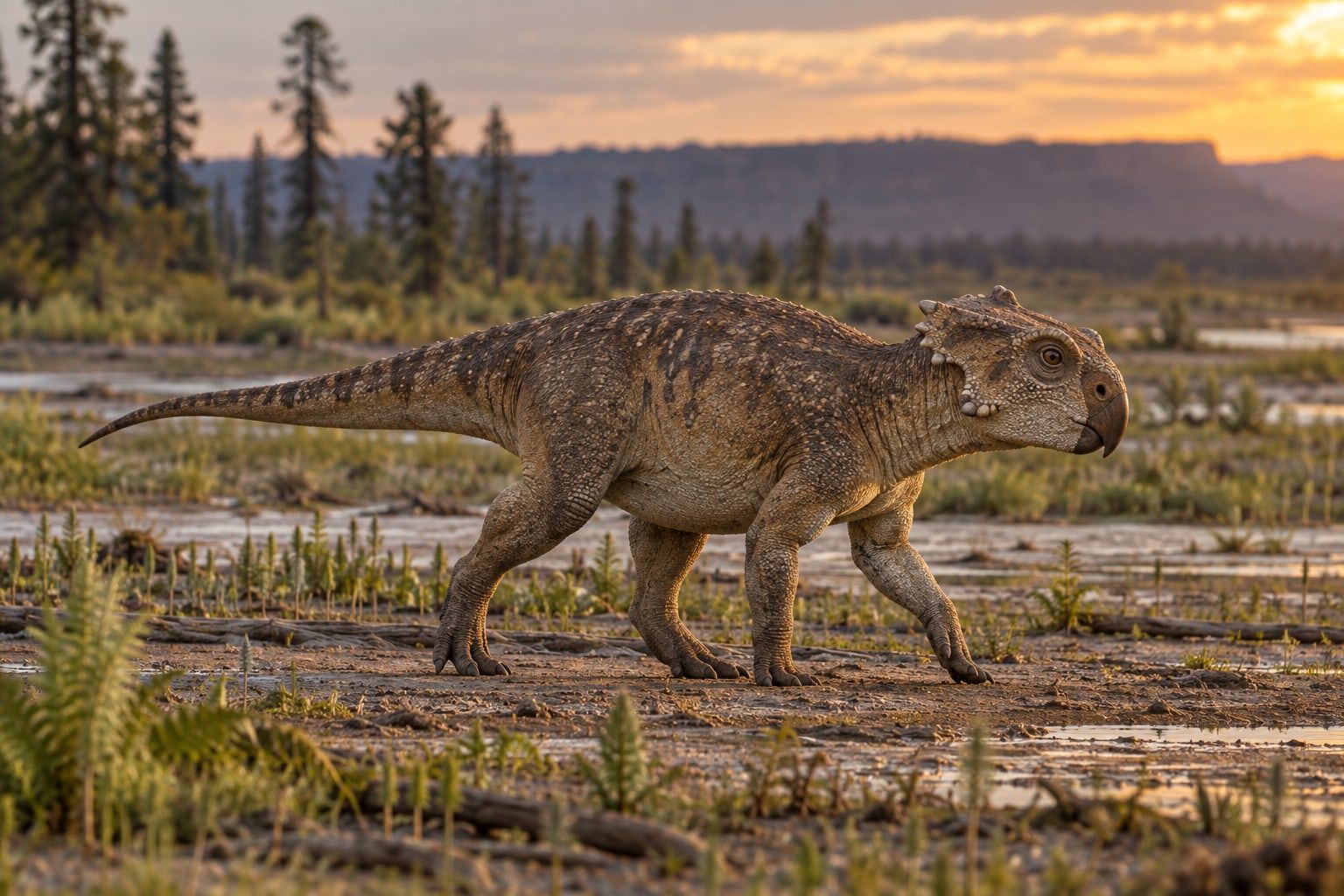
Asiaceratops was a small, early horned dinosaur, a plant eater with a beak. It is known from teeth and bits of jaw.
Its world
It lived in the Late Cretaceous, in what is now Uzbekistan. It comes from the Khodzhakul Formation.
How it was found
Nessov and colleagues named Asiaceratops in 1989. Because the fossils are so scrappy, some scientists treat the name as doubtful.
Lived alongside
Found in the same rock formations
Close relatives
Other members of Neoceratopsia
Sources: WikidataNamed in: L. A. Nessov, L. F. Kaznyshkina, and G. O. Cherepanov. 1989. [Mesozoic ceratopsian dinosaurs and crocodiles of central Asia]. In Bogdanova and Khozatskii (eds.), Theoretical and Applied Aspects of Modern Palaeontology