Kryptops
KRIP-tops
"covered face"
- Lived
- 121 to 101 million years ago, Early Cretaceous
- Diet
- Carnivore
- Group
- Theropods, Abelisauridae
- Found in
- Niger
- Named by
- Sereno and Brusatte 2008
Where its fossils were found
The evidence
Today

110 million years ago
Habitat
A river landscape in what is now Niger. Other dinosaurs from the Elrhaz Formation include Suchomimus, Nigersaurus and Ouranosaurus.
Field notes
About Kryptops
What it was like
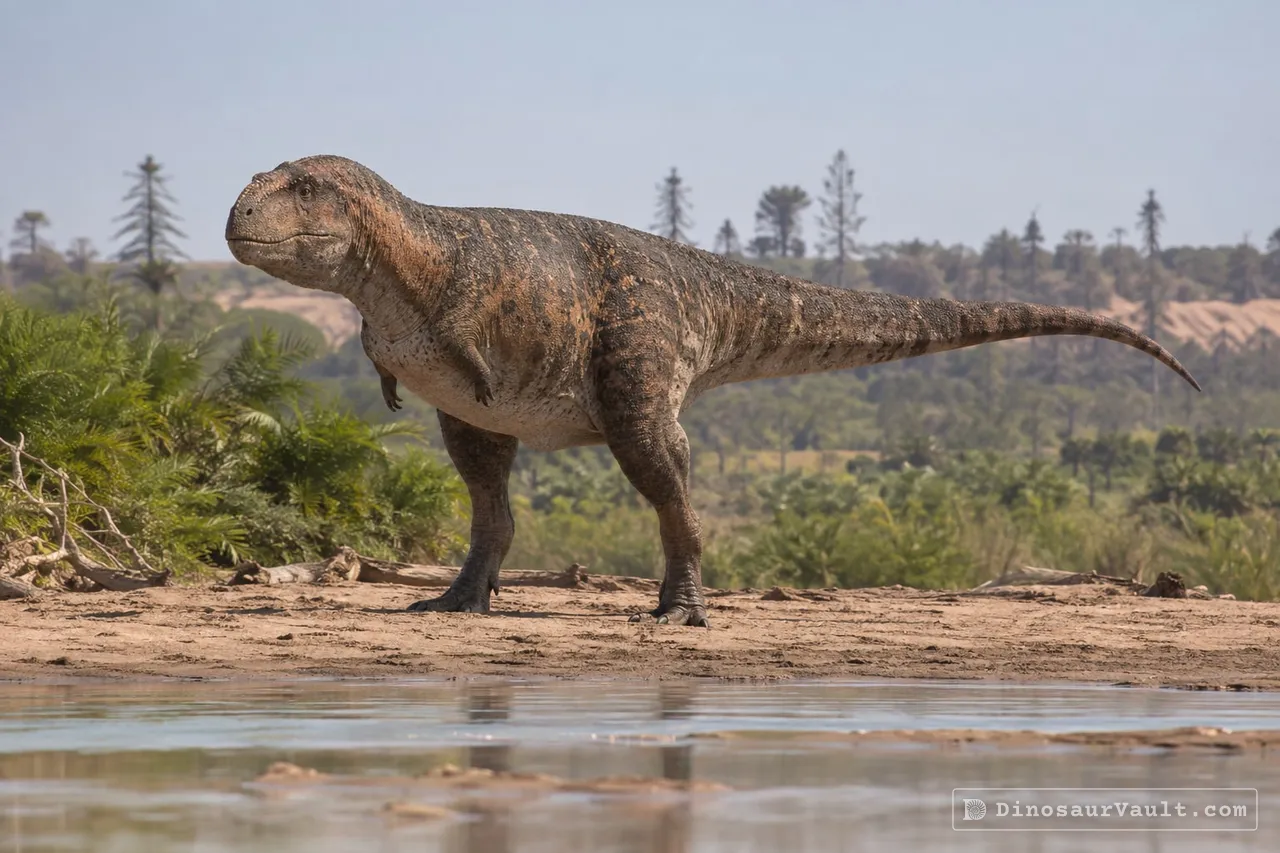
Kryptops was an abelisaurid, a predator with a short, deep face. Its upper jaw bone is rough and pitted, a sign that a tough, horny covering lay over its face in life, which gave it its name.
Its world
It lived in the Early Cretaceous in what is now Niger. Its bones come from the Elrhaz Formation, a land of rivers where it shared the land with the fish-eating Suchomimus, the predator Eocarcharia and plant eaters such as Nigersaurus, Ouranosaurus and Lurdusaurus.
How it was found
Sereno and Brusatte named Kryptops in 2008. Some back and hip bones were first linked to it, but later studies suggest those belong to a different kind of predator, so only the jaw is certain.
Field gallery
More views of Kryptops
Scenes reconstructed from the available fossil evidence.
Lived alongside
Found in the same rock formations
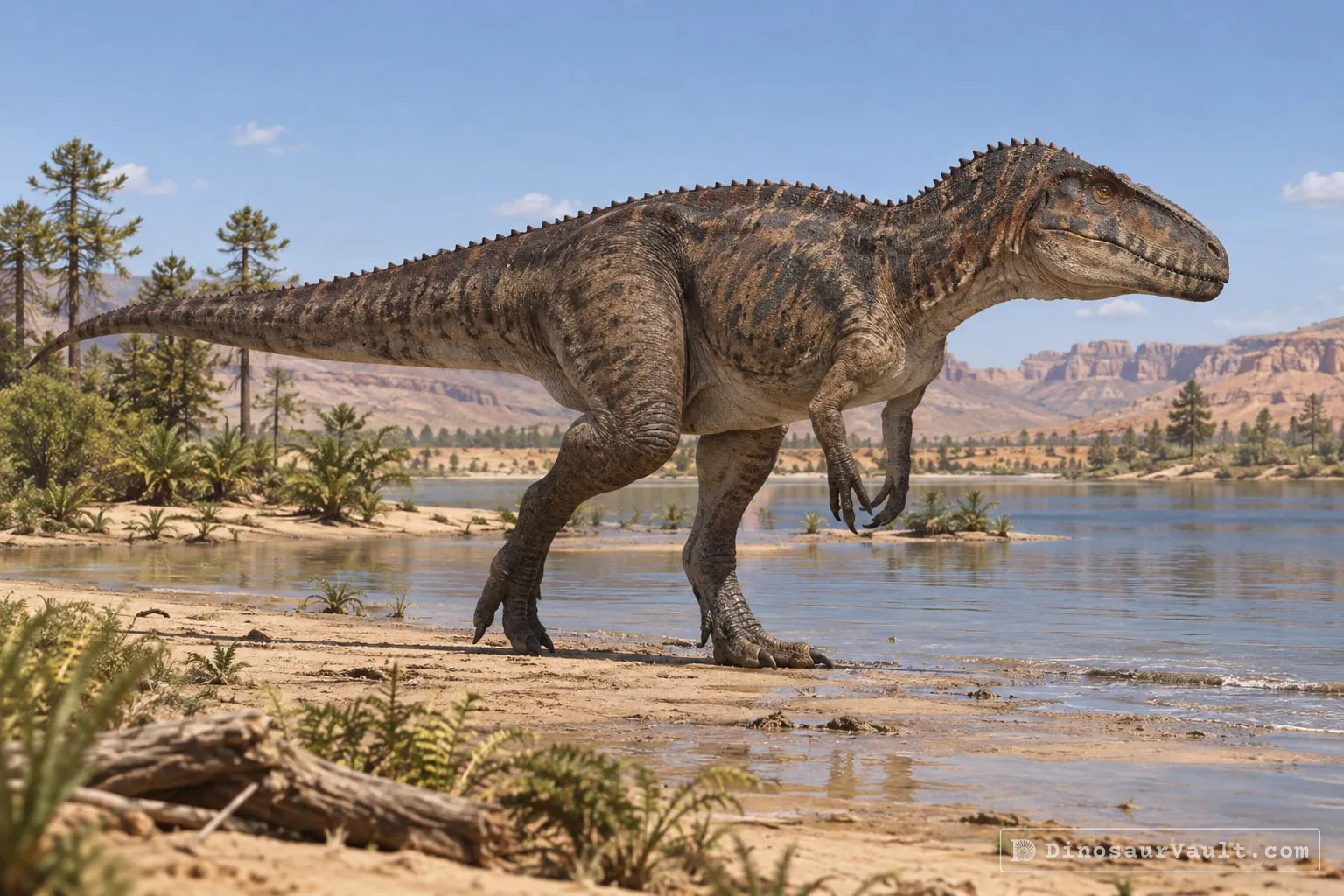
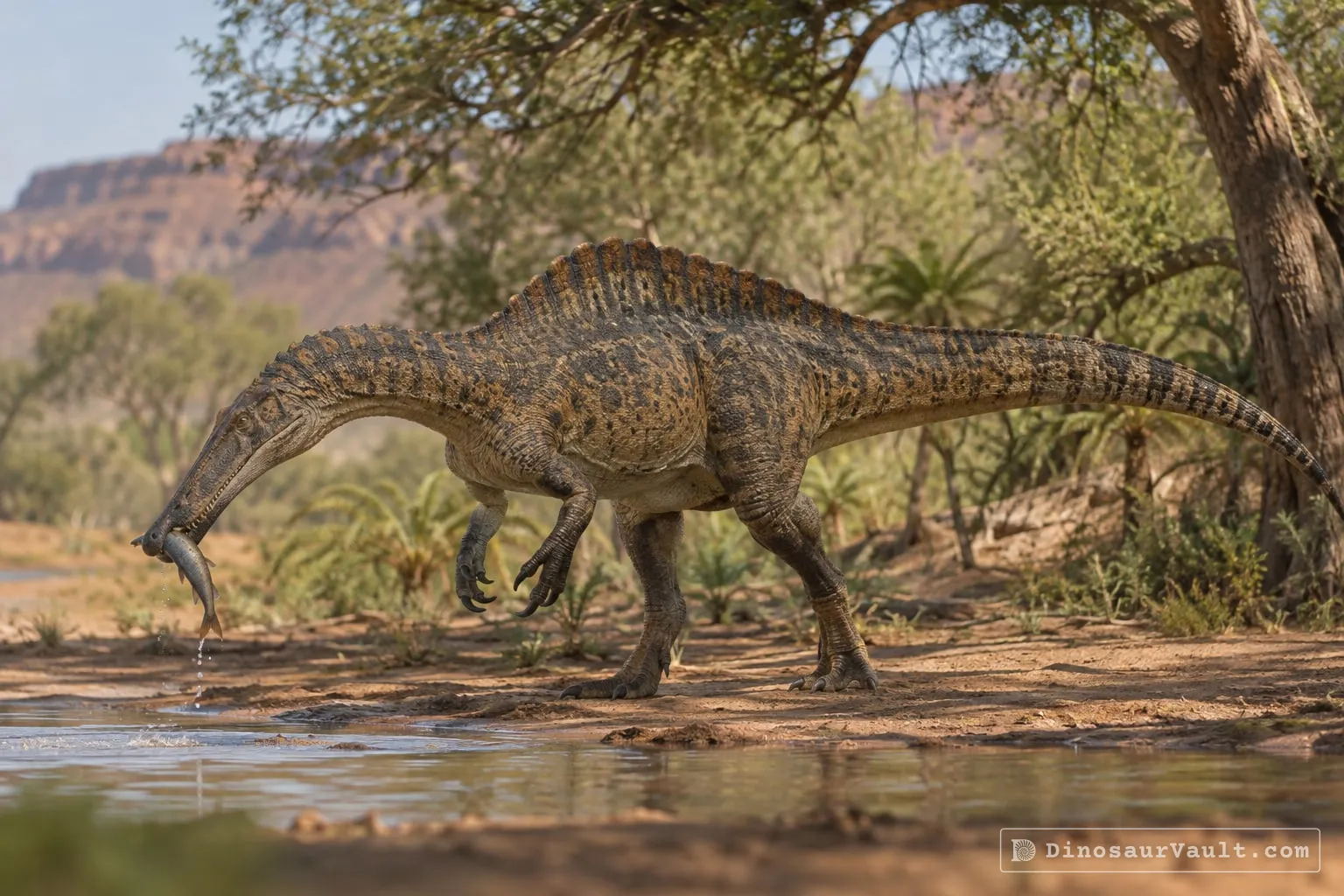
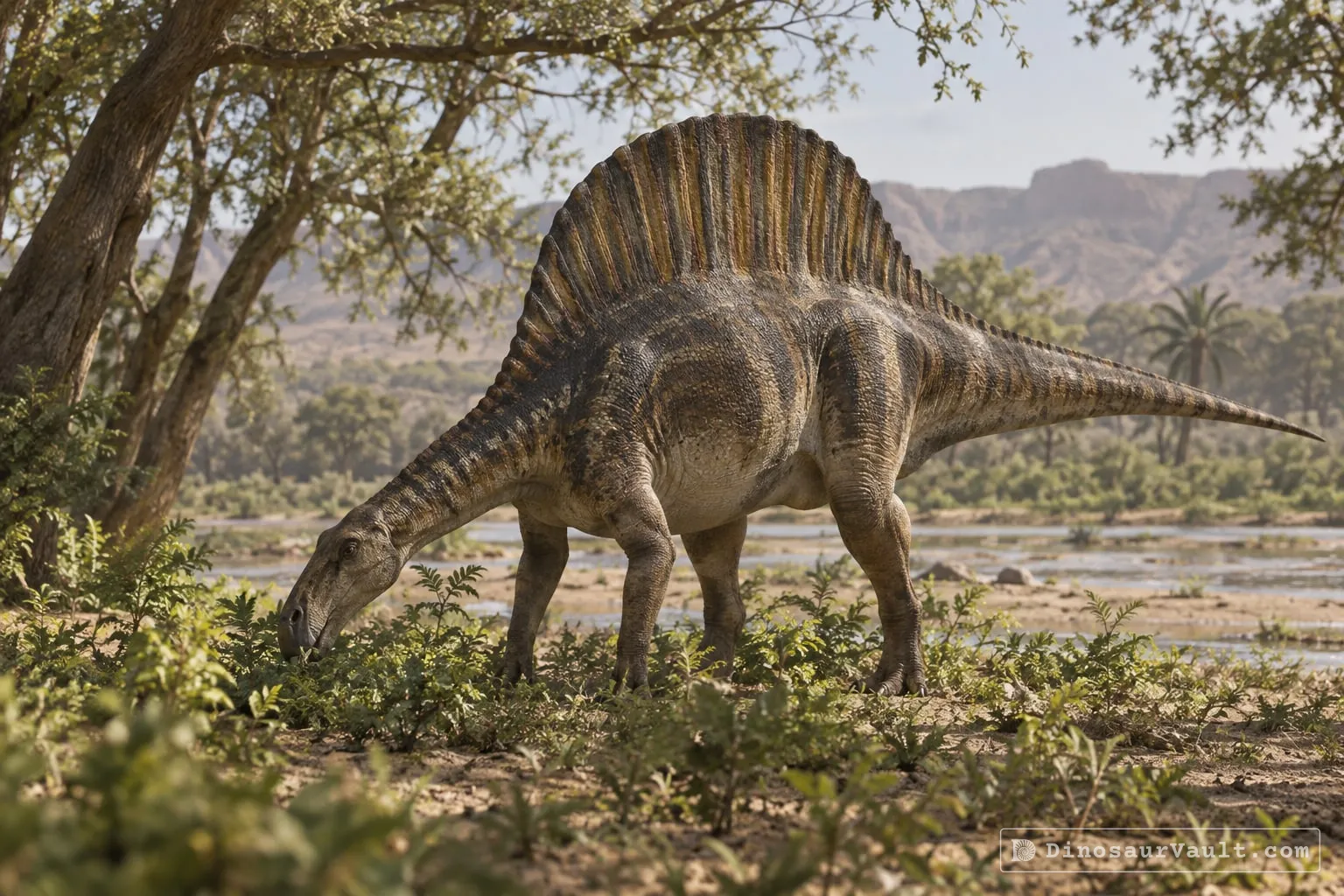
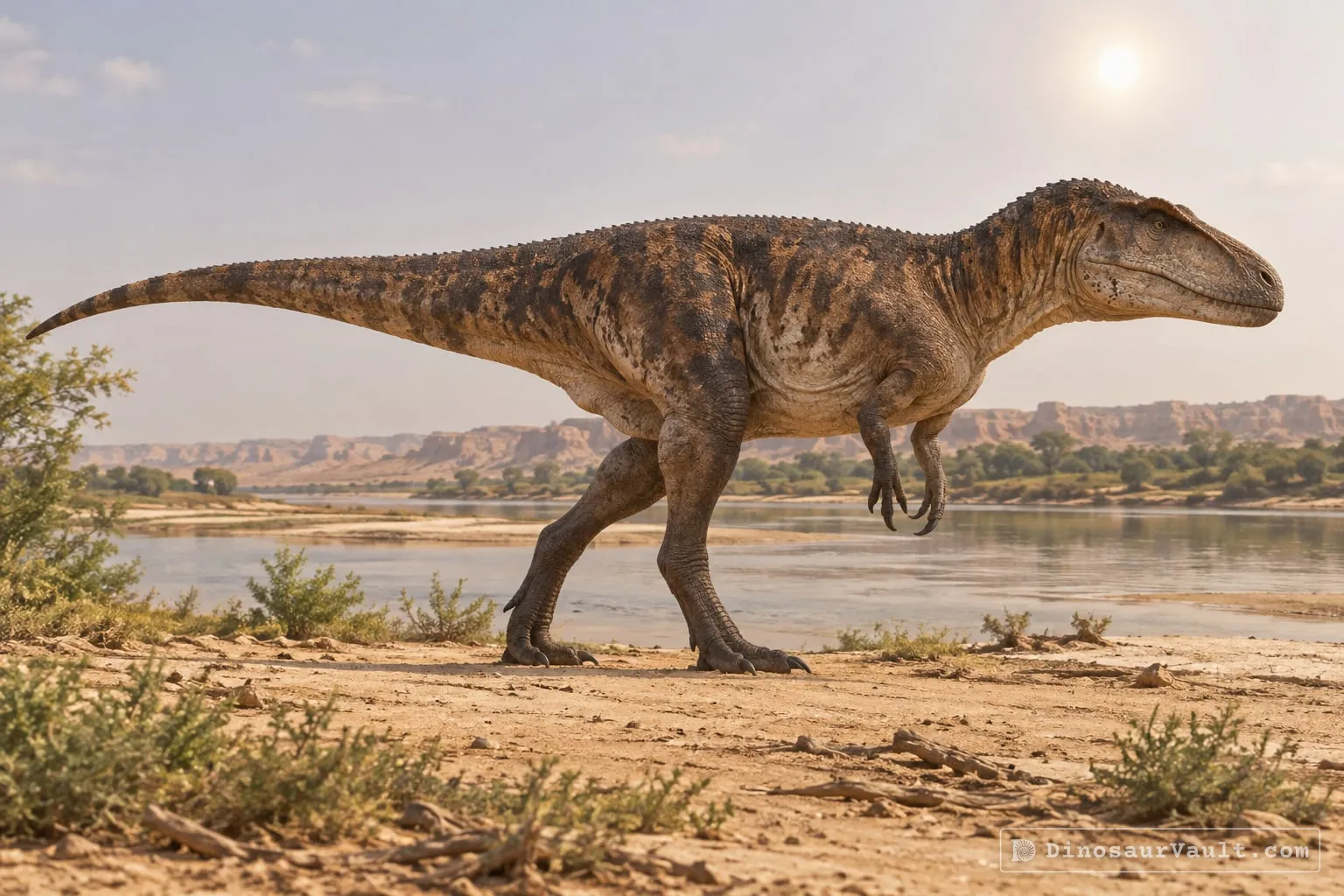
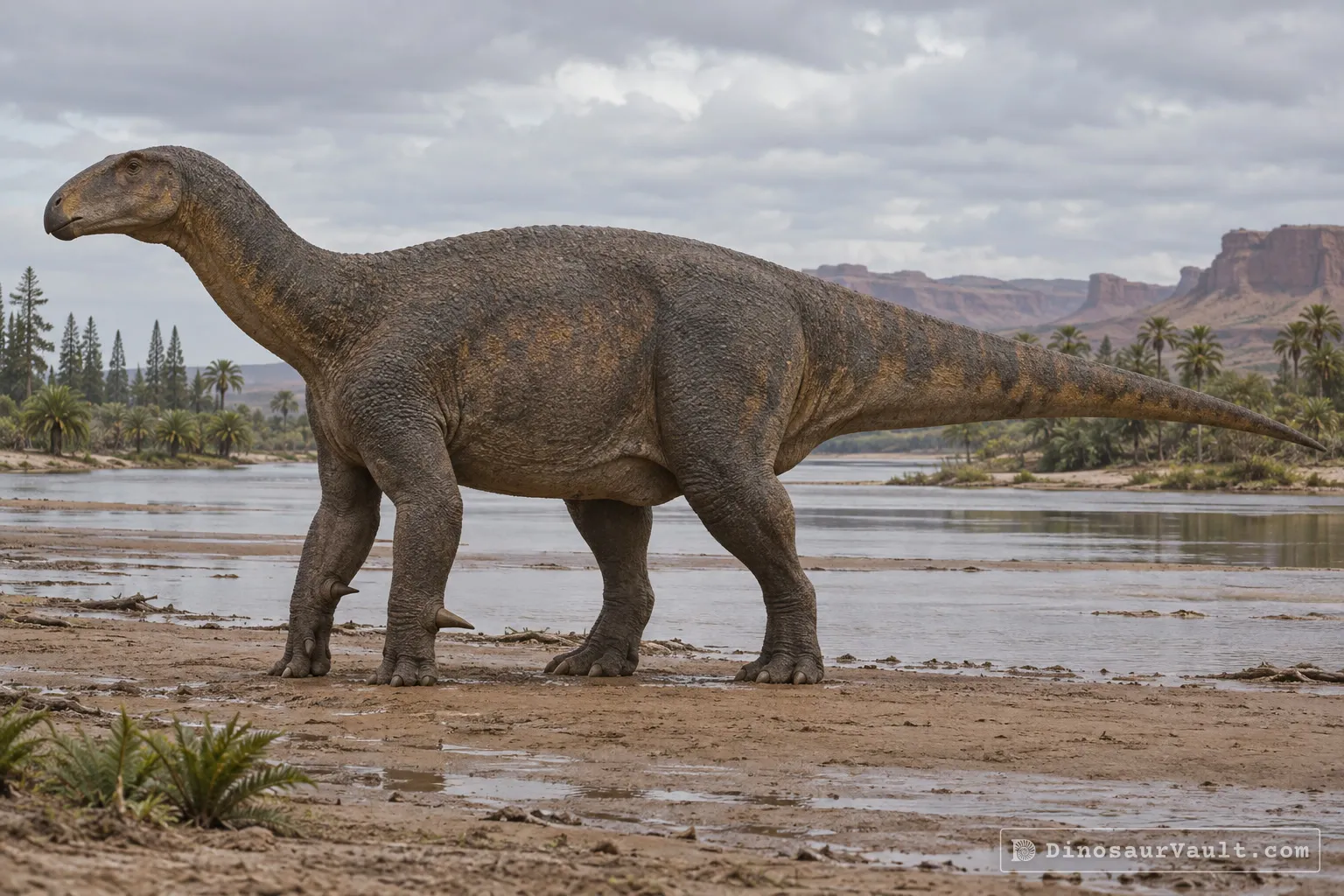
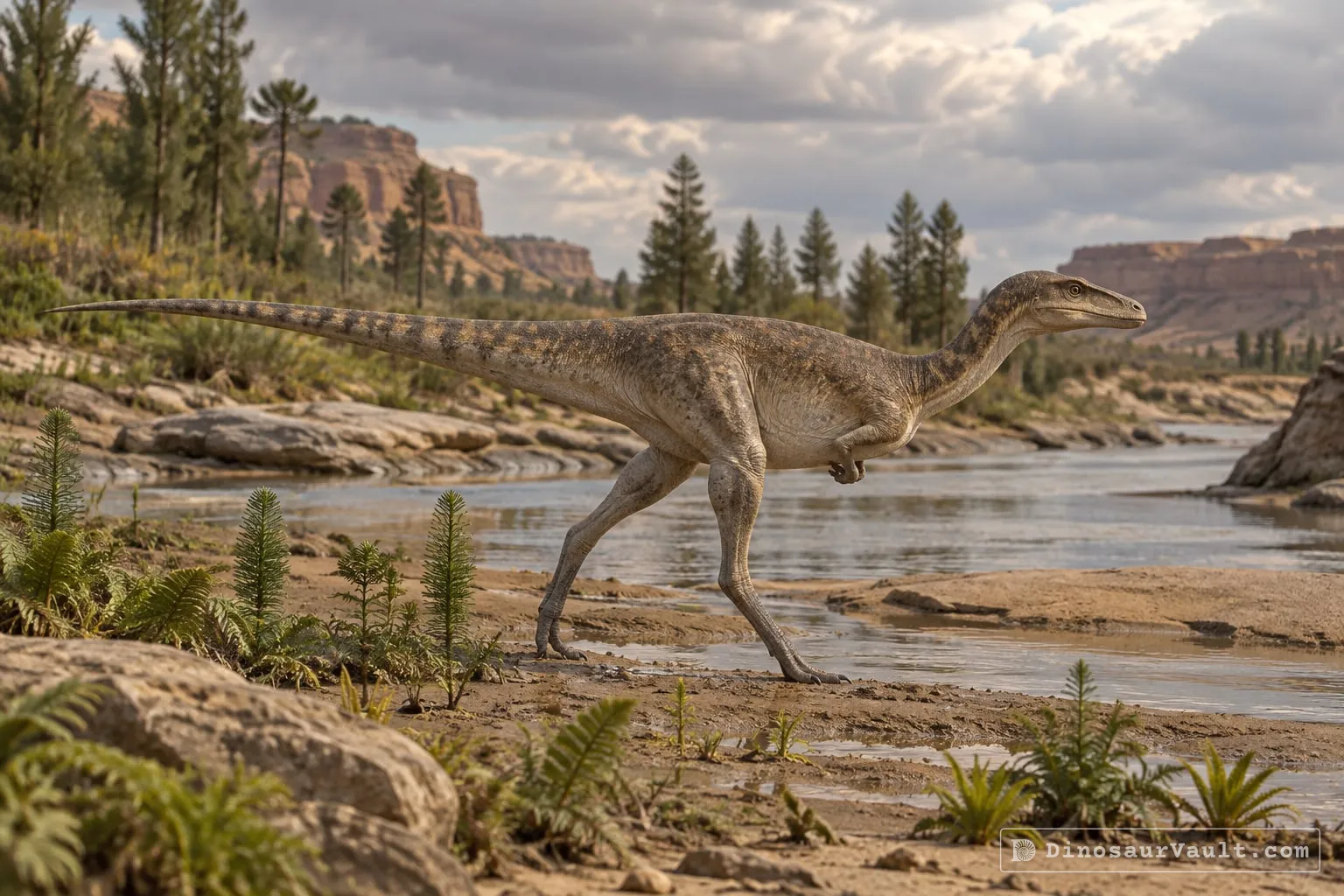
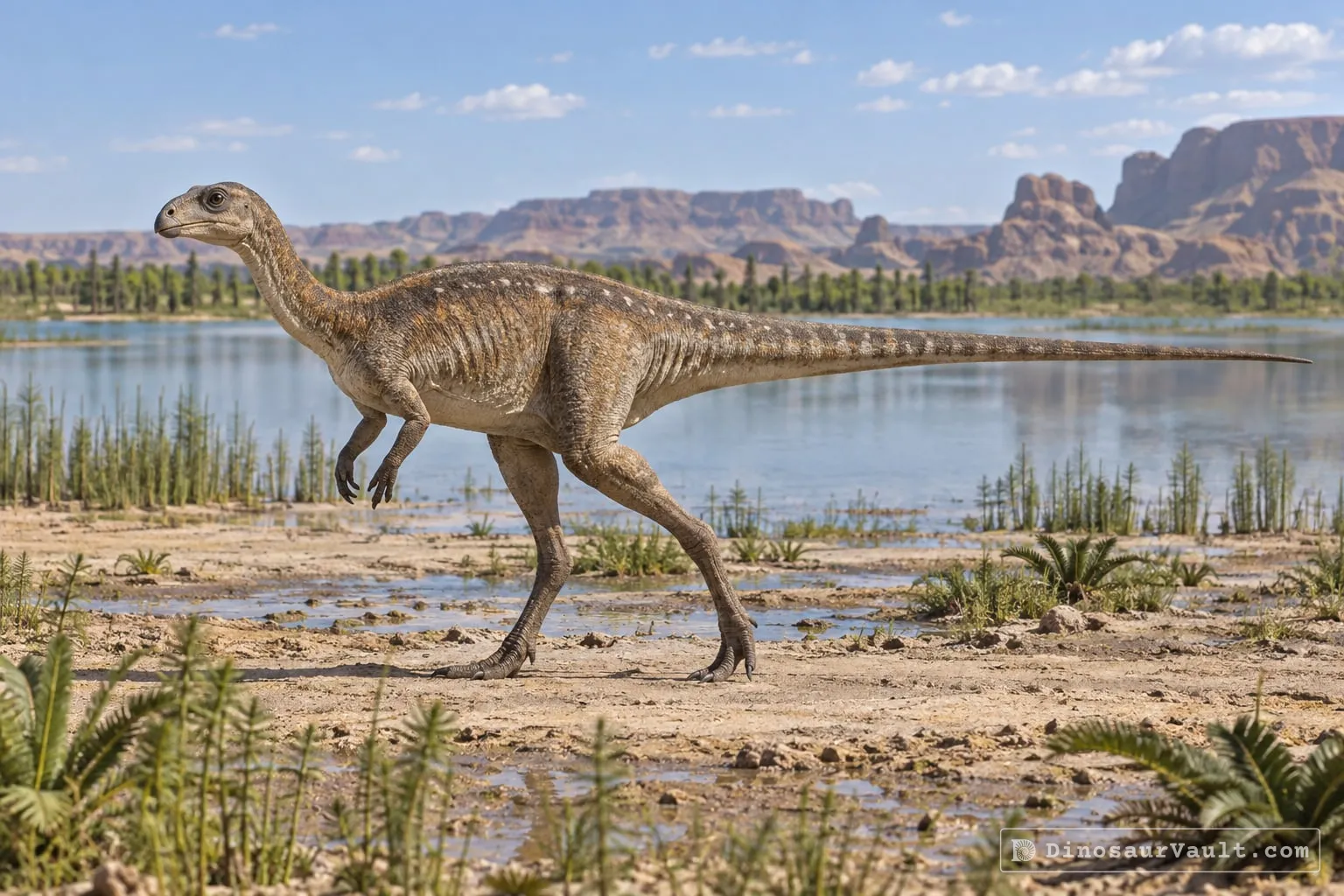


A rock formation can hold fossils laid down millions of years apart, so not every animal here met Kryptops.
The evidence
The science behind Kryptops
Which parts of the picture come from its own bones, and which come from its relatives.
From its own fossils
- The securely assigned fossil is part of the left upper jaw, with teeth.
- The jaw's outer surface has short grooves and rough patches like those of other abelisaurids.
Borrowed from relatives
- The missing skull and body are restored by comparison with abelisaurids such as Rugops and Majungasaurus.
- Short arms in restorations follow better-known abelisaurids such as Majungasaurus.
Still unknown
- The shape and size of its complete body.
- Its color and the exact covering over its face.
- Whether the jaw is distinctive enough to separate Kryptops from every other abelisaurid.
Discovery timeline
- 2008Named itSereno & Brusatte
- 2018Family treeDelcourt
- 2023Fossil sitesSouza-Júnior et al.
Key papers
The research behind what we know of Kryptops
Named it
Named Kryptops from a rough-surfaced upper jaw and initially assigned nearby body bones to the same animal.
Basal Abelisaurid and Carcharodontosaurid Theropods from the Lower Cretaceous Elrhaz Formation of Niger. Acta Palaeontologica Polonica 53: 15-46
Read the paper : Basal Abelisaurid and Carcharodontosaurid Theropods from the Lower Cretaceous Elrhaz Formation of Niger (opens in a new tab)Family tree
Questioned the assigned body bones and whether the incomplete jaw supports a distinct genus.
Ceratosaur palaeobiology: new insights on evolution and ecology of the southern rulers. Scientific Reports 8
Read the paper : Ceratosaur palaeobiology: new insights on evolution and ecology of the southern rulers (opens in a new tab)Fossil sites
Retained the upper jaw as the Kryptops type fossil and excluded the originally assigned body bones.
Abelisauroidea (Theropoda, Dinosauria) from Africa: a review of the fossil record. Papéis Avulsos de Zoologia 63: e202363019
Read the paper : Abelisauroidea (Theropoda, Dinosauria) from Africa: a review of the fossil record (opens in a new tab)
Close relatives
Other members of Abelisauridae


Sources: Wikidata