Eocarcharia
"dawn shark"
Type species Eocarcharia dinops
- Lived
- 121 to 101 million years ago, Early Cretaceous
- Diet
- Carnivore
- Group
- Theropods, Carcharodontosauridae
- Found in
- Niger
- Named by
- Sereno and Brusatte 2008
Where its fossils were found
The evidence
Today

110 million years ago
Habitat
Rivers crossed the plains recorded by the Elrhaz Formation. Suchomimus, Nigersaurus and Ouranosaurus also lived in this region.
Field notes
About Eocarcharia
What it was like
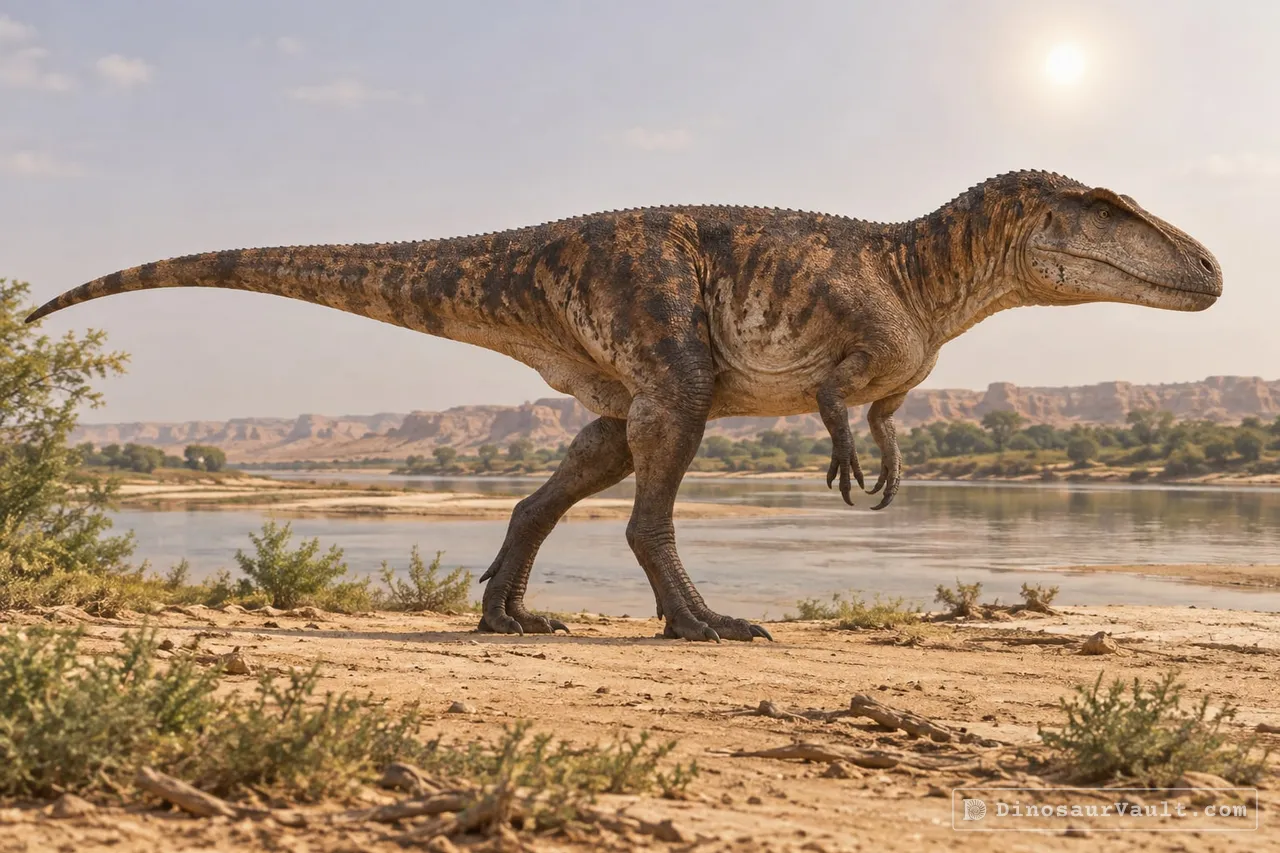
Eocarcharia was a two-legged meat eater known only from parts of its skull and some teeth. It had a thick bony brow over each eye.
It was first described as an early relative of Carcharodontosaurus, but some scientists now think its bones come from more than one animal, with part of it belonging to a spinosaurid instead.
Its world
It lived in the Early Cretaceous, about 121 to 101 million years ago, in what is now Niger. Its fossils come from the Elrhaz Formation, a land of rivers where Suchomimus, Nigersaurus and Ouranosaurus also lived.
How it was found
Sereno and Brusatte named Eocarcharia in 2008. The type species is Eocarcharia dinops. Only one find is known.
Field gallery
More views of Eocarcharia
Scenes reconstructed from the available fossil evidence.
1 of 3
Lived alongside
Found in the same rock formations
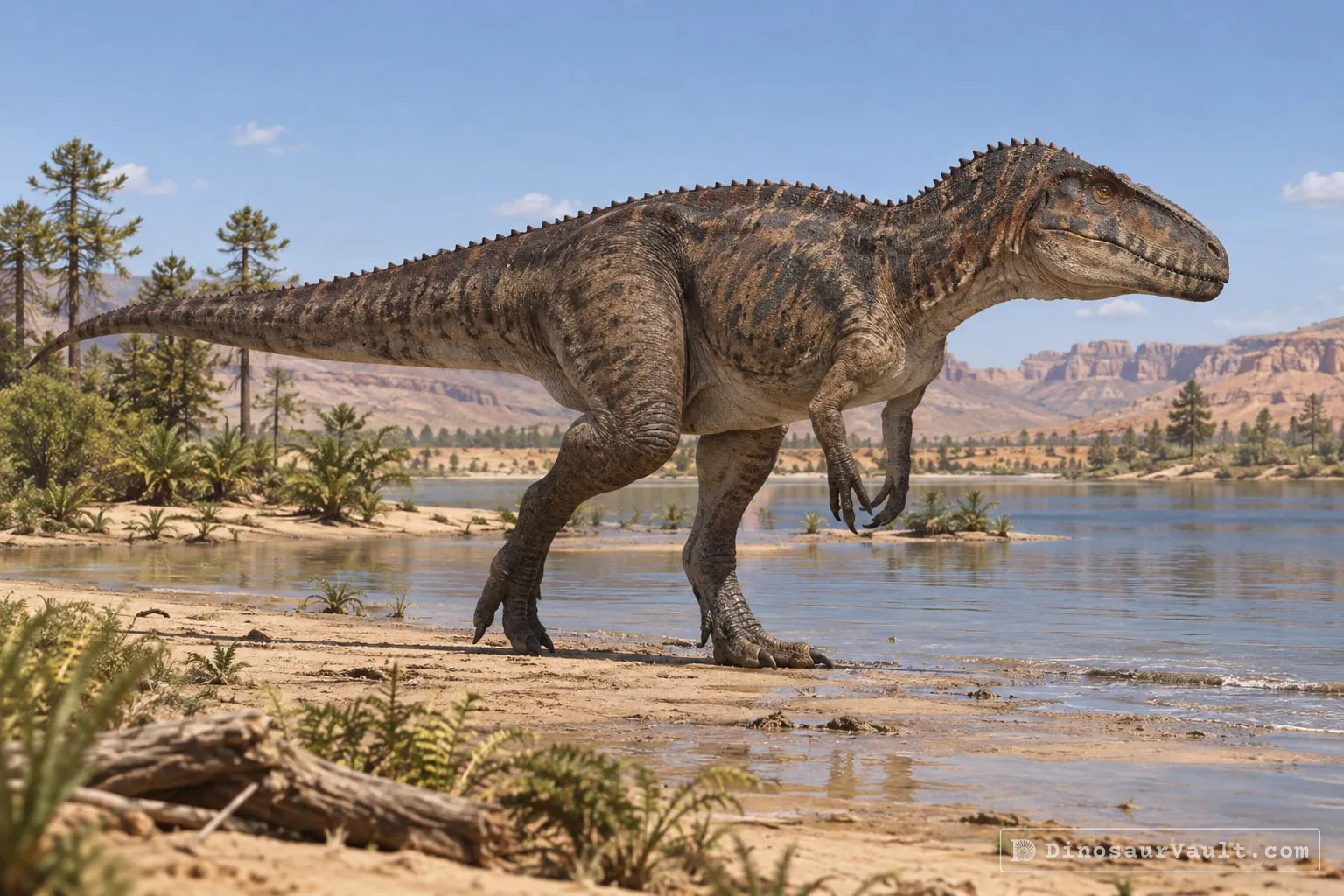
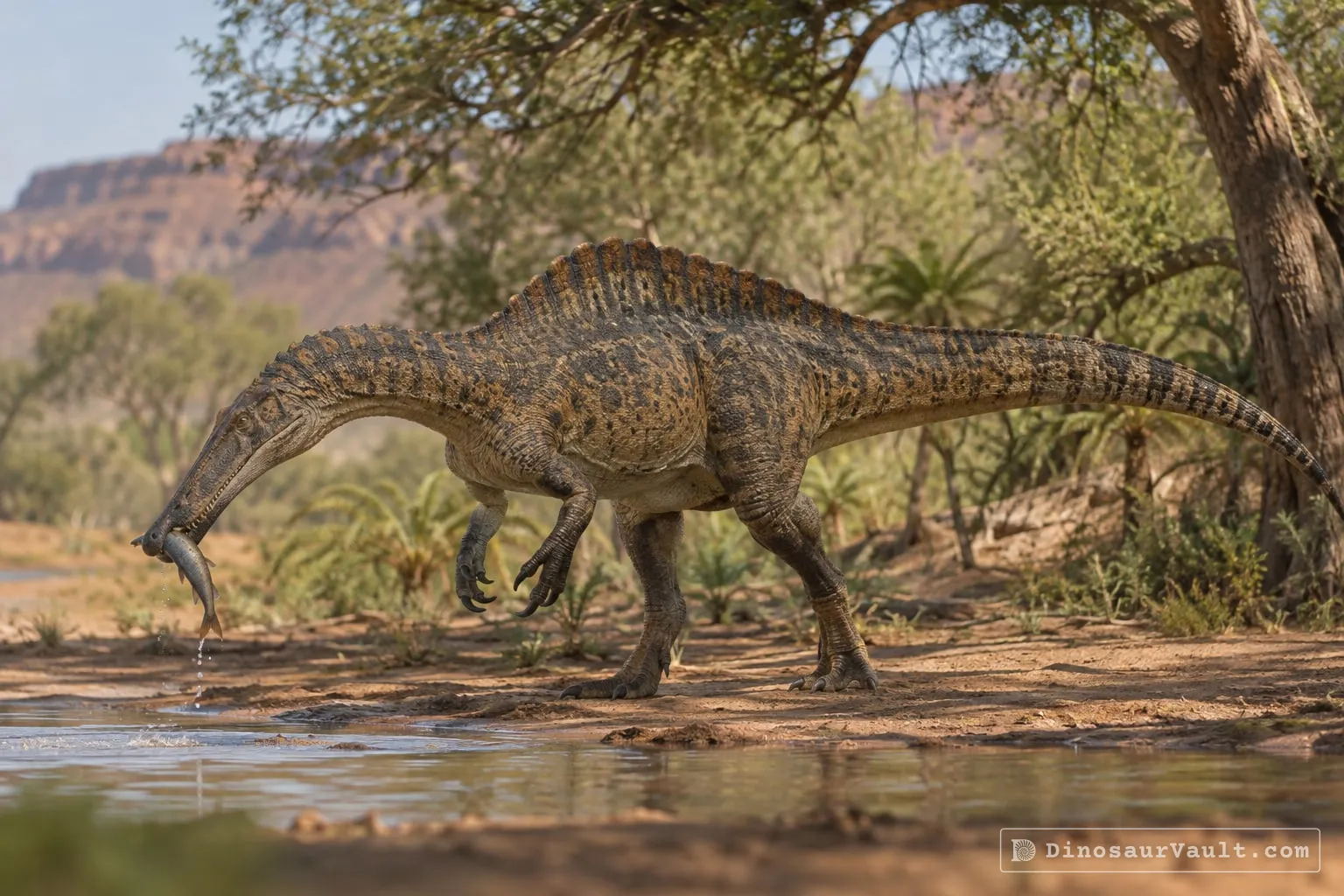
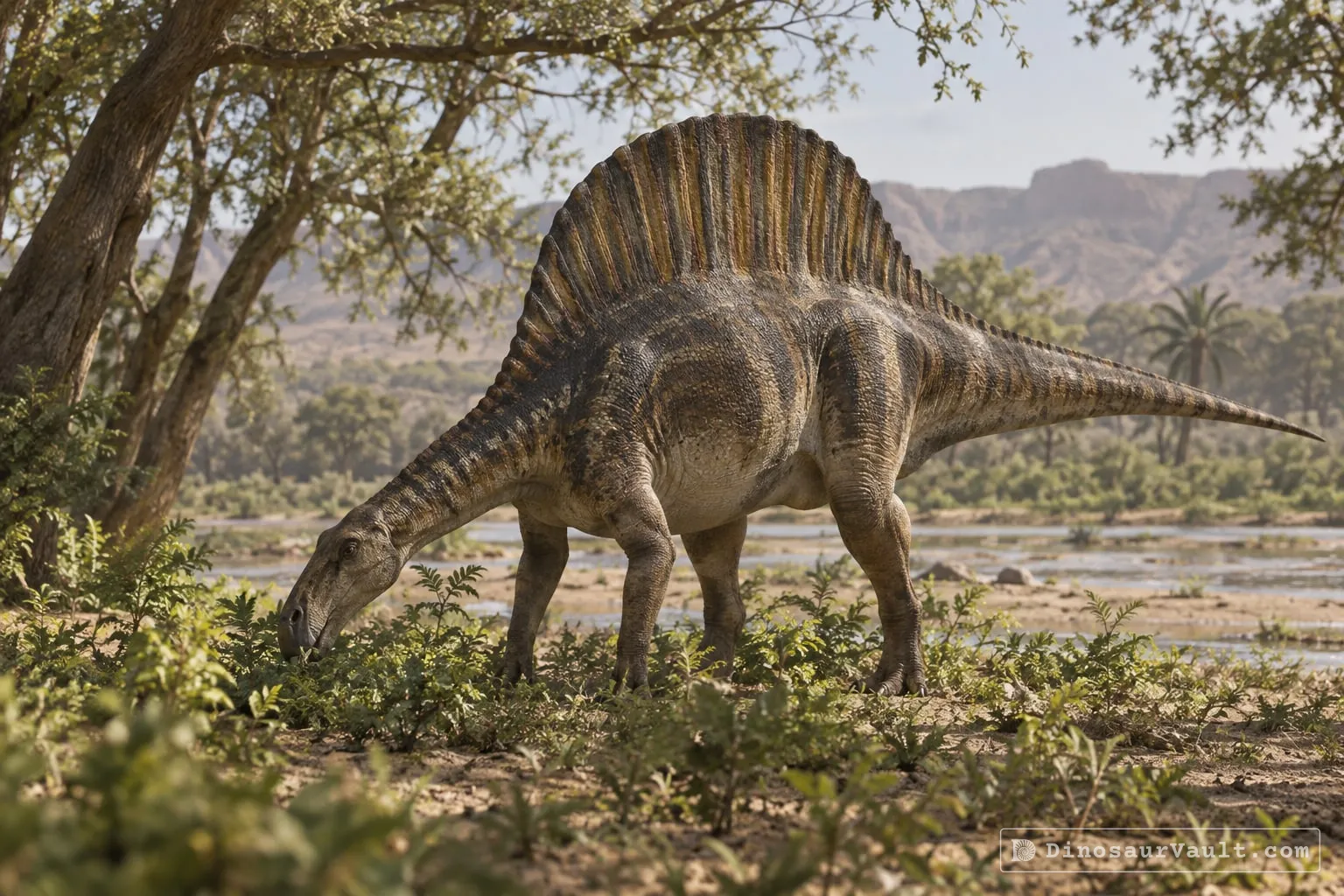
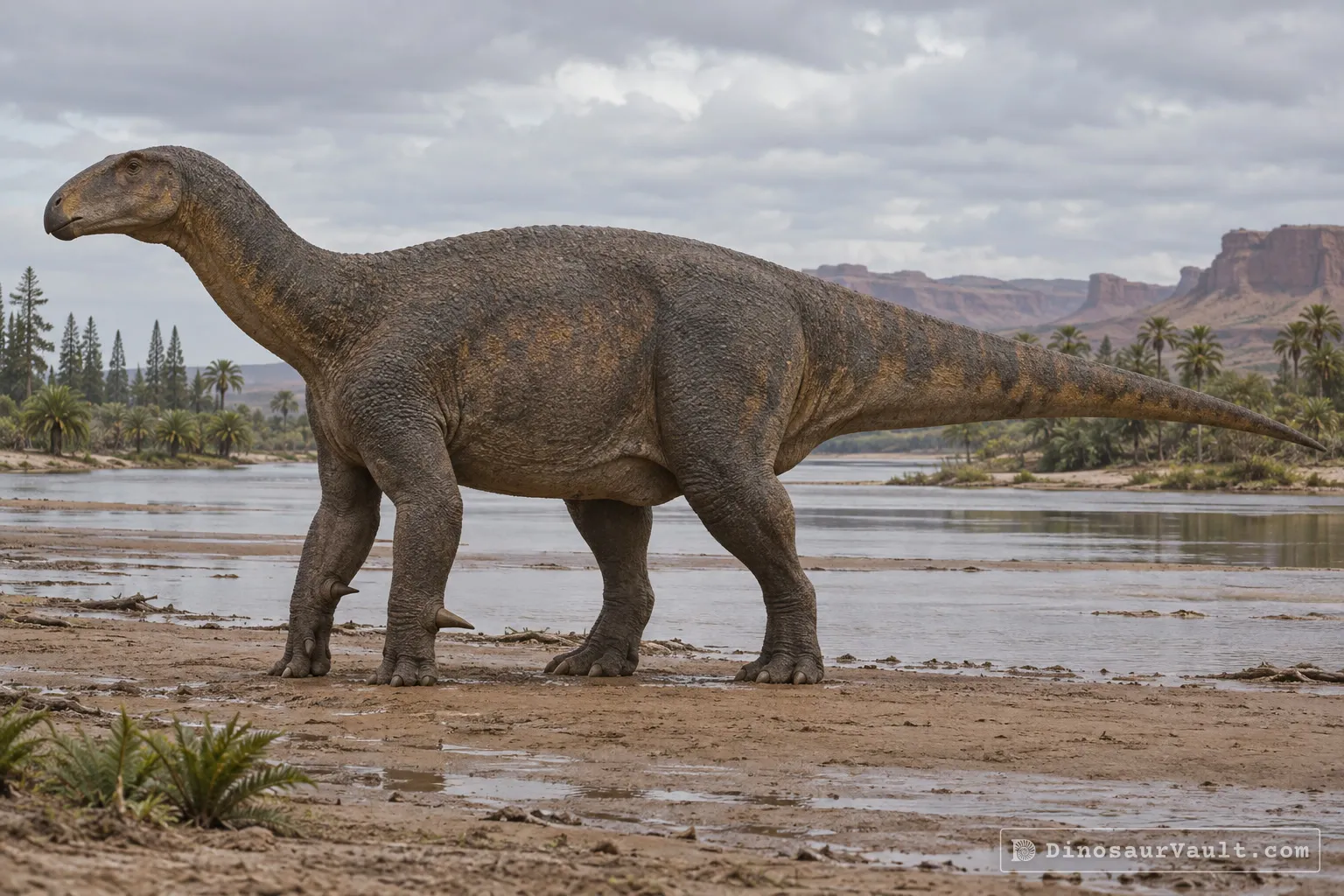
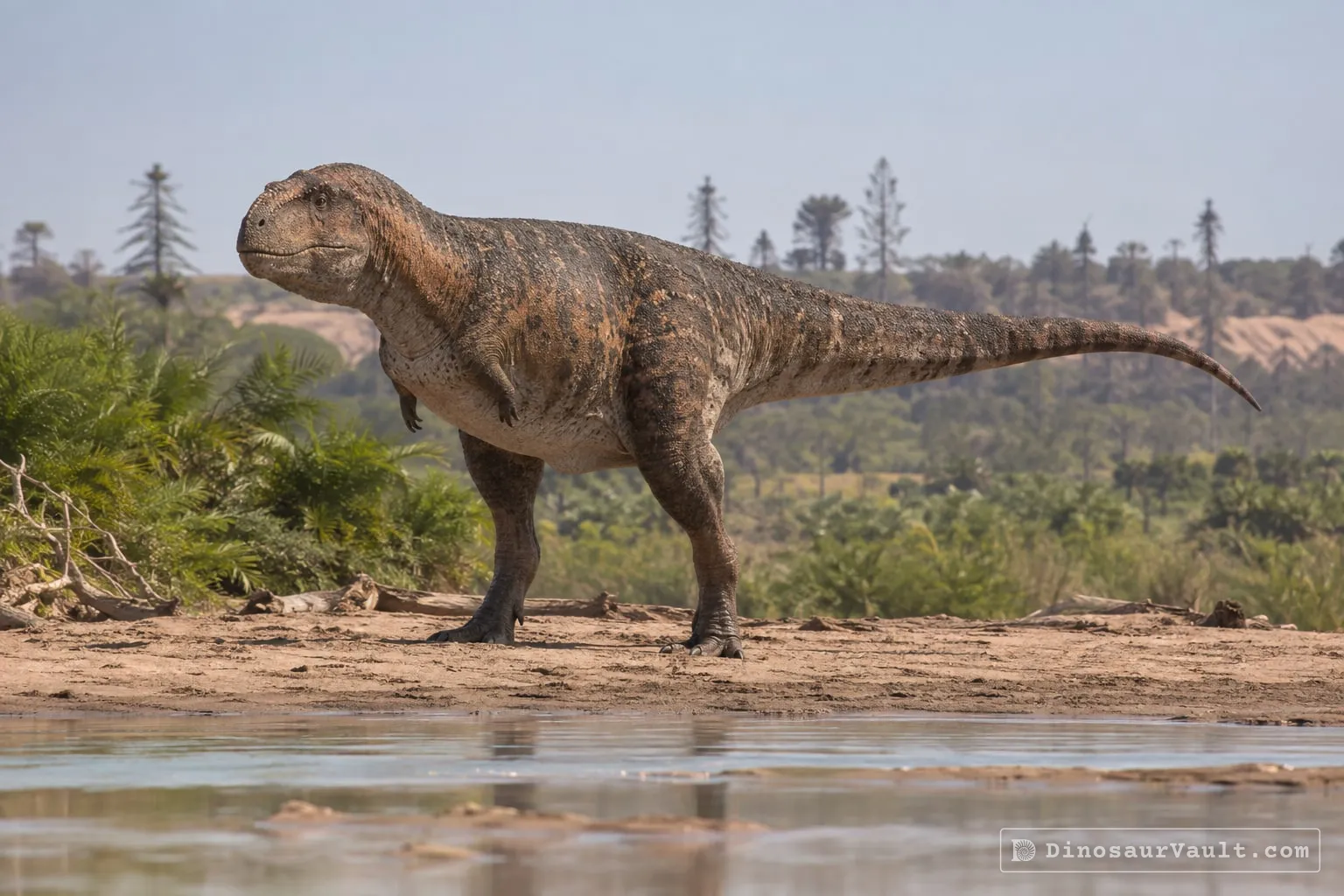
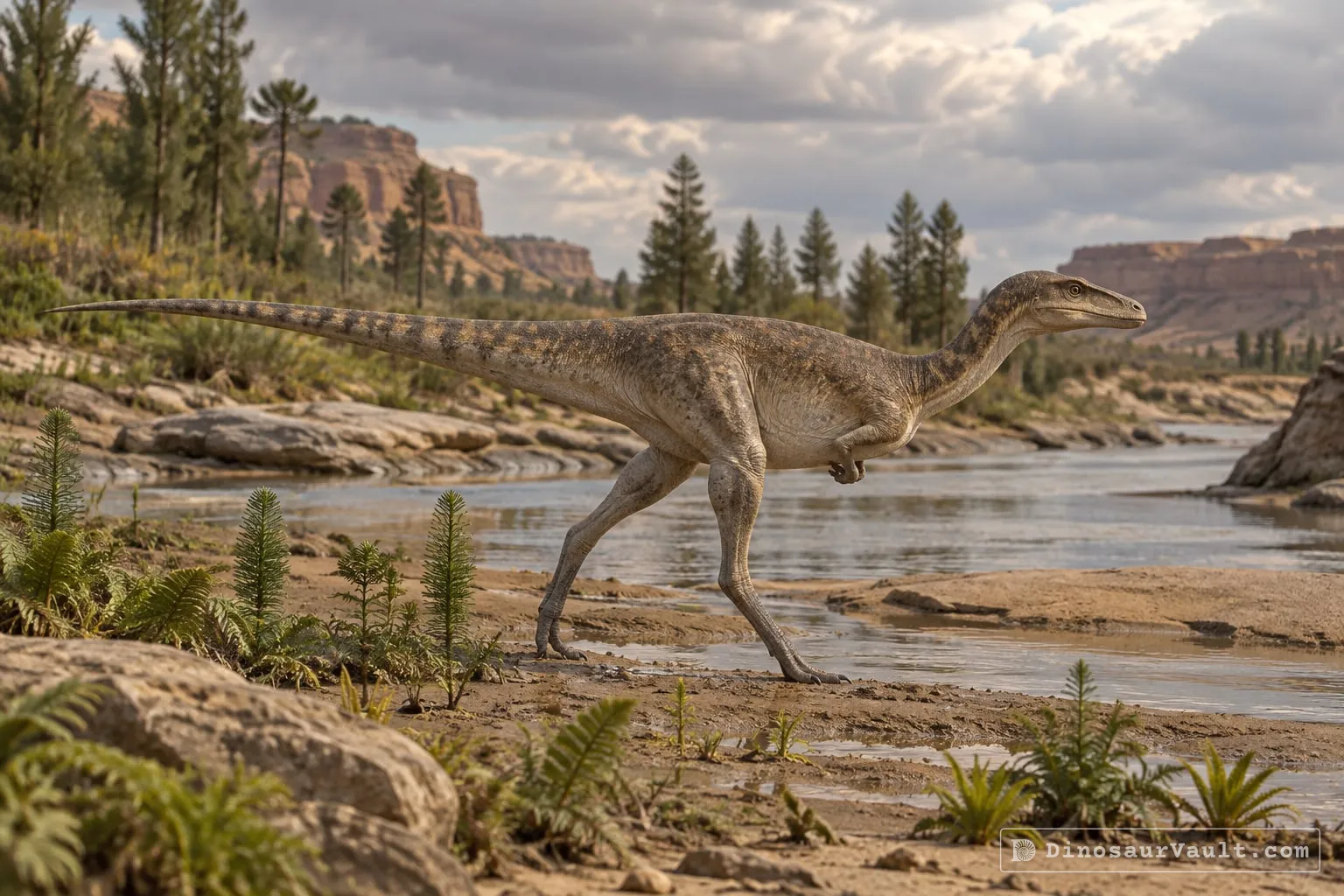
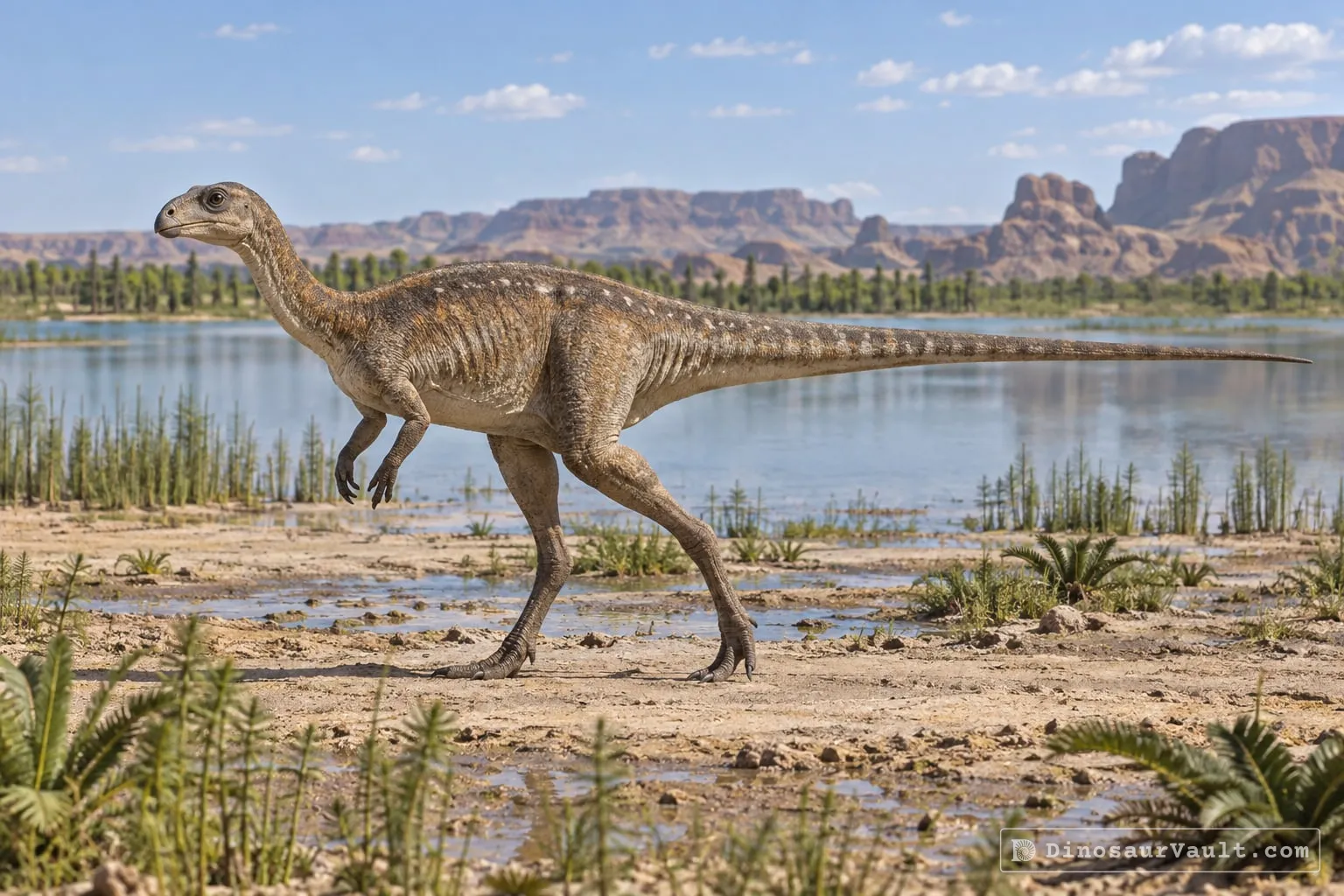
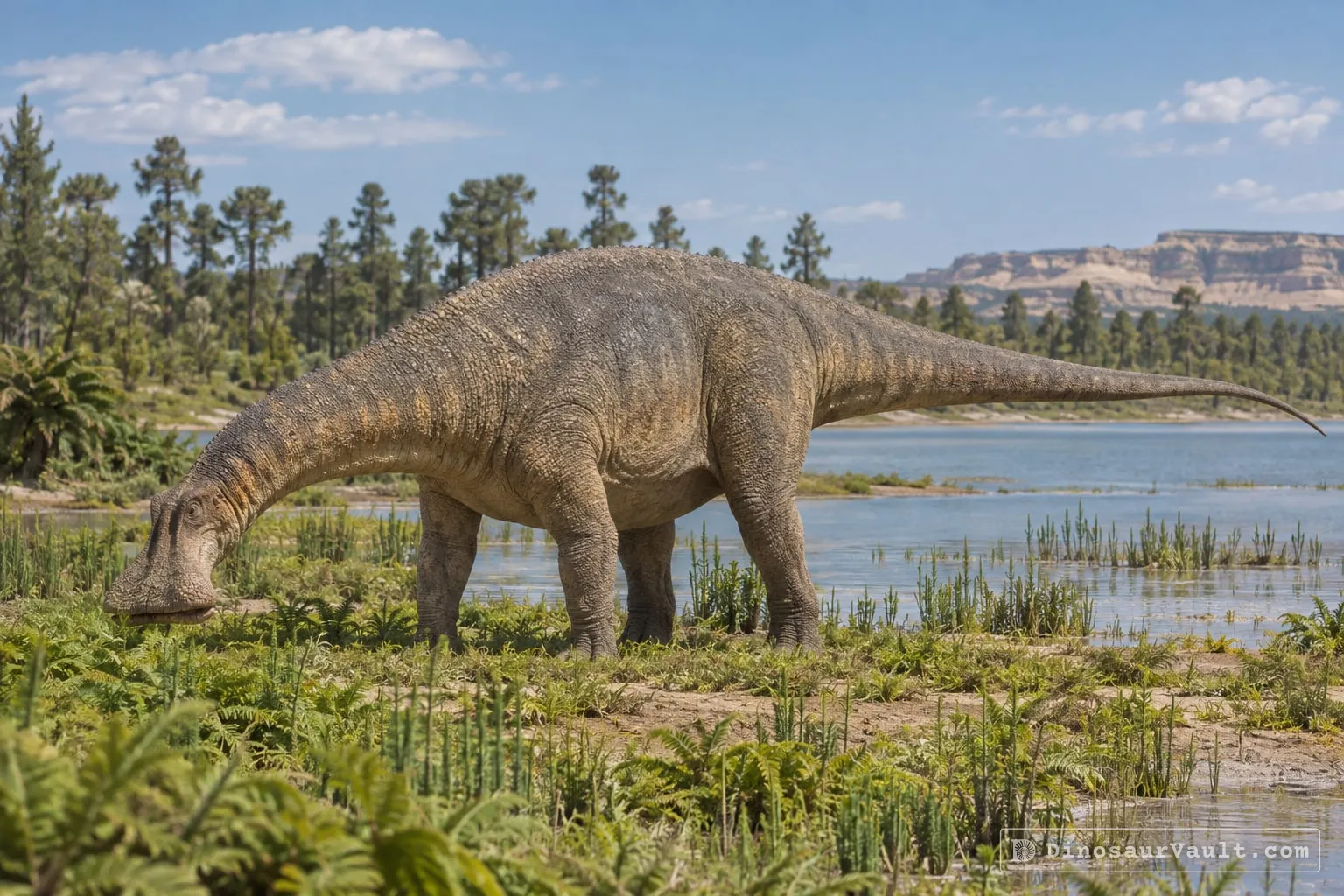


A rock formation can hold fossils laid down millions of years apart, so not every animal here met Eocarcharia.
The evidence
The science behind Eocarcharia
Which parts of the picture come from its own bones, and which come from its relatives.
From its own fossils
- Separate skull bones preserve thick, rounded bony swellings above the eyes.
- Additional skull roof bones have been assigned to the genus from their matching anatomy.
Borrowed from relatives
- The neck, body, limbs and tail are inferred from carcharodontosaurids such as Acrocanthosaurus.
- Missing parts of the face and lower jaw are also restored by comparison with Acrocanthosaurus.
Still unknown
- Whether all the skull bones assigned to it belong to the same kind of animal, especially the upper jaw fragments.
- Its body proportions and skin covering.
- What the bony brow swellings were used for.
Often drawn wrong
- Its brow swellings were broad and rounded, rather than sharp horns.
- A tall back ridge like that of Acrocanthosaurus has no support from Eocarcharia fossils.
Discovery timeline
- 2008Named itSereno & Brusatte
- 2011Family treeEddy & Clarke
Key papers
The research behind what we know of Eocarcharia
Named it
Named Eocarcharia from skull remains with thick brow swellings and compared it with early carcharodontosaurids.
Basal Abelisaurid and Carcharodontosaurid Theropods from the Lower Cretaceous Elrhaz Formation of Niger. Acta Palaeontologica Polonica 53: 15-46
Read the paper : Basal Abelisaurid and Carcharodontosaurid Theropods from the Lower Cretaceous Elrhaz Formation of Niger (opens in a new tab)Family tree
Restudied the Acrocanthosaurus skull and compared its relationships with other allosauroids, including Eocarcharia.
New Information on the Cranial Anatomy of Acrocanthosaurus atokensis and Its Implications for the Phylogeny of Allosauroidea (Dinosauria: Theropoda). PLoS ONE 6: e17932
Read the paper : New Information on the Cranial Anatomy of Acrocanthosaurus atokensis and Its Implications for the Phylogeny of Allosauroidea (Dinosauria: Theropoda) (opens in a new tab)
Close relatives
Other members of Carcharodontosauridae


Sources: Wikidata