Lurdusaurus
LUR-doo-SORE-us
"heavy lizard"
Type species Lurdusaurus arenatus
- Lived
- 113 to 101 million years ago, Early Cretaceous
- Diet
- Herbivore
- Length
- about 9 m (30 ft)
- Group
- Ornithopods
- Found in
- Niger
- Named by
- Taquet and Russell 1999
Size comparison
To scale


Scale in metersOutline: typical ornithopod shape
Where its fossils were found
The evidence
Today

105 million years ago
Habitat
It lived on forested river plains in what is now Niger. Ouranosaurus, Nigersaurus and Suchomimus also occur in the Elrhaz Formation.
Field notes
About Lurdusaurus
What it was like
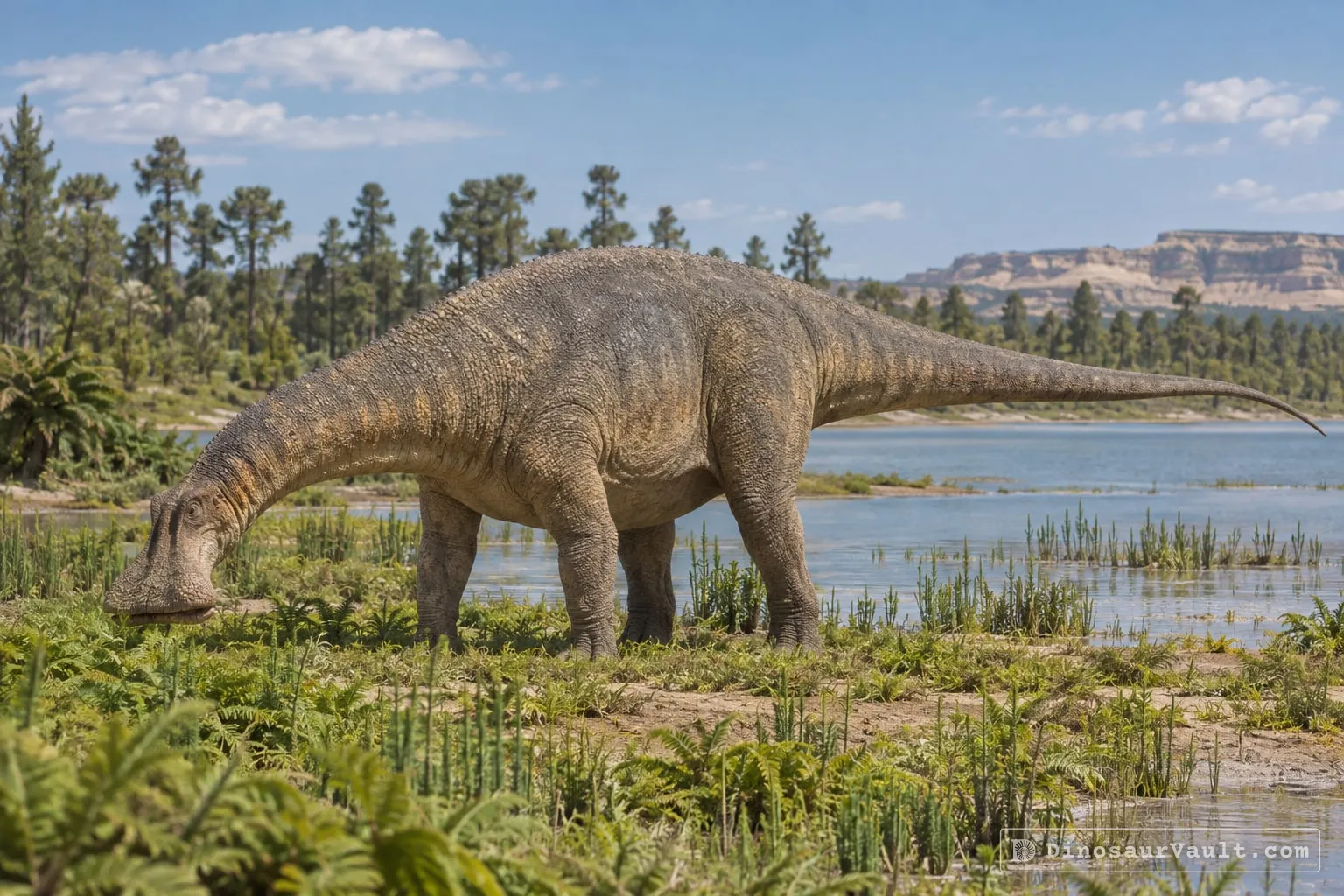
Lurdusaurus was a heavy, low-slung relative of Iguanodon, about 9 meters (30 feet) long. It had a small head, a bulky barrel-shaped body, strong arms and a large spike on each thumb. It probably walked on all fours most of the time.
Its world
It lived in the Early Cretaceous in what is now Niger. Its bones come from the Elrhaz Formation, a land of rivers where it lived alongside the sail-backed Ouranosaurus, the long-necked Nigersaurus and the fish-eating Suchomimus.
How it was found
Taquet and Russell named it in 1999 from one partial skeleton. The type species is Lurdusaurus arenatus.
Field gallery
More views of Lurdusaurus
Scenes reconstructed from the available fossil evidence.
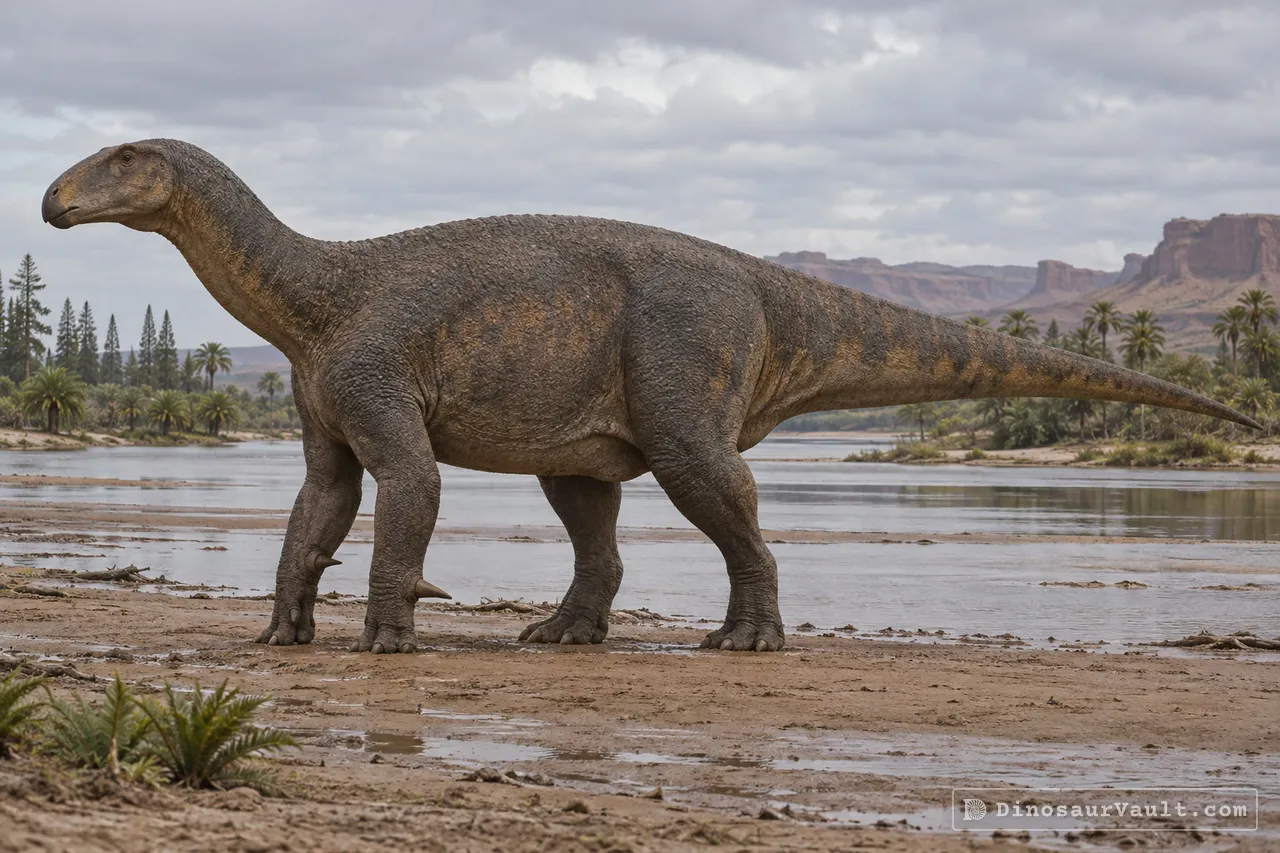
1 of 3
Lived alongside
Found in the same rock formations
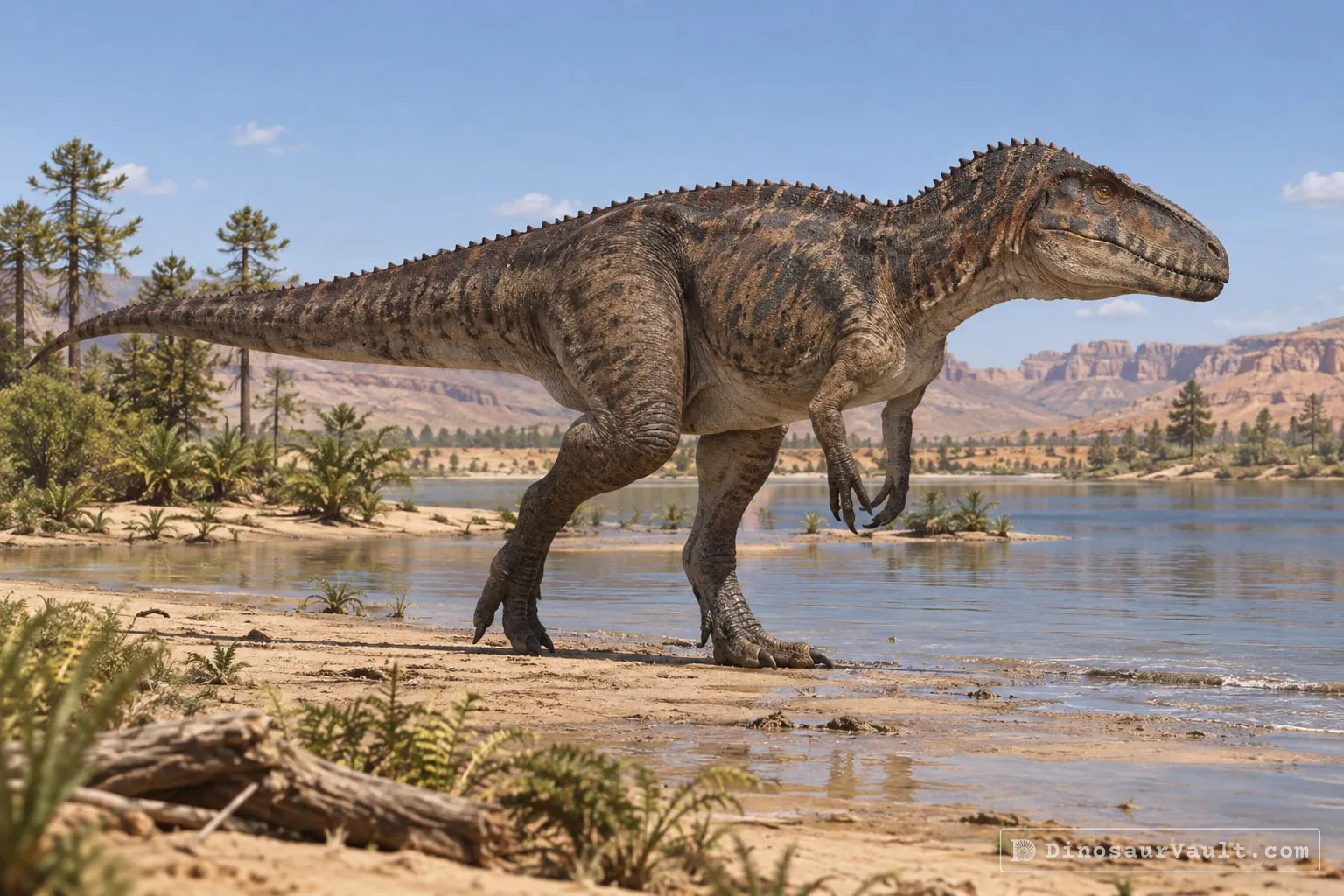
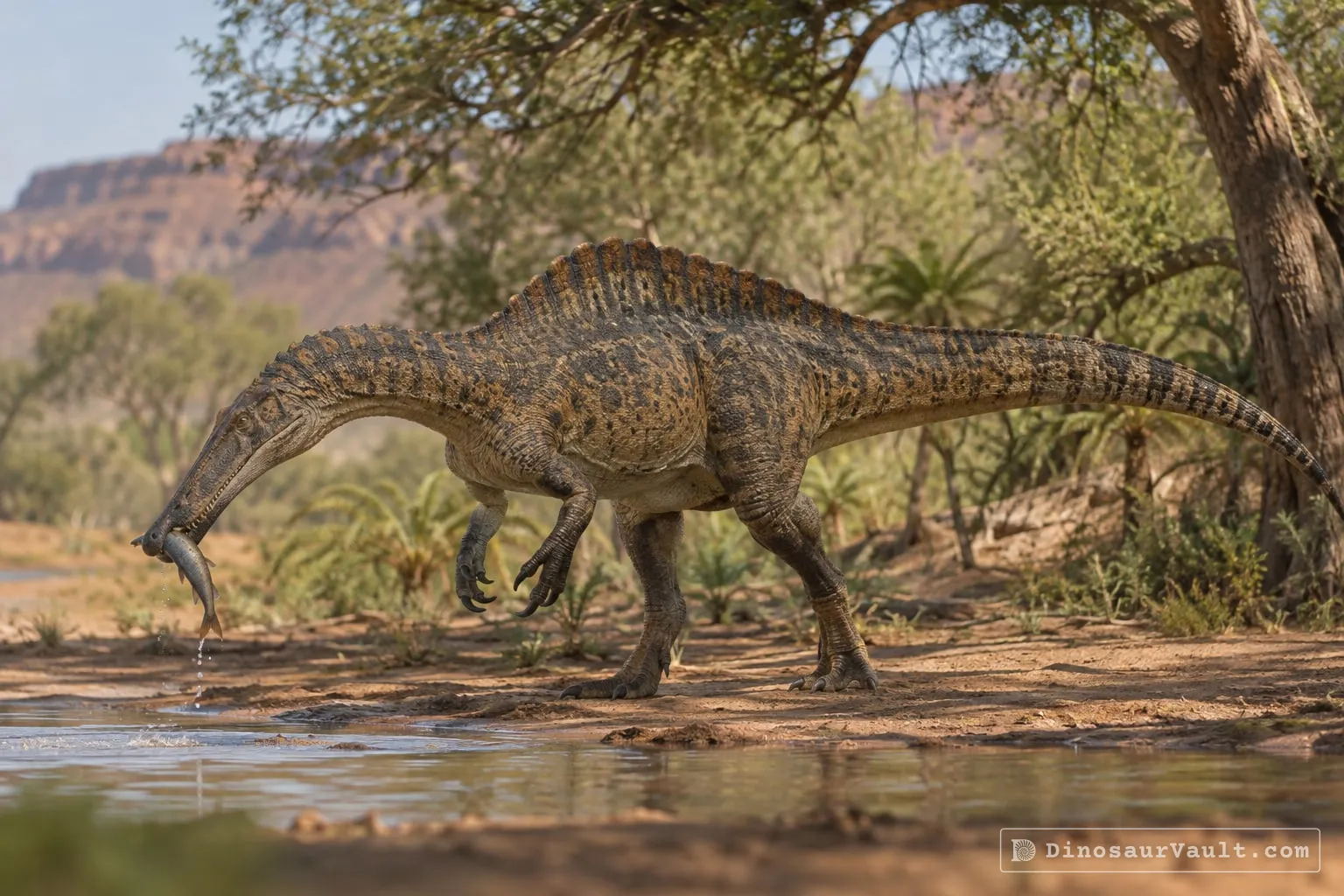
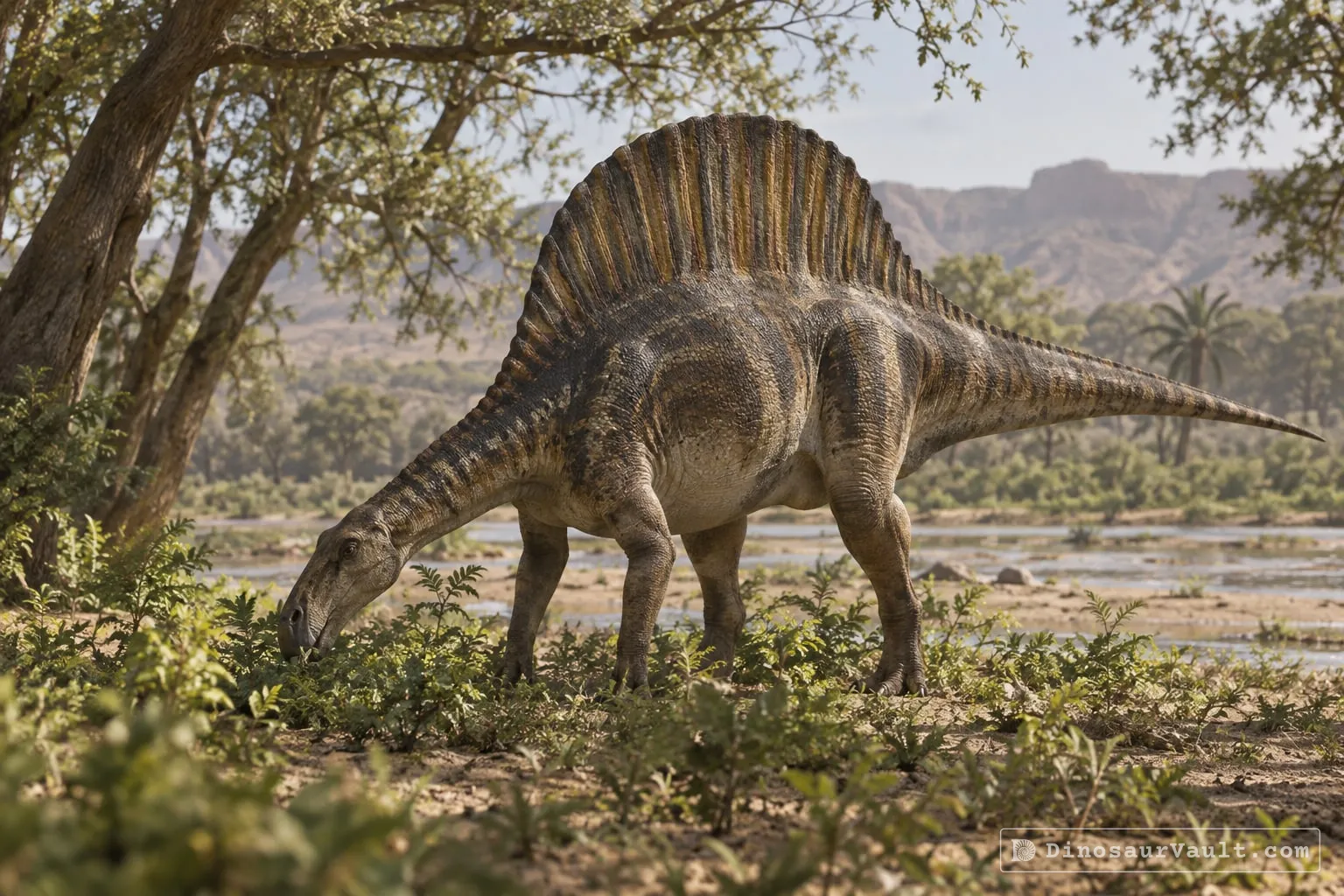
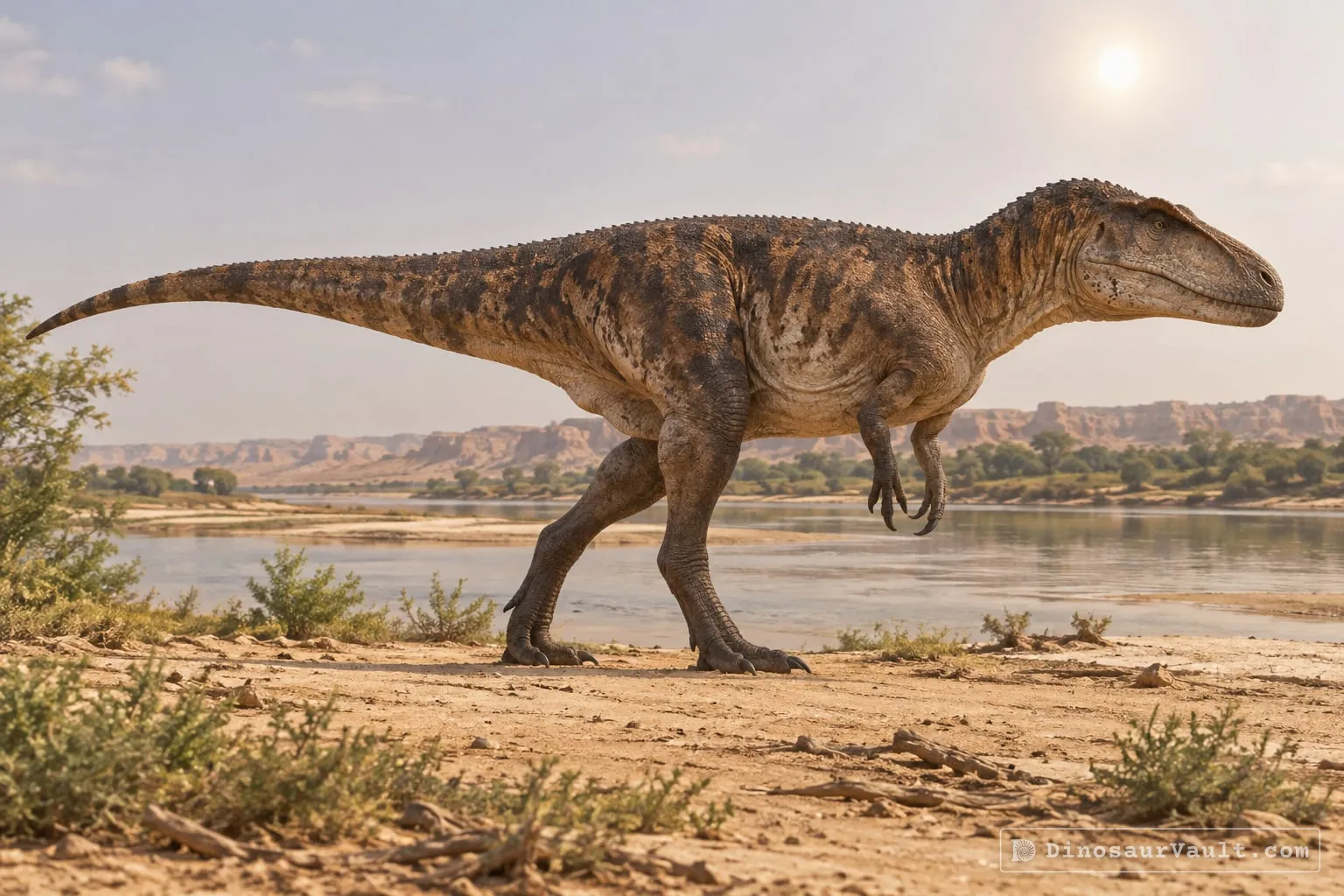
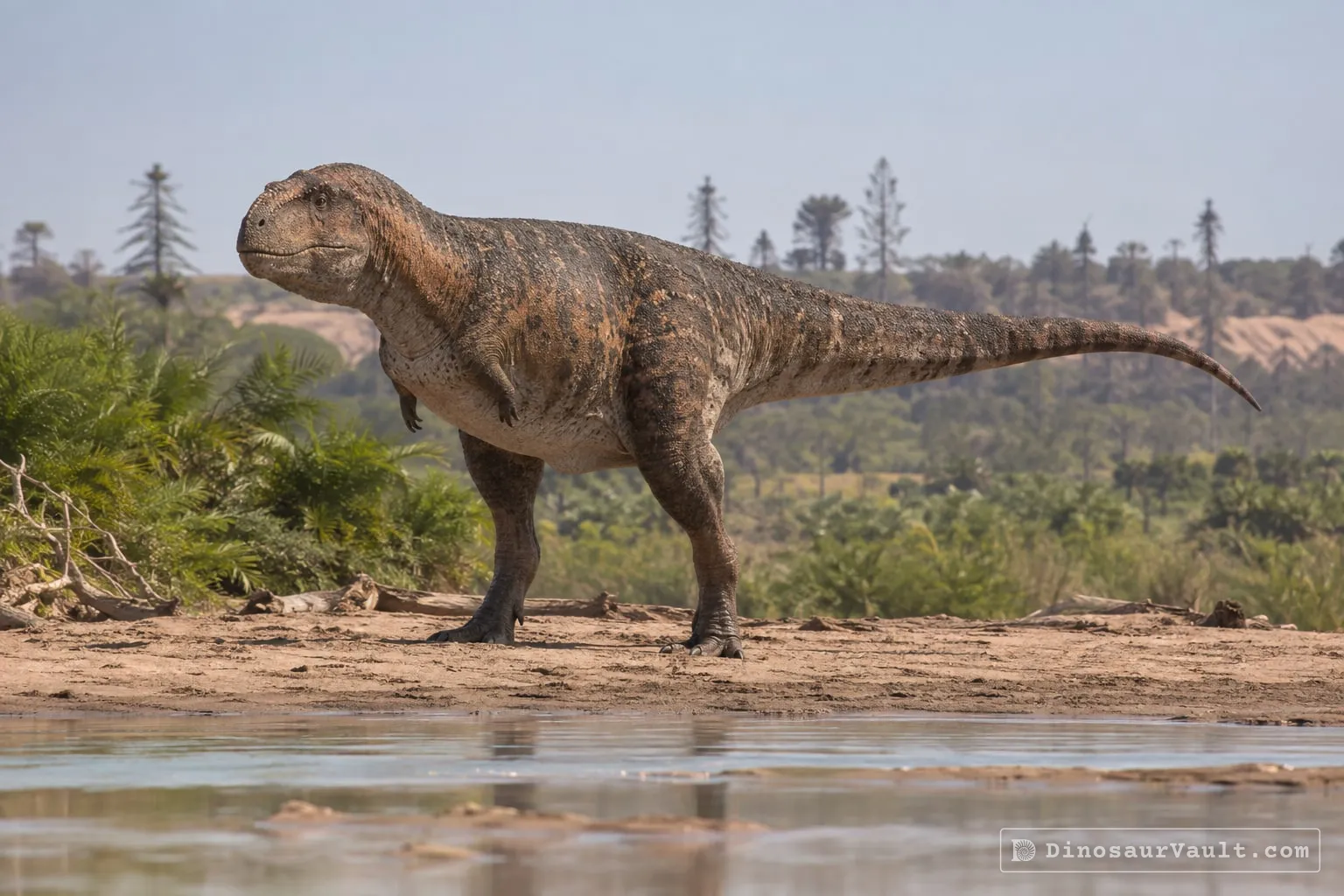
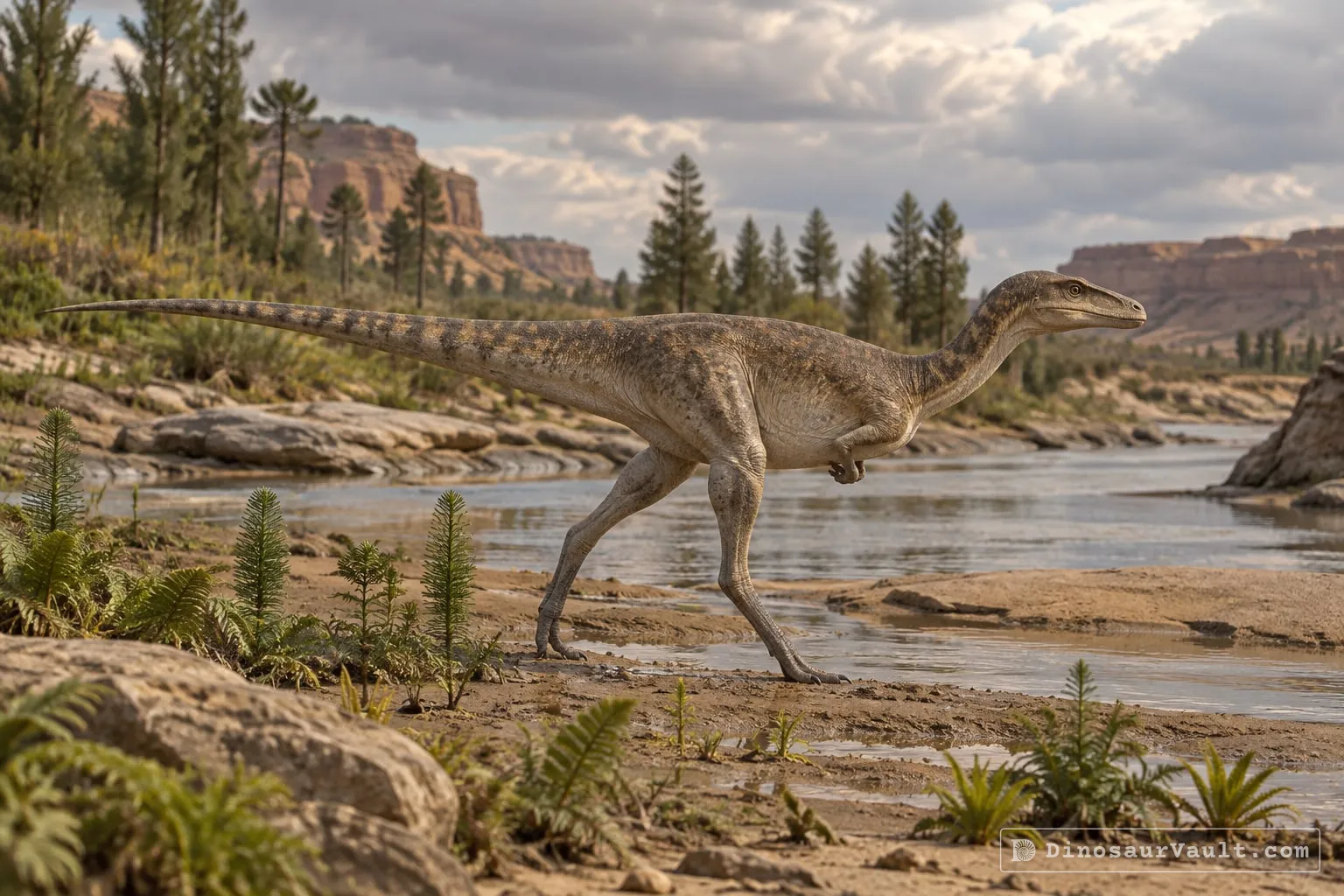
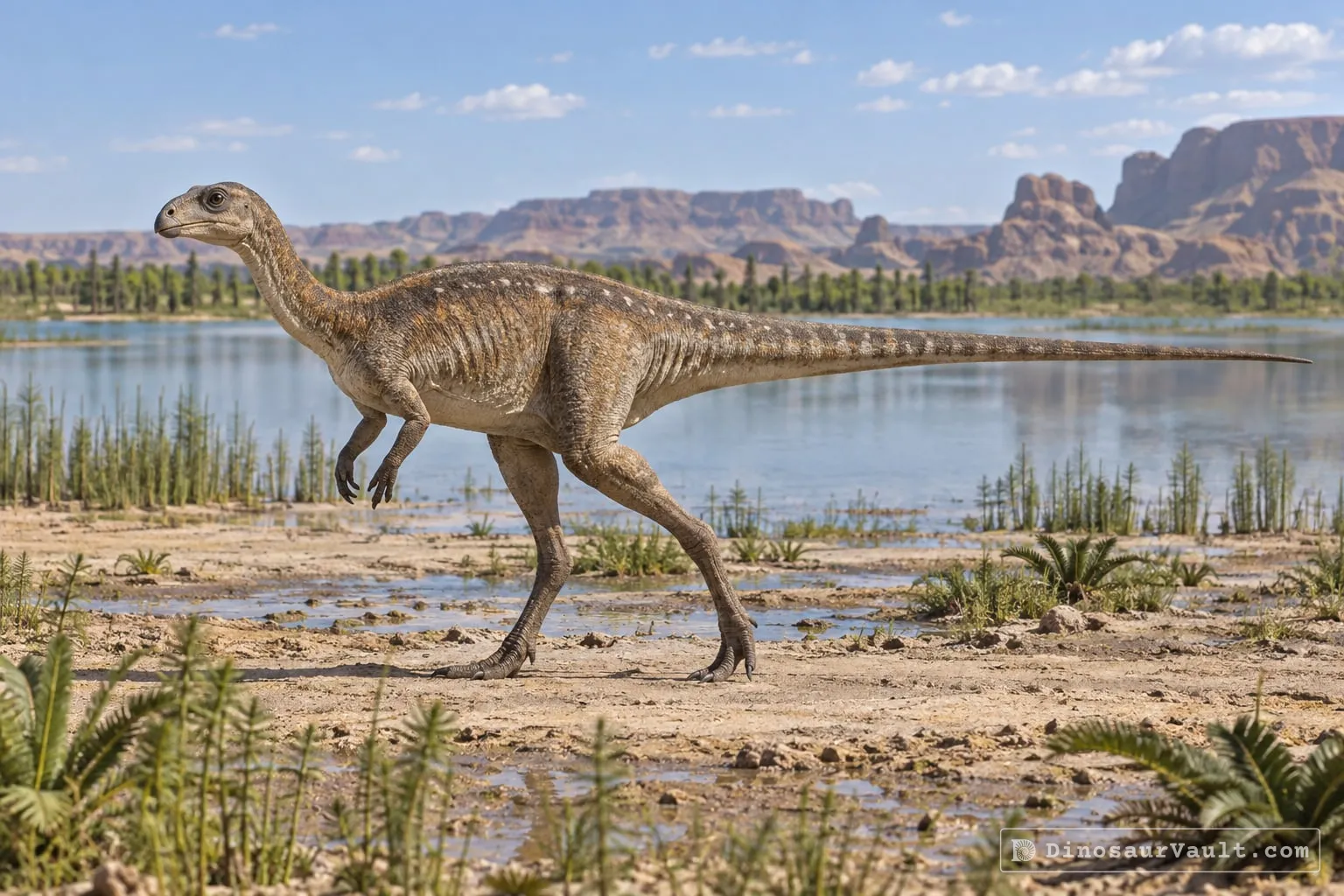


A rock formation can hold fossils laid down millions of years apart, so not every animal here met Lurdusaurus.
The evidence
The science behind Lurdusaurus
Which parts of the picture come from its own bones, and which come from its relatives.
From its own fossils
- A partial adult skeleton shows a broad, deep body with massive upper limbs and short lower legs.
- The hands are short and broad, with a large thumb spike.
- The bones between the ankle and toes are exceptionally short.
Borrowed from relatives
- Iguanodon guides the missing middle of the face and skull roof.
- Iguanodon also guides the supporting fingers and broad hindfeet.
Still unknown
- Whether it spent much time in water.
- Its skin, color and soft foot pads.
- The appearance of its young.
Often drawn wrong
- Its thumb spike belongs on the inner side of the hand, held clear of the ground.
- Its heavy limbs supported the body underneath it rather than sprawling sideways like a crocodile.
Discovery timeline
- 1999Named itTaquet & Russell
- 2008Family treePaul
- 2026PostureGônet, Allain & Houssaye
Key papers
The research behind what we know of Lurdusaurus
Named it
Described an unusually heavy iguanodont with a broad body, powerful arms and short lower limbs.
A massively-constructed iguanodont from Gadoufaoua, lower Cretaceous of Niger. Annales de Paléontologie 85: 85-96
Read the paper : A massively-constructed iguanodont from Gadoufaoua, lower Cretaceous of Niger (opens in a new tab)Family tree
Compared iguanodont body plans and highlighted the short, broad hand and massive thumb spike of Lurdusaurus.
A revised taxonomy of the iguanodont dinosaur genera and species. Cretaceous Research 29: 192-216
Read the paper : A revised taxonomy of the iguanodont dinosaur genera and species (opens in a new tab)Posture
Compared limb features and concluded that Lurdusaurus walked on all fours, with a skeleton adapted to supporting a heavy body.
Locomotor reassessment of Iguanodon, Ouranosaurus and Lurdusaurus (Dinosauria, Ornithopoda) using osteological correlates. Fossil Record 29: 71-86
Read the paper : Locomotor reassessment of Iguanodon, Ouranosaurus and Lurdusaurus (Dinosauria, Ornithopoda) using osteological correlates (opens in a new tab)
Close relatives
Other members of Iguanodontoidea

Sources: Wikidata