Kol
"foot"
- Lived
- 84 to 72 million years ago, Late Cretaceous
- Diet
- Carnivore
- Group
- Theropods
- Found in
- Mongolia
- Named by
- Turner et al. 2009
Where its fossils were found
The evidence
Today

80 million years ago
Habitat
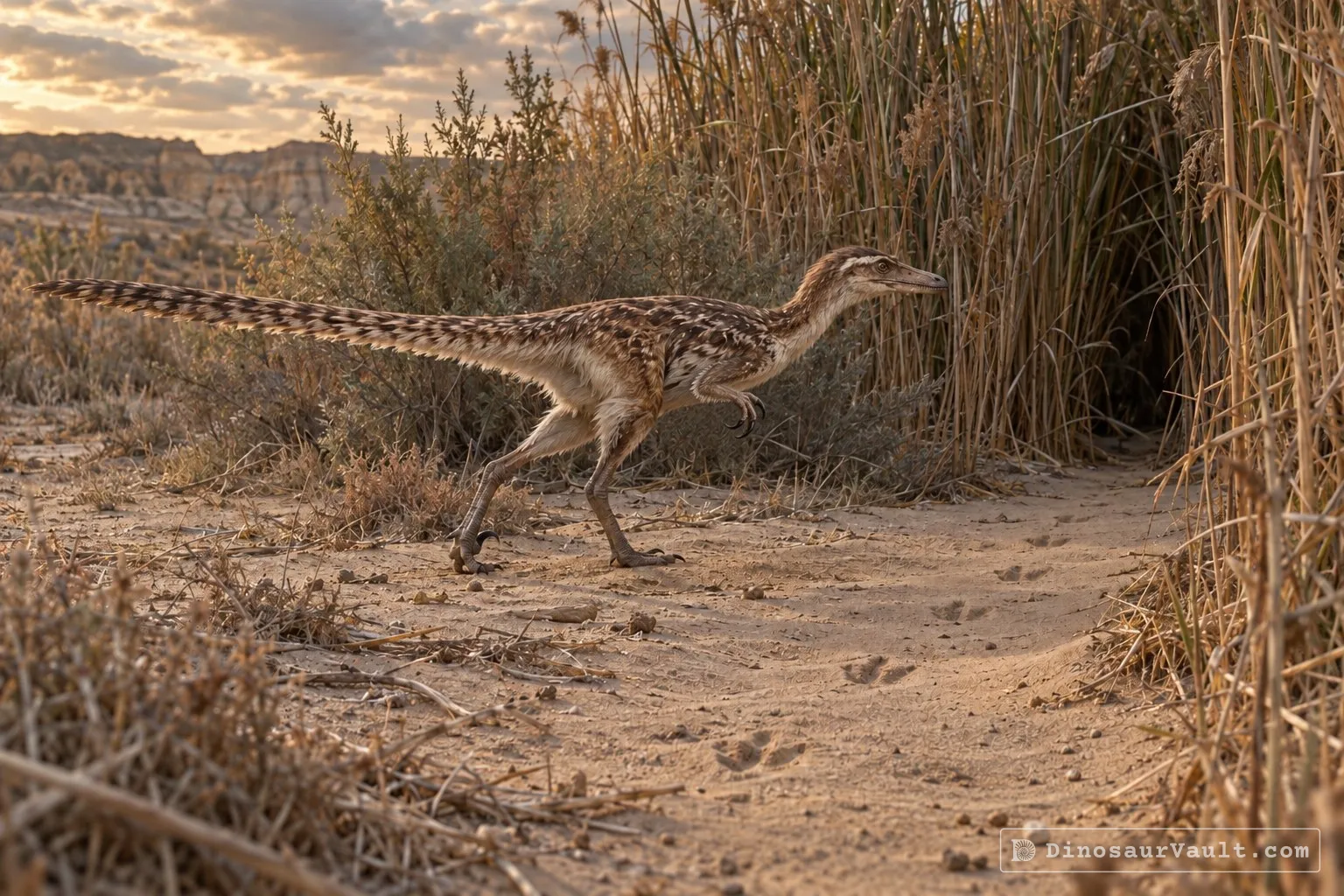
A sandy landscape in Late Cretaceous Mongolia. The Djadokhta Formation also preserves Velociraptor, Protoceratops and Citipati.
Field notes
About Kol
What it was like
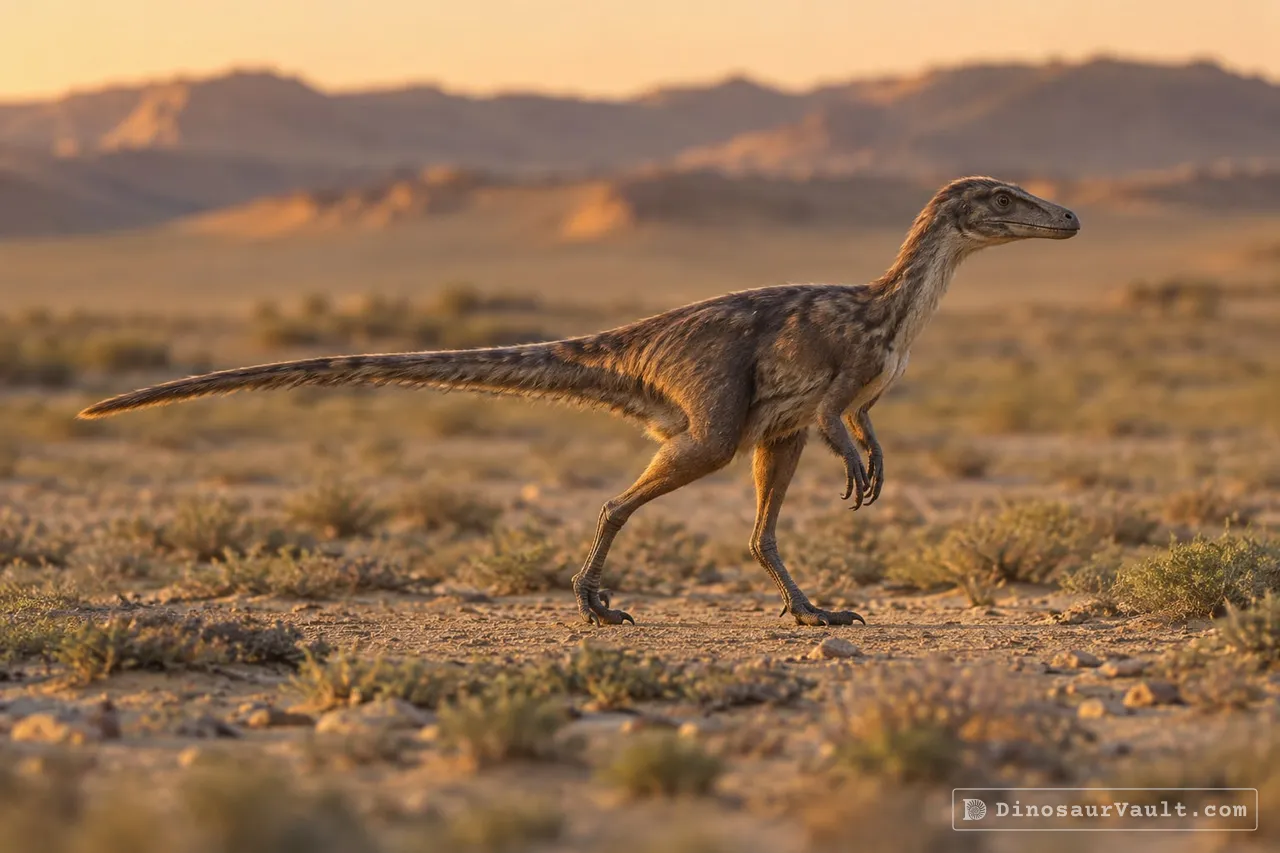
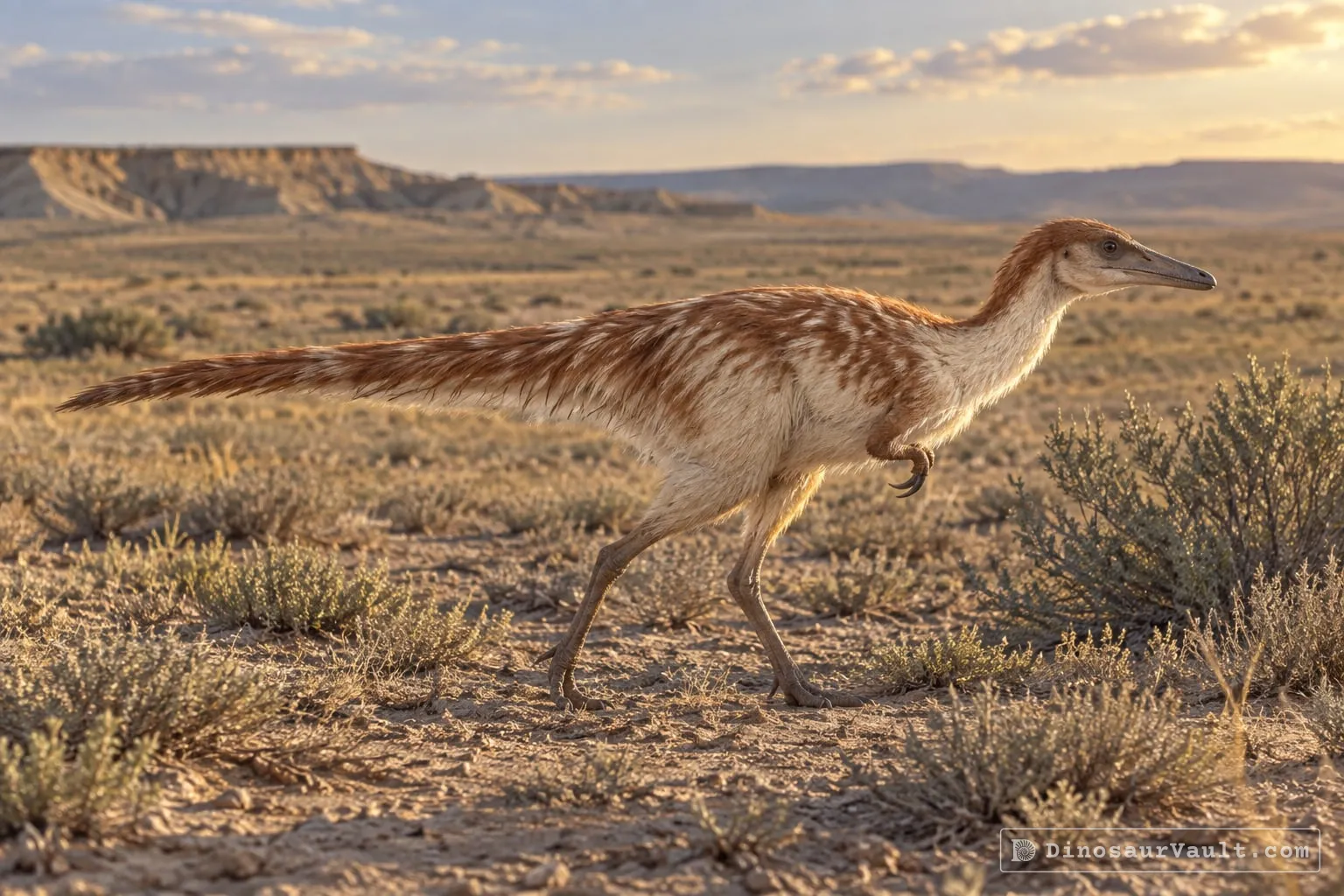
Kol was a meat-eating dinosaur known from a single foot. It was large for an alvarezsaur, but scientists disagree about whether it belongs in that group. Its toe bones were tightly locked together, which may have helped it run fast.
Its world
It lived in the Late Cretaceous, in what is now Mongolia. It comes from the Djadokhta Formation, a sandy land shared with Velociraptor, Protoceratops and the oviraptorid Citipati.
How it was found
Turner and colleagues named Kol in 2009. Its name is the Mongolian word for foot.
Field gallery
More views of Kol
Scenes reconstructed from the available fossil evidence.
1 of 3
Lived alongside
Found in the same rock formations
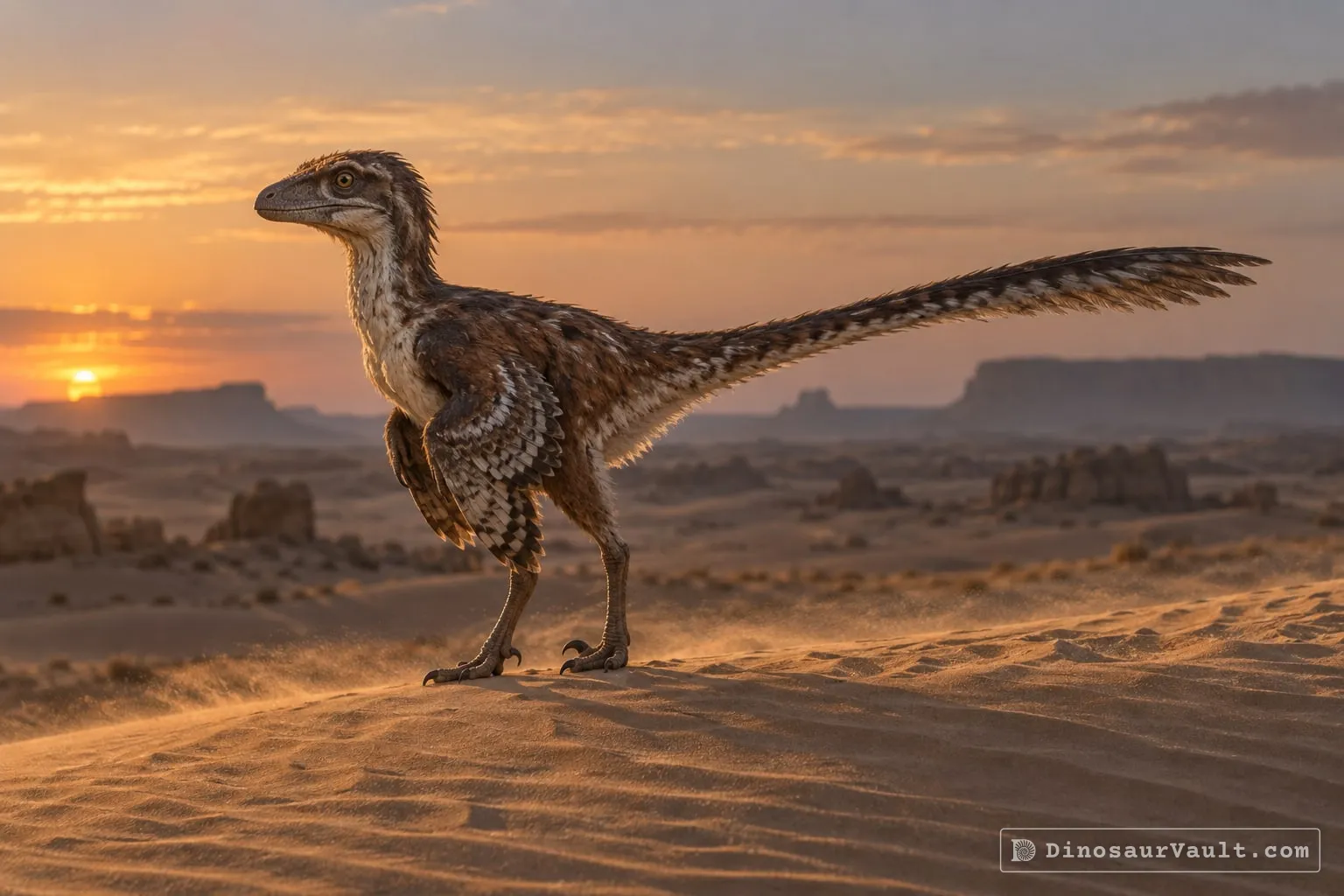
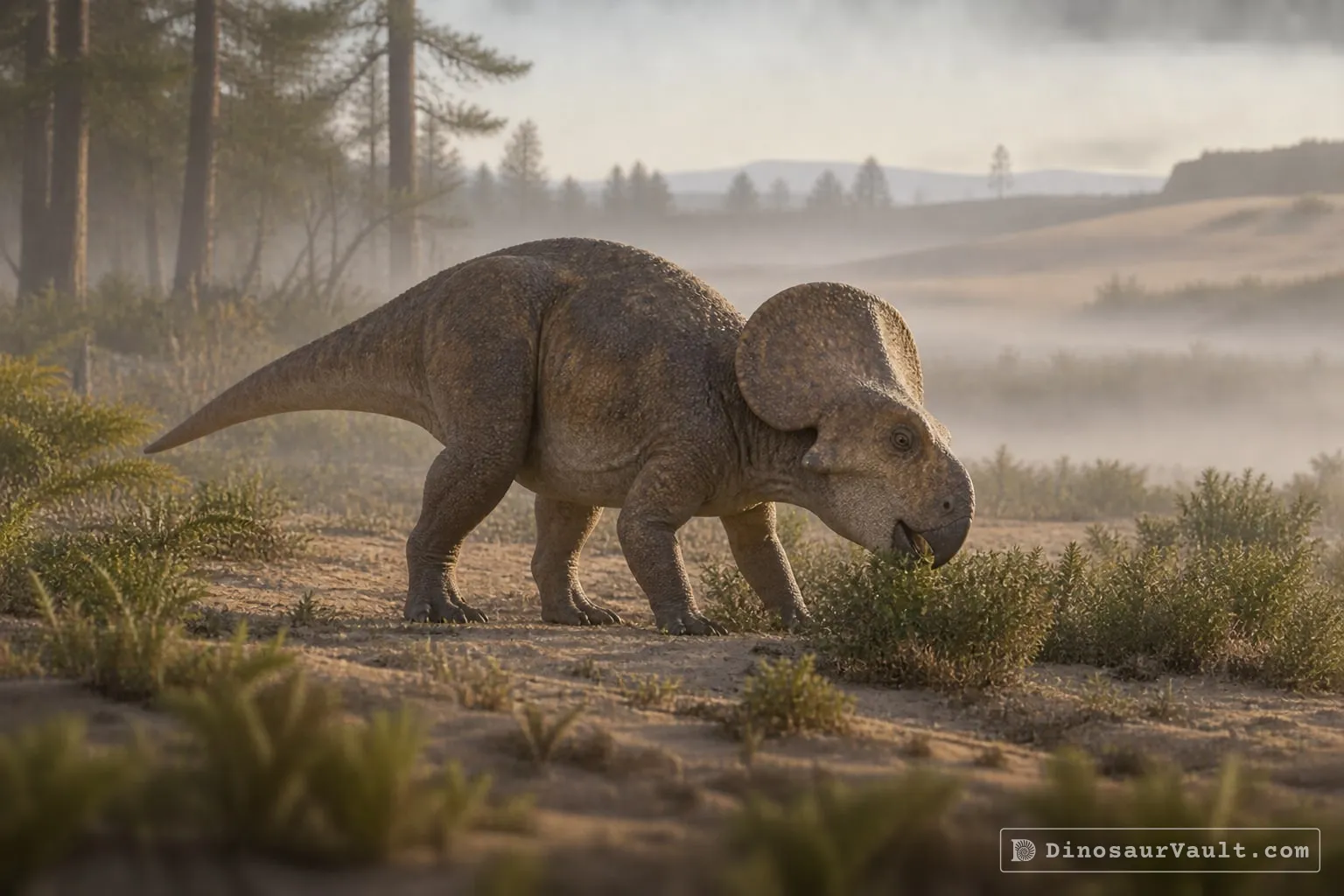
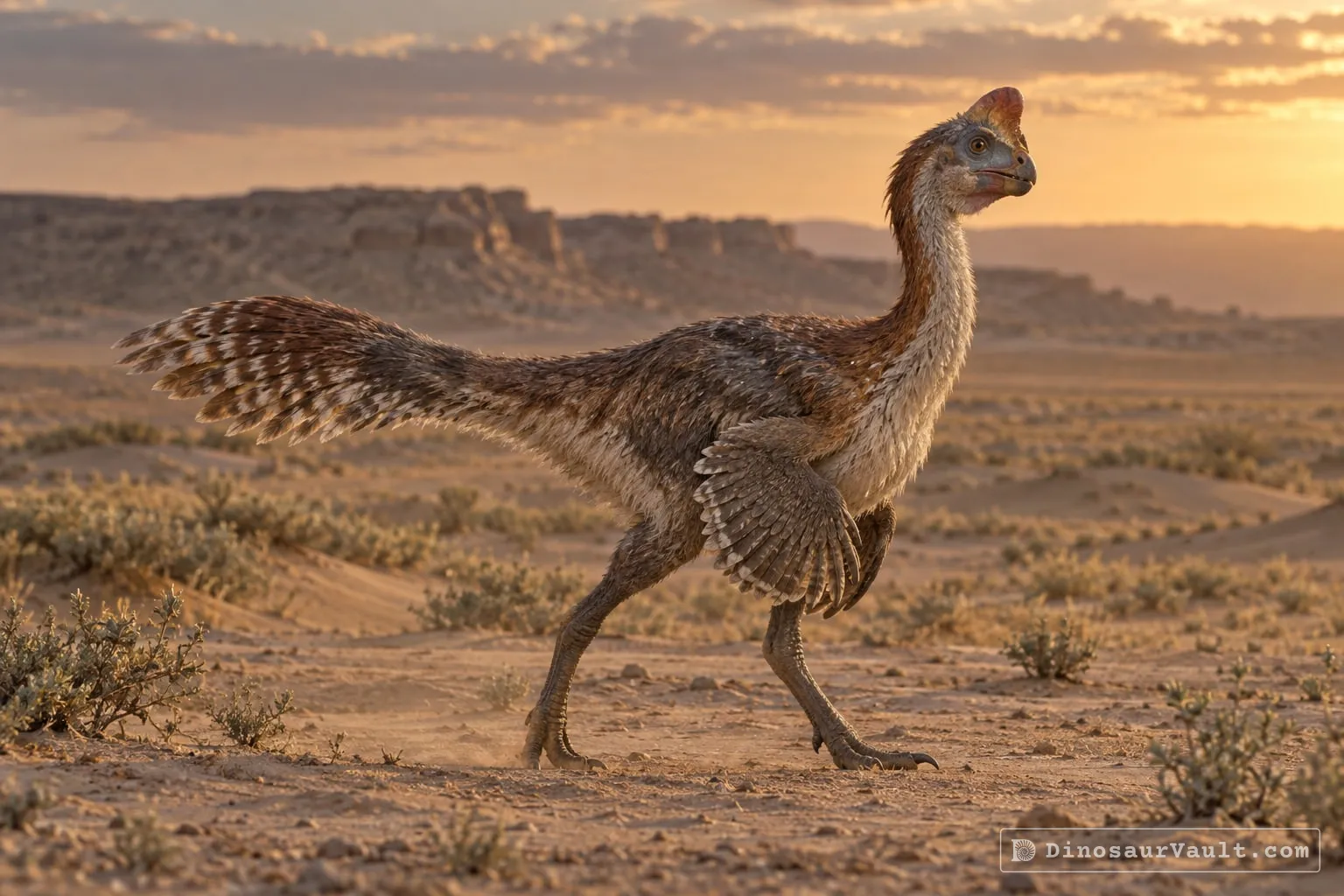
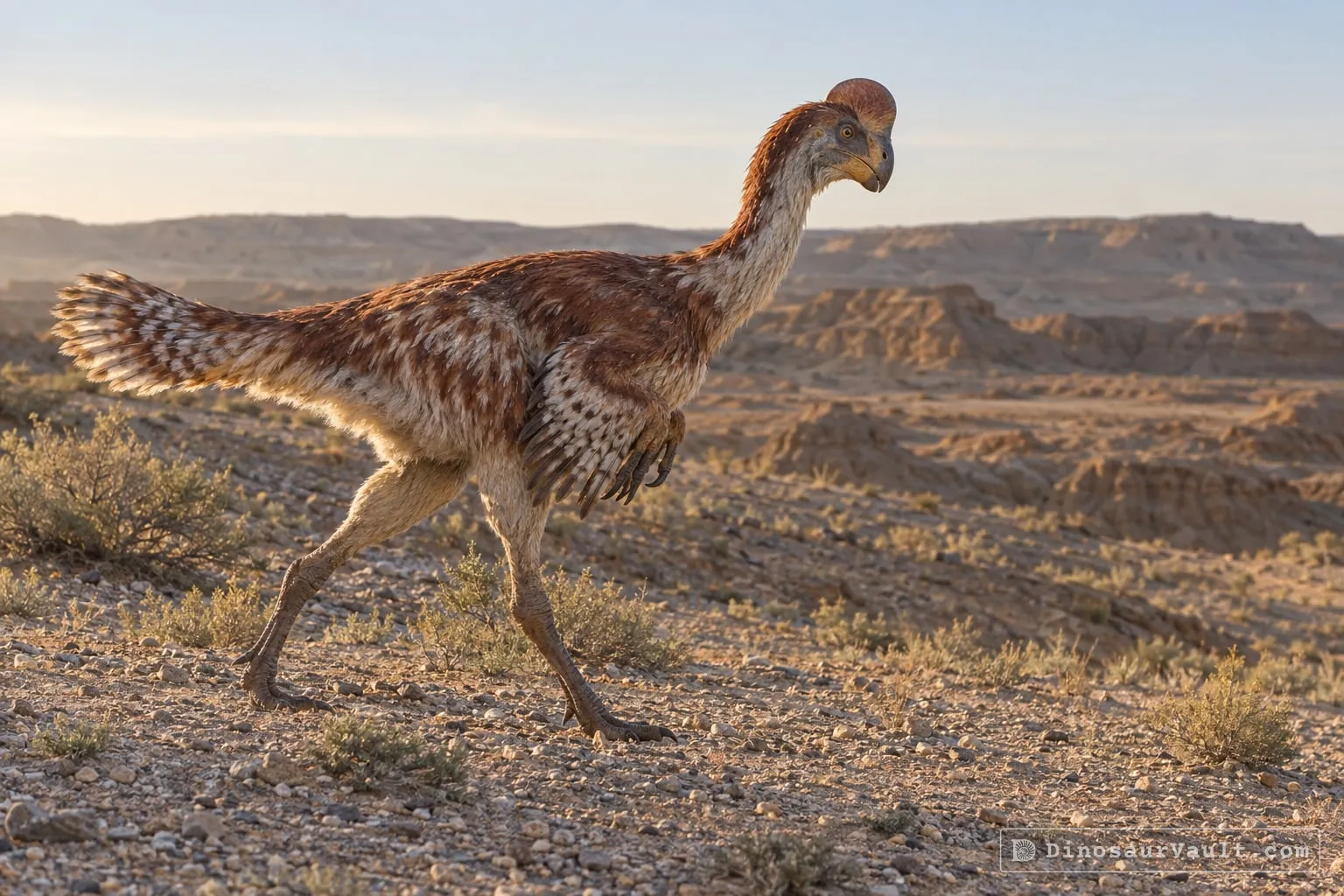
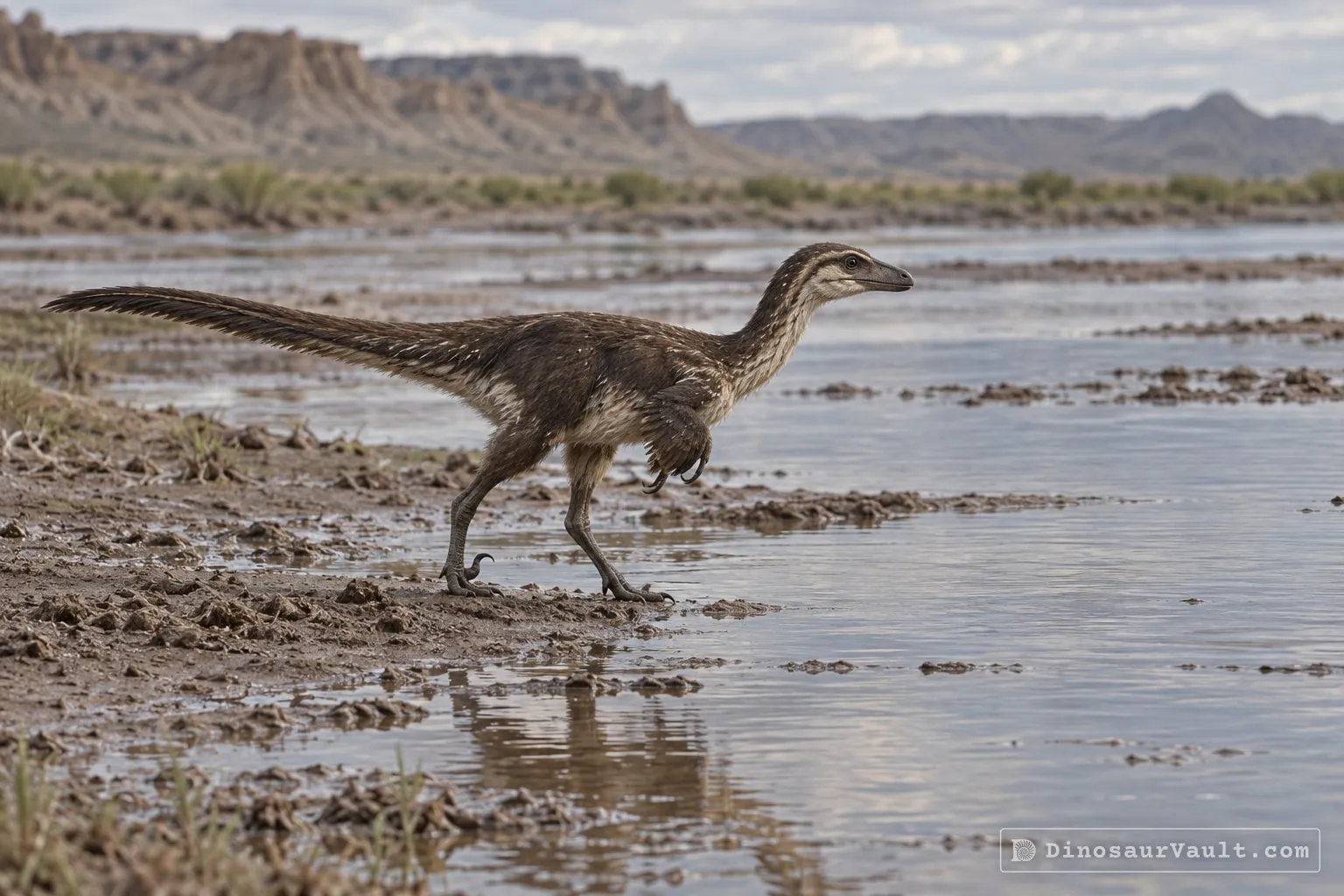
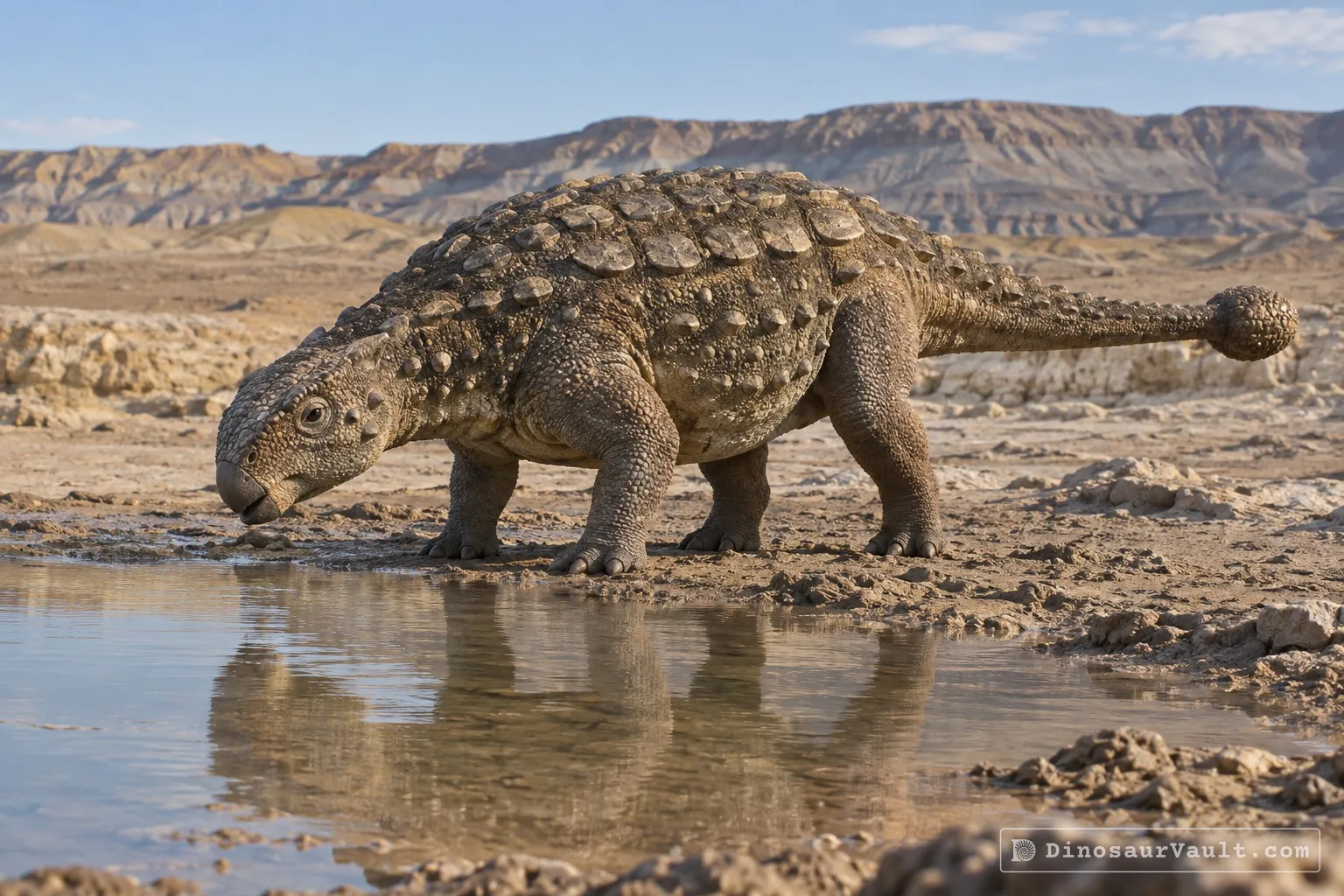


A rock formation can hold fossils laid down millions of years apart, so not every animal here met Kol.
The evidence
The science behind Kol
Which parts of the picture come from its own bones, and which come from its relatives.
From its own fossils
- A well-preserved foot with an ankle bone, the long foot bones, toe bones and claws.
- The middle long bone of the foot is squeezed between its neighbors and stops short of the ankle.
- The second and third toe claws are short, with sharp edges and broad, nearly flat undersides. The fourth claw is gently curved with a rounder underside.
Borrowed from relatives
- Restorations usually borrow the head, arms and body from alvarezsaurs such as Shuvuuia, which had long hind legs and short arms with a large hand claw.
Still unknown
- The shape of its head and arms.
- Its skin covering and color.
- Which family it belongs to. Some experts place it among the alvarezsaurs, while others argue its foot differs enough to put it outside that family.
Discovery timeline
- 2009Named itTurner, Nesbitt & Norell
- 2011Close relativeNesbitt et al.
- 2019Family treeLee et al.
- 2021Family treeAverianov & Lopatin
- 2024Family treeMeso et al.
Key papers
The research behind what we know of Kol
Named it
Named Kol from a foot whose tightly packed bones and claw shapes distinguished it from other small theropods.
A Large Alvarezsaurid from the Late Cretaceous of Mongolia. American Museum Novitates 3648: 1-14
Read the paper : A Large Alvarezsaurid from the Late Cretaceous of Mongolia (opens in a new tab)Close relative
Described Albinykus, a small alvarezsaur with fused ankle bones and feet tucked beneath its body, useful for comparing the foot of Kol.
A small alvarezsaurid from the eastern Gobi Desert offers insight into evolutionary patterns in the Alvarezsauroidea. Journal of Vertebrate Paleontology 31: 144-153
Read the paper : A small alvarezsaurid from the eastern Gobi Desert offers insight into evolutionary patterns in the Alvarezsauroidea (opens in a new tab)Family tree
Named Nemegtonykus and recovered Kol among the specialized alvarezsaurs in a comparison of their family tree.
A new alvarezsaurid dinosaur from the Nemegt Formation of Mongolia. Scientific Reports 9
Read the paper : A new alvarezsaurid dinosaur from the Nemegt Formation of Mongolia (opens in a new tab)Family tree
Restudied Parvicursor and argued that the foot of Kol, with its longer middle foot bone and sturdier toes, does not match the alvarezsaur family.
A re-appraisal of Parvicursor remotus from the Late Cretaceous of Mongolia: implications for the phylogeny and taxonomy of alvarezsaurid theropod dinosaurs. Journal of Systematic Palaeontology 19: 1097-1128
Read the paper : A re-appraisal of Parvicursor remotus from the Late Cretaceous of Mongolia: implications for the phylogeny and taxonomy of alvarezsaurid theropod dinosaurs (opens in a new tab)Family tree
Traced body size across alvarezsaurs. Kol stayed in the group, but its position shifted between analyses because so much of its skeleton is missing.
Body size and evolutionary rate analyses reveal complex evolutionary history of Alvarezsauria. Cladistics 41: 135-155
Read the paper : Body size and evolutionary rate analyses reveal complex evolutionary history of Alvarezsauria (opens in a new tab)
Close relatives
Other members of Coelurosauria


Sources: Wikidata