Bicentenaria
- Lived
- 113 to 110 million years ago, Early Cretaceous
- Diet
- Carnivore
- Group
- Theropods
- Found in
- Argentina
- Named by
- Novas et al. 2012
Where its fossils were found
The evidence
Today

110 million years ago
Habitat
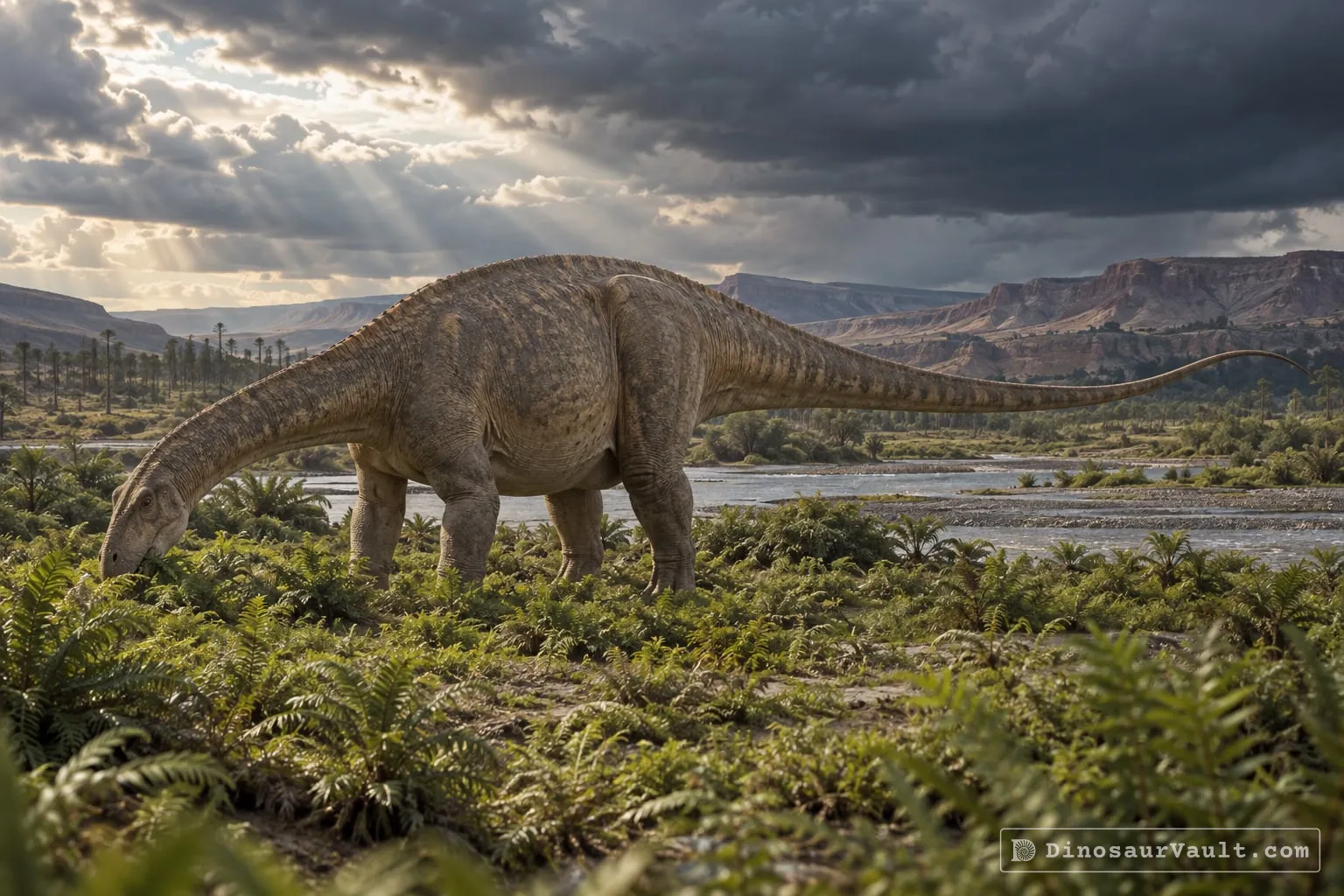
Rivers wound through sandy plains, with windblown sand in drier areas. Giganotosaurus, Buitreraptor and Limaysaurus also lived in the Candeleros Formation.
Field notes
About Bicentenaria
What it was like
Bicentenaria was a small coelurosaur, a two-legged meat eater. Bones from several animals were found together, which suggests they may have lived or died in a group.
Its world
It lived in the Cretaceous, in what is now Argentina. It comes from the Candeleros Formation, where it shared the land with the giant predator Giganotosaurus, the small feathered hunter Buitreraptor and the sauropod Limaysaurus.
How it was found
Novas and colleagues named Bicentenaria in 2012. The name marks a national anniversary.
Field gallery
More views of Bicentenaria
Scenes reconstructed from the available fossil evidence.
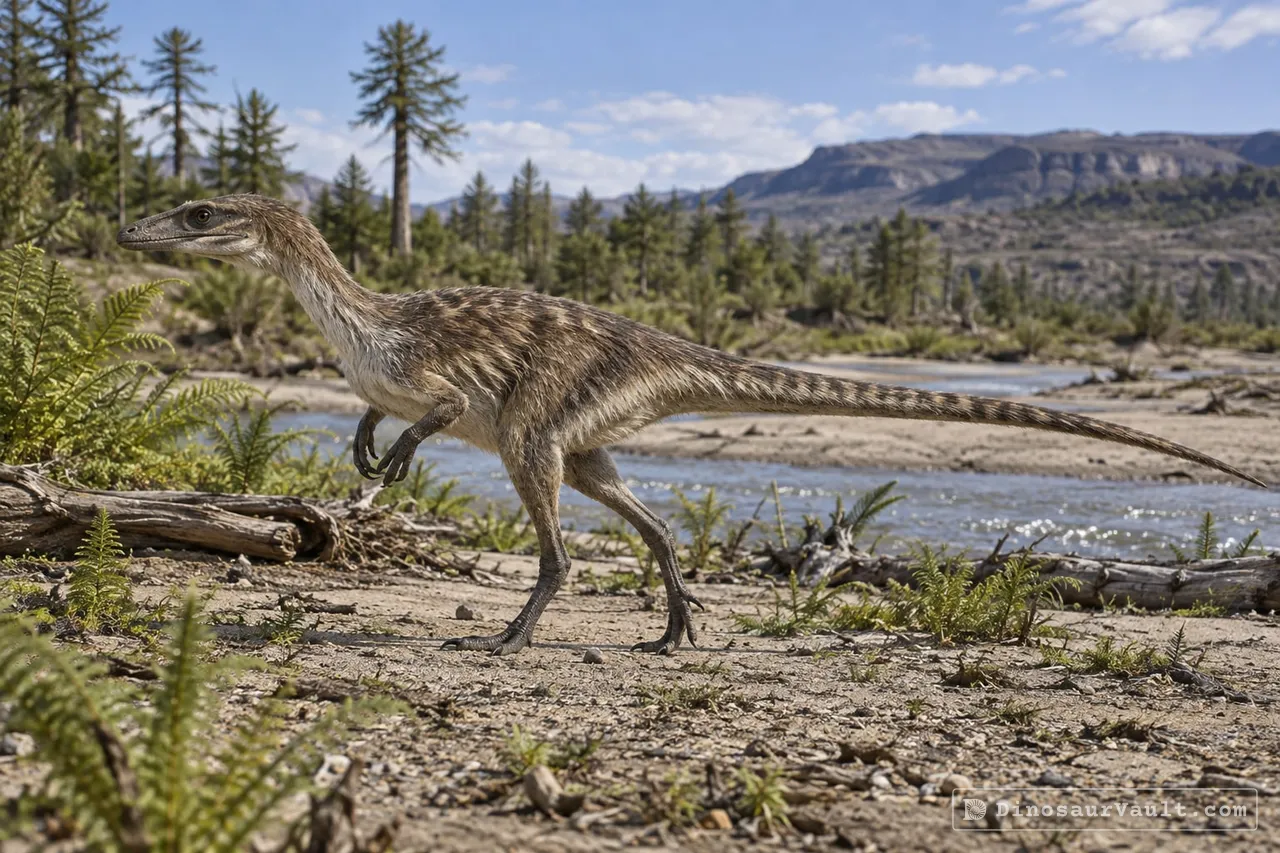
1 of 3
Lived alongside
Found in the same rock formations
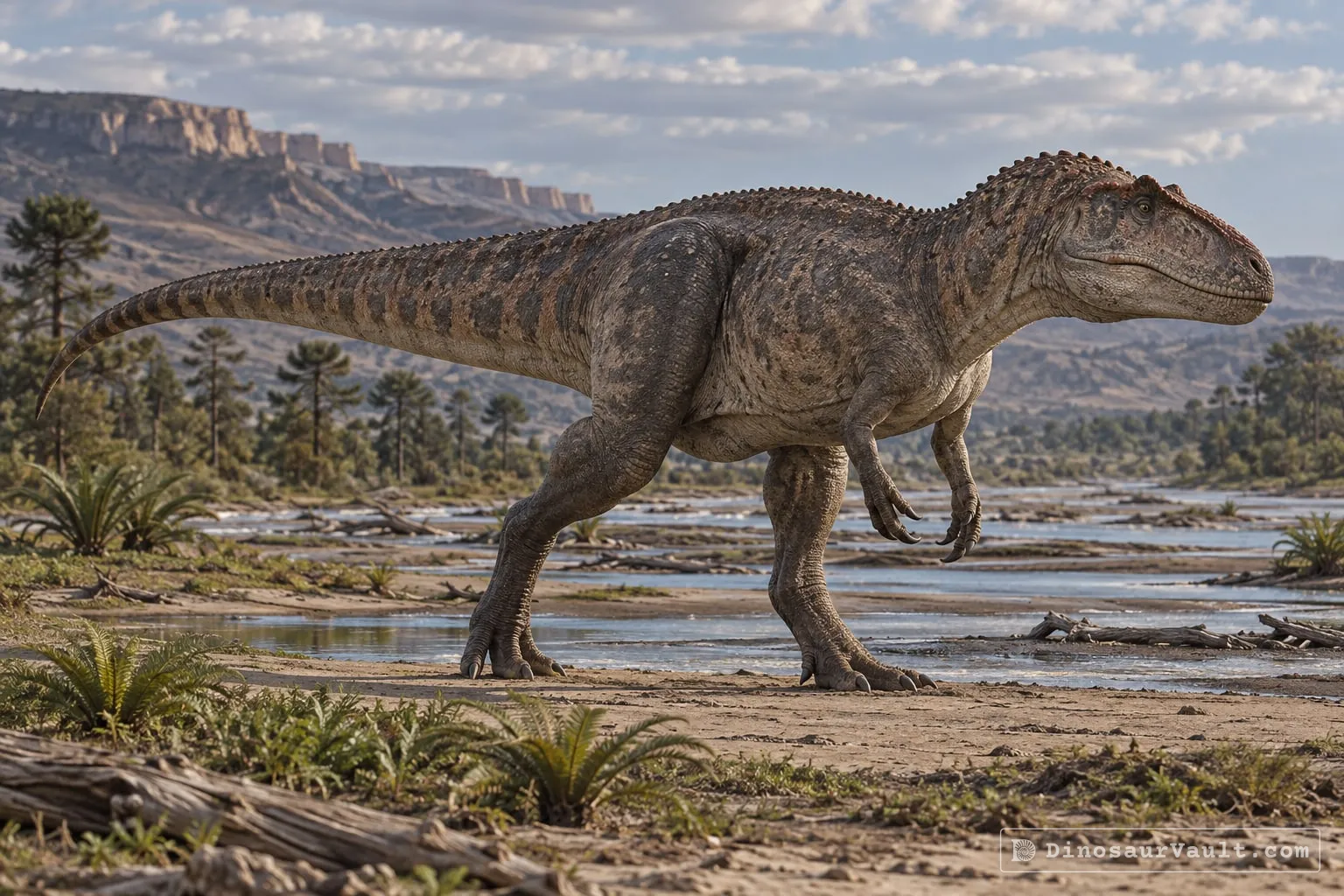
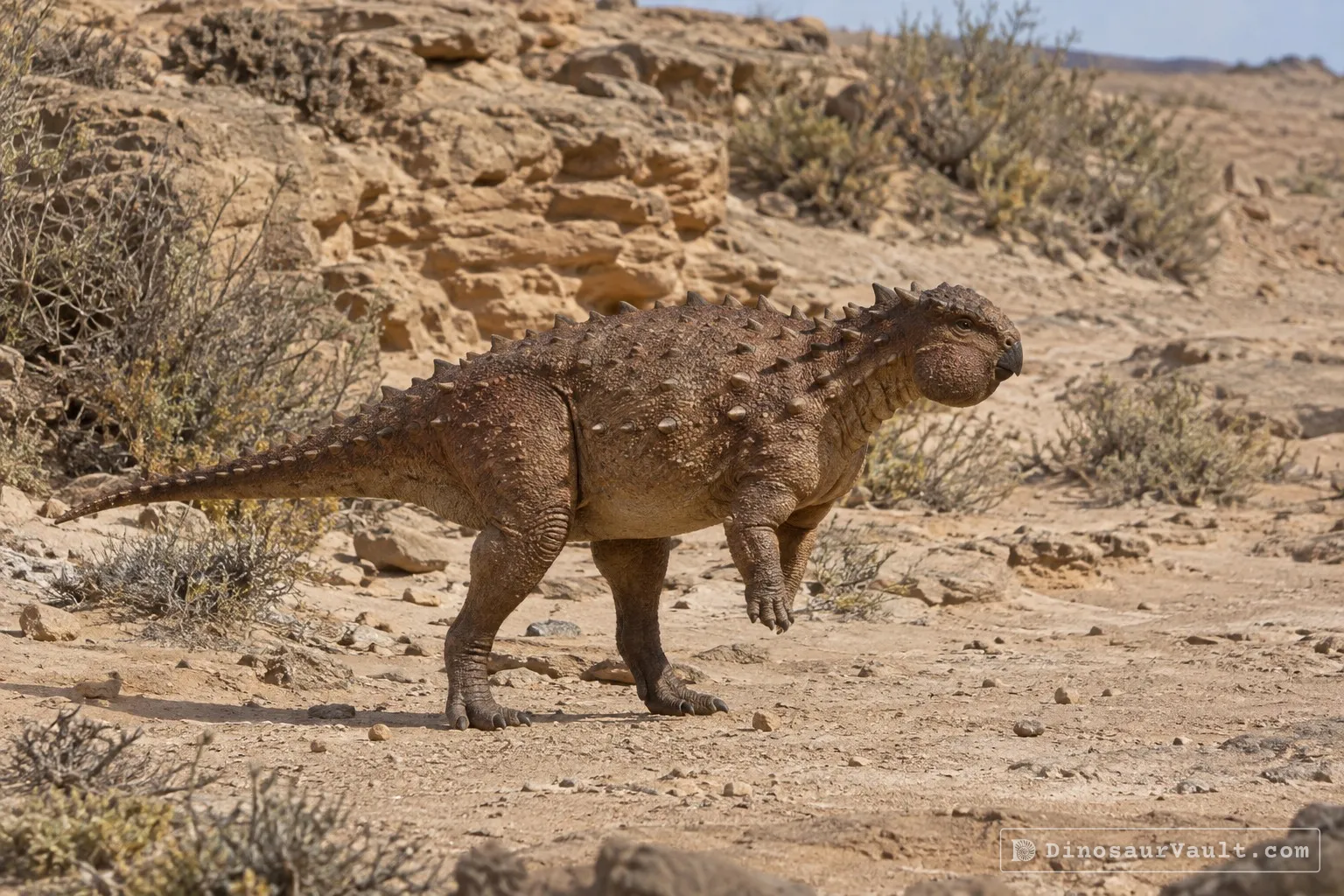
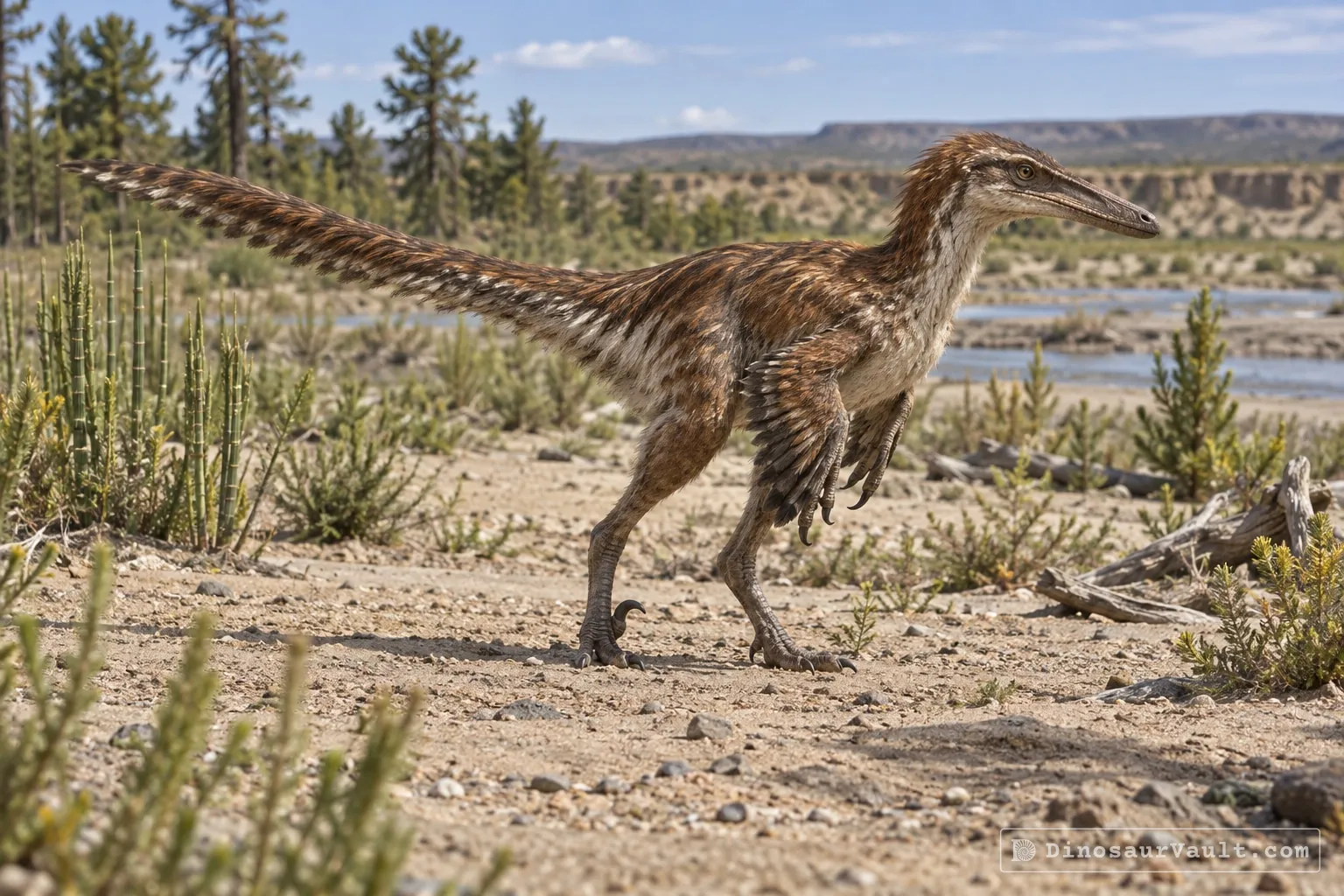
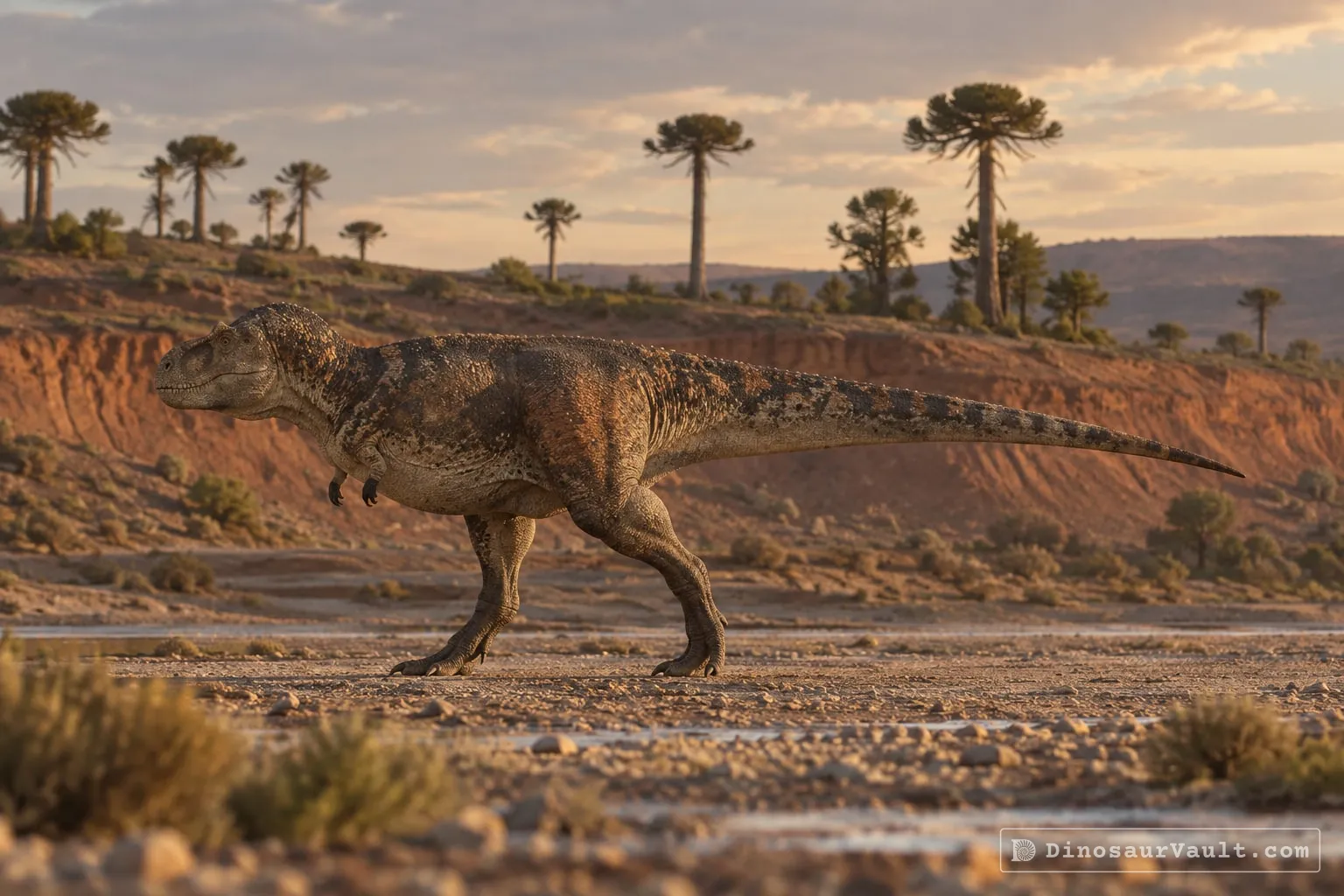
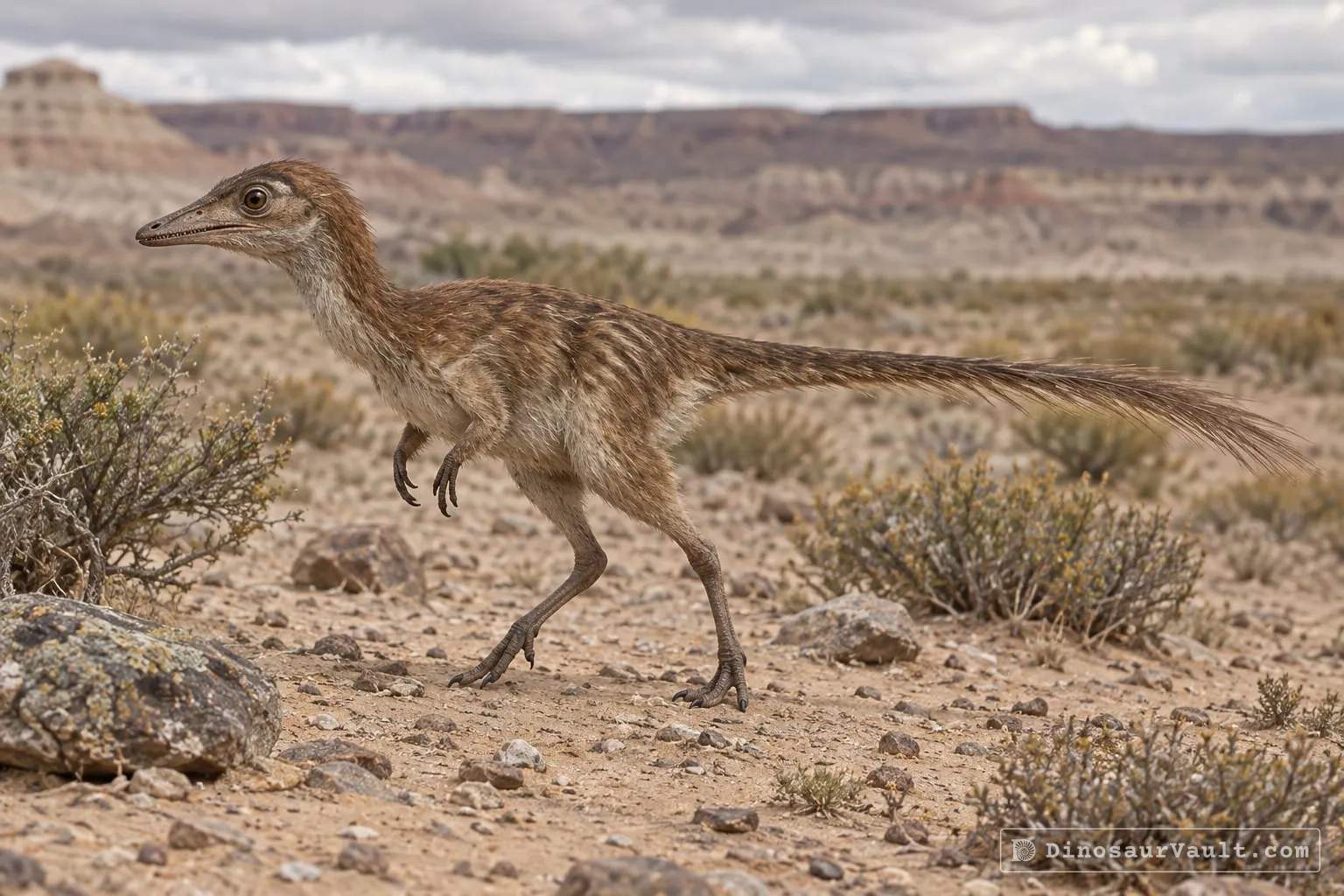
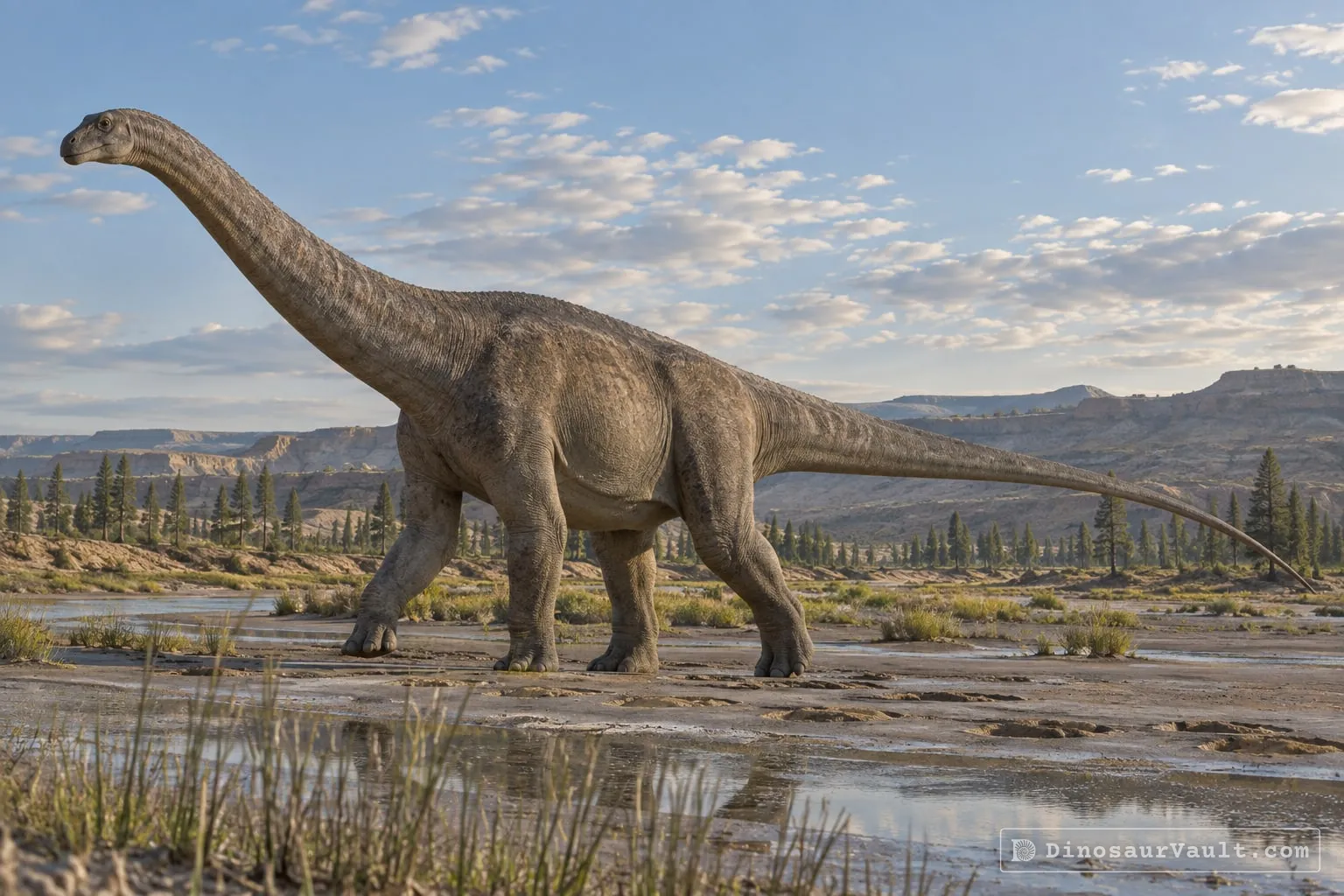
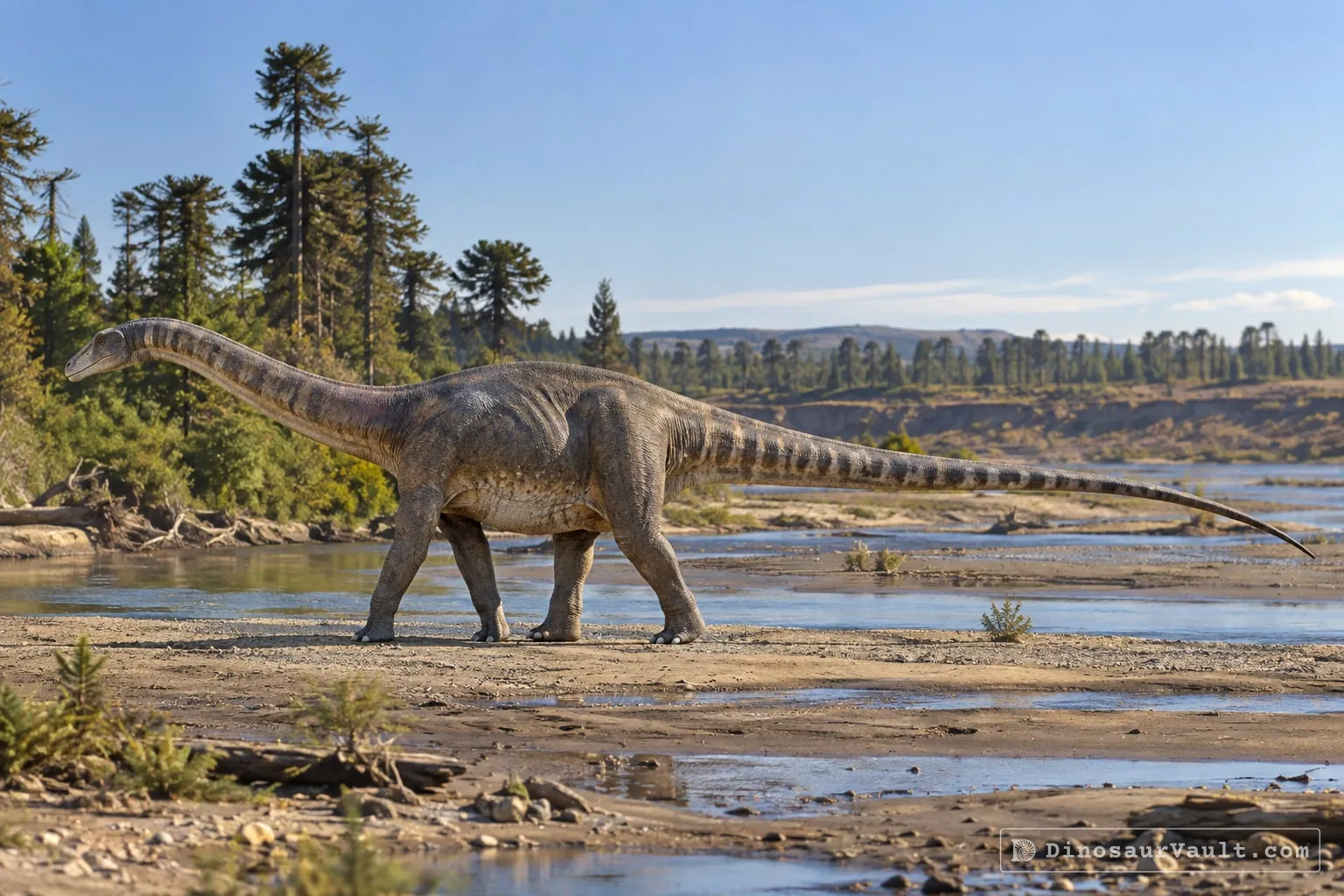


A rock formation can hold fossils laid down millions of years apart, so not every animal here met Bicentenaria.
The evidence
The science behind Bicentenaria
Which parts of the picture come from its own bones, and which come from its relatives.
From its own fossils
- Parts of the skull and jaws, backbone, arms, hips and legs come from several animals buried together.
- Its hand claws were sharp and flattened from side to side.
Borrowed from relatives
- Compsognathus and Tanycolagreus help fill in the missing parts of the skeleton.
Still unknown
- Whether the animals buried together lived in a group.
- Its skin covering and color.
- Exactly what it hunted.
Discovery timeline
- 2012Named itNovas et al.
- 2013Family treeNovas et al.
- 2013Close relativeIbiricu et al.
Key papers
The research behind what we know of Bicentenaria
Named it
Described a small predator from mixed bones of young and adult animals, and placed it near the early branches of the coelurosaur family tree.
New Patagonian Cretaceous theropod sheds light about the early radiation of Coelurosauria. Revista del Museo Argentino de Ciencias Naturales 14: 57-81
Read the paper : New Patagonian Cretaceous theropod sheds light about the early radiation of Coelurosauria (opens in a new tab)Family tree
Included Bicentenaria among early coelurosaurs in a review of how meat-eating dinosaurs evolved in South America.
Evolution of the carnivorous dinosaurs during the Cretaceous: The evidence from Patagonia. Cretaceous Research 45: 174-215
Read the paper : Evolution of the carnivorous dinosaurs during the Cretaceous: The evidence from Patagonia (opens in a new tab)Close relative
Studied a group burial of Aniksosaurus and compared it with Bicentenaria as possible evidence of group living.
The Behavioral Implications of a Multi-Individual Bonebed of a Small Theropod Dinosaur. PLoS ONE 8: e64253
Read the paper : The Behavioral Implications of a Multi-Individual Bonebed of a Small Theropod Dinosaur (opens in a new tab)
Close relatives
Other members of Coelurosauria


Sources: Wikidata