Jiangjunosaurus
Type species Jiangjunosaurus junggarensis
- Lived
- 162 to 155 million years ago, Late Jurassic
- Diet
- Herbivore
- Group
- Stegosaurs, Stegosauridae
- Found in
- China
- Named by
- Jia et al. 2007
Where its fossils were found
The evidence
Today

160 million years ago
Habitat
Rivers crossed a floodplain with patches of woodland in what is now China. Mamenchisaurus, Sinraptor and Guanlong also occur in the Shishugou Formation.
Field notes
About Jiangjunosaurus
What it was like
Jiangjunosaurus was a stegosaur, a plant eater with plates and spikes along its back and tail. It is known from part of a skull and jaw, some neck bones and a plate from the neck.
Its world
It lived in the Late Jurassic, around 155 million years ago or a little earlier, in what is now northwestern China. Its bones come from the Shishugou Formation, where it shared the land with the giant long-necked Mamenchisaurus, the big hunters Sinraptor and Monolophosaurus, the crested Guanlong and the beaked Limusaurus.
How it was found
Jia and colleagues named Jiangjunosaurus in 2007, from a single find.
Field gallery
More views of Jiangjunosaurus
Scenes reconstructed from the available fossil evidence.
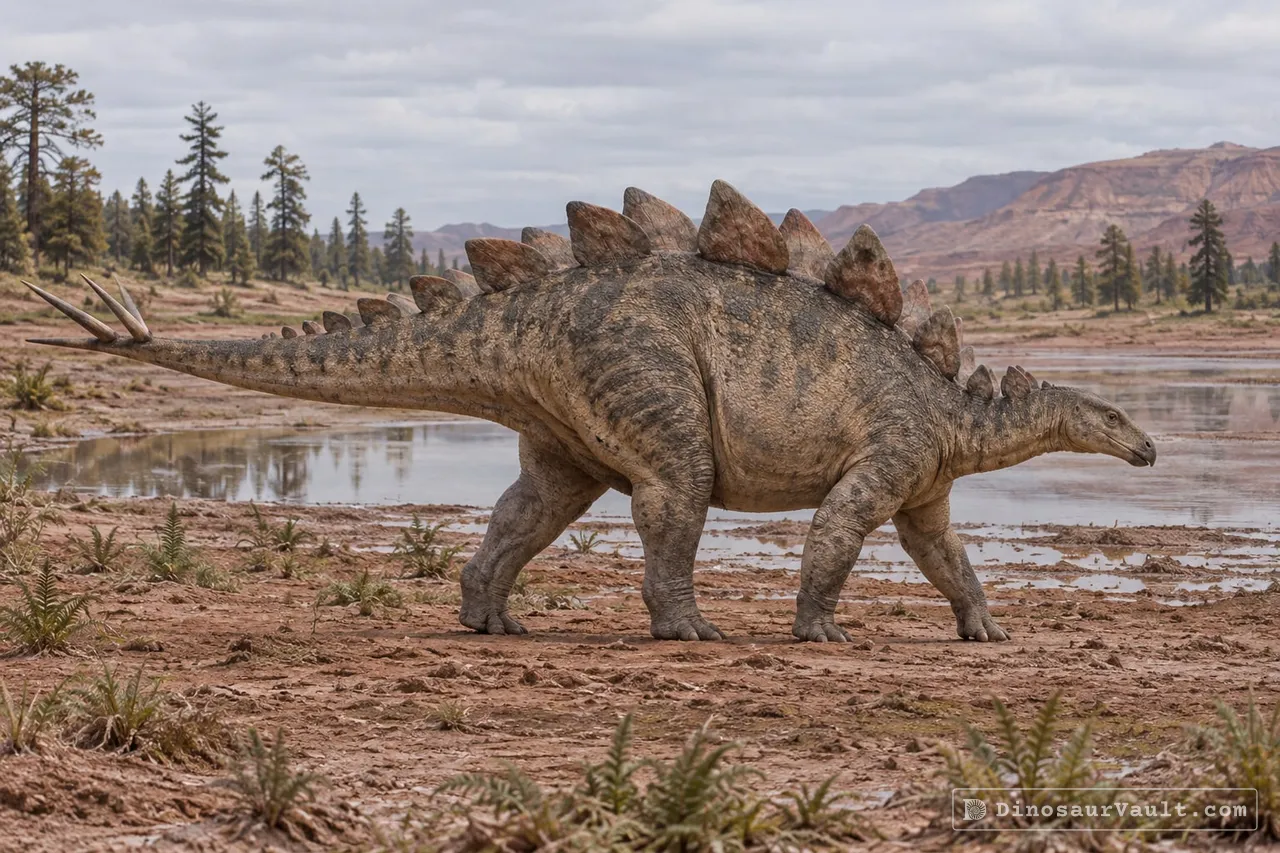
1 of 2
Lived alongside
Found in the same rock formations
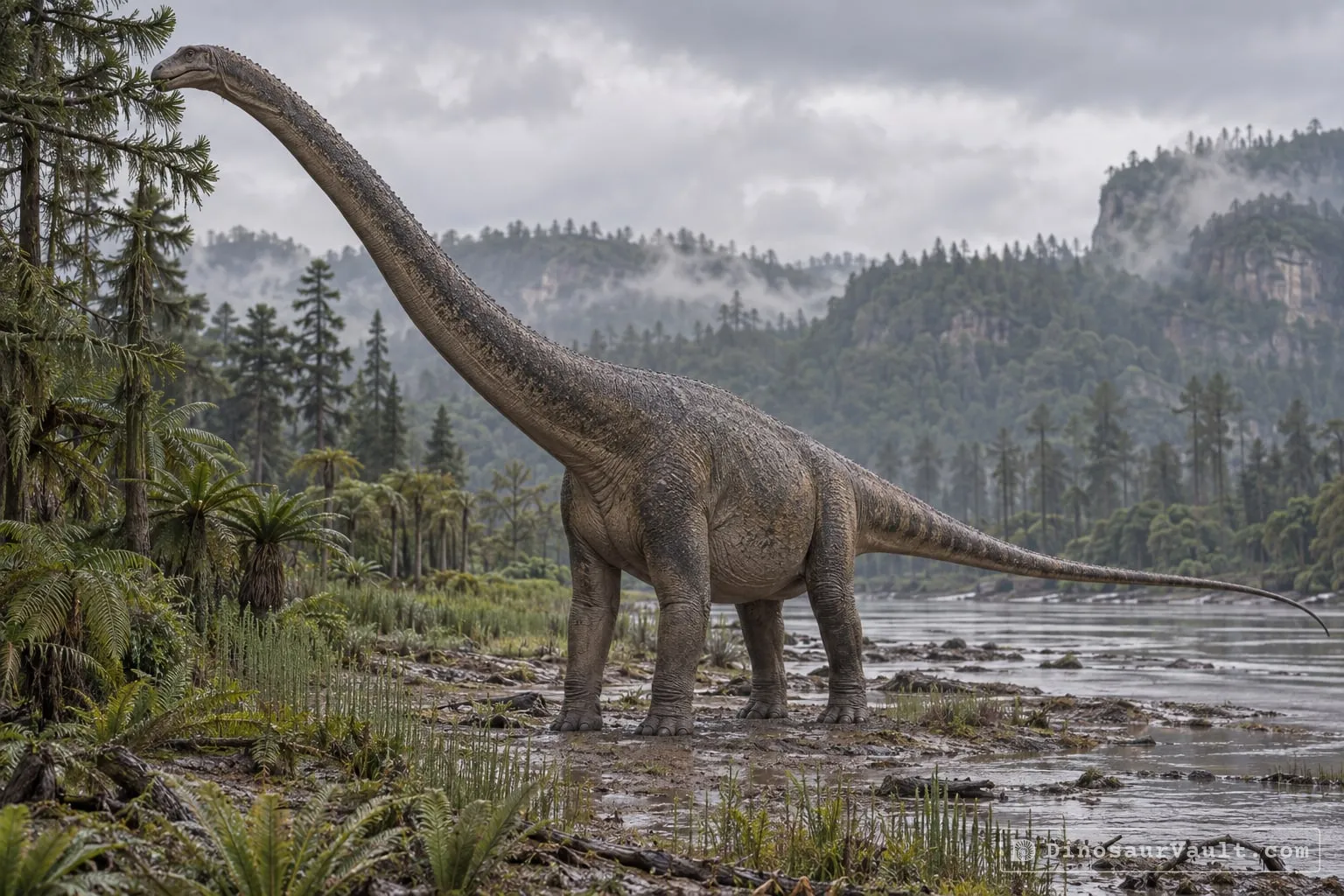
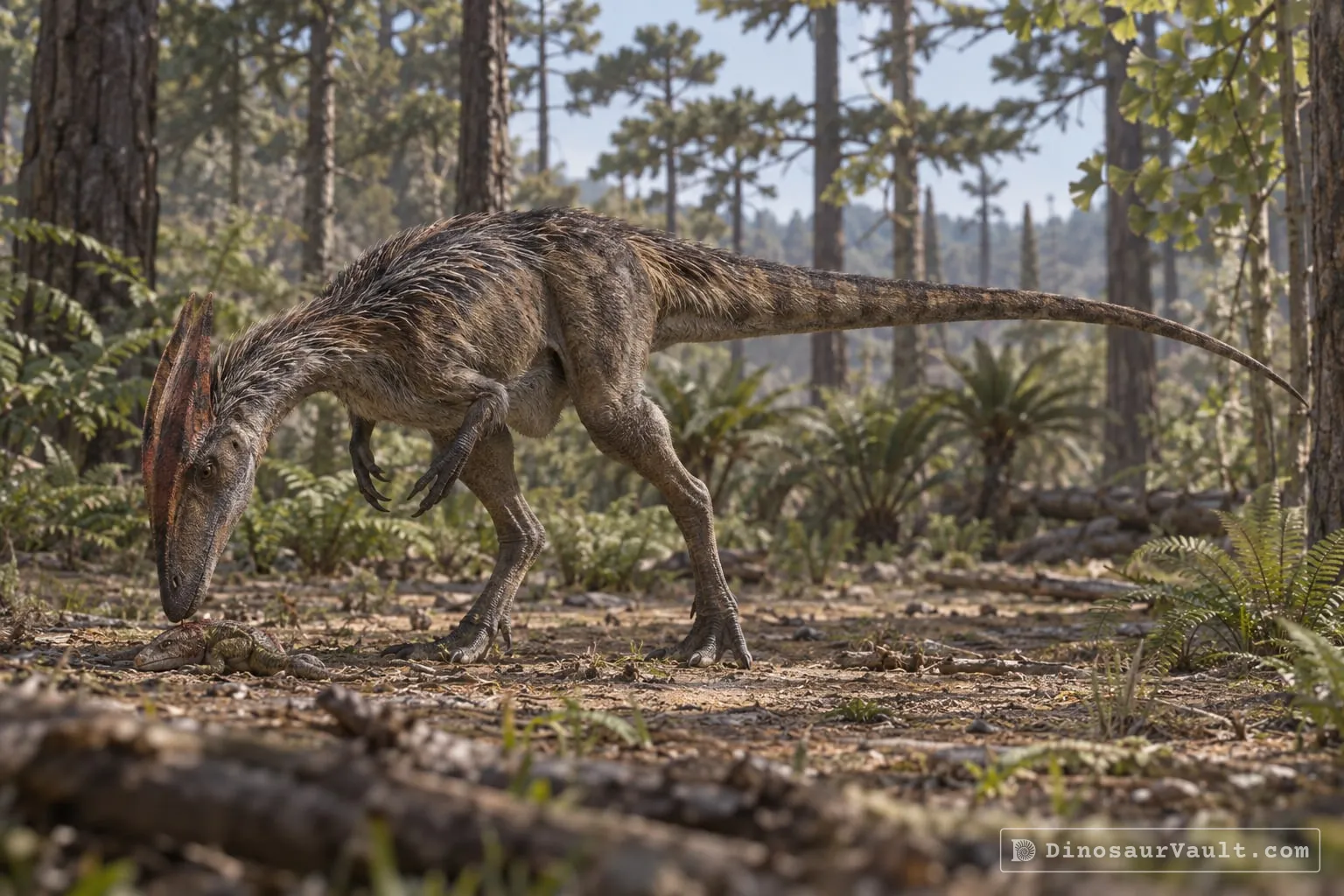
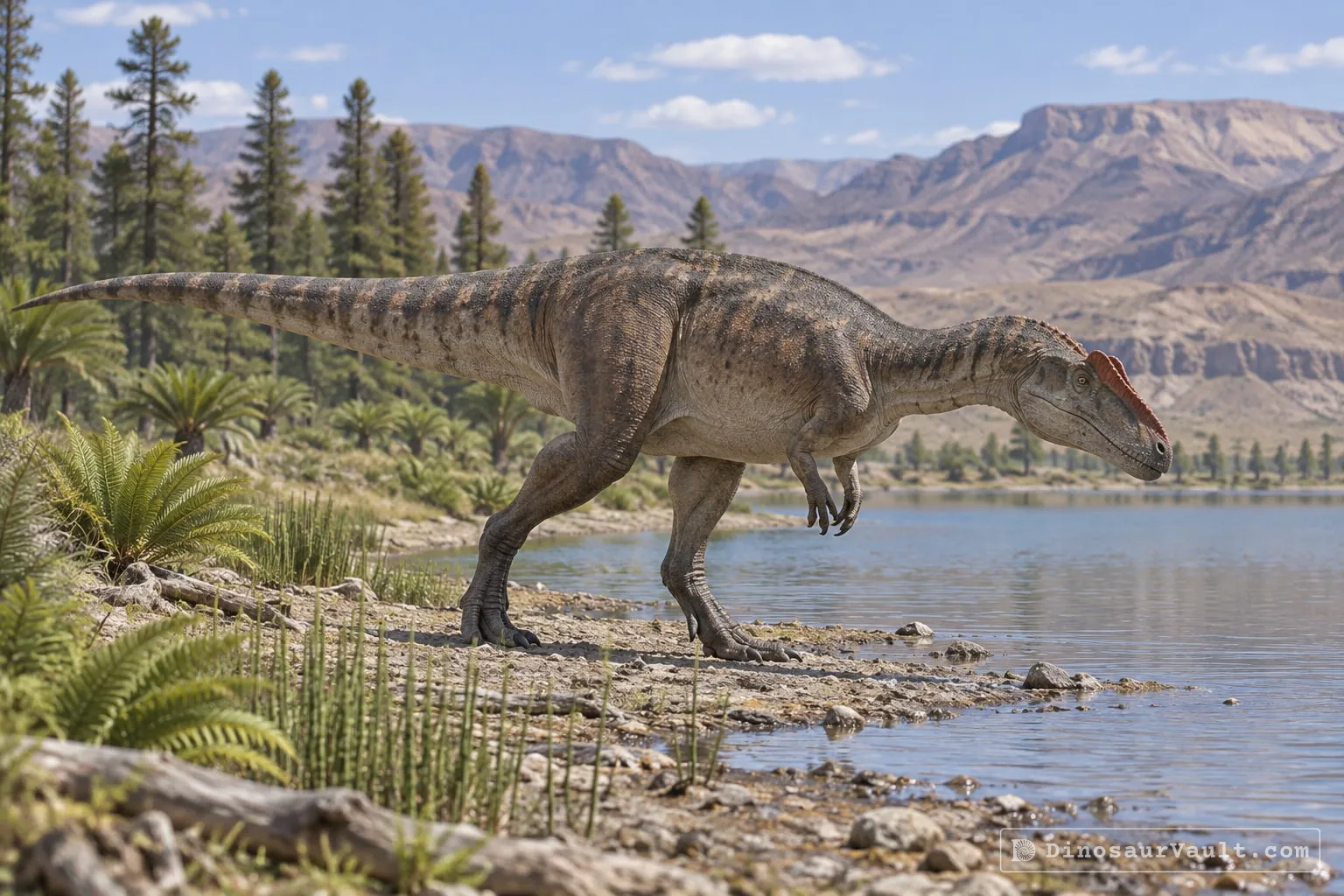
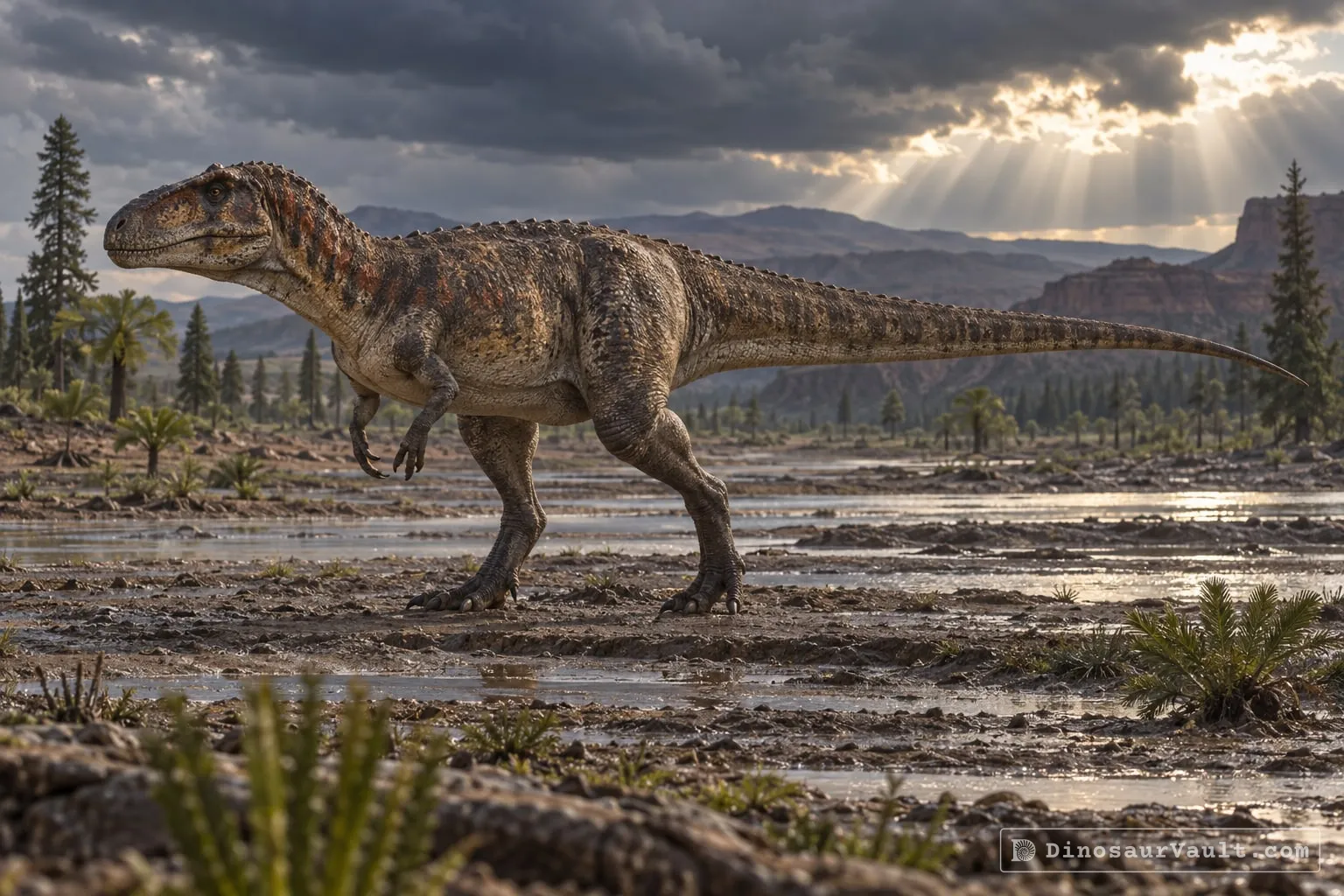
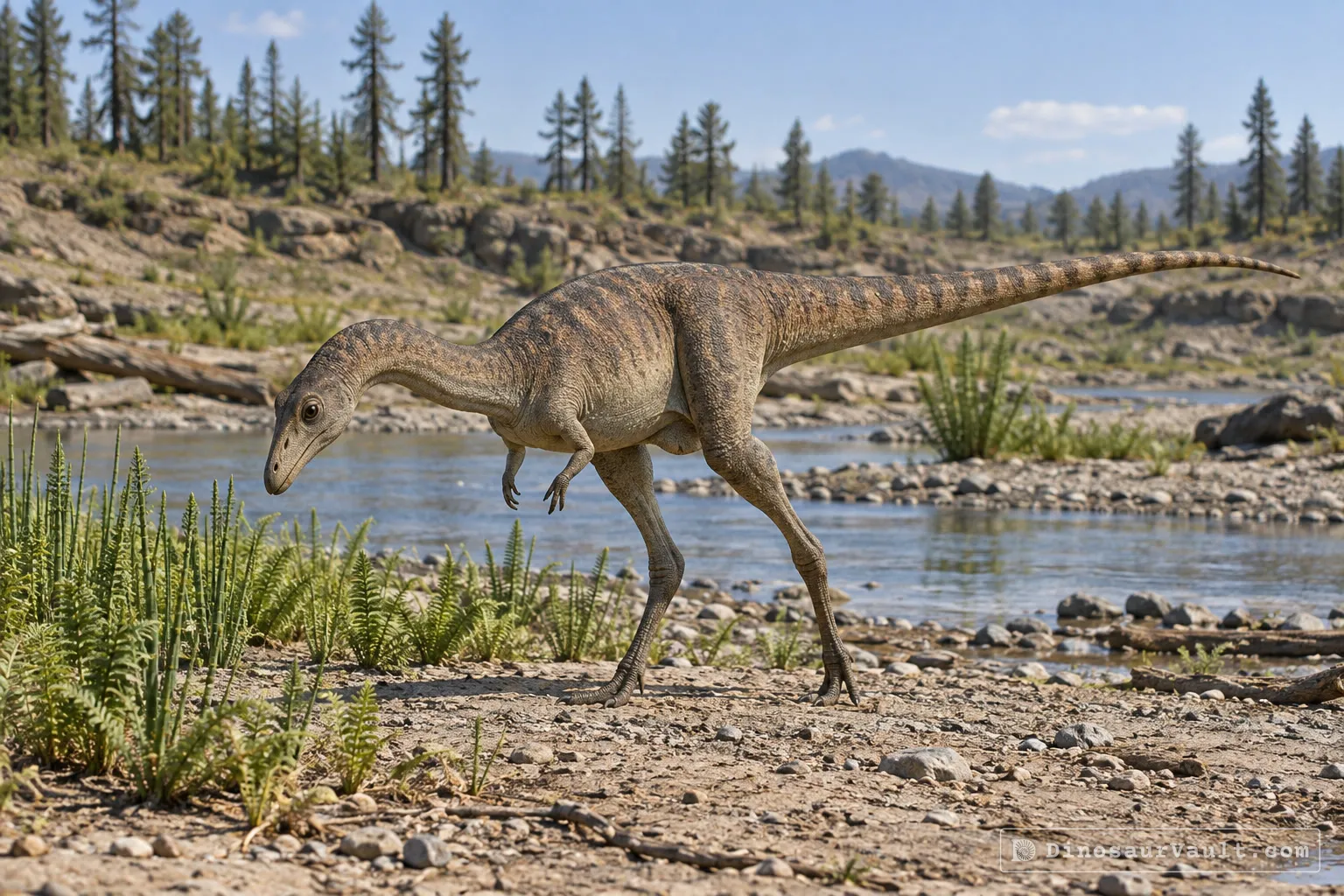
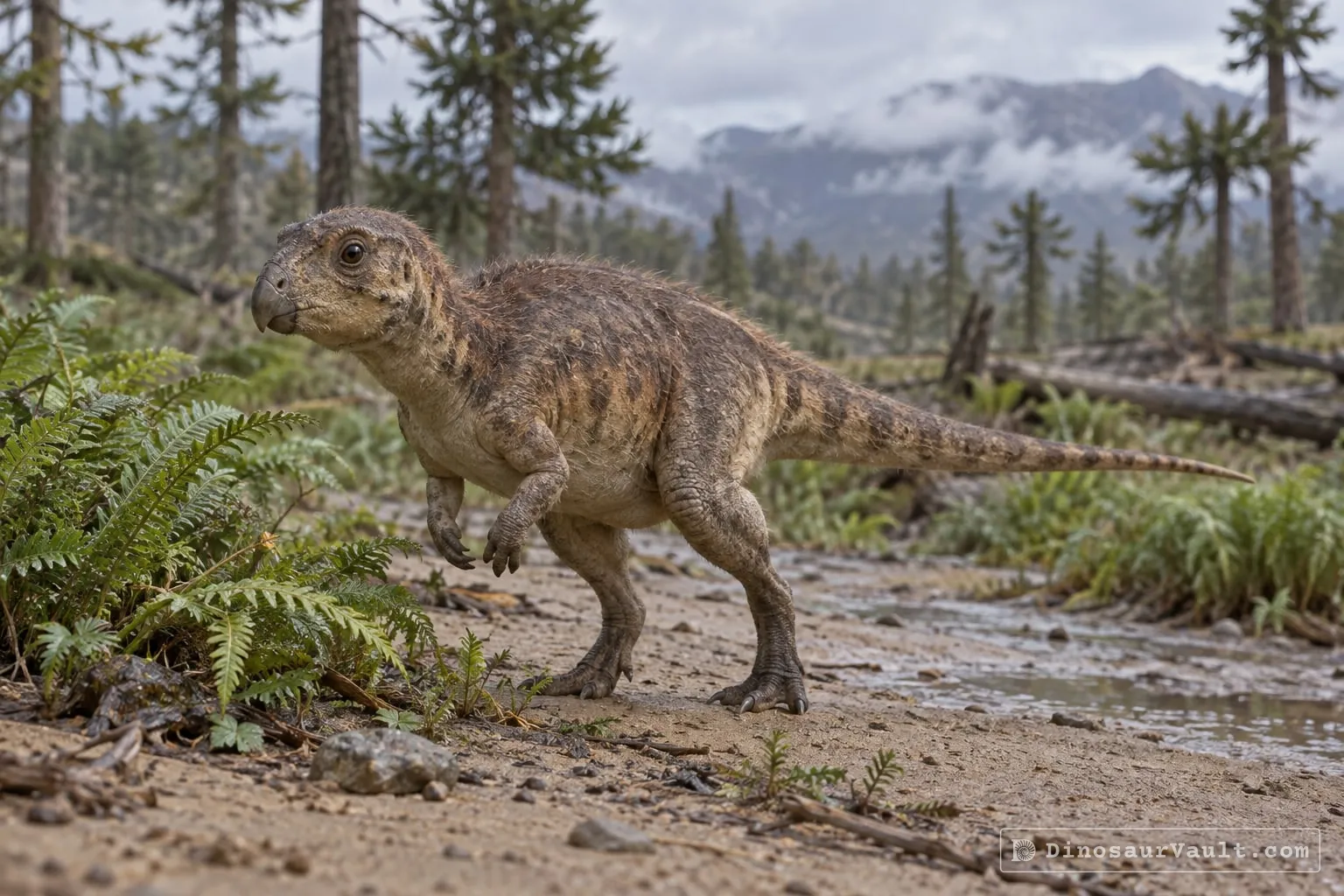
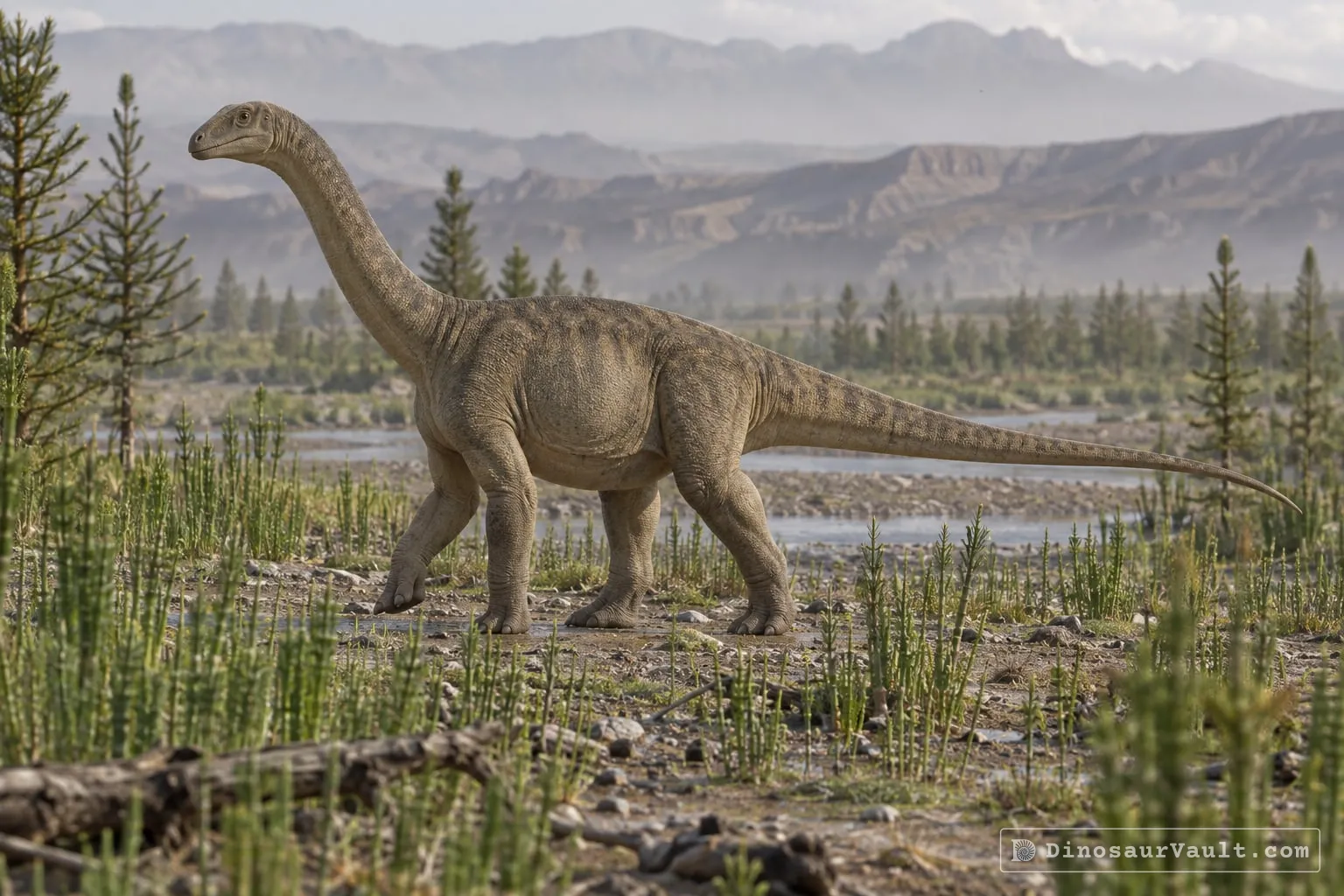
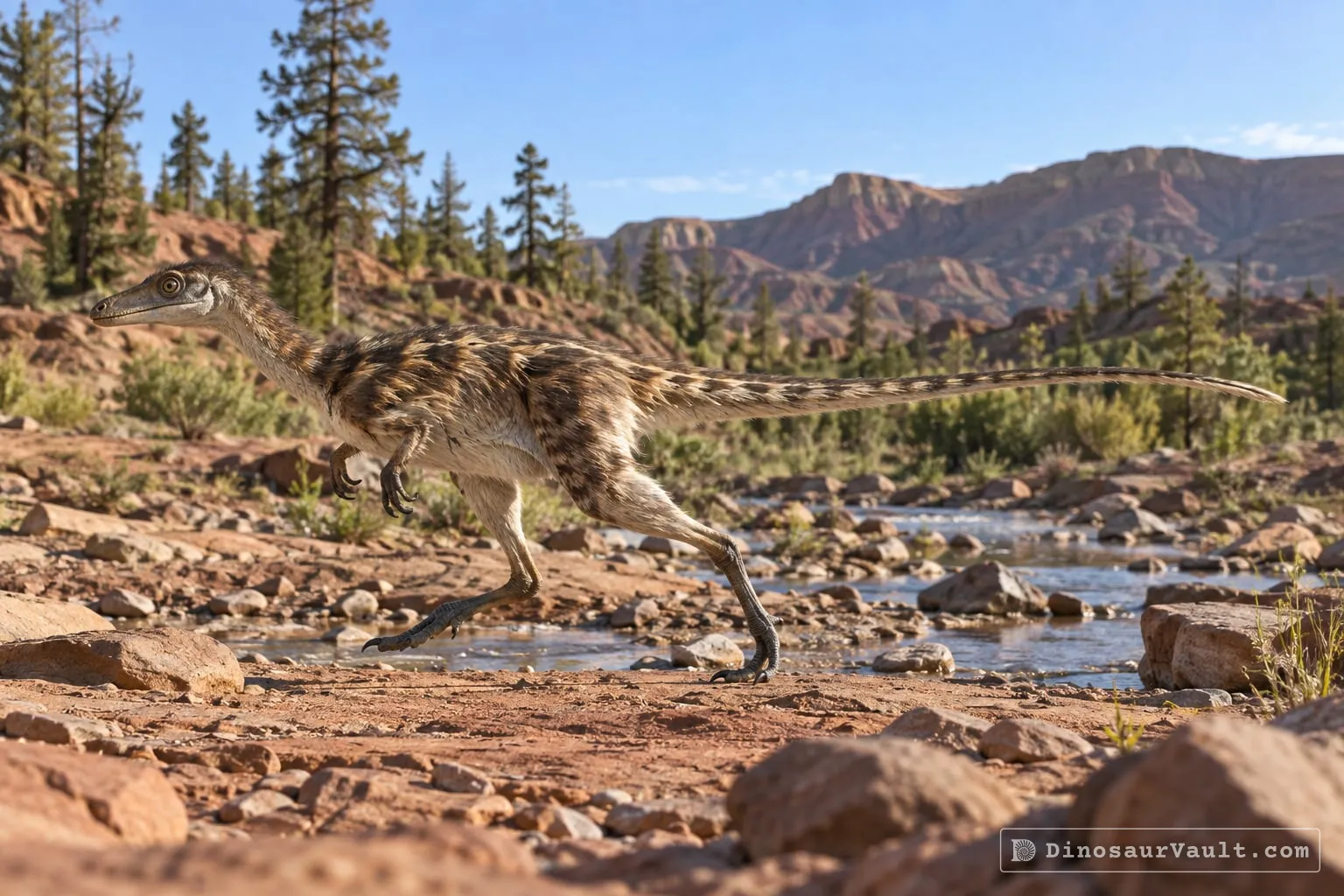


A rock formation can hold fossils laid down millions of years apart, so not every animal here met Jiangjunosaurus.
The evidence
The science behind Jiangjunosaurus
Which parts of the picture come from its own bones, and which come from its relatives.
From its own fossils
- A partial skull, almost complete lower jaw and connected neck bones preserve a long, narrow head with a downturned jaw tip.
- Its broad cheek teeth have roughly symmetrical crowns with small serrations along their edges.
- Small neck plates have rounded outlines, thick bases and thin edges.
Borrowed from relatives
- Stegosaurus provides a guide to the missing upper snout, body, legs, back plates and tail spikes.
- The upright, curved arrangement of hand bones in Stegosaurus guides the restoration of its supporting front feet.
Still unknown
- The number, shape and arrangement of its back plates and tail spikes.
- Its complete limb proportions and toe arrangement.
- Its skin and color.
Discovery timeline
- 2007Named itJia et al.
- 2010PostureSenter
- 2015Close relativeMaidment, Brassey & Barrett
Key papers
The research behind what we know of Jiangjunosaurus
Named it
Described Jiangjunosaurus from a partial skeleton with broad teeth, distinctive neck vertebrae and small rounded neck plates.
The first stegosaur (Dinosauria, Ornithischia) from the Upper Jurassic Shishugou Formation of Xinjiang, China. Acta Geologica Sinica 81: 351-356
No link available
Posture
Showed that stegosaur hand bones fitted into an upright curved arrangement, supporting the body above short fingers.
Evidence for a Sauropod-Like Metacarpal Configuration in Stegosaurian Dinosaurs. Acta Palaeontologica Polonica 55: 427-432
Read the paper : Evidence for a Sauropod-Like Metacarpal Configuration in Stegosaurian Dinosaurs (opens in a new tab)Close relative
Described a nearly complete Stegosaurus skeleton, providing a detailed comparison for the missing body, feet and armor of Jiangjunosaurus.
The Postcranial Skeleton of an Exceptionally Complete Individual of the Plated Dinosaur Stegosaurus stenops (Dinosauria: Thyreophora) from the Upper Jurassic Morrison Formation of Wyoming, U.S.A. PLOS ONE 10: e0138352
Read the paper : The Postcranial Skeleton of an Exceptionally Complete Individual of the Plated Dinosaur Stegosaurus stenops (Dinosauria: Thyreophora) from the Upper Jurassic Morrison Formation of Wyoming, U.S.A. (opens in a new tab)
Close relatives
Other members of Stegosauridae


Sources: Wikidata