Bellusaurus
"beautiful lizard"
Type species Bellusaurus sui
- Lived
- 159 to 158 million years ago, Late Jurassic
- Diet
- Herbivore
- Length
- about 5 m (16 ft)
- Group
- Sauropods, Mamenchisauridae
- Found in
- China
- Named by
- Dong 1990
Size comparison
To scale


Scale in metersOutline: typical sauropod shape
Where its fossils were found
The evidence
Today

160 million years ago
Habitat
The Shishugou Formation records floodplains and wetlands that received volcanic ash. Mamenchisaurus, Guanlong and Limusaurus also lived in this region.
Field notes
About Bellusaurus
What it was like
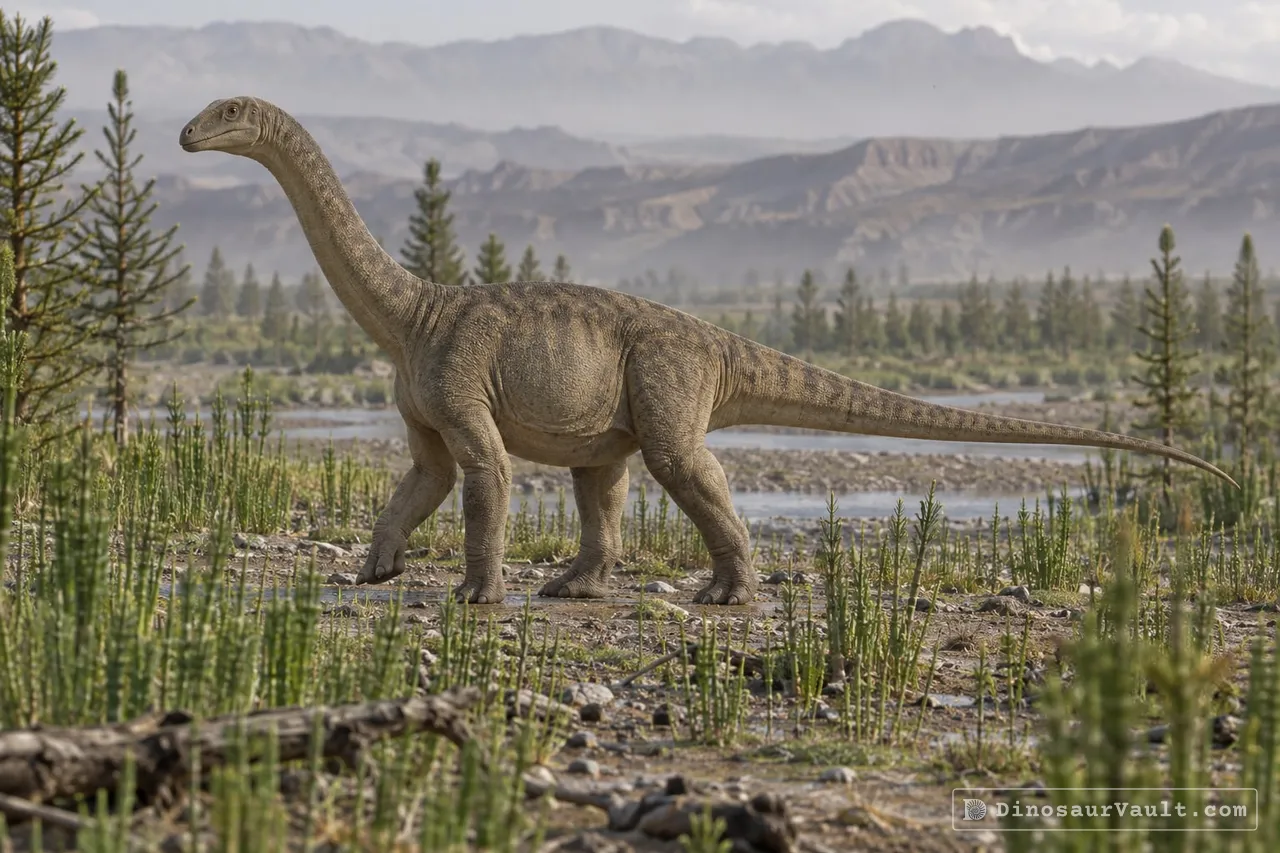
Bellusaurus was a long-necked plant eater known from the bones of young animals, about 5 meters (16 feet) long. Adults would have been larger, but no grown individual has been found.
It had spoon-shaped teeth for stripping leaves and was a relative of Mamenchisaurus and Omeisaurus.
Its world
It lived about 159 to 158 million years ago, in the Late Jurassic, in what is now northwestern China. Its bones come from the Shishugou Formation, where it shared the land with the giant Mamenchisaurus, the crested hunters Guanlong and Monolophosaurus, the big predator Sinraptor and the beaked Limusaurus.
How it was found
Dong named Bellusaurus in 1990. Its bones come from a single site that held the remains of many young animals together, which may mean a group died at the same time, perhaps in a flood.
Field gallery
More views of Bellusaurus
Scenes reconstructed from the available fossil evidence.
1 of 3
Lived alongside
Found in the same rock formations
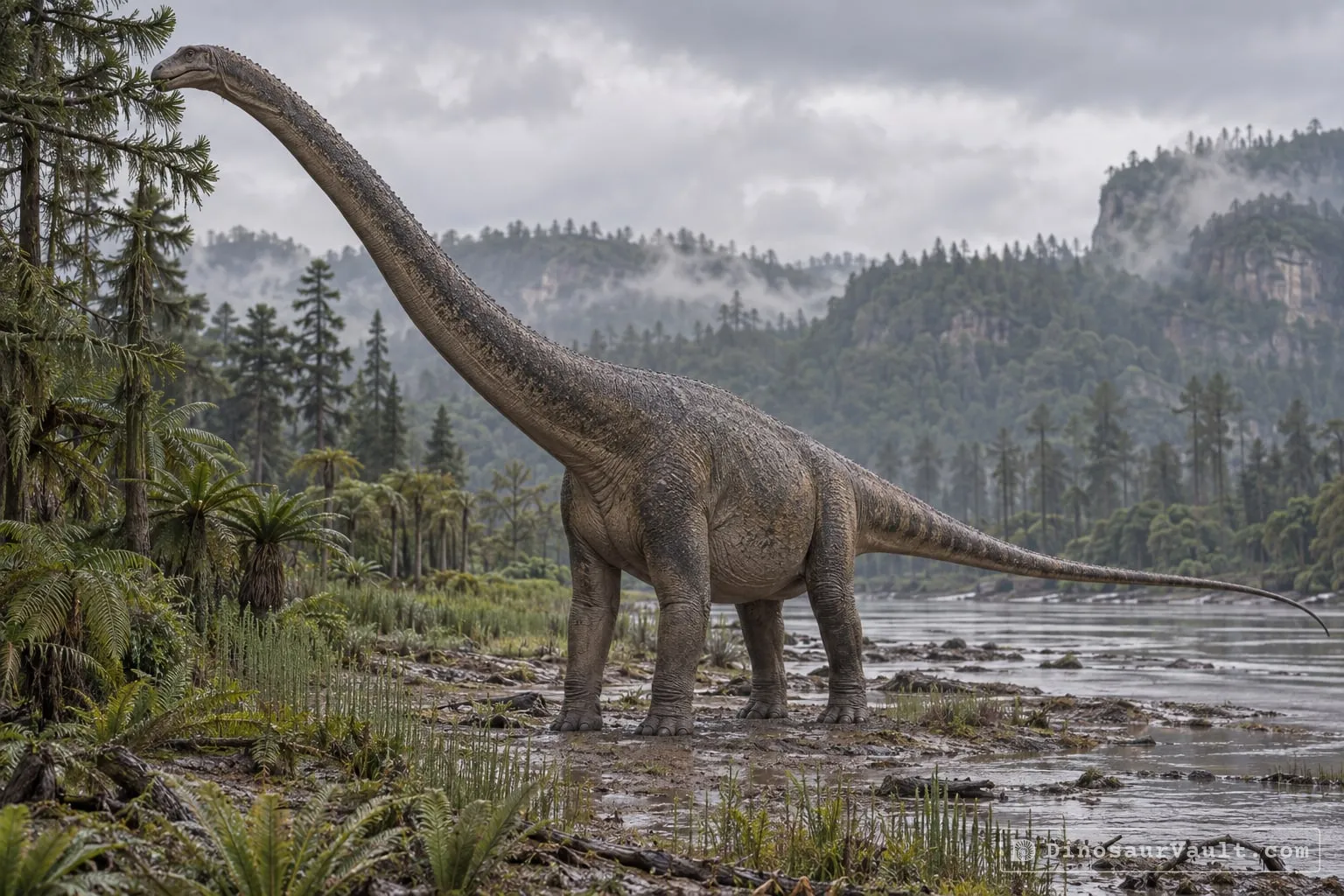
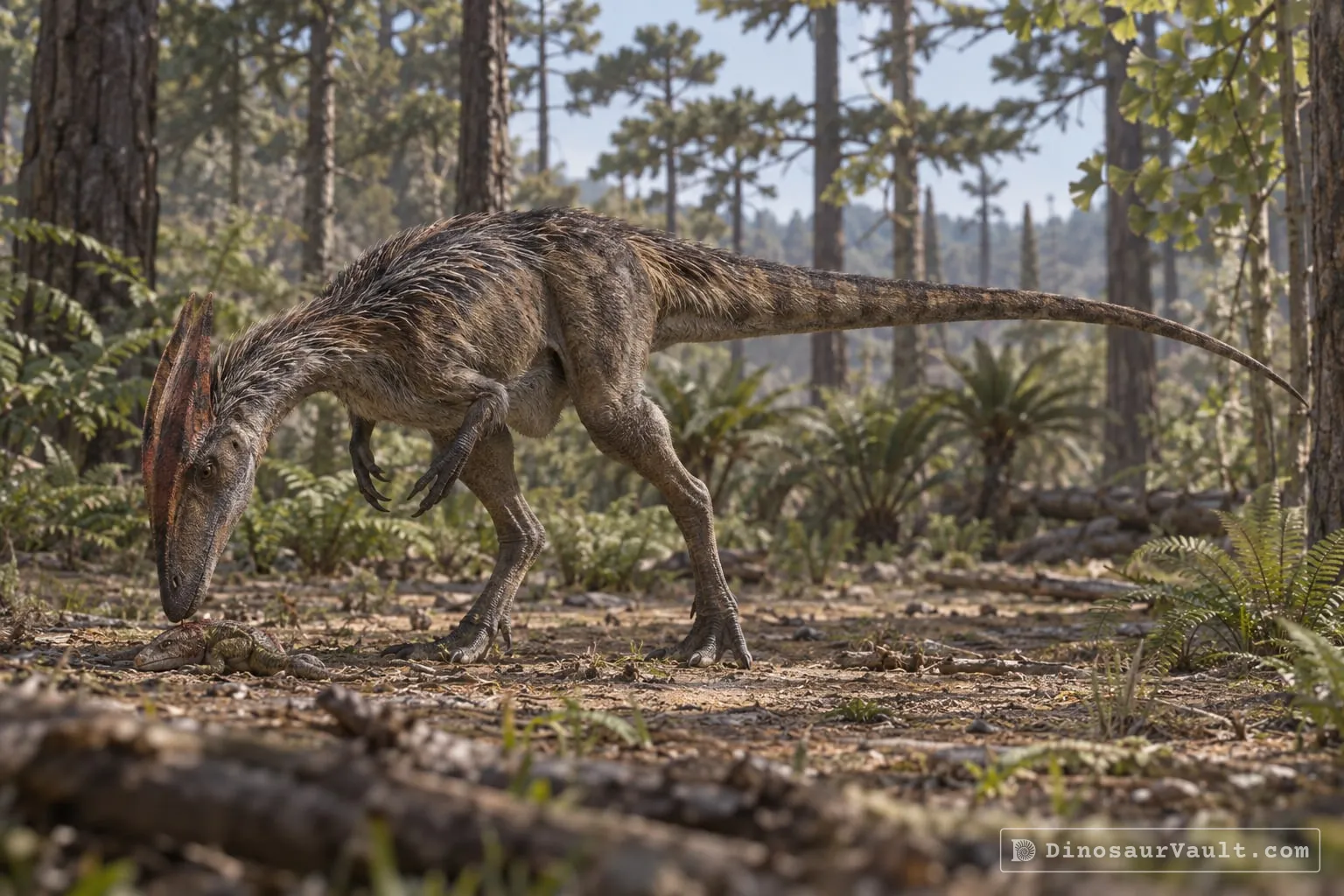
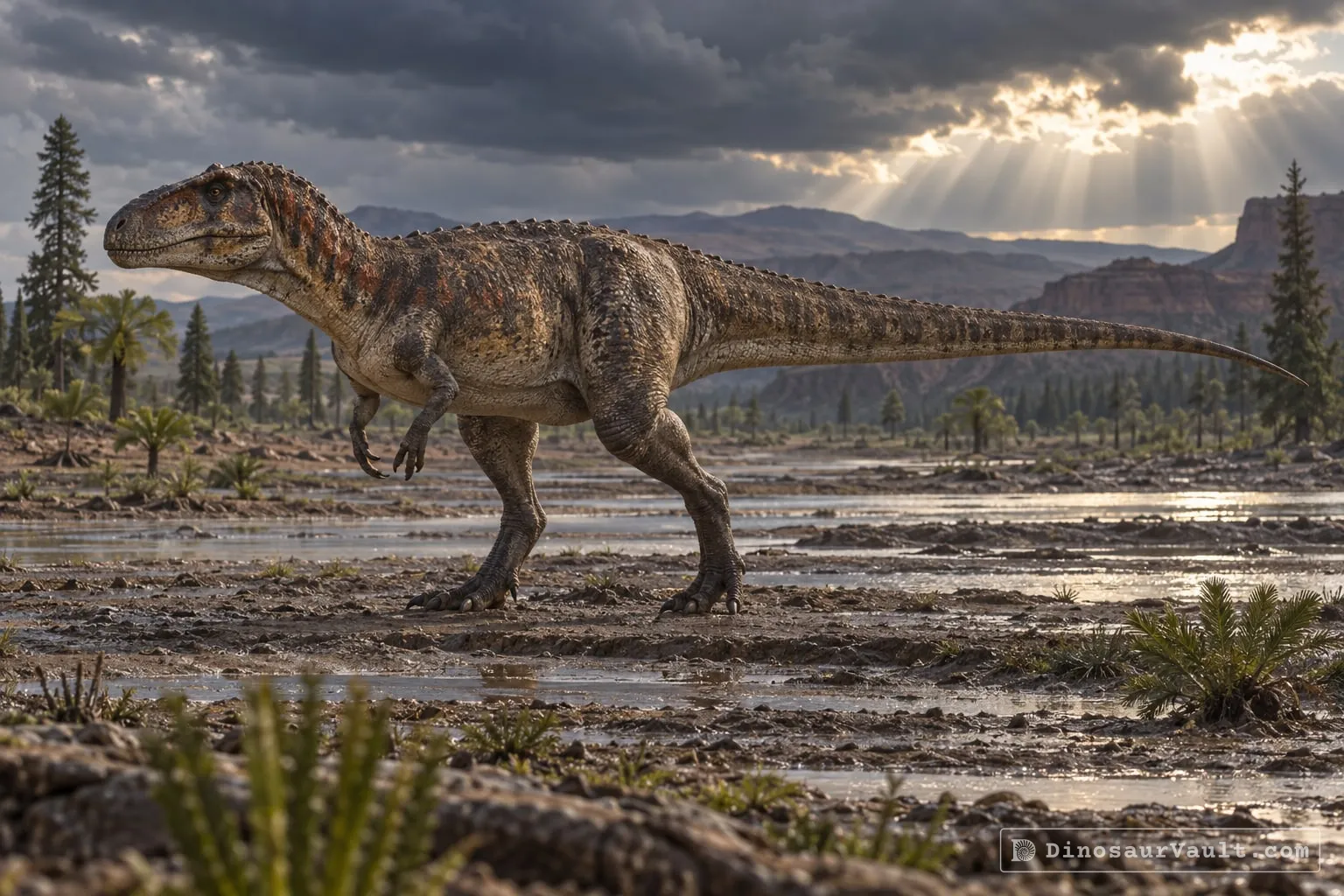
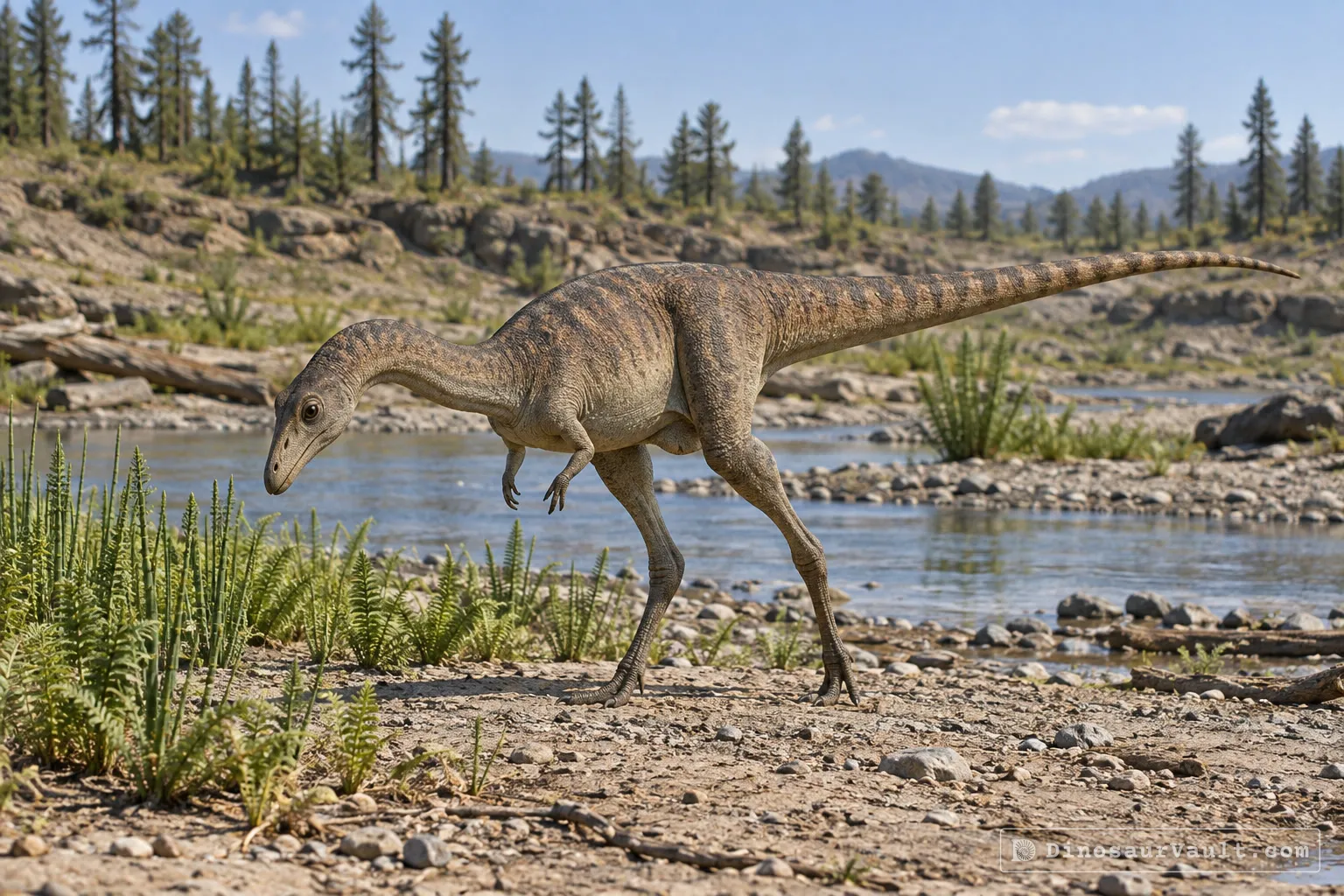
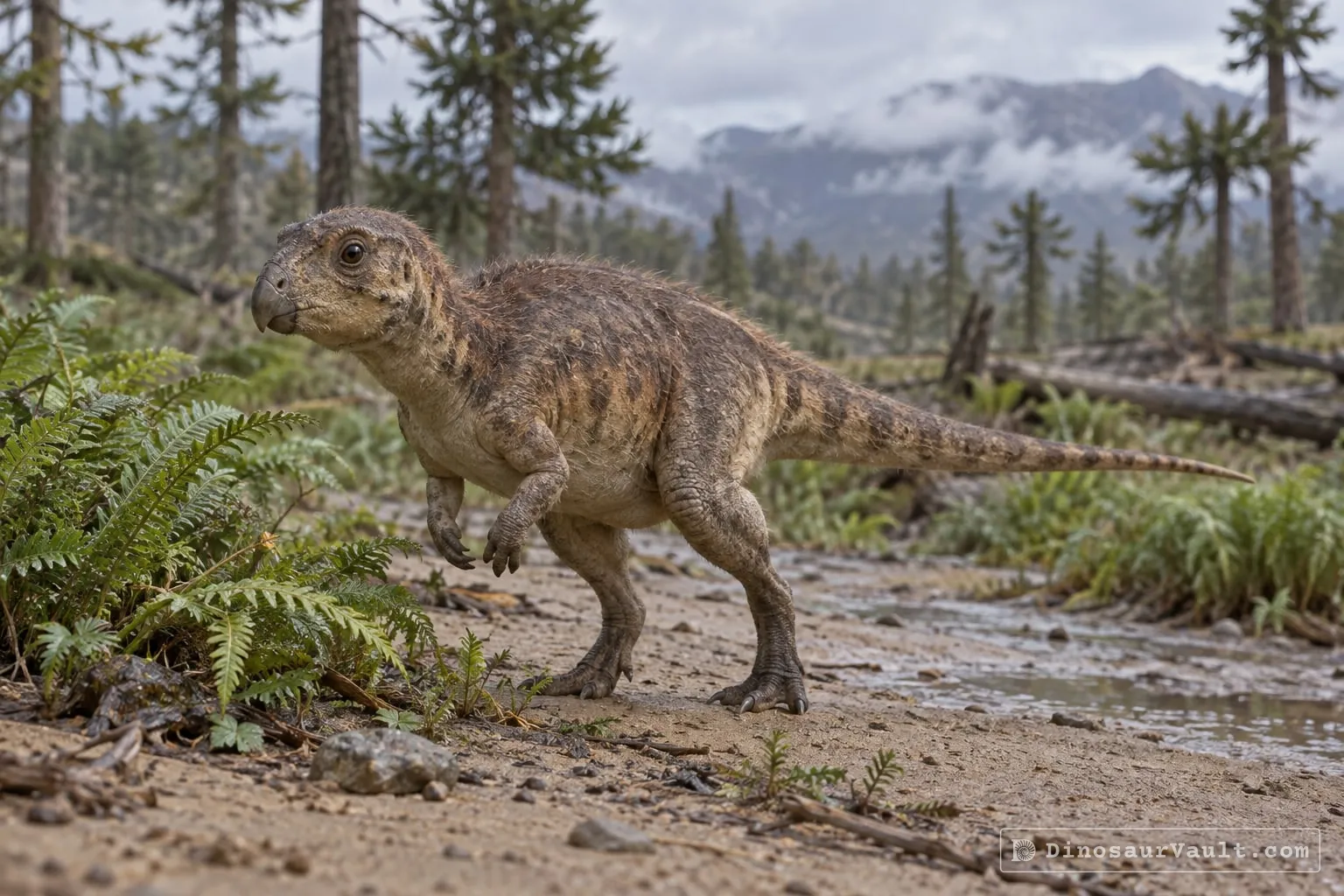
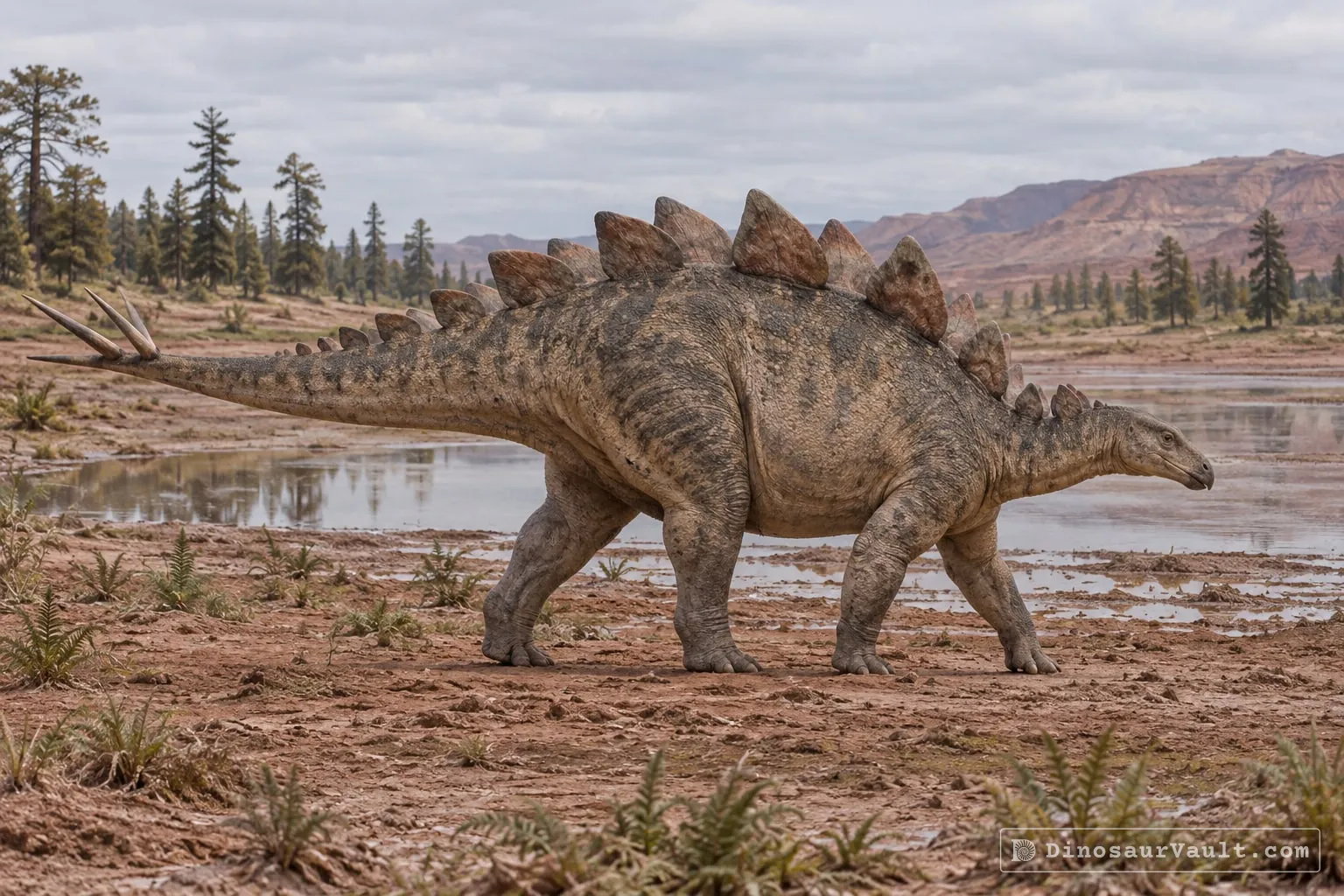
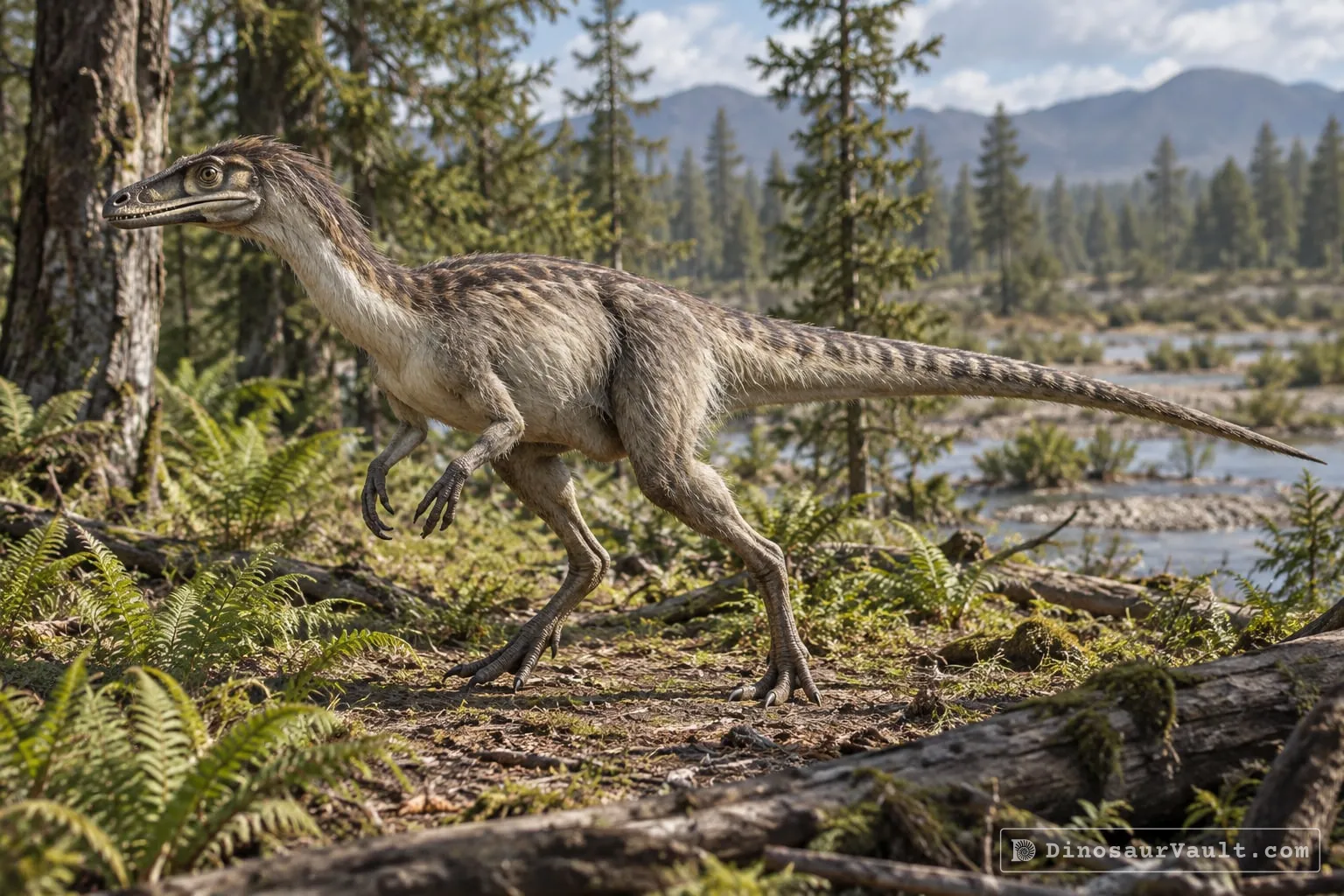
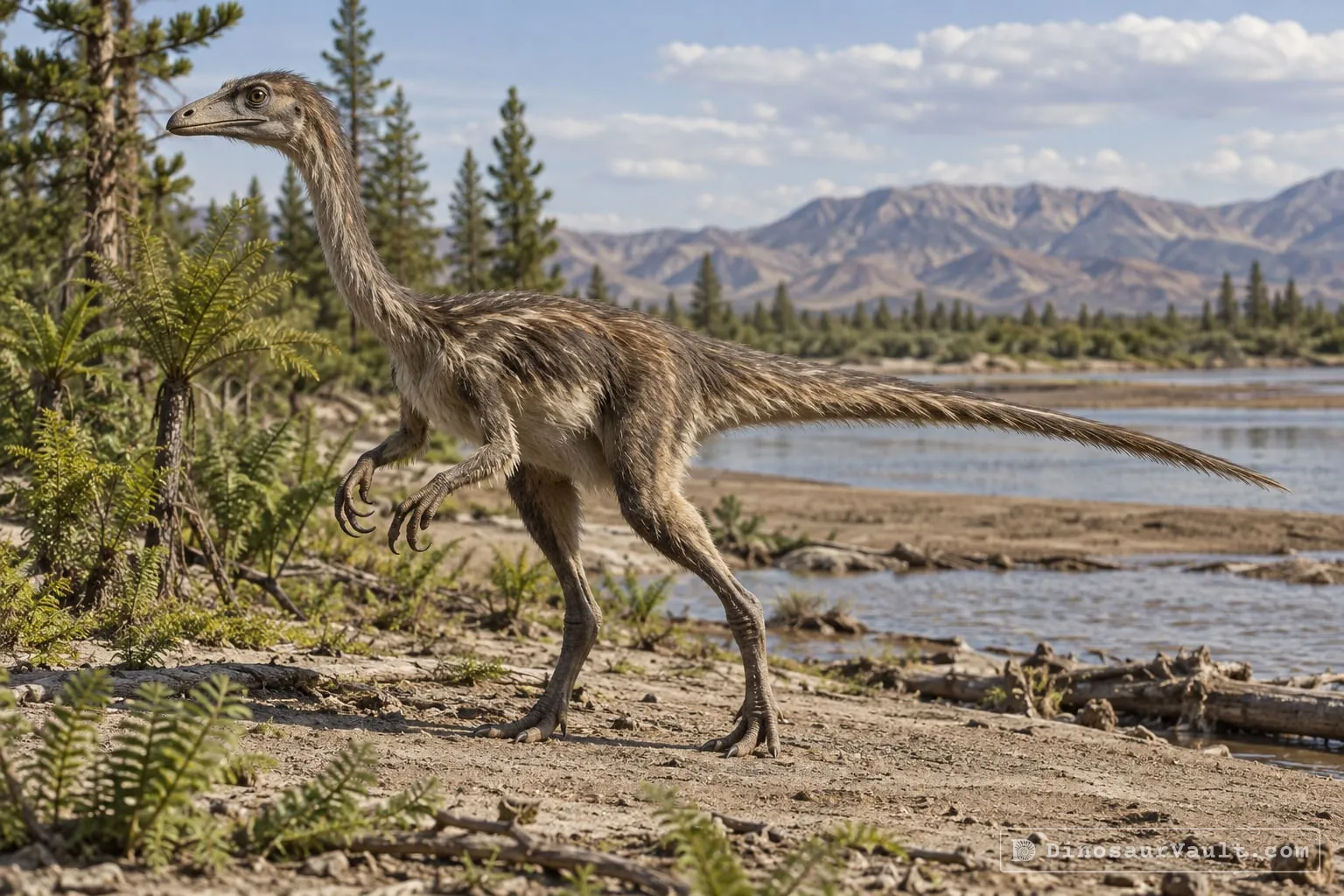


A rock formation can hold fossils laid down millions of years apart, so not every animal here met Bellusaurus.
The evidence
The science behind Bellusaurus
Which parts of the picture come from its own bones, and which come from its relatives.
From its own fossils
- A bone bed contains skull pieces, teeth, vertebrae and limb bones from many young animals.
- Its teeth have broad, spoon-shaped crowns.
- New skull bones reveal details of the palate and braincase.
Borrowed from relatives
- Missing sections of the neck and tail are filled in by comparison with sauropods such as Omeisaurus and Mamenchisaurus.
Still unknown
- Its adult size and proportions.
- How its skull changed as it grew.
- Its color and skin pattern.
Discovery timeline
- 1990Named itDong
- 2010Same rocksEBERTH, XING & CLARK
- 2018SkullMoore et al.
Key papers
The research behind what we know of Bellusaurus
Named it
Named Bellusaurus from a bone bed containing many small sauropods, with spoon-shaped teeth and bones from across the body.
Sauropoda from the Kelamaili region of the Junggar Basin, Xinjiang Autonomous Region. Vertebrata PalAsiatica 28: 43-58
No link available
Same rocks
Explained how small theropods, especially Limusaurus, became trapped in wet mud in the same formation that preserves Bellusaurus.
DINOSAUR DEATH PITS FROM THE JURASSIC OF CHINA. PALAIOS 25: 112-125
Read the paper : DINOSAUR DEATH PITS FROM THE JURASSIC OF CHINA (opens in a new tab)Skull
Described new skull bones and explored how the young age of Bellusaurus affects comparisons with other sauropods.
Cranial anatomy of Bellusaurus sui (Dinosauria: Eusauropoda) from the Middle-Late Jurassic Shishugou Formation of northwest China and a review of sauropod cranial ontogeny. PeerJ 6: e4881
Read the paper : Cranial anatomy of Bellusaurus sui (Dinosauria: Eusauropoda) from the Middle-Late Jurassic Shishugou Formation of northwest China and a review of sauropod cranial ontogeny (opens in a new tab)
Close relatives
Other members of Mamenchisauridae


Sources: Wikidata