Hesperosaurus
HES-per-oh-SORE-us
"western lizard"
Type species Hesperosaurus mjosi
- Lived
- 158 to 143 million years ago, Late Jurassic
- Diet
- Herbivore
- Length
- about 6 m (20 ft)
- Group
- Stegosaurs, Stegosauridae
- Found in
- United States
- Named by
- Carpenter et al. 2001
Size comparison
To scale


Scale in metersOutline: typical stegosaur shape
Where its fossils were found
The evidence
Today

150 million years ago
Habitat
Rivers, lakes and broad floodplains formed its Morrison Formation world. Other dinosaurs in these rocks include Allosaurus, Diplodocus and Camarasaurus.
Field notes
About Hesperosaurus
What it was like
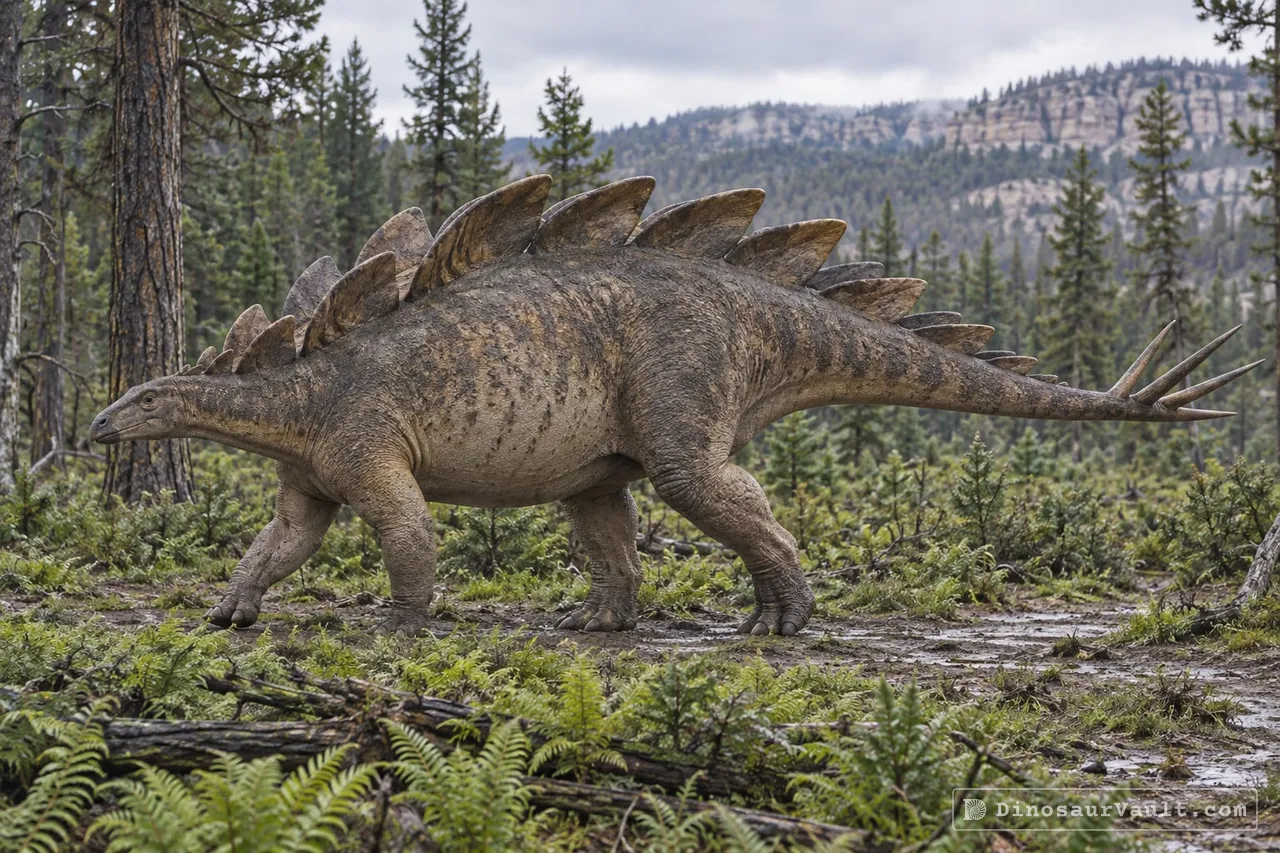
Hesperosaurus was a stegosaur about 6 meters (20 feet) long, with plates along its back and spikes on its tail. It was close to Stegosaurus but had a shorter, deeper skull and plates that were longer than tall.
Its world
It lived in the Late Jurassic, in what is now Wyoming and Montana. It comes from the Morrison Formation, the same rocks that hold Stegosaurus, Allosaurus, Diplodocus and Brontosaurus, though Hesperosaurus comes from an older part of that rock layer.
How it was found
Carpenter and colleagues named Hesperosaurus in 2001. The type species is Hesperosaurus mjosi. Several skeletons are known, one with skin impressions around its plates. Some scientists think it could be a species of Stegosaurus.
Field gallery
More views of Hesperosaurus
Scenes reconstructed from the available fossil evidence.
1 of 3
Lived alongside
Found in the same rock formations
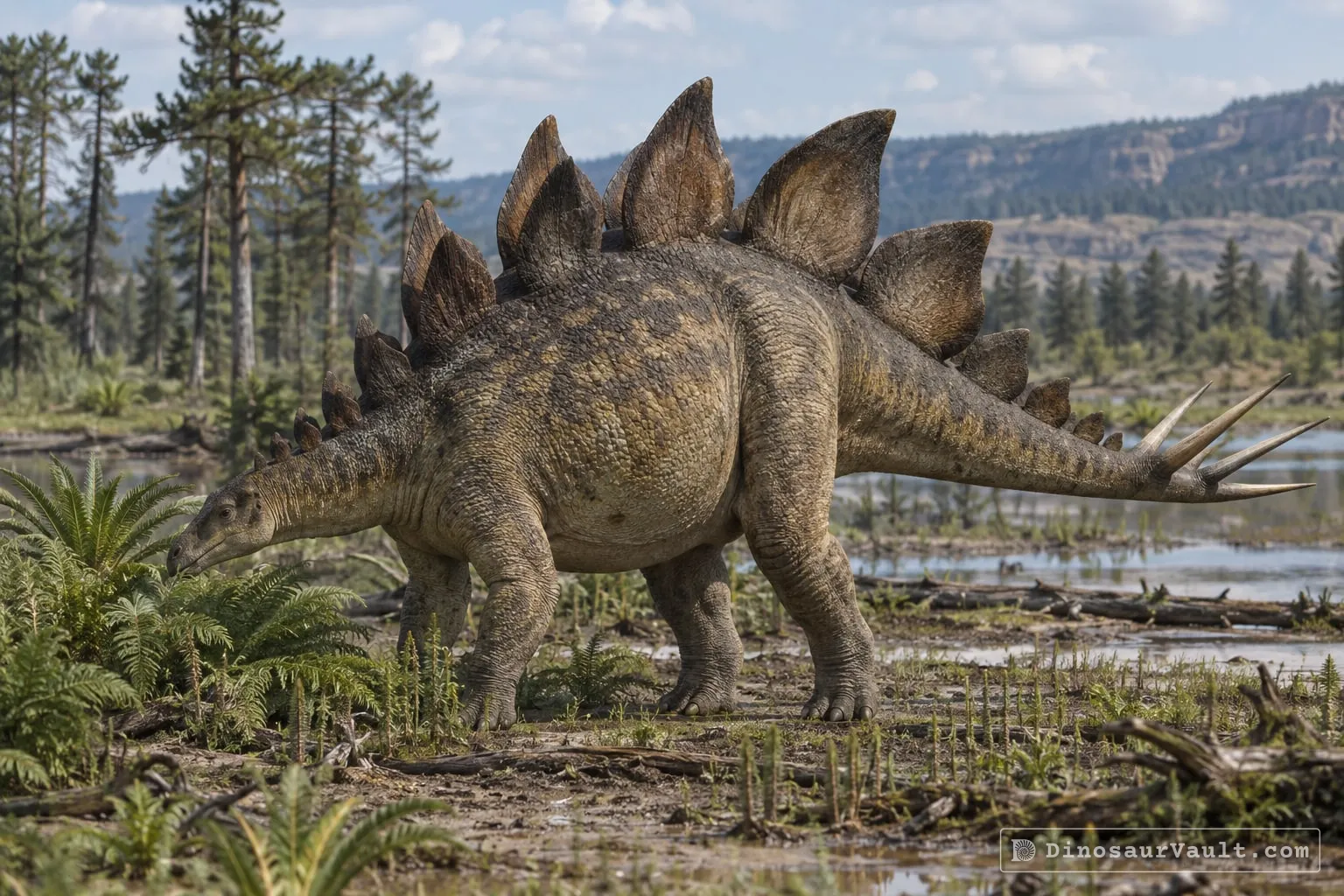
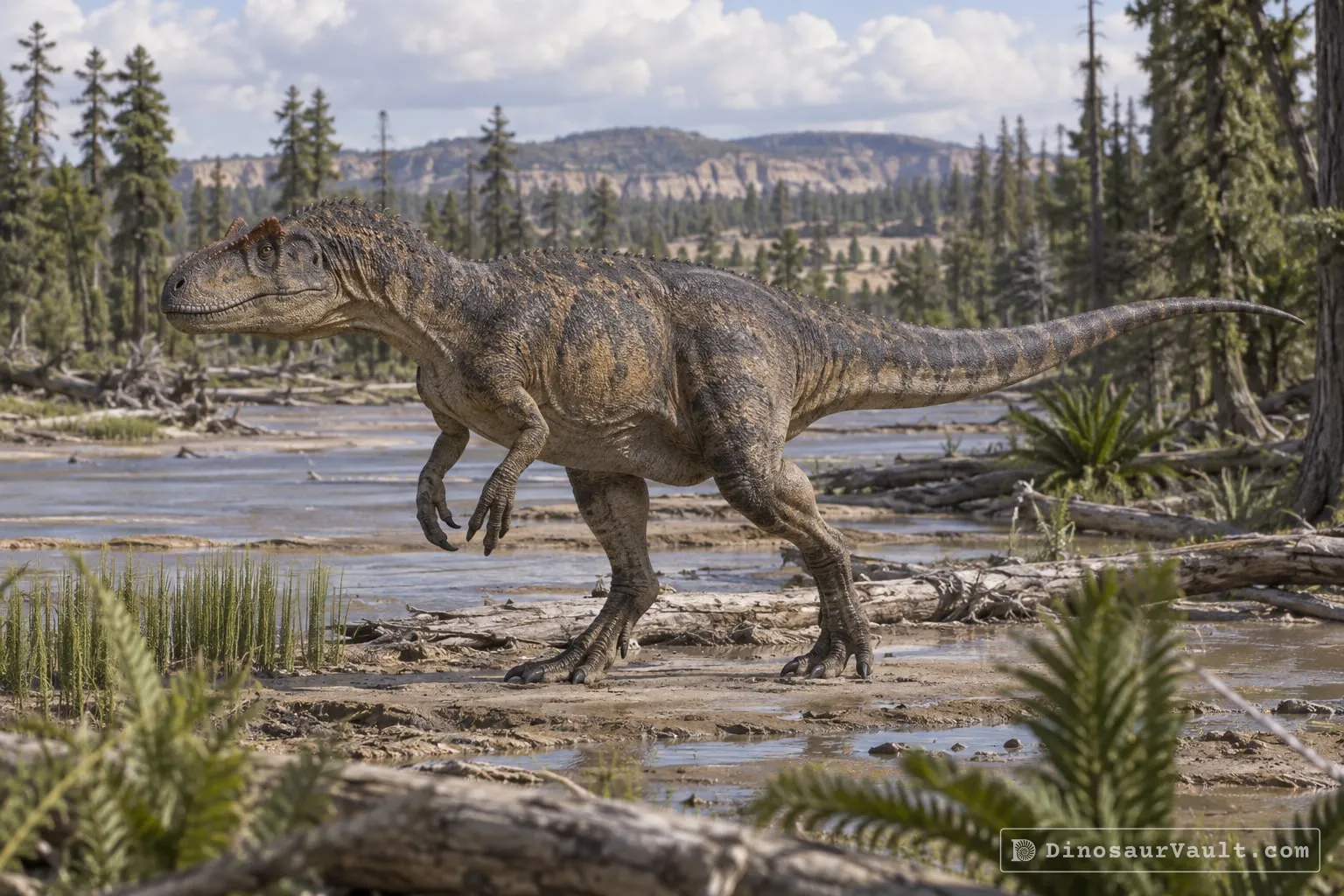
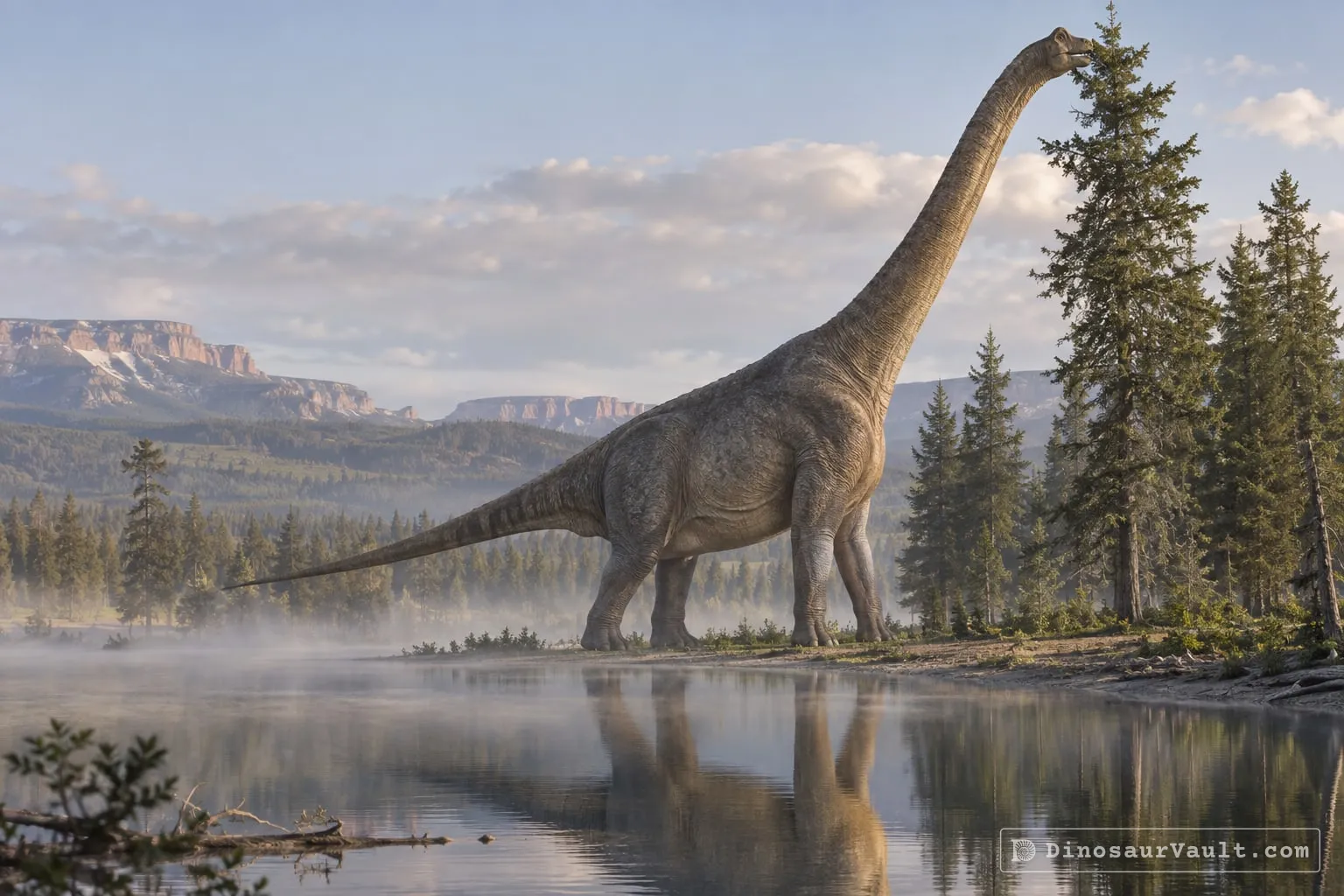
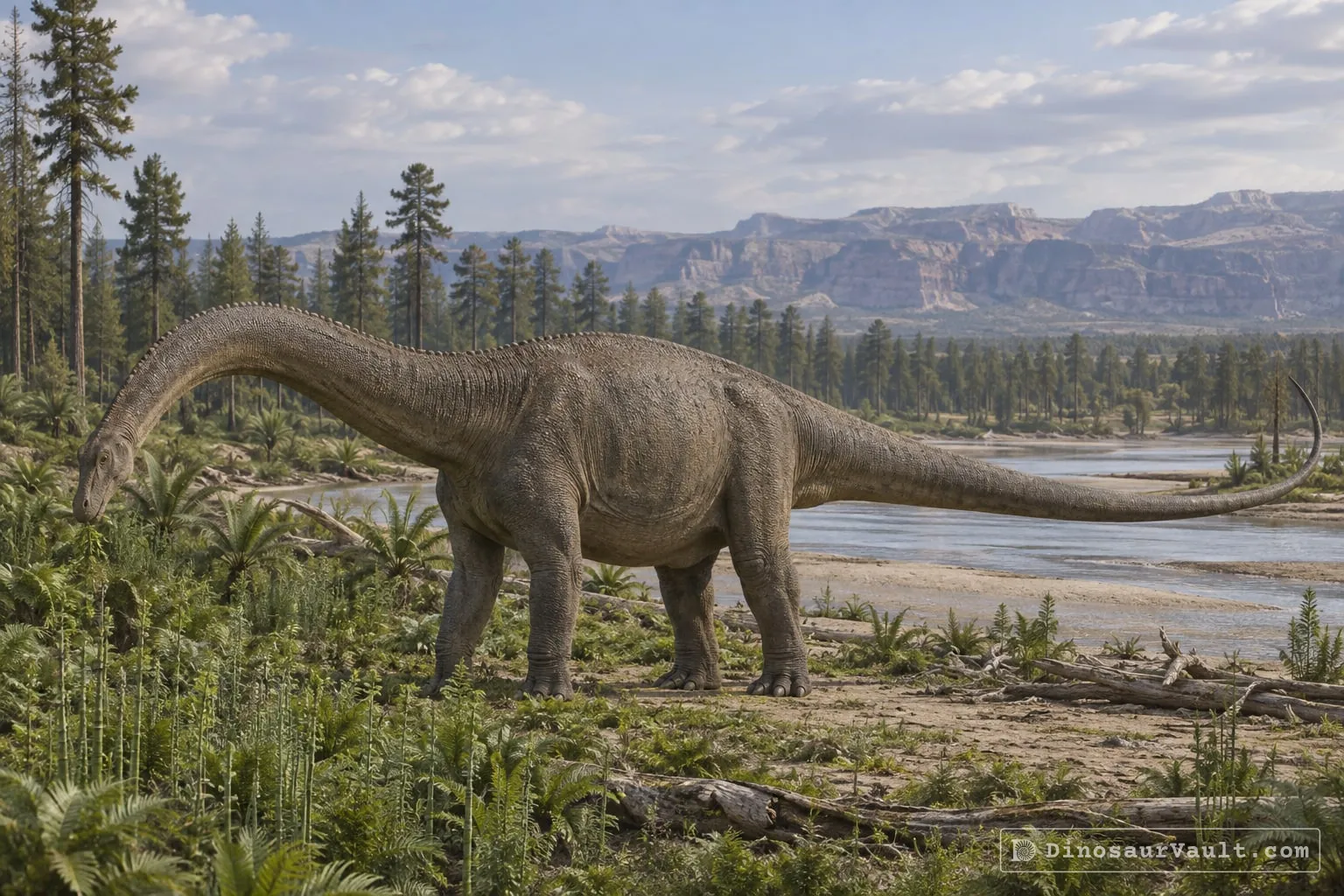
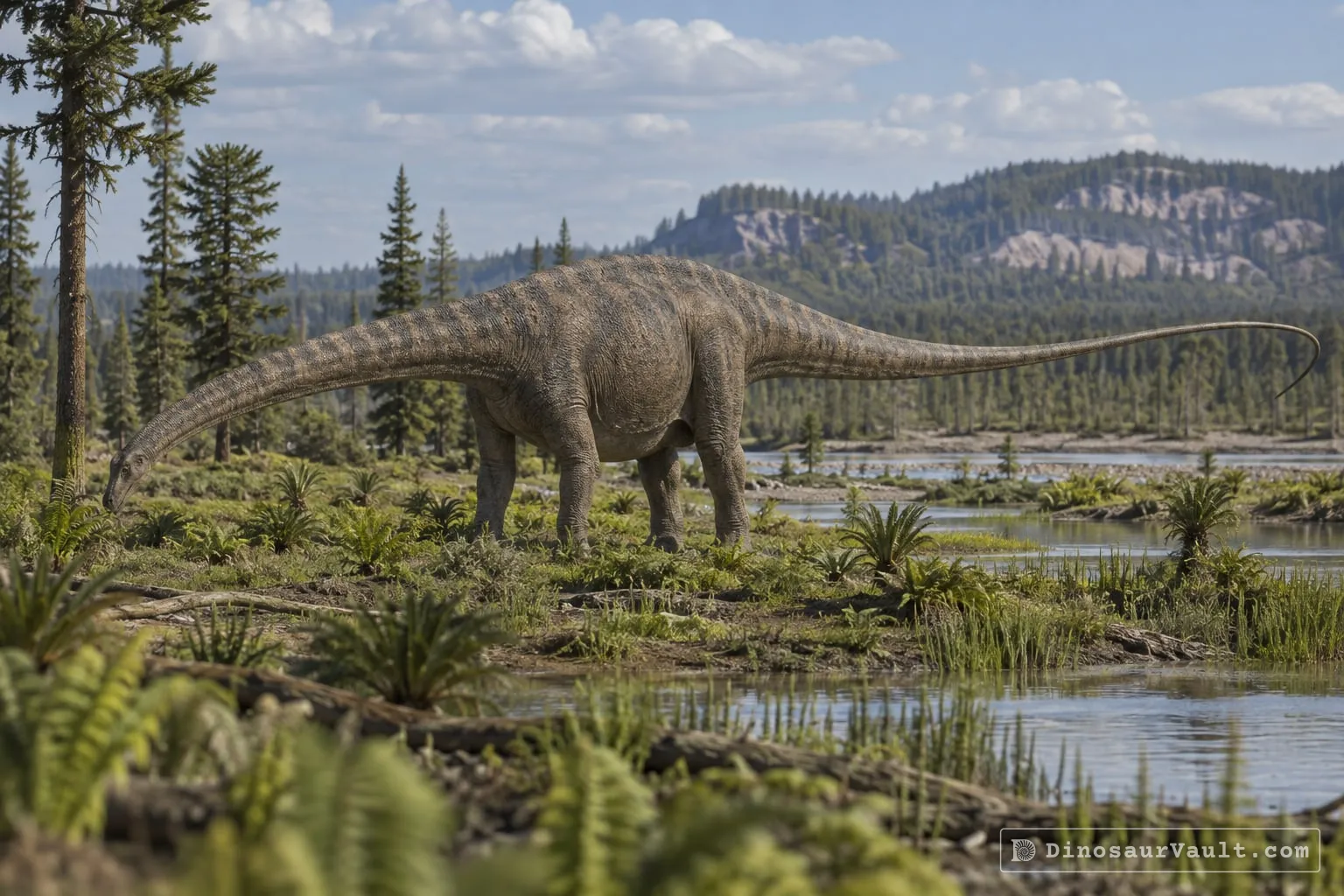
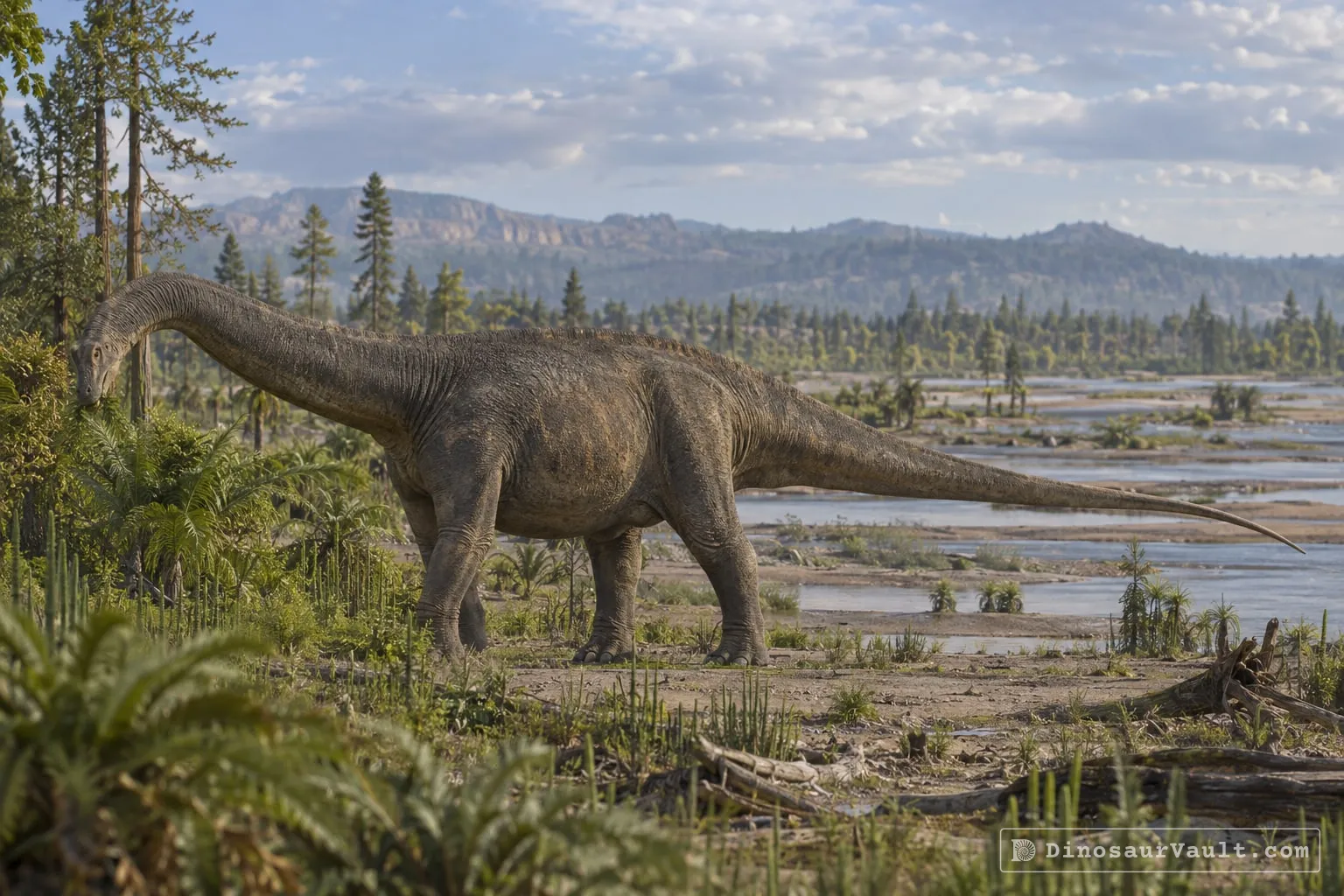
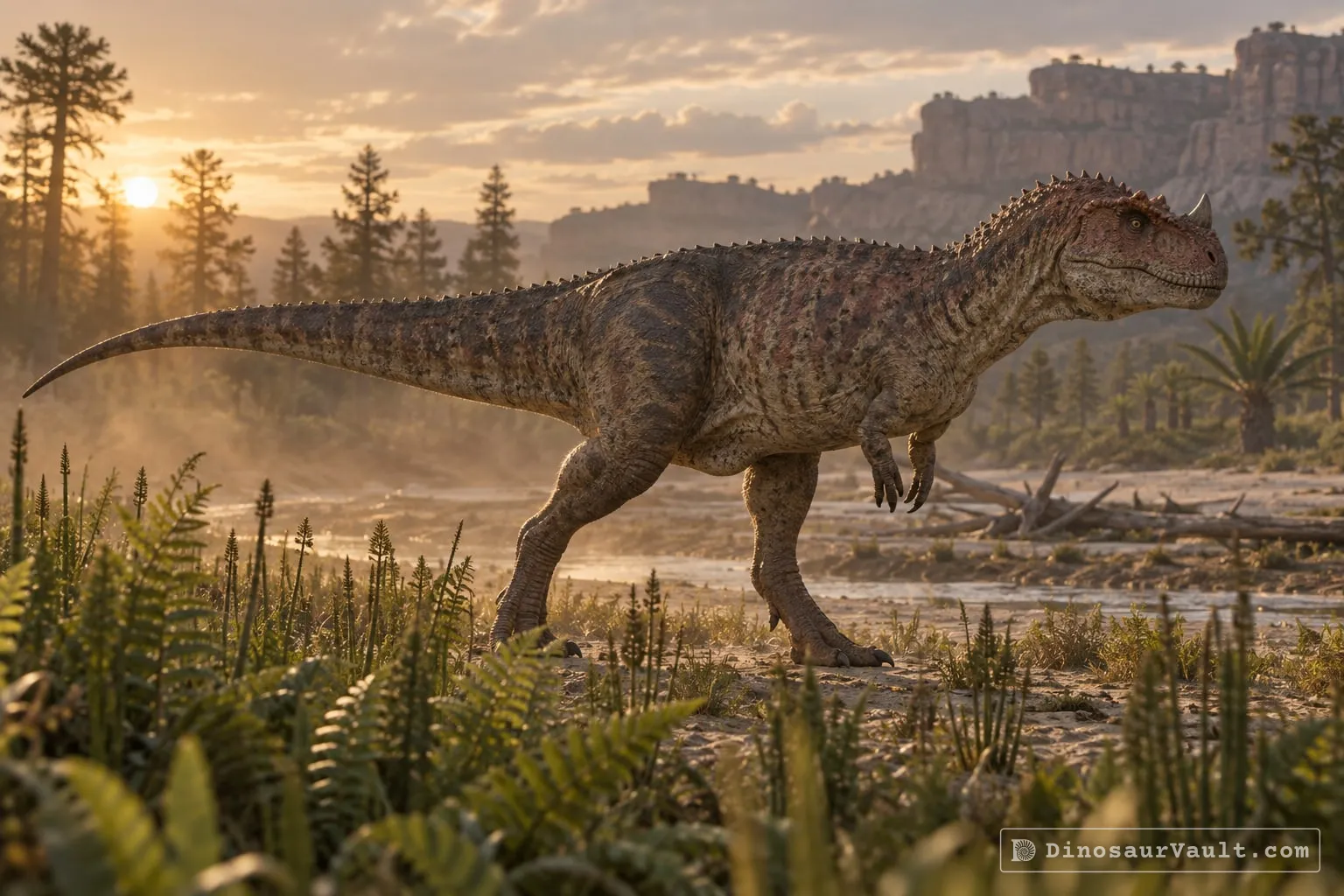


A rock formation can hold fossils laid down millions of years apart, so not every animal here met Hesperosaurus.
The evidence
The science behind Hesperosaurus
Which parts of the picture come from its own bones, and which come from its relatives.
From its own fossils
- Skeletons preserve a broad skull, back plates longer than they are tall, and pointed tail spikes.
- Skin impressions show small scales, with larger scales mixed among them.
- An impression beside a back plate preserves its outer covering, probably a sheath of horn.
Borrowed from relatives
- Much of the body is known from its own skeletons, so little needs to be borrowed from Stegosaurus.
Still unknown
- Its color.
- Whether the plates were mainly used for display, heat exchange or both.
- Whether it preferred wetter habitats than Stegosaurus.
Discovery timeline
- 2001Named itCarpenter, Miles & Cloward
- 2010SkinChristiansen & Tschopp
- 2011Growing upHAYASHI et al.
- 2018New findMaidment, Woodruff & Horner
Key papers
The research behind what we know of Hesperosaurus
Named it
Described a stegosaur with a broad skull and low, oval plates from the lower part of the Morrison Formation.
New primitive stegosaur from the Morrison Formation, Wyoming. The Armored Dinosaurs. Indiana University Press, Bloomington.
No link available
Skin
Described scaly skin and the impression of a covering over a back plate, interpreted as a sheath of horn.
Exceptional stegosaur integument impressions from the Upper Jurassic Morrison Formation of Wyoming. Swiss Journal of Geosciences 103: 163-171
Read the paper : Exceptional stegosaur integument impressions from the Upper Jurassic Morrison Formation of Wyoming (opens in a new tab)Growing up
Examined the inside of plates and spikes, including an old adult Hesperosaurus whose armor resembled that of Stegosaurus.
Ontogenetic histology of Stegosaurus plates and spikes. Palaeontology 55: 145-161
Read the paper : Ontogenetic histology of Stegosaurus plates and spikes (opens in a new tab)New find
Described a skeleton still growing at death and suggested that Hesperosaurus may have been smaller than Stegosaurus.
A new specimen of the ornithischian dinosaur Hesperosaurus mjosi from the Upper Jurassic Morrison Formation of Montana, U.S.A., and implications for growth and size in Morrison stegosaurs. Journal of Vertebrate Paleontology 38: e1406366
Read the paper : A new specimen of the ornithischian dinosaur Hesperosaurus mjosi from the Upper Jurassic Morrison Formation of Montana, U.S.A., and implications for growth and size in Morrison stegosaurs (opens in a new tab)
Close relatives
Other members of Stegosauridae


Sources: Wikidata