Sinraptor
SIN-rap-tor
"Chinese robber"
- Lived
- 168 to 155 million years ago, Middle Jurassic to Late Jurassic
- Diet
- Carnivore
- Length
- about 7.6 m (25 ft)
- Group
- Theropods, Metriacanthosauridae
- Found in
- China
- Named by
- Currie and Zhao 1994
Size comparison
To scale


Scale in meters
Where its fossils were found
The evidence
Today

160 million years ago
Field notes
About Sinraptor
What it was like
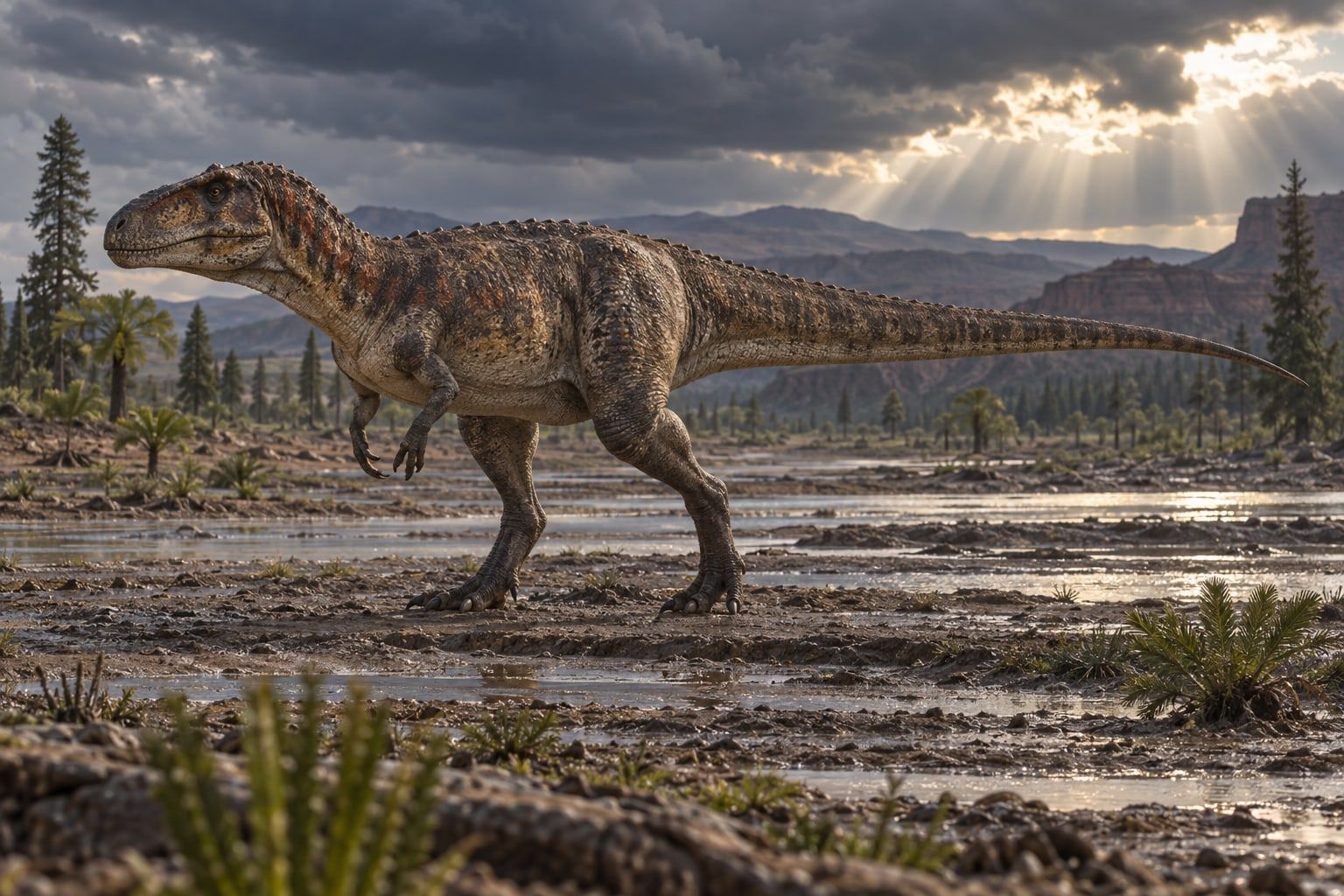
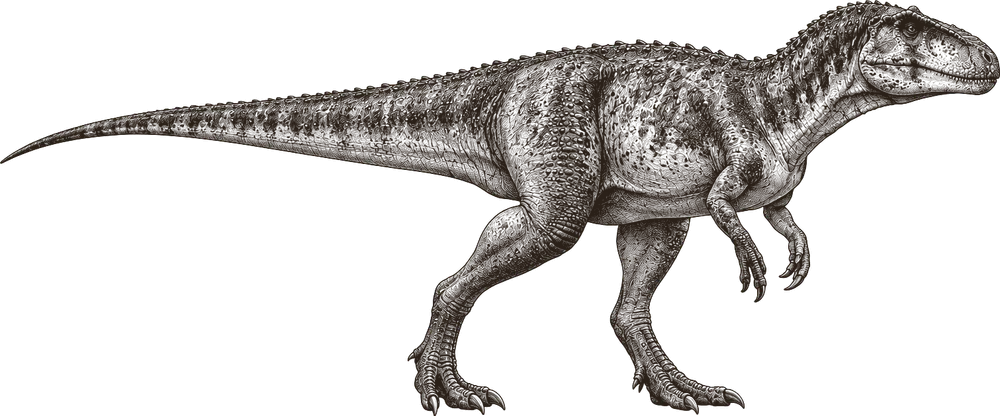
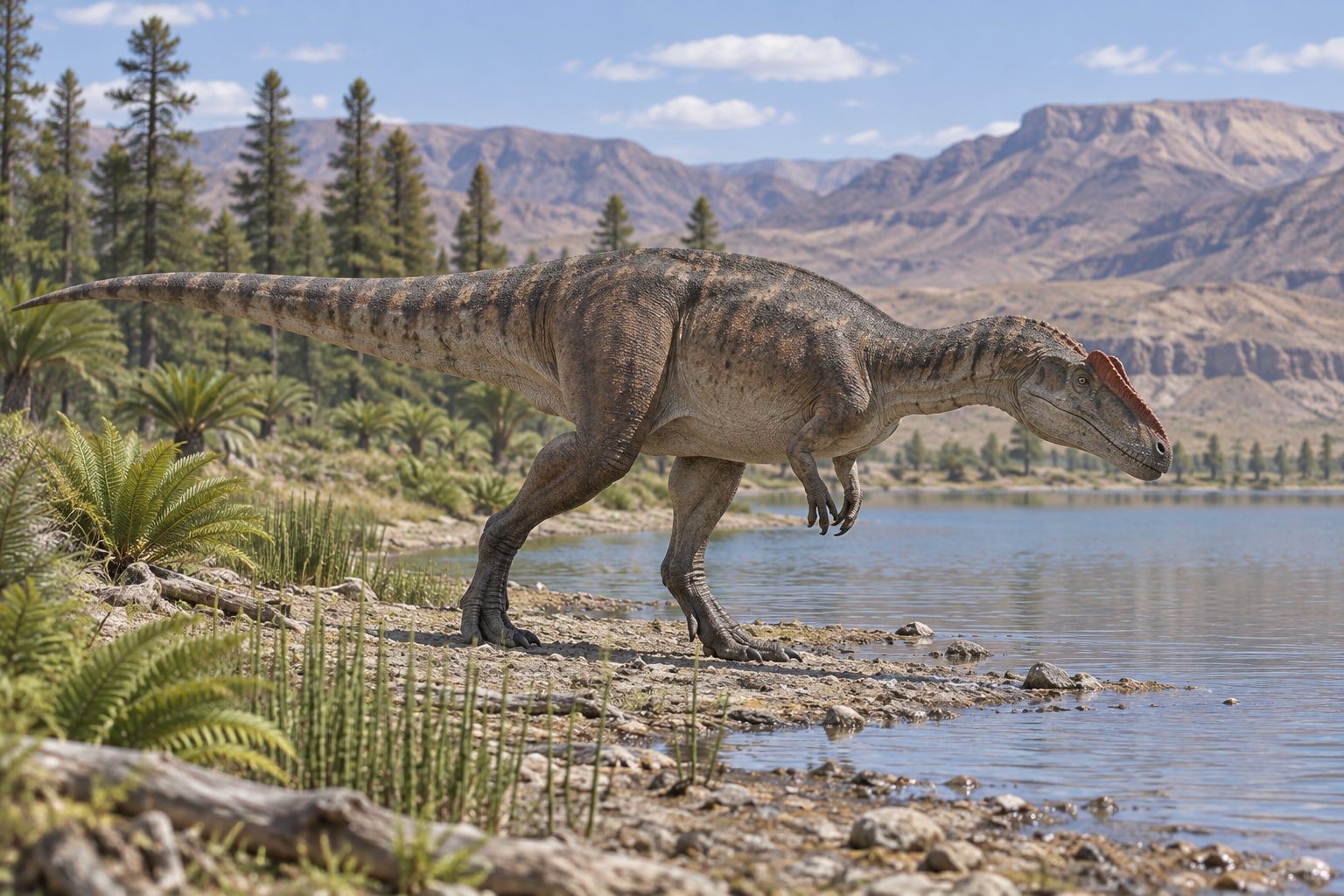
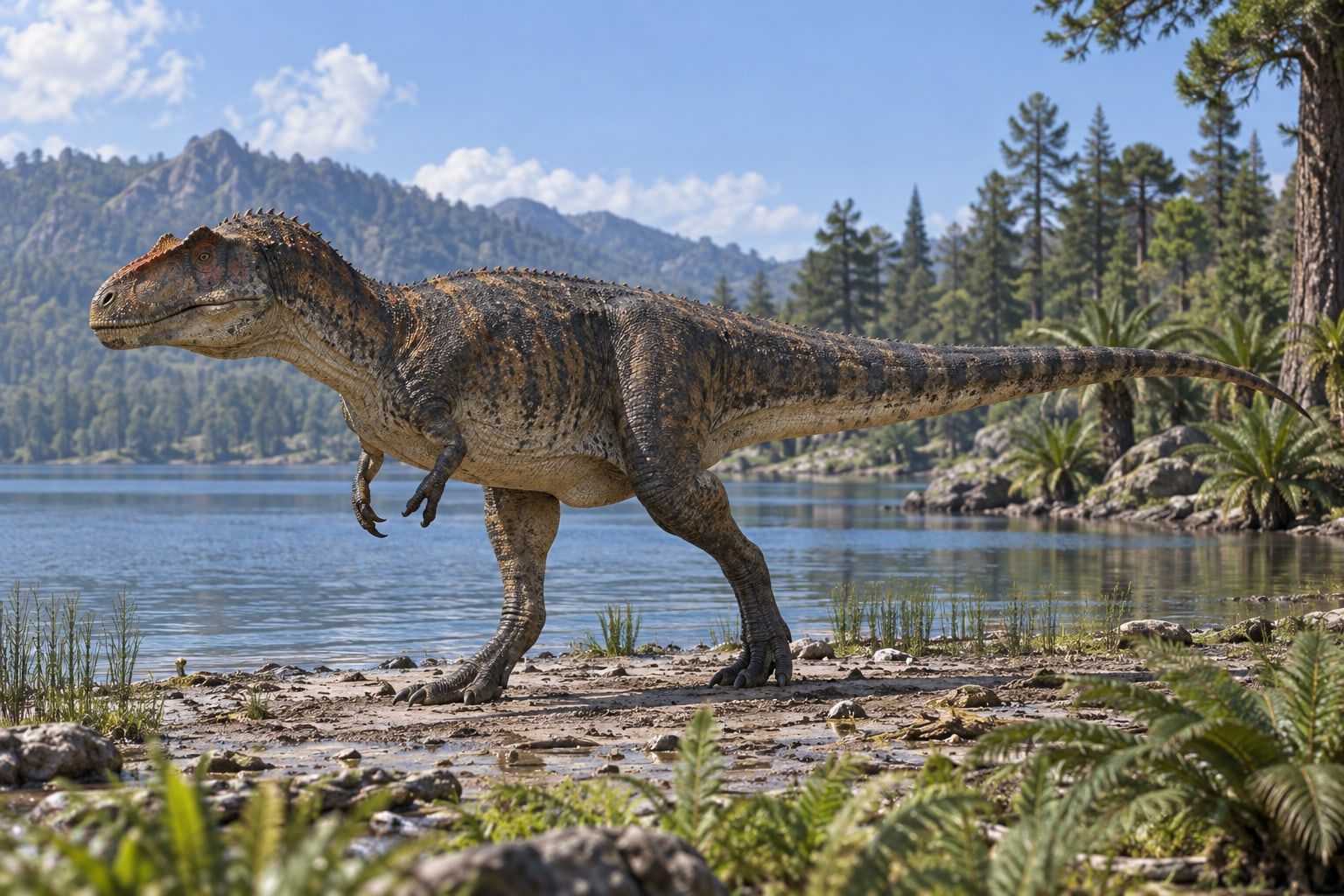
Sinraptor was a large, deep-skulled predator with blade-shaped, serrated teeth built for tackling sizeable prey. It walked on two strong legs, balanced by a long, heavy tail, and was almost certainly one of the largest hunters in its ecosystem. Sinraptor grew to about 7.6 meters (25 feet) long, making it a similar size to the more famous Allosaurus.
Its world
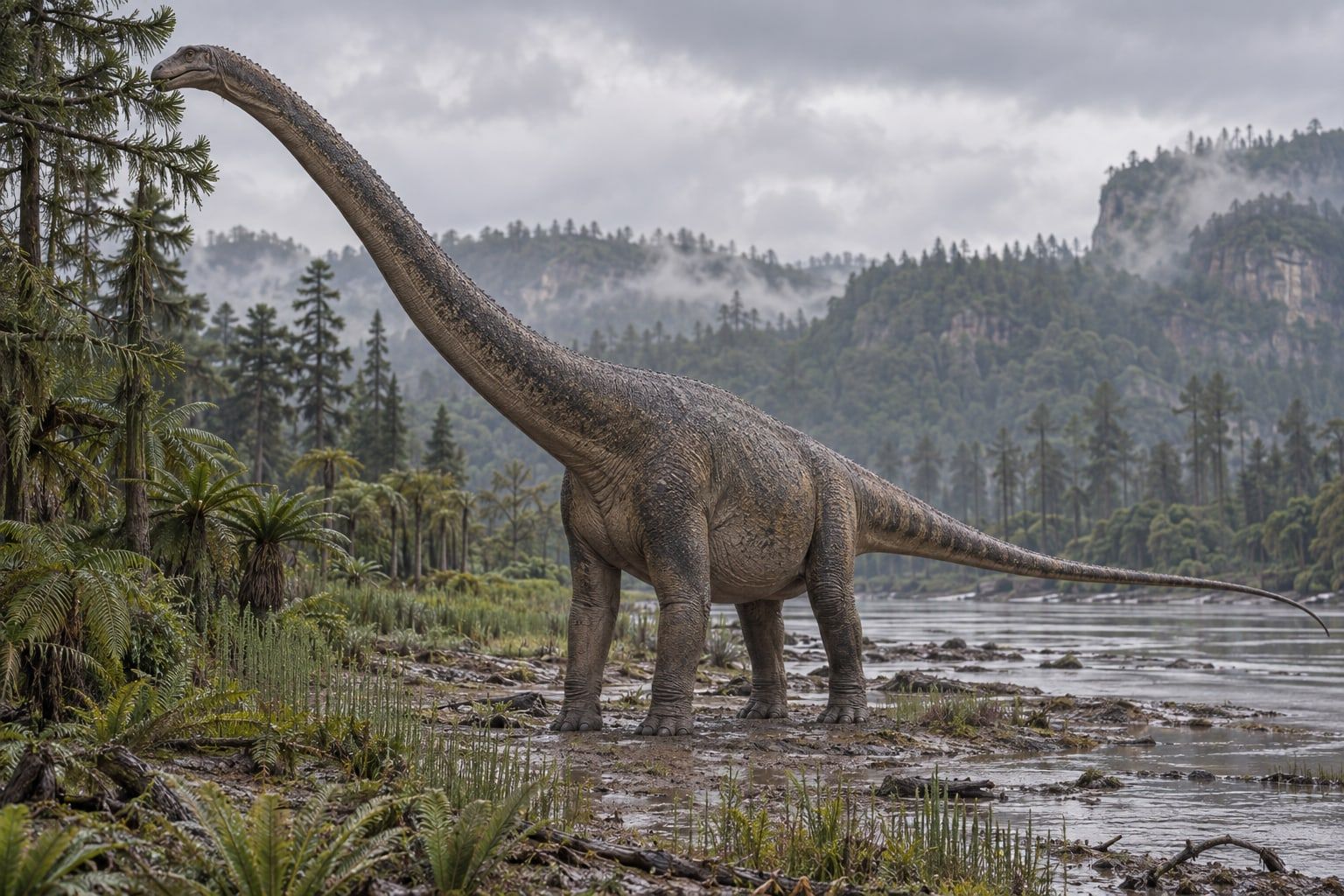
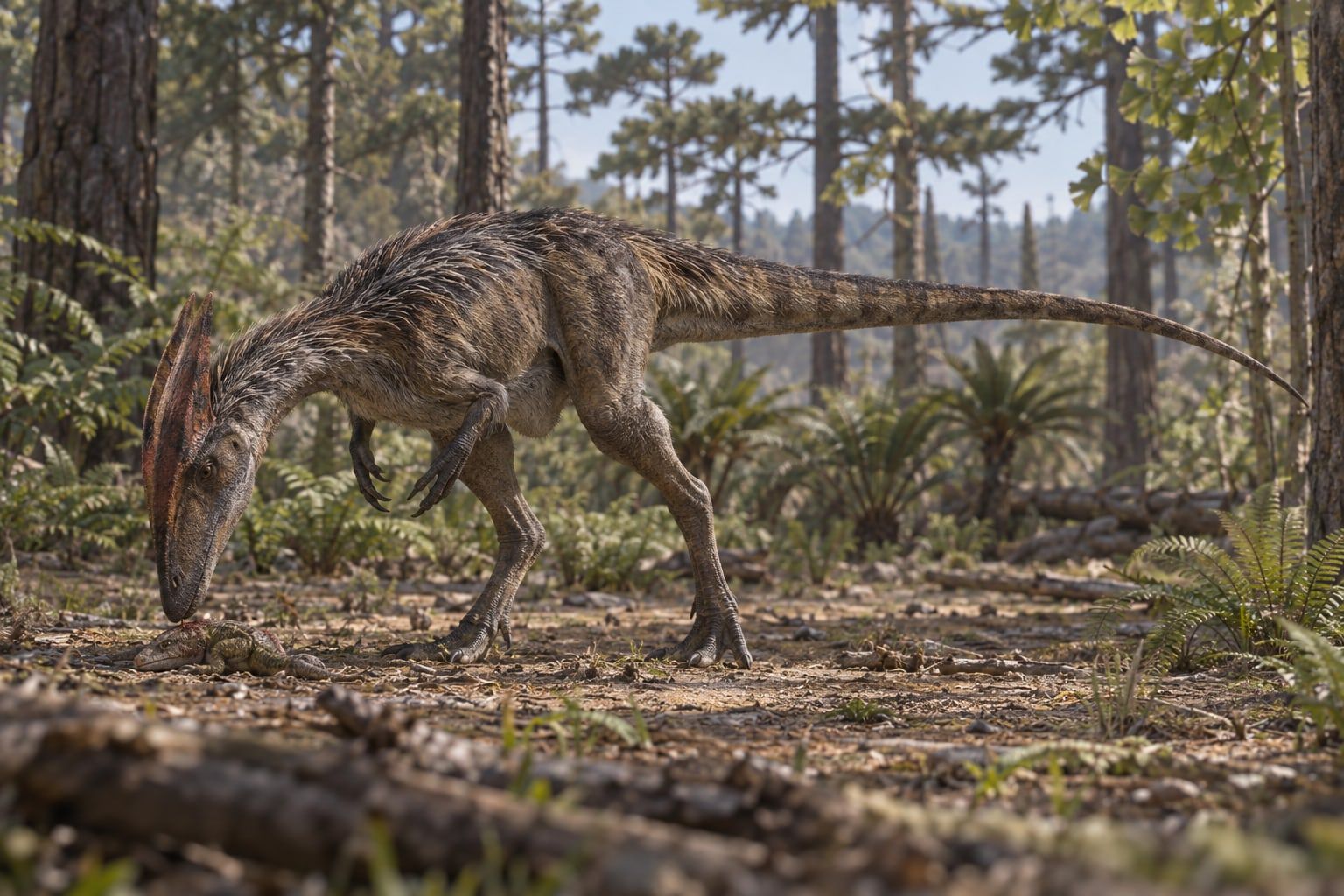
Sinraptor lived from about 168 to 155 million years ago, during the Middle to Late Jurassic, in what is now China. Its fossils come from the Shaximiao and Shishugou formations, rock layers that have produced some of the richest Jurassic dinosaur faunas known from Asia. It shared its world with long-necked sauropods such as Mamenchisaurus and Shunosaurus, the small predator Guanlong, and its close relative Yangchuanosaurus. Other predators, such as Monolophosaurus, also hunted in the same region, alongside armored dinosaurs like Gigantspinosaurus.
How it was found
Currie and Zhao named Sinraptor in 1994. Two fossil finds are known, including a well preserved skeleton that has made Sinraptor one of the best studied members of its family, Metriacanthosauridae. It remains an important genus for understanding how this whole group of large Jurassic predators evolved.
Lived alongside
Found in the same rock formations
Close relatives
Other members of Metriacanthosauridae
Sources: WikidataNamed in: P. J. Currie and X.-J. Zhao. 1994. A new carnosaur (Dinosauria, Theropoda) from the Jurassic of Xinjiang, People's Republic of China. Canadian Journal of Earth Sciences 30(10-11):2037-2081