Outline: a typical stegosaur
Wuerhosaurus
woo-UR-ho-SORE-us
"Wuerho lizard"
- Lived
- 137 to 101 million years ago, Early Cretaceous
- Diet
- Herbivore
- Length
- about 7 m (23 ft)
- Group
- Stegosaurs, Stegosauridae
- Found in
- China
- Named by
- Dong 1973
Size comparison
To scale

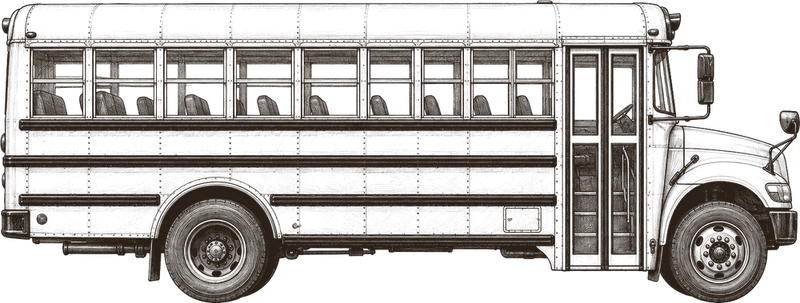
Scale in metersOutline: typical stegosaur shape
Where its fossils were found
The evidence
Today
120 million years ago
Field notes
About Wuerhosaurus
What it was like
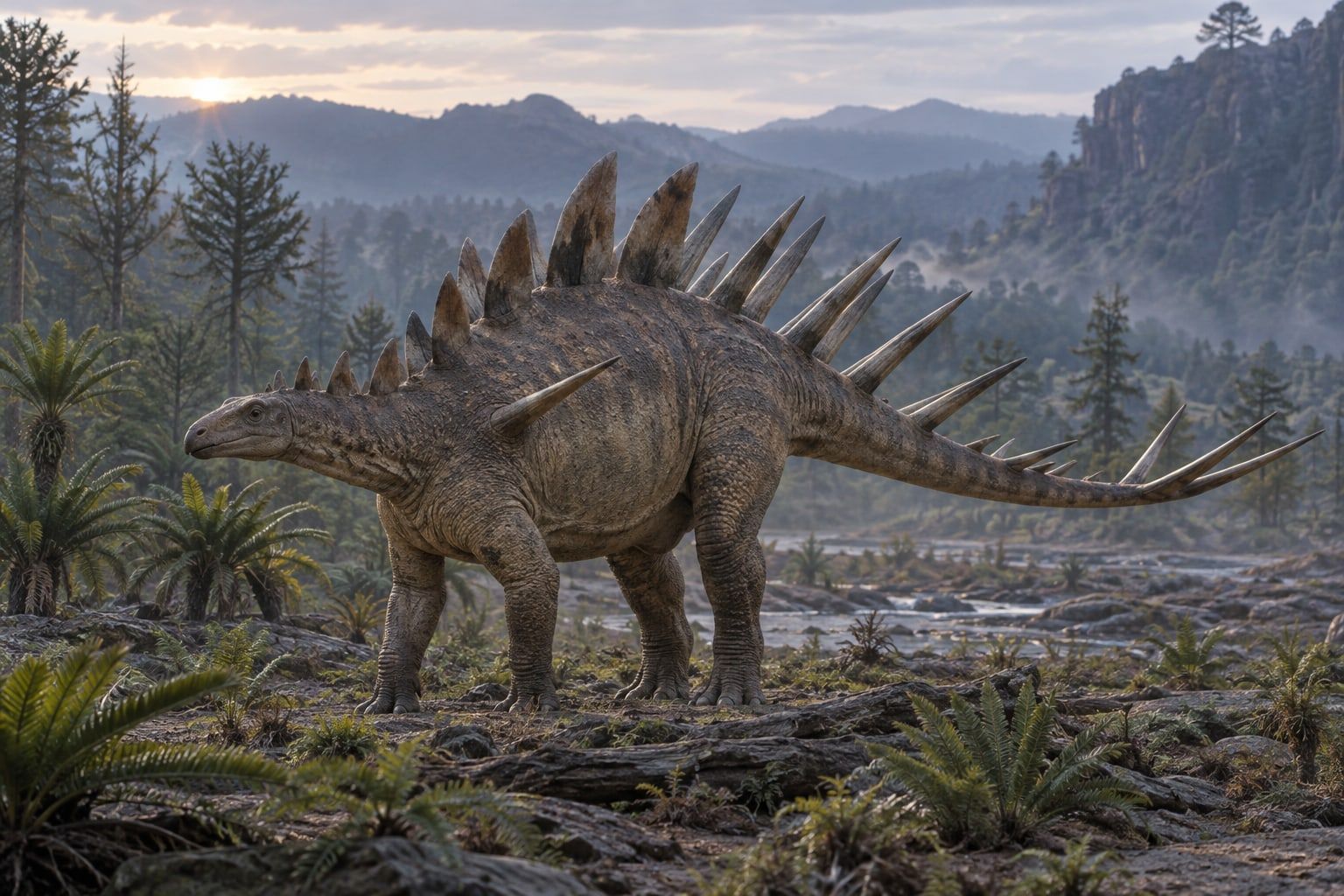
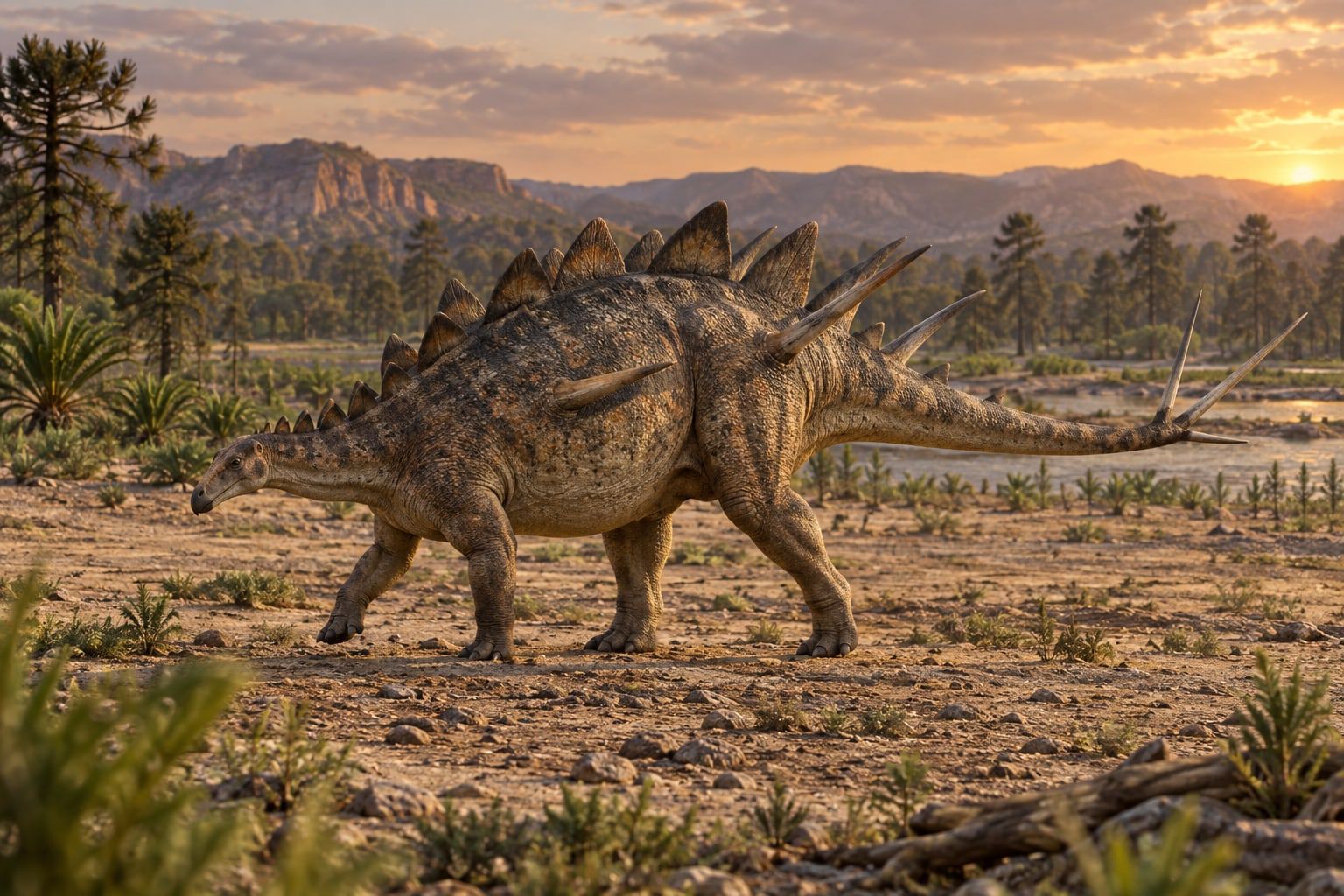
Wuerhosaurus was a stegosaur, a plant eater with plates along its back and spikes on its tail. It was about 7 meters (23 feet) long. Its plates may have been lower and longer than those of Stegosaurus, but the fossils are broken, so their true shape is uncertain.
It had a broad body and short front legs, so its head hung low, which suited browsing on low plants.
Its world
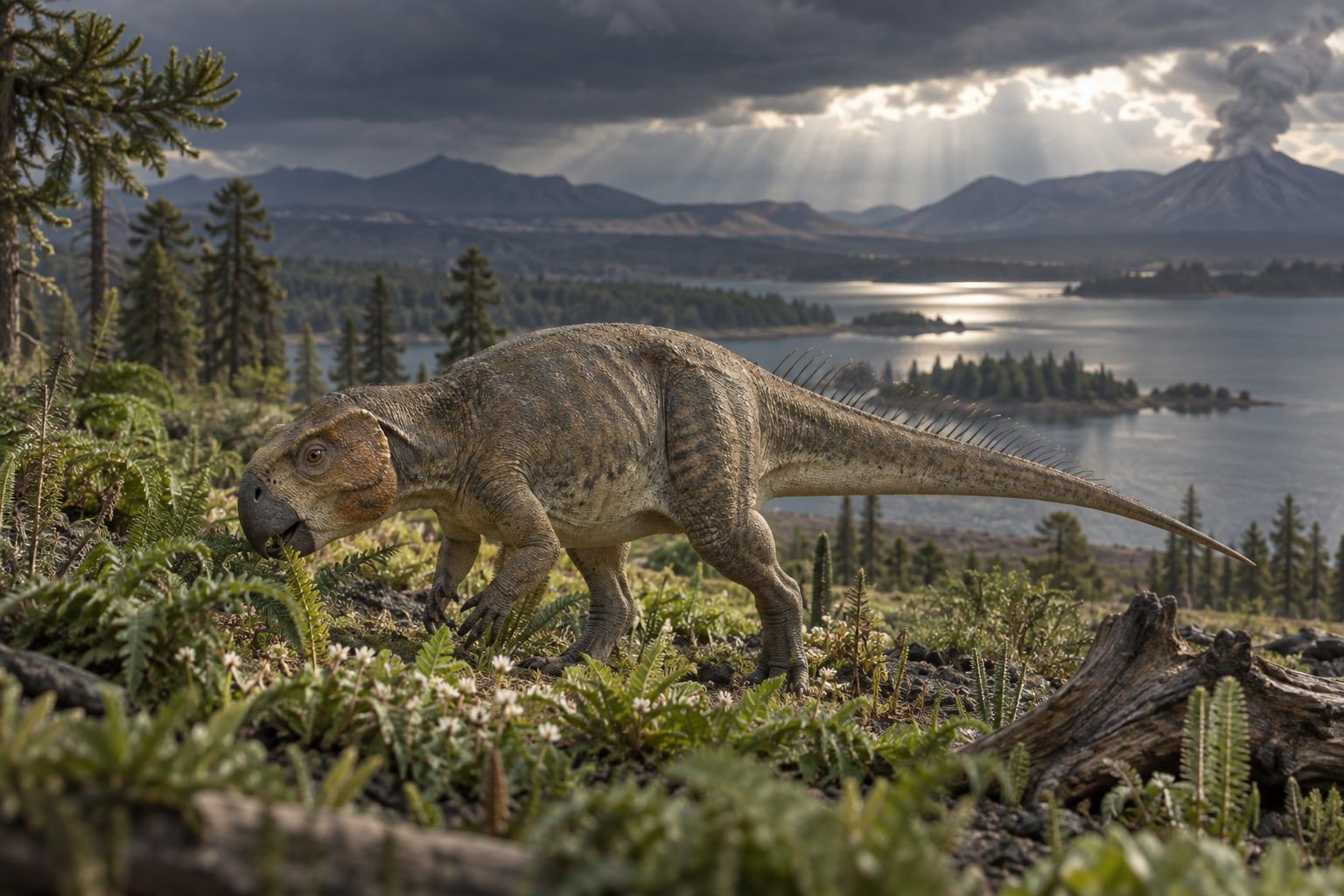
It lived in the Early Cretaceous, in what is now China. Its fossils come from the Lianmuqin and Ejinhoro formations. It shared its world with the small parrot-beaked Psittacosaurus and the predator Kelmayisaurus. It is one of the last stegosaurs known, from a time when the group had nearly disappeared.
How it was found
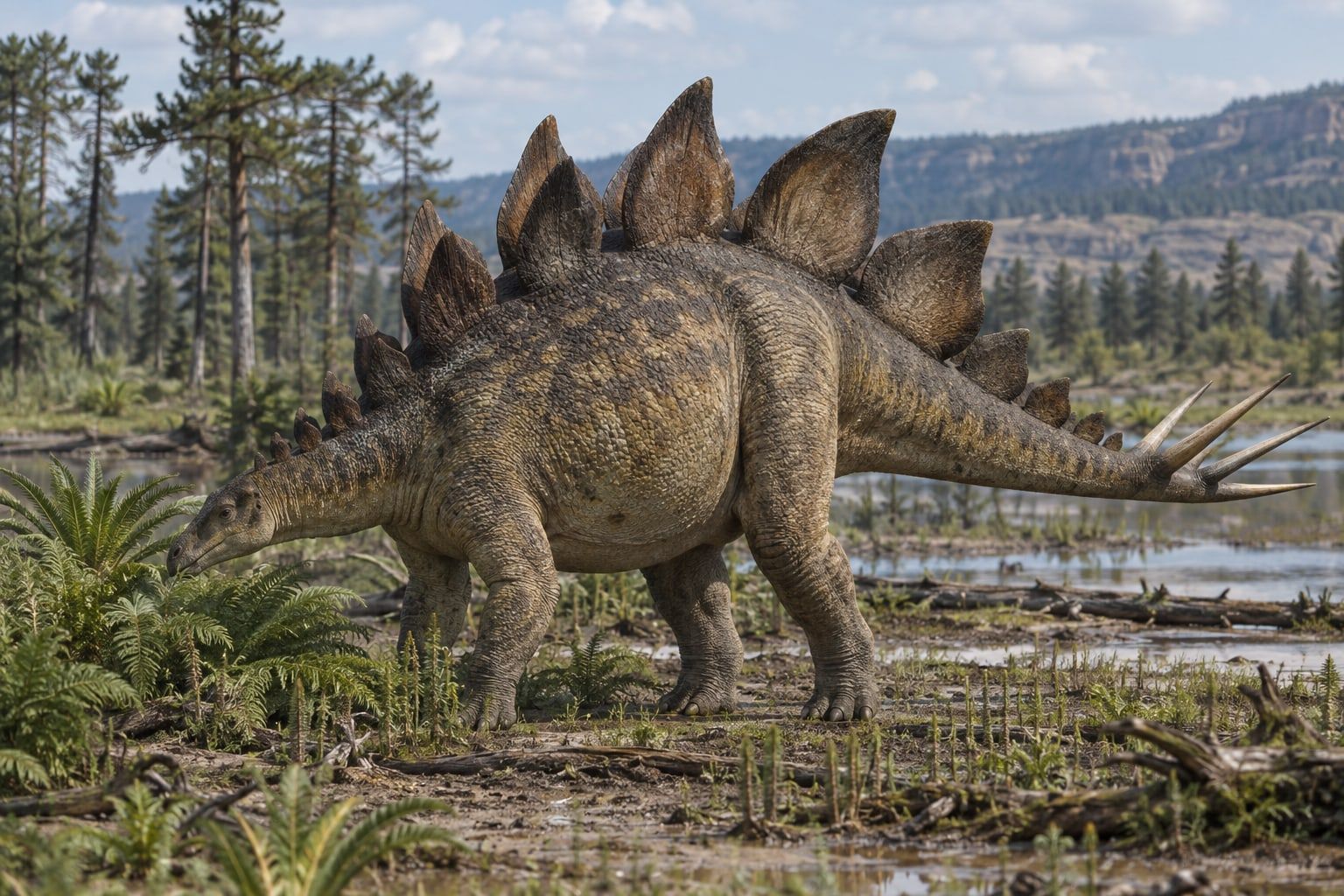
Dong named Wuerhosaurus in 1973. A second species was named later. Some scientists think Wuerhosaurus is so close to Stegosaurus that it could belong to the same genus, but most keep it separate.
Lived alongside
Found in the same rock formations
Close relatives
Other members of Stegosauridae
Sources: WikidataNamed in: Z. Dong. 1973. [Dinosaurs from Wuerho]. Reports of Paleontological Expedition to Sinkiang (II): Pterosaurian Fauna from Wuerho, Sinkiang. Memoirs of the Institute of Vertebrate Paleontology and Paleoanthropology, Academia Sinica 11:45-52