Yinlong
"hidden dragon"
- Lived
- 162 to 155 million years ago, Late Jurassic
- Diet
- Herbivore
- Length
- about 1.2 m (4 ft)
- Group
- Ceratopsians, Chaoyangsauridae
- Found in
- China
- Named by
- Xu et al. 2006
Size comparison
To scale

Scale in metersOutline: typical ceratopsian shape
Where its fossils were found
The evidence
Today

160 million years ago
Habitat
Rivers, floodplains and wetlands formed the landscape of the Shishugou Formation in China. Guanlong, Limusaurus and Mamenchisaurus also lived in the region.
Field notes
About Yinlong
What it was like
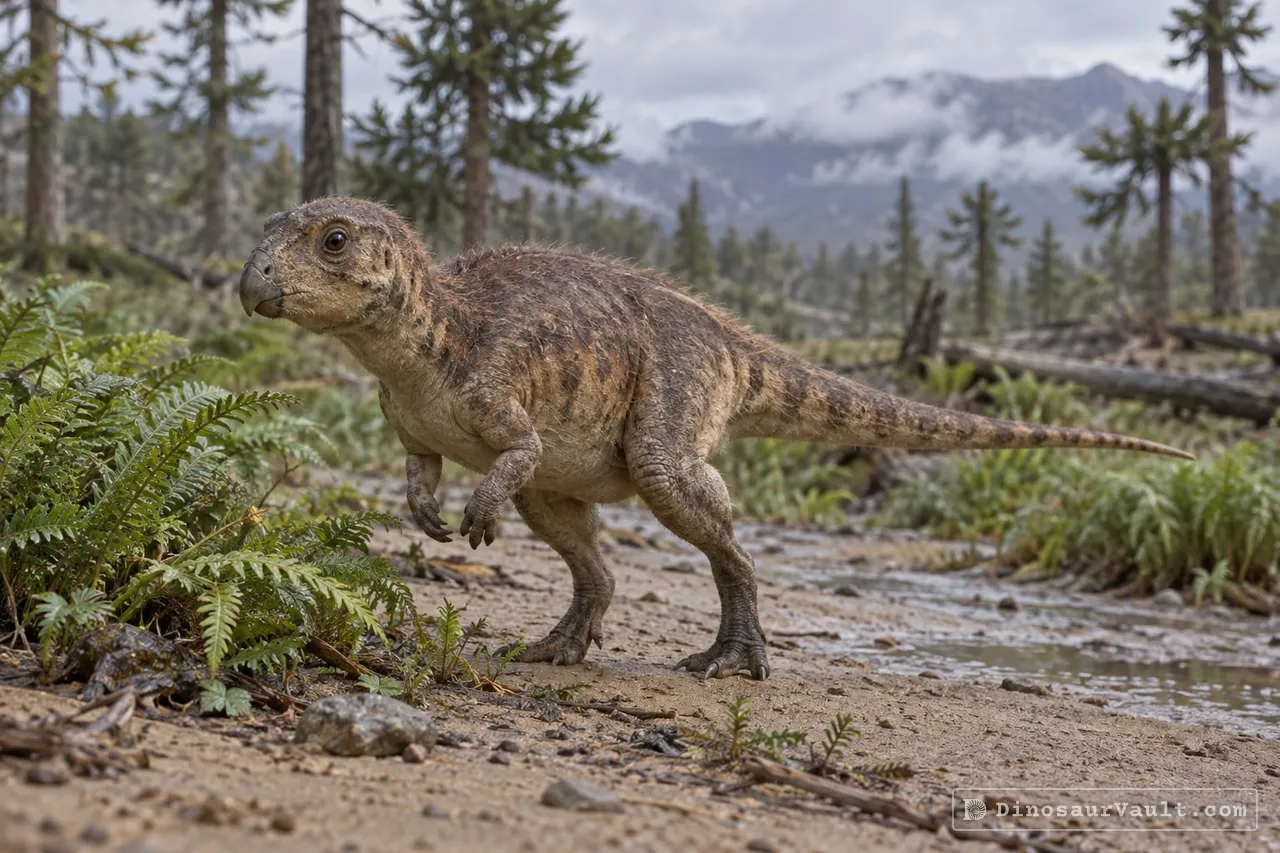
Yinlong was a small plant eater about 1.2 meters (4 feet) long that walked on its hind legs. It is one of the oldest known ceratopsians, the group that later produced Triceratops. It already had the narrow beak bone that marks the horned dinosaurs, but no frill or horns.
Its world
It lived in the Late Jurassic, in what is now China. It comes from the Shishugou Formation, where it shared the land with the long-necked Mamenchisaurus, the predators Sinraptor and Monolophosaurus, and the crested early tyrannosaur Guanlong.
How it was found
Xu and colleagues named Yinlong in 2006. Its name refers to a film shot near the site. The skeleton is almost complete, and gastroliths, stones swallowed to help grind food, were found in its belly.
Field gallery
More views of Yinlong
Scenes reconstructed from the available fossil evidence.
1 of 3
Lived alongside
Found in the same rock formations
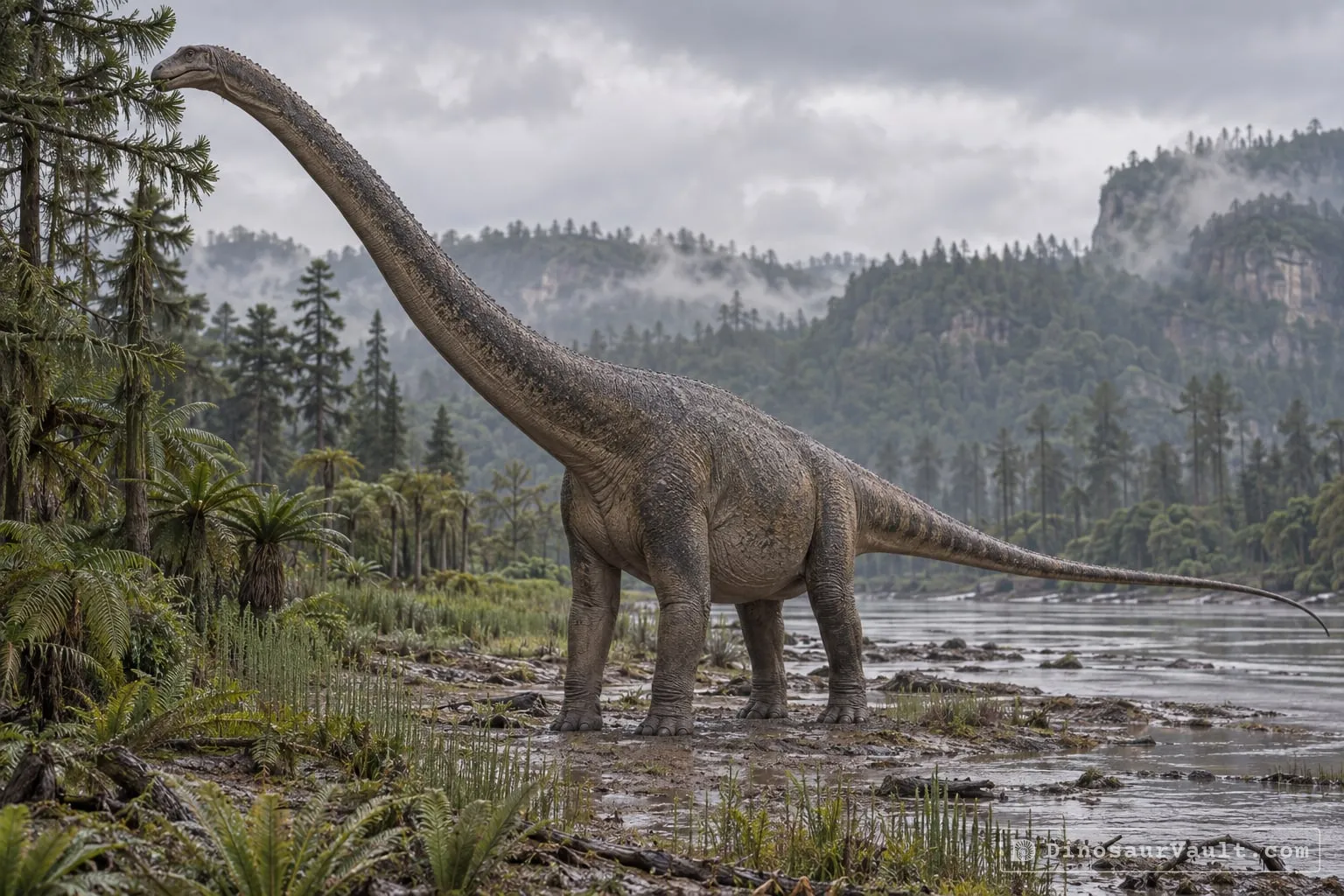
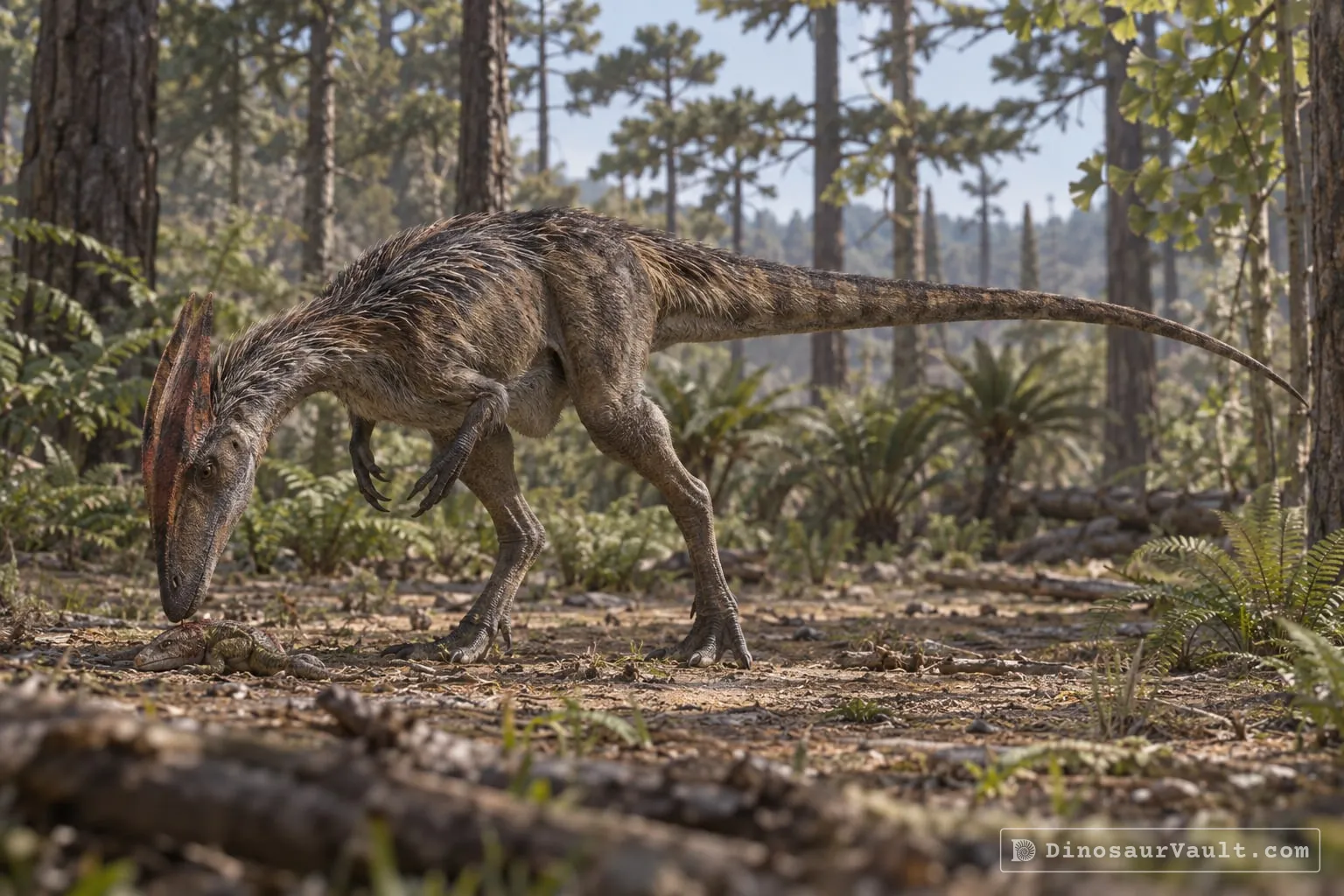
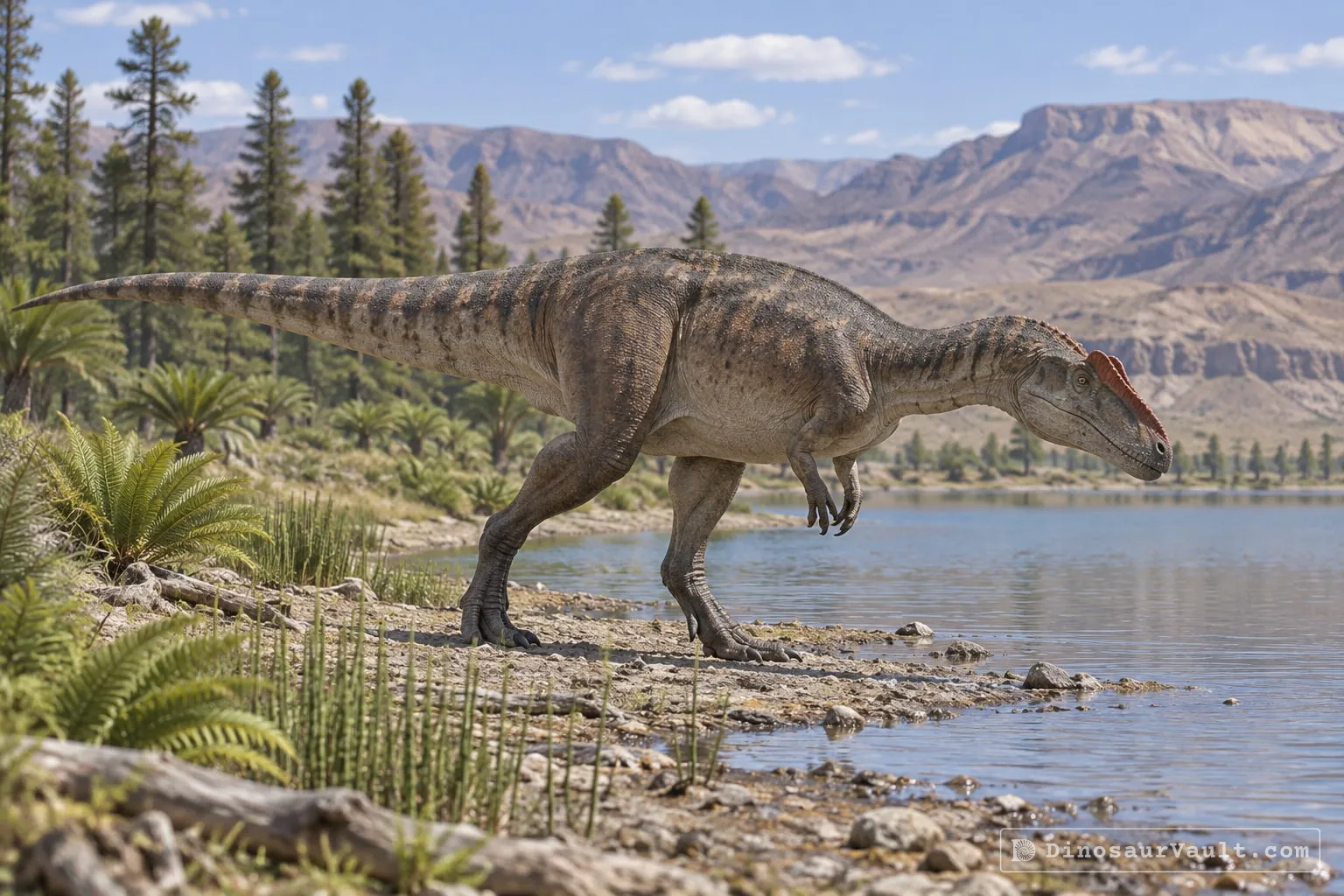
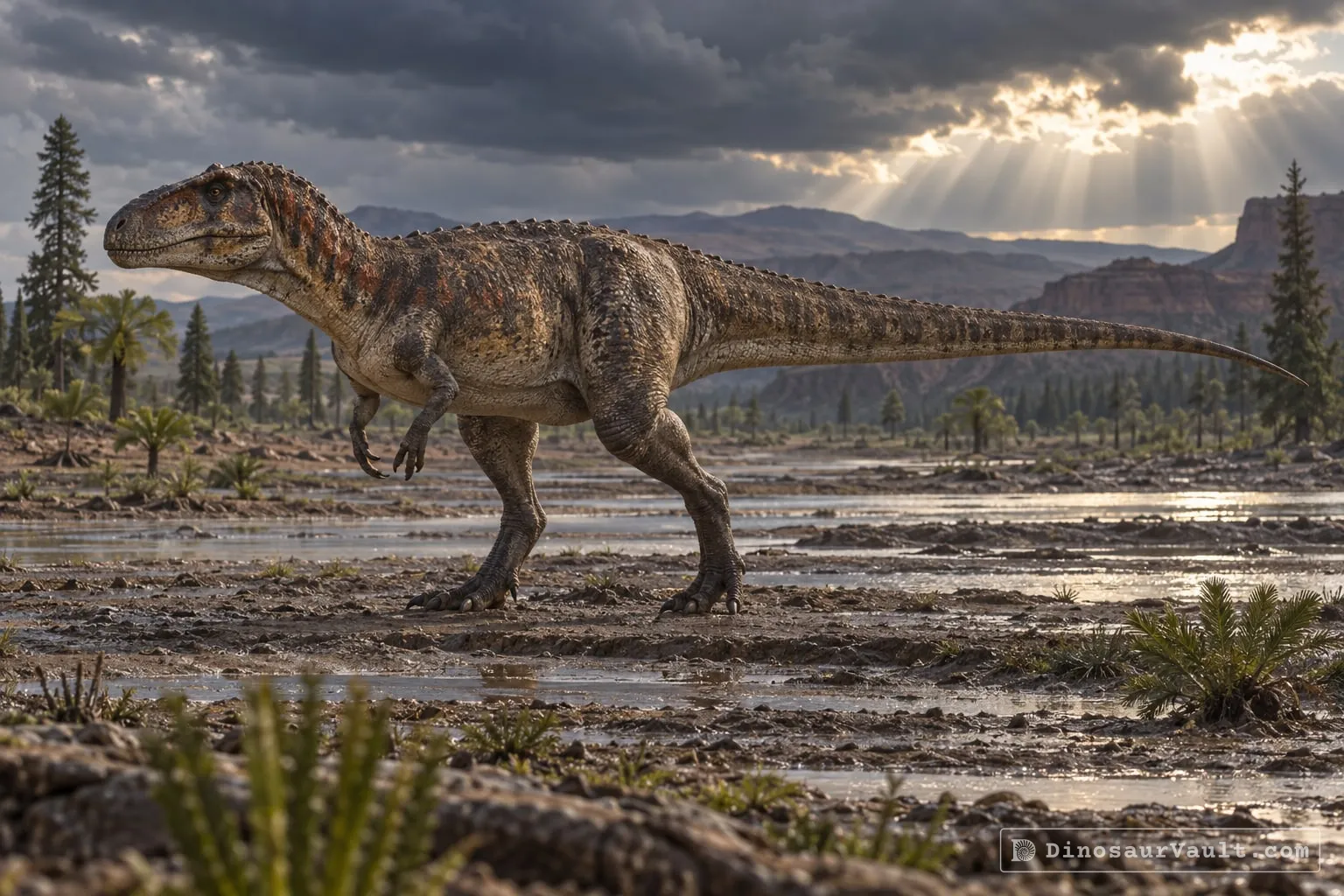
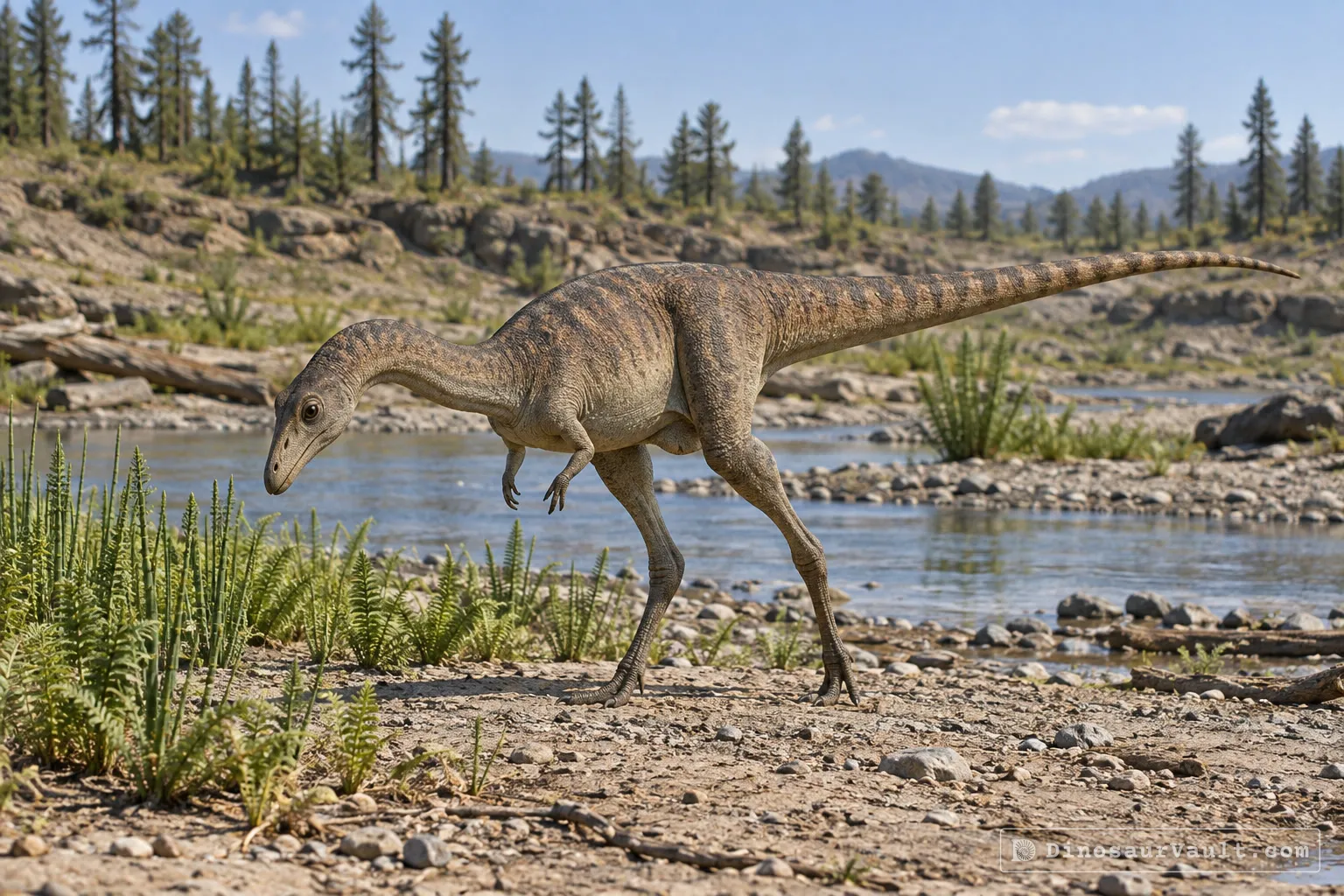
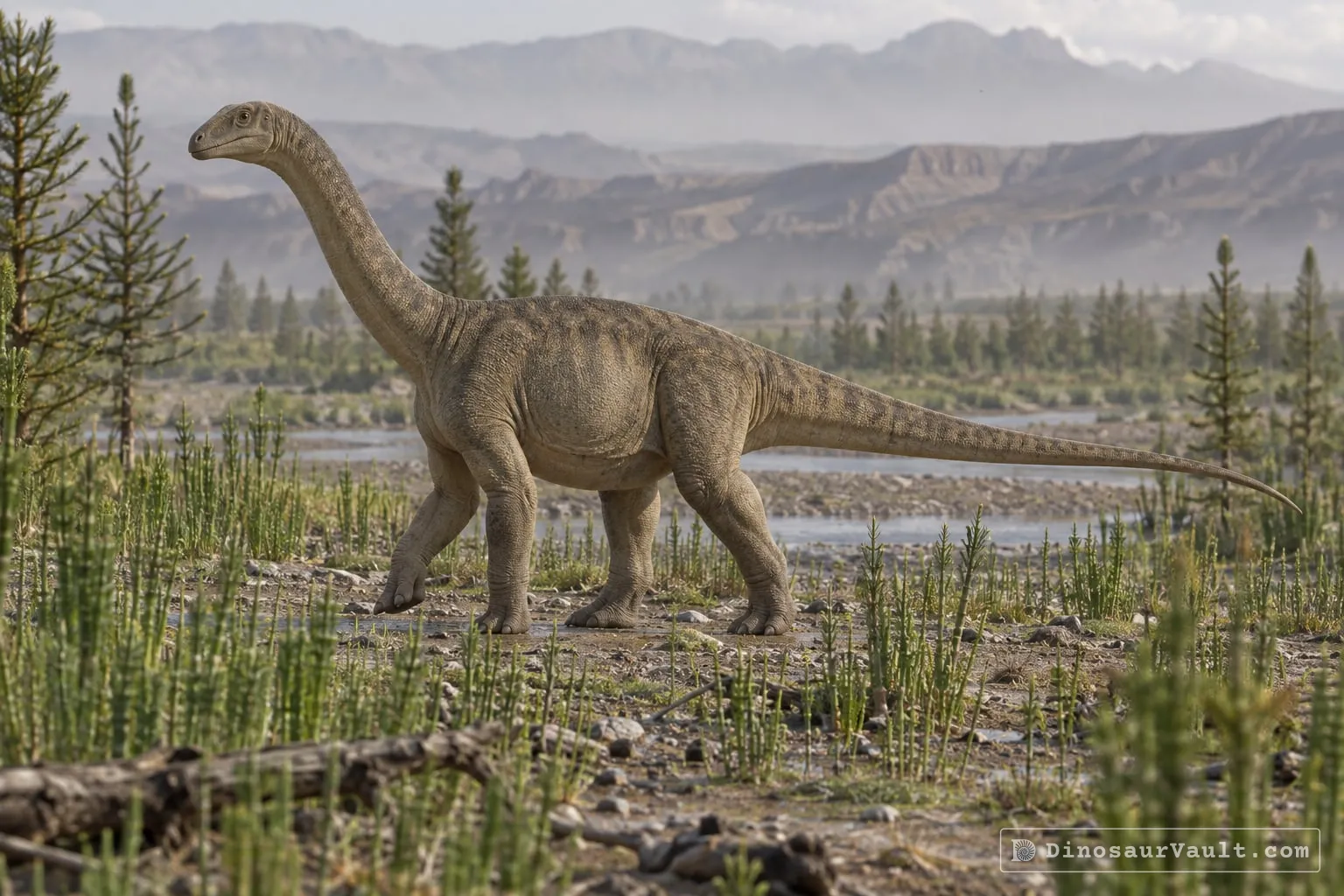
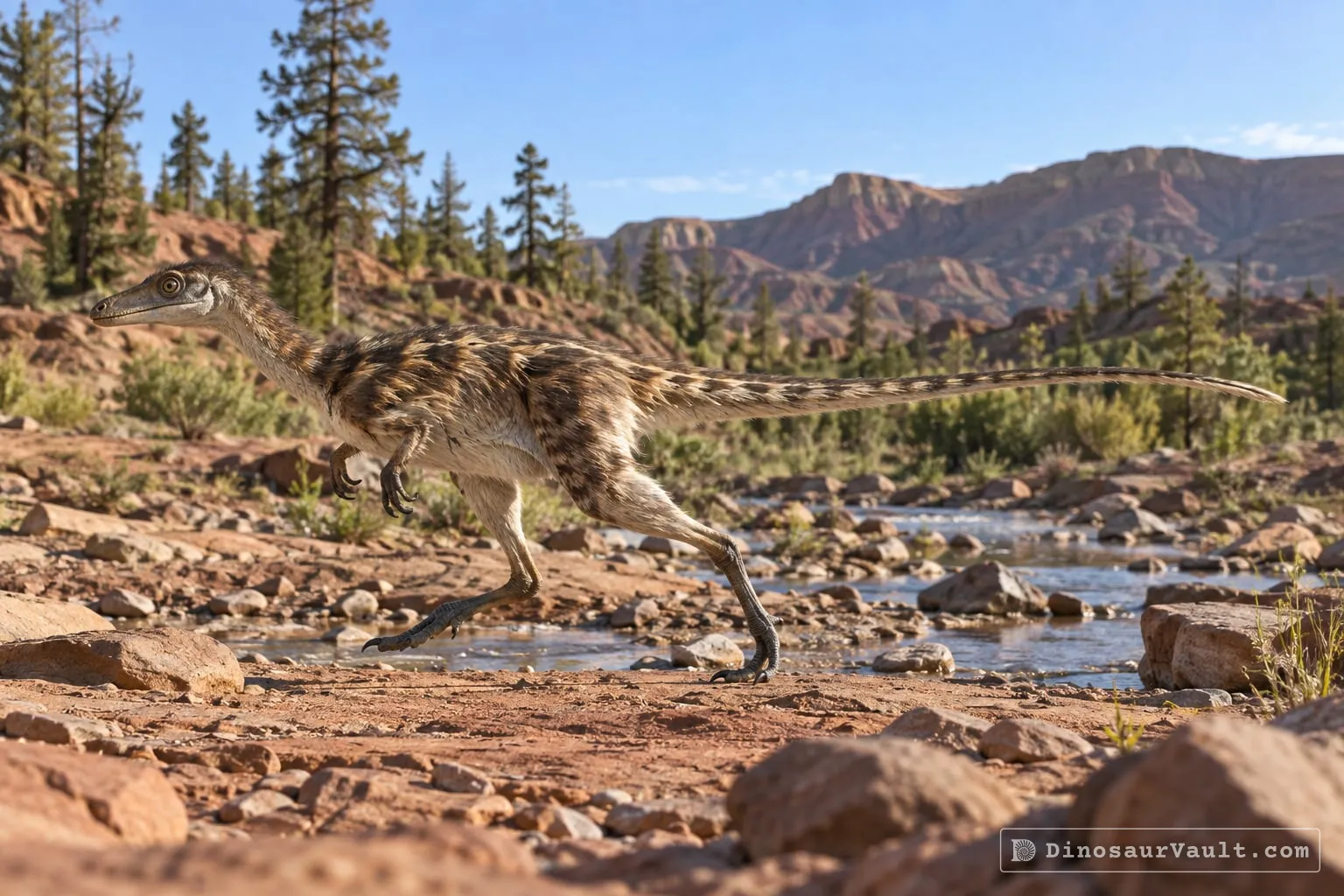
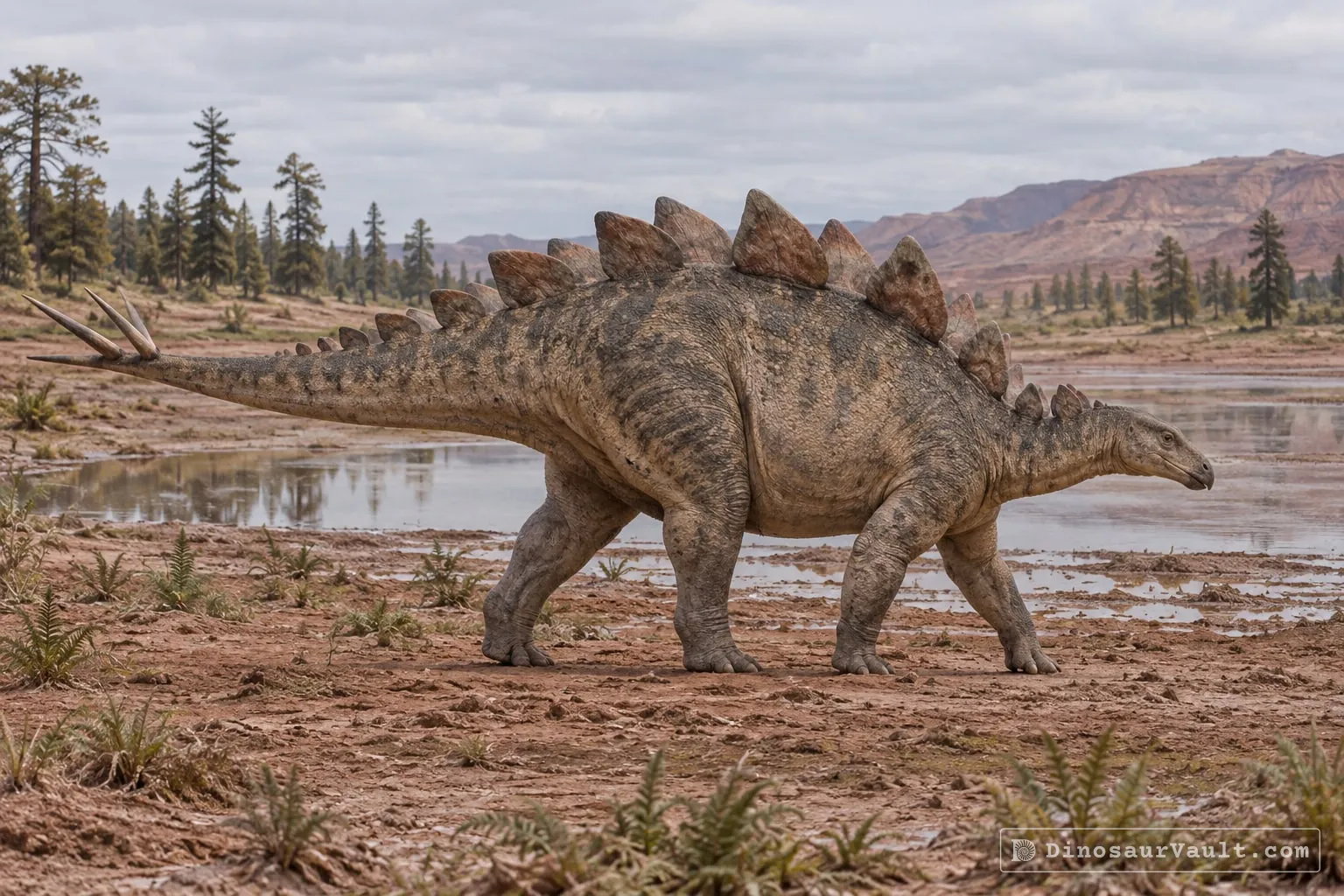


A rock formation can hold fossils laid down millions of years apart, so not every animal here met Yinlong.
The evidence
The science behind Yinlong
Which parts of the picture come from its own bones, and which come from its relatives.
From its own fossils
- The original skeleton preserves almost the whole body, with short, slender arms and long, strong hind legs suited to walking on two legs.
- The skull has a small beak bone, a short snout and a broad, deep rear portion.
- Additional skulls preserve rounded bumps on the cheek bones and distinctive wear surfaces on the front teeth.
Borrowed from relatives
- Most of its skeleton is known from its own fossils, so little of the body needs to be borrowed from relatives.
Still unknown
- Its skin covering and color.
- Which plants made up most of its diet.
- Whether adults cared for their young.
Discovery timeline
- 2006Named itXu et al.
- 2015SkullHan et al.
- 2017Full descriptionHan et al.
- 2024Growing upHan et al.
Key papers
The research behind what we know of Yinlong
Named it
Named Yinlong from a nearly complete skeleton and showed that horned dinosaurs were already present in the Jurassic.
A basal ceratopsian with transitional features from the Late Jurassic of northwestern China. Proceedings of the Royal Society B: Biological Sciences 273: 2135-2140
Read the paper : A basal ceratopsian with transitional features from the Late Jurassic of northwestern China (opens in a new tab)Skull
Described additional skulls and identified distinctive features of the cheek bones, front teeth and skull roof.
Cranial anatomy ofYinlong downsi(Ornithischia: Ceratopsia) from the Upper Jurassic Shishugou Formation of Xinjiang, China. Journal of Vertebrate Paleontology 36: e1029579
Read the paper : Cranial anatomy ofYinlong downsi(Ornithischia: Ceratopsia) from the Upper Jurassic Shishugou Formation of Xinjiang, China (opens in a new tab)Full description
Described the skeleton beyond the skull using the original specimen and additional skeletons, and tested its place among early plant-eating dinosaurs.
Postcranial anatomy ofYinlong downsi(Dinosauria: Ceratopsia) from the Upper Jurassic Shishugou Formation of China and the phylogeny of basal ornithischians. Journal of Systematic Palaeontology 16: 1159-1187
Read the paper : Postcranial anatomy ofYinlong downsi(Dinosauria: Ceratopsia) from the Upper Jurassic Shishugou Formation of China and the phylogeny of basal ornithischians (opens in a new tab)Growing up
Compared bone tissue from young and adult Yinlong and found moderate growth rates with repeated pauses or slowdowns.
Bone histology and growth curve of the earliest ceratopsian Yinlong downsi from the Upper Jurassic of Junggar Basin, Northwest China. PeerJ 12: e18761
Read the paper : Bone histology and growth curve of the earliest ceratopsian Yinlong downsi from the Upper Jurassic of Junggar Basin, Northwest China (opens in a new tab)
Close relatives
Other members of Chaoyangsauridae


Sources: Wikidata