Monolophosaurus
MON-oh-LOF-oh-SORE-us
"single-crested lizard"
- Lived
- 165 to 162 million years ago, Middle Jurassic
- Diet
- Carnivore
- Length
- about 5.7 m (19 ft)
- Group
- Theropods
- Found in
- China
- Named by
- Zhao and Currie 1994
Size comparison
To scale
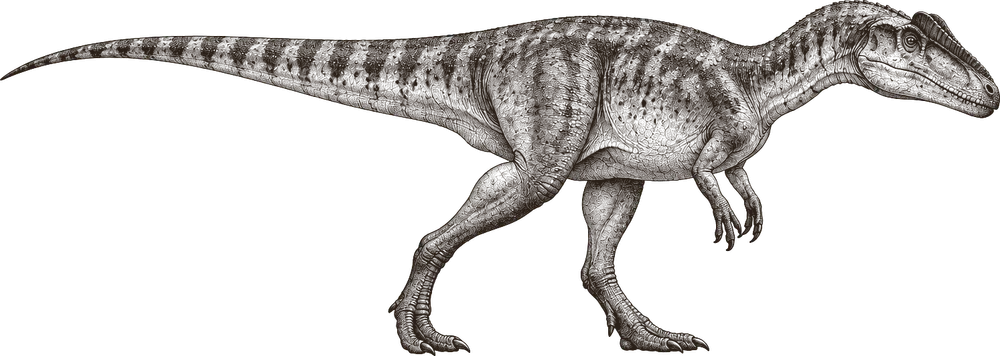


Scale in meters
Where its fossils were found
The evidence
Today

165 million years ago
Habitat
The Shishugou Formation records a landscape of rivers and floodplains in China. Mamenchisaurus, Sinraptor and Guanlong belonged to its regional dinosaur fauna.
Field notes
About Monolophosaurus
What it was like
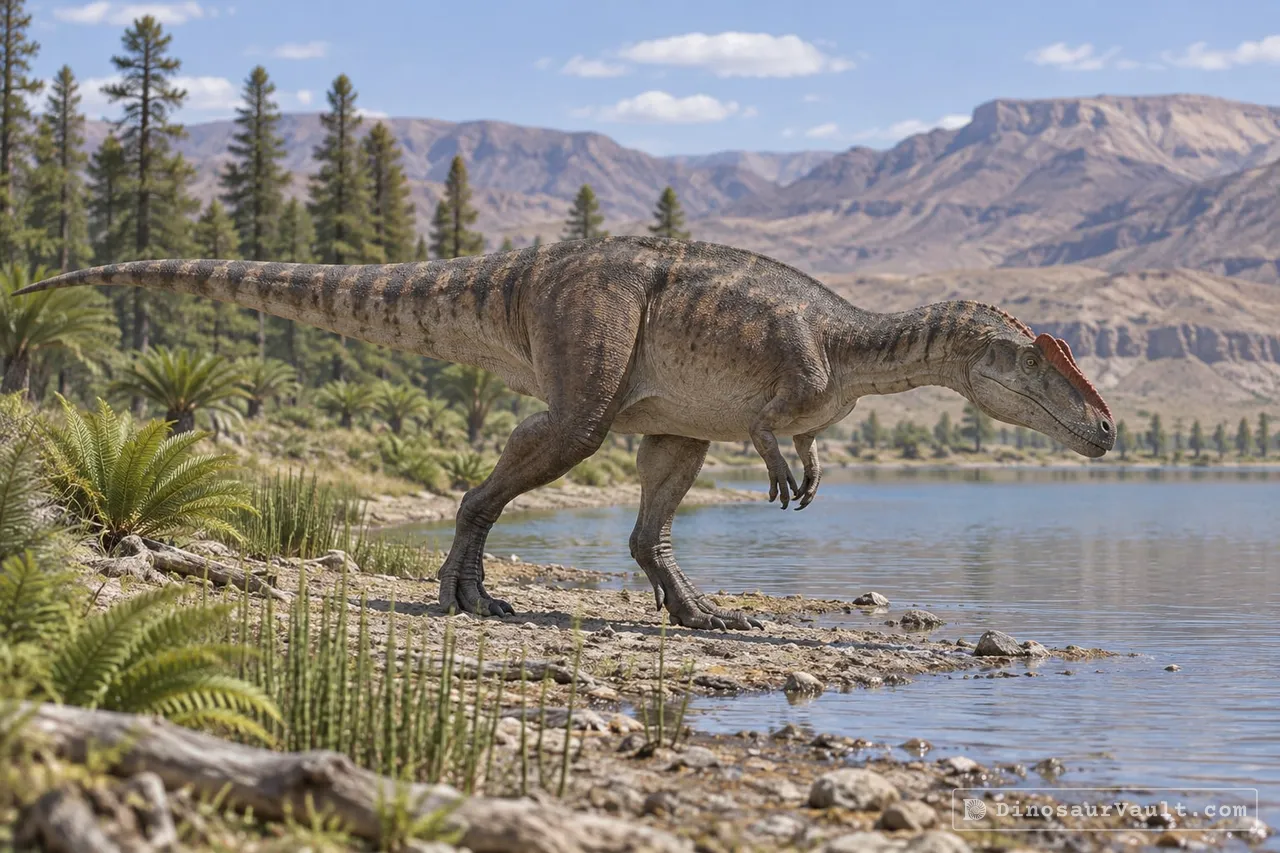
Monolophosaurus was a meat-eating theropod named for the single, tall crest running along the top of its skull. The crest was hollow and connected to the animal's nasal passages, and paleontologists think it was mainly for display rather than fighting, since it looks too thin and delicate for combat. Monolophosaurus grew to about 5.7 meters (19 feet) long, walked on two legs, and had a skull built for gripping struggling prey, lined with sharp, curved teeth.
Its world
Monolophosaurus lived in what is now China during the Middle Jurassic, between about 165 and 162 million years ago. It shared its world with the long-necked sauropod Mamenchisaurus, the early tyrannosauroid relative Guanlong, and other predators such as Sinraptor and Limusaurus, along with smaller plant eaters like Yinlong.
How it was found
Zhao and Currie named Monolophosaurus in 1994, based on fossils from the Shishugou Formation. Only one fossil find has been reported, so many questions about its biology, and its exact relationship to other theropods such as Allosaurus, remain open.
Field gallery
More views of Monolophosaurus
Scenes reconstructed from the available fossil evidence.
1 of 7
Lived alongside
Found in the same rock formations
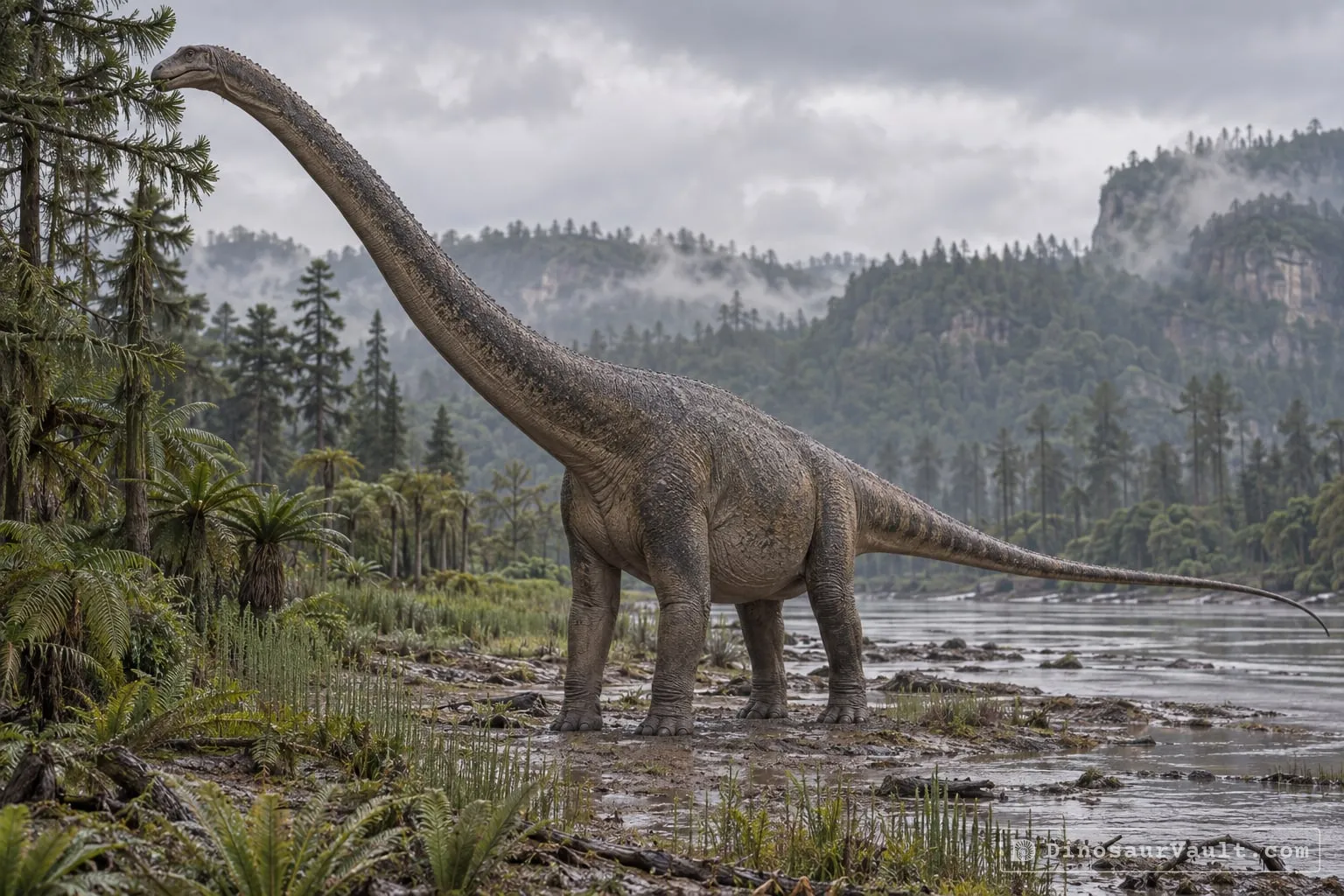
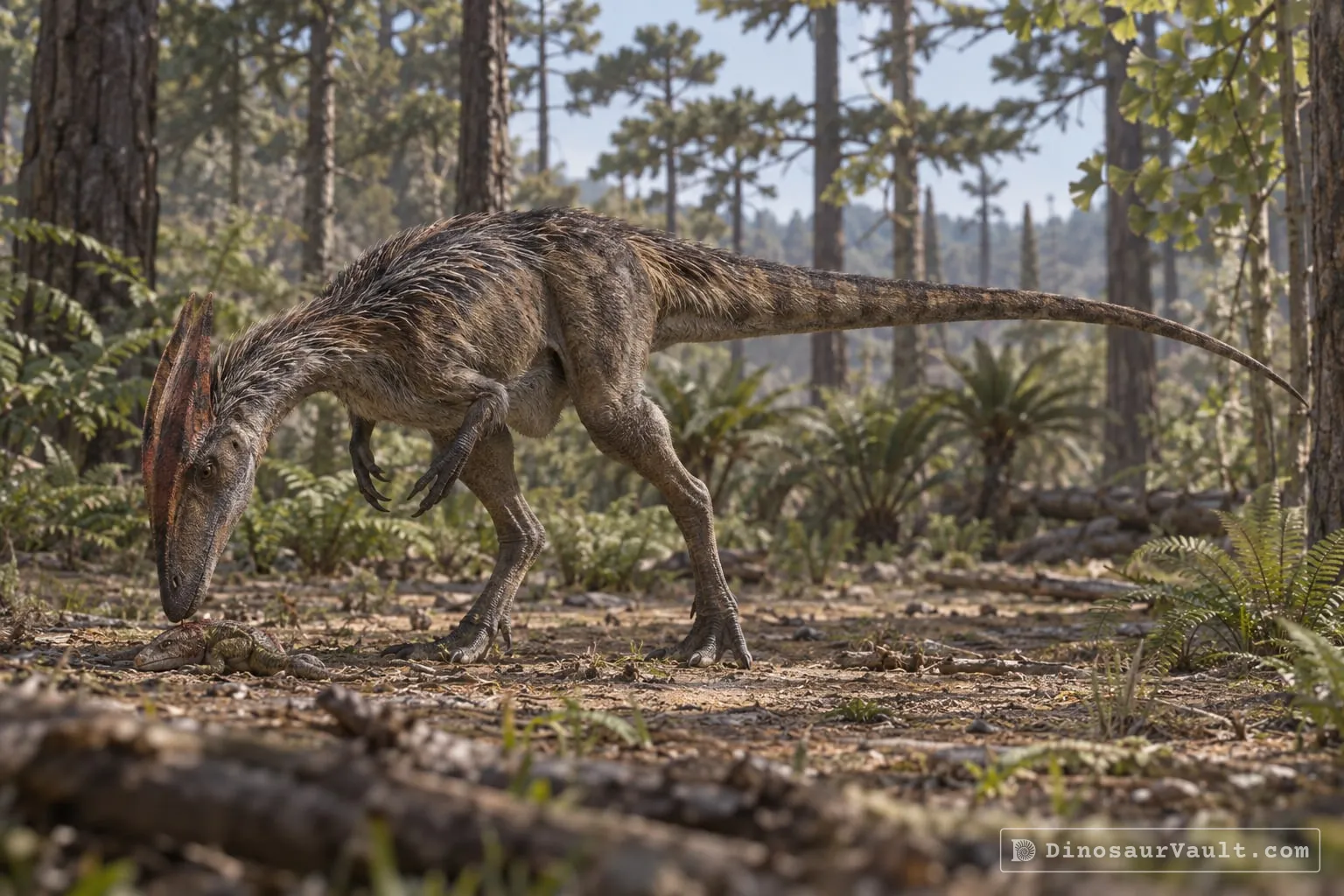
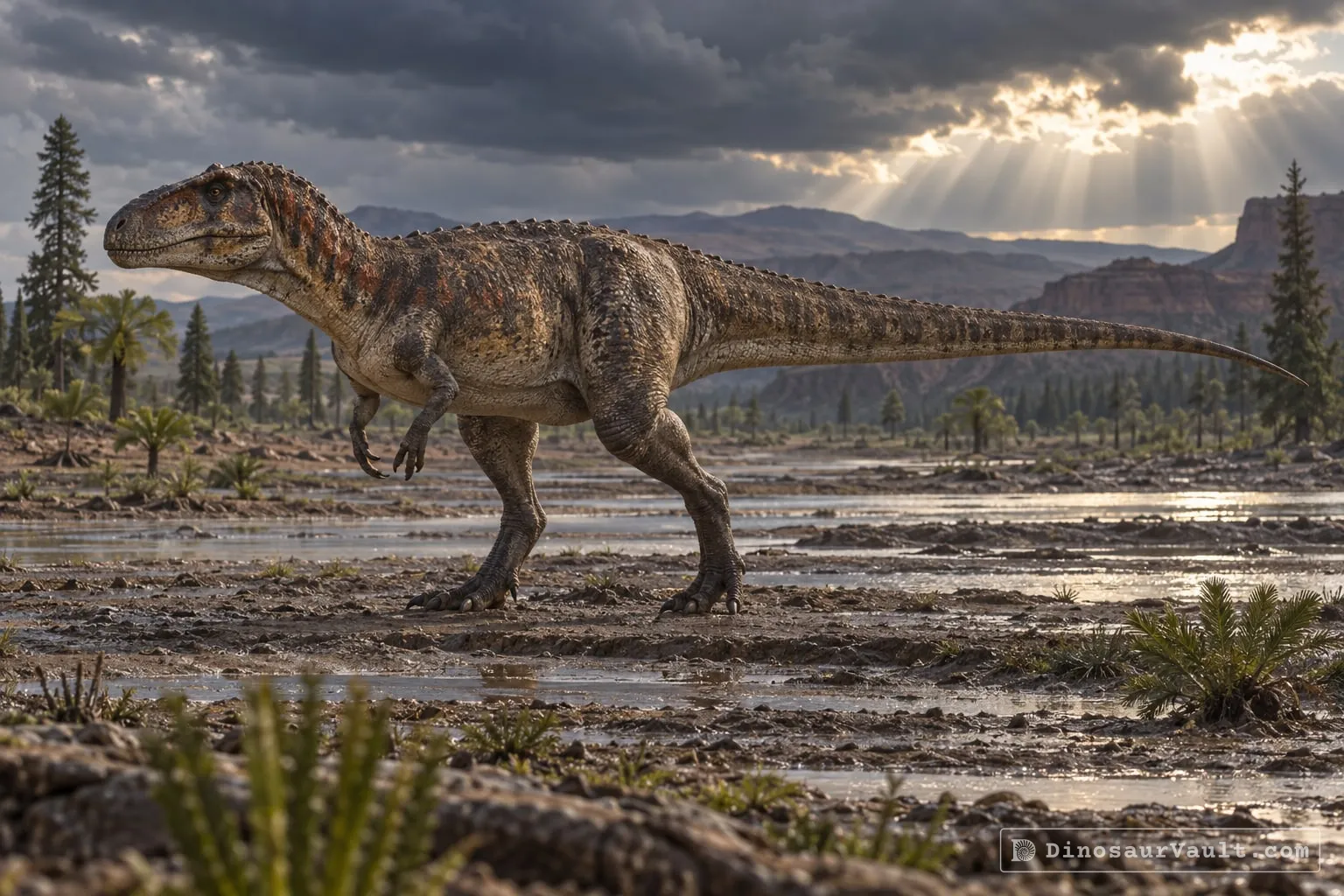
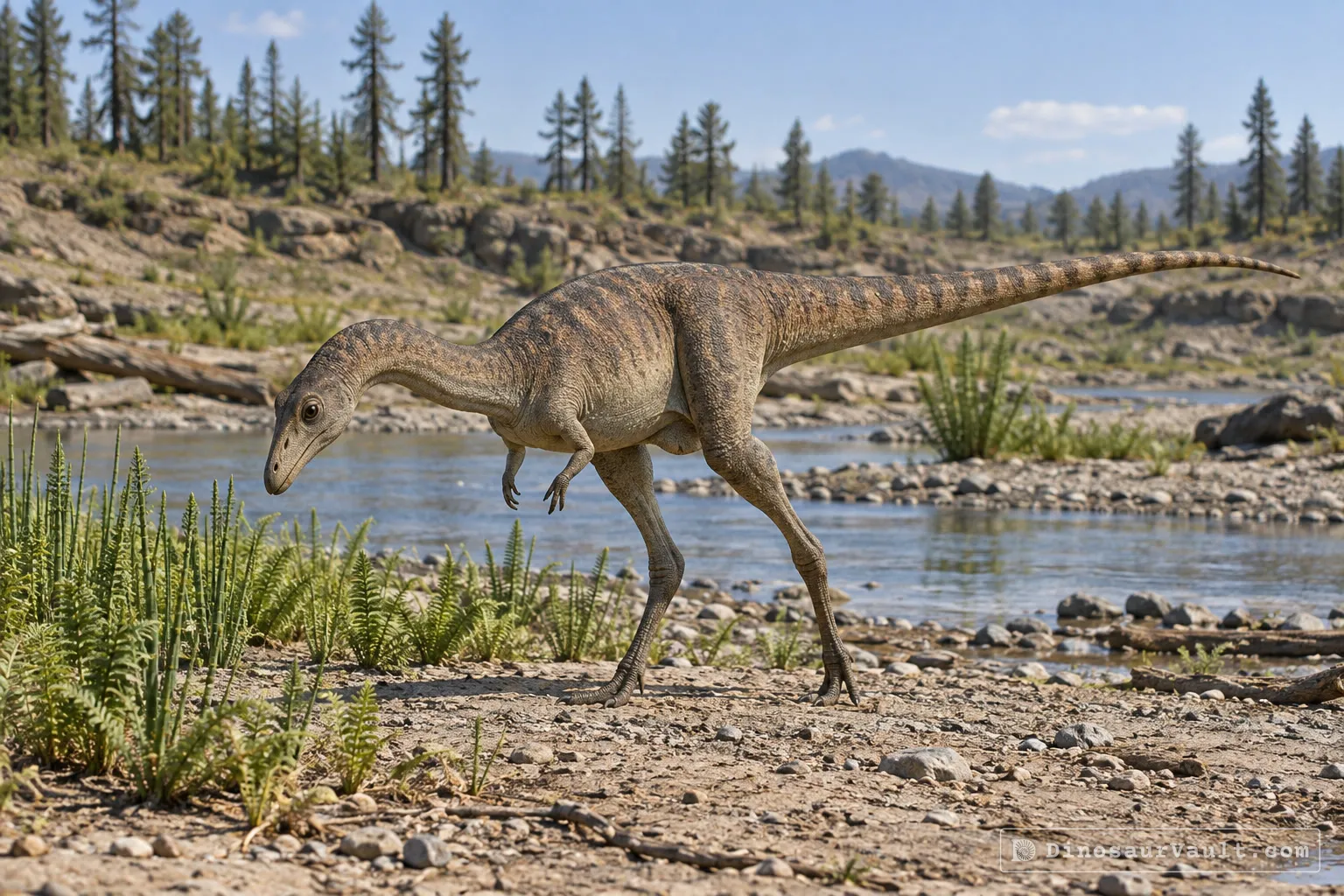
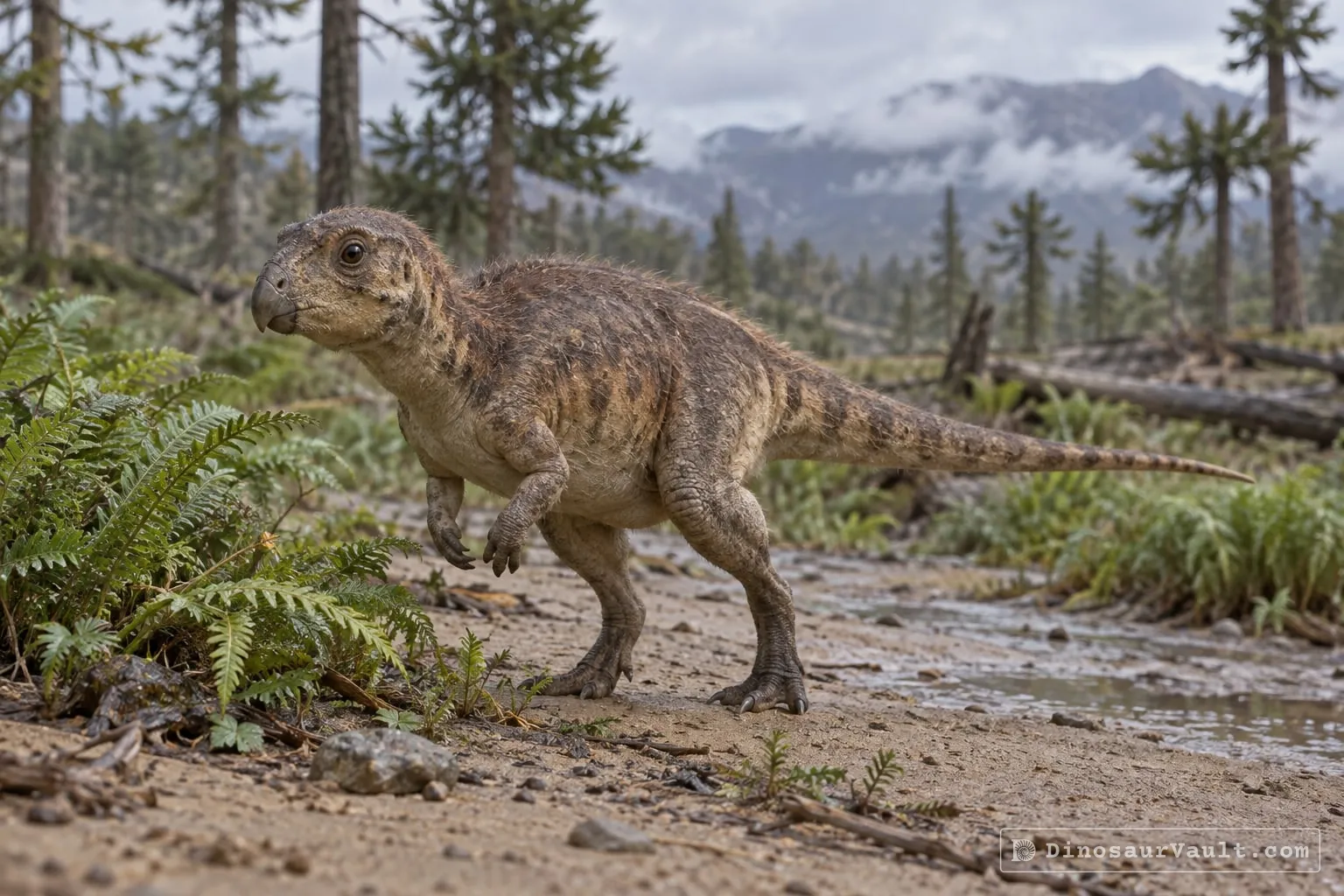
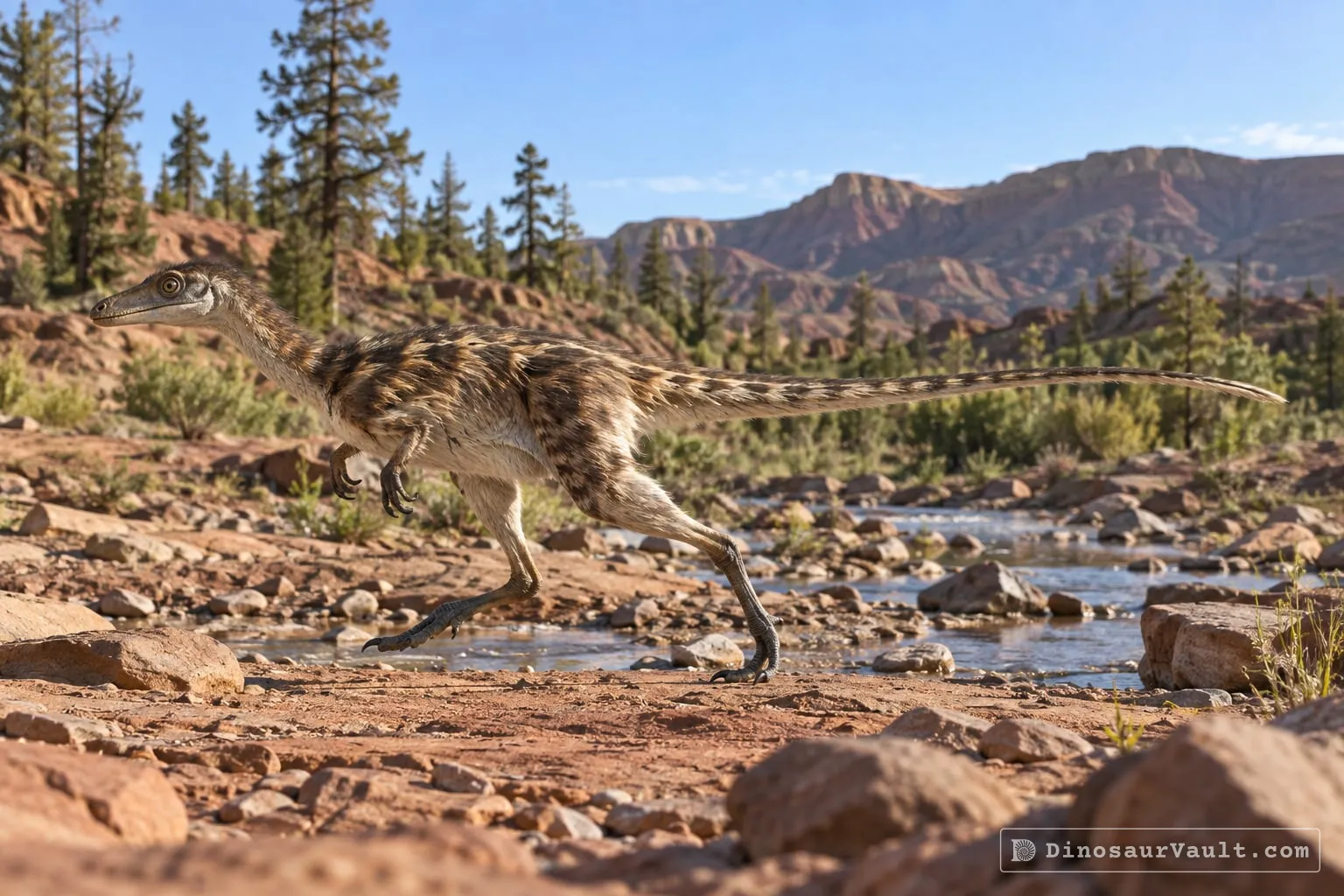
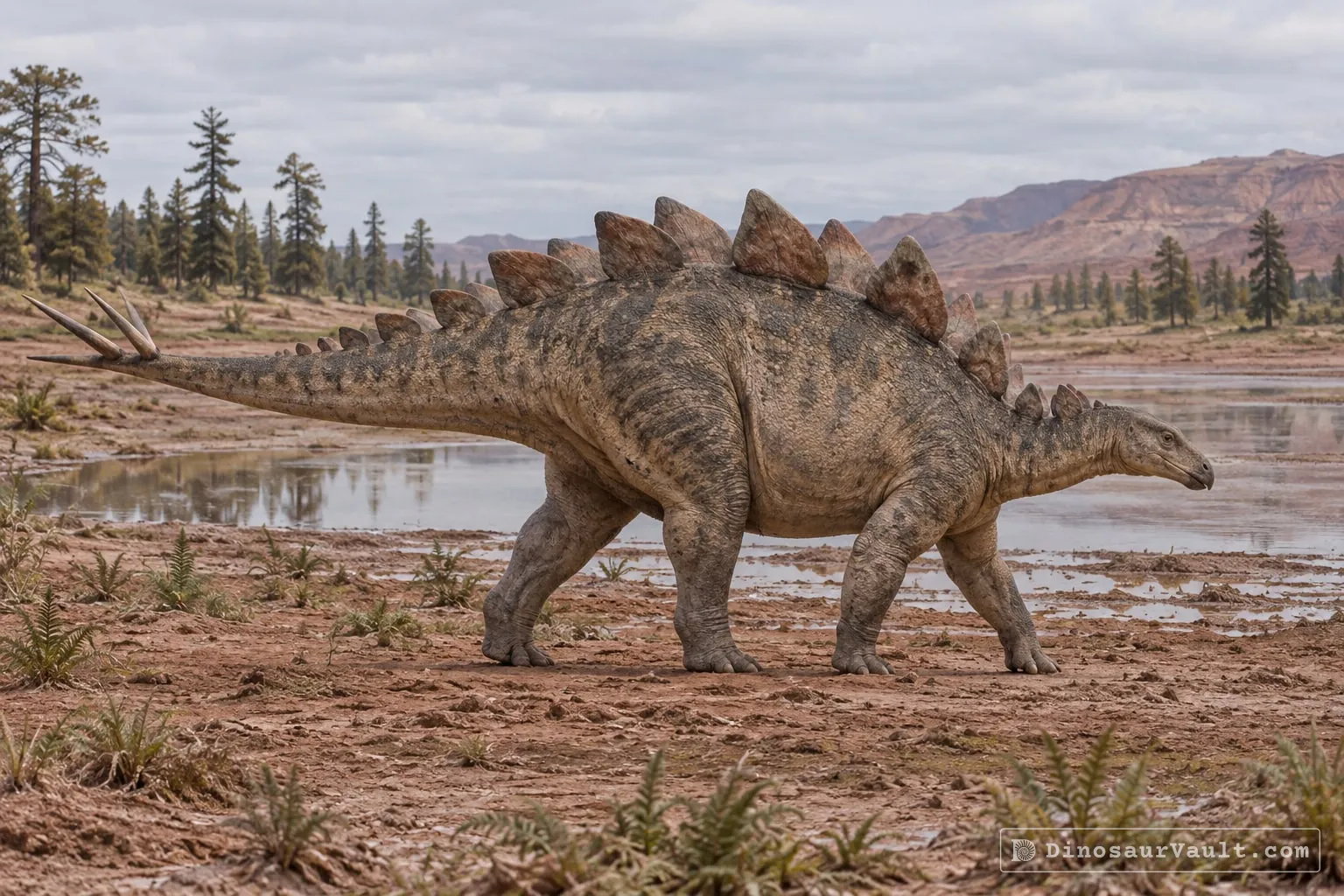
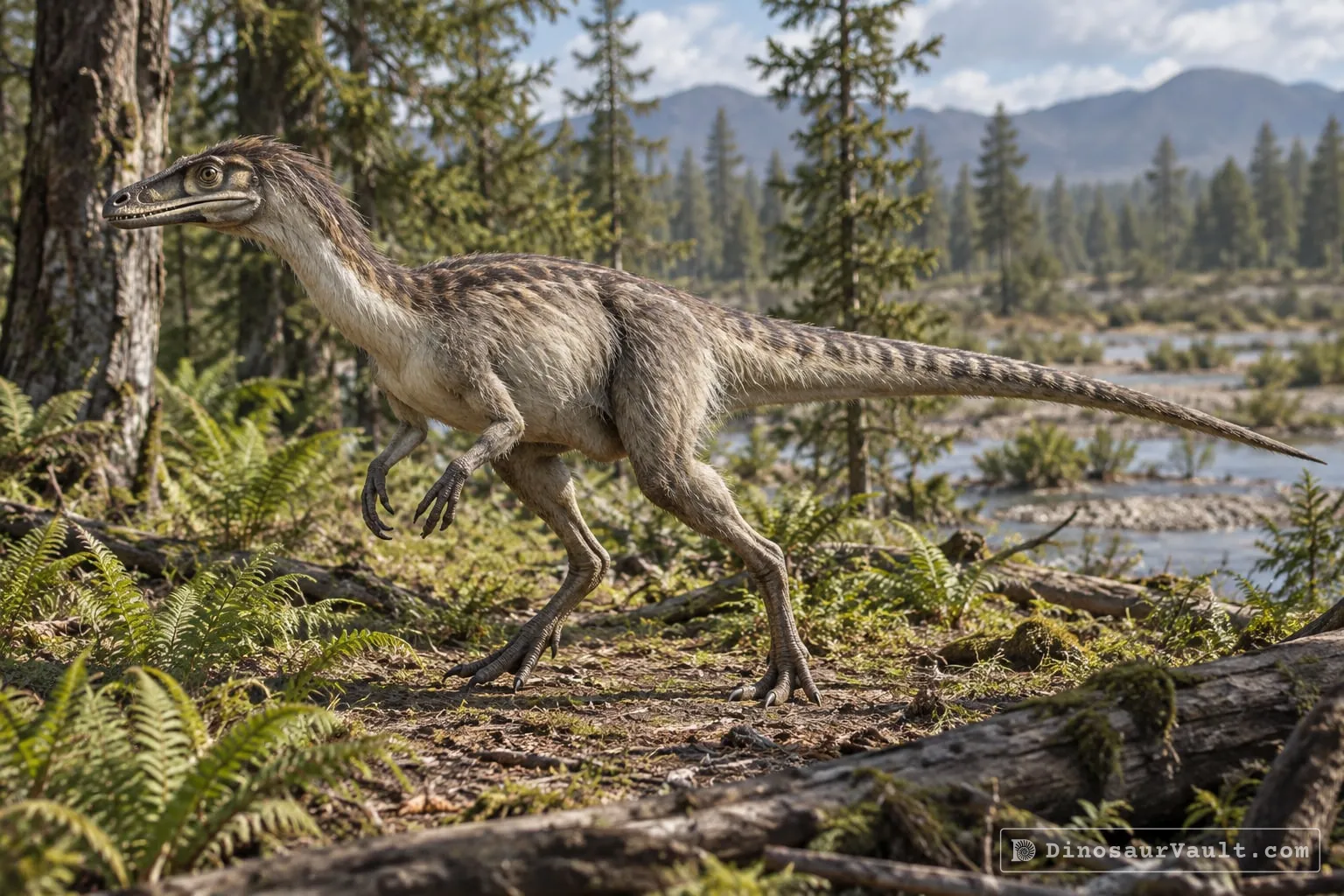


A rock formation can hold fossils laid down millions of years apart, so not every animal here met Monolophosaurus.
The evidence
The science behind Monolophosaurus
Which parts of the picture come from its own bones, and which come from its relatives.
From its own fossils
- A nearly complete skull preserves a single crest running along its midline.
- The hollow crest connects with air spaces in the snout.
- The neck and back vertebrae, pelvis and base of the tail preserve much of the body's framework.
Borrowed from relatives
- The missing limbs and most of the tail are restored by comparison with other early tetanuran theropods, including Allosaurus.
- Lips and skin covering are inferred from other theropods.
Still unknown
- Its skin covering and color.
- Whether the crest was used for display, and how it changed during growth.
- Its exact position on the theropod family tree.
Often drawn wrong
- The skull has a single midline crest, rather than the paired crests of Dilophosaurus.
- Its hands should face inward rather than palm down, as in other theropods.
Discovery timeline
- 1994Named itZhao & Currie
- 2010SkullBRUSATTE et al.
Key papers
The research behind what we know of Monolophosaurus
Named it
Named a large meat eater from China with a single crest along the top of its skull.
A large crested theropod from the Jurassic of Xinjiang, People's Republic of China. Canadian Journal of Earth Sciences 30: 2027-2036
No link available
Skull
Described the skull in detail, including the hollow crest, and reassessed its relationships to other early theropods.
The skull of Monolophosaurus jiangi (Dinosauria: Theropoda) and its implications for early theropod phylogeny and evolution. Zoological Journal of the Linnean Society 158: 573-607
Read the paper : The skull of Monolophosaurus jiangi (Dinosauria: Theropoda) and its implications for early theropod phylogeny and evolution (opens in a new tab)
Close relatives
Other members of Allosauroidea


Sources: Wikidata