Haplocheirus
"simple hand"
- Lived
- 162 to 155 million years ago, Late Jurassic
- Diet
- Carnivore
- Group
- Theropods
- Found in
- China
- Named by
- Choiniere et al. 2010
Where its fossils were found
The evidence
Today

160 million years ago
Habitat
A warm landscape of river plains and wetlands, with wet and dry seasons. Dinosaurs from the Shishugou Formation include Guanlong, Sinraptor and Yinlong.
Field notes
About Haplocheirus
What it was like
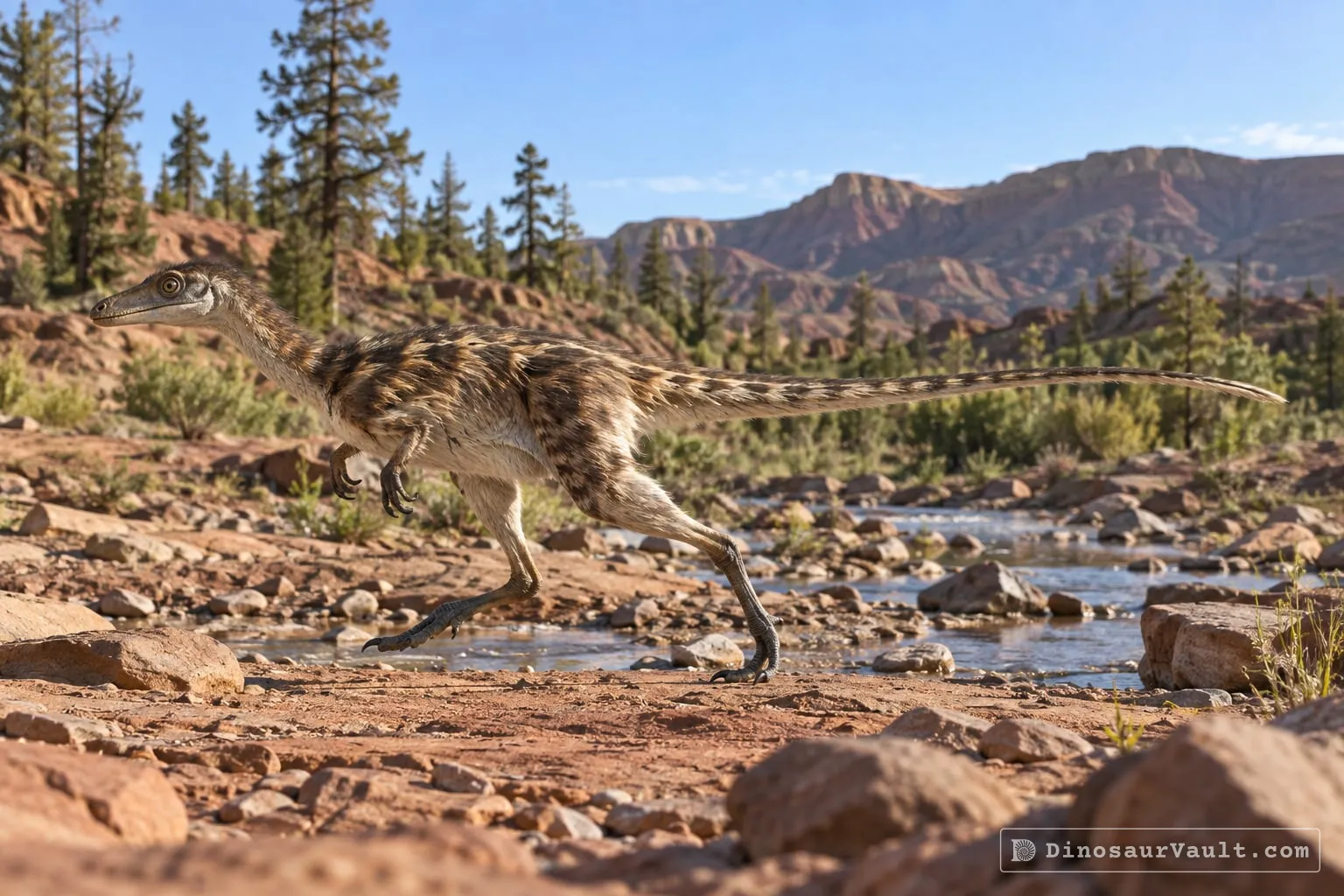
Haplocheirus was the oldest known alvarezsaur. Later alvarezsaurs were small with stubby arms, but Haplocheirus was bigger, with longer arms and three working fingers, showing how the group started.
Its world
It lived in the Jurassic, in what is now China. It comes from the Shishugou Formation, where it shared the land with the crested early tyrannosaur Guanlong, the predators Sinraptor and Monolophosaurus, and the small ceratopsian Yinlong.
How it was found
Choiniere and colleagues named Haplocheirus in 2010, from a nearly complete skeleton.
Field gallery
More views of Haplocheirus
Scenes reconstructed from the available fossil evidence.
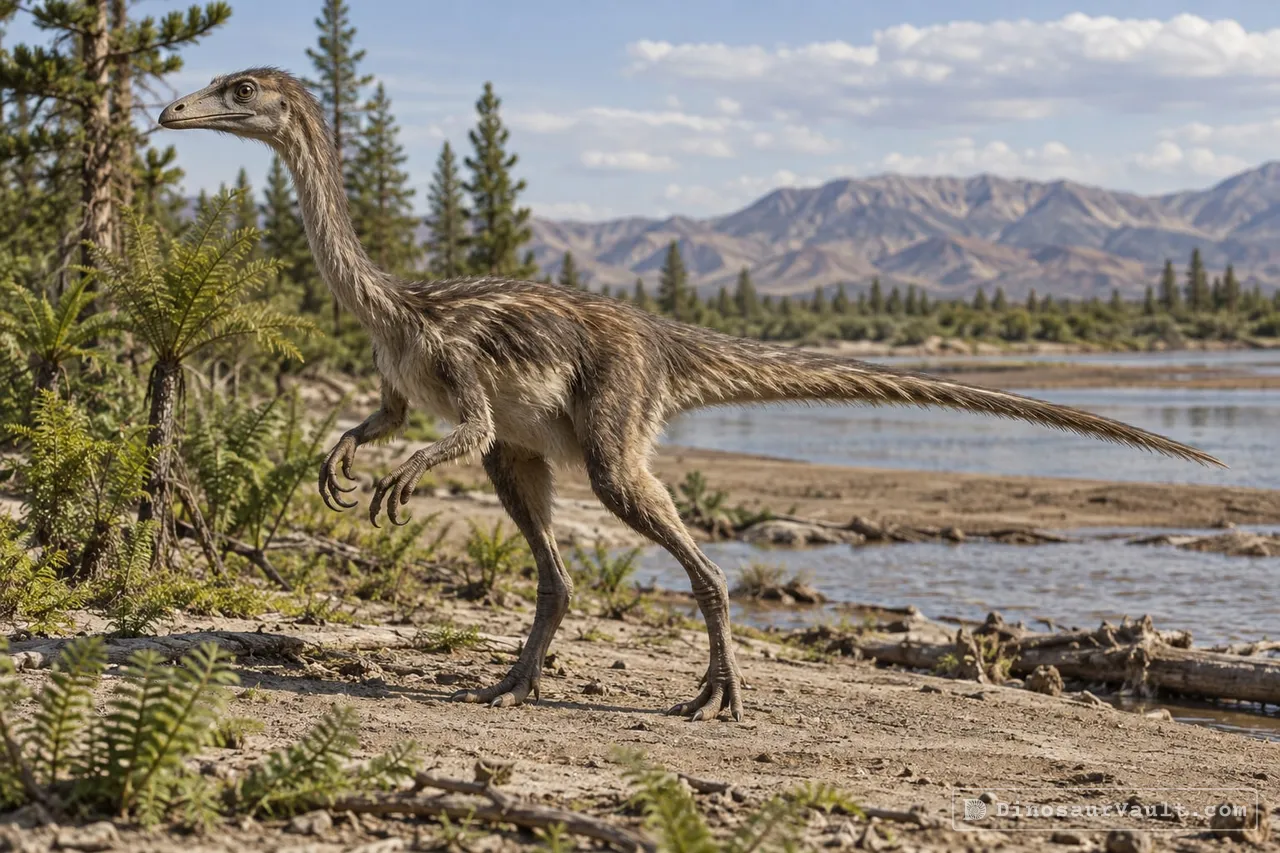
1 of 3
Lived alongside
Found in the same rock formations
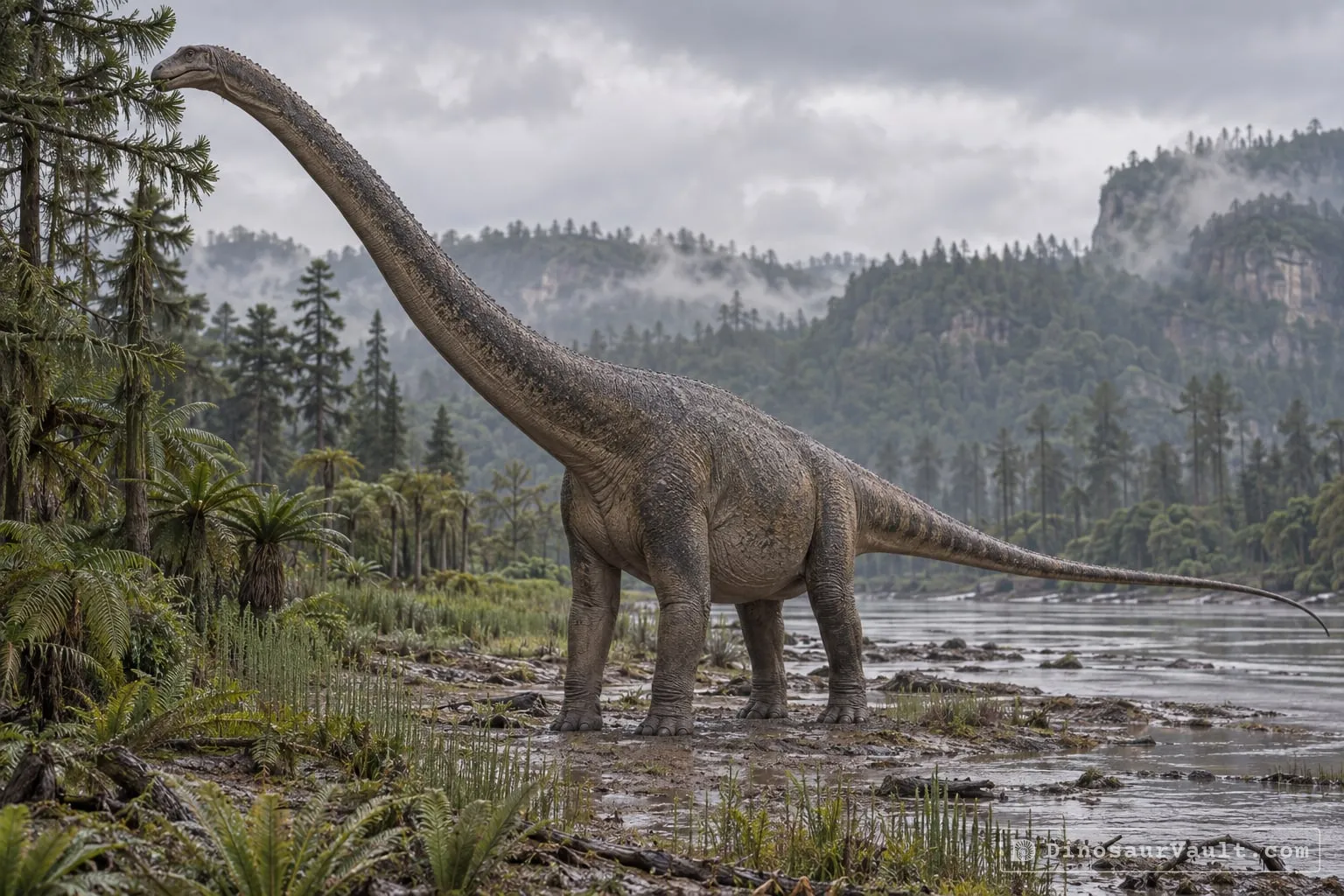
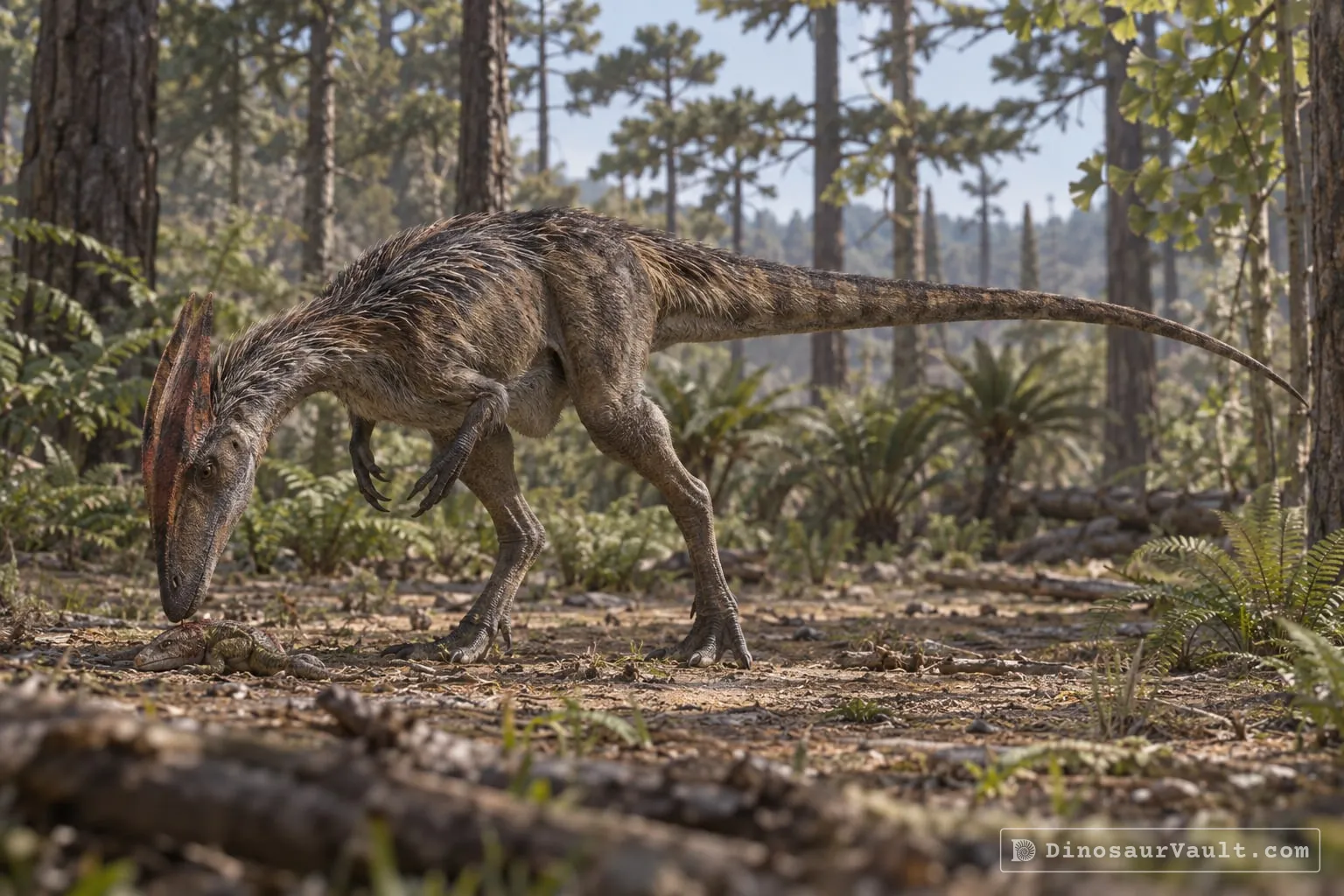
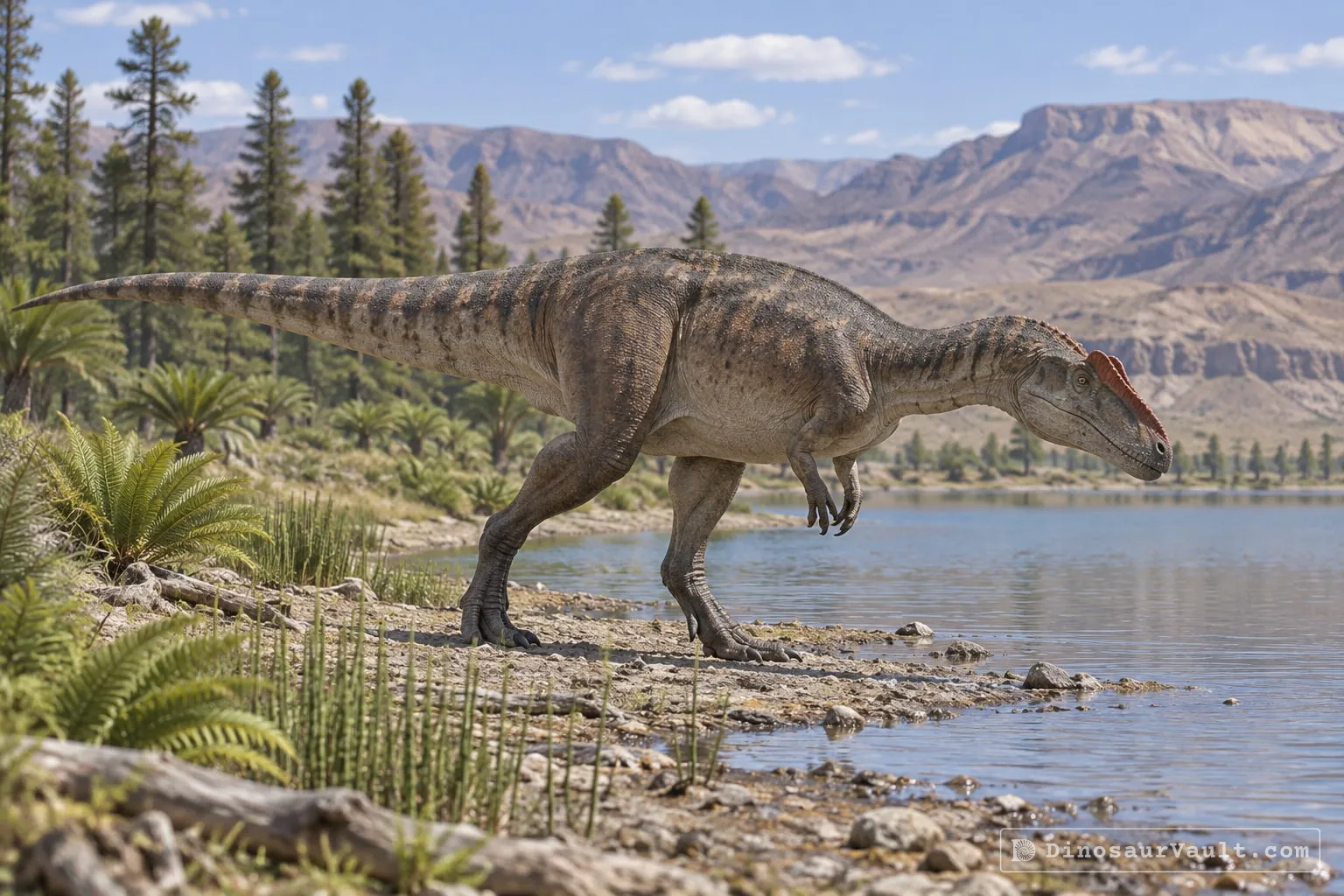
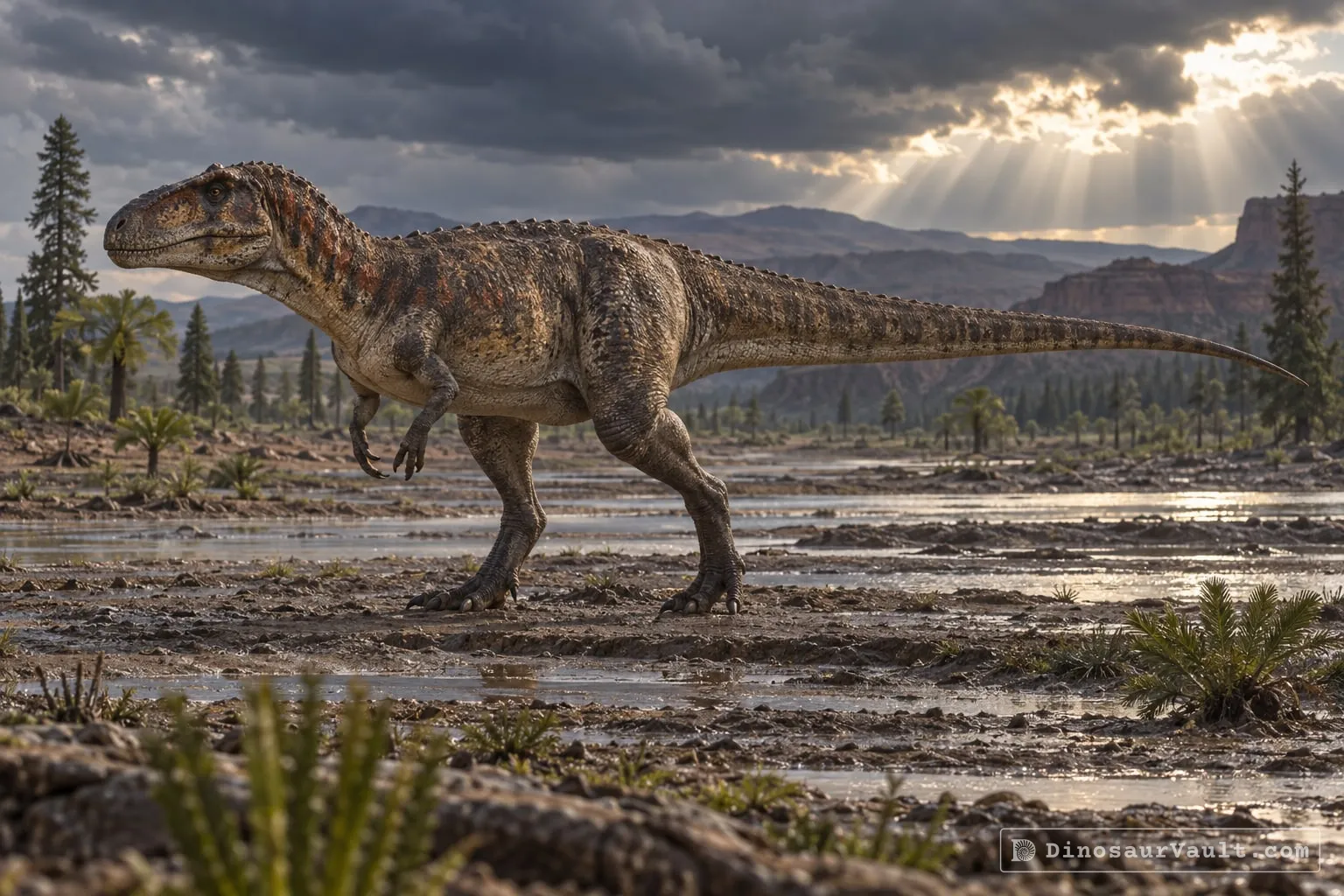
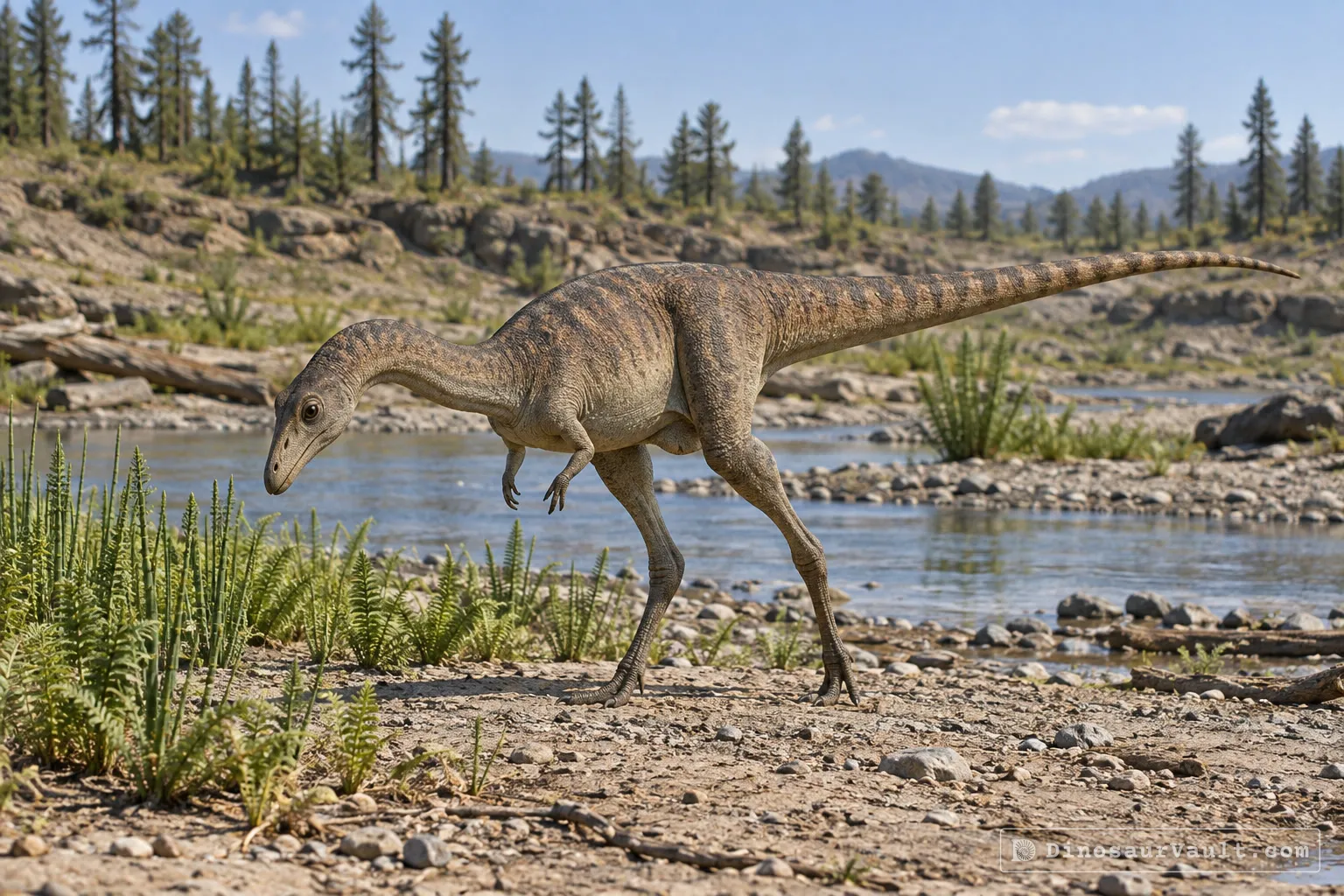
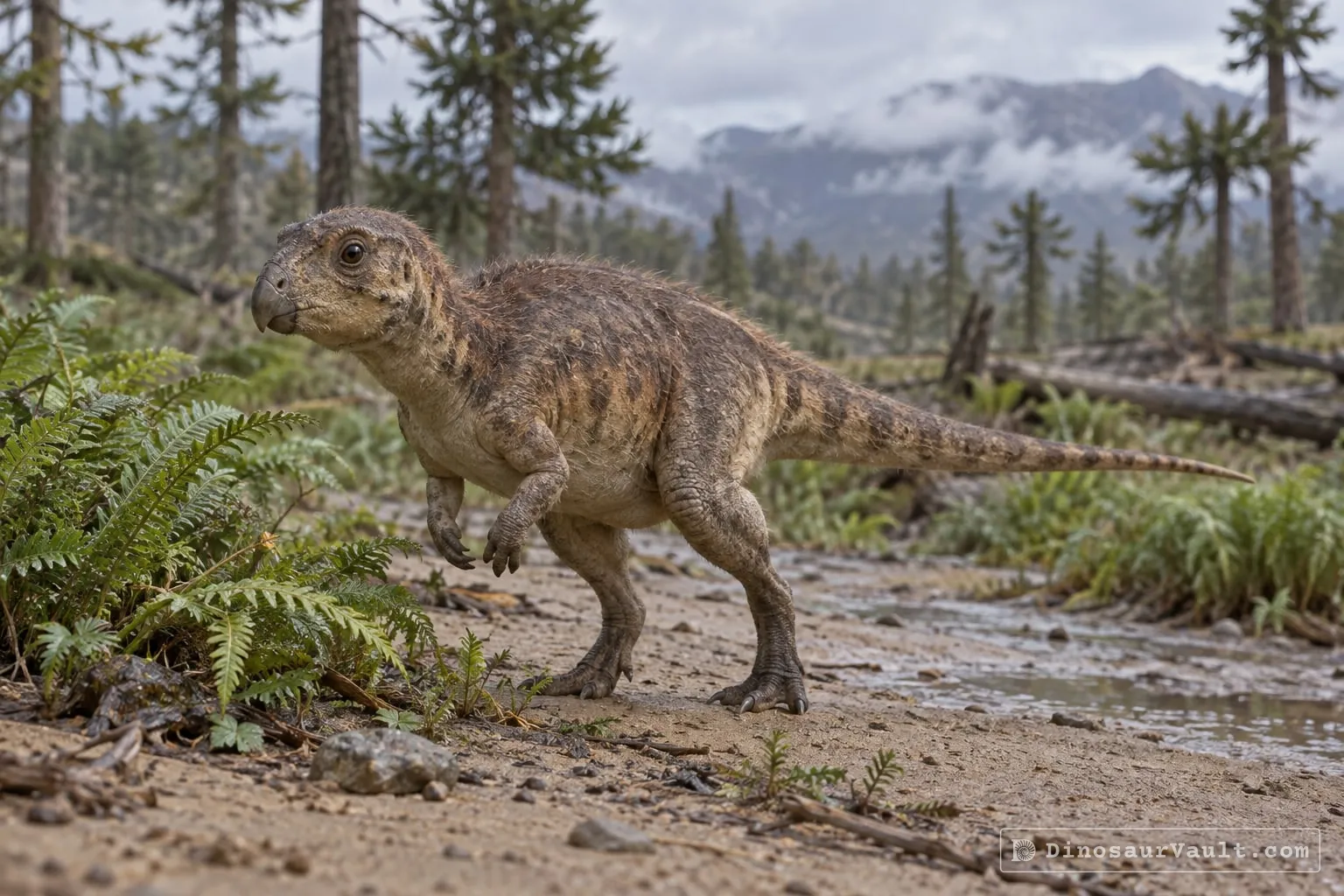
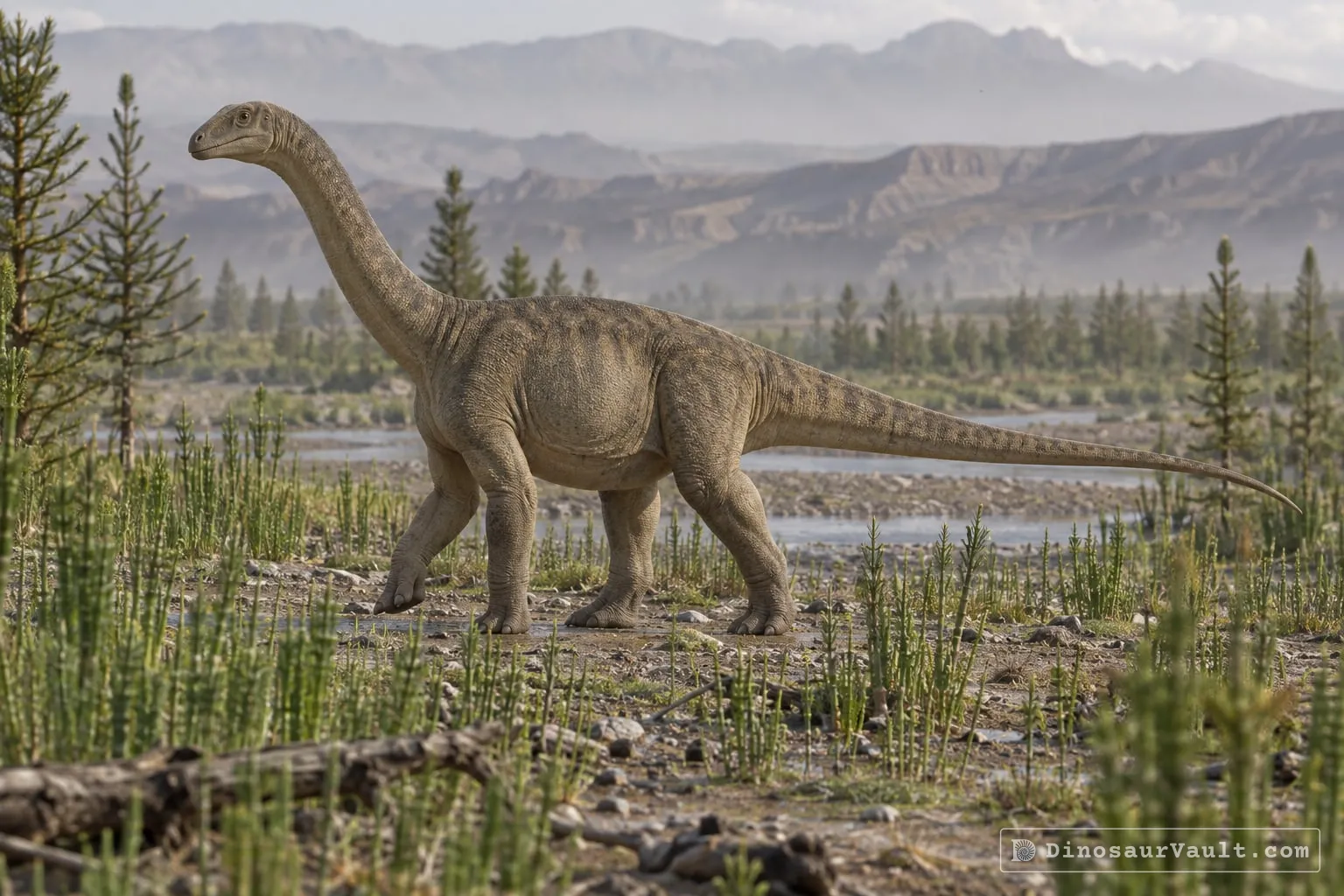


A rock formation can hold fossils laid down millions of years apart, so not every animal here met Haplocheirus.
The evidence
The science behind Haplocheirus
Which parts of the picture come from its own bones, and which come from its relatives.
From its own fossils
- A nearly complete skeleton preserves the skull, arms, legs and much of the tail.
- Its long arms ended in grasping hands with curved claws and an enlarged inner finger.
- The low, narrow skull carried curved teeth with serrated edges.
Borrowed from relatives
- Almost the whole body is known from its own bones; the missing tail tip is restored from other alvarezsaurs.
- Bannykus and Xiyunykus help show how its long, grasping arms changed into the short, specialized arms of later alvarezsaurs.
Still unknown
- Its color and body covering.
- Exactly which animals it ate.
- What hatchlings looked like.
Discovery timeline
- 2010Named itChoiniere et al.
- 2014SkullChoiniere et al.
- 2018Family treeXu et al.
Key papers
The research behind what we know of Haplocheirus
Named it
Described a nearly complete early alvarezsaur with long arms and grasping fingers, linking the group to other theropods.
A Basal Alvarezsauroid Theropod from the Early Late Jurassic of Xinjiang, China. Science 327: 571-574
Read the paper : A Basal Alvarezsauroid Theropod from the Early Late Jurassic of Xinjiang, China (opens in a new tab)Skull
Described the skull in detail and revised the features that distinguish Haplocheirus from other alvarezsaurs.
Cranial Osteology ofHaplocheirus sollersChoiniere et al., 2010 (Theropoda: Alvarezsauroidea). American Museum Novitates 3816: 1-44
Read the paper : Cranial Osteology ofHaplocheirus sollersChoiniere et al., 2010 (Theropoda: Alvarezsauroidea) (opens in a new tab)Family tree
Bannykus and Xiyunykus filled part of the evolutionary gap between Haplocheirus and later short-armed alvarezsaurs.
Two Early Cretaceous Fossils Document Transitional Stages in Alvarezsaurian Dinosaur Evolution. Current Biology 28: 2853-2860.e3
Read the paper : Two Early Cretaceous Fossils Document Transitional Stages in Alvarezsaurian Dinosaur Evolution (opens in a new tab)
Close relatives
Other members of Alvarezsauroidea


Sources: Wikidata