Outline: a typical ankylosaur
Polacanthus
POL-uh-KAN-thus
"many spines"
- Lived
- 137 to 113 million years ago, Early Cretaceous
- Diet
- Herbivore
- Length
- about 5 m (16 ft)
- Group
- Ankylosaurs, Nodosauridae
- Found in
- United Kingdom and Spain
- Named by
- Fox 1866
Size comparison
To scale


Scale in metersOutline: typical ankylosaur shape
Where its fossils were found
The evidence
Today

125 million years ago
Field notes
About Polacanthus
What it was like
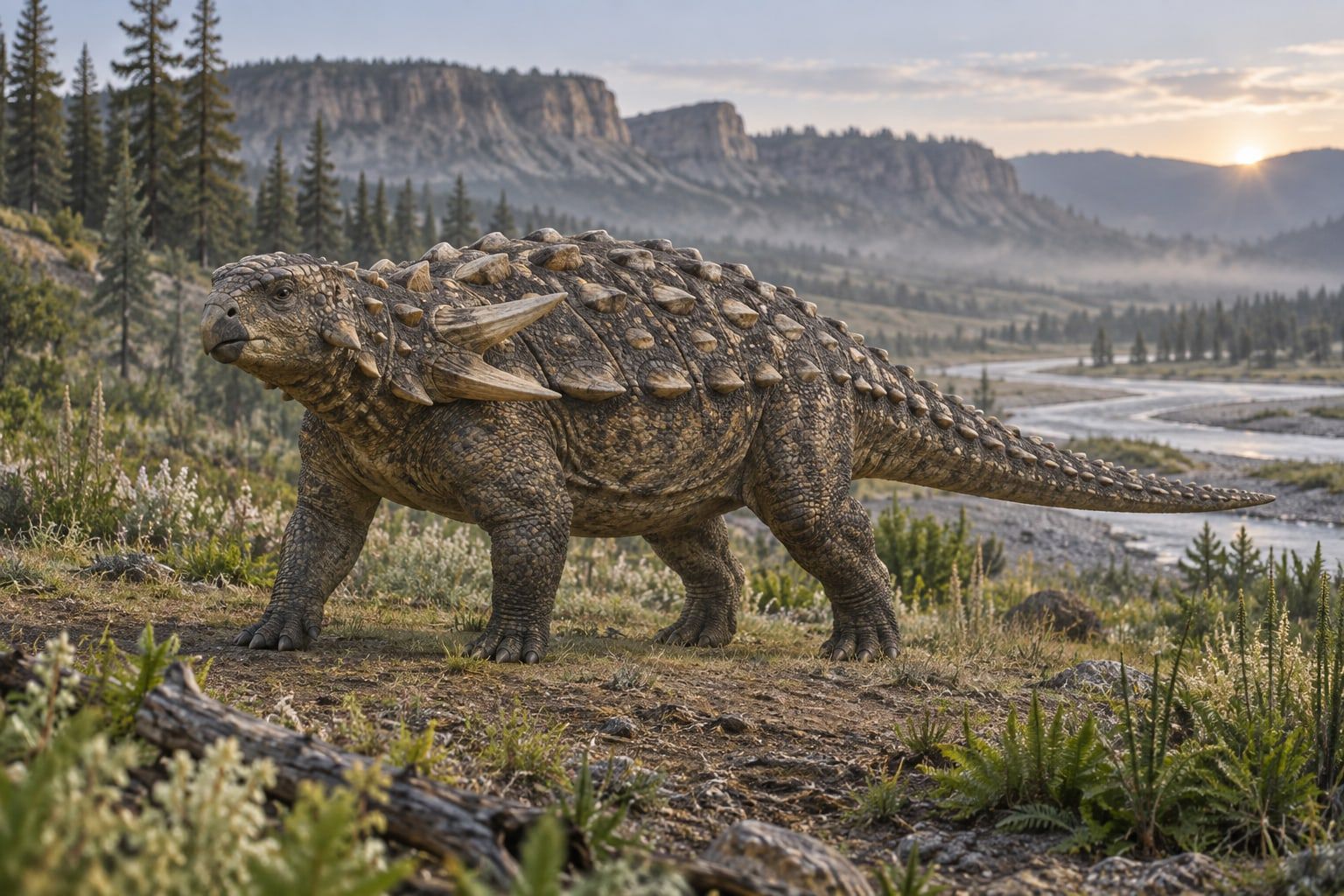
Polacanthus was an armored plant eater about 5 meters (16 feet) long. Rows of tall spines ran along its neck and shoulders, and a solid shield of fused bony plates covered its hips like a saddle.
Its tail carried pairs of flat, sharp-edged plates but no club. Its skull is poorly known.
Its world
It lived about 137 to 113 million years ago, in the Early Cretaceous, in what are now England and Spain. Many of its fossils come from the Wessex Formation of southern England, a land of river plains and seasonal fires.
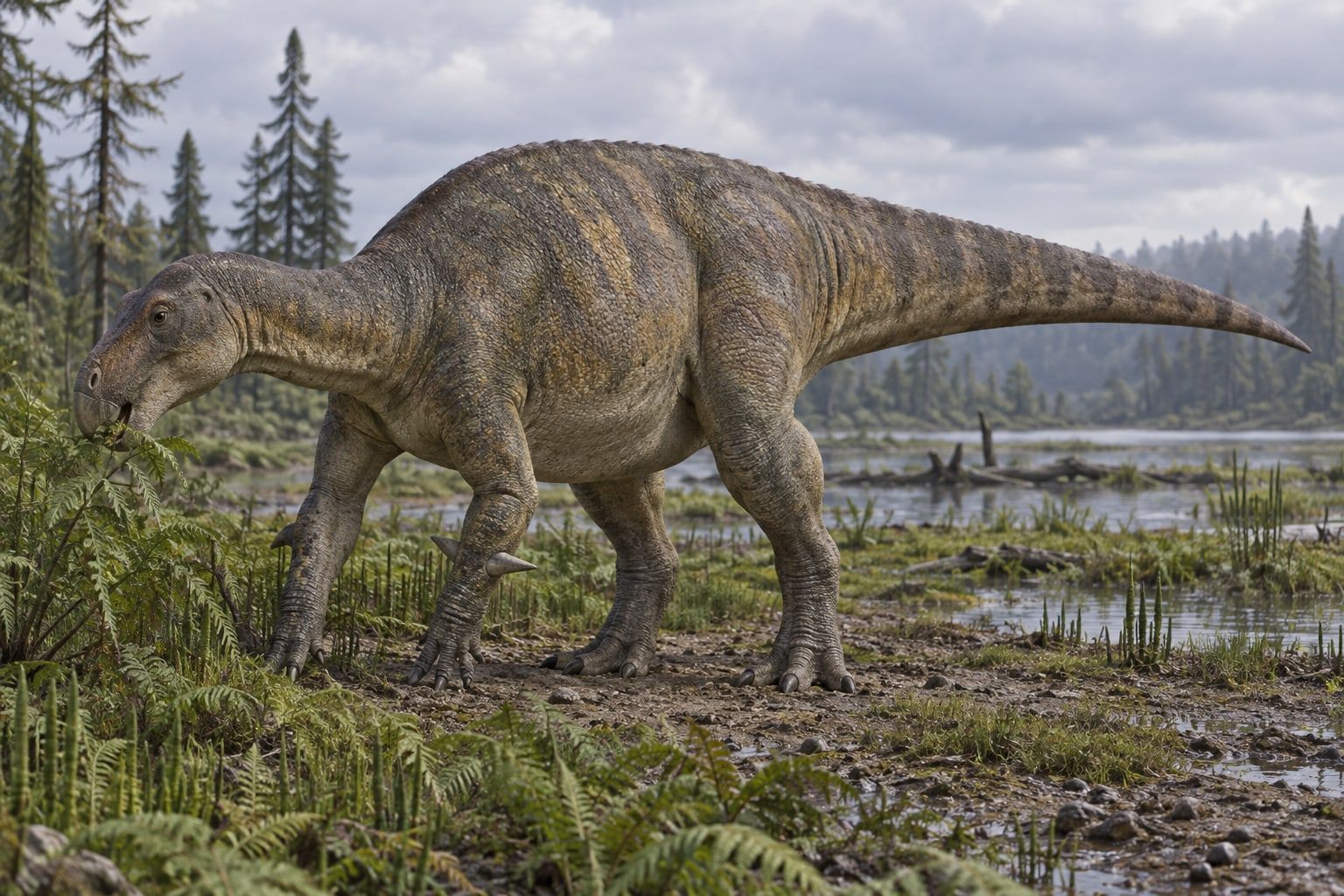
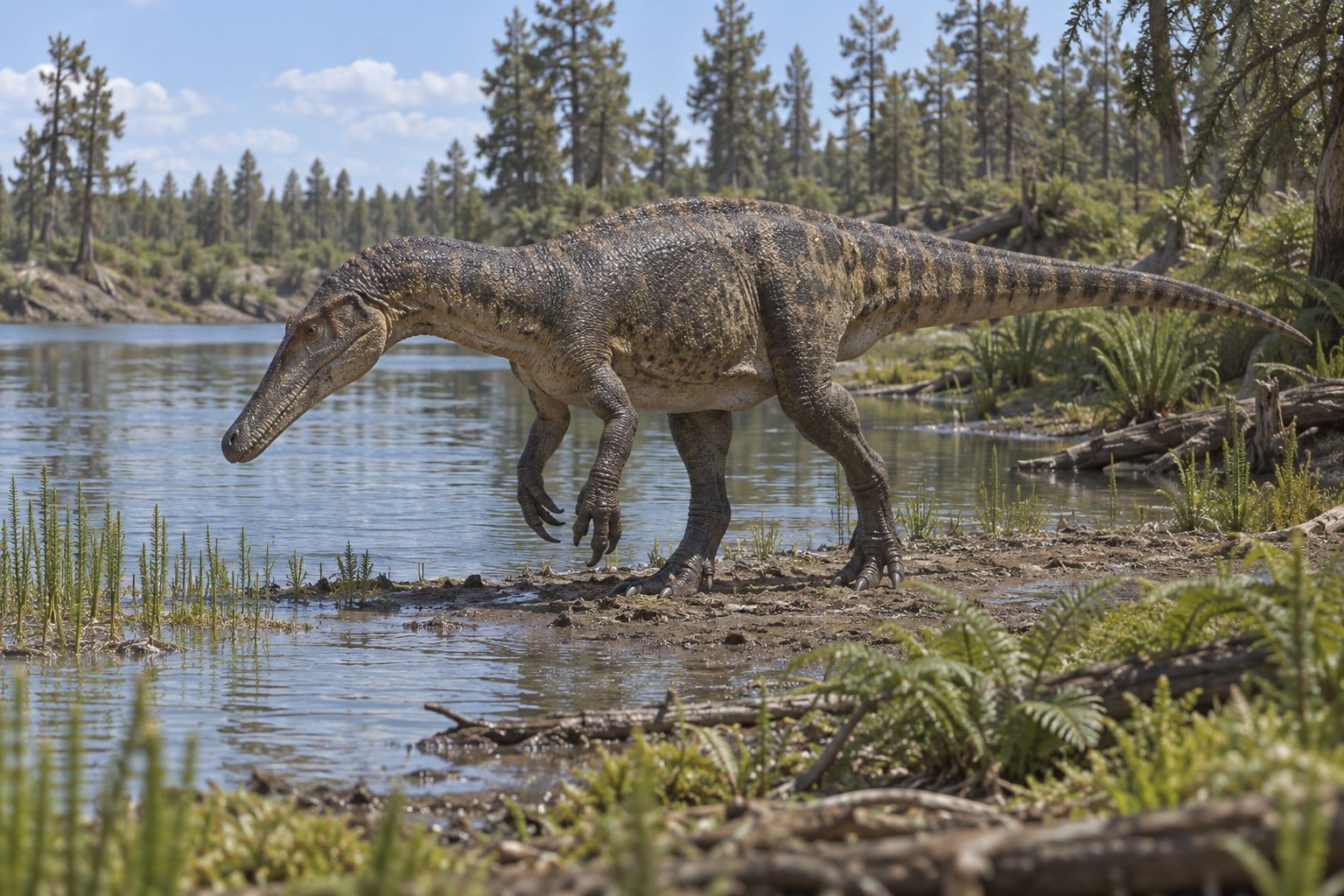
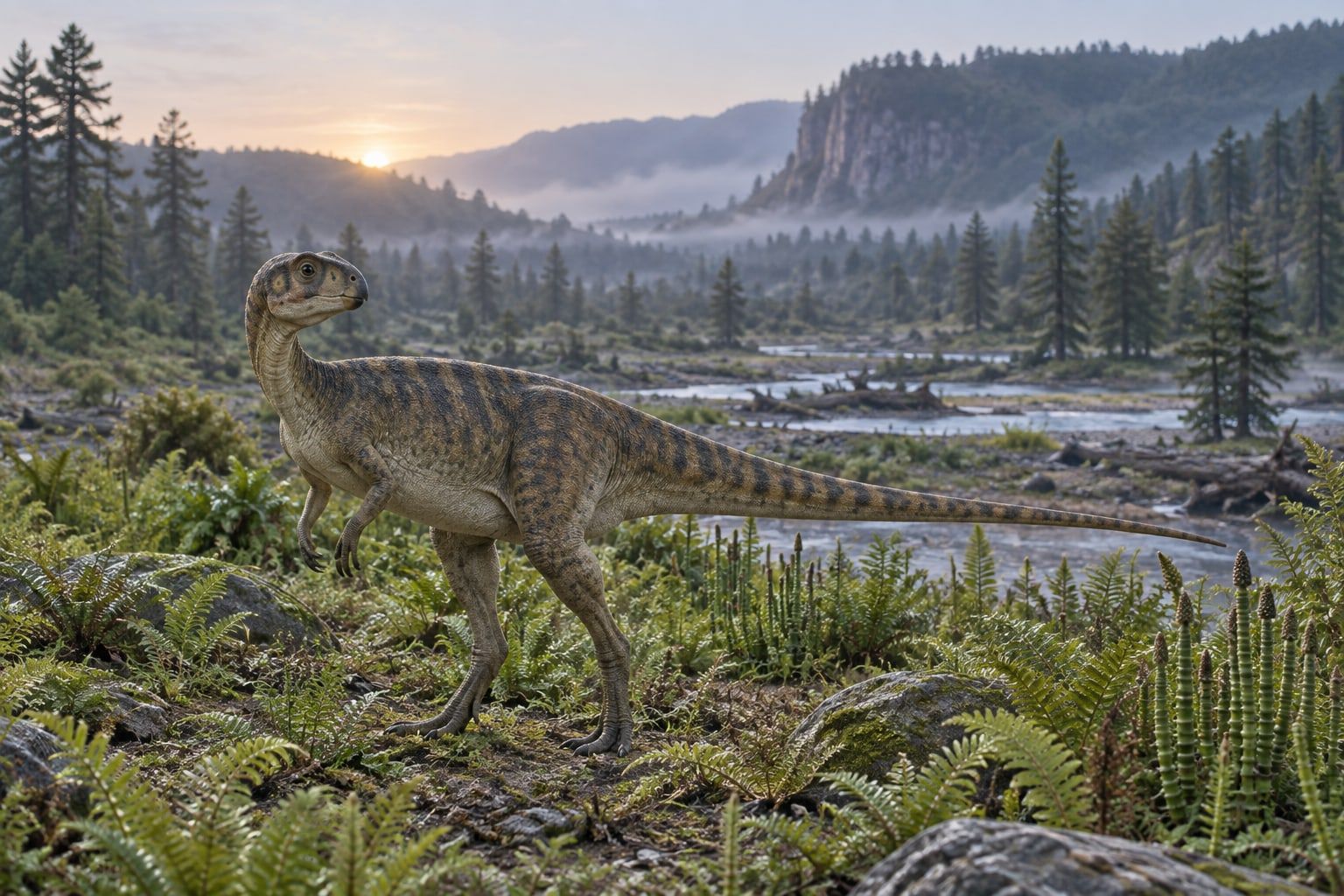
It shared that land with Iguanodon, Mantellisaurus, Hypsilophodon and the fish-eating Baryonyx.
How it was found
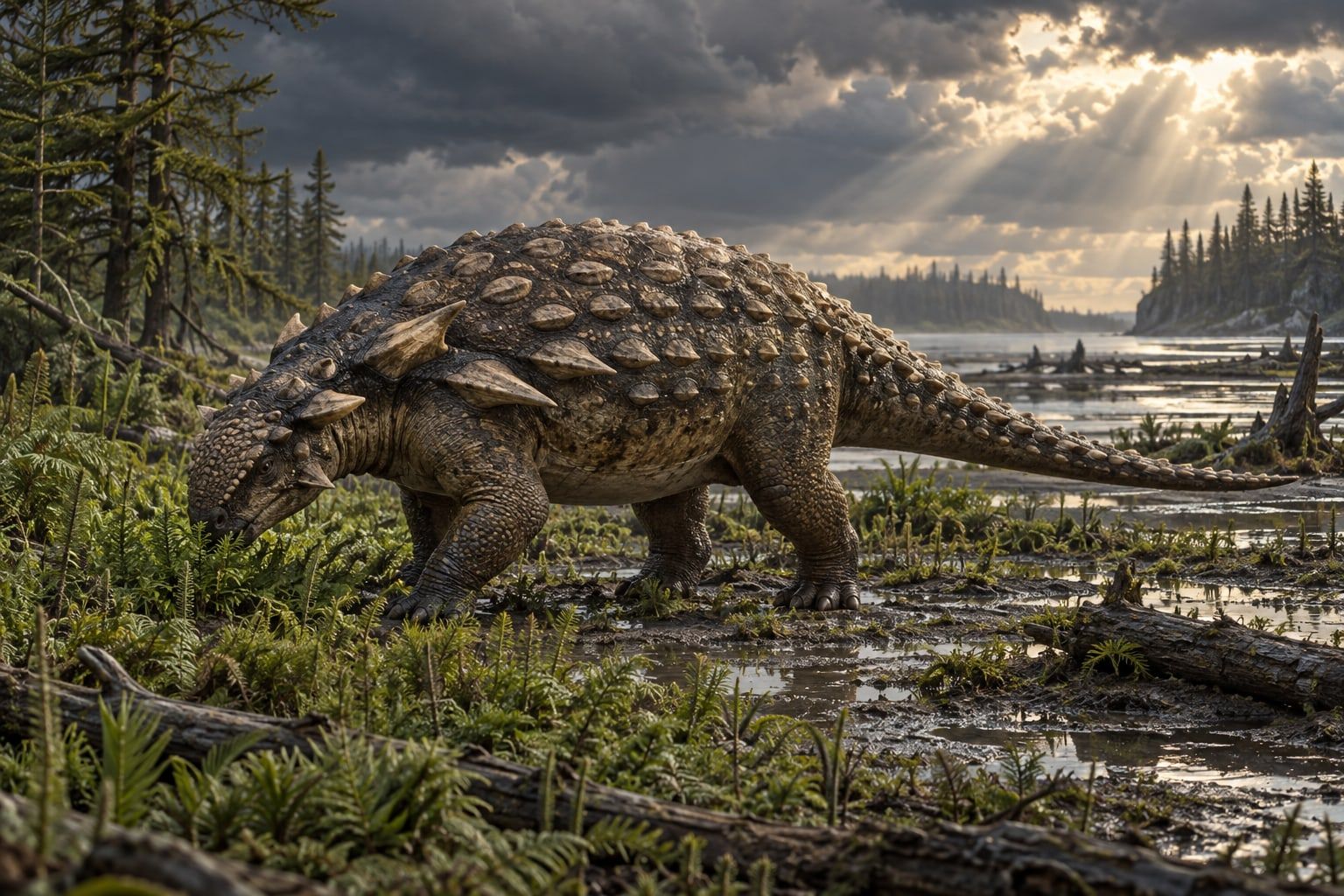
Fox named Polacanthus in 1866. About 13 finds are known. Its closest relative may be Gastonia from North America, and scientists still debate whether the two belong in their own family.
Lived alongside
Found in the same rock formations

Close relatives
Other members of Nodosauridae
Sources: WikidataNamed in: W. Fox. 1866. On a new Wealden saurian named Polacanthus. Report of the British Association for the Advancement of Science, Birmingham 1865:56