Eoraptor
EE-oh-RAP-tor
"dawn thief"
- Lived
- 234 to 227 million years ago, Late Triassic
- Length
- about 1 m (3 ft)
- Found in
- Argentina
- Named by
- Sereno et al. 1993
Size comparison
To scale

Scale in meters
Where its fossils were found
The evidence
Today

230 million years ago
Habitat
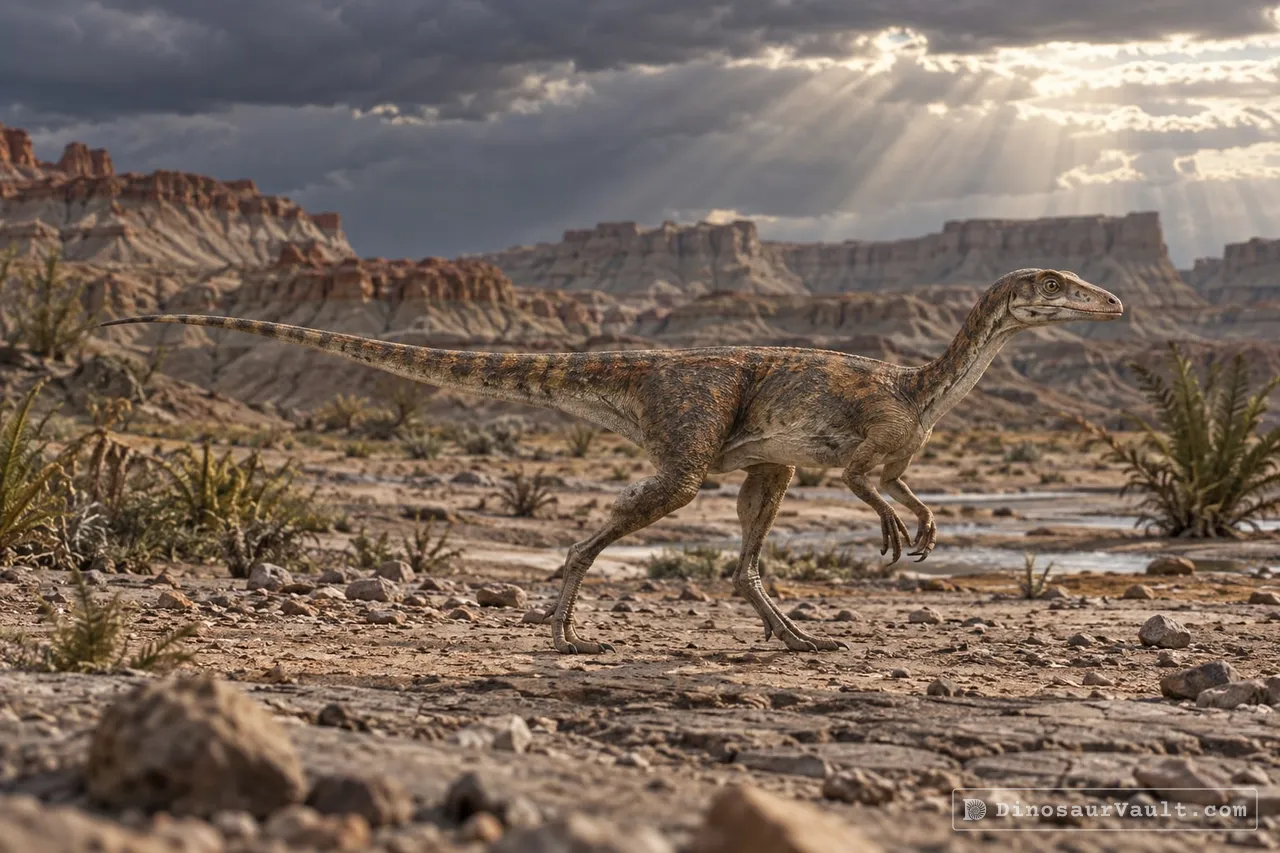
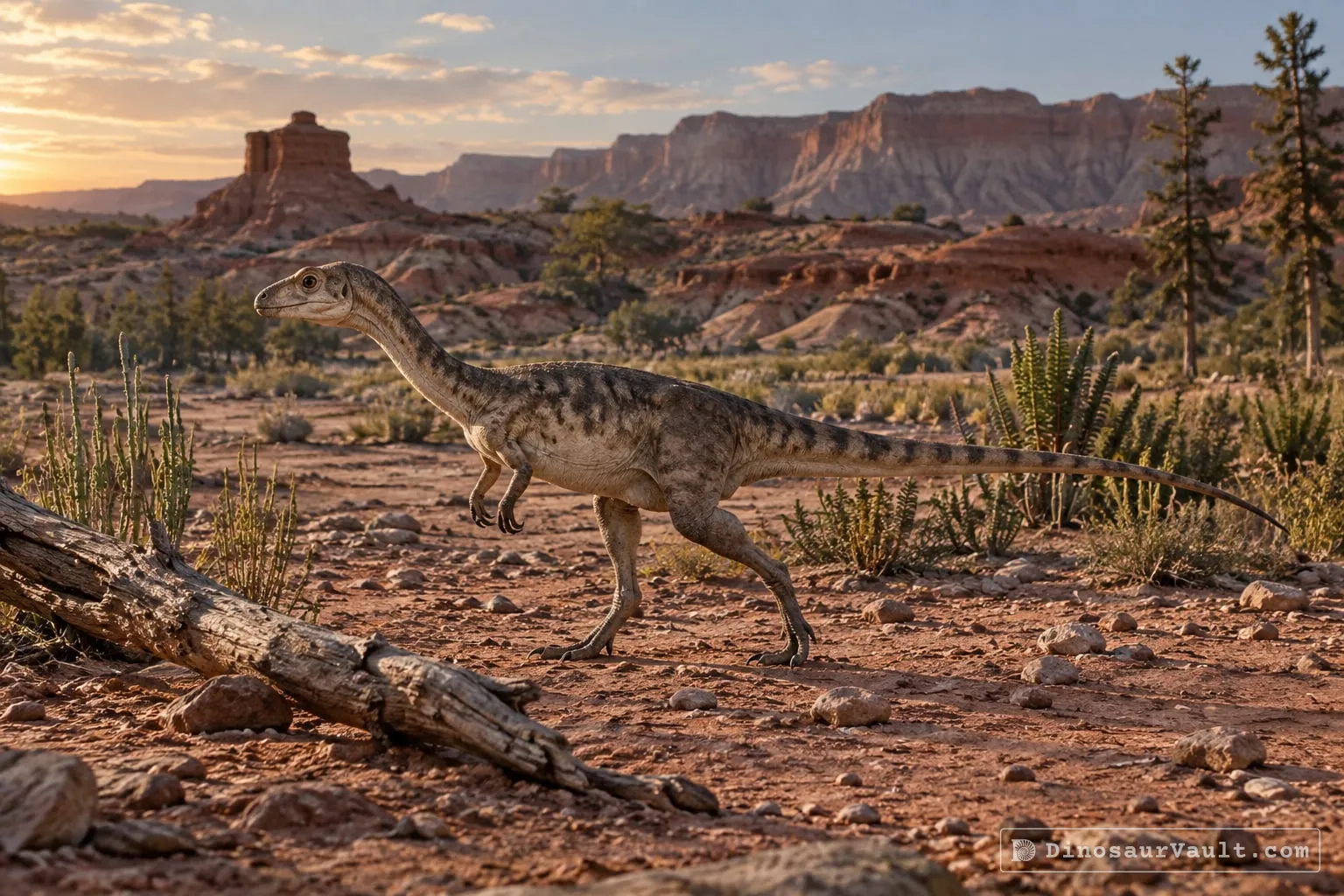
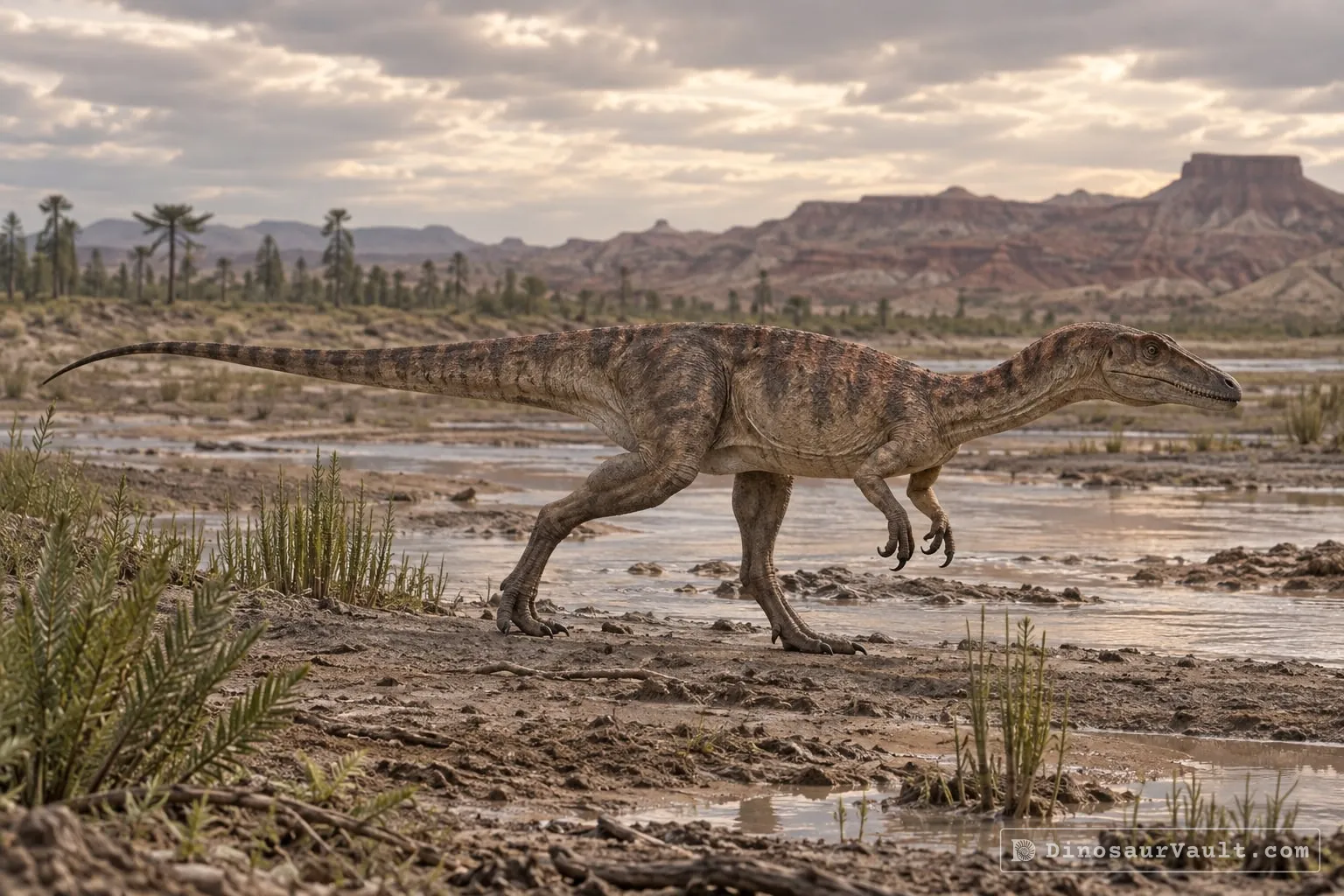
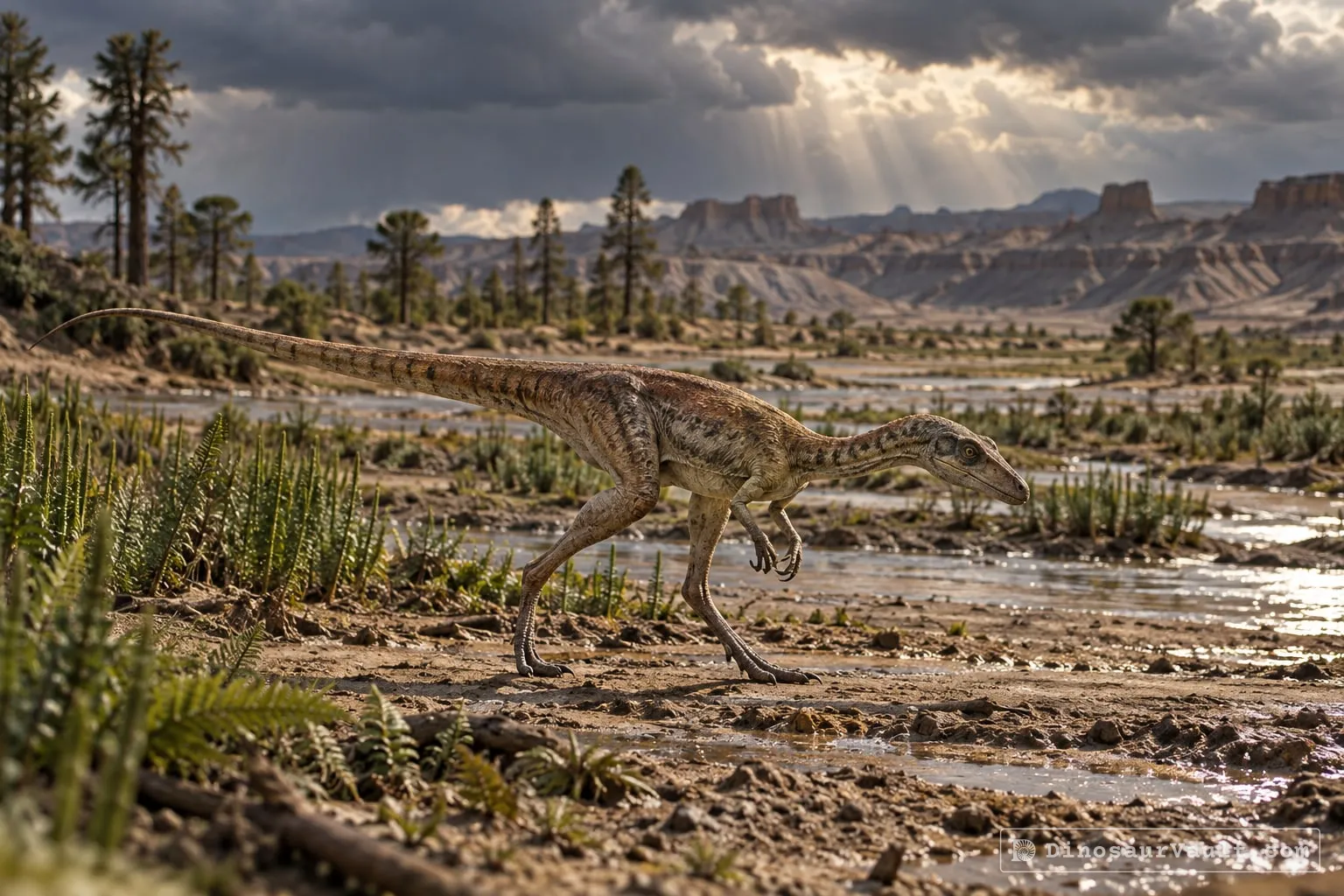
It probably lived on river floodplains with open silt bars, scattered woody plants and low fernlike cover. Herrerasaurus, Panphagia and Eodromaeus were other dinosaurs of the Ischigualasto Formation.
Field notes
About Eoraptor
What it was like
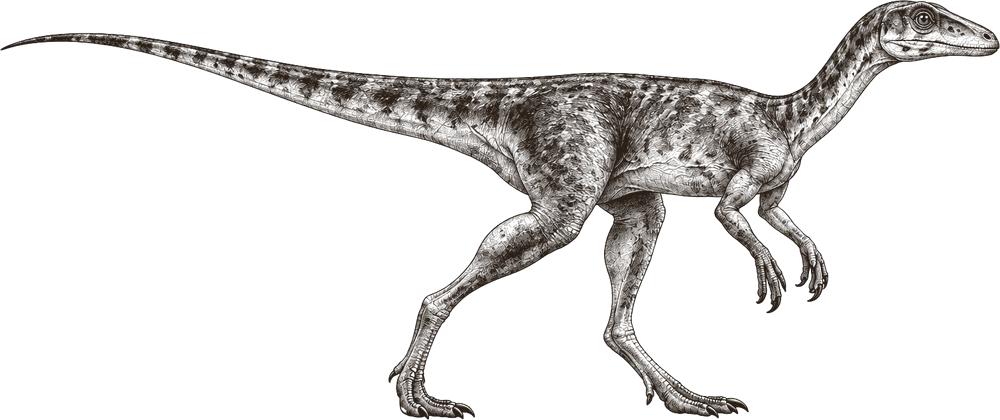
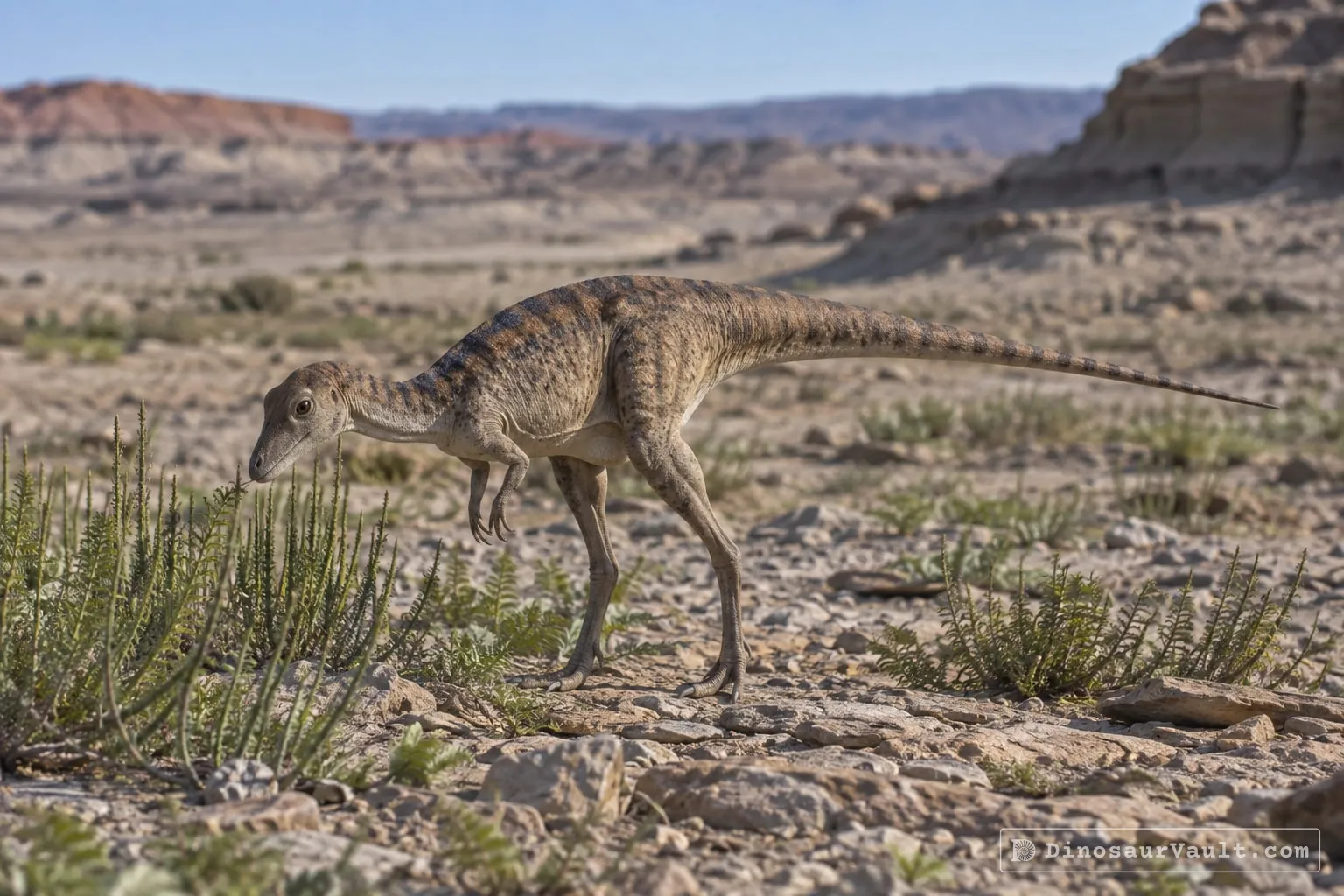
Eoraptor was small and lightly built, with a long tail balancing a narrow skull full of small, varied teeth. The original description gave its skeleton a length of about 1 meter (3 feet), a specimen estimate rather than an adult maximum. Its incomplete tail means that different reconstructions can give different total lengths.
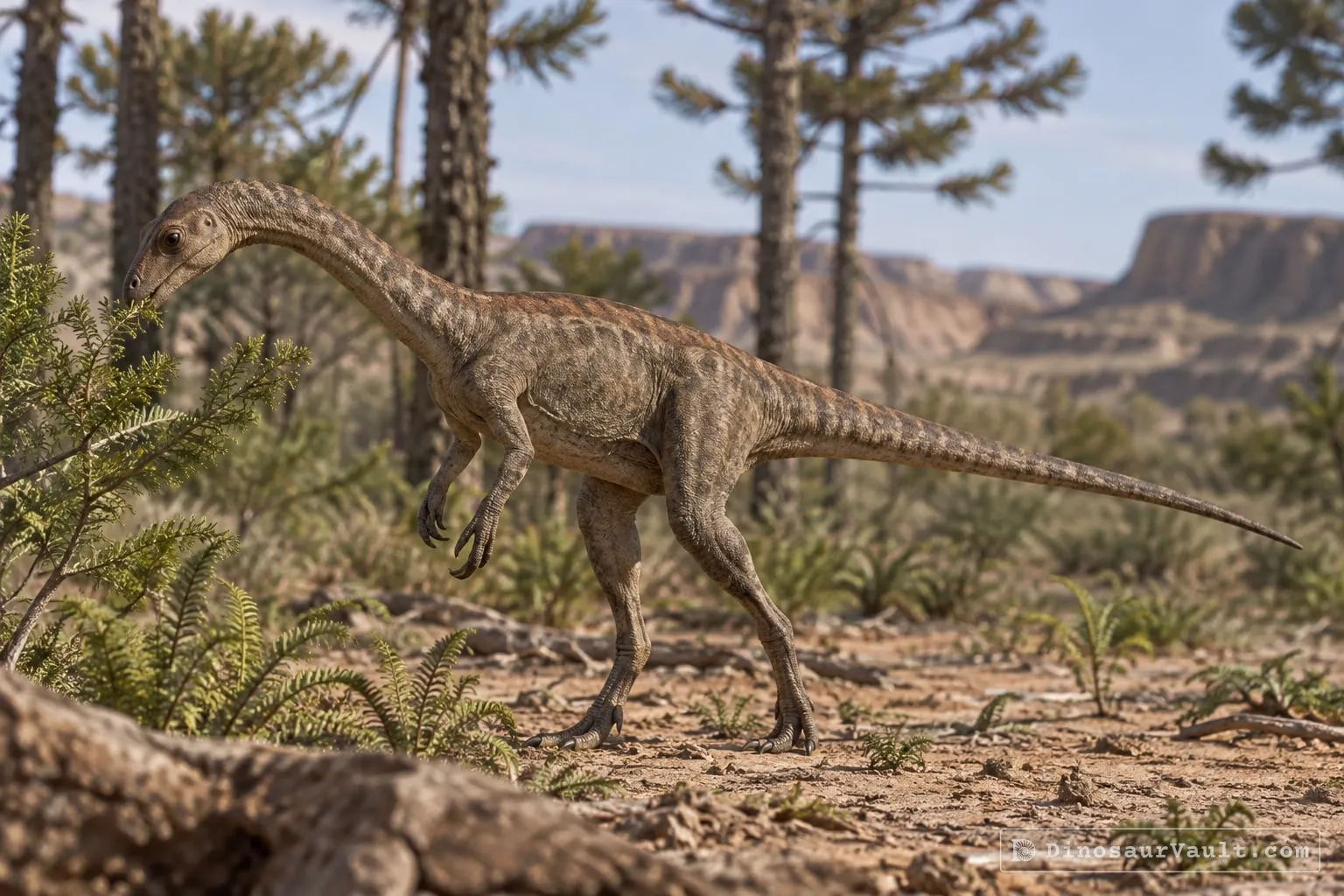
Its jaws held a mix of tooth shapes, some curved and blade-like for catching small animals, others simpler and leaf-shaped, suggesting Eoraptor was probably an omnivore that ate both meat and plants.
Its world
Eoraptor lived from about 234 to 227 million years ago, in the Late Triassic, in what is now Argentina. Its fossils come from the Ischigualasto Formation, one of the richest sites for early dinosaurs anywhere in the world.
It lived alongside some of the earliest known dinosaurs, including Herrerasaurus, Panphagia, and Eodromaeus, at a time when dinosaurs were still a small part of a world dominated by other kinds of reptiles.
How it was found
Sereno and colleagues named Eoraptor in 1993. Only one fossil find has been reported for the genus, an almost complete skeleton that remains one of the best-preserved dinosaurs from this early part of the Triassic. Eoraptor is among the earliest and most primitive dinosaurs known, making it important for understanding how the first dinosaurs evolved.
Field gallery
More views of Eoraptor
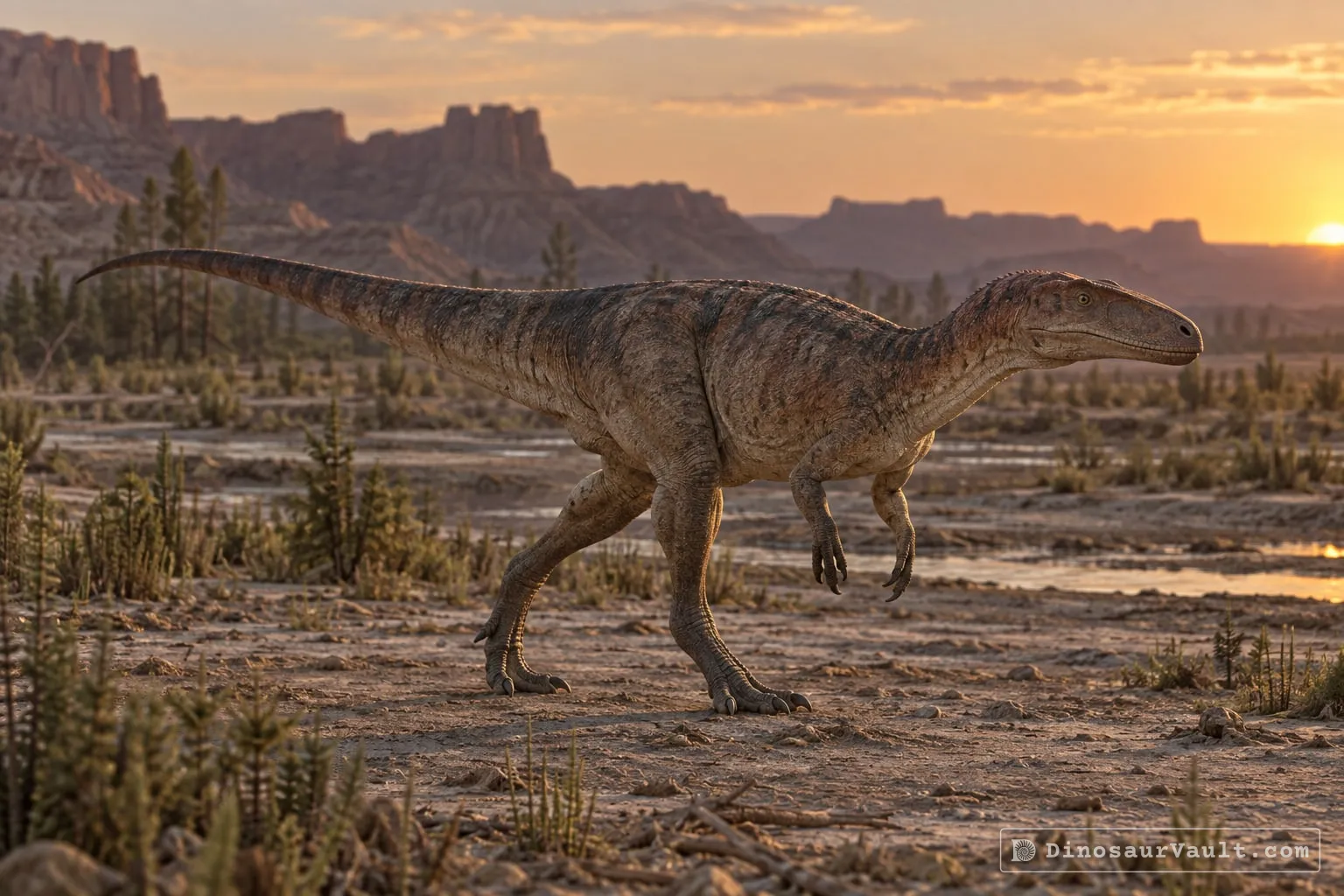
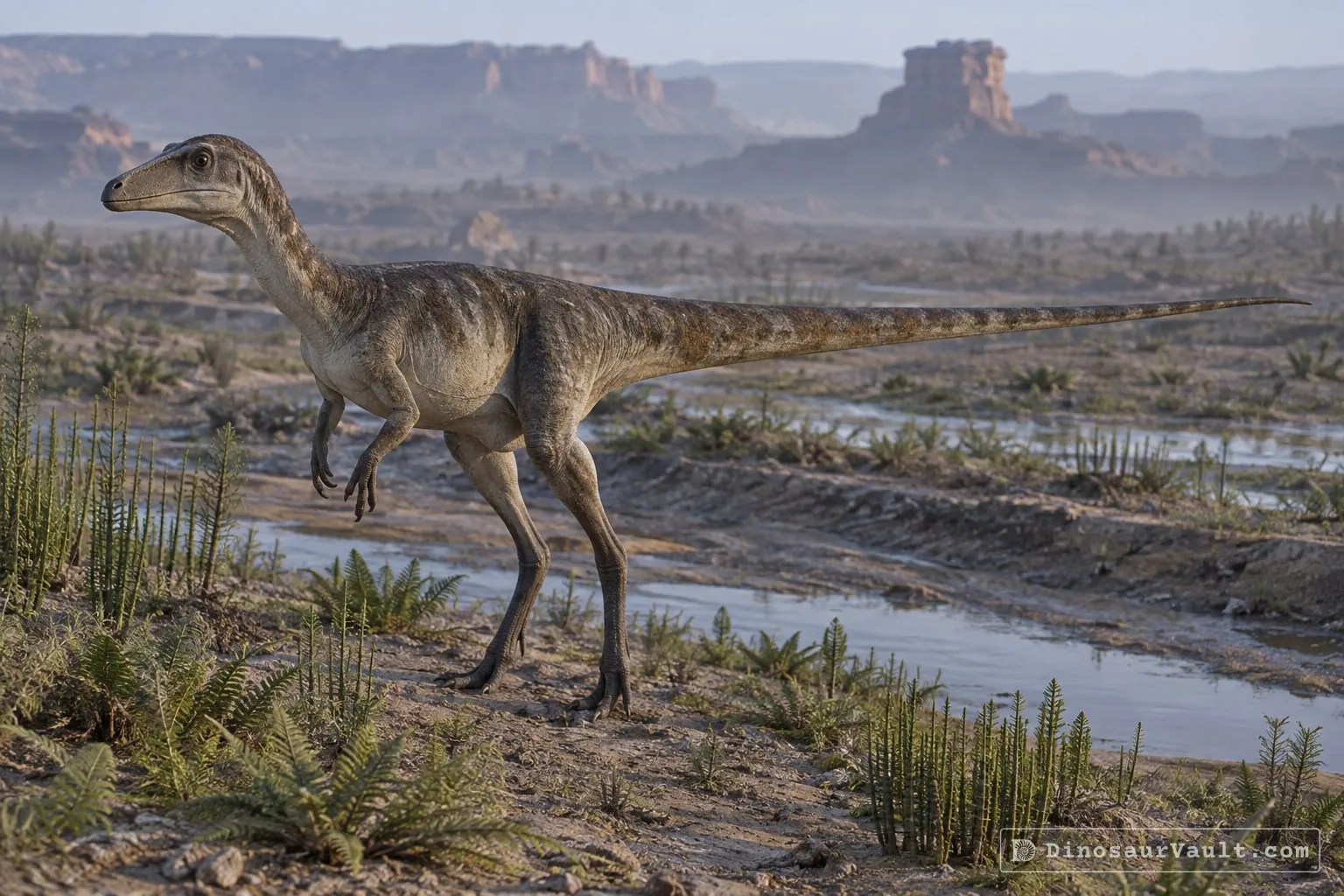
Scenes reconstructed from the available fossil evidence.
1 of 7
Lived alongside
Found in the same rock formations


A rock formation can hold fossils laid down millions of years apart, so not every animal here met Eoraptor.
The evidence
The science behind Eoraptor
Which parts of the picture come from its own bones, and which come from its relatives.
From its own fossils
- An almost complete skeleton shows a lightly built animal with long hindlegs and a long balancing tail.
- Its hands had five digits, with three prominent clawed fingers and smaller outer digits.
- Its jaws held curved and leaf-shaped teeth, suggesting it probably ate both small animals and plants.
Borrowed from relatives
- Almost the whole body is known from its own bones, so little of the skeleton needs to be borrowed.
- The fleshy outline of the mouth follows comparisons with other early dinosaurs, including Plateosaurus.
Still unknown
- Its color and body covering.
- Its everyday behavior and the foods it ate most often.
- What its young looked like.
Often drawn wrong
- A raised sickle claw like that of Velociraptor belongs to a different dinosaur lineage.
- A large predator skull misses its small, lightly built head.
- Its hands had reduced outer digits as well as the prominent clawed fingers.
Discovery timeline
- 1993Named itSereno et al.
- 2011Family treeMartinez et al.
- 2012Full descriptionSereno, Martínez & Alcober
Key papers
The research behind what we know of Eoraptor
Named it
Named Eoraptor from a small, nearly complete skeleton in Argentina and explored what it revealed about the earliest dinosaurs.
Primitive dinosaur skeleton from Argentina and the early evolution of Dinosauria. Nature 361: 64-66
Read the paper : Primitive dinosaur skeleton from Argentina and the early evolution of Dinosauria (opens in a new tab)Family tree
Described Eodromaeus and reassessed Eoraptor as an early sauropodomorph rather than a member of the meat-eating theropod branch.
A Basal Dinosaur from the Dawn of the Dinosaur Era in Southwestern Pangaea. Science 331: 206-210
Read the paper : A Basal Dinosaur from the Dawn of the Dinosaur Era in Southwestern Pangaea (opens in a new tab)Full description
Described the skeleton in detail and placed Eoraptor among early relatives of the long-necked plant eaters.
Osteology ofEoraptor lunensis(Dinosauria, Sauropodomorpha). Journal of Vertebrate Paleontology 32: 83-179
Read the paper : Osteology ofEoraptor lunensis(Dinosauria, Sauropodomorpha) (opens in a new tab)
Close relatives
Other members of Sauropodomorpha


Sources: Wikidata