Outline: a typical early sauropodomorph
Thecodontosaurus
THEE-koh-DON-toh-SORE-us
"socket-tooth lizard"
- Lived
- 209 to 201 million years ago, Late Triassic
- Length
- about 2.5 m (8 ft)
- Group
- Early sauropodomorphs
- Found in
- United Kingdom, France, Lesotho and Zimbabwe
- Named by
- Riley and Stutchbury 1836
Size comparison
To scale

Scale in metersOutline: typical early sauropodomorph shape
Where its fossils were found
The evidence
Today
200 million years ago
Field notes
About Thecodontosaurus
What it was like
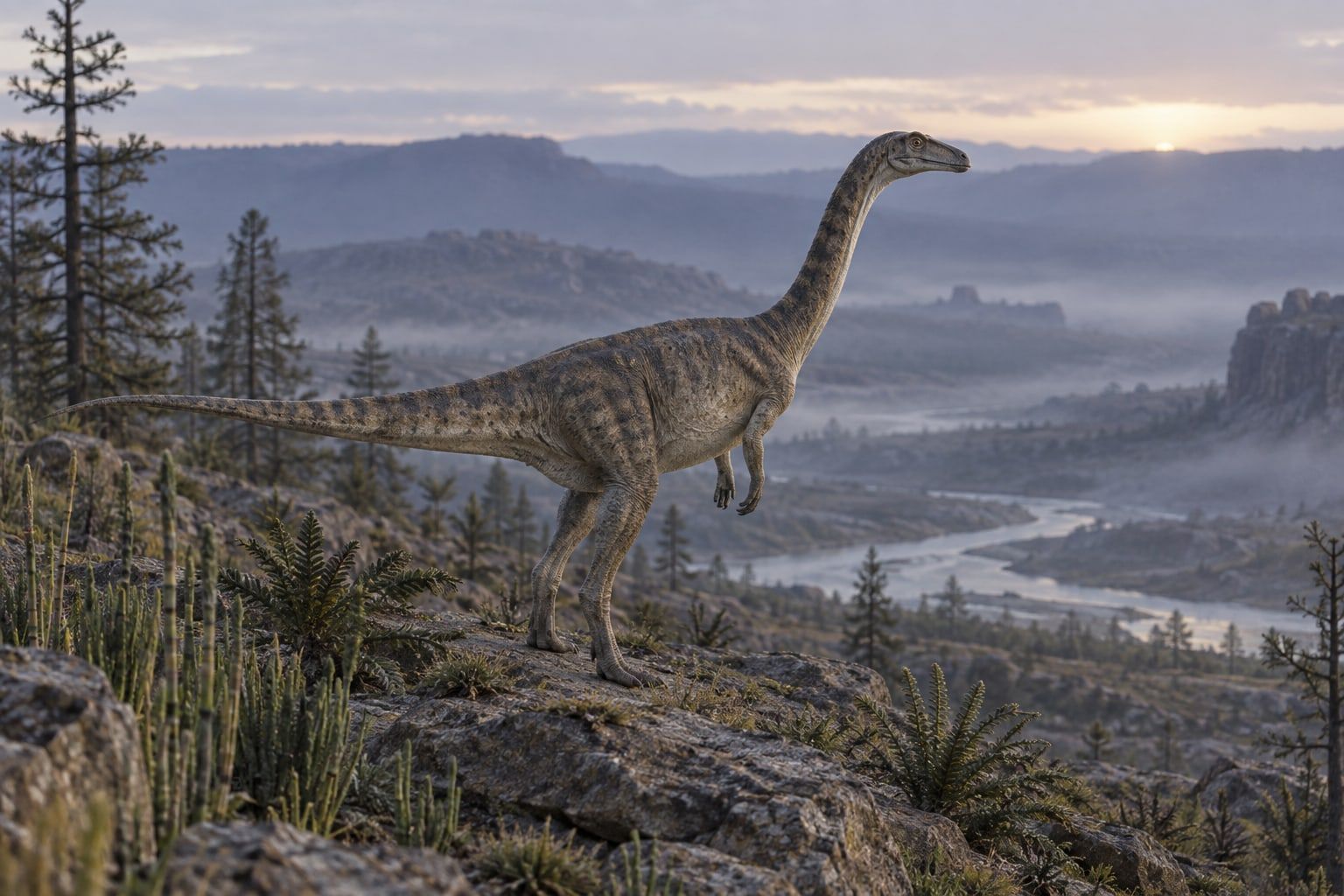
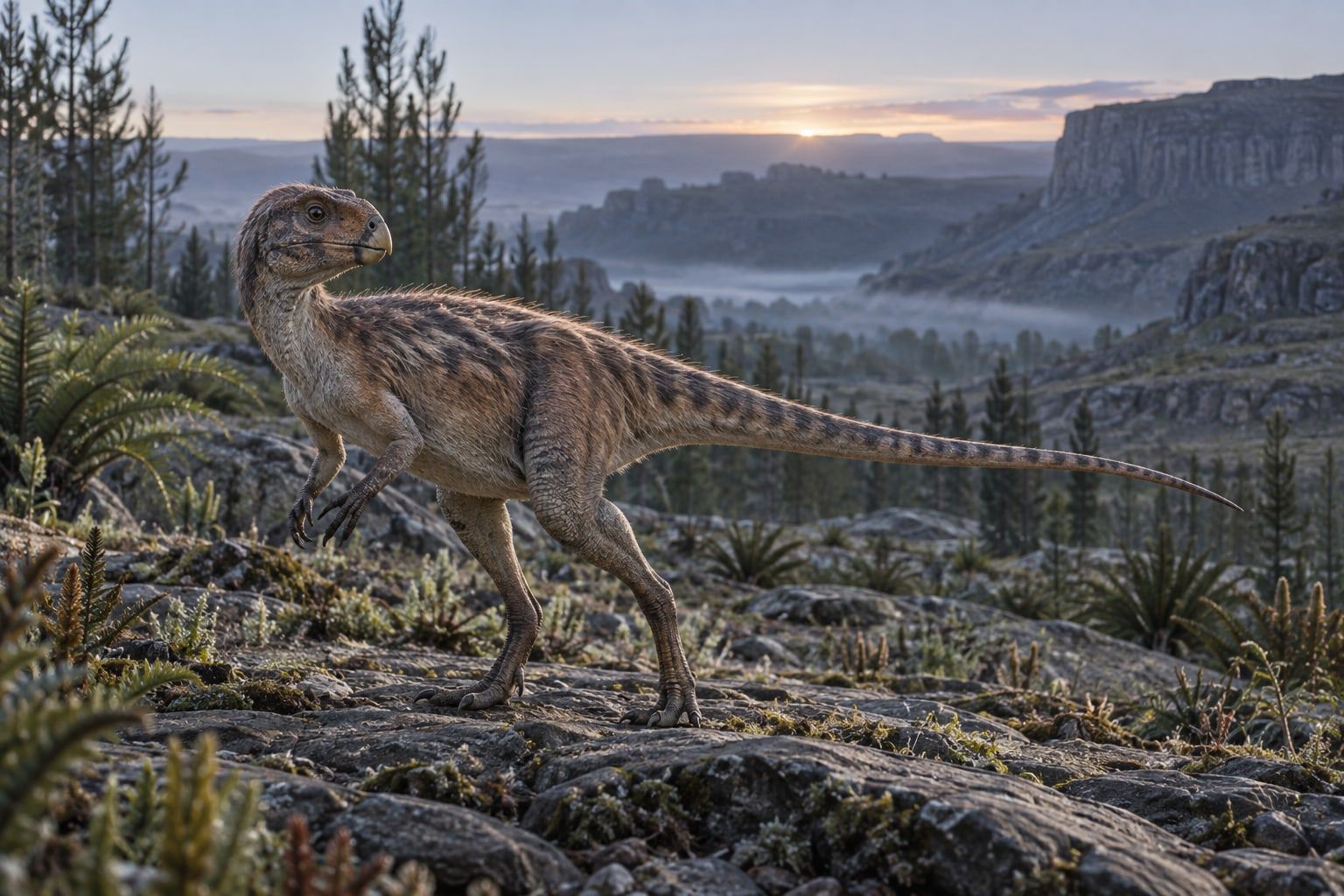
Thecodontosaurus was a small plant eater about 2.5 meters (8 feet) long, an early member of the long-necked line that later produced the giant sauropods. It had a small head, a long neck and tail, and mostly walked on its hind legs.
Its name comes from its teeth, which sat in sockets in the jaw, and many of them had jagged edges for slicing plants.
Its world
It lived in the Late Triassic in what is now England. Many of its bones come from cracks and caves in older limestone, which filled with sediment and bones in its time, perhaps on small islands.
How it was found
Riley and Stutchbury named Thecodontosaurus in 1836, making it one of the very first dinosaurs ever named. Several species were later added to the genus, but only the first is still accepted.
Lived alongside
Found in the same rock formations
Close relatives
Other members of Sauropodomorpha
Sources: WikidataNamed in: H. Riley and S. Stutchbury. 1836. A description of various fossil remains of three distinct saurian animals discovered in the autumn of 1834, in the Magnesian Conglomerate on Durdham Down, near Bristol. Proceedings of the Geological Society of London 2:397-399