Kholumolumo
Type species Kholumolumo ellenbergerorum
- Lived
- 227 to 206 million years ago, Late Triassic
- Found in
- Lesotho
- Named by
- Peyre de Fabrègues and Allain 2020
Where its fossils were found
The evidence
Today

220 million years ago
Habitat
Floodplains crossed by winding rivers formed the lower Elliot Formation in southern Africa. Other plant eaters from these rocks include Melanorosaurus, Blikanasaurus and Eucnemesaurus.
Field notes
About Kholumolumo
What it was like
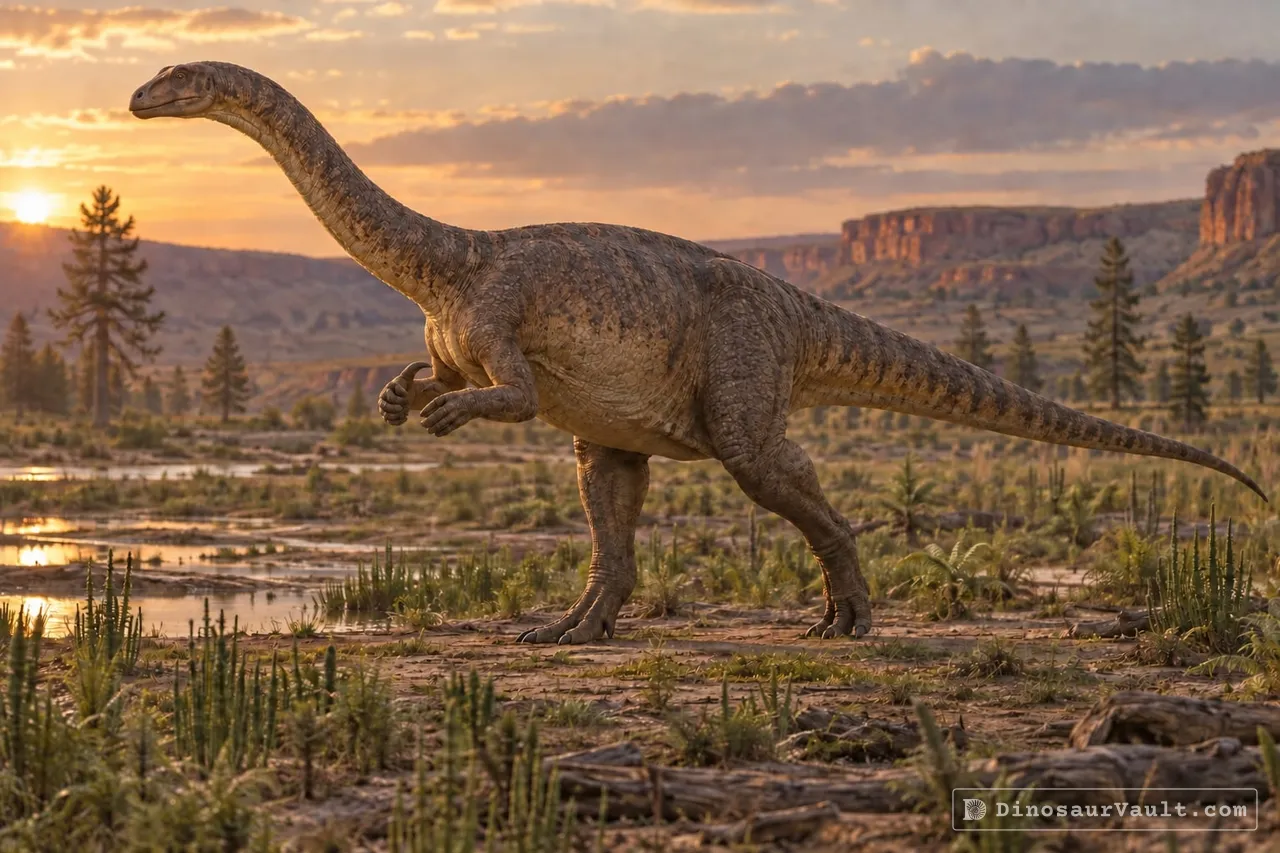
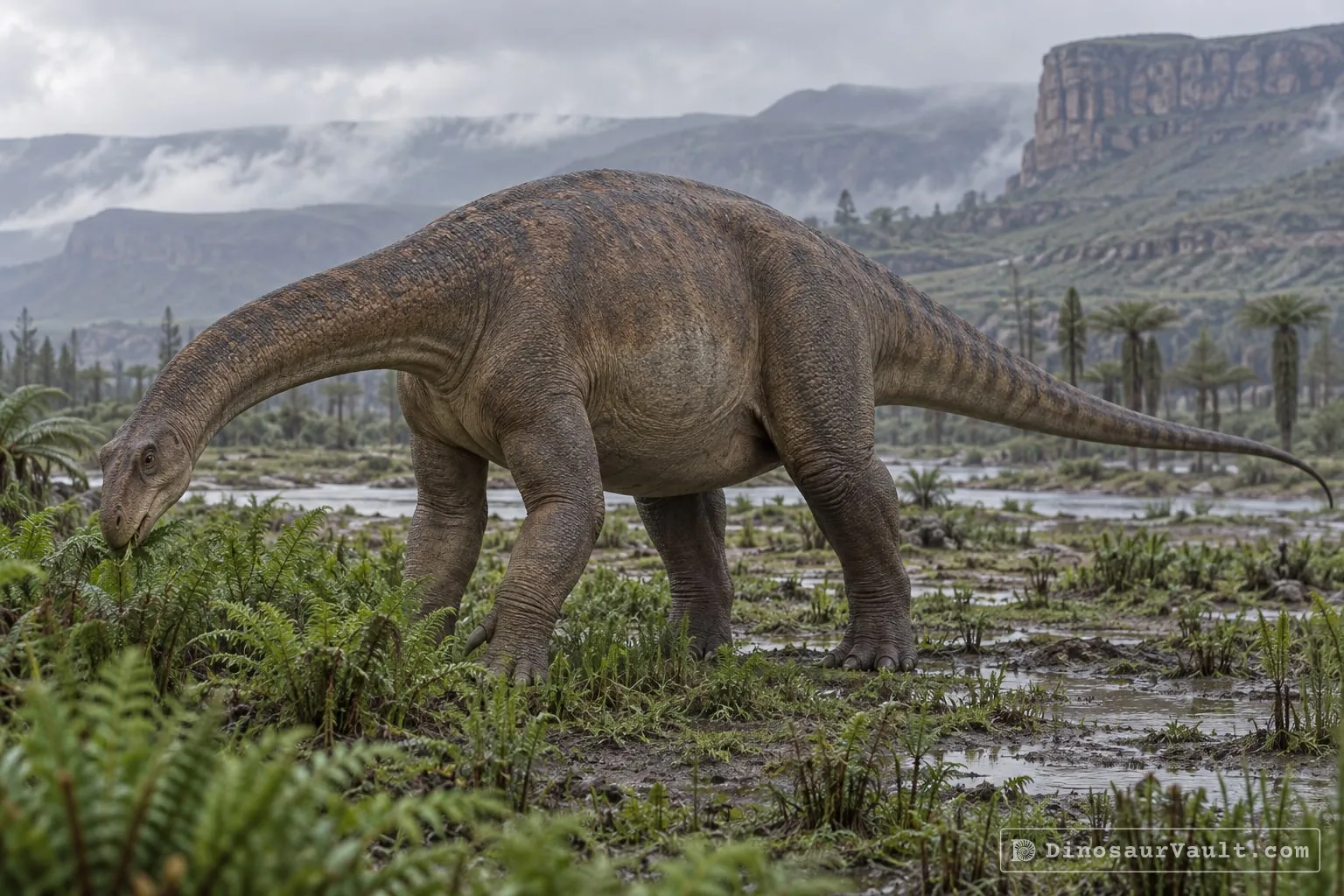
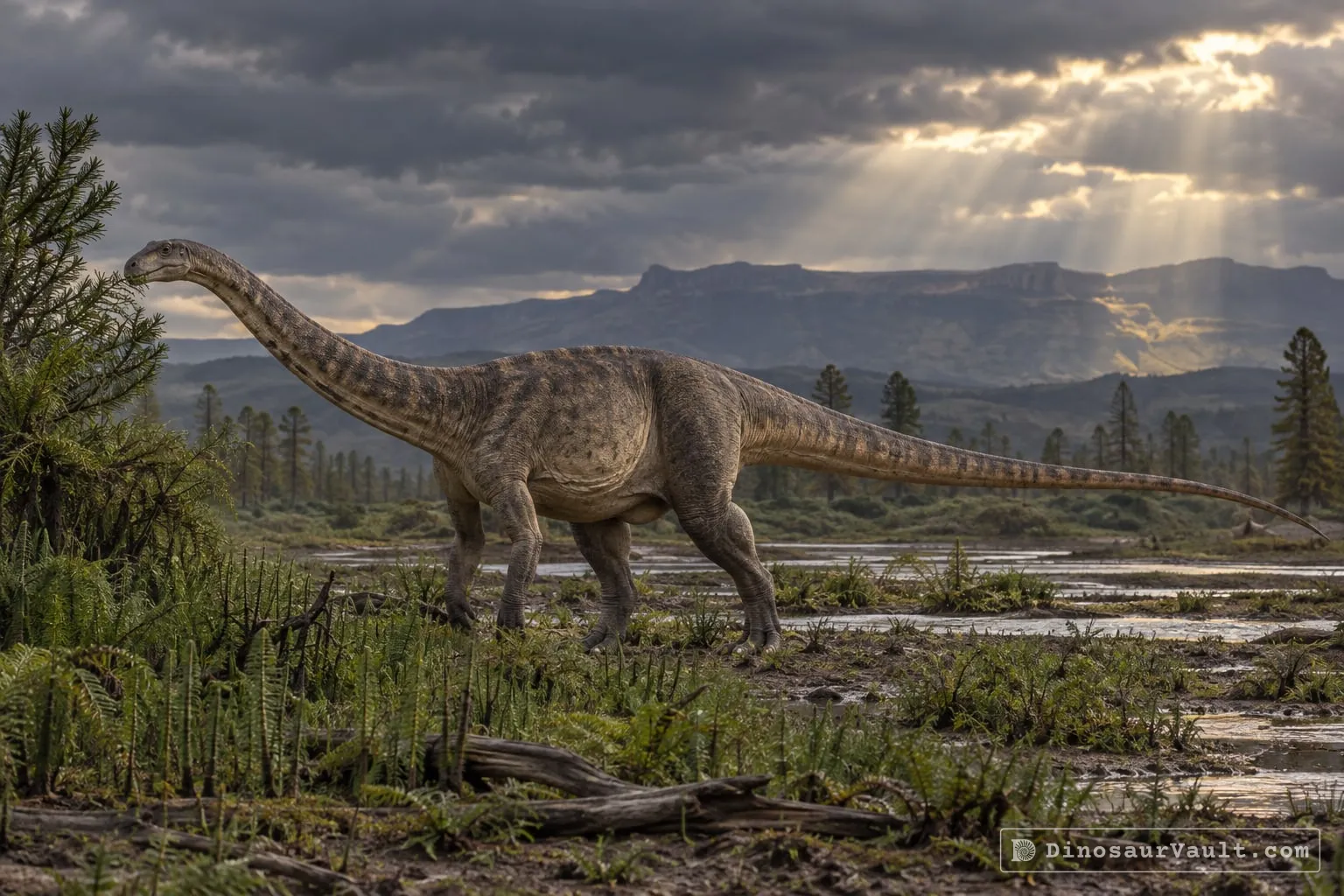
Kholumolumo was a plant eater from the long-necked line that later produced the giant sauropods. It is known from bones of several animals found together.
Its world
It lived in the Late Triassic in what is now Lesotho. Its bones come from the lower part of the Elliot Formation.
How it was found
Peyre de Fabrègues and Allain named Kholumolumo in 2020, from bones collected decades earlier. Its name comes from a dragon in local legend that people linked with dinosaur bones.
Field gallery
More views of Kholumolumo
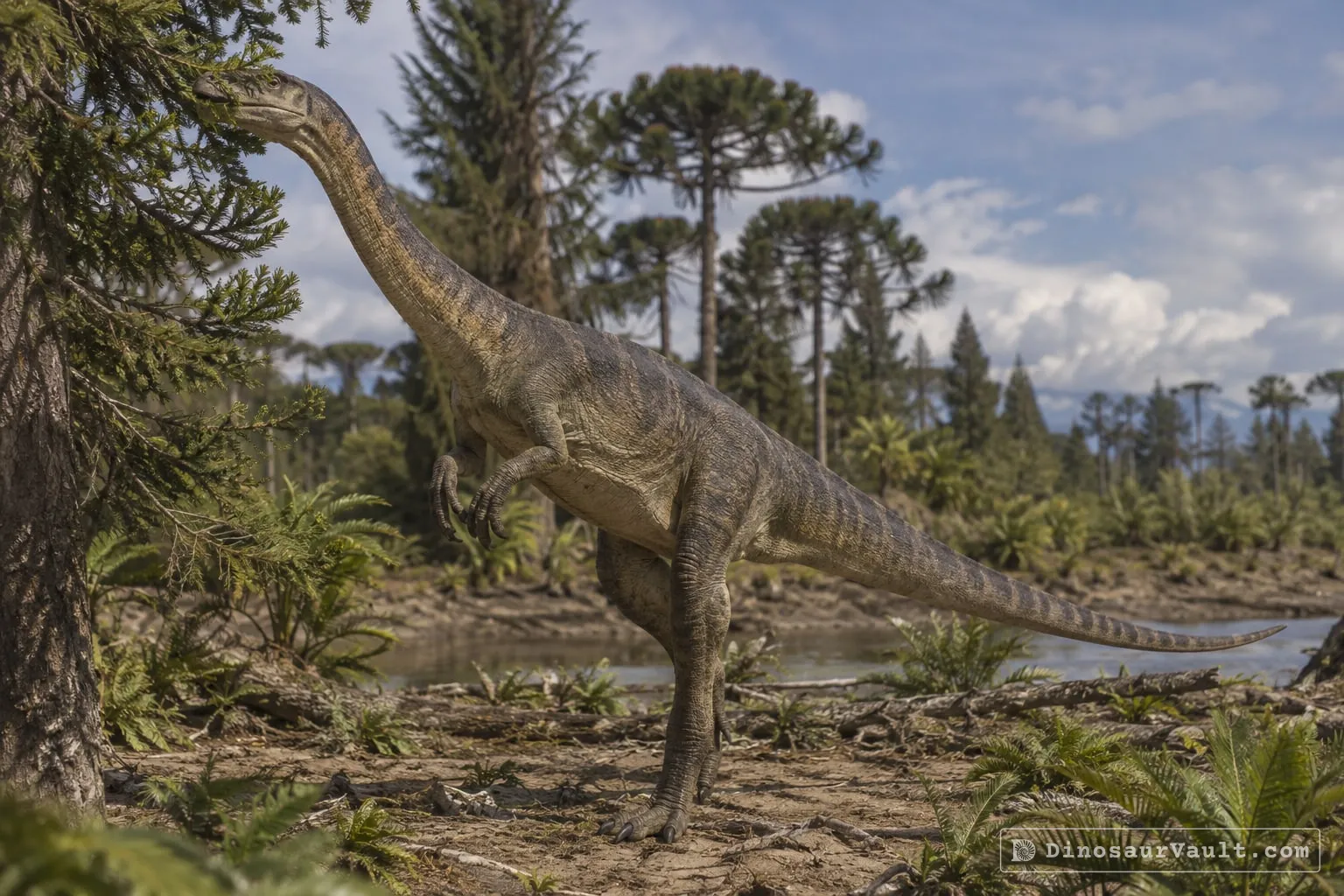
Scenes reconstructed from the available fossil evidence.
1 of 3
Lived alongside
Found in the same rock formations
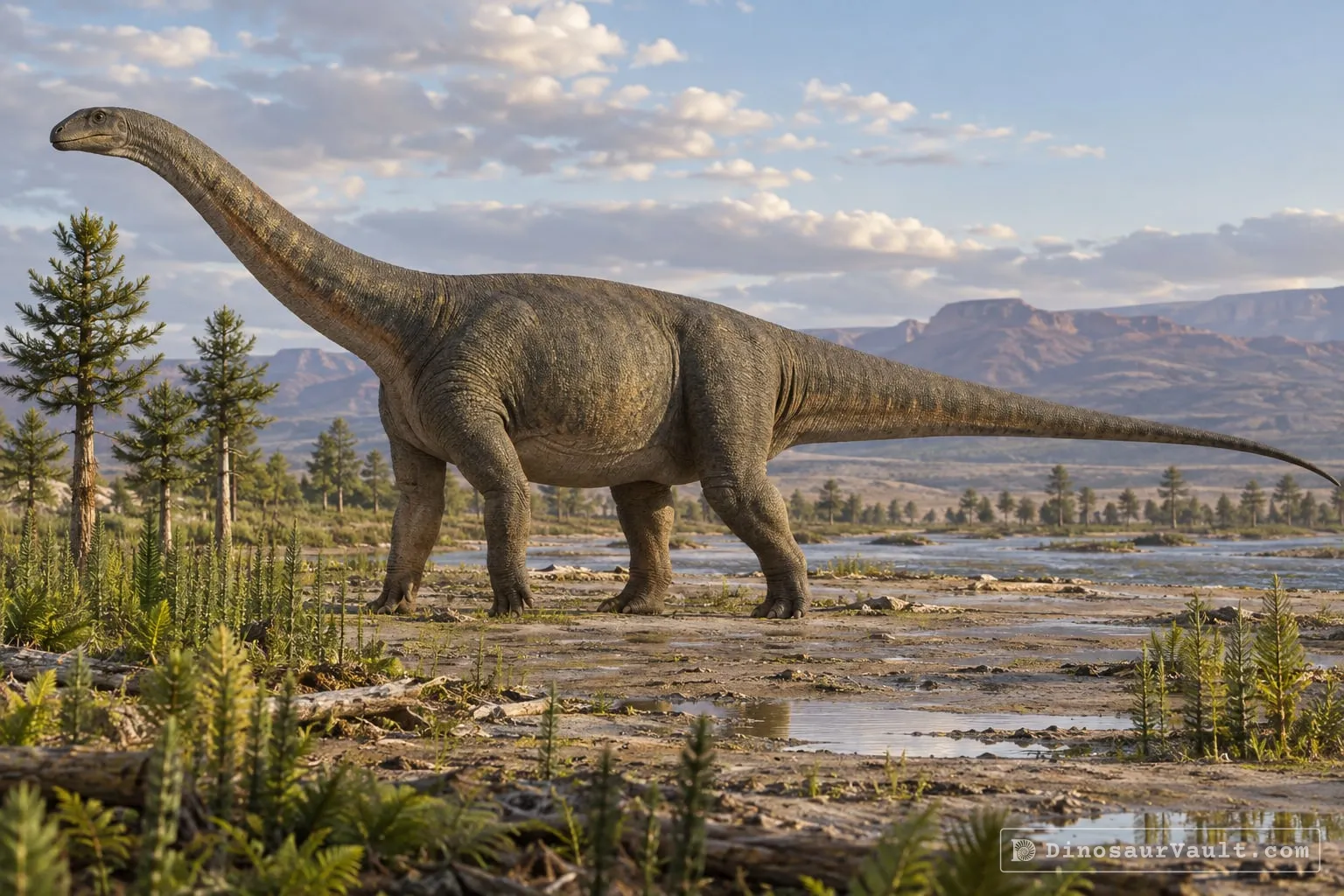
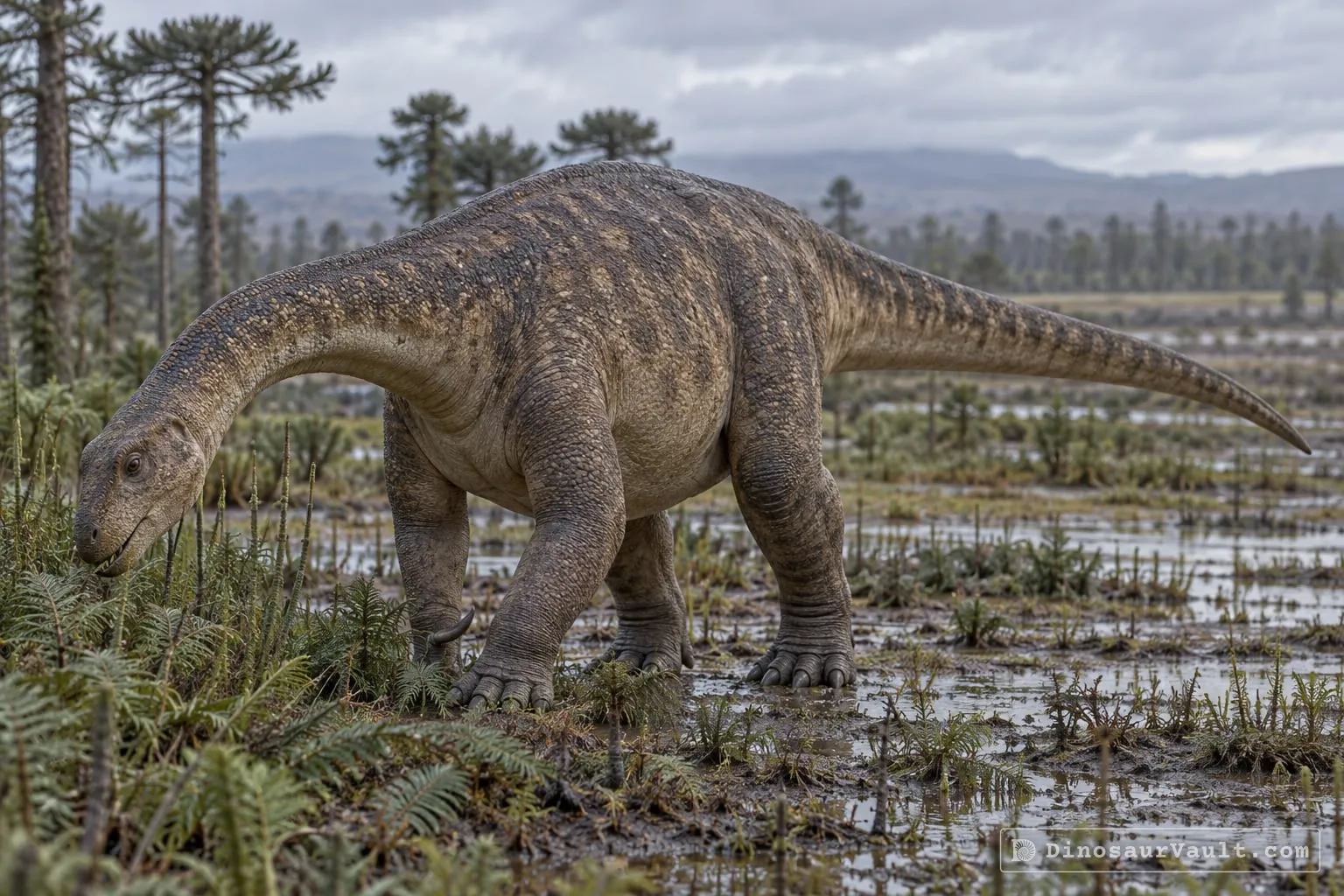
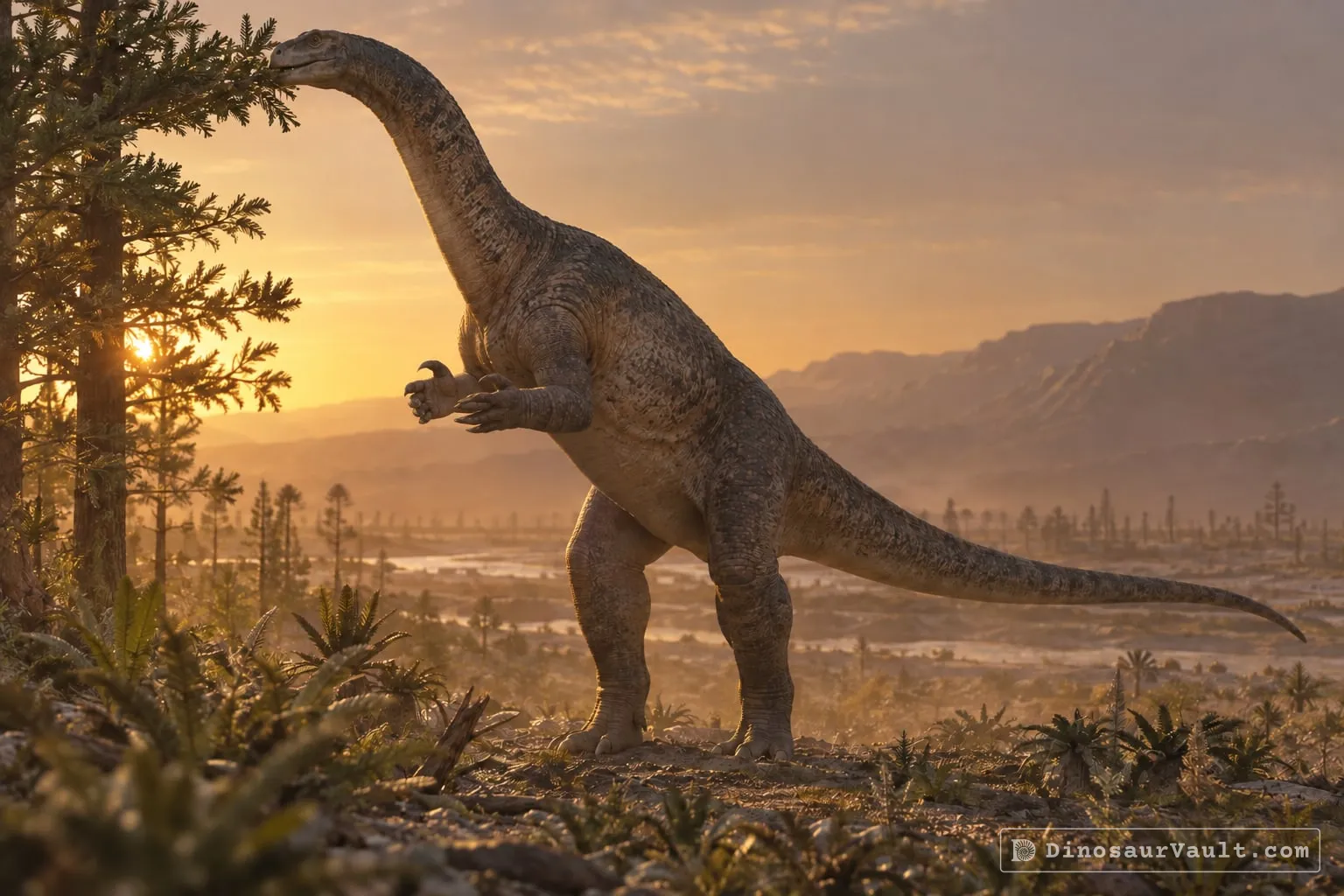


A rock formation can hold fossils laid down millions of years apart, so not every animal here met Kholumolumo.
The evidence
The science behind Kholumolumo
Which parts of the picture come from its own bones, and which come from its relatives.
From its own fossils
- A large bonebed contains bones of many animals, with material from across the skeleton.
- The bones show that this large early sauropodomorph walked on two legs.
- Its thigh bone is straight when viewed from the front, and its shin bone is relatively substantial.
Borrowed from relatives
- Plateosaurus provides broader comparisons for the missing head, hands and feet.
Still unknown
- Its skin color and markings.
- Whether the animals in the bonebed lived together as a herd.
- The exact proportions of a complete individual and the identity of a foot assigned to Kholumolumo that another study assigned to possible Antetonitrus.
Discovery timeline
- 2004Its worldBordy, John Hancox & Rubidge
- 2020Named itPeyre de Fabrègues & Allain
- 2025Fossil sitesBenoit, Helm & Bordy
Key papers
The research behind what we know of Kholumolumo
Its world
Found that winding, year-round rivers deposited the lower Elliot Formation, while more temporary rivers shaped the upper part.
Fluvial style variations in the Late Triassic–Early Jurassic Elliot formation, main Karoo Basin, South Africa. Journal of African Earth Sciences 38: 383-400
Read the paper : Fluvial style variations in the Late Triassic–Early Jurassic Elliot formation, main Karoo Basin, South Africa (opens in a new tab)Named it
Named a large early sauropodomorph from a bonebed in Lesotho and identified it as a two-legged animal.
Kholumolumo ellenbergerorum , gen. et sp. nov., a new early sauropodomorph from the lower Elliot Formation (Upper Triassic) of Maphutseng, Lesotho. Journal of Vertebrate Paleontology 39
Read the paper : Kholumolumo ellenbergerorum , gen. et sp. nov., a new early sauropodomorph from the lower Elliot Formation (Upper Triassic) of Maphutseng, Lesotho (opens in a new tab)Fossil sites
Traced the history of fossils from the site and assigned a historical foot specimen to possible Antetonitrus, separate from the material named Kholumolumo.
Paleontological Knowledge among the Basotho and San of Lesotho: A Review Including Insights from Paul Ellenberger’s Archives. Geoheritage 17
Read the paper : Paleontological Knowledge among the Basotho and San of Lesotho: A Review Including Insights from Paul Ellenberger’s Archives (opens in a new tab)
Close relatives
Other members of Sauropodomorpha


Sources: Wikidata