Outline: a typical early sauropodomorph
Panphagia
"eats everything"
- Lived
- 237 to 227 million years ago, Late Triassic
- Group
- Early sauropodomorphs, Saturnaliidae
- Found in
- Argentina
- Named by
- Martínez and Alcober 2009
Where its fossils were found
The evidence
Today
230 million years ago
Field notes
About Panphagia
What it was like
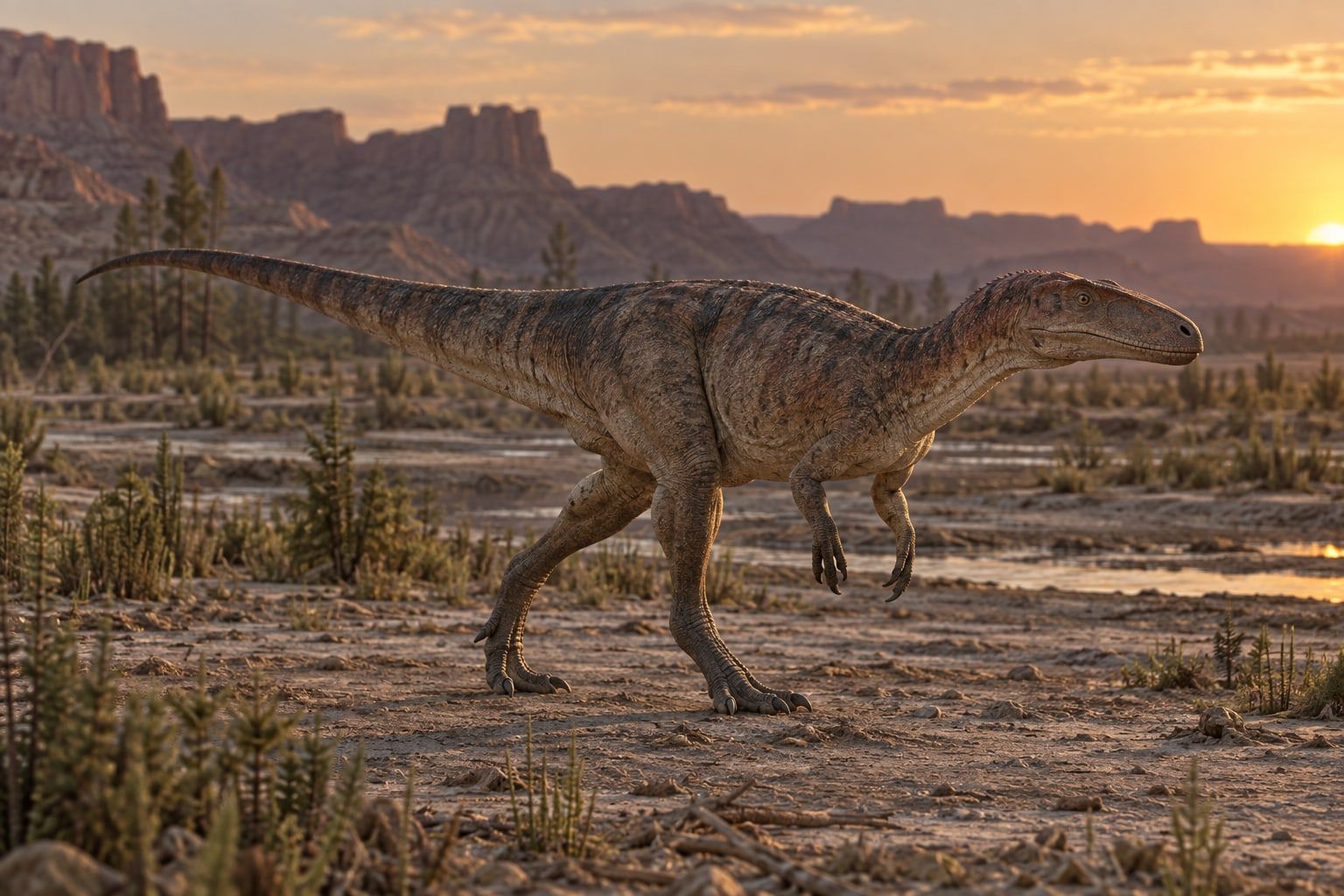
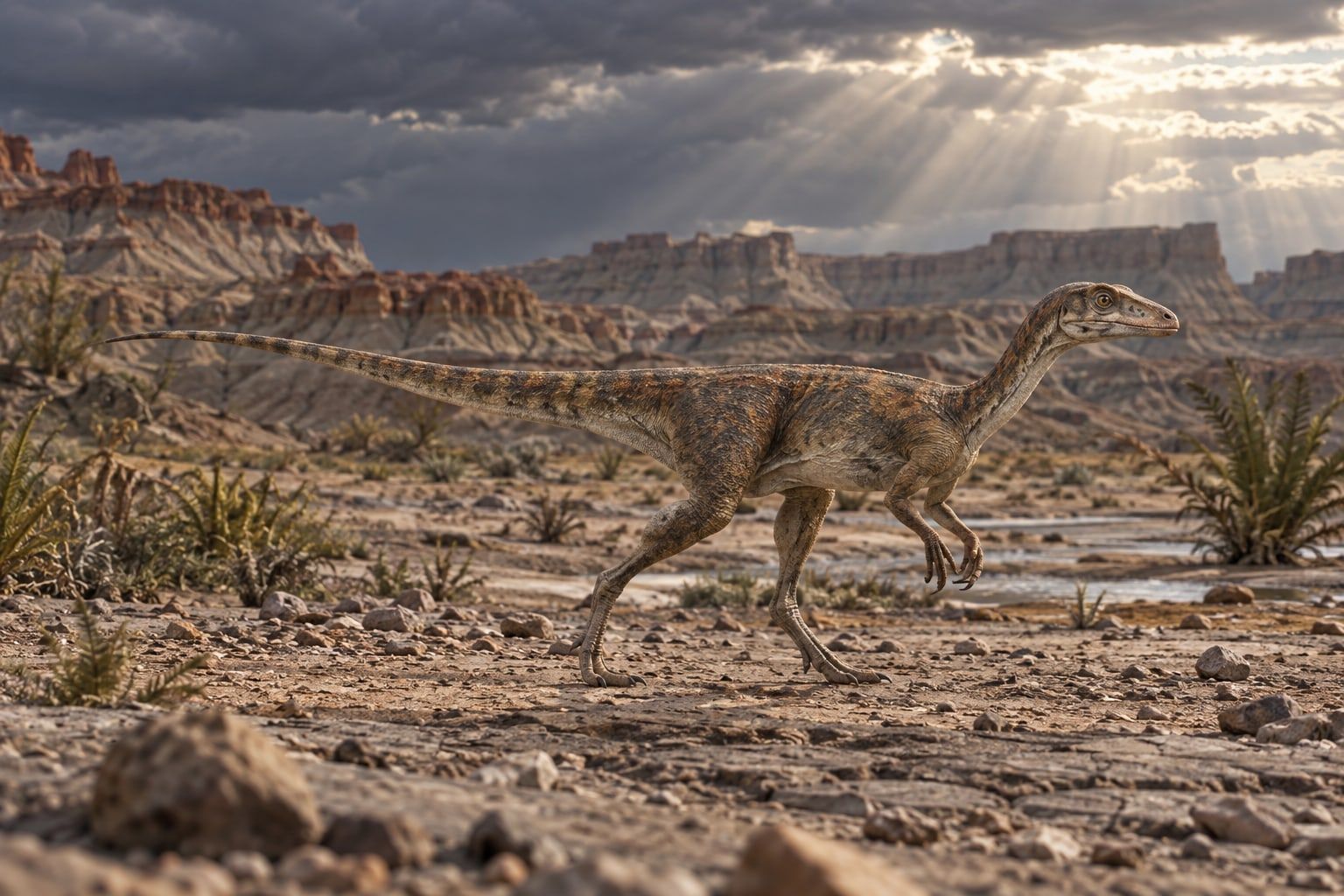
Panphagia was a small, early two-legged dinosaur, one of the oldest members of the long-necked line that later produced the giant sauropods. It was only a few feet long.
Its teeth suggest it ate both plants and small animals, which is where its name comes from.
Its world
It lived about 237 to 227 million years ago, in the Late Triassic, in what is now Argentina. Its bones come from the Ischigualasto Formation, which holds some of the oldest dinosaurs known, including Herrerasaurus, Eoraptor and Eodromaeus.
How it was found
Martínez and Alcober named Panphagia in 2009, from a single partial skeleton.
Lived alongside
Found in the same rock formations
Close relatives
Other members of Saturnaliidae
Sources: WikidataNamed in: R. N. Martínez and O. A. Alcober. 2009. A basal sauropodomorph (Dinosauria: Saurischia) from the Ischigualasto Formation (Triassic, Carnian) and the early evolution of Sauropodomorpha. PLoS ONE 4(2 (e4397)):1-12