Chromogisaurus
"colored earth lizard"
- Lived
- 237 to 227 million years ago, Late Triassic
- Group
- Early sauropodomorphs, Saturnaliidae
- Found in
- Argentina
- Named by
- Ezcurra 2010
Where its fossils were found
The evidence
Today

230 million years ago
Habitat
A river floodplain in the Ischigualasto Formation, in what is now Argentina. Other dinosaurs there included Herrerasaurus, Eoraptor and Panphagia.
Field notes
About Chromogisaurus
What it was like
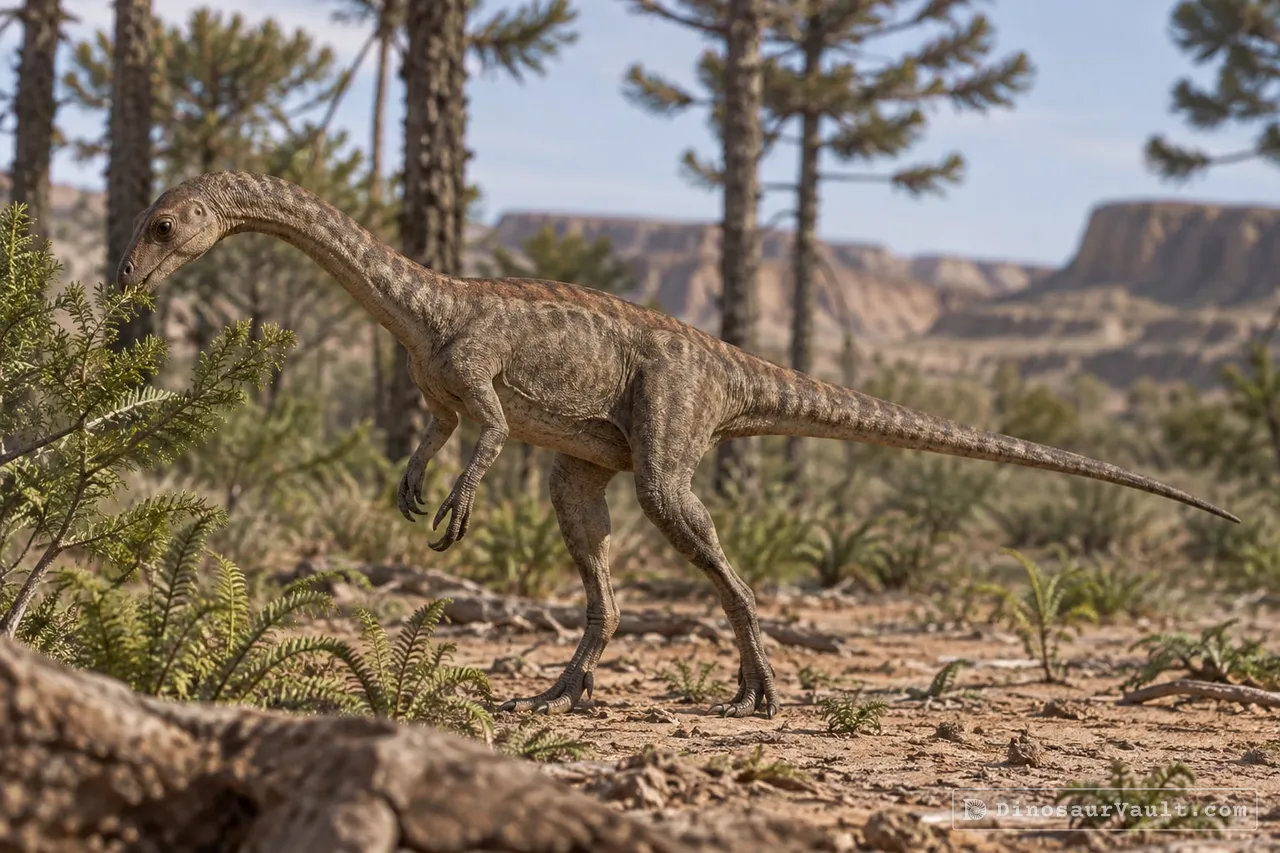
Chromogisaurus was a small, two-legged early relative of the giant sauropods. It is known from parts of the legs and hips. It probably ate plants.
Its world
It lived in the Late Triassic in what is now Argentina. Its bones come from the Ischigualasto Formation, home to some of the earliest known dinosaurs, including Herrerasaurus, Eoraptor and Panphagia.
How it was found
Ezcurra named it in 2010 from one find. Its name refers to the colorful rocks of the valley where it was found.
Field gallery
More views of Chromogisaurus
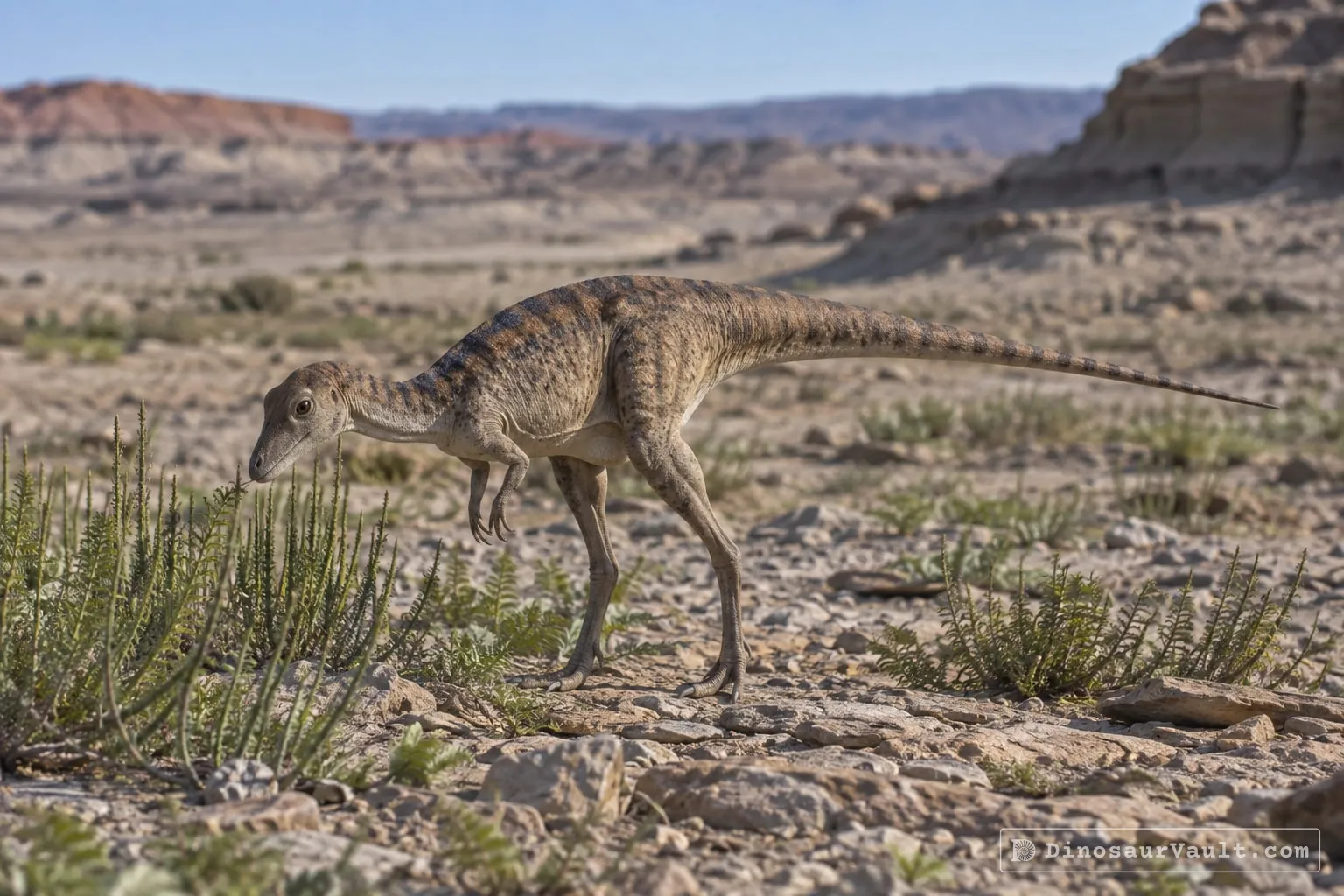
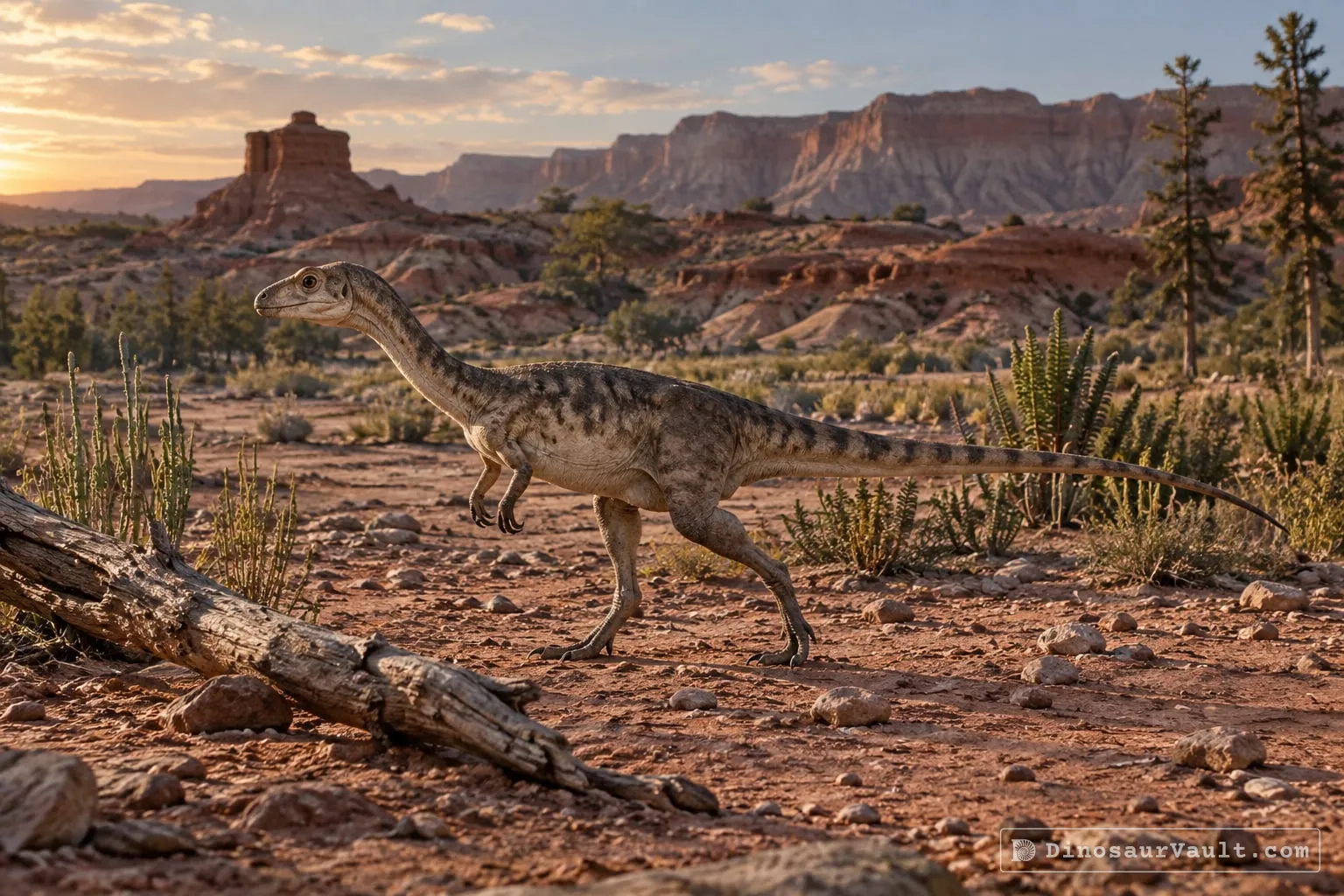
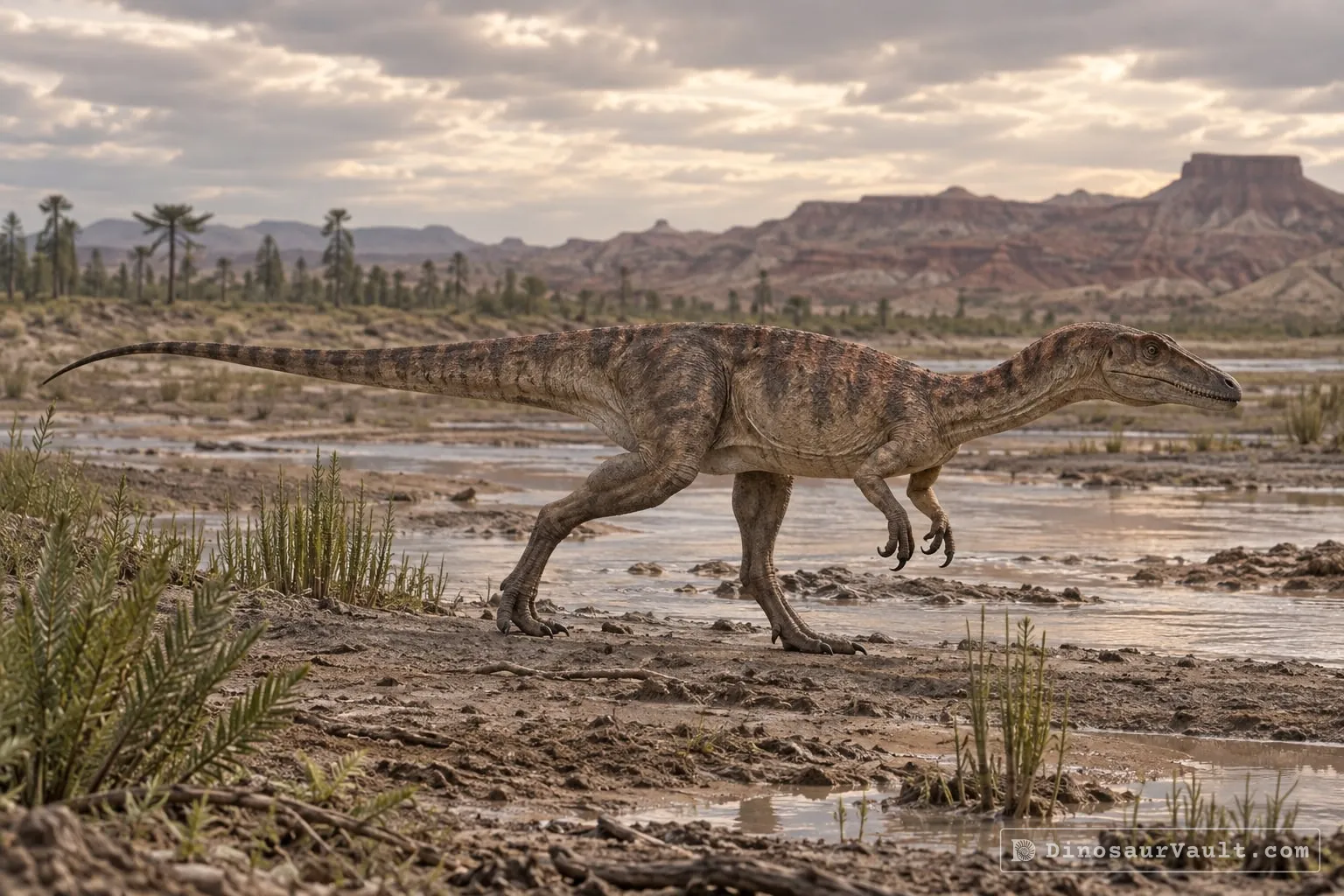
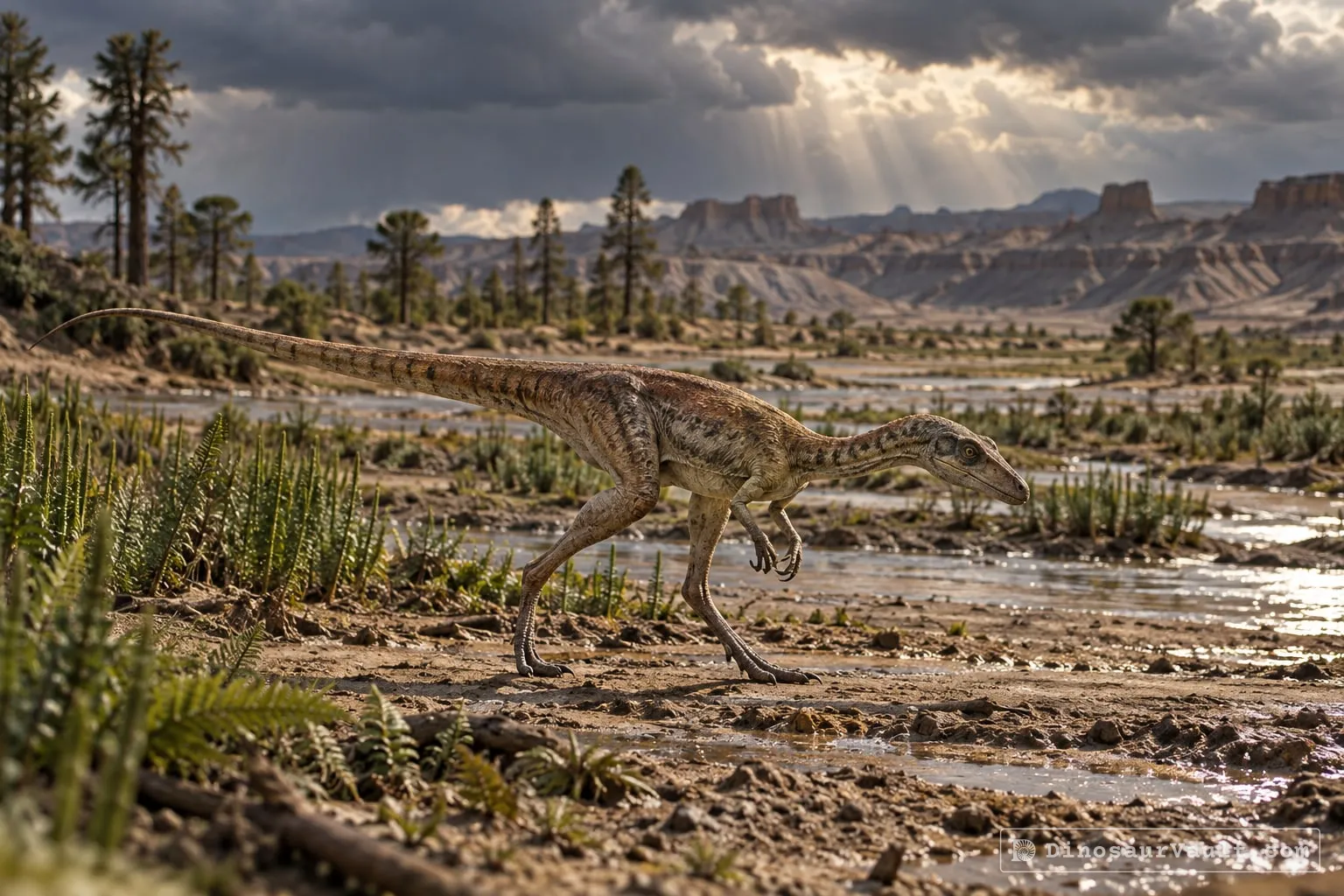
Scenes reconstructed from the available fossil evidence.
1 of 3
Lived alongside
Found in the same rock formations
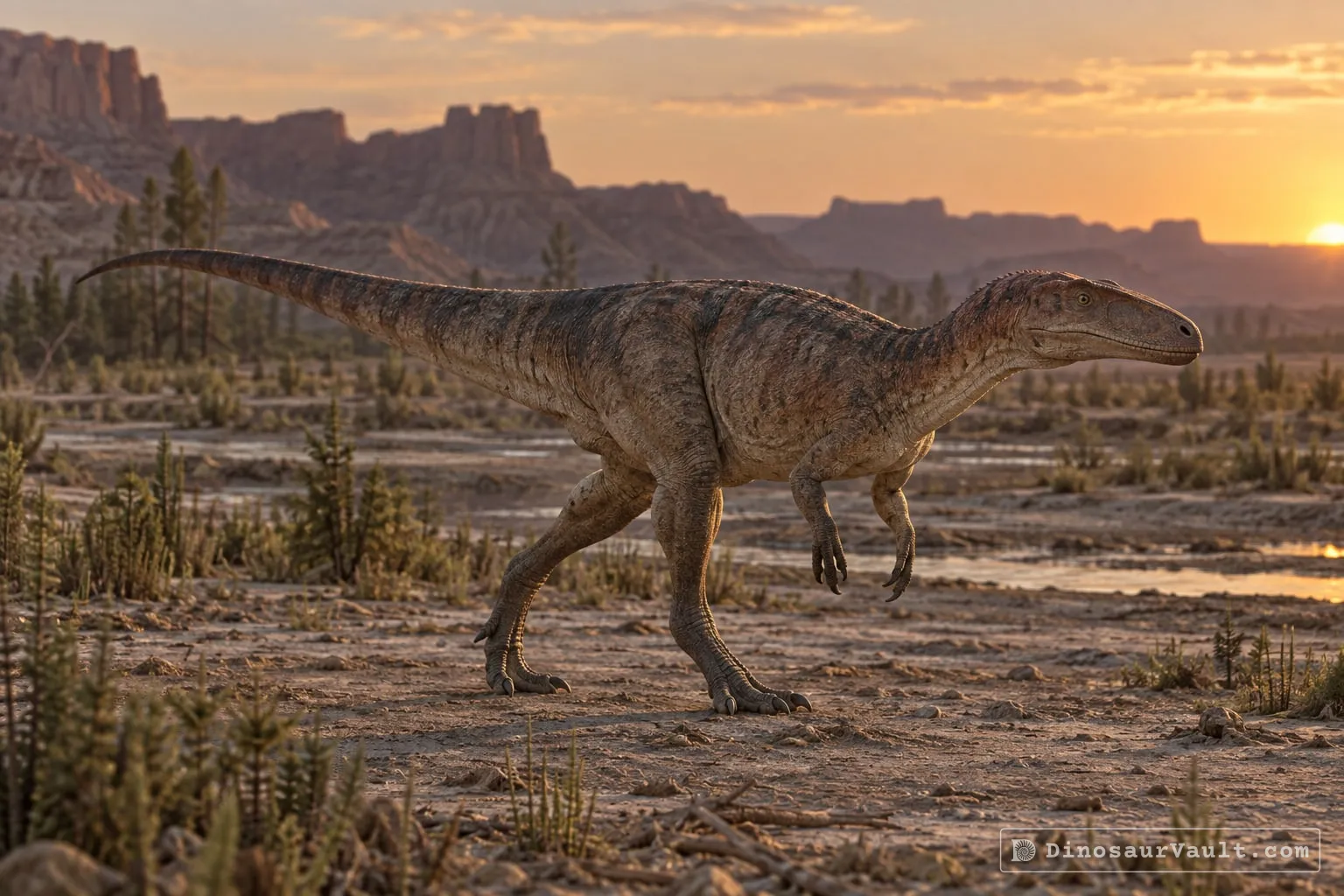
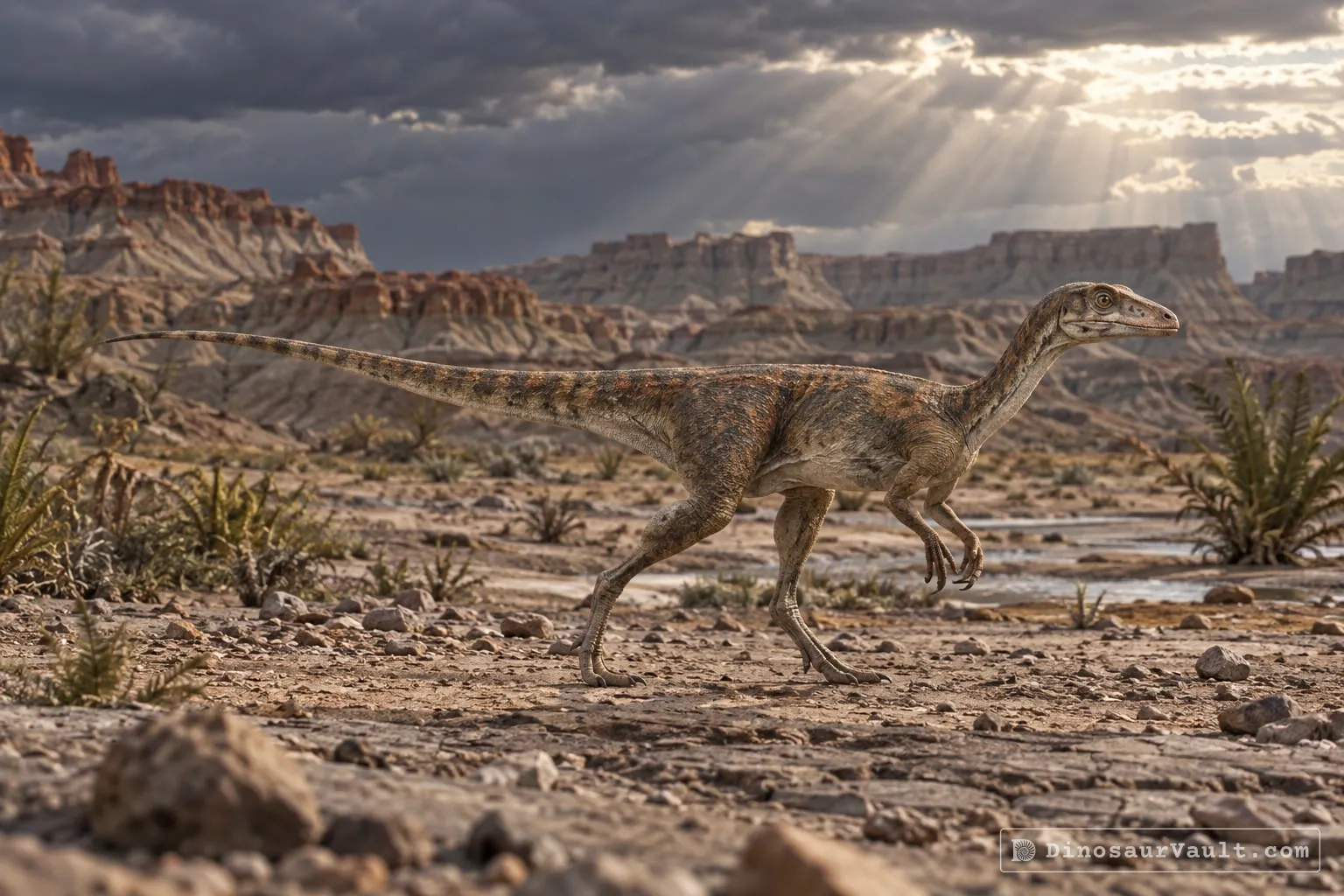
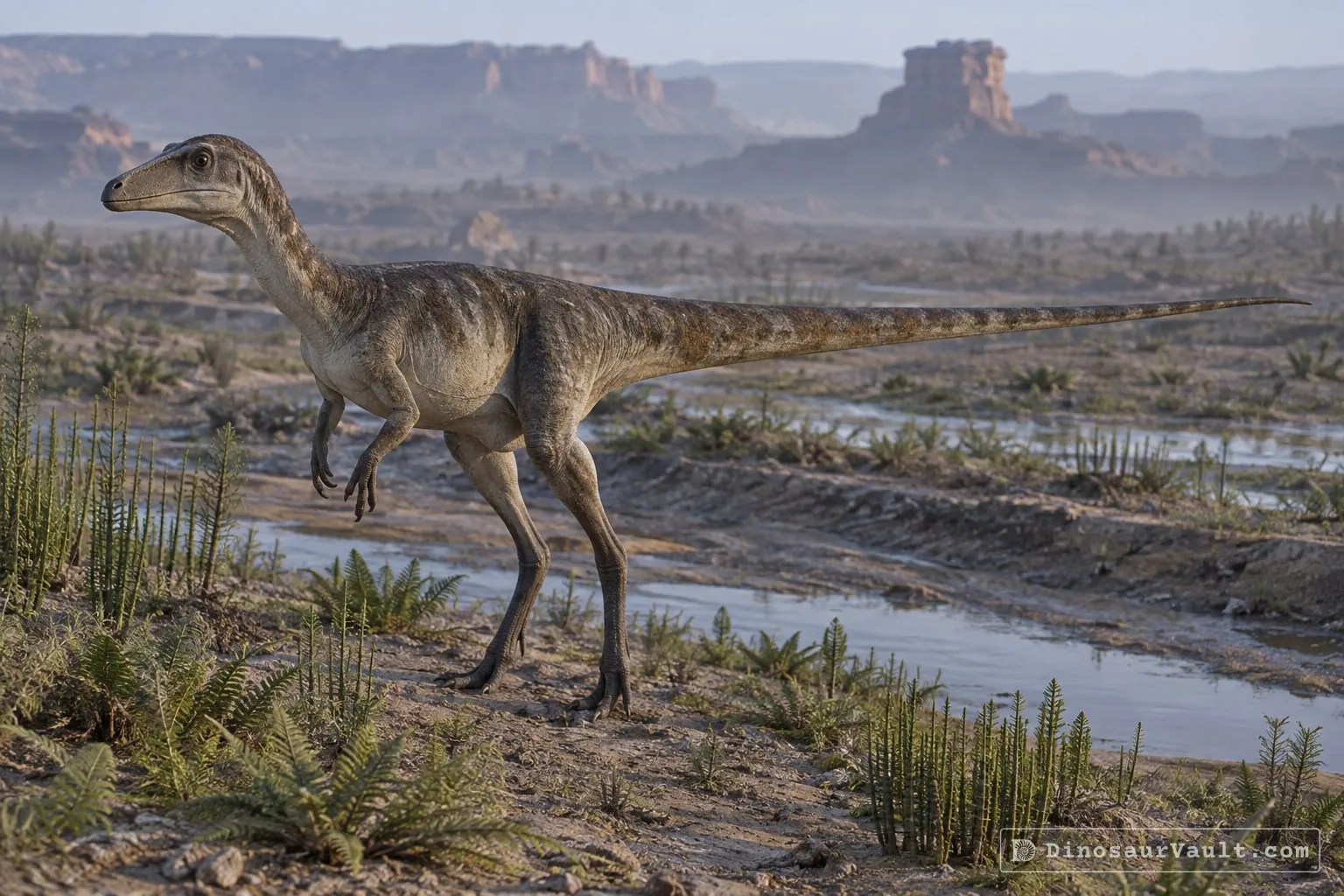


A rock formation can hold fossils laid down millions of years apart, so not every animal here met Chromogisaurus.
The evidence
The science behind Chromogisaurus
Which parts of the picture come from its own bones, and which come from its relatives.
From its own fossils
- The type specimen preserves hip and hind-limb bones, toe bones, tail vertebrae and part of the shoulder joint. Preparation reidentified a supposed forearm bone as another reptile's jaw, possibly a rhynchosaur, and a supposed outer foot bone as a bone from beneath the tail.
- Its shin bone is slightly longer than its thigh bone.
- Unequal joints in a foot bone and a rough muscle attachment on the outer shin bone help distinguish it from other early dinosaurs.
Borrowed from relatives
- The missing head and forelimbs can be reconstructed by comparison with Eoraptor.
Still unknown
- The shape of its skull and teeth.
- Its skin texture and color.
- Exactly what it ate.
Discovery timeline
- 2009Same rocksMartinez & Alcober
- 2010Named itEzcurra
- 2012Full descriptionMartÍnez, Apaldetti & Abelin
Key papers
The research behind what we know of Chromogisaurus
Same rocks
Described Panphagia, an early sauropodomorph from the same formation.
A Basal Sauropodomorph (Dinosauria: Saurischia) from the Ischigualasto Formation (Triassic, Carnian) and the Early Evolution of Sauropodomorpha. PLoS ONE 4: e4397
Read the paper : A Basal Sauropodomorph (Dinosauria: Saurischia) from the Ischigualasto Formation (Triassic, Carnian) and the Early Evolution of Sauropodomorpha (opens in a new tab)Named it
Named Chromogisaurus from a partial skeleton and placed it among the earliest sauropodomorphs, close to Saturnalia.
A new early dinosaur (Saurischia: Sauropodomorpha) from the Late Triassic of Argentina: a reassessment of dinosaur origin and phylogeny. Journal of Systematic Palaeontology 8: 371-425
Read the paper : A new early dinosaur (Saurischia: Sauropodomorpha) from the Late Triassic of Argentina: a reassessment of dinosaur origin and phylogeny (opens in a new tab)Full description
Restudied the prepared skeleton, corrected earlier interpretations of several bones, and confirmed that Chromogisaurus was distinct from its neighbors.
Basal sauropodomorphs from the Ischigualasto Formation. Journal of Vertebrate Paleontology 32: 51-69
Read the paper : Basal sauropodomorphs from the Ischigualasto Formation (opens in a new tab)
Close relatives
Other members of Saturnaliidae


Sources: Wikidata