Herrerasaurus
heh-RARE-ah-SORE-us
"Herrera's lizard"
- Lived
- 237 to 227 million years ago, Late Triassic
- Length
- about 4.5 m (15 ft)
- Group
- Early dinosaurs, Herrerasauridae
- Found in
- Argentina
- Named by
- Reig 1963
Size comparison
To scale
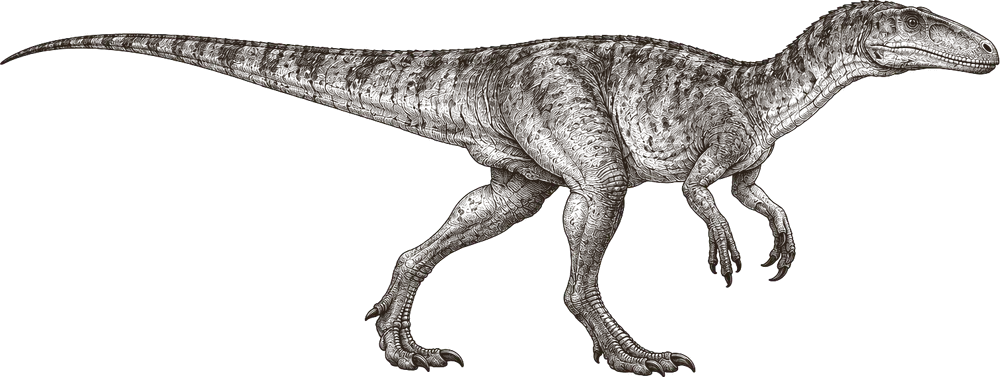

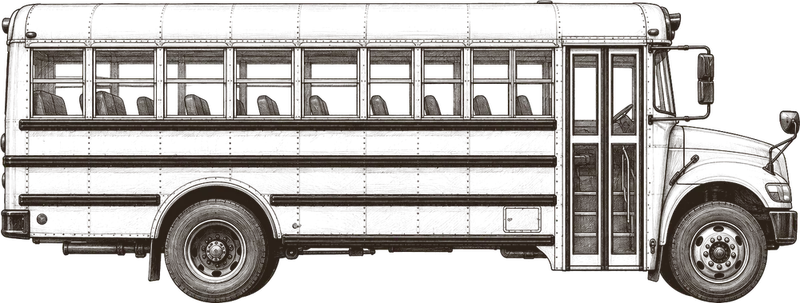
Scale in meters
Where its fossils were found
The evidence
Today

230 million years ago
Habitat
It lived on river floodplains with seasonal rainfall and vegetation that probably included conifers and ferns. Eoraptor, Panphagia and Eodromaeus lived in the Ischigualasto region.
A Dinosaur Vault film
This Dinosaur Fight Never Happened
The last Stegosaurus died more than 70 million years before the first T. rex. Turn time into a road, one meter for every million years, and walk it back to the first dinosaurs.
Subscribe on YouTubeField notes
About Herrerasaurus
What it was like
Herrerasaurus was one of the earliest known dinosaurs, a bipedal meat eater that grew to about 4.5 meters (15 feet) long. It had a long skull with sharp, curved teeth and strong hind legs built for fast movement.
Its hands had sharp claws for grabbing prey, and it probably hunted small reptiles and other early animals of its time. For years, scientists debated exactly where Herrerasaurus belonged on the family tree, and some early studies were not even sure it was a true dinosaur.
Its world
Herrerasaurus lived from about 237 to 227 million years ago, during the Late Triassic, in what is now Argentina. All known fossils come from the Ischigualasto Formation.
It shared its world with other early dinosaurs, including Eoraptor, Panphagia, and Eodromaeus, at a time when dinosaurs were still a small part of a world dominated by other kinds of reptiles.
How it was found
Reig named Herrerasaurus in 1963, based on fossils found in Argentina. Around 11 finds are now known, including a nearly complete skeleton that helped settle much of the early debate about its classification. Its closest relatives include Staurikosaurus and Sanjuansaurus, other early saurischian dinosaurs from South America.
Field gallery
More views of Herrerasaurus
Scenes reconstructed from the available fossil evidence.
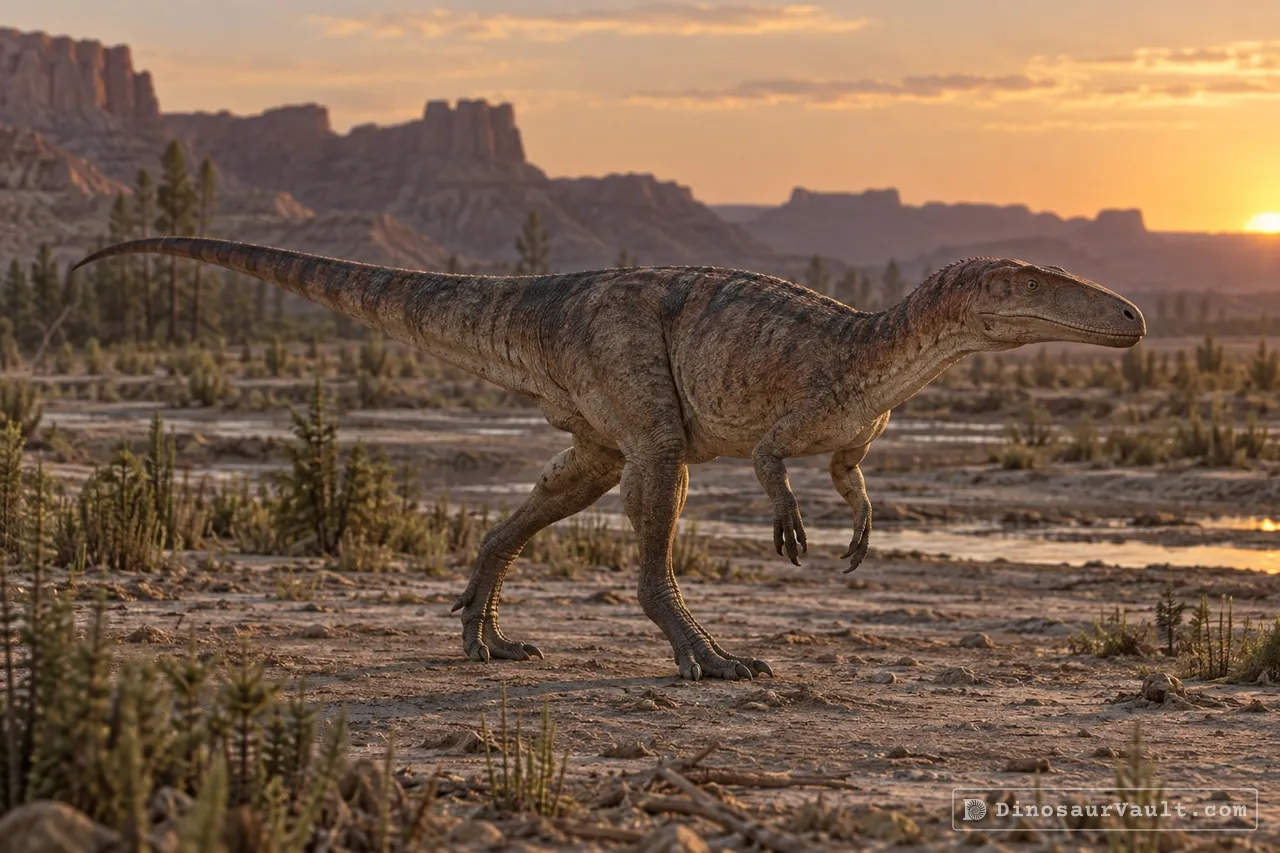
1 of 7
Lived alongside
Found in the same rock formations
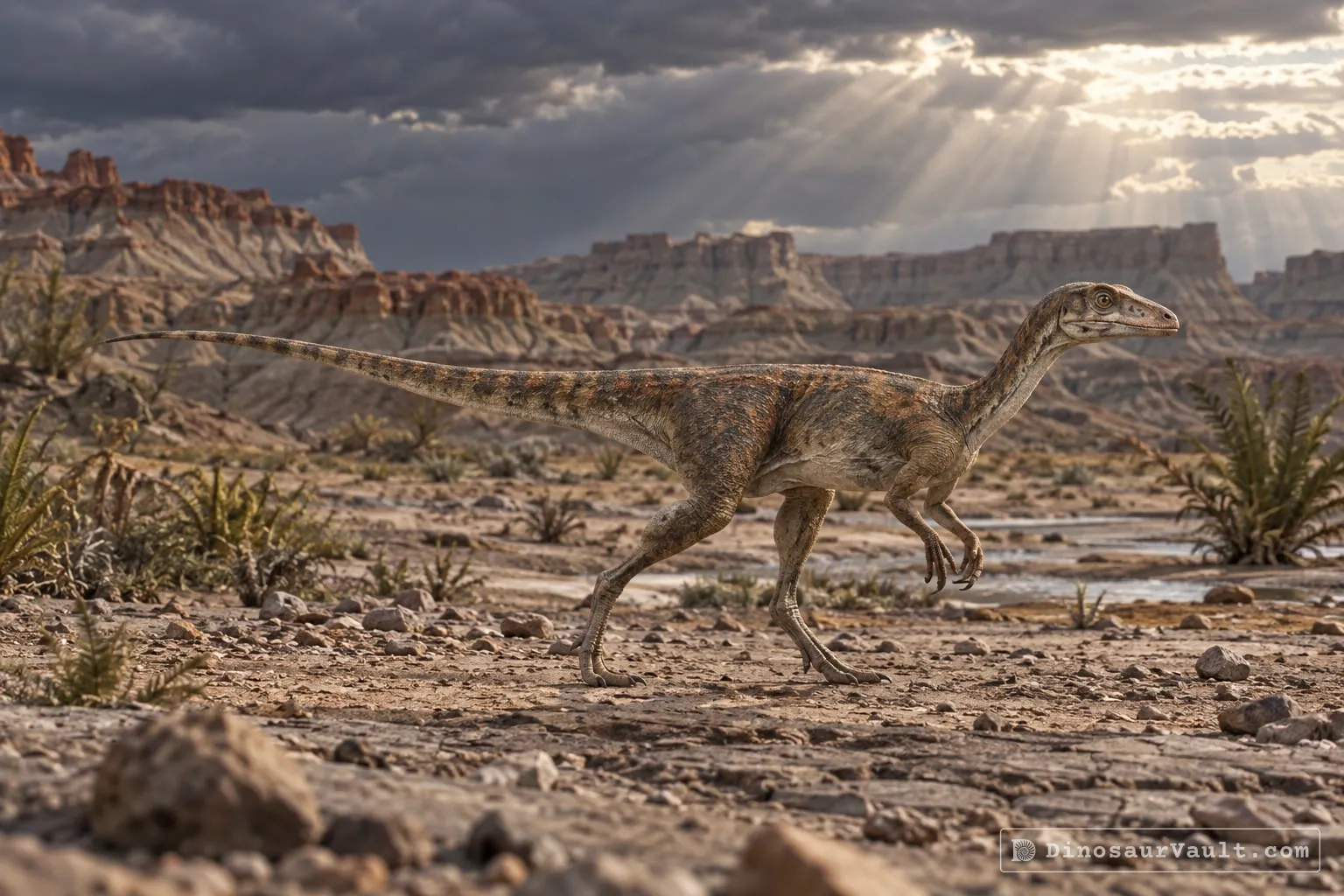
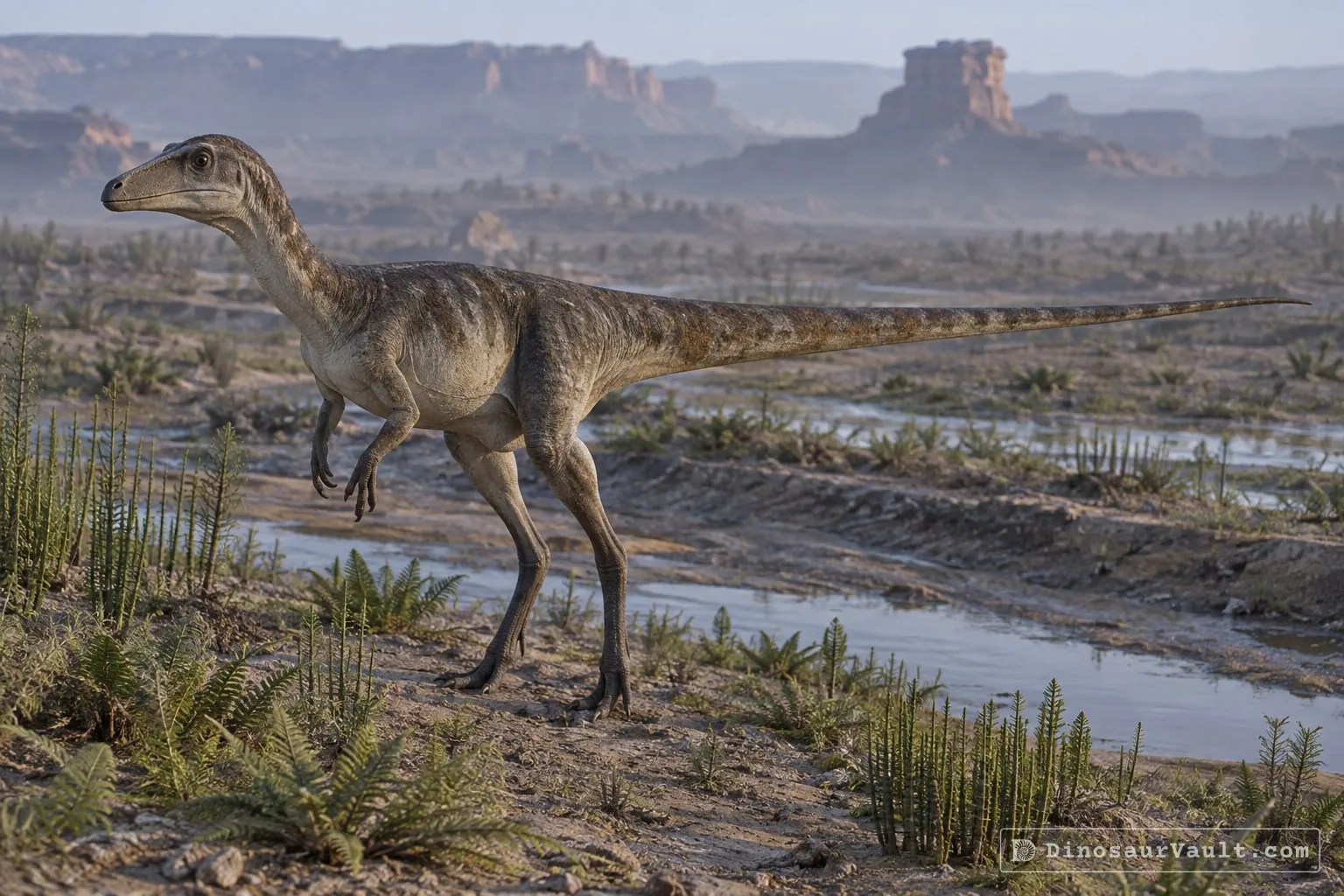
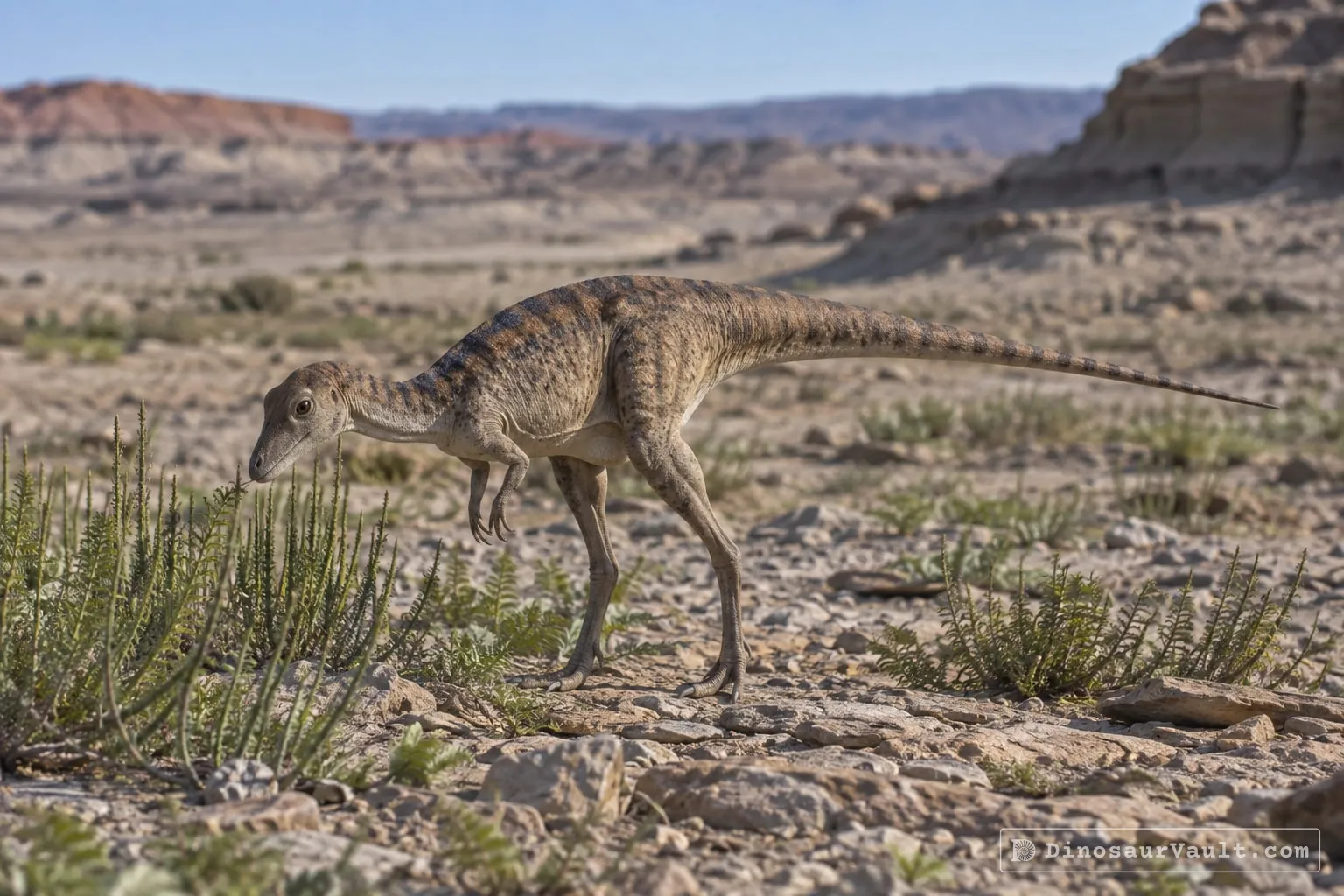
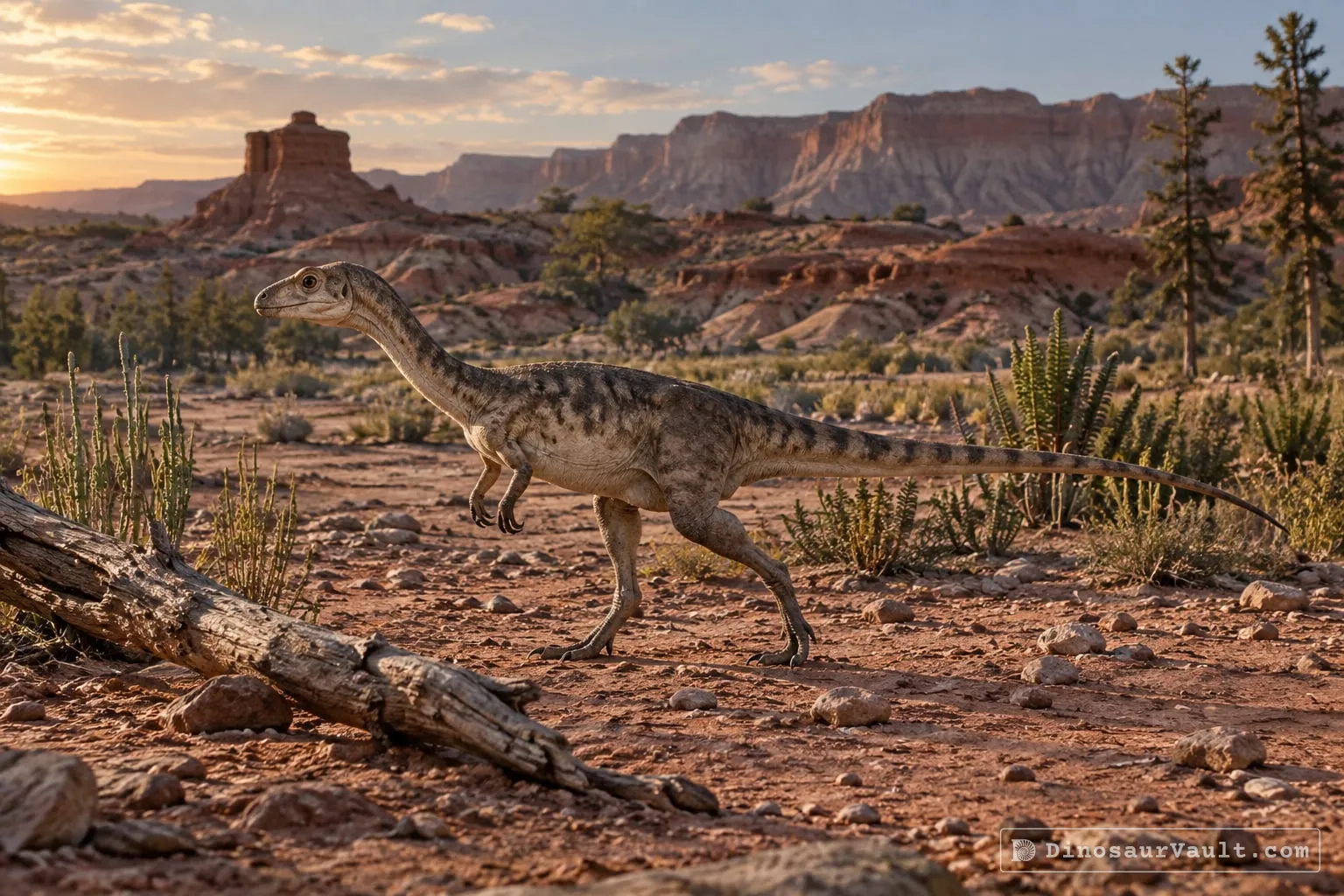
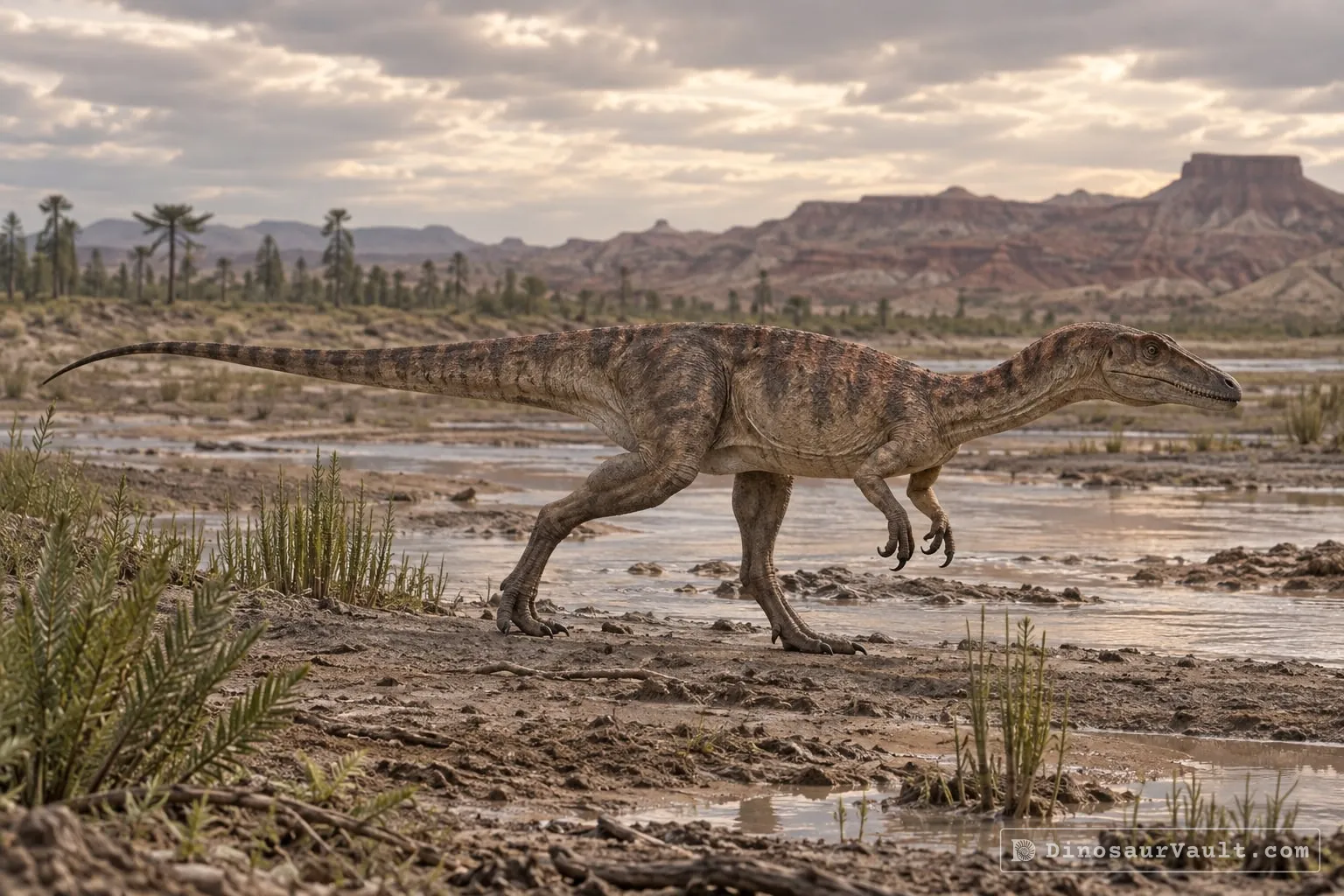
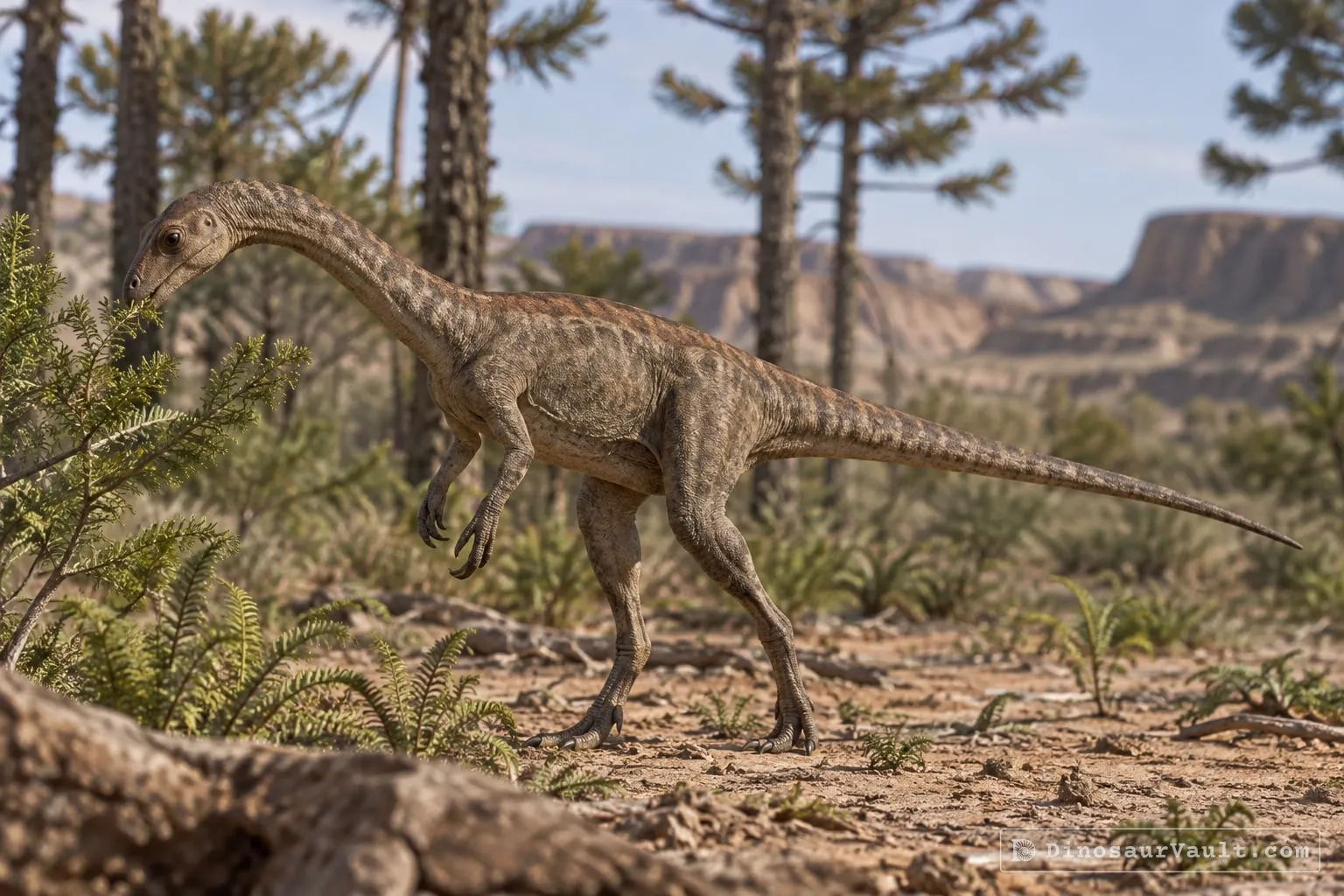
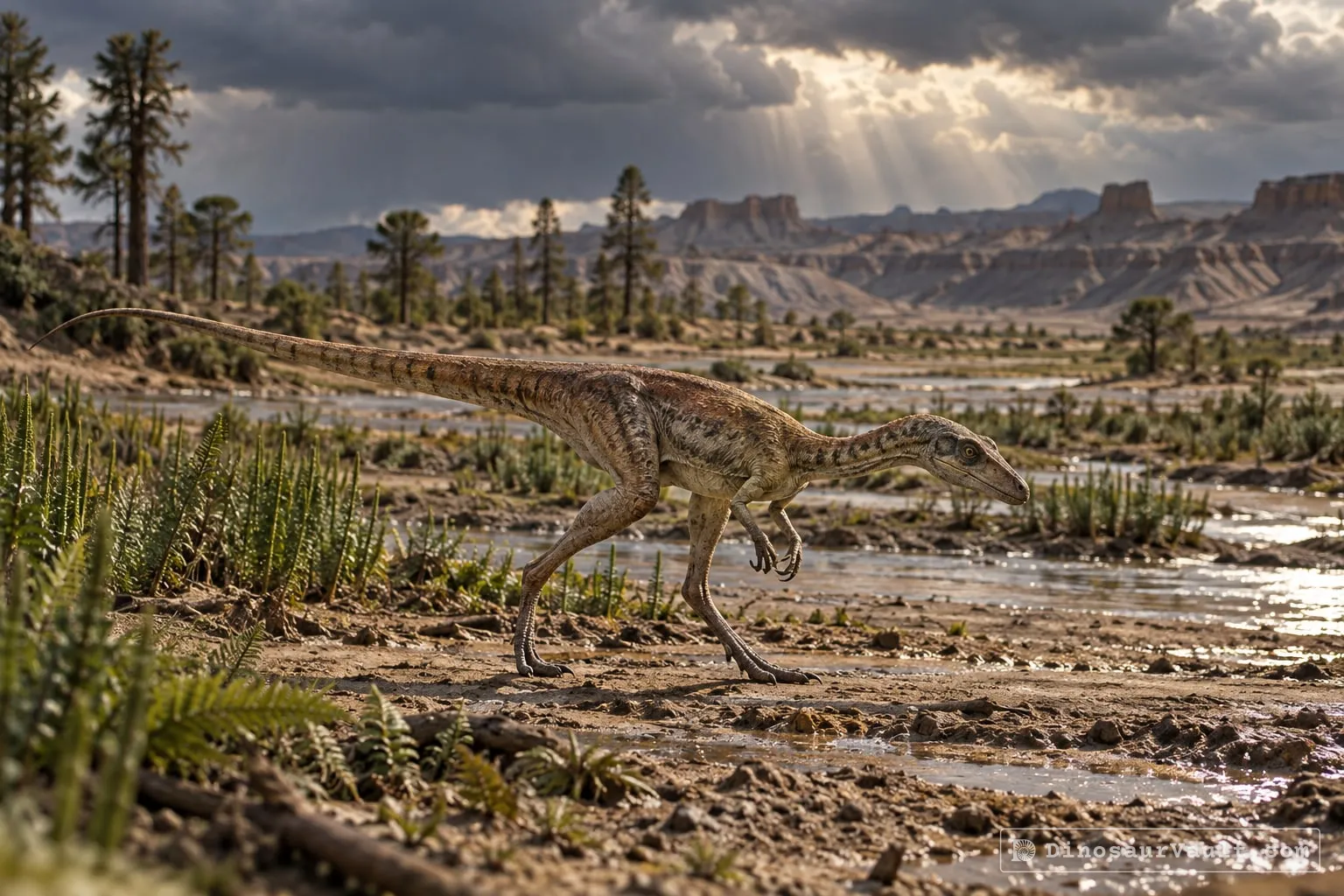


A rock formation can hold fossils laid down millions of years apart, so not every animal here met Herrerasaurus.
The evidence
The science behind Herrerasaurus
Which parts of the picture come from its own bones, and which come from its relatives.
From its own fossils
- A nearly complete skeleton shows a meat eater that walked on strong hindlegs and balanced its body with a long tail.
- The long skull held curved, serrated teeth, and an extra joint allowed movement within the lower jaw.
- Its hands had prominent grasping claws on the inner fingers and smaller outer fingers.
Borrowed from relatives
- Most of the skeleton is known from its own bones.
- Scaly skin and lips are inferred from comparisons with other early dinosaurs and their reptile relatives.
Still unknown
- Its color and skin texture.
- Which small herrerasaurid fossils belong to young Herrerasaurus.
- Its exact position among the earliest branches of the dinosaur family tree.
Often drawn wrong
- Its palms faced inward, rather than lying flat toward the ground.
- Its tail balanced the body above the ground, rather than dragging behind an upright, kangaroo-like stance.
Discovery timeline
- 1963Named itReig
- 1992New findSereno & Novas
- 1994Full descriptionNovas
- 1994Full descriptionSereno
- 1994SkullSereno & Novas
Key papers
The research behind what we know of Herrerasaurus
Named it
Named Herrerasaurus from early dinosaur bones found in the Ischigualasto Formation of Argentina.
La presencia de dinosaurios saurisquios en los "Estratos de Ischigualasto" (Mesotriasico Superior) de las provincias de San Juan y La Rioja (República Argentina) [The presence of saurischian dinosaurs in the "Ischigualasto beds" (upper Middle Triassic) of San Juan and La Rioja Provinces (Argentine Republic)]. Ameghiniana 3: 3-20
No link available
New find
A nearly complete skull and skeleton revealed a bipedal predator with grasping hands and clarified its place in early dinosaur evolution.
The Complete Skull and Skeleton of an Early Dinosaur. Science 258: 1137-1140
Read the paper : The Complete Skull and Skeleton of an Early Dinosaur (opens in a new tab)Full description
Detailed the backbone, hips and hindlimbs, using their anatomy to reassess the relationships of Herrerasaurus.
New information on the systematics and postcranial skeleton ofHerrerasaurus ischigualastensis(Theropoda: Herrerasauridae) from the Ischigualasto Formation (Upper Triassic) of Argentina. Journal of Vertebrate Paleontology 13: 400-423
Read the paper : New information on the systematics and postcranial skeleton ofHerrerasaurus ischigualastensis(Theropoda: Herrerasauridae) from the Ischigualasto Formation (Upper Triassic) of Argentina (opens in a new tab)Full description
Described the shoulder and arm bones and the grasping hand, including the reduced outer fingers.
The pectoral girdle and forelimb of the basal theropodHerrerasaurus ischigualastensis. Journal of Vertebrate Paleontology 13: 425-450
Read the paper : The pectoral girdle and forelimb of the basal theropodHerrerasaurus ischigualastensis (opens in a new tab)Skull
Described the skull and neck in detail, including the toothed jaws and the extra joint within the lower jaw.
The skull and neck of the basal theropodHerrerasaurus ischigualastensis. Journal of Vertebrate Paleontology 13: 451-476
Read the paper : The skull and neck of the basal theropodHerrerasaurus ischigualastensis (opens in a new tab)
Close relatives
Other members of Herrerasauridae


Sources: Wikidata