Eodromaeus
"dawn runner"
- Lived
- 237 to 227 million years ago, Late Triassic
- Group
- Early dinosaurs
- Found in
- Argentina
- Named by
- Martinez et al. 2011
Where its fossils were found
The evidence
Today

230 million years ago
Habitat
It lived on river floodplains in Late Triassic Argentina. Herrerasaurus, Eoraptor and Sanjuansaurus lived in the same region.
Field notes
About Eodromaeus
What it was like
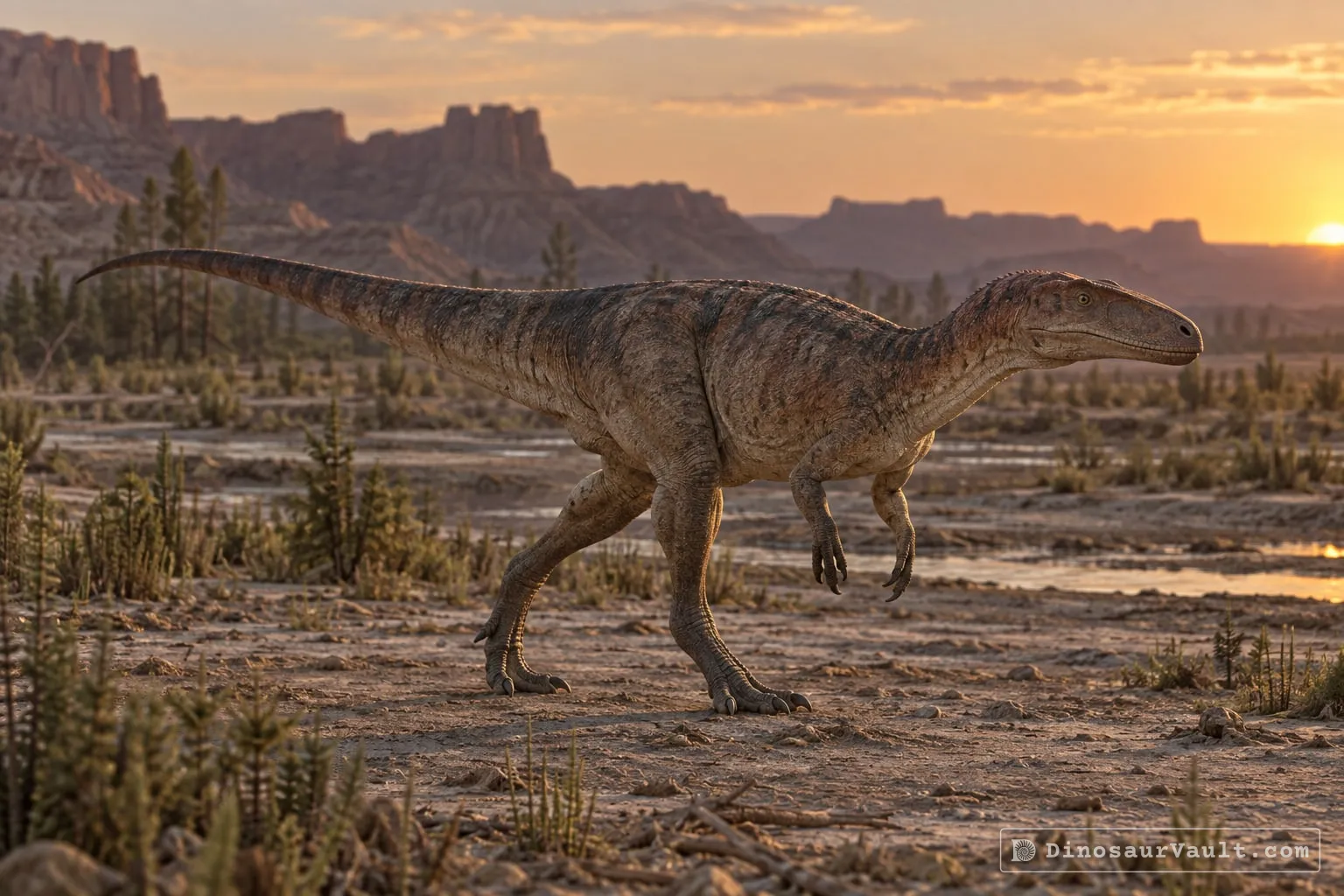
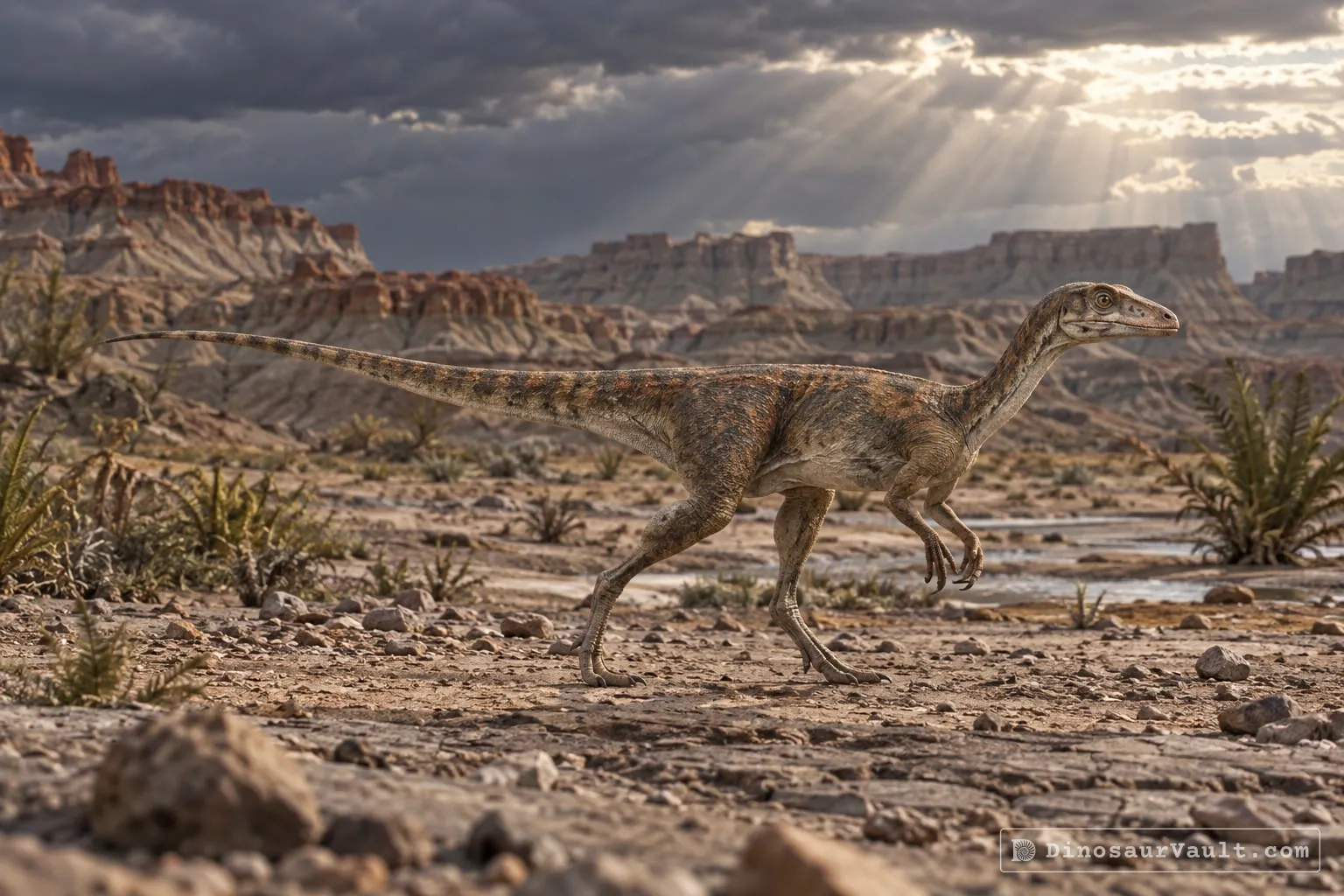
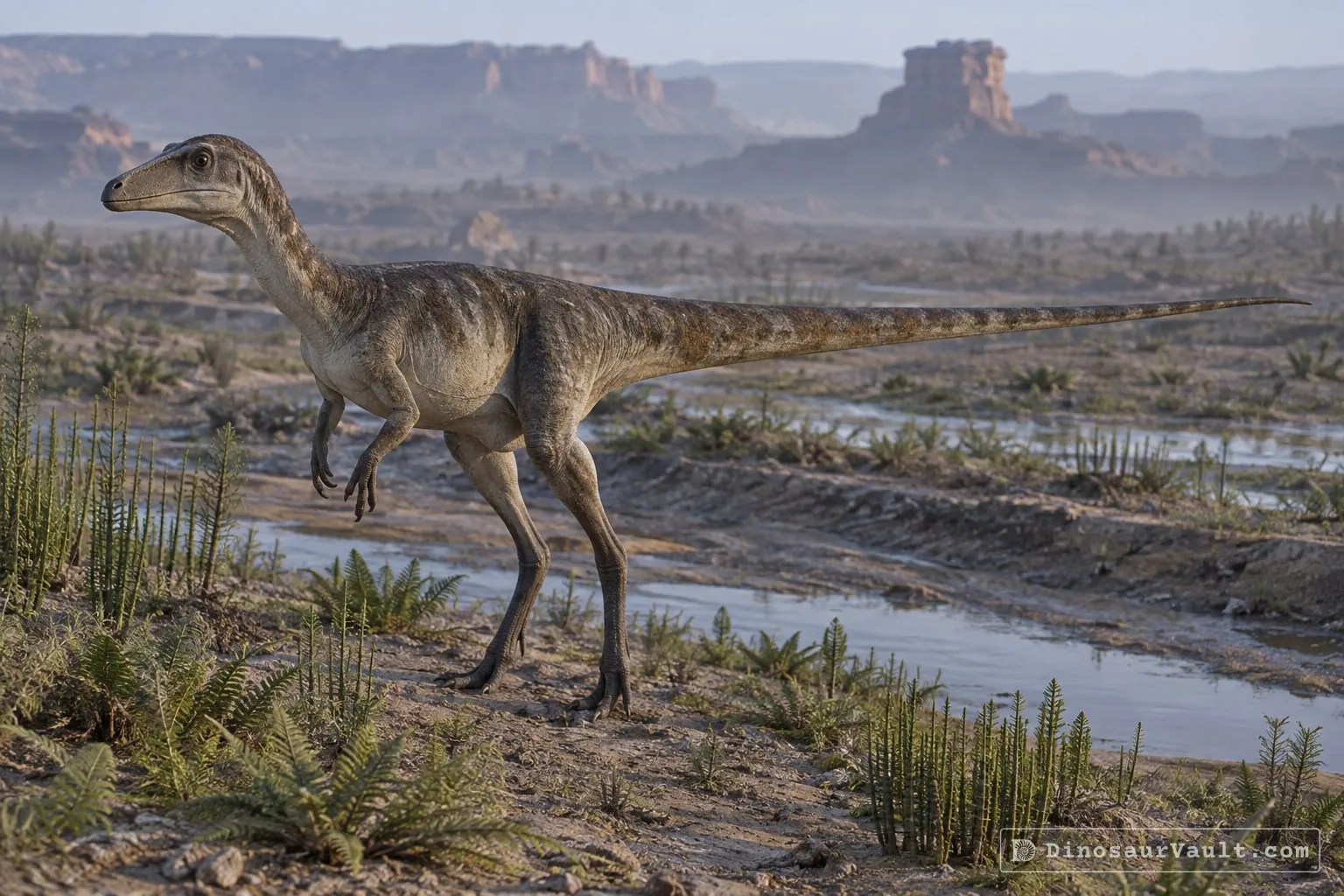
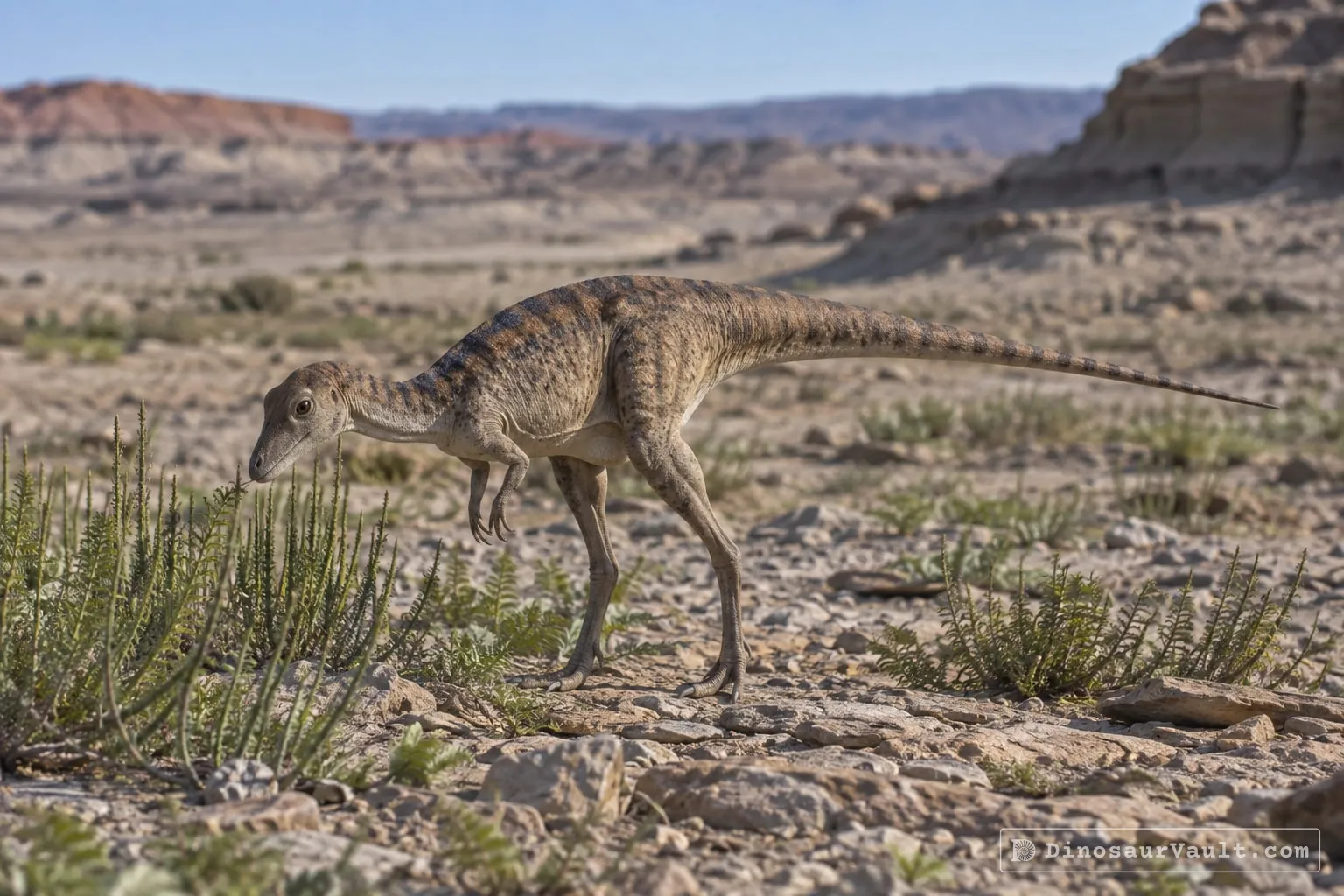
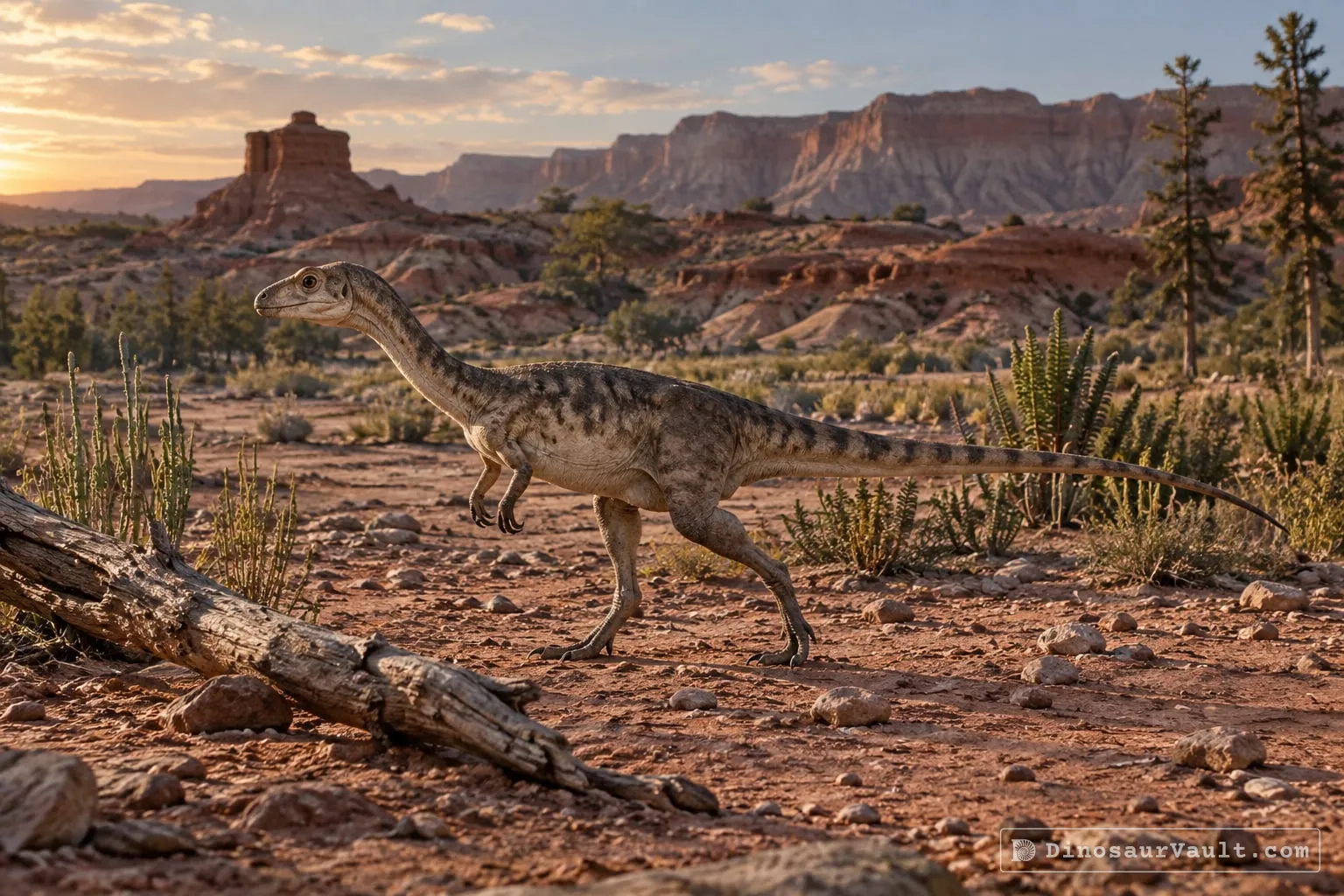
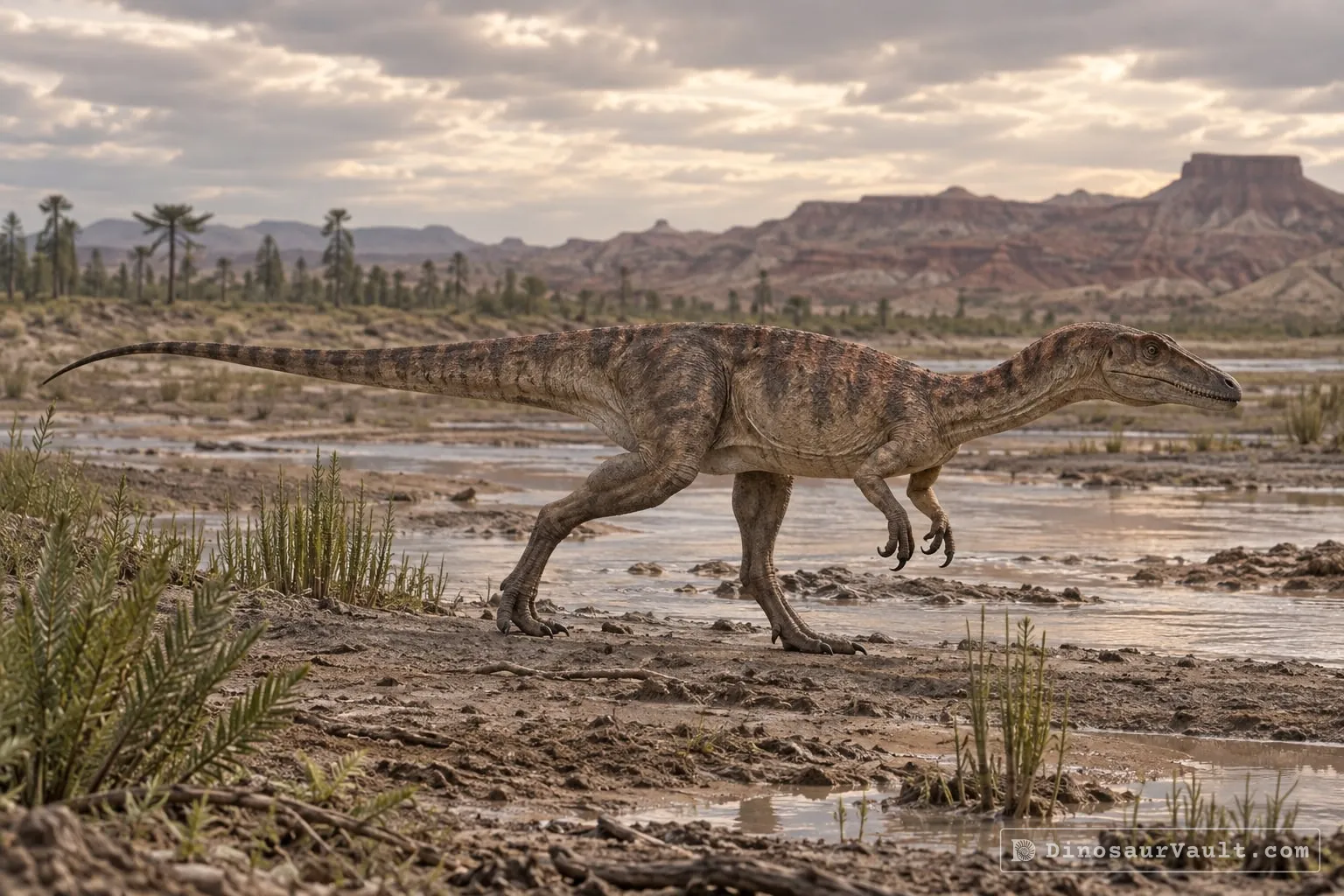
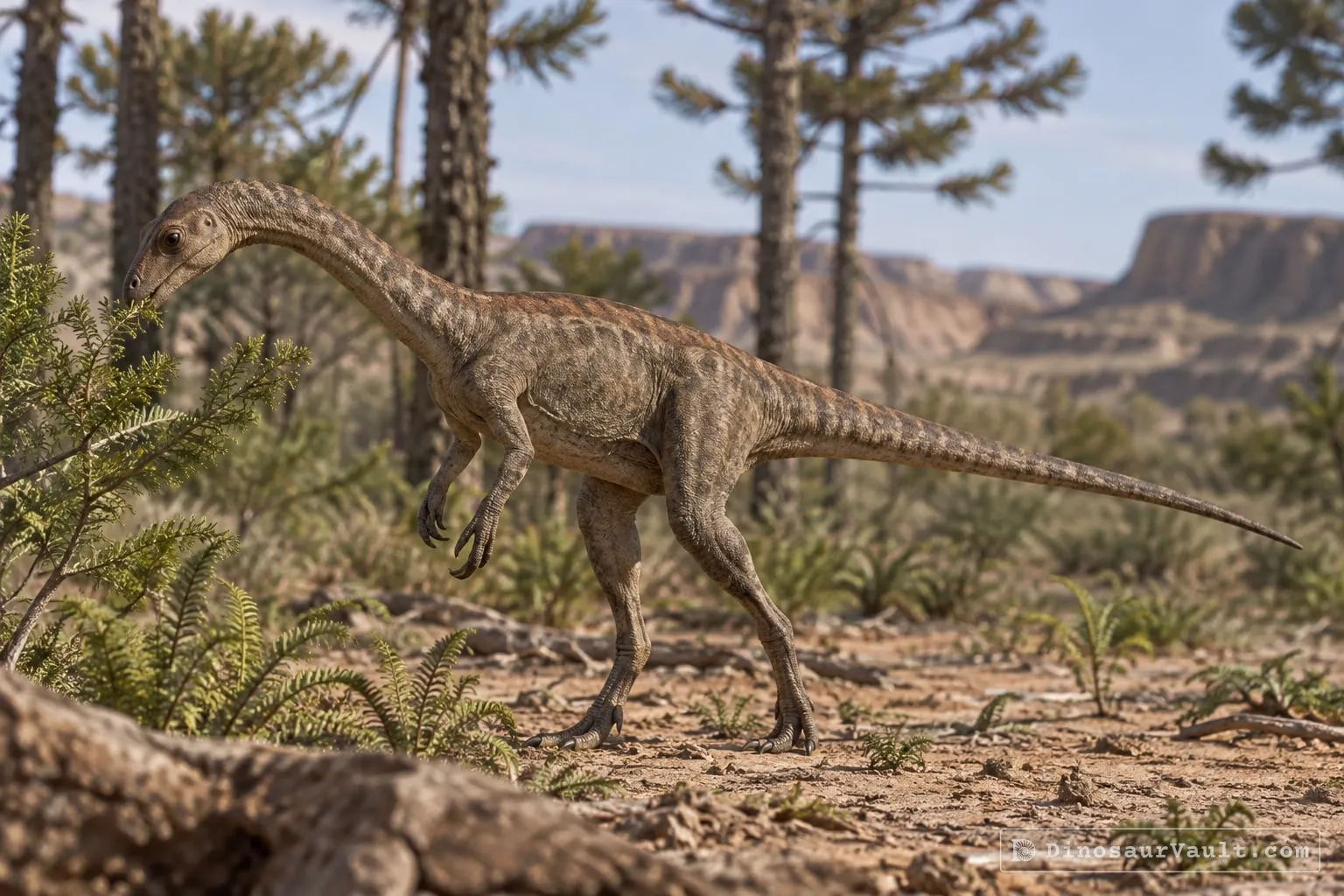
Eodromaeus was a small early theropod about the size of a fox. It had long legs, sharp teeth and a long tail. It is one of the oldest known meat-eating dinosaurs.
Its world
It lived in the Late Triassic, in what is now Argentina. It comes from the Ischigualasto Formation, where it shared the land with Herrerasaurus, Eoraptor and Sanjuansaurus. Dinosaurs were still rare there, and other reptiles ruled.
How it was found
Martinez and colleagues named Eodromaeus in 2011, from several skeletons.
Field gallery
More views of Eodromaeus
Scenes reconstructed from the available fossil evidence.
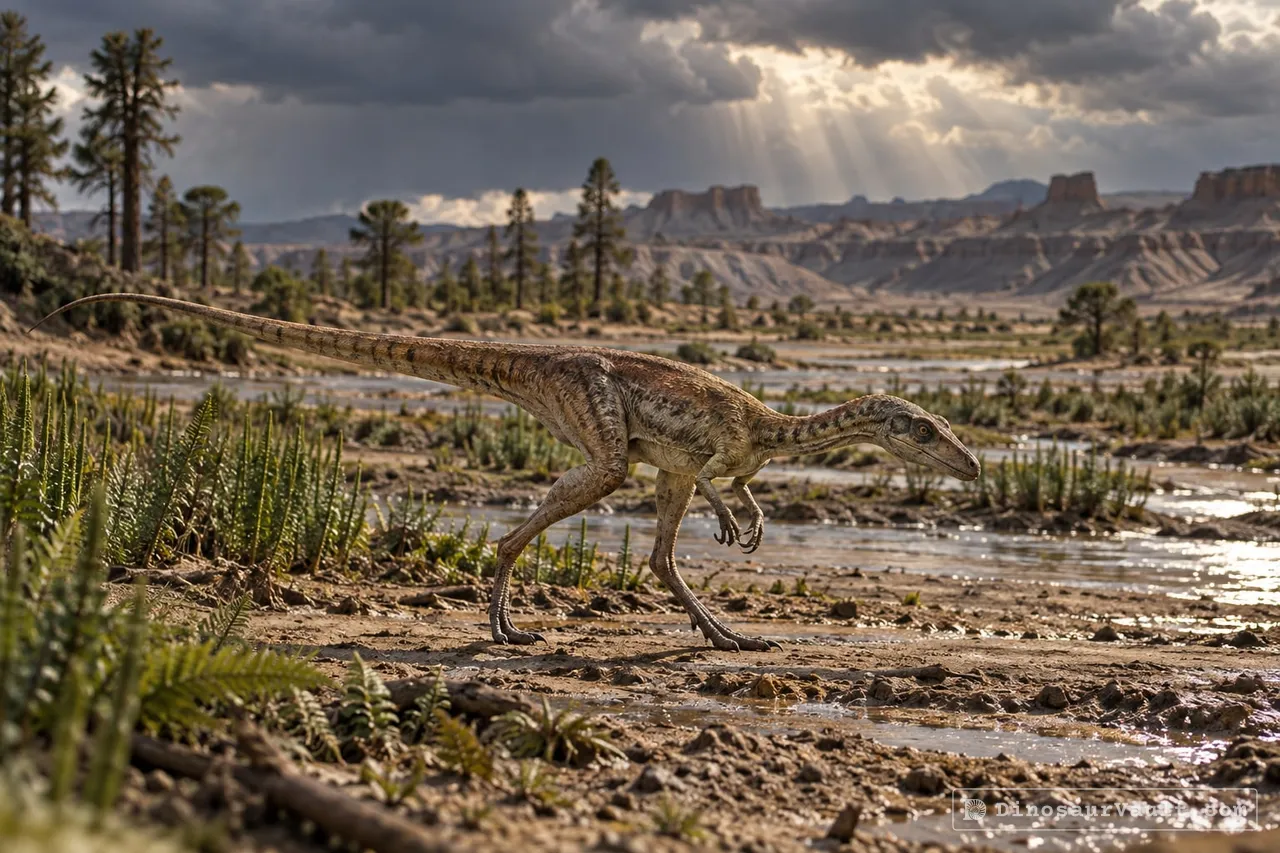
1 of 3
Lived alongside
Found in the same rock formations


A rock formation can hold fossils laid down millions of years apart, so not every animal here met Eodromaeus.
The evidence
The science behind Eodromaeus
Which parts of the picture come from its own bones, and which come from its relatives.
From its own fossils
- A nearly complete skeleton shows a lightly built skull, long neck, long tail and slender legs.
- Its teeth are flattened, curve backward and have finely serrated edges.
- Tiny teeth also line part of the roof of its mouth.
Borrowed from relatives
- Most of the body shape comes from its own skeleton rather than from other dinosaurs.
- Comparisons with Eoraptor and Herrerasaurus help explain how its skull and limbs differ from those of other early dinosaurs.
Still unknown
- Its skin covering and color.
- Which animals it hunted.
- Whether it cared for its young.
Discovery timeline
- 2009Same rocksMartinez & Alcober
- 2011Named itMartinez et al.
- 2012Fossil sitesMartínez et al.
Key papers
The research behind what we know of Eodromaeus
Same rocks
Described Panphagia, a small early relative of sauropods from the same formation, showing that different dinosaur lineages already lived there.
A Basal Sauropodomorph (Dinosauria: Saurischia) from the Ischigualasto Formation (Triassic, Carnian) and the Early Evolution of Sauropodomorpha. PLoS ONE 4: e4397
Read the paper : A Basal Sauropodomorph (Dinosauria: Saurischia) from the Ischigualasto Formation (Triassic, Carnian) and the Early Evolution of Sauropodomorpha (opens in a new tab)Named it
Described a small, nearly complete early meat eater and compared it with Eoraptor to examine the first branches of the dinosaur family tree.
A Basal Dinosaur from the Dawn of the Dinosaur Era in Southwestern Pangaea. Science 331: 206-210
Read the paper : A Basal Dinosaur from the Dawn of the Dinosaur Era in Southwestern Pangaea (opens in a new tab)Fossil sites
Mapped the changing animal communities of the Ischigualasto Formation and placed Eodromaeus within that succession.
Vertebrate succession in the Ischigualasto Formation. Journal of Vertebrate Paleontology 32: 10-30
Read the paper : Vertebrate succession in the Ischigualasto Formation (opens in a new tab)
Close relatives
Other members of Saurischia


