Buriolestes
"Buriol's robber"
- Lived
- 237 to 227 million years ago, Late Triassic
- Found in
- Brazil
- Named by
- Cabreira et al. 2016
Where its fossils were found
The evidence
Today

230 million years ago
Habitat
Rivers and muddy floodplains crossed what is now southern Brazil. Other dinosaurs from the Santa Maria Formation included Staurikosaurus, Saturnalia and Pampadromaeus.
Field notes
About Buriolestes
What it was like
Buriolestes was one of the earliest relatives of the giant sauropods, yet it was small and ate meat. Its teeth were sharp, curved and serrated, like a predator's. This suggests that the first members of the sauropod line hunted small animals before their descendants turned to plants.
Its world
It lived in the Late Triassic in what is now Brazil. Its bones come from the Santa Maria Formation, one of the richest sources of early dinosaurs, where it lived alongside the predators Staurikosaurus and Gnathovorax and the plant eater Saturnalia.
How it was found
Cabreira and colleagues named it in 2016. Its name honors the family that owns the land where it was found.
Field gallery
More views of Buriolestes
Scenes reconstructed from the available fossil evidence.
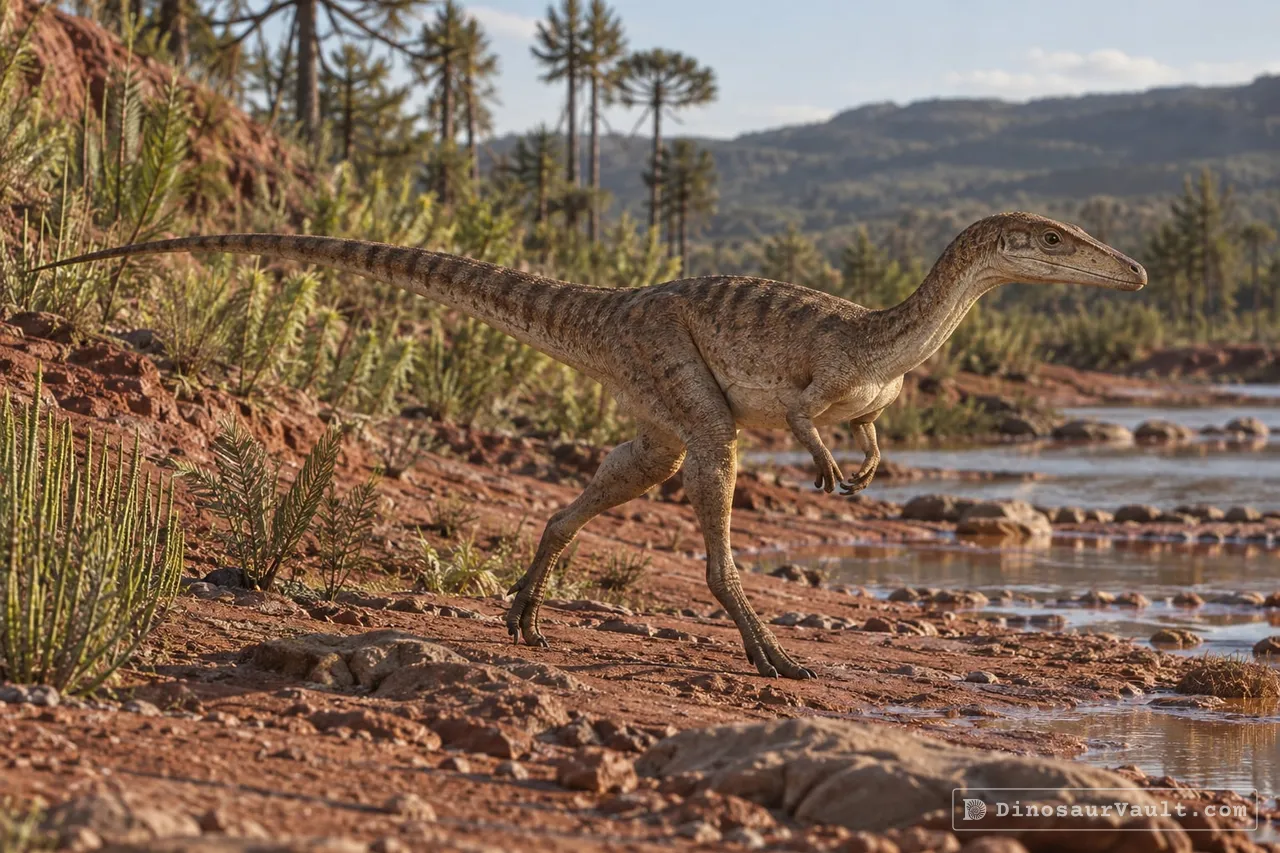
1 of 3
Lived alongside
Found in the same rock formations
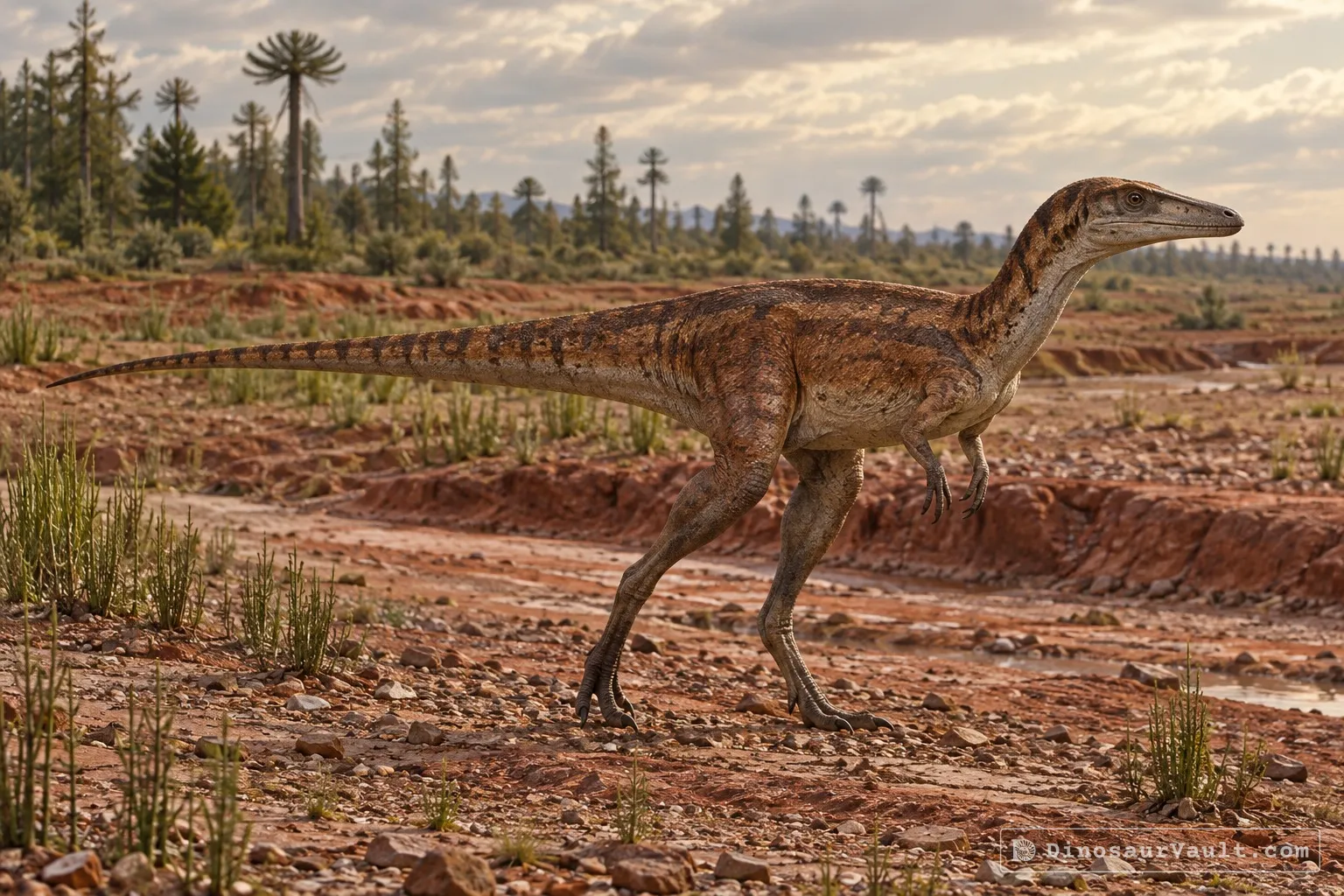
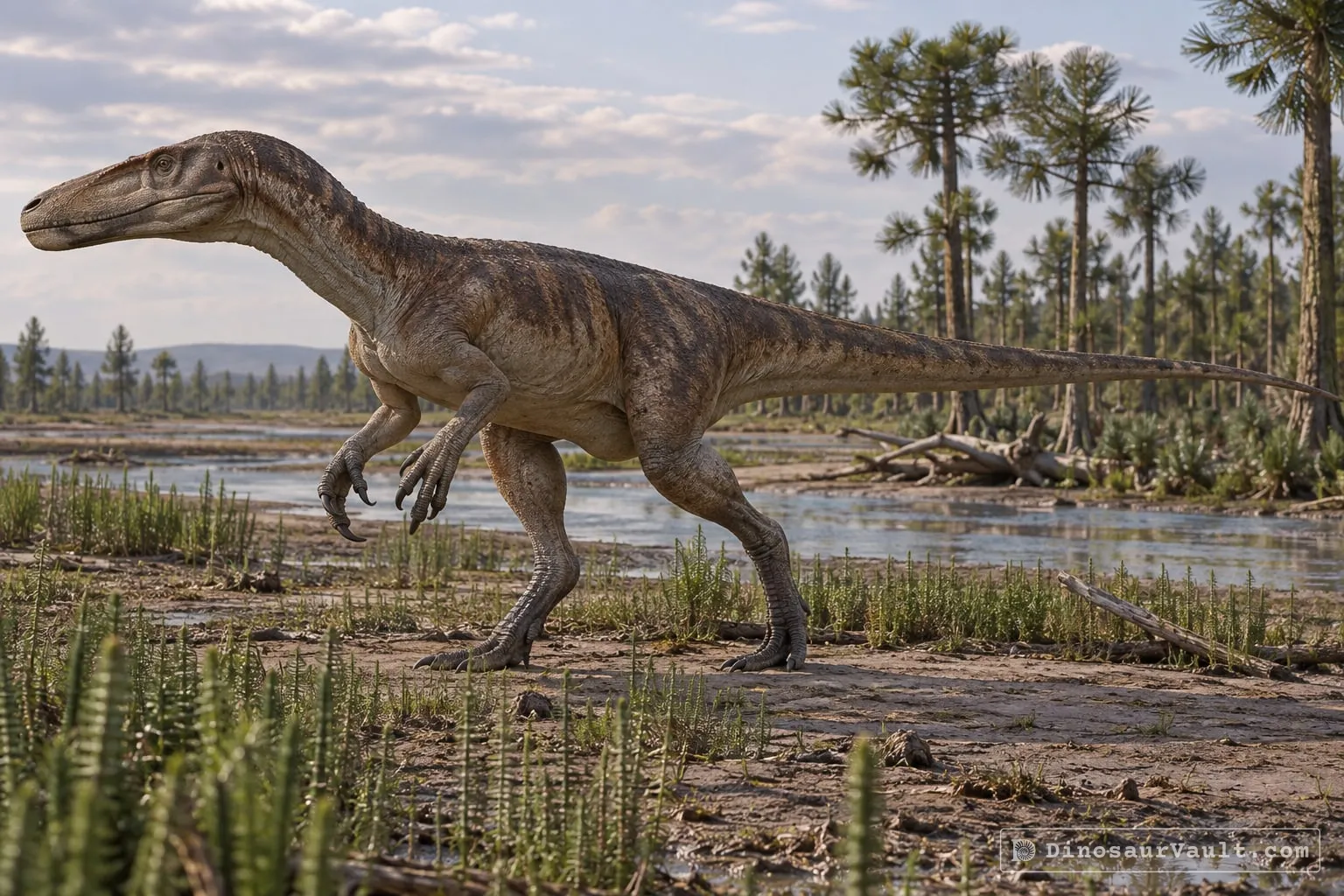
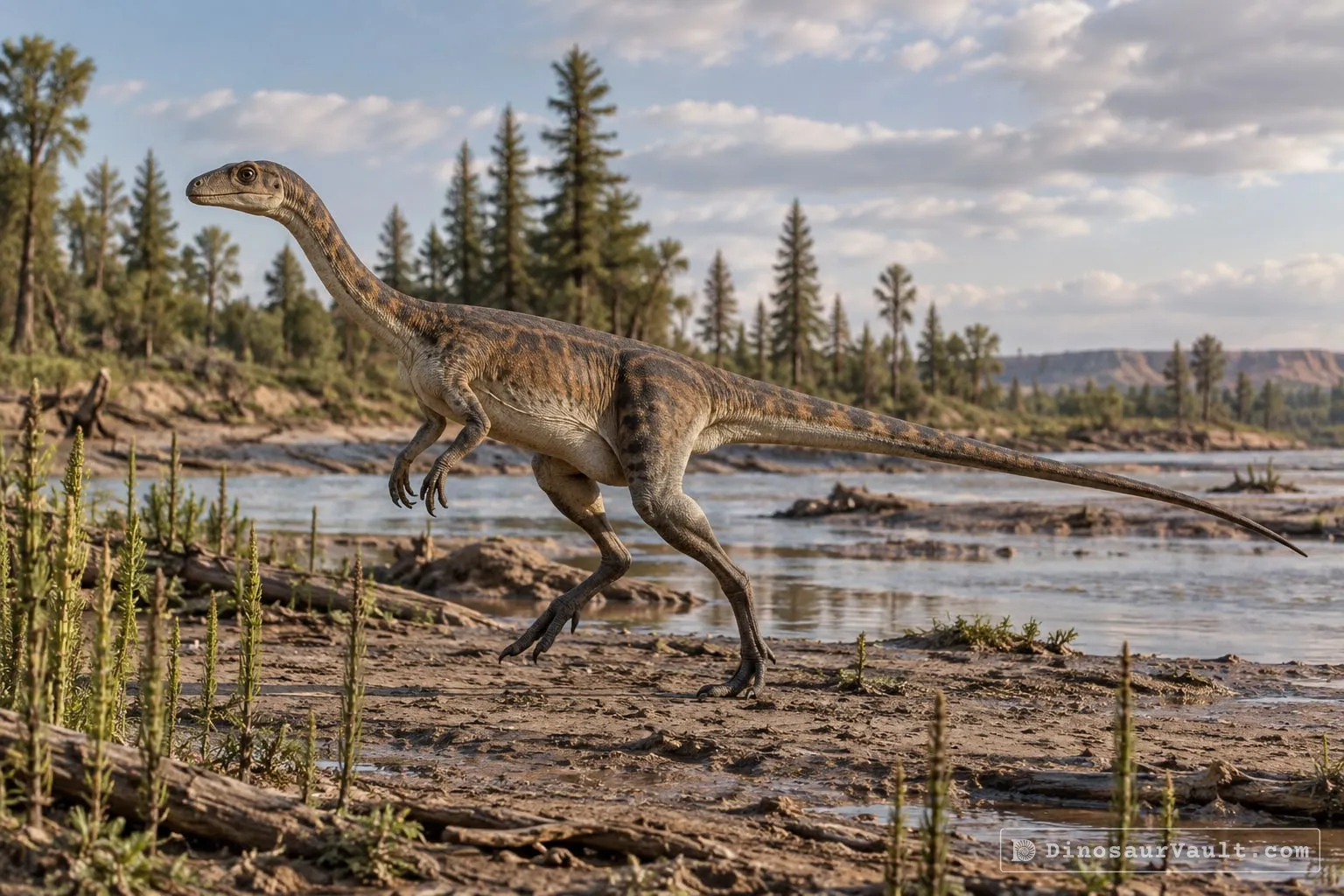
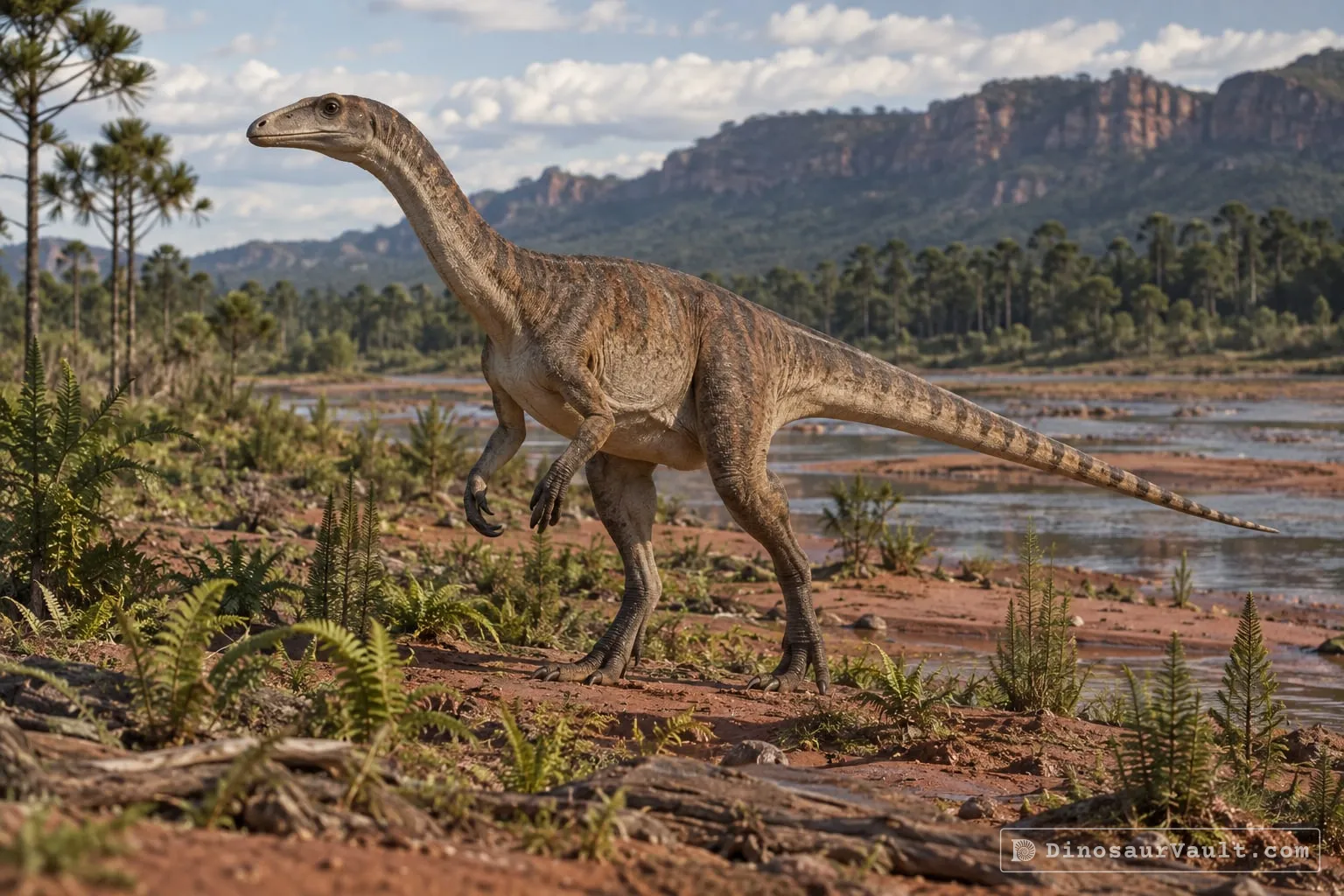
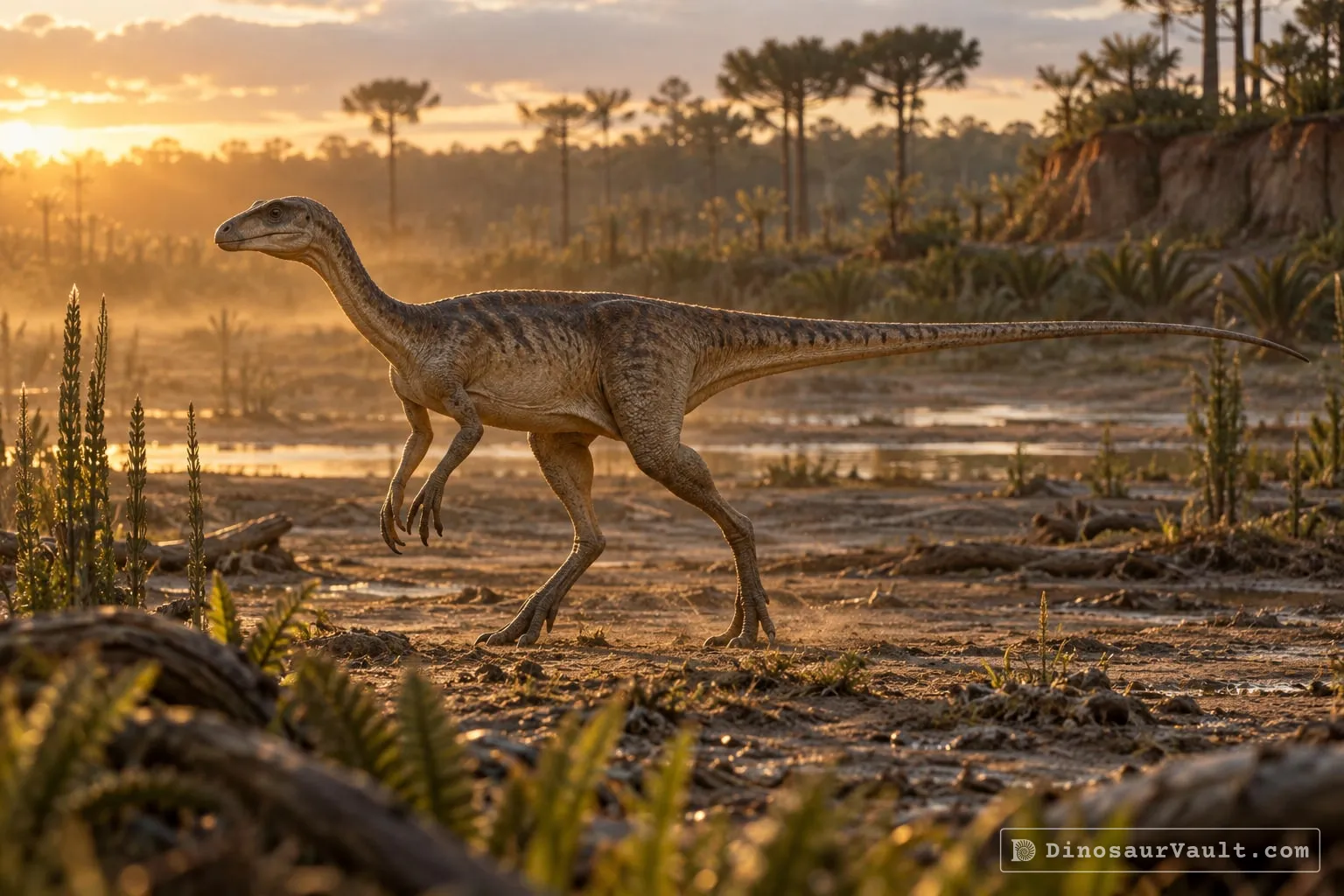
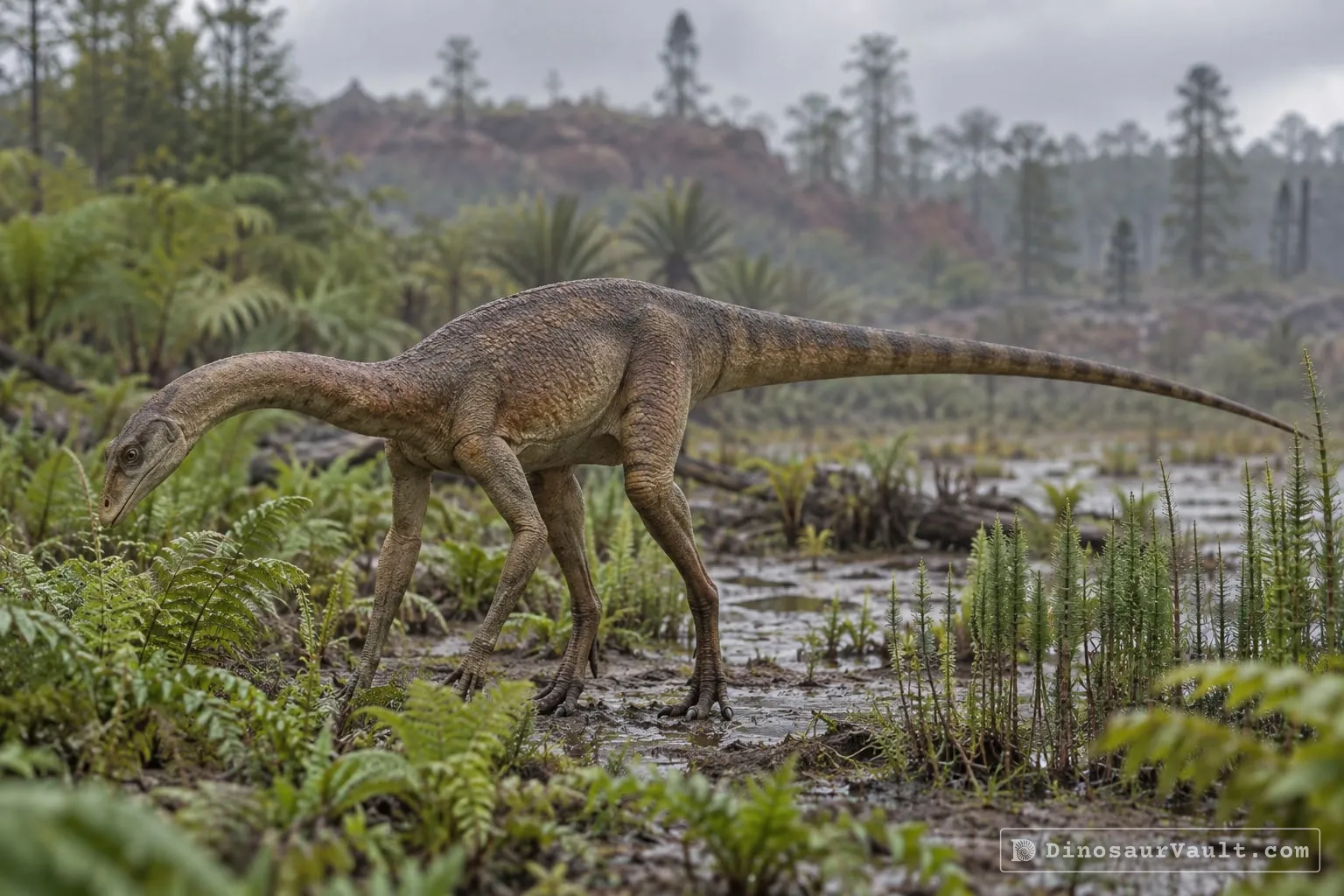


A rock formation can hold fossils laid down millions of years apart, so not every animal here met Buriolestes.
The evidence
The science behind Buriolestes
Which parts of the picture come from its own bones, and which come from its relatives.
From its own fossils
- Complementary skeletons preserve most of the body, including a well-preserved skull and backbone.
- Its teeth are curved, sharp and serrated, suited to eating small animals.
- Scans of the braincase reveal a well-developed region involved in coordinating head and eye movements.
Borrowed from relatives
- Most body proportions come from its own bones; early sauropodomorphs such as Eoraptor help guide the restoration of missing details.
Still unknown
- Its skin covering and color.
- Which small animals it hunted.
- How it cared for its young.
Discovery timeline
- 2016Named itCabreira et al.
- 2018Full descriptionMüller et al.
- 2020SkullMüller et al.
Key papers
The research behind what we know of Buriolestes
Named it
Named an early sauropodomorph whose sharp teeth supported meat eating near the beginning of the sauropod family tree.
A Unique Late Triassic Dinosauromorph Assemblage Reveals Dinosaur Ancestral Anatomy and Diet. Current Biology 26: 3090-3095
Read the paper : A Unique Late Triassic Dinosauromorph Assemblage Reveals Dinosaur Ancestral Anatomy and Diet (opens in a new tab)Full description
A new skeleton filled gaps in the skull and backbone and confirmed Buriolestes as an early sauropodomorph despite its predatory teeth.
Early evolution of sauropodomorphs: anatomy and phylogenetic relationships of a remarkably well-preserved dinosaur from the Upper Triassic of southern Brazil. Zoological Journal of the Linnean Society 184: 1187-1248
Read the paper : Early evolution of sauropodomorphs: anatomy and phylogenetic relationships of a remarkably well-preserved dinosaur from the Upper Triassic of southern Brazil (opens in a new tab)Skull
A reconstruction of the brain cavity suggests Buriolestes was an active predator able to track moving prey.
The endocranial anatomy of Buriolestes schultzi (Dinosauria: Saurischia) and the early evolution of brain tissues in sauropodomorph dinosaurs. Journal of Anatomy 238: 809-827
Read the paper : The endocranial anatomy of Buriolestes schultzi (Dinosauria: Saurischia) and the early evolution of brain tissues in sauropodomorph dinosaurs (opens in a new tab)
Close relatives
Other members of Sauropodomorpha


Sources: Wikidata