Eoabelisaurus
"dawn Abelisaurus"
- Lived
- 184 to 175 million years ago, Early Jurassic
- Diet
- Carnivore
- Group
- Theropods, Abelisauridae
- Found in
- Argentina
- Named by
- Pol and Rauhut 2012
Where its fossils were found
The evidence
Today

180 million years ago
Habitat
Lakes and nearby river plains supported conifers and ferns. Patagosaurus, Piatnitzkysaurus and Condorraptor also occur in these rocks.
Field notes
About Eoabelisaurus
What it was like
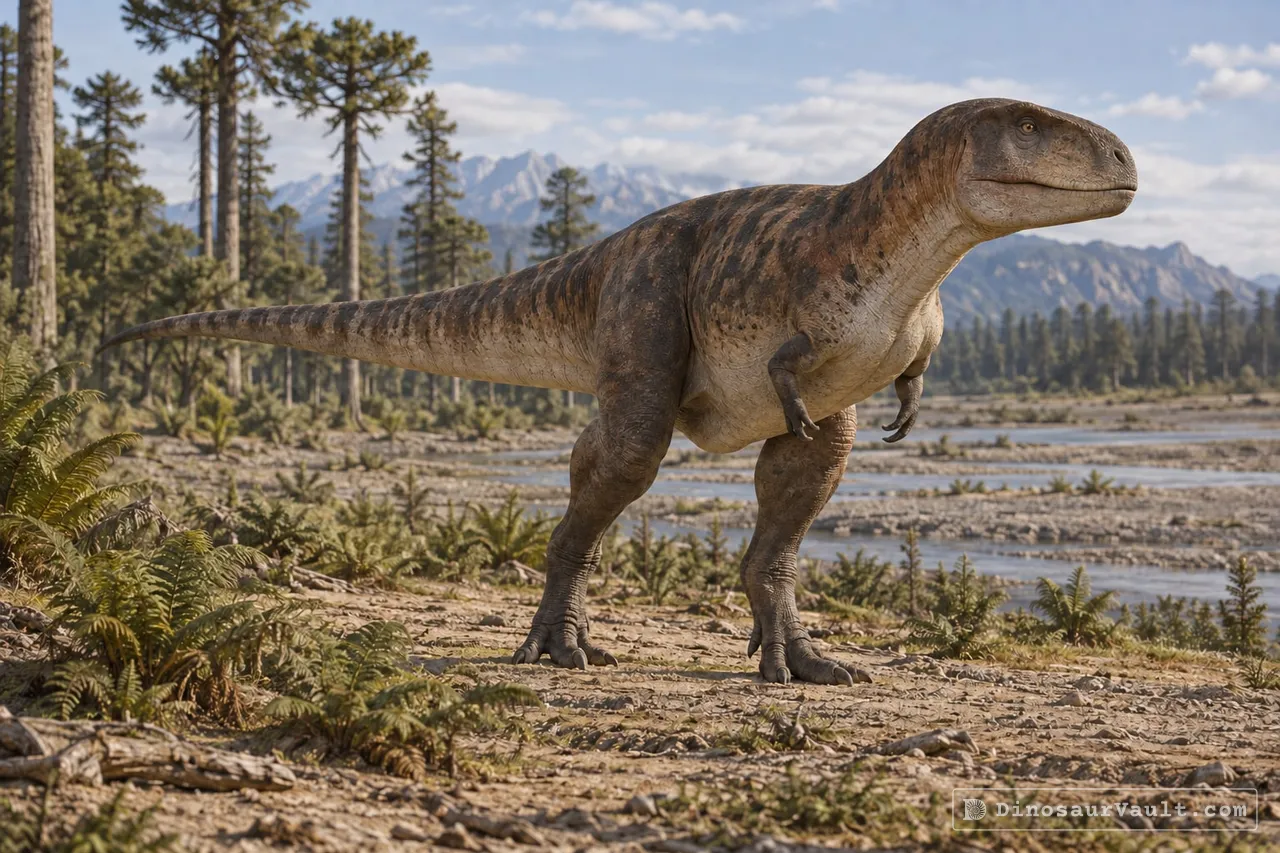
Eoabelisaurus was a predator and the oldest known member of the abelisaurids, the family of Carnotaurus. Its arms were already very short, with a stubby forearm, a trait that became extreme in later abelisaurs.
Its world
It lived in the Jurassic, in what is now Argentina. It comes from the Cañadón Asfalto Formation, where it shared the land with the predators Piatnitzkysaurus and Condorraptor and the sauropods Patagosaurus and Bagualia.
How it was found
Pol and Rauhut named Eoabelisaurus in 2012, from a nearly complete skeleton. It showed that abelisaurs had appeared tens of millions of years earlier than once thought.
Field gallery
More views of Eoabelisaurus
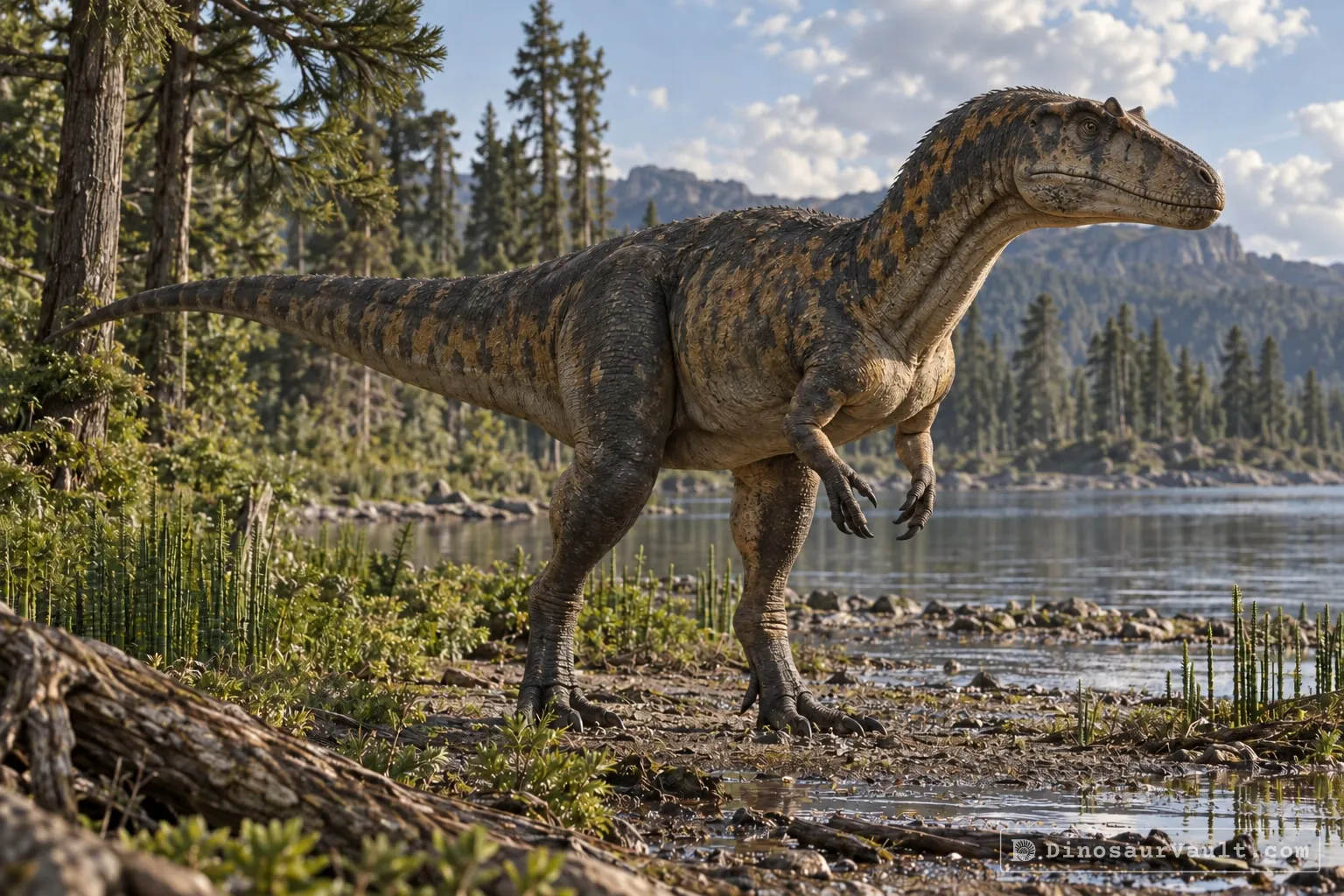
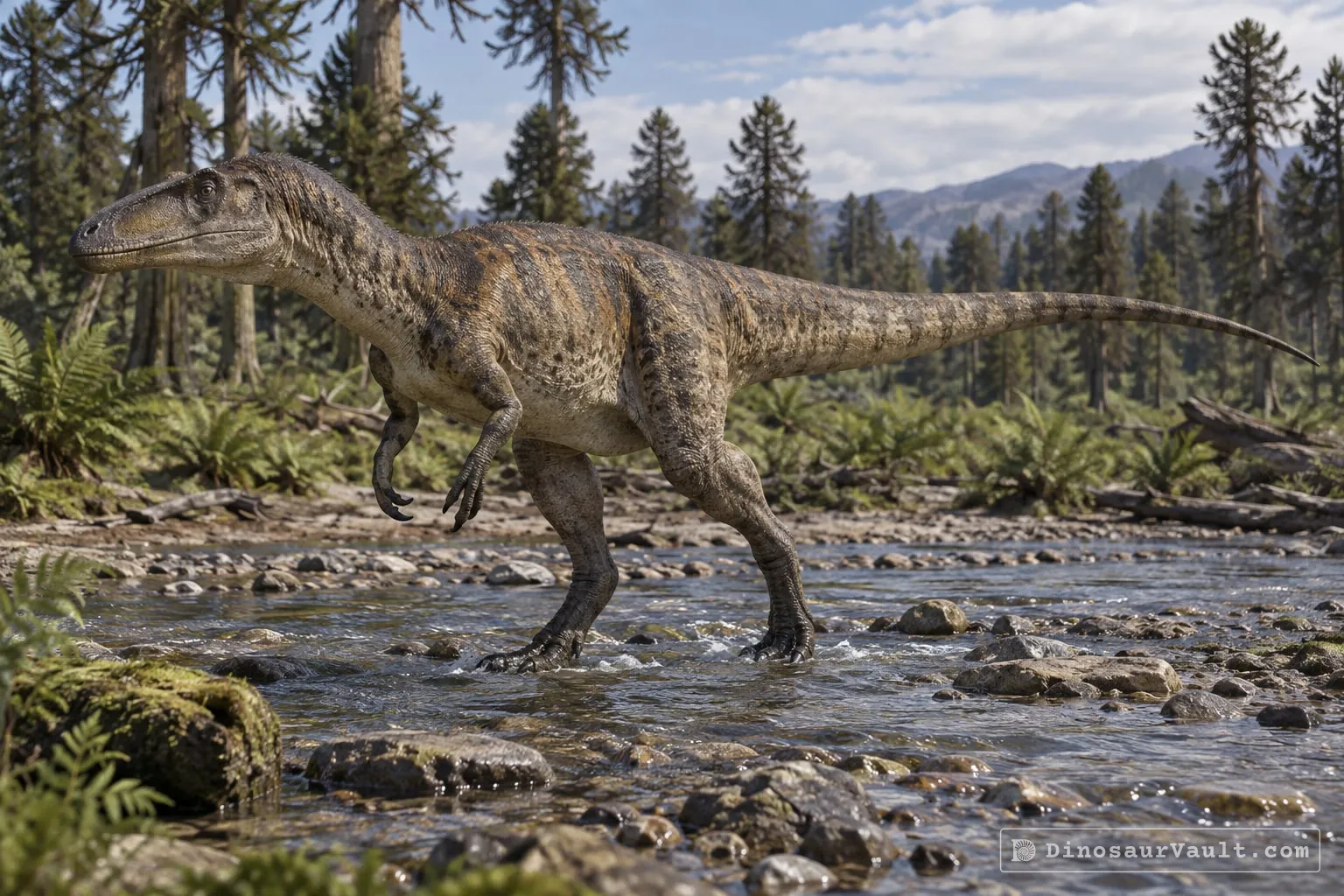
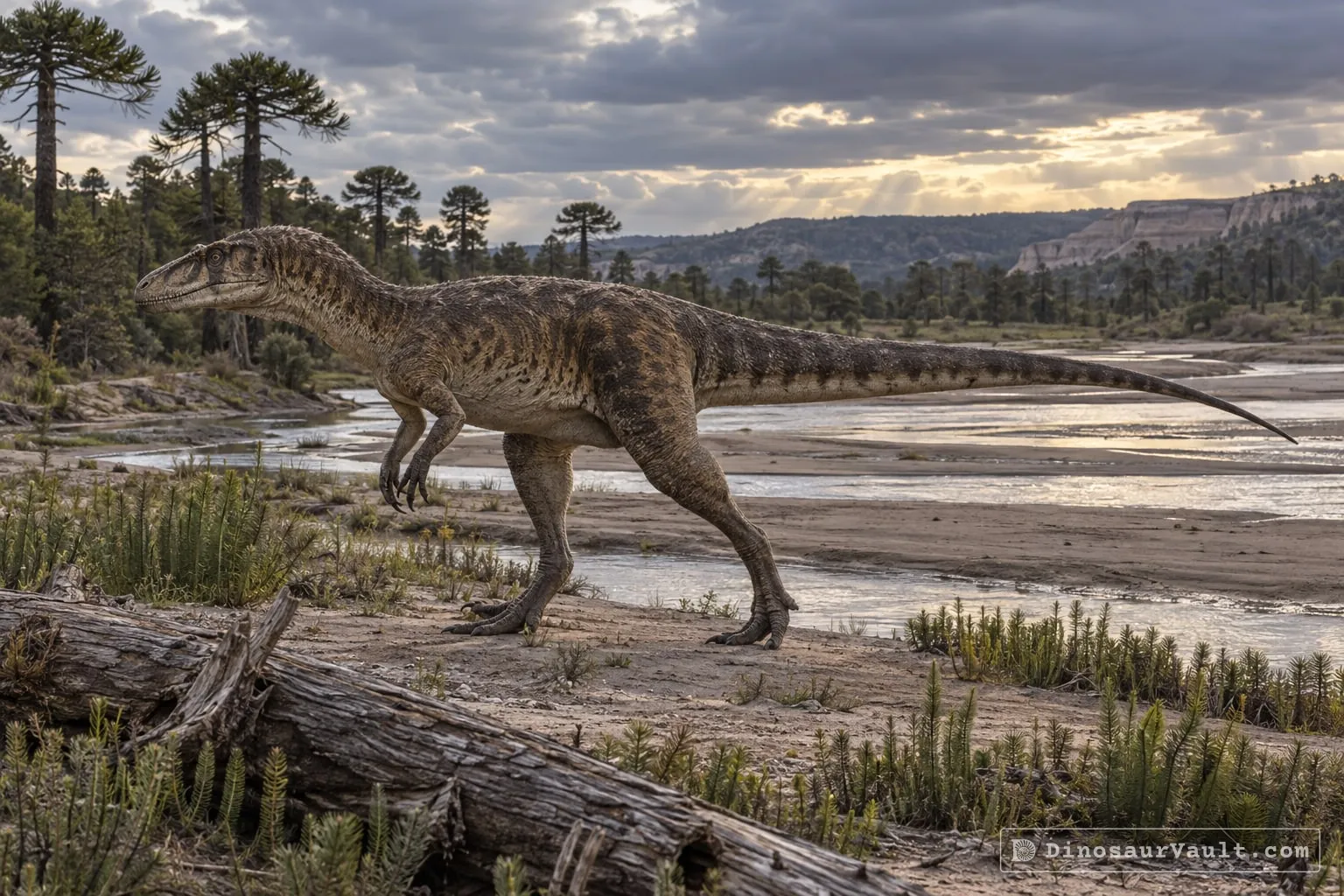
Scenes reconstructed from the available fossil evidence.
Lived alongside
Found in the same rock formations
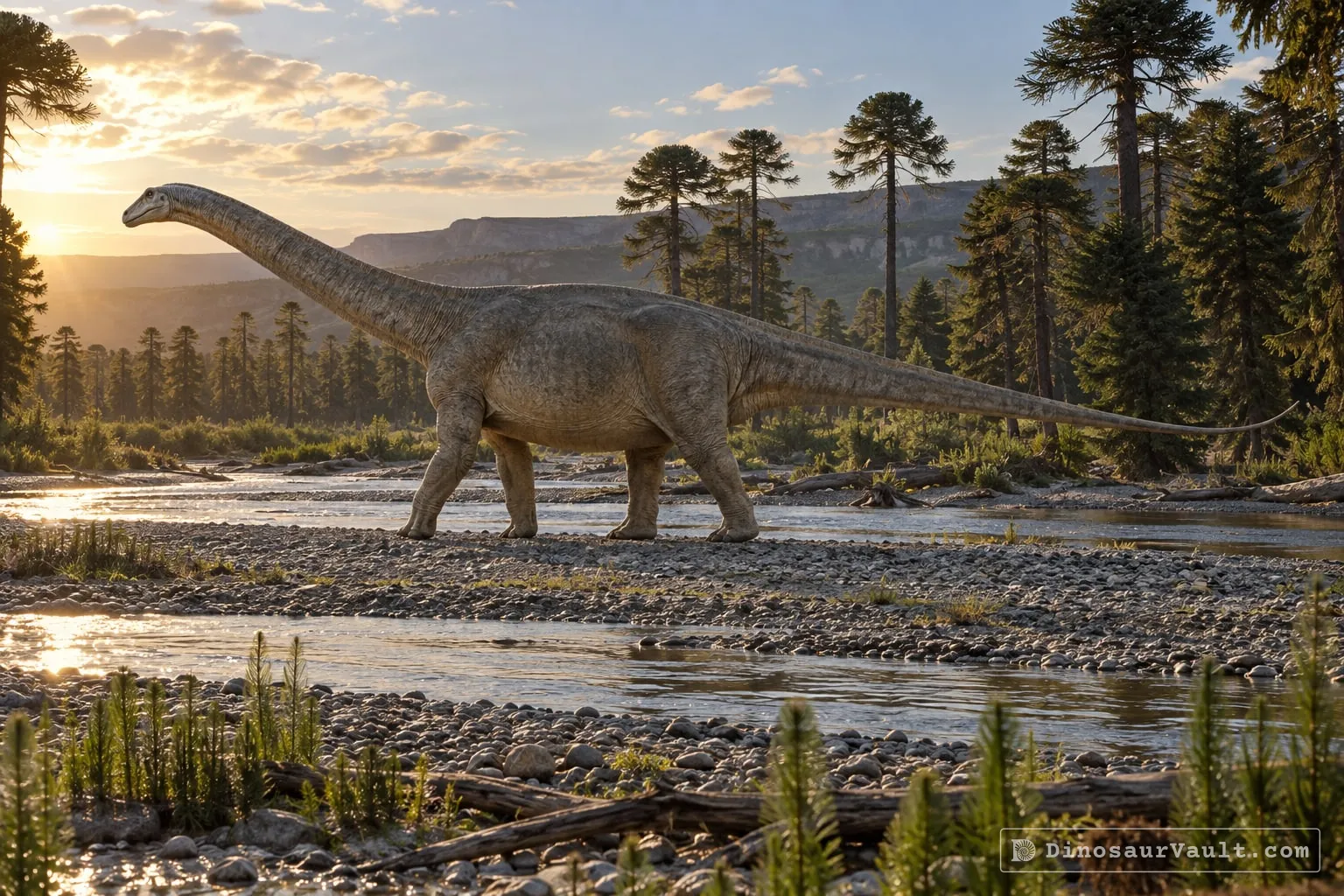
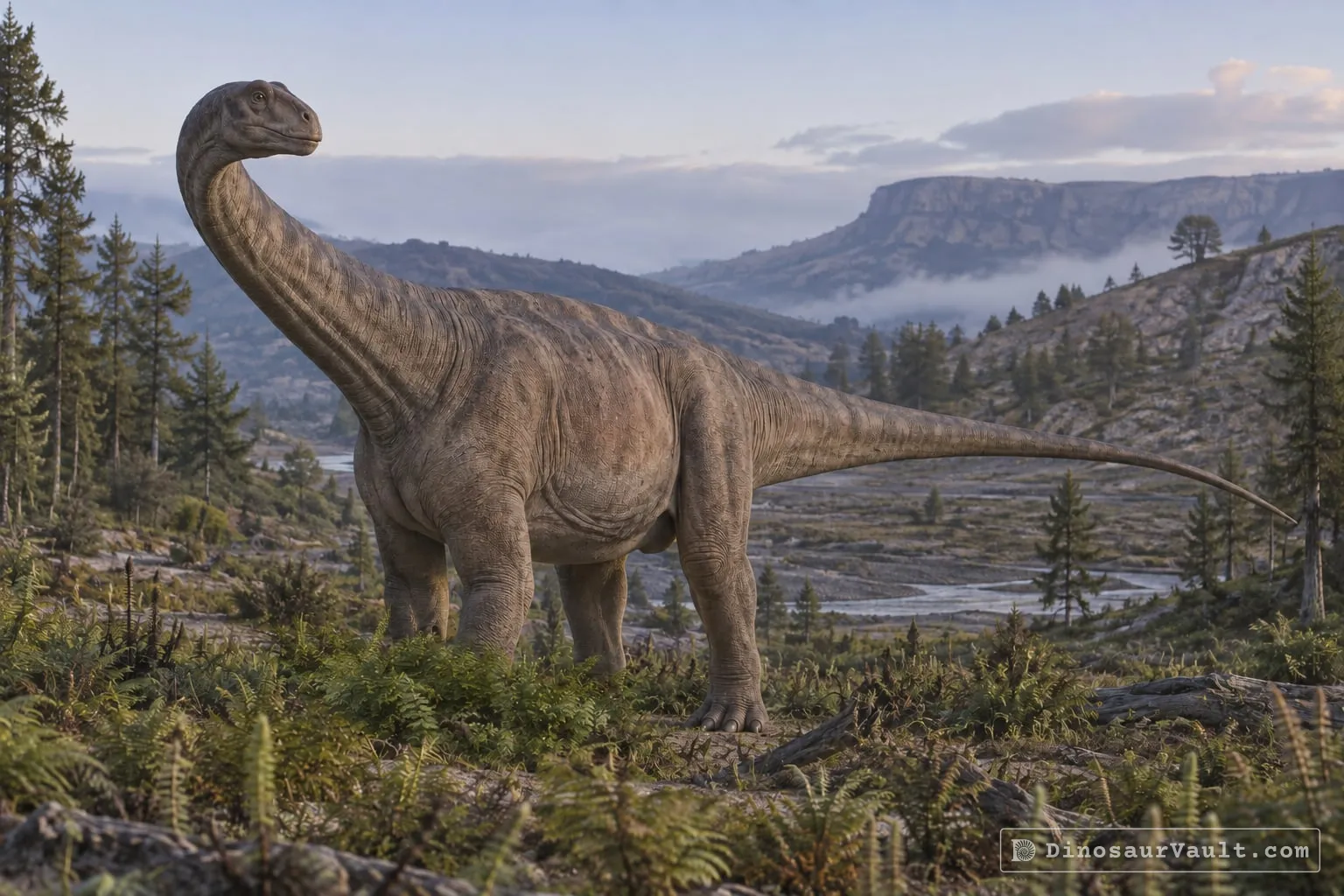
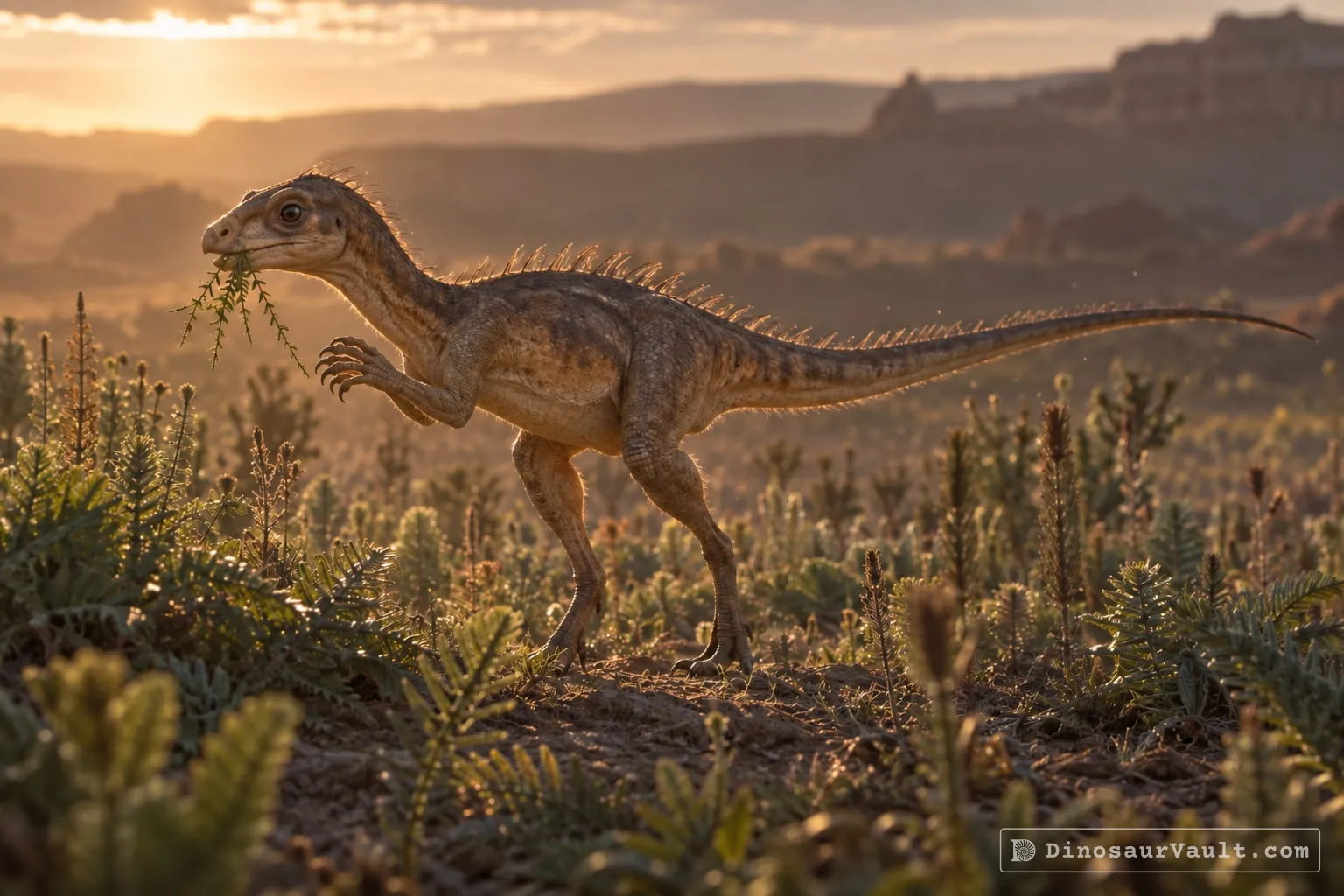
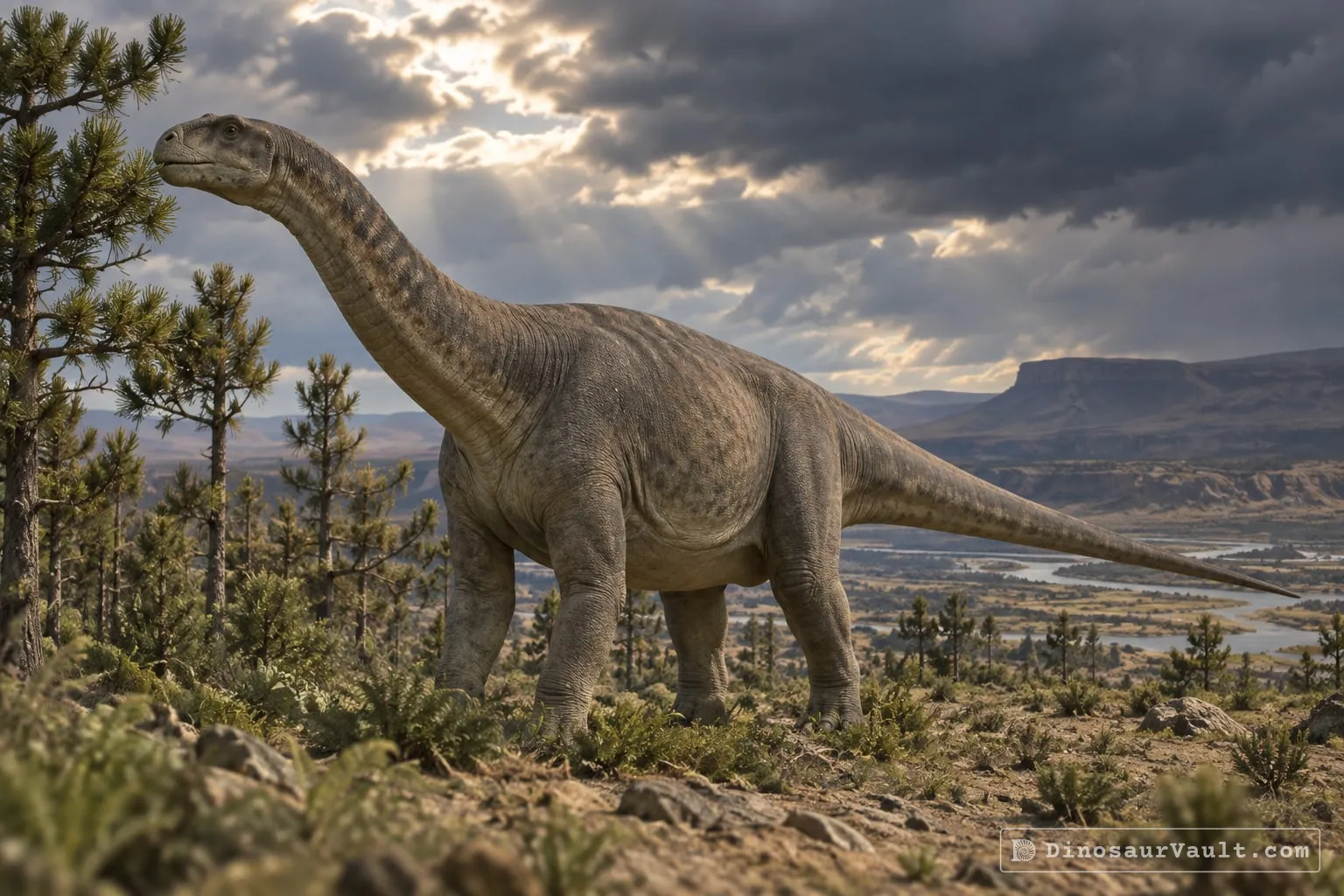


A rock formation can hold fossils laid down millions of years apart, so not every animal here met Eoabelisaurus.
The evidence
The science behind Eoabelisaurus
Which parts of the picture come from its own bones, and which come from its relatives.
From its own fossils
- A nearly complete skeleton preserves much of the backbone, tail and limbs, along with the back of the skull.
- Substantial upper arms ended in short forearms and very short, sturdy hands with reduced claws.
- The preserved skull roof is tall and lacks the heavy ornament seen in some later relatives.
Borrowed from relatives
- Most of the body is known from its own bones; the missing front of the snout can be restored by comparison with Ceratosaurus.
- Details of the incomplete toes can be inferred from early theropods such as Dilophosaurus.
Still unknown
- The complete shape of its snout.
- Its skin covering and color.
- Its exact position among the early relatives of abelisaurids.
Often drawn wrong
- Giving it tiny upper arms like Carnotaurus misses its distinctive pattern of short forearms and hands.
- Large grasping hand claws replace the small claws preserved in its skeleton.
Discovery timeline
- 2012Named itPol & Rauhut
- 2018Family treeDelcourt
- 2024Family treePol et al.
Key papers
The research behind what we know of Eoabelisaurus
Named it
Described a nearly complete skeleton with reduced hands, showing that the distinctive arms of later abelisaurids developed in stages.
A Middle Jurassic abelisaurid from Patagonia and the early diversification of theropod dinosaurs. Proceedings of the Royal Society B: Biological Sciences 279: 3170-3175
Read the paper : A Middle Jurassic abelisaurid from Patagonia and the early diversification of theropod dinosaurs (opens in a new tab)Family tree
Reviewed ceratosaur anatomy and competing family trees, including different placements for Eoabelisaurus.
Ceratosaur palaeobiology: new insights on evolution and ecology of the southern rulers. Scientific Reports 8
Read the paper : Ceratosaur palaeobiology: new insights on evolution and ecology of the southern rulers (opens in a new tab)Family tree
Compared evolutionary changes across ceratosaurs, placing Eoabelisaurus early in the abelisaurid lineage and tracing later changes in the arms.
A new abelisaurid dinosaur from the end Cretaceous of Patagonia and evolutionary rates among the Ceratosauria. Cladistics 40: 307-356
Read the paper : A new abelisaurid dinosaur from the end Cretaceous of Patagonia and evolutionary rates among the Ceratosauria (opens in a new tab)
Close relatives
Other members of Abelisauridae


Sources: Wikidata