Bagualia
"wild horse"
- Lived
- 183 to 180 million years ago, Early Jurassic
- Diet
- Herbivore
- Group
- Sauropods
- Found in
- Argentina
- Named by
- Pol et al. 2020
Where its fossils were found
The evidence
Today

180 million years ago
Habitat
Lakes and wetlands dotted the landscape in what is now Argentina. Conifers with small, tough leaves became common after volcanic activity and warming changed the vegetation. The same formation contains Patagosaurus, Piatnitzkysaurus and Manidens.
Field notes
About Bagualia
What it was like
Bagualia was an early sauropod, a long-necked plant eater. It is known from a skull and part of the skeleton. It had strong jaws and thick, sturdy teeth, suited to tough plants such as conifers.
Its world
It lived in the Early Jurassic, in what is now Argentina. It comes from the Cañadón Asfalto Formation, where it shared the land with the sauropod Patagosaurus and the predators Piatnitzkysaurus and Eoabelisaurus. Its time followed a period of volcanic activity and climate change, when big sauropods like it took over from other plant eaters.
How it was found
Pol and colleagues named Bagualia in 2020.
Field gallery
More views of Bagualia
Scenes reconstructed from the available fossil evidence.
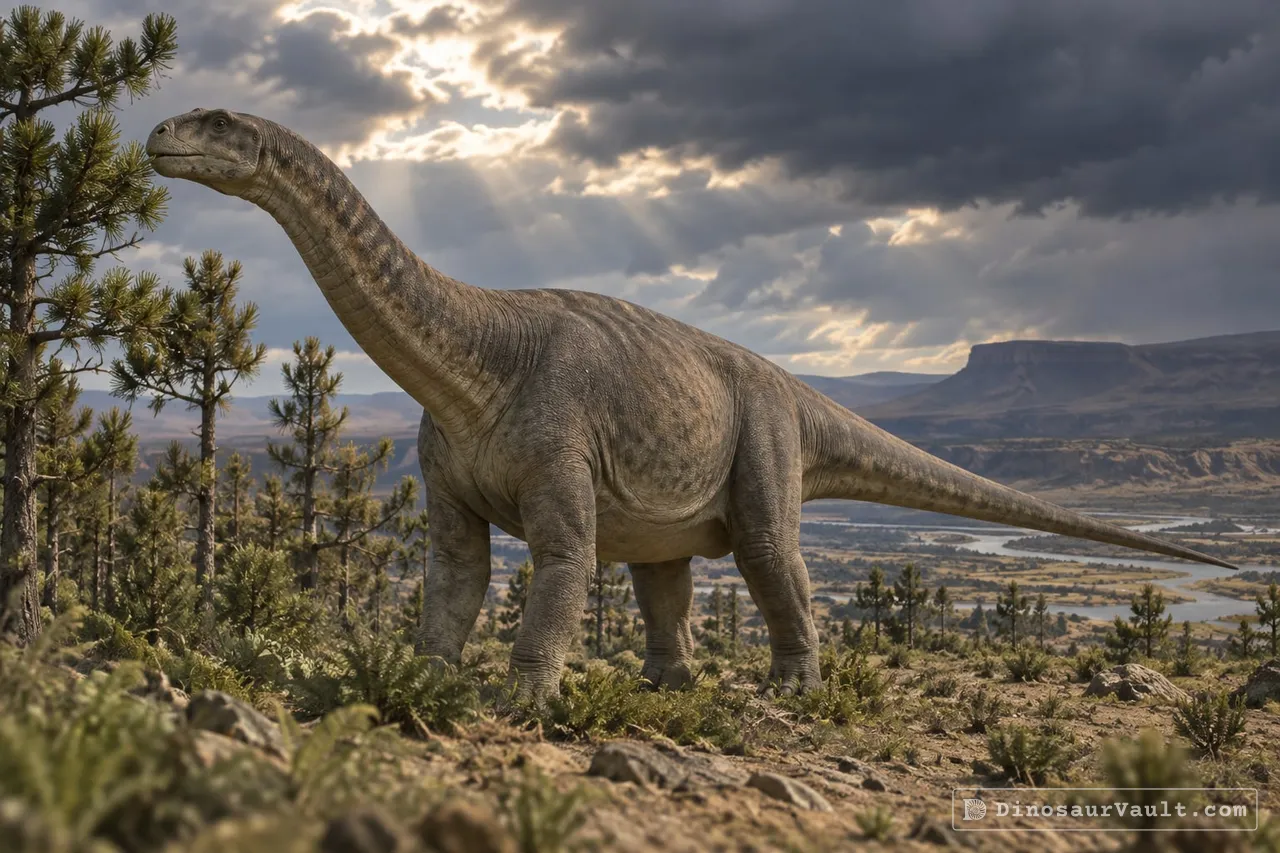
1 of 3
Lived alongside
Found in the same rock formations
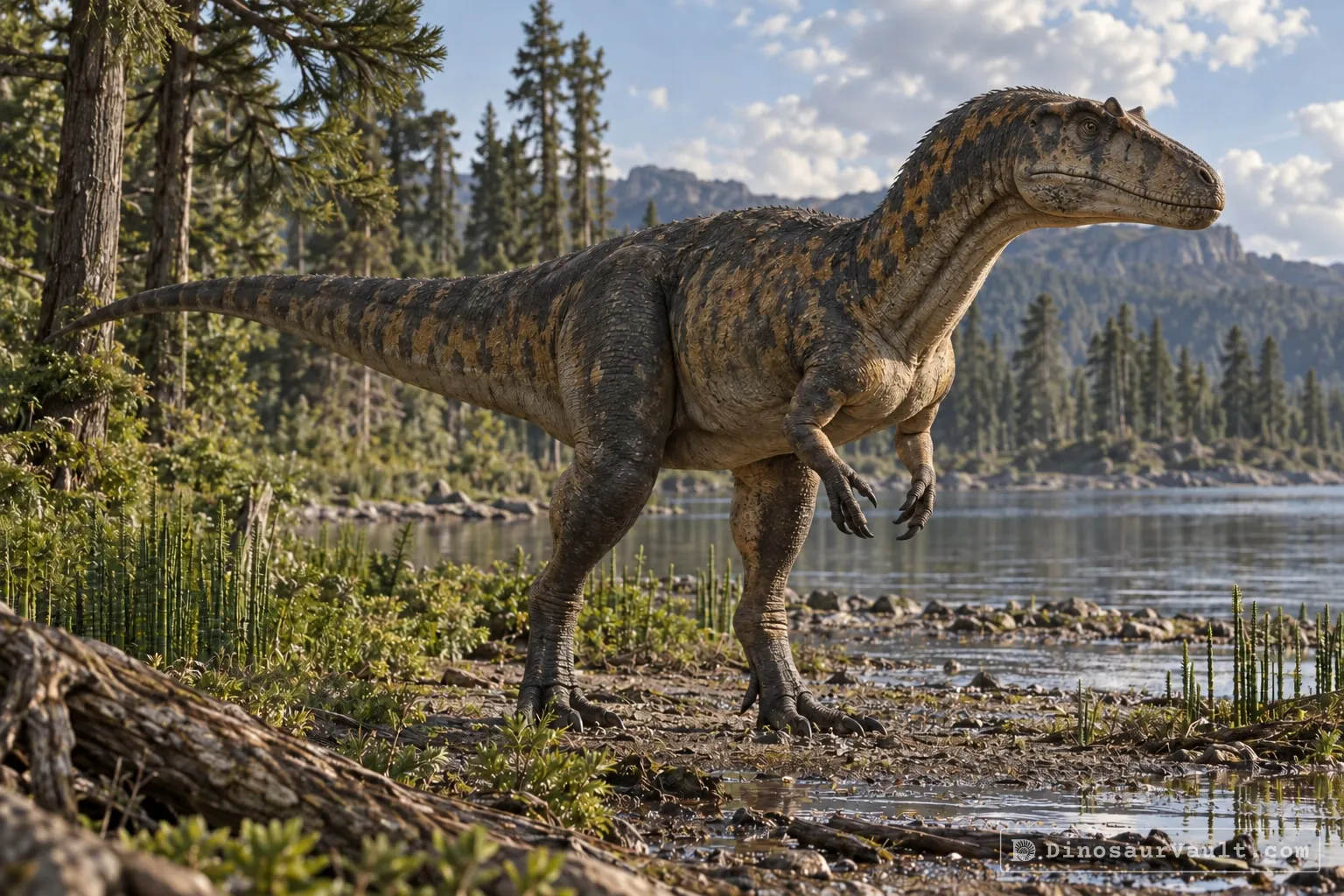
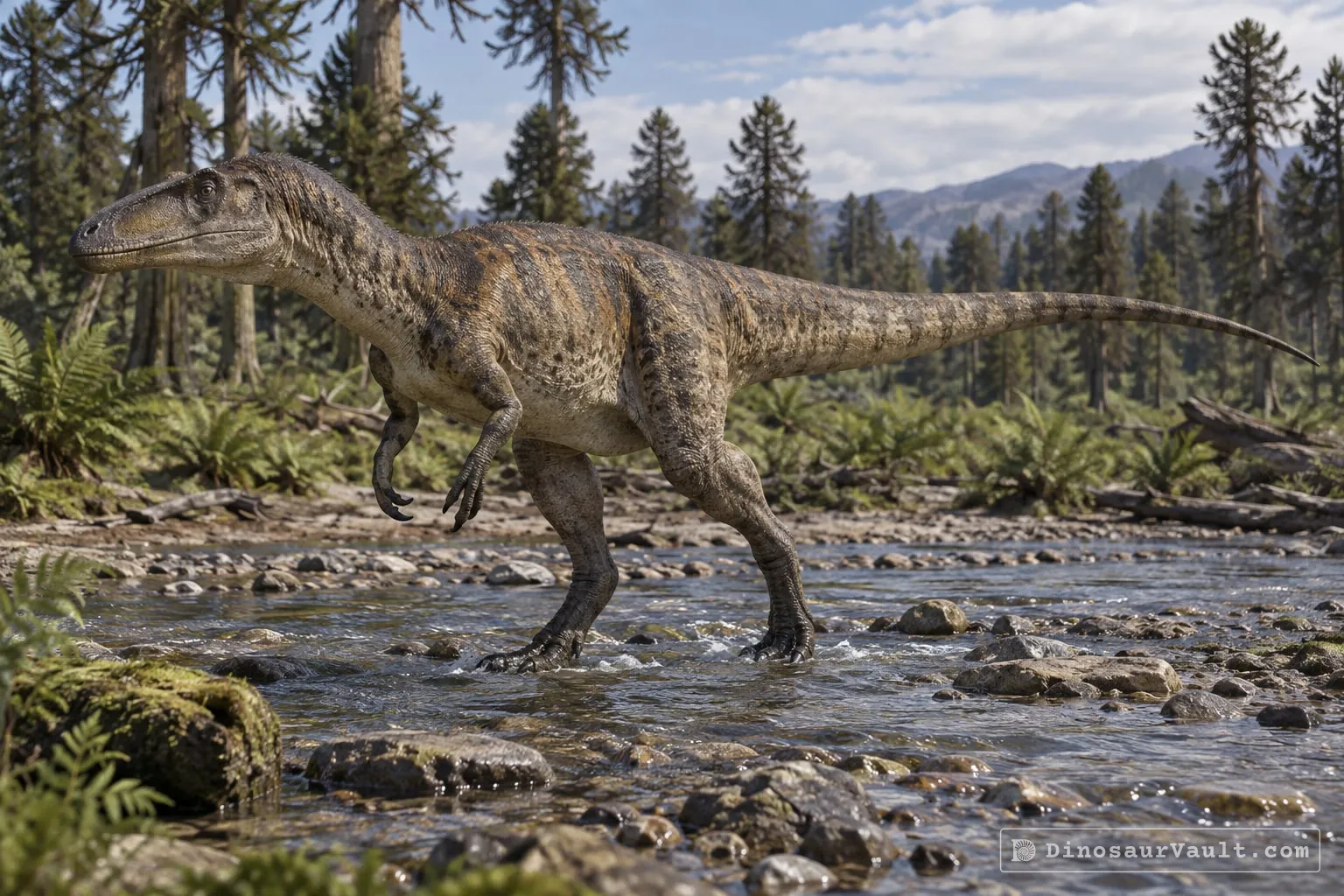
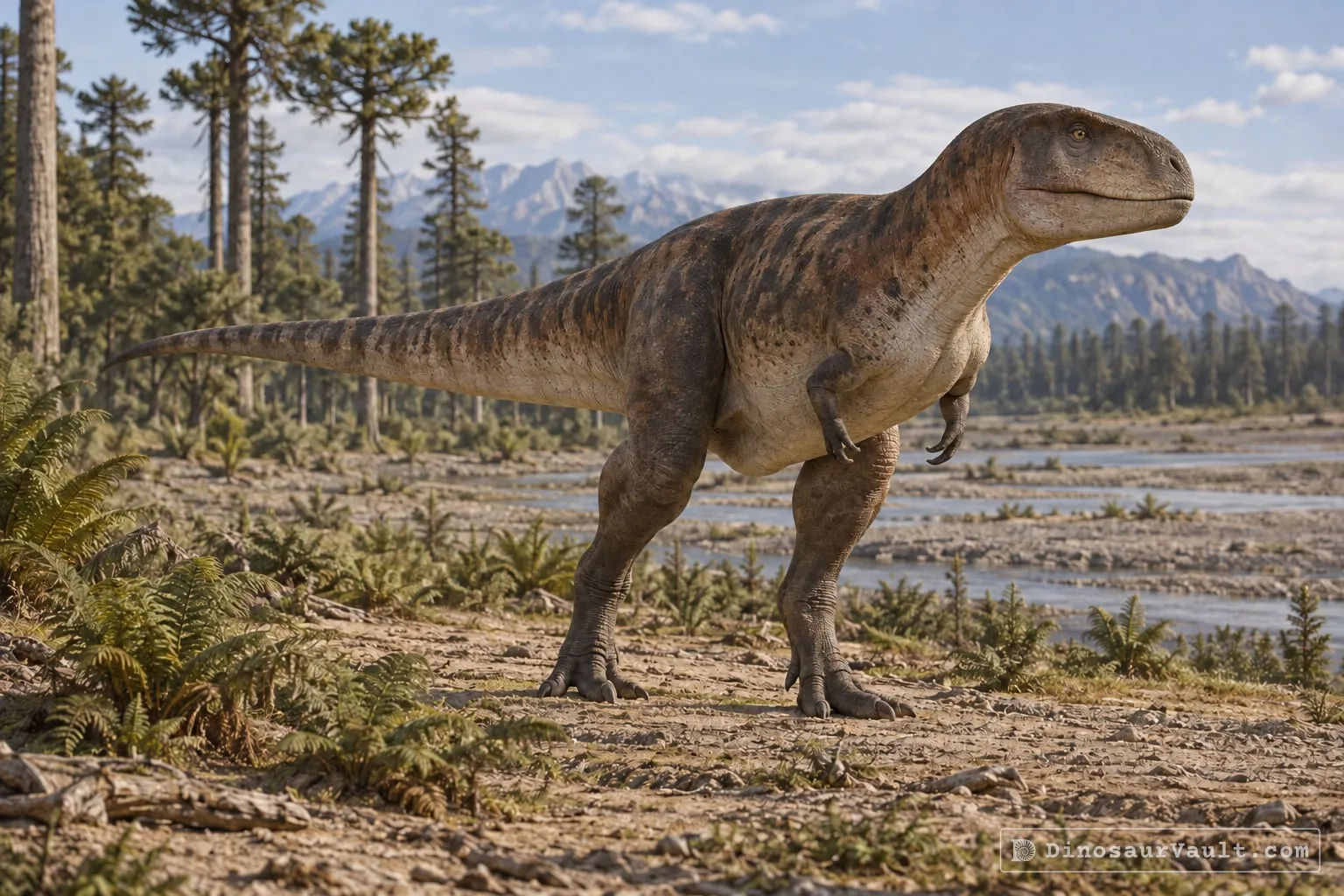
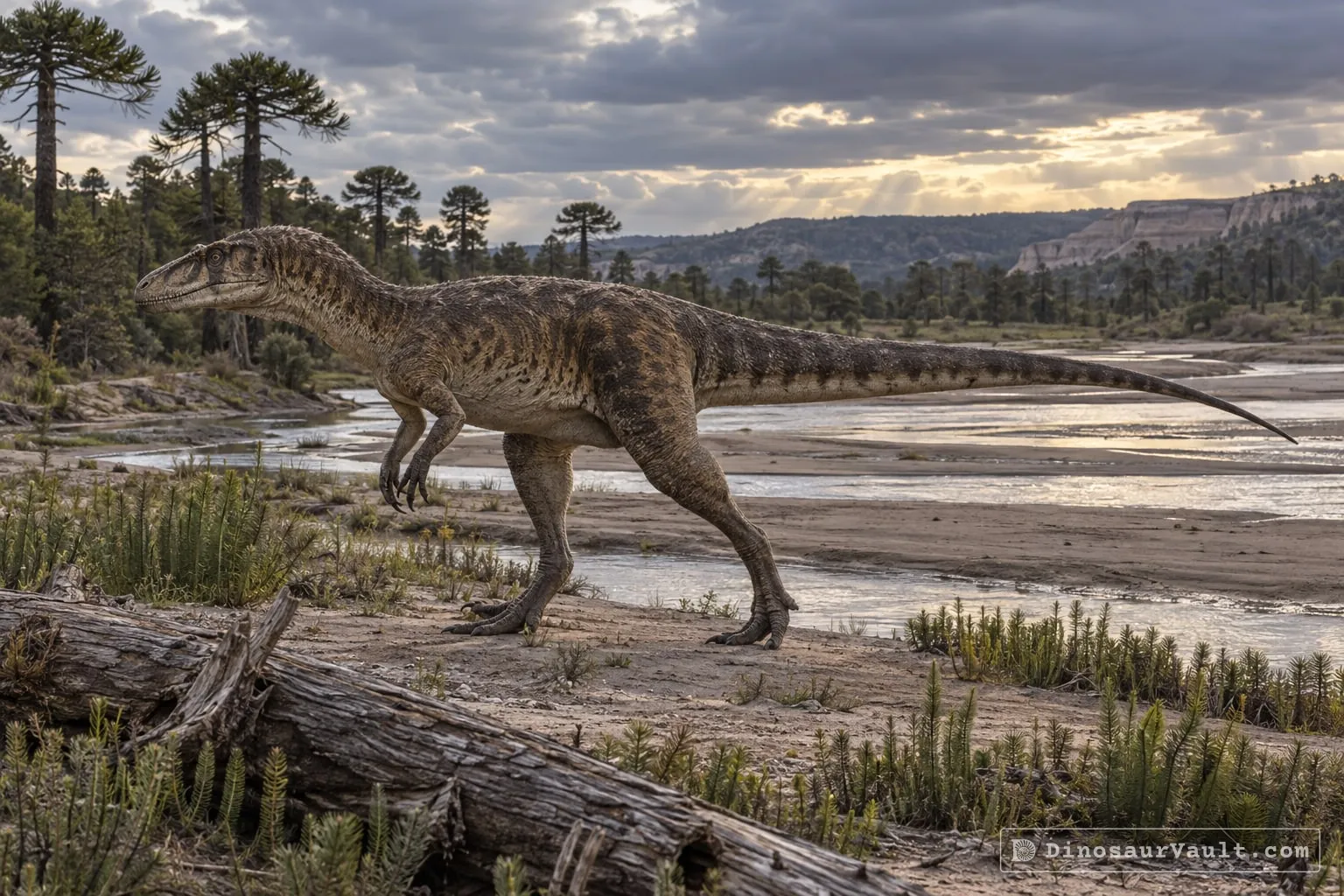
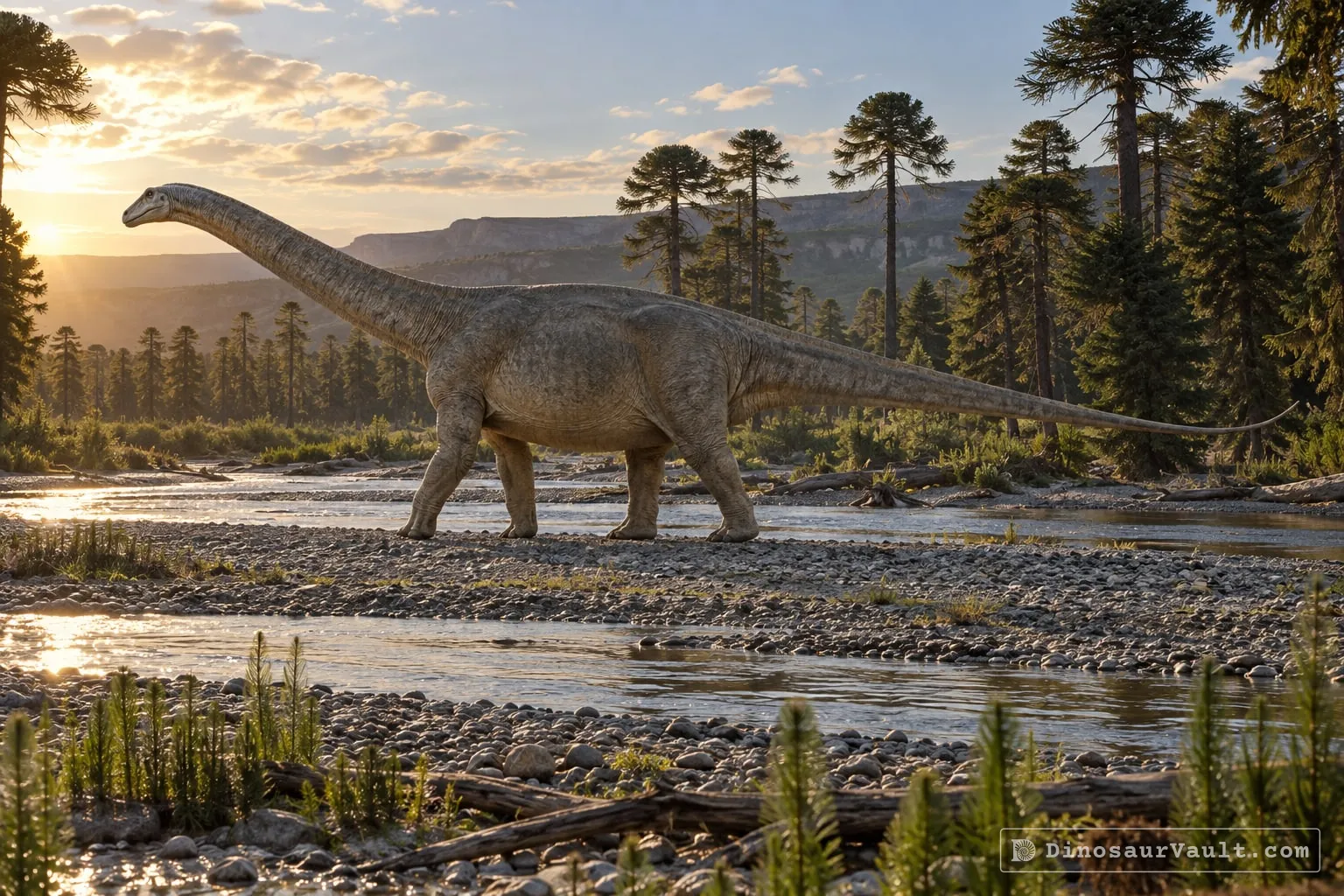
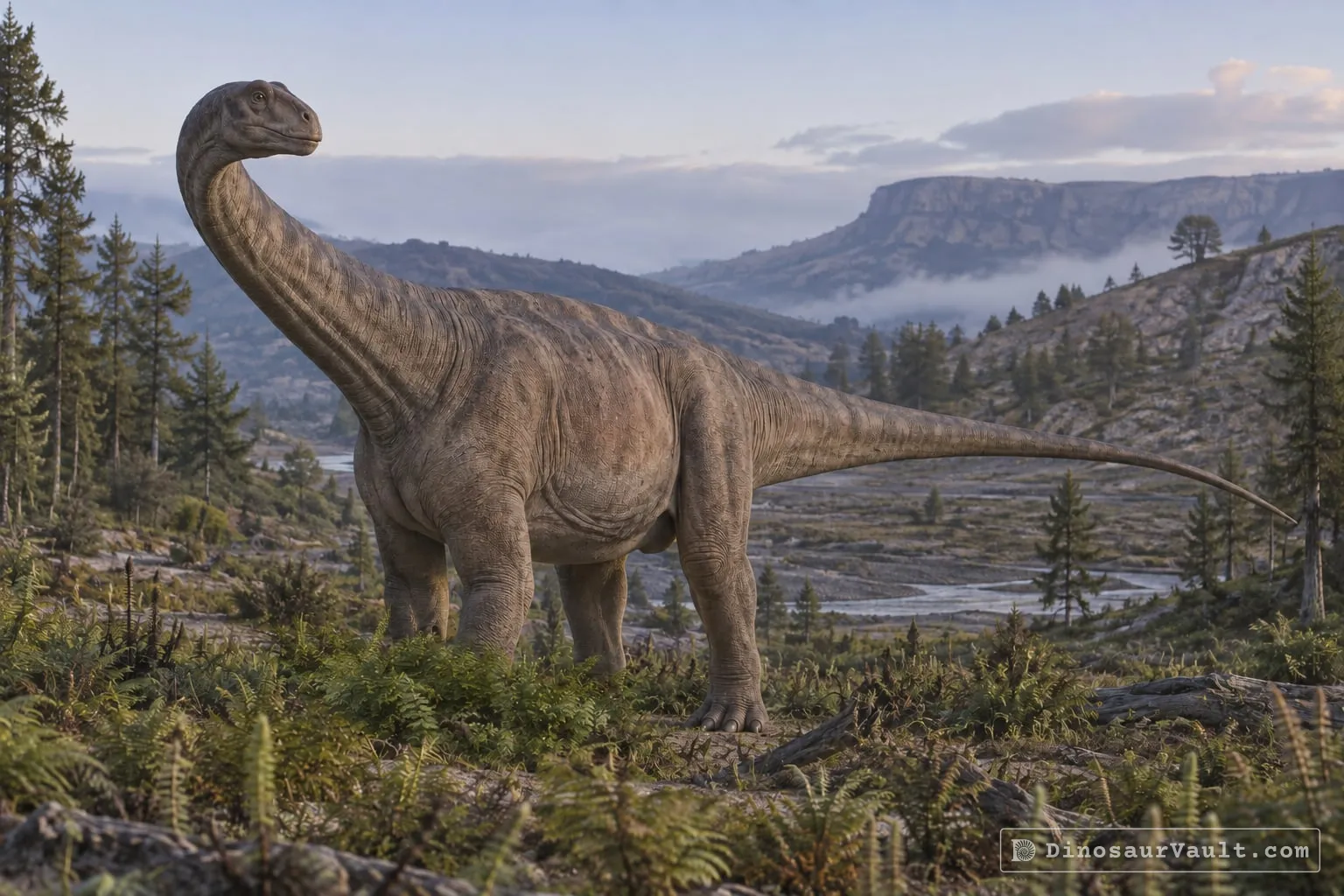
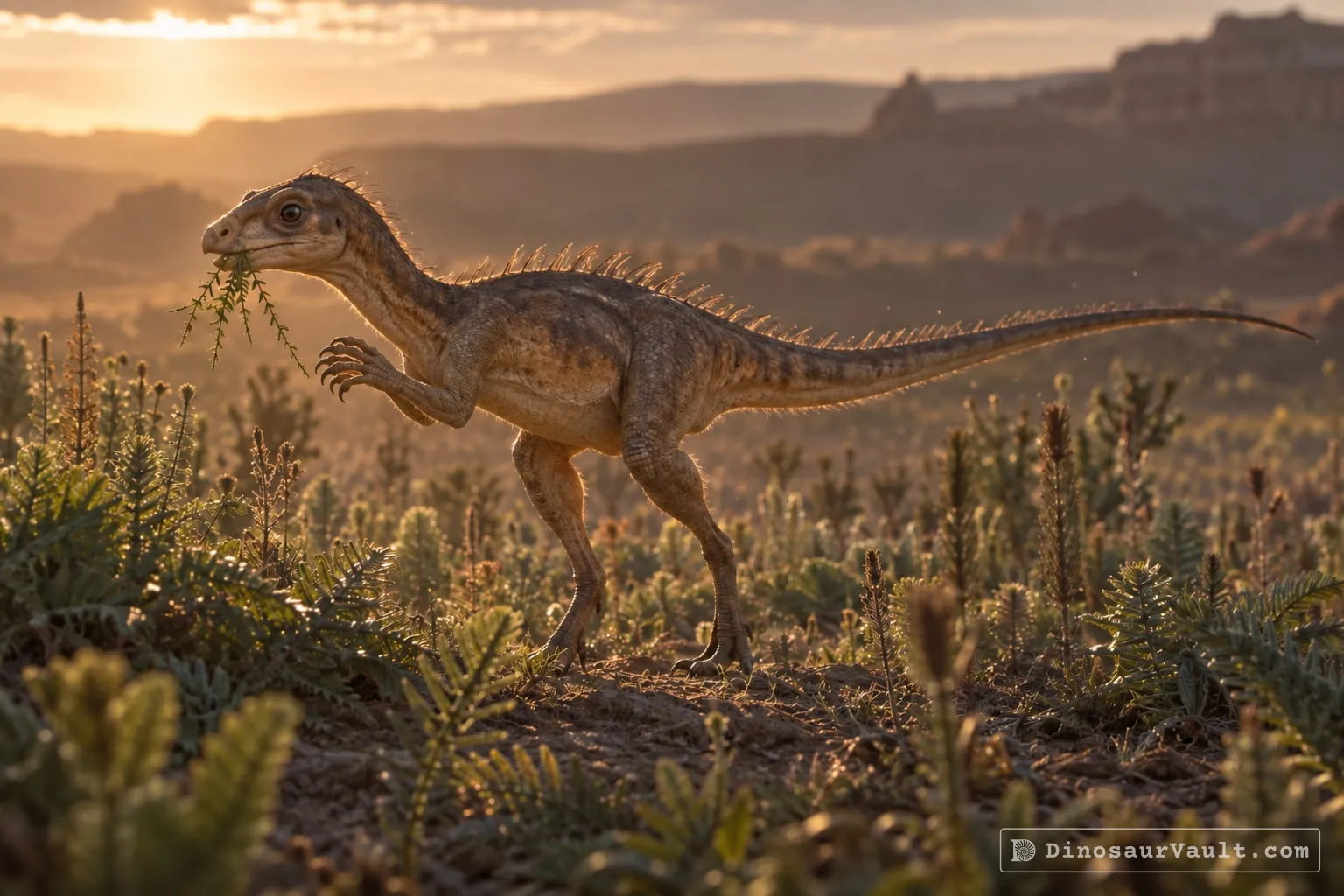


A rock formation can hold fossils laid down millions of years apart, so not every animal here met Bagualia.
The evidence
The science behind Bagualia
Which parts of the picture come from its own bones, and which come from its relatives.
From its own fossils
- The type specimen is the back of a skull with the first seven neck vertebrae lying in a row. The neck bones are long and have deep hollows along their sides.
- Skull bones and teeth assigned to it from the same site show a short, tall snout, jaws that meet in a broad, deep curve at the front, and broad, spoon-shaped teeth with thick enamel.
- Many more bones from the same site, from at least three animals, are assigned to it. They include the backbone, shoulders, hips and limbs.
Borrowed from relatives
- Bones assigned to it cover most of the skeleton. The shapes of the hands and feet are restored by comparison with later sauropods such as Apatosaurus and Camarasaurus.
Still unknown
- Its skin, its color and how it held its neck.
- Its exact place among the early sauropods.
- Whether the animals found together moved in herds.
Discovery timeline
- 2020Named itPol et al.
- 2021Full descriptionGomez, Carballido & Pol
- 2024SkullGomez, Carballido & Pol
- 2025Full descriptionGomez et al.
Key papers
The research behind what we know of Bagualia
Named it
Named Bagualia and linked the rise of large sauropods to warming and a shift toward tough-leaved conifers.
Extinction of herbivorous dinosaurs linked to Early Jurassic global warming event. Proceedings of the Royal Society B: Biological Sciences 287: 20202310
Read the paper : Extinction of herbivorous dinosaurs linked to Early Jurassic global warming event (opens in a new tab)Full description
Described the backbone, showing that an elongated neck and hollows associated with air sacs appeared early in the evolution of large sauropods.
The axial skeleton of Bagualia alba (Dinosauria: Eusauropoda) from the Early Jurassic of Patagonia. Palaeontologia Electronica
Read the paper : The axial skeleton of Bagualia alba (Dinosauria: Eusauropoda) from the Early Jurassic of Patagonia (opens in a new tab)Skull
Described the skull, with its short, tall, sturdy snout, bony nostrils set back from the tip and lower jaws curving together at the front.
Cranial anatomy of Bagualia alba (Dinosauria, Eusauropoda) from the Early Jurassic of Patagonia and the implications for sauropod cranial evolution. Journal of Systematic Palaeontology 22
Read the paper : Cranial anatomy of Bagualia alba (Dinosauria, Eusauropoda) from the Early Jurassic of Patagonia and the implications for sauropod cranial evolution (opens in a new tab)Full description
Described the limb and girdle bones and examined how early sauropods evolved the anatomy of large animals walking on all fours.
Osteology of the appendicular skeleton of Bagualia alba (Dinosauria, Eusauropoda) from the Lower Jurassic of Patagonia and the macroevolutionary history of early eusauropods. Cladistics 41: 70-103
Read the paper : Osteology of the appendicular skeleton of Bagualia alba (Dinosauria, Eusauropoda) from the Lower Jurassic of Patagonia and the macroevolutionary history of early eusauropods (opens in a new tab)
Close relatives
Other members of Eusauropoda


Sources: Wikidata