Volkheimeria
Type species Volkheimeria chubutensis
- Lived
- 183 to 180 million years ago, Early Jurassic
- Diet
- Herbivore
- Group
- Sauropods
- Found in
- Argentina
- Named by
- Bonaparte 1979
Where its fossils were found
The evidence
Today

180 million years ago
Habitat
Lakes and their surrounding lowlands in Argentina. Dinosaurs from the same rocks include Patagosaurus, Piatnitzkysaurus and Condorraptor.
Field notes
About Volkheimeria
What it was like
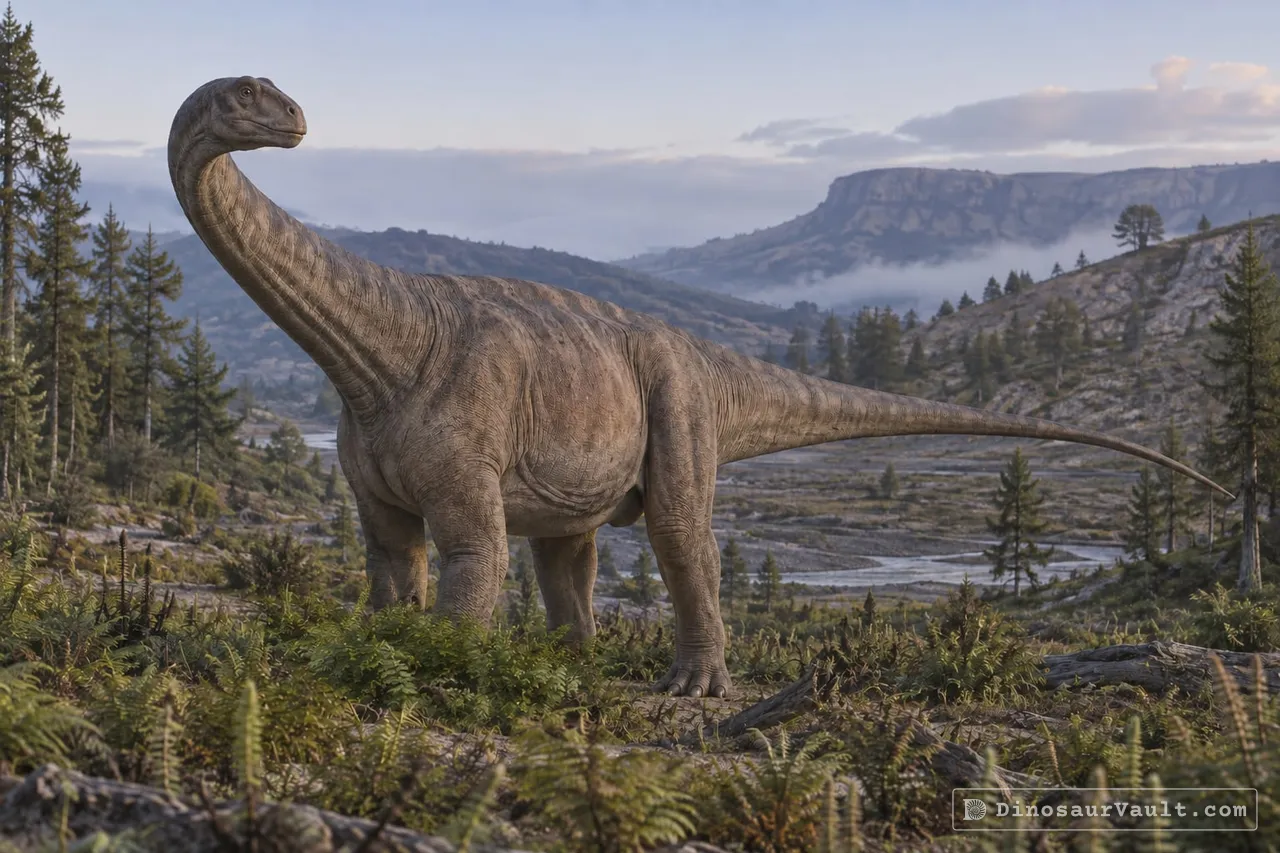
Volkheimeria was an early sauropod, a long-necked plant eater known from parts of the backbone, hips and legs.
Its world
It lived about 183 to 180 million years ago, in the Early Jurassic, in what is now Argentina. Its bones come from the Cañadón Asfalto Formation, where it shared the land with the sauropod Patagosaurus and the predators Piatnitzkysaurus and Condorraptor.
How it was found
Bonaparte named it in 1979. The type species is Volkheimeria chubutensis. The name honors a geologist.
Field gallery
More views of Volkheimeria
Scenes reconstructed from the available fossil evidence.
Lived alongside
Found in the same rock formations
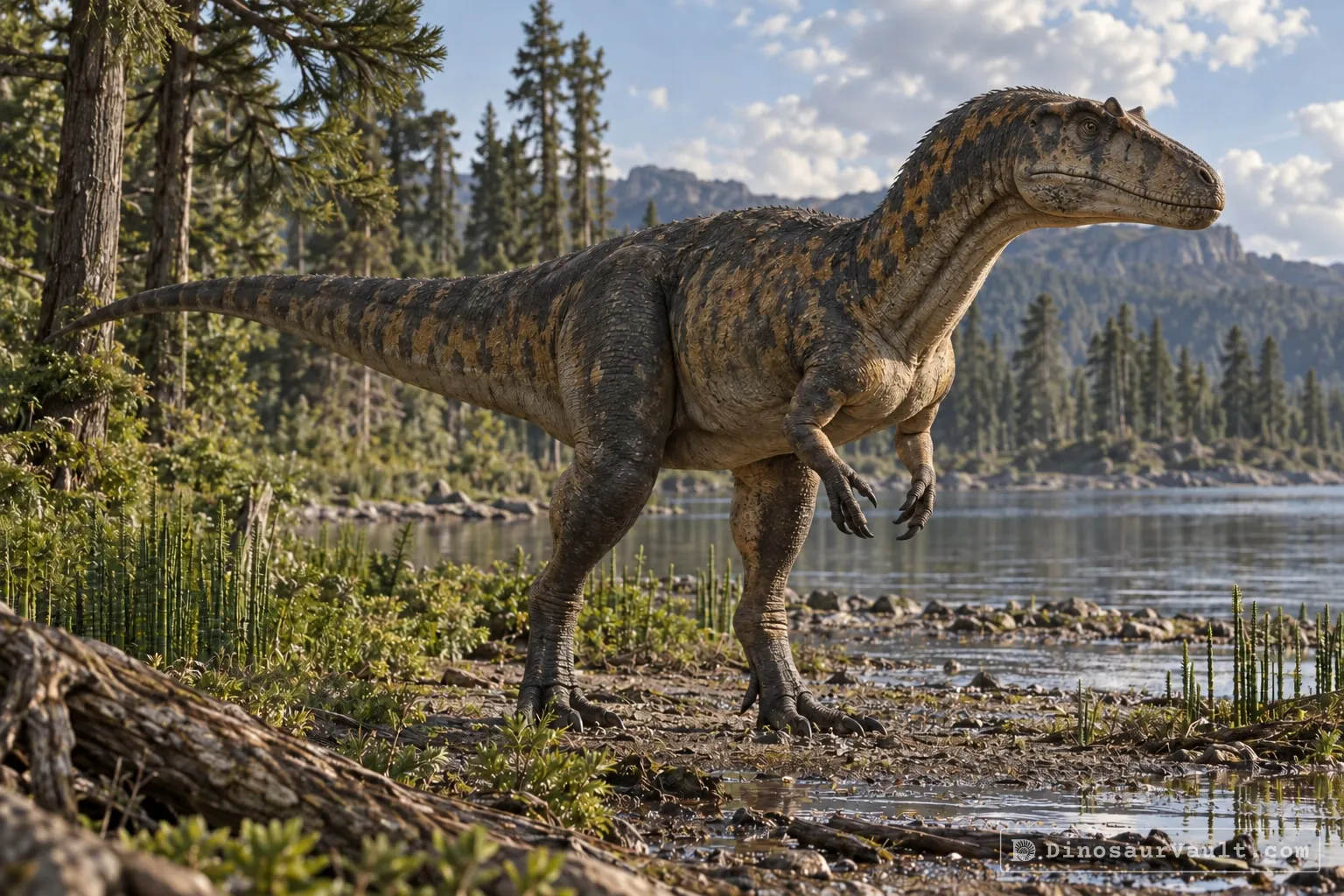
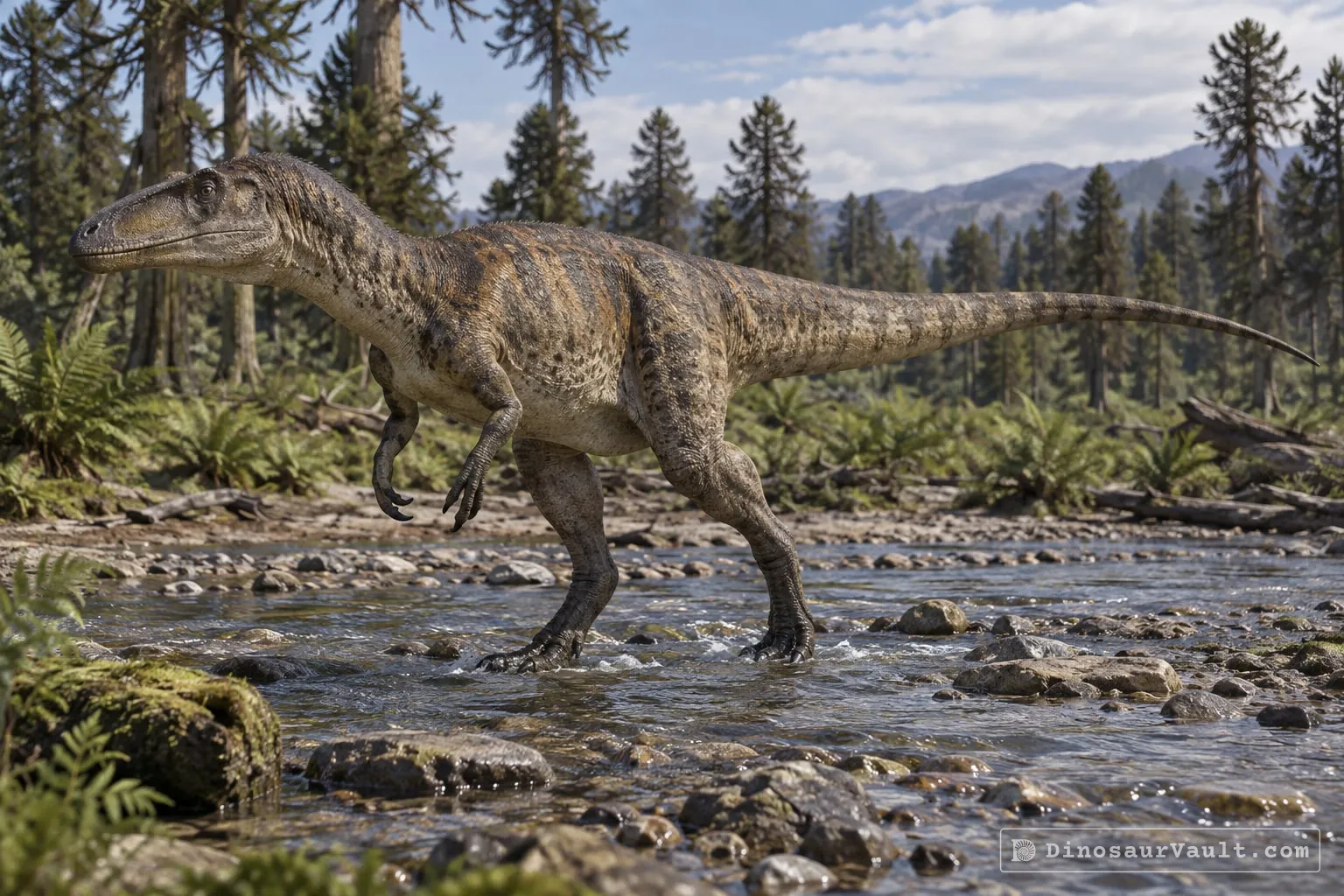
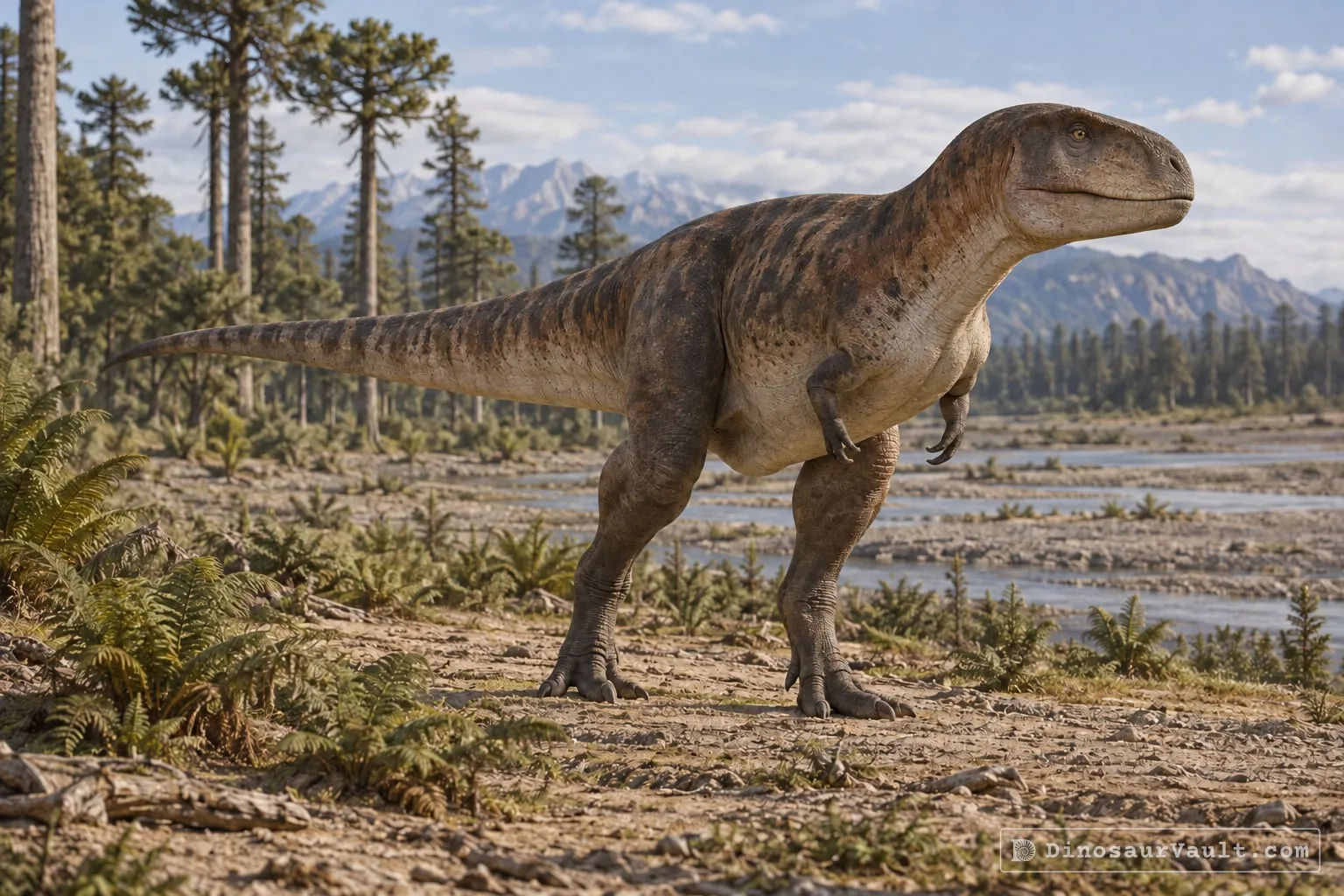
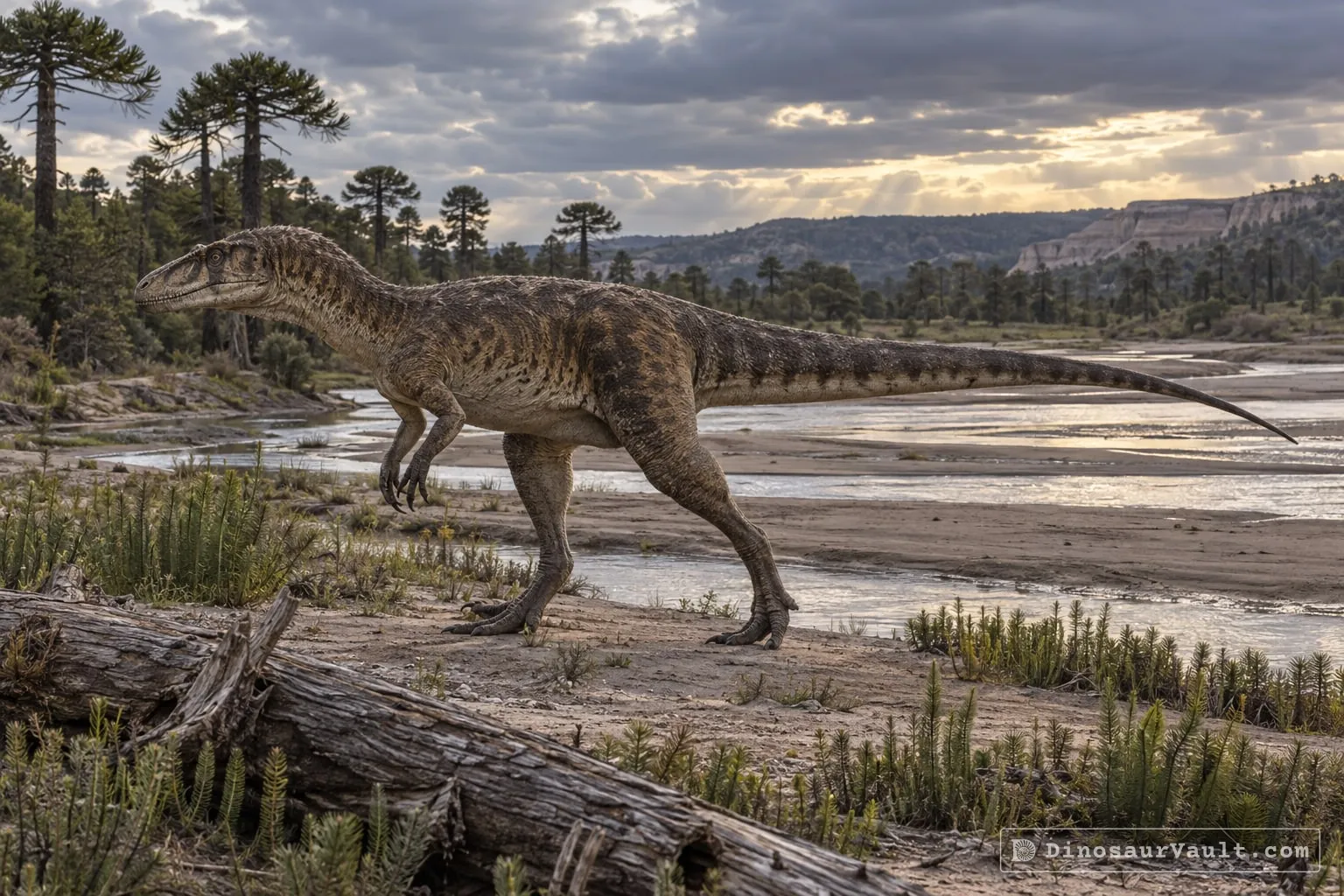
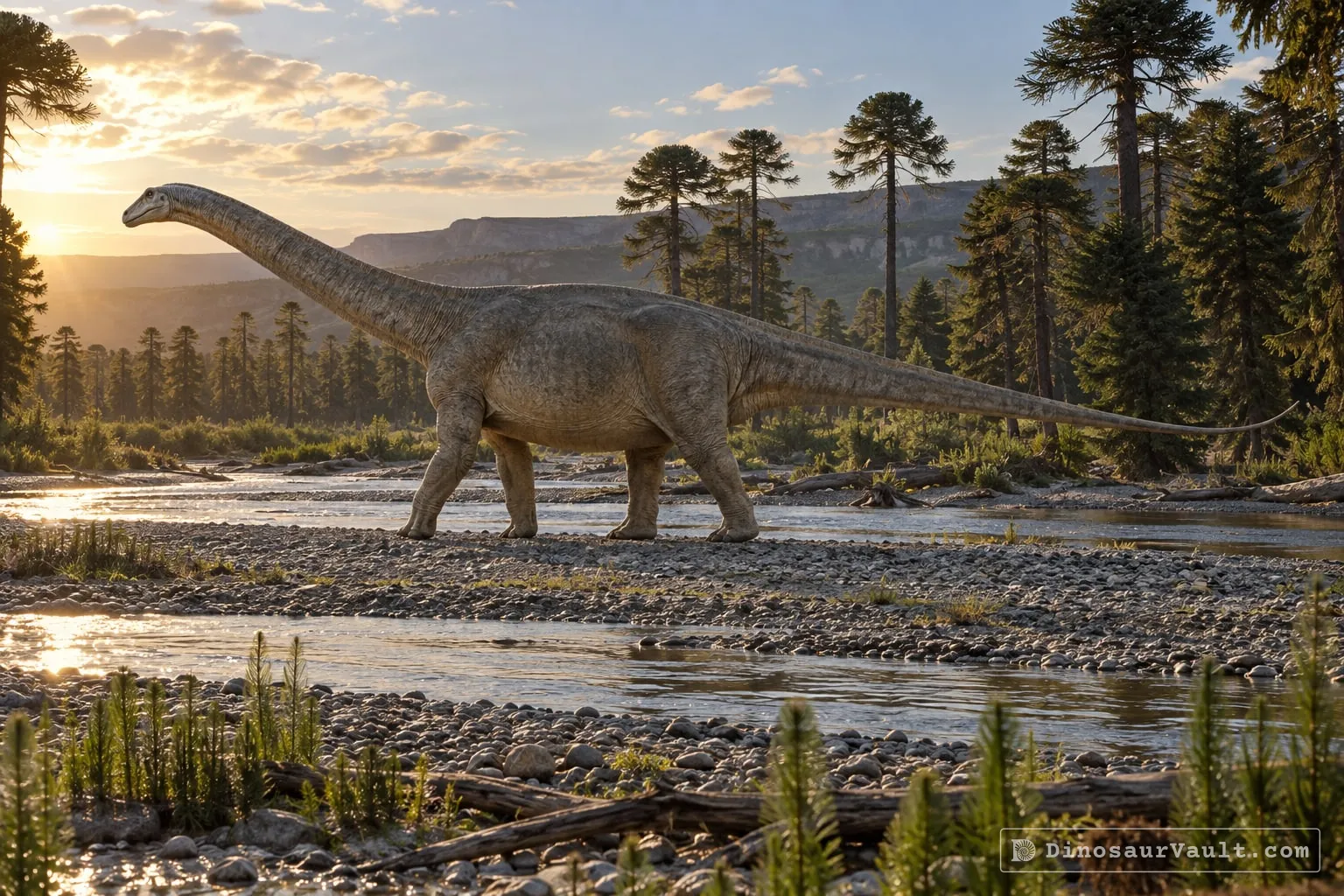
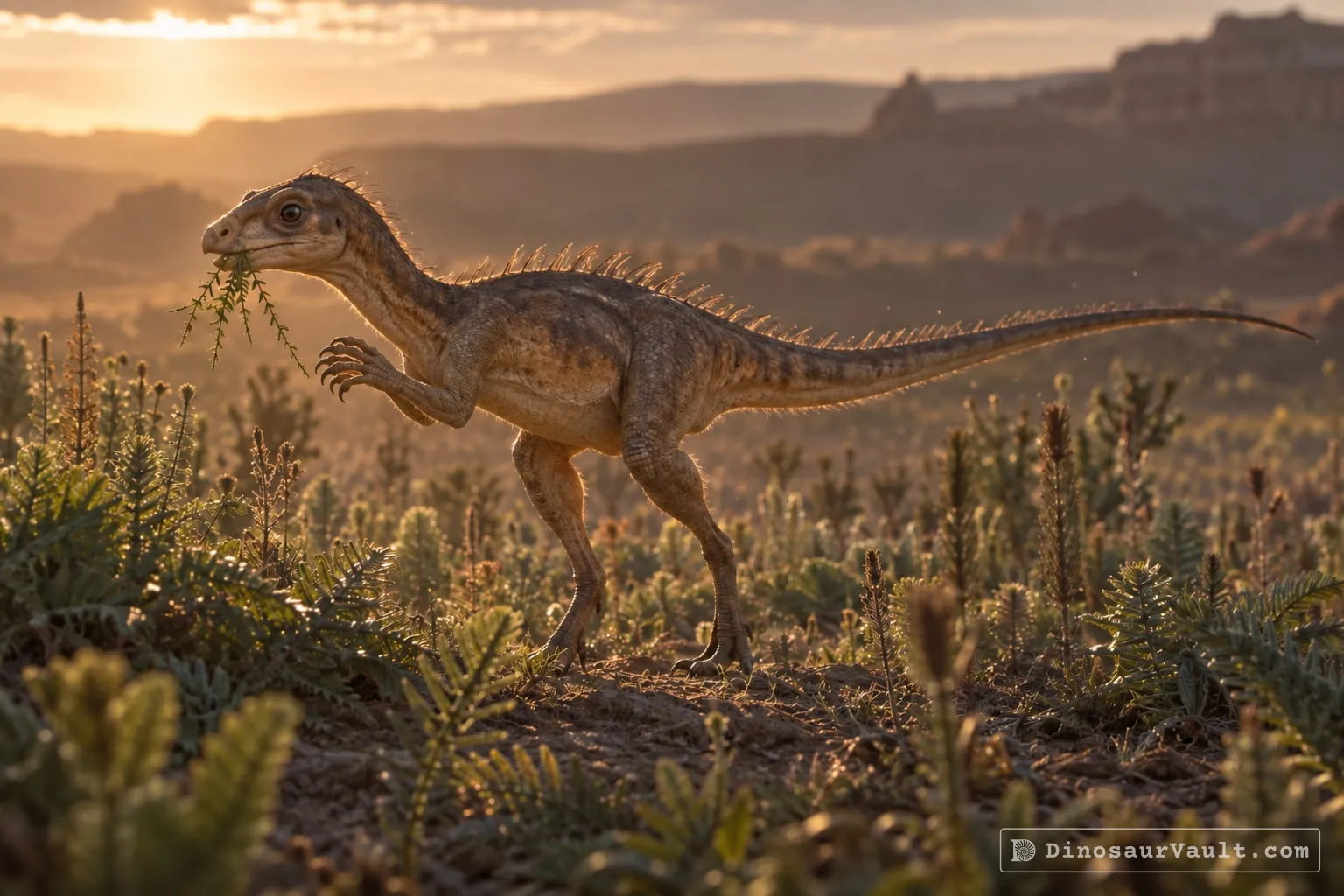
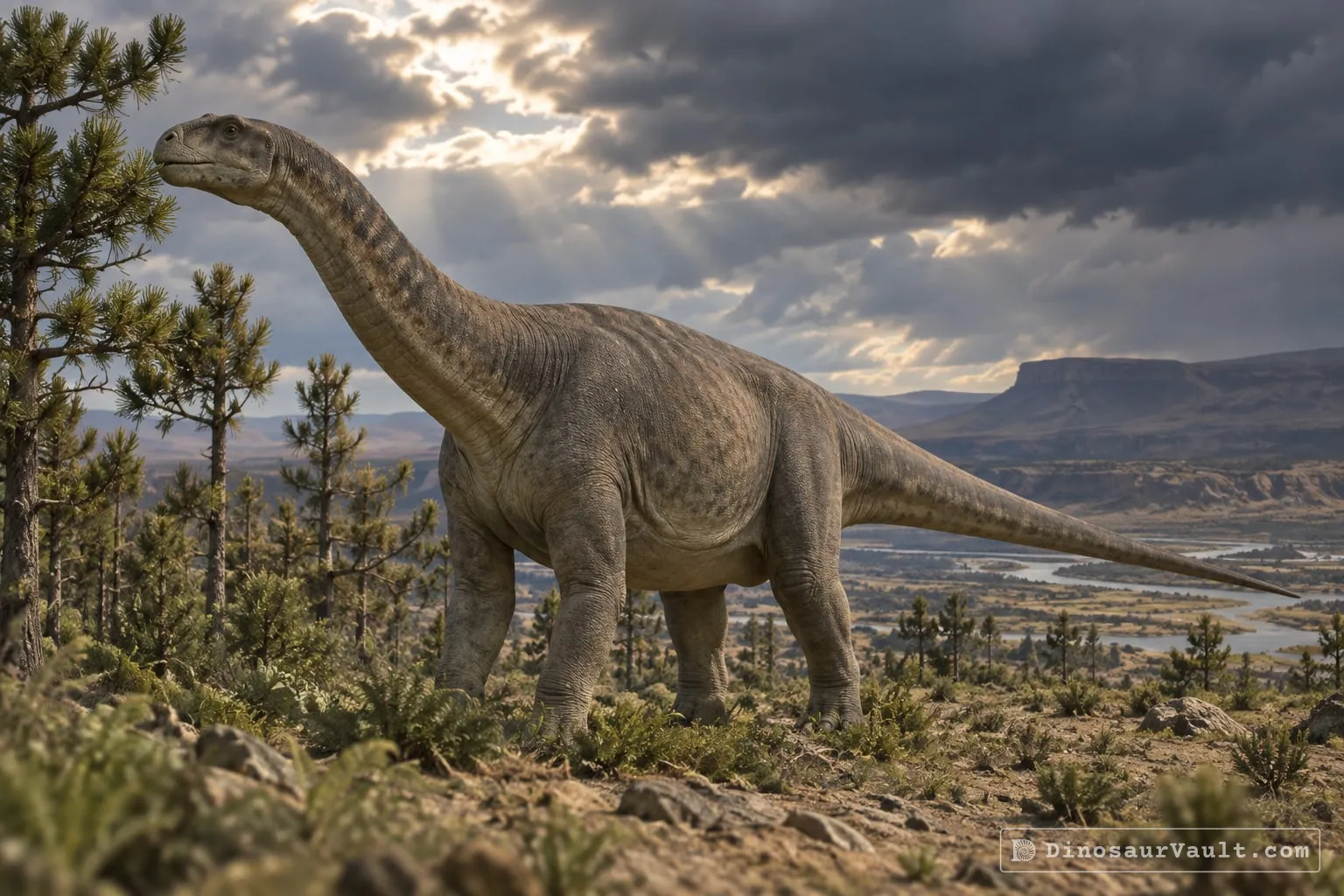


A rock formation can hold fossils laid down millions of years apart, so not every animal here met Volkheimeria.
The evidence
The science behind Volkheimeria
Which parts of the picture come from its own bones, and which come from its relatives.
From its own fossils
- The type skeleton preserves parts of the backbone, hips and hindlimbs.
- Its back vertebrae have relatively low arches and thin, blade-shaped spines.
- Its shin bone is short and robust compared with the thigh bone. Short, tall tail vertebrae suggest a relatively short tail.
Borrowed from relatives
- Tazoudasaurus provides broader early sauropod comparisons for the missing head, neck, hands and feet.
- Plateosaurus provides a broader comparison for the missing front of the upper jaw.
Still unknown
- The shape of its skull and teeth.
- Its full body length and neck proportions.
- Its skin texture, color and exact place in the sauropod family tree.
Discovery timeline
- 1979Named itBonaparte
- 2015Same rocksHolwerda, Pol & Rauhut
- 2018Family treeHolwerda & Pol
Key papers
The research behind what we know of Volkheimeria
Named it
Named Volkheimeria alongside Patagosaurus and Piatnitzkysaurus, revealing an assemblage of Jurassic sauropods and predators in Argentina.
Dinosaurs: A Jurassic Assemblage from Patagonia. Science 205: 1377-1379
Read the paper : Dinosaurs: A Jurassic Assemblage from Patagonia (opens in a new tab)Same rocks
Distinguished several sauropod tooth shapes in the same formation and described the fossil-bearing landscape as dominated by lakes.
Using Dental Enamel Wrinkling to Define Sauropod Tooth Morphotypes from the Cañadón Asfalto Formation, Patagonia, Argentina. PLOS ONE 10: e0118100
Read the paper : Using Dental Enamel Wrinkling to Define Sauropod Tooth Morphotypes from the Cañadón Asfalto Formation, Patagonia, Argentina (opens in a new tab)Family tree
One analysis grouped Volkheimeria with Spinophorosaurus on an early sauropod branch, with weak support.
Phylogenetic analysis of Gondwanan basal eusauropods from the Early-Middle Jurassic of Patagonia, Argentina. Spanish Journal of Palaeontology 33: 289-298
Read the paper : Phylogenetic analysis of Gondwanan basal eusauropods from the Early-Middle Jurassic of Patagonia, Argentina (opens in a new tab)
Close relatives
Other members of Gravisauria


Sources: Wikidata