Patagosaurus
Type species Patagosaurus fariasi
- Lived
- 183 to 169 million years ago, Early Jurassic to Middle Jurassic
- Diet
- Herbivore
- Length
- about 18 m (59 ft)
- Group
- Sauropods, Cetiosauridae
- Found in
- Argentina
- Named by
- Bonaparte 1979
Size comparison
To scale


Scale in metersOutline: typical sauropod shape
Where its fossils were found
The evidence
Today

175 million years ago
Habitat
Lakes spread across the region where its bones were buried in what is now Argentina. Piatnitzkysaurus, Volkheimeria and Bagualia are other dinosaurs from the Cañadón Asfalto Formation.
Field notes
About Patagosaurus
What it was like
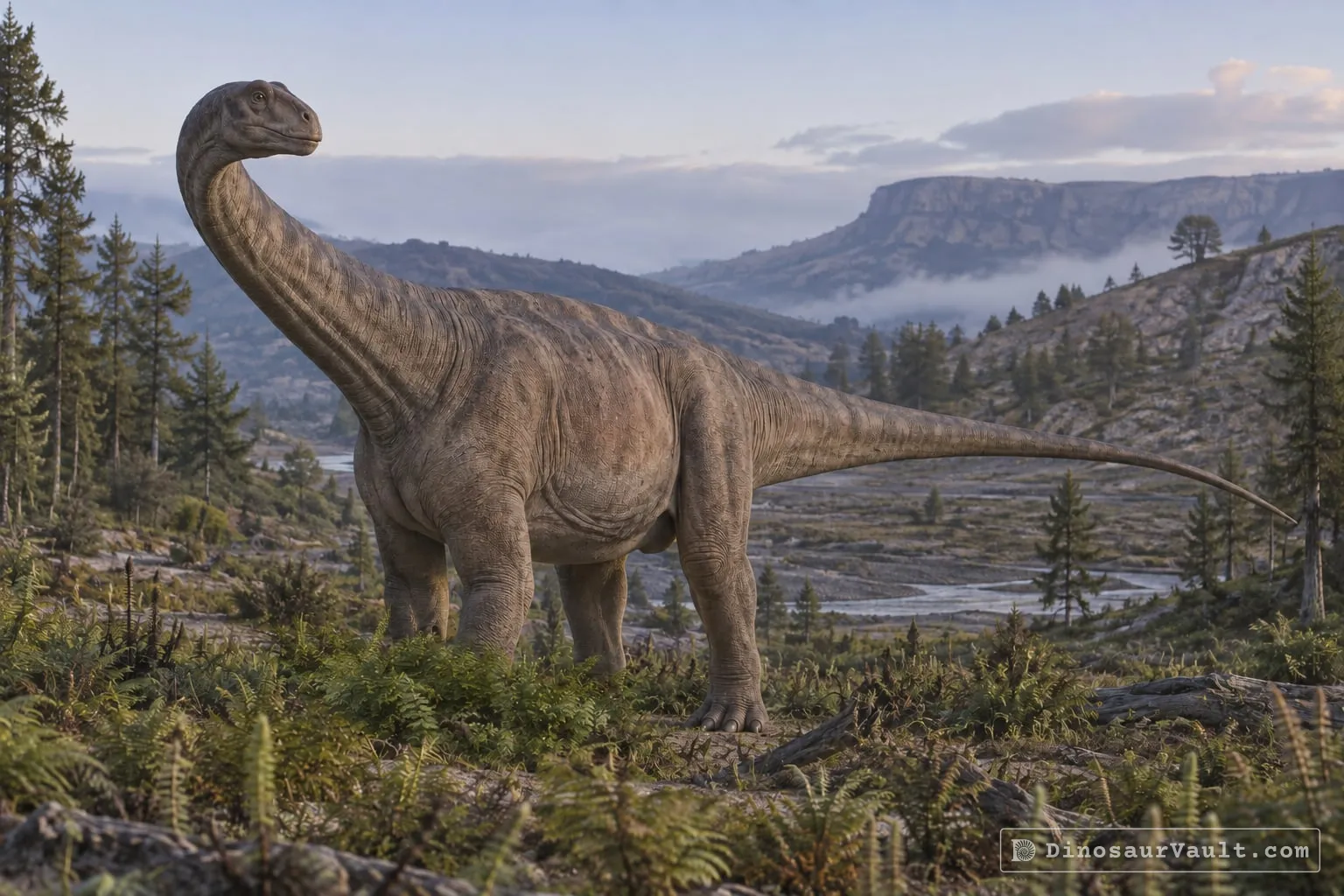
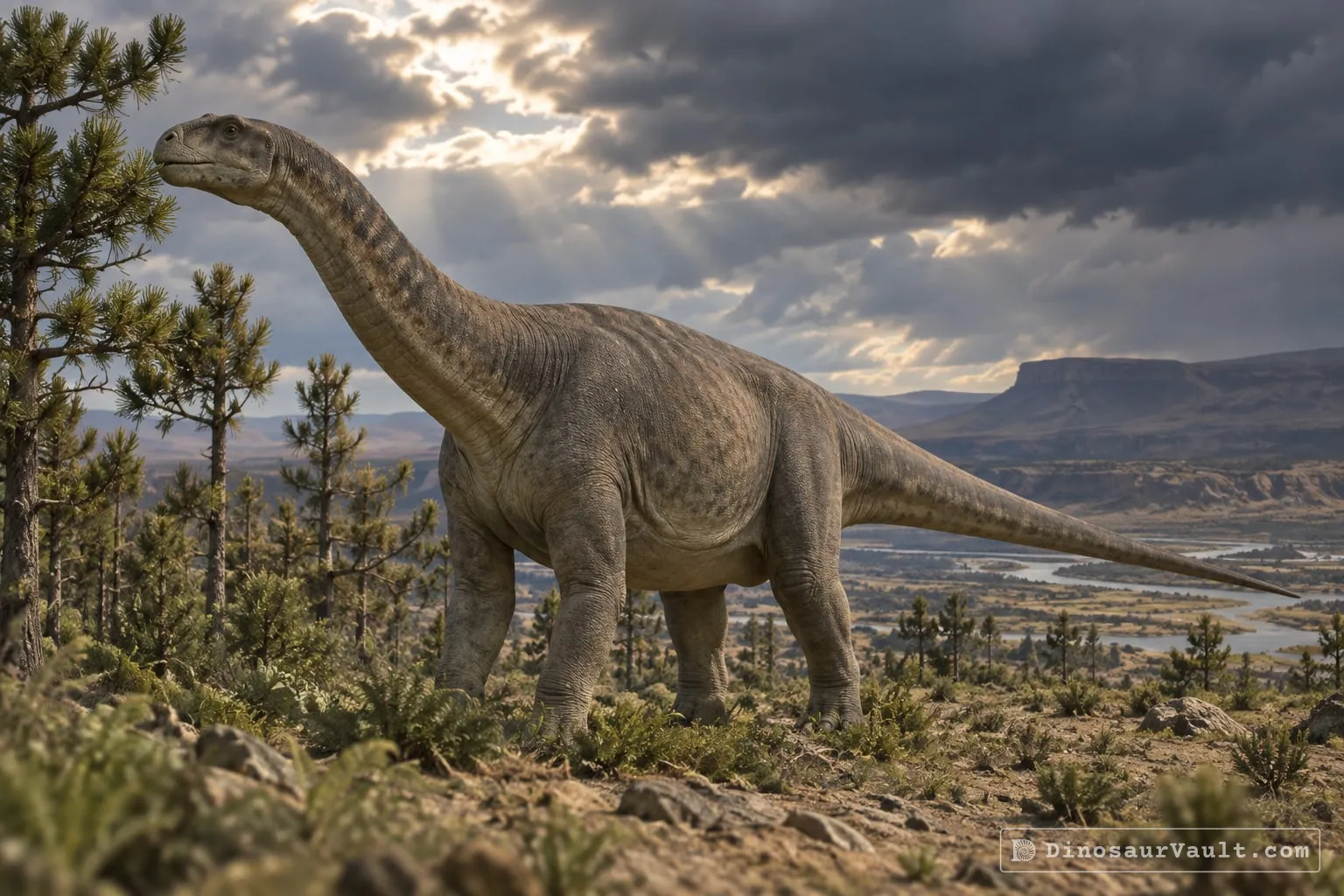
Patagosaurus was a sauropod about 18 meters (59 feet) long. It had a long neck, a long tail and a solid, heavy build. It was close to Cetiosaurus, among the sauropods that came before the famous giants of the Late Jurassic.
Its world
It lived in the Jurassic, in what is now Argentina. It comes from the Cañadón Asfalto Formation, where it shared the land with the predators Piatnitzkysaurus, Condorraptor and Eoabelisaurus and the sauropod Bagualia.
How it was found
Bonaparte named Patagosaurus in 1979. The type species is Patagosaurus fariasi. Several skeletons are known, including young ones.
Field gallery
More views of Patagosaurus
Scenes reconstructed from the available fossil evidence.
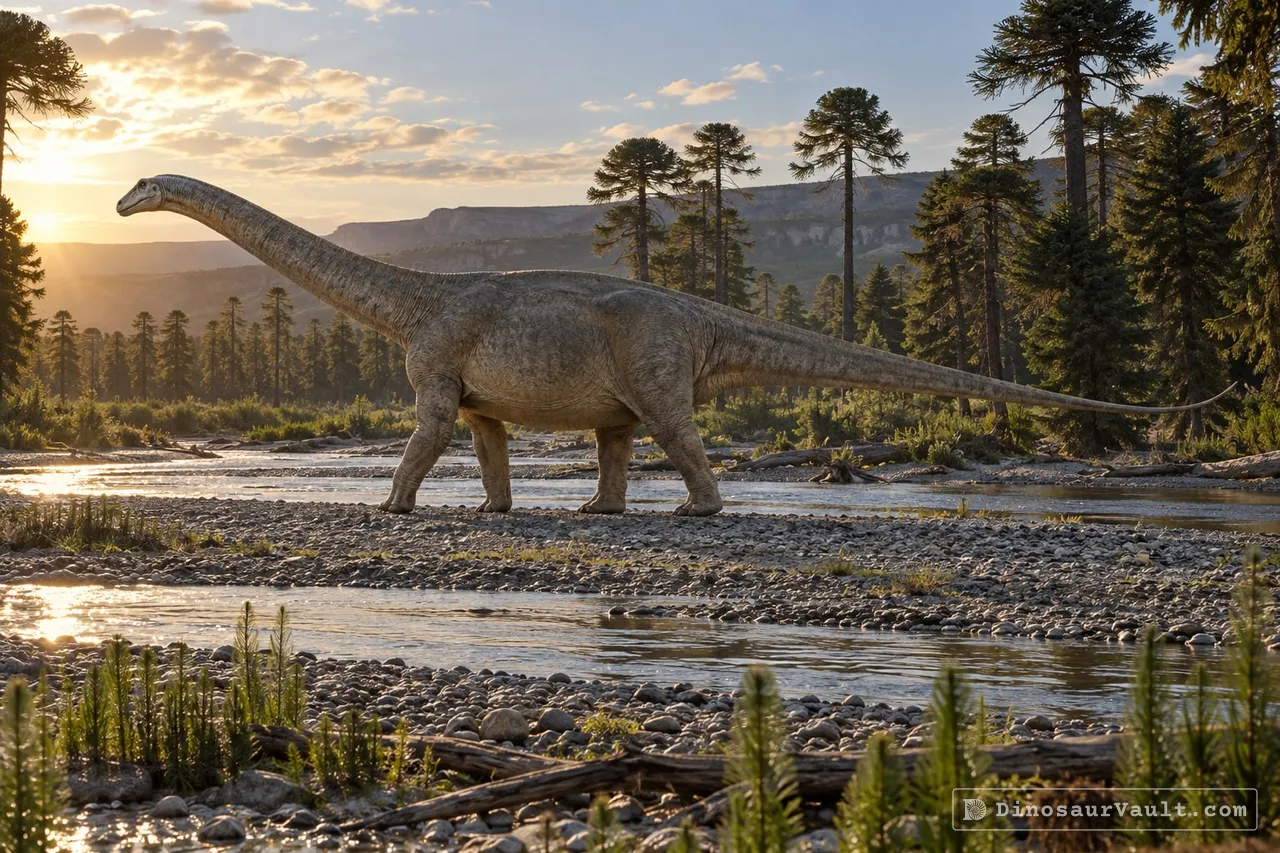
1 of 2
Lived alongside
Found in the same rock formations
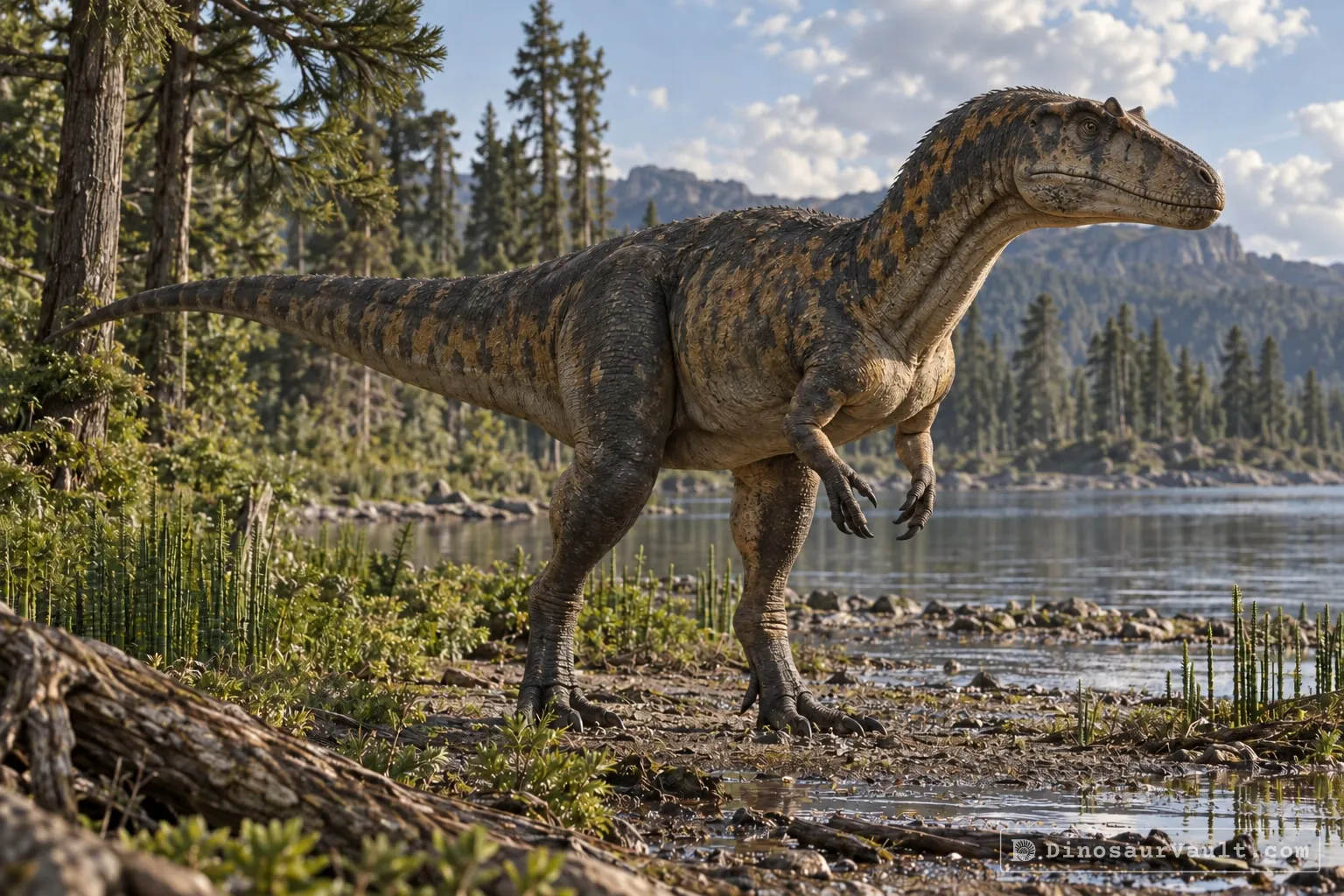
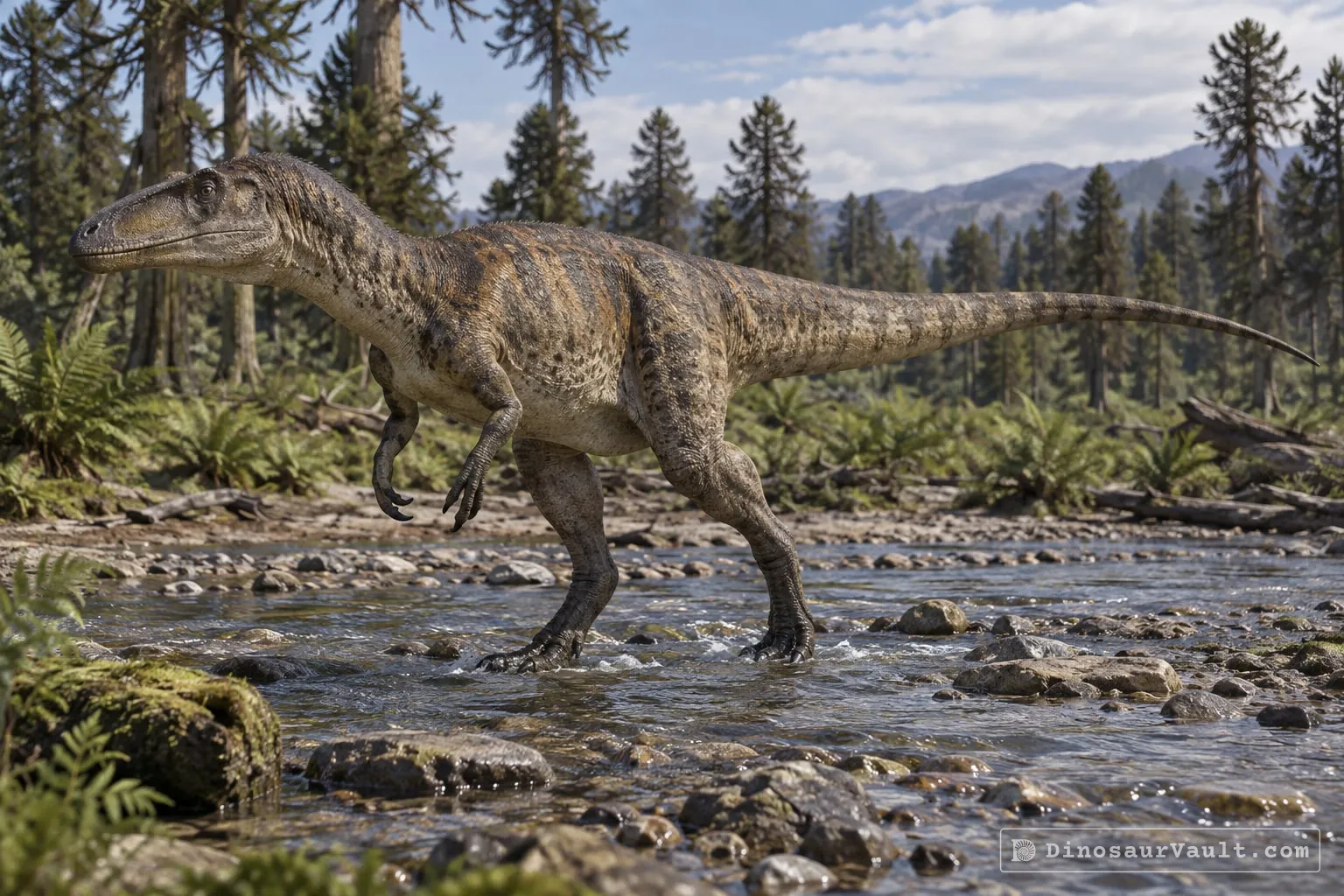
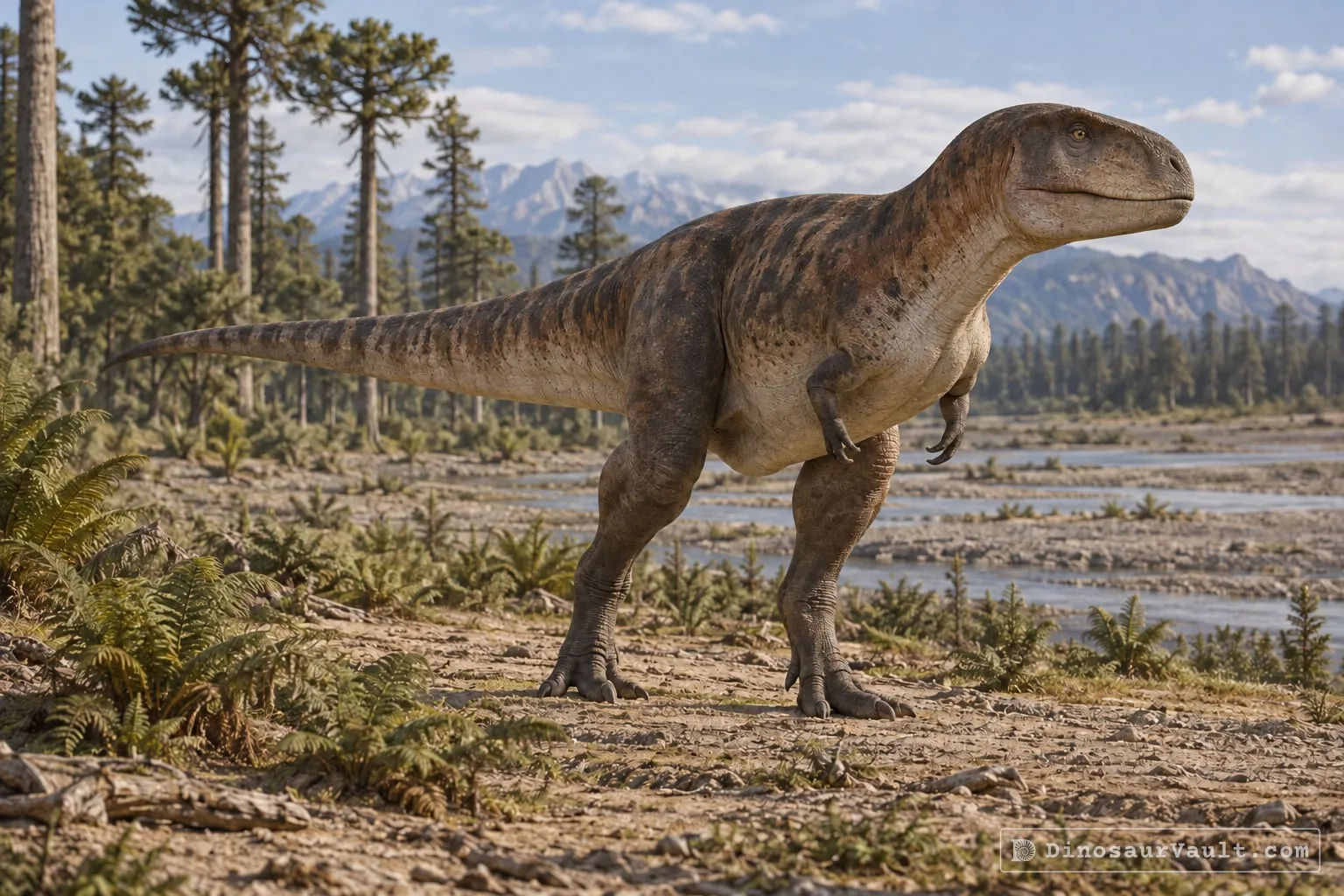
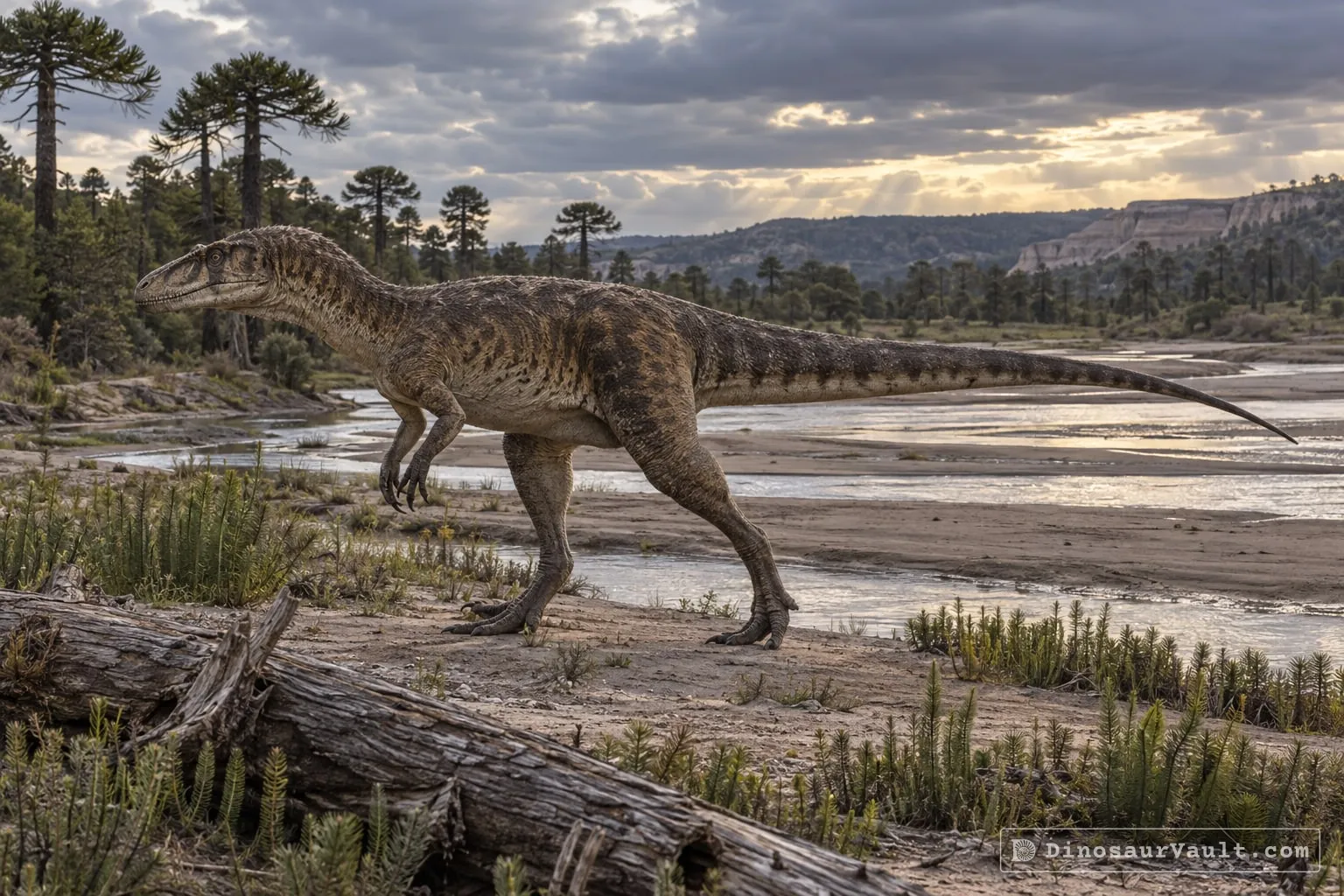
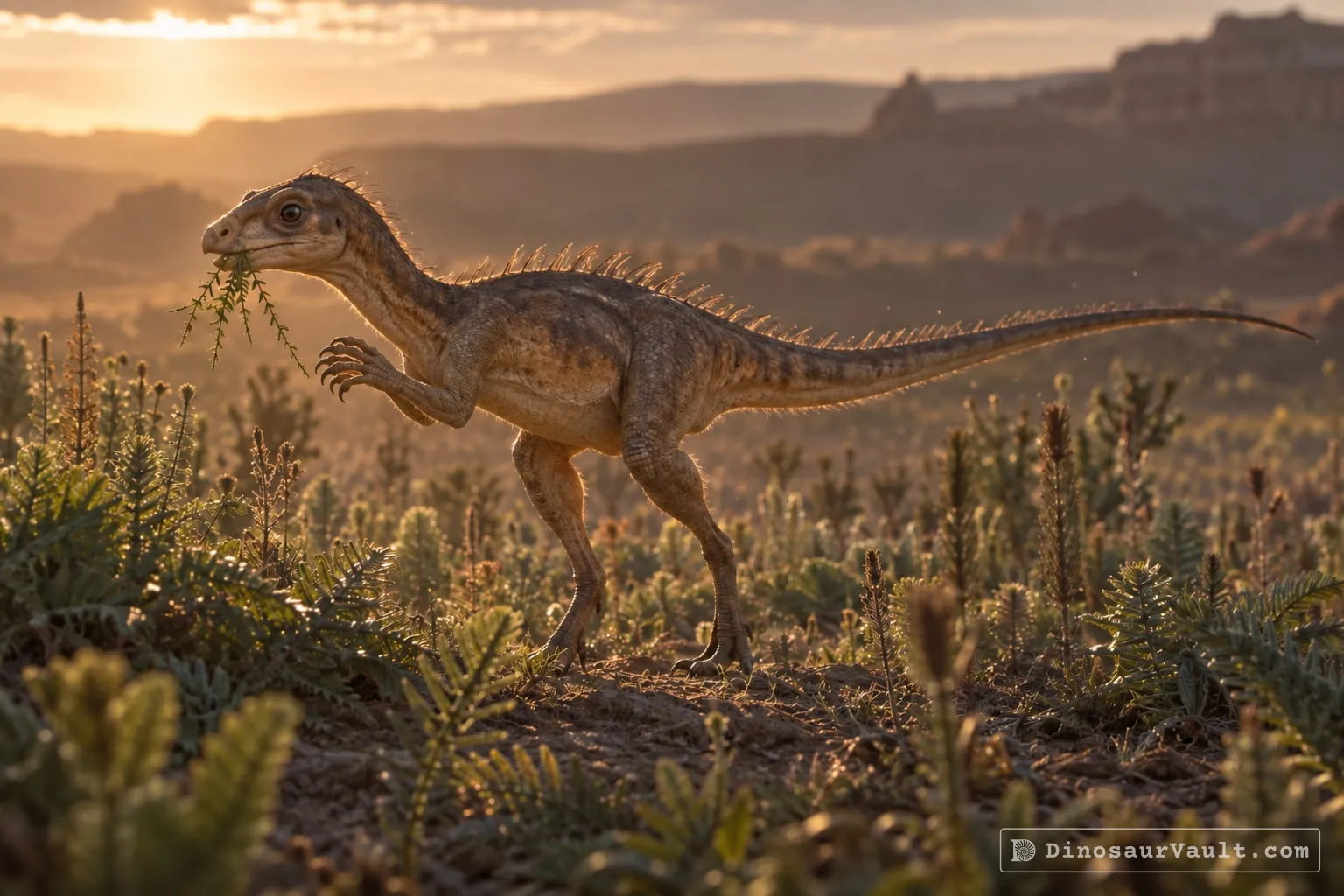


A rock formation can hold fossils laid down millions of years apart, so not every animal here met Patagosaurus.
The evidence
The science behind Patagosaurus
Which parts of the picture come from its own bones, and which come from its relatives.
From its own fossils
- The original skeleton preserves neck, back and tail vertebrae, the pelvis and a thighbone. The thighbone is broad from side to side, and the front of the hip bone curves into a hook.
- Openings in the back vertebrae lead into internal chambers that housed air-filled extensions of the breathing system.
- A separate lower jaw referred to Patagosaurus is short and deep and preserves replacement teeth but no fully erupted ones.
Borrowed from relatives
- Cetiosaurus supplies comparisons for gaps in its backbone and shoulder bones.
Still unknown
- Its complete skull shape is unknown; upper jaws once assigned to it were later attributed to another sauropod.
- Its skin color and markings.
- Exactly which plants it ate.
Discovery timeline
- 1979Named itBonaparte
- 2015How it fedHolwerda, Pol & Rauhut
- 2021RedescriptionHolwerda, Rauhut & Pol
Key papers
The research behind what we know of Patagosaurus
Named it
Named Patagosaurus alongside other Jurassic dinosaurs from Argentina and compared its backbone and hips with those of Cetiosaurus.
Dinosaurs: A Jurassic Assemblage from Patagonia. Science 205: 1377-1379
Read the paper : Dinosaurs: A Jurassic Assemblage from Patagonia (opens in a new tab)How it fed
Compared tooth shapes and enamel wrinkles, tentatively linking one tooth type to Patagosaurus and separating others previously assigned to it.
Using Dental Enamel Wrinkling to Define Sauropod Tooth Morphotypes from the Cañadón Asfalto Formation, Patagonia, Argentina. PLOS ONE 10: e0118100
Read the paper : Using Dental Enamel Wrinkling to Define Sauropod Tooth Morphotypes from the Cañadón Asfalto Formation, Patagonia, Argentina (opens in a new tab)Redescription
Reexamined the original skeleton and identified distinctive features of its vertebrae, hip bones and thighbone.
Osteological revision of the holotype of the Middle Jurassic sauropod dinosaur Patagosaurus fariasi Bonaparte, 1979 (Sauropoda: Cetiosauridae). Geodiversitas 43
Read the paper : Osteological revision of the holotype of the Middle Jurassic sauropod dinosaur Patagosaurus fariasi Bonaparte, 1979 (Sauropoda: Cetiosauridae) (opens in a new tab)
Close relatives
Other members of Cetiosauridae


Sources: Wikidata