Dyoplosaurus
"double armored lizard"
- Lived
- 84 to 72 million years ago, Late Cretaceous
- Diet
- Herbivore
- Group
- Ankylosaurs, Ankylosauridae
- Found in
- Canada
- Named by
- Parks 1924
Where its fossils were found
The evidence
Today

80 million years ago
Habitat
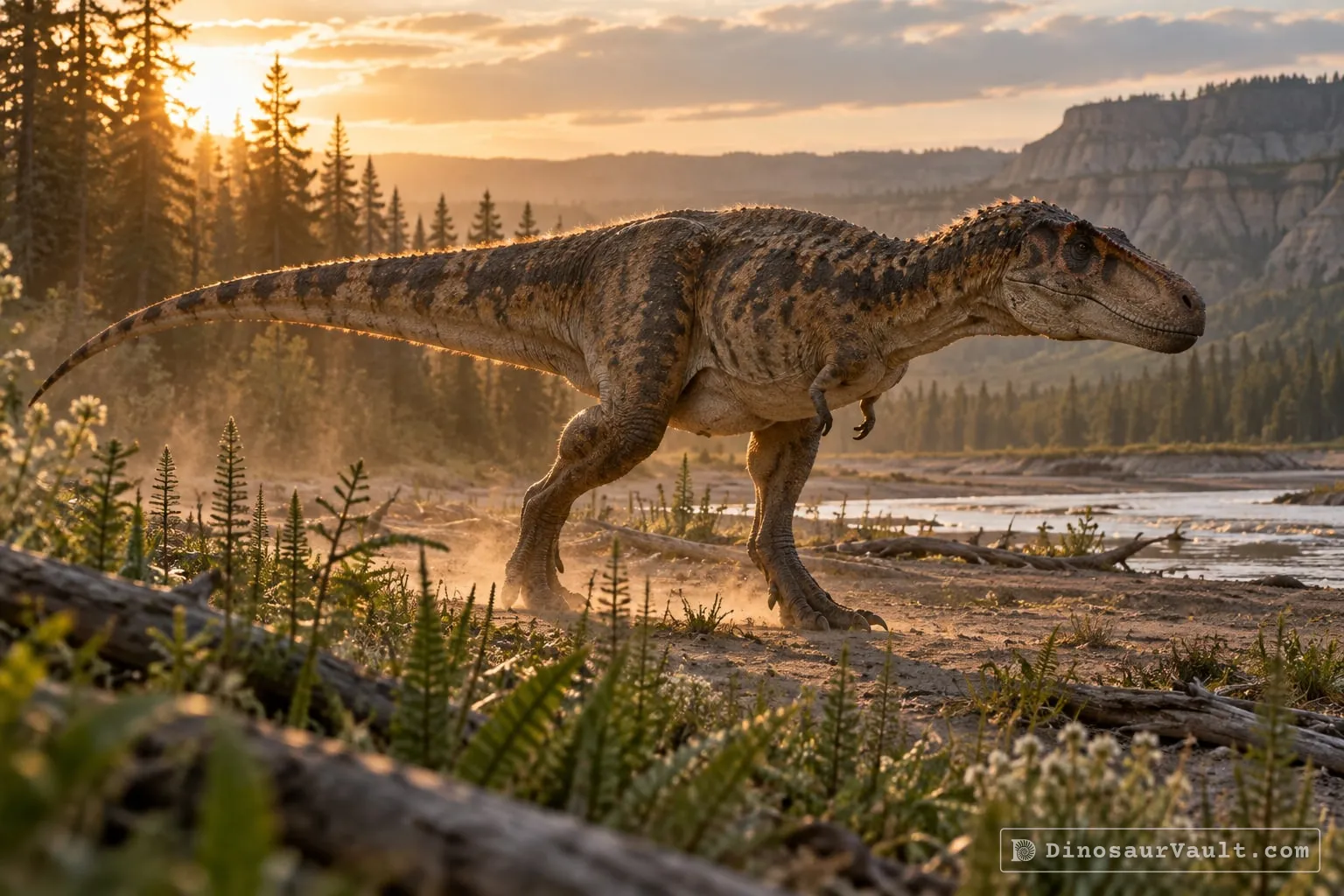
Winding rivers crossed a forested floodplain in what is now Alberta, Canada. Conifers formed much of the canopy, with ferns below; Gorgosaurus, Styracosaurus and Parasaurolophus lived in the same region.
Field notes
About Dyoplosaurus
What it was like
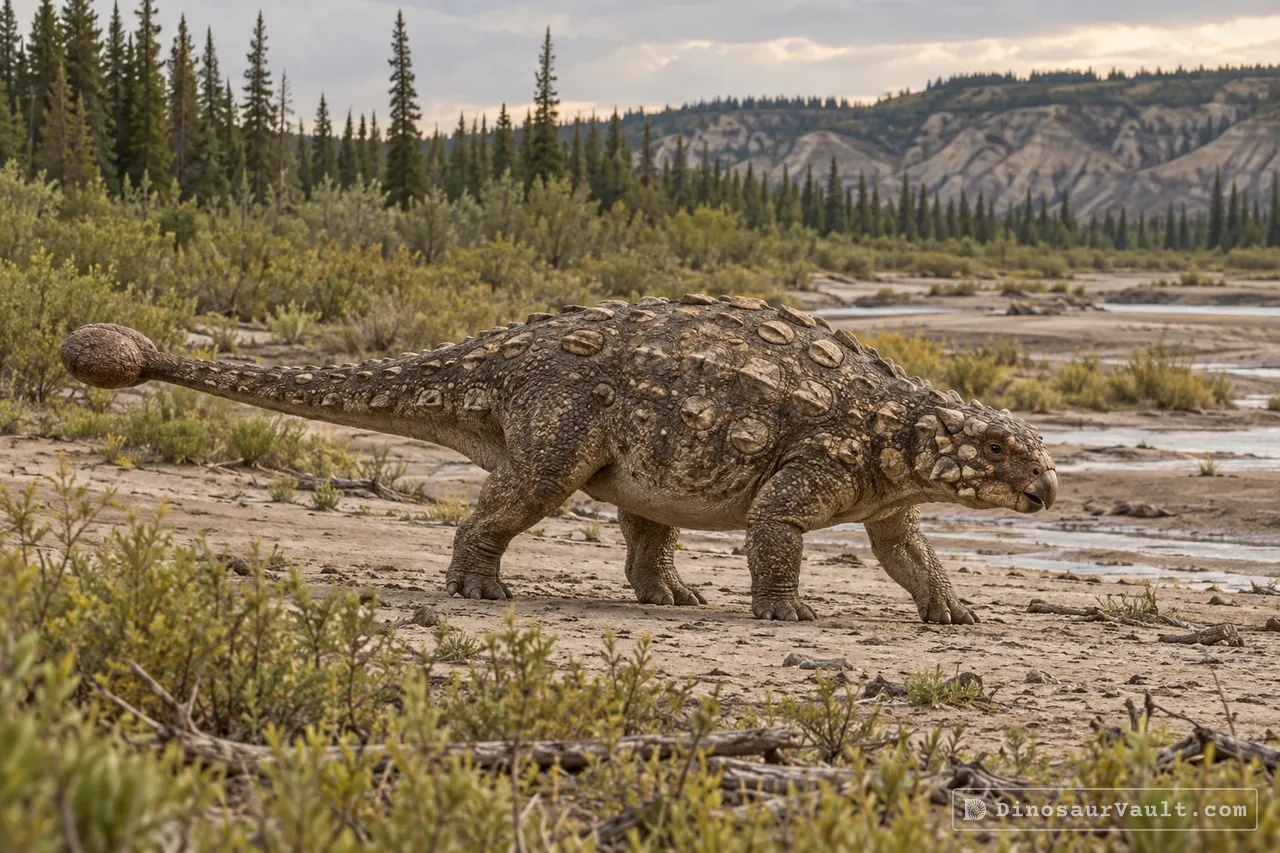
Dyoplosaurus was an ankylosaur, a low, armored plant eater with a club on its tail. Its skeleton includes the tail club and parts of the armor, and it was close to Euoplocephalus.
Its world
It lived in the Late Cretaceous, in what is now Alberta, Canada. It comes from the Dinosaur Park Formation, where it shared the land with the tyrannosaur Gorgosaurus, the horned Styracosaurus and the crested duckbill Parasaurolophus.
How it was found
Parks named Dyoplosaurus in 1924. For many years it was folded into Euoplocephalus, but it was later found to be different.
Field gallery
More views of Dyoplosaurus
Scenes reconstructed from the available fossil evidence.
1 of 3
Lived alongside
Found in the same rock formations
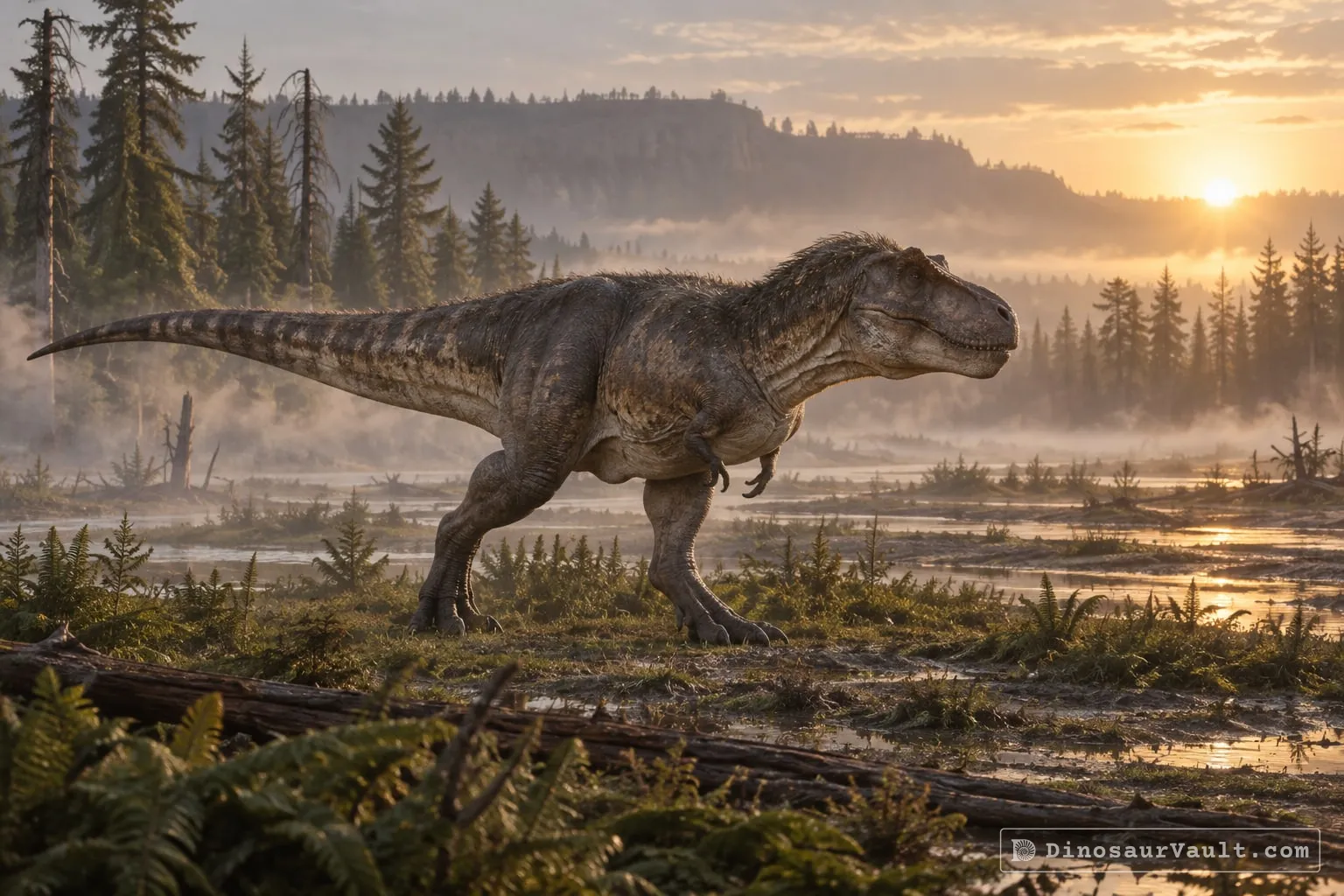
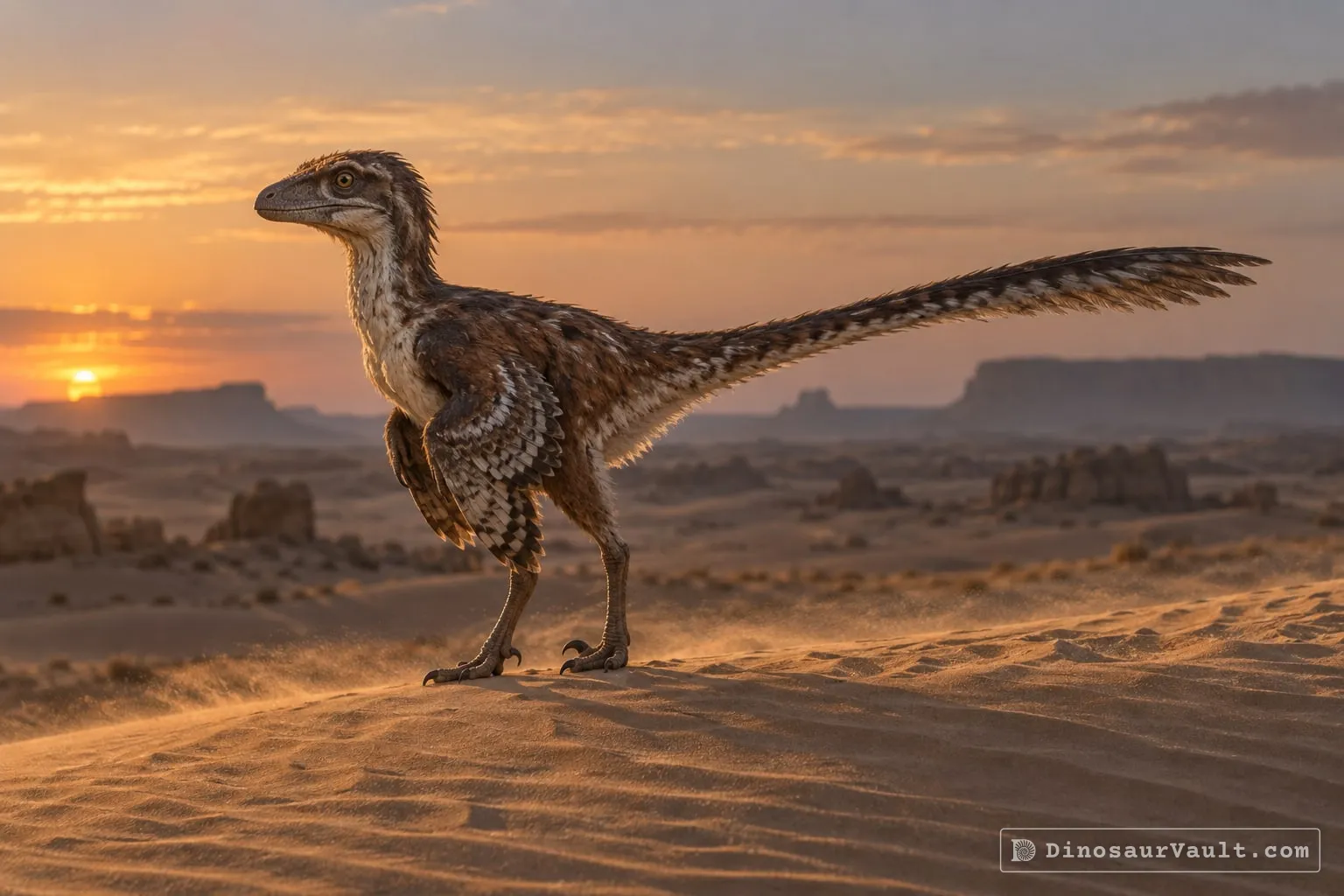
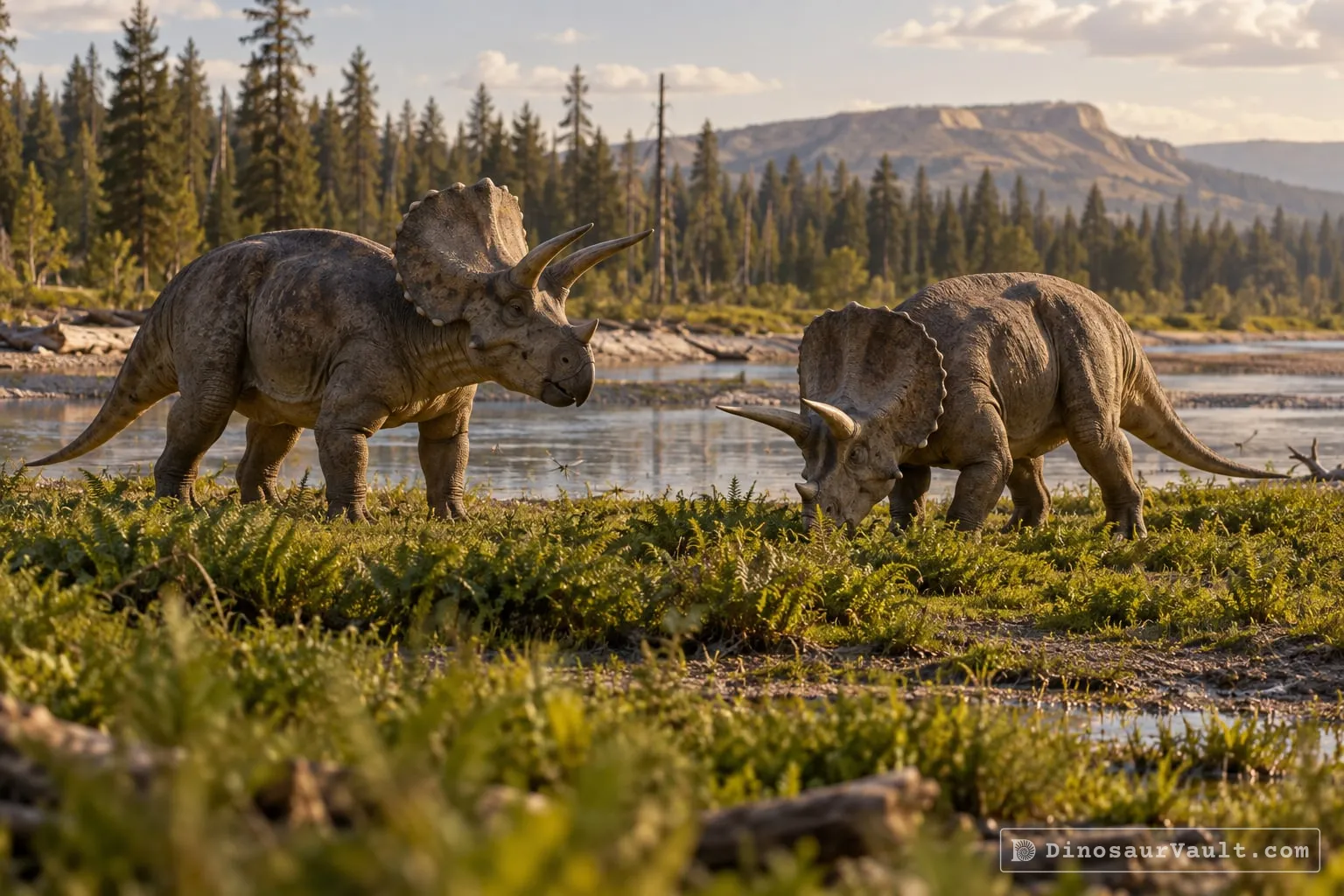
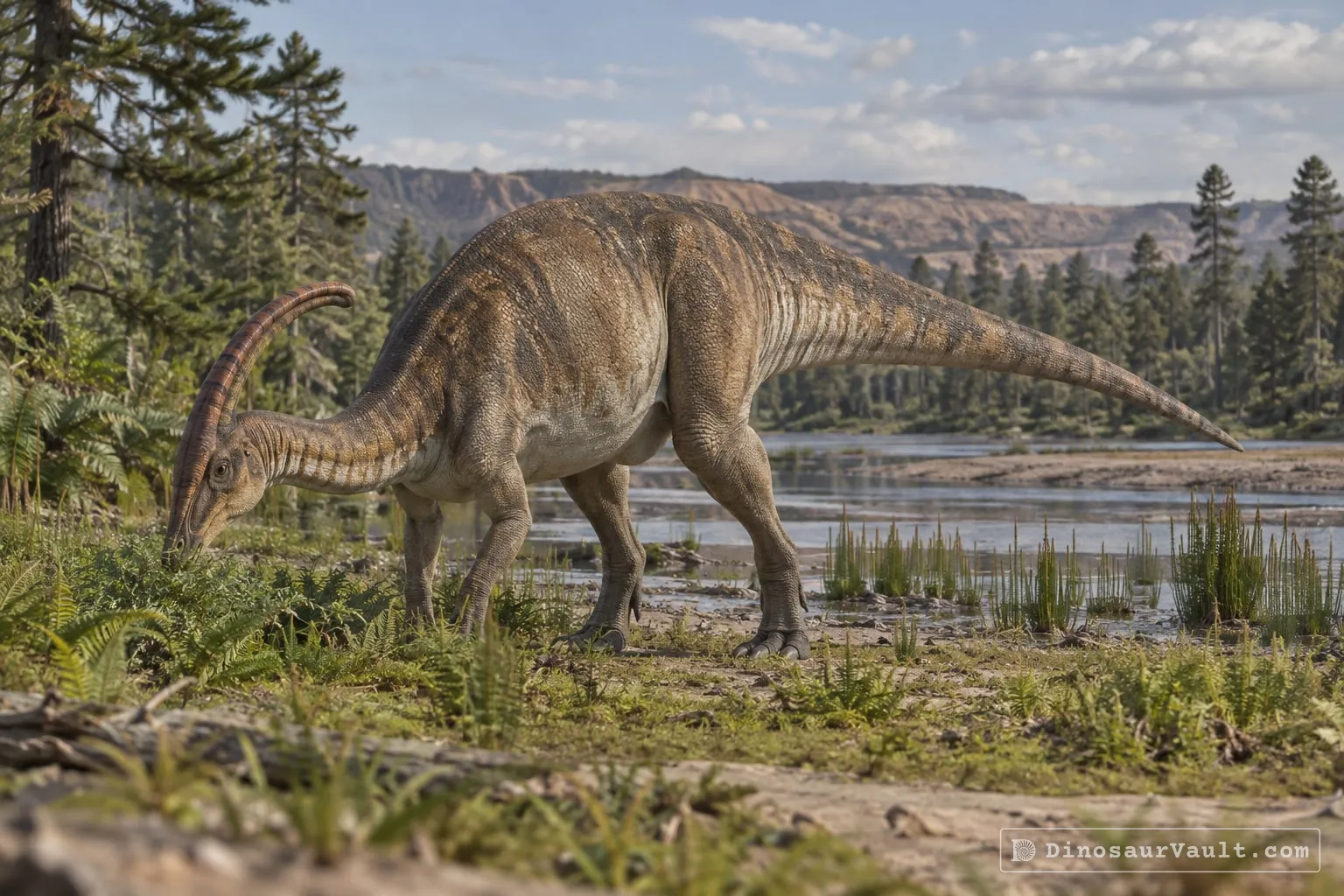
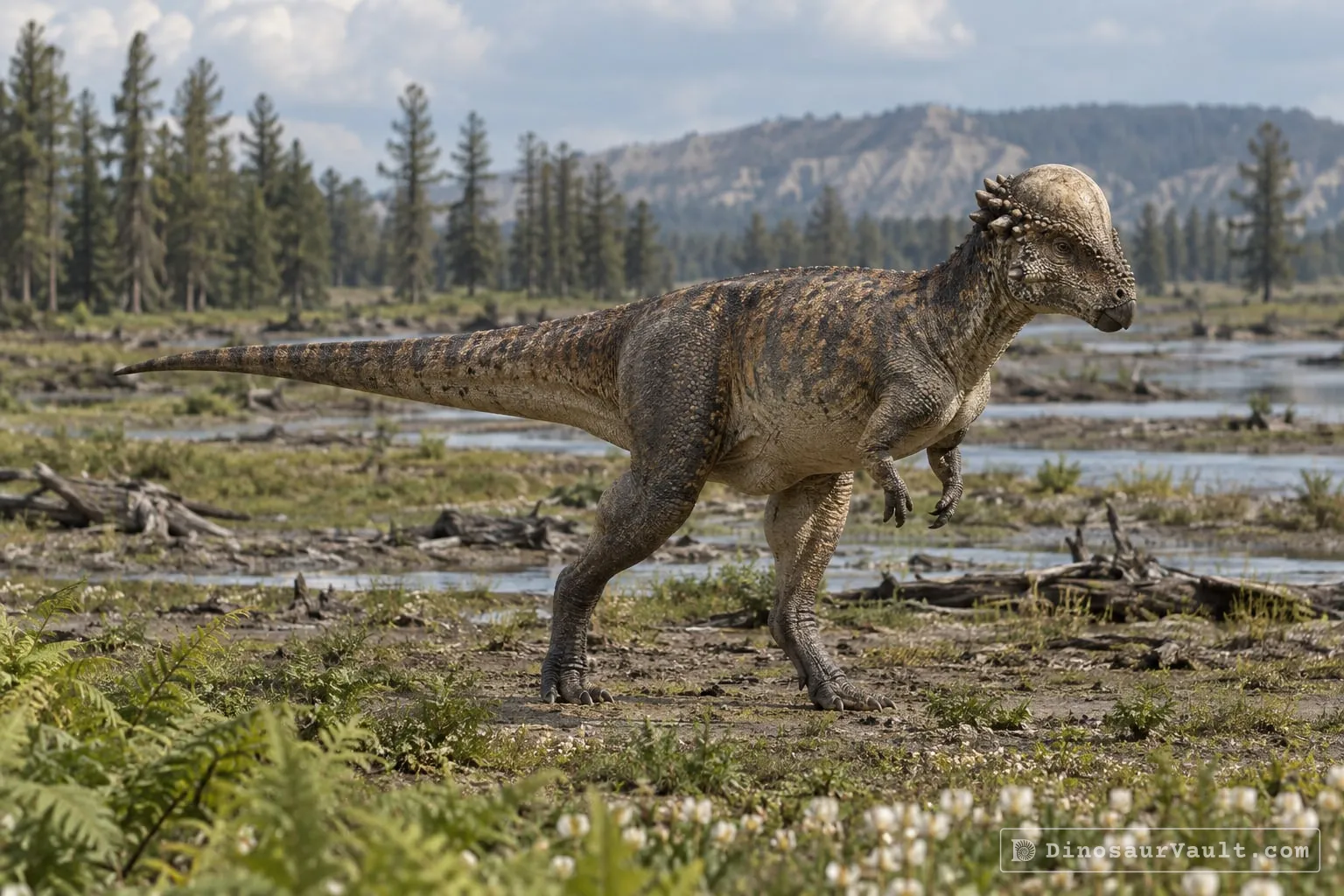
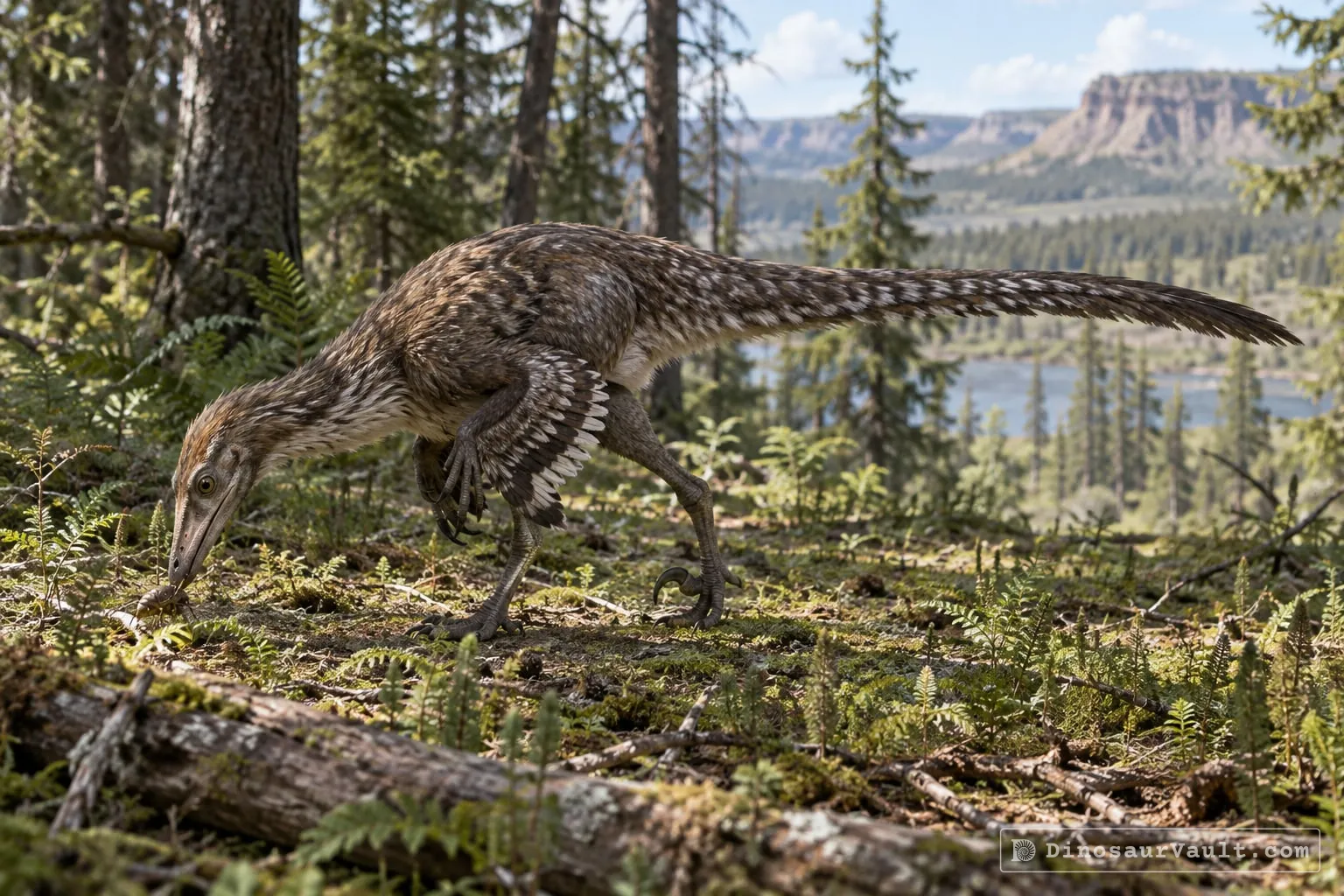
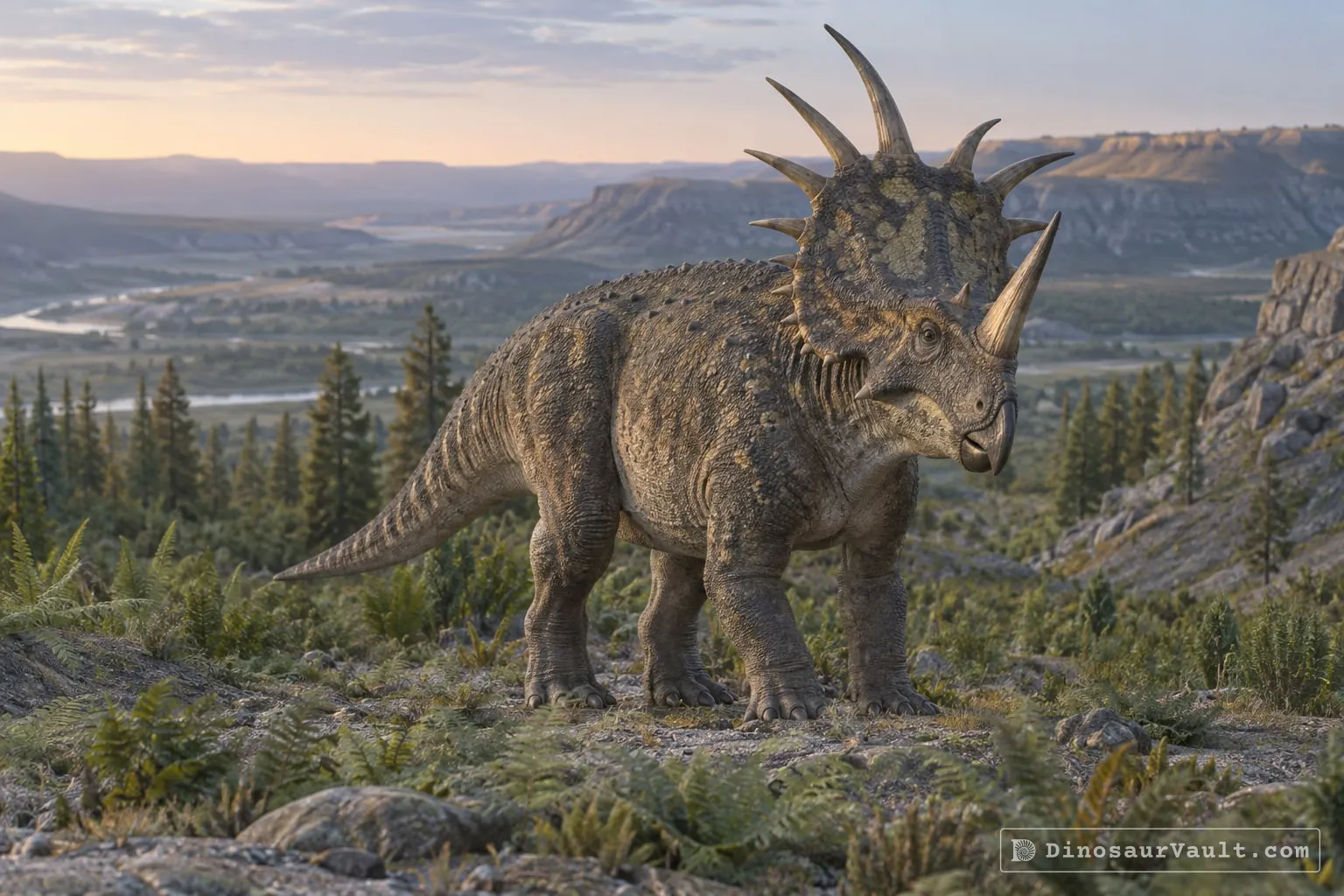


A rock formation can hold fossils laid down millions of years apart, so not every animal here met Dyoplosaurus.
The evidence
The science behind Dyoplosaurus
Which parts of the picture come from its own bones, and which come from its relatives.
From its own fossils
- The partial skeleton preserves skin, armor, parts of the skull and jaws, hips, hind feet and the tail club.
- Its tail ends in a narrow bony knob that is longer than it is wide, carried on a stiffened handle.
- Its hind claws are triangular when viewed from above, and triangular armor plates run along the sides of the front of the tail.
Borrowed from relatives
- Euoplocephalus guides the missing front of the face and neck armor.
- Pinacosaurus provides a guide to the incomplete hands.
Still unknown
- The complete arrangement of its armor and the shape of the front of its skull.
- Its exact finger arrangement and color.
- How it grew and whether it lived in groups.
Often drawn wrong
- A broad, rounded tail club copies other ankylosaurs; the known Dyoplosaurus knob is narrow and elongated.
Discovery timeline
- 1924Named itParks
- 2009Full descriptionArbour, Burns & Sissons
- 2009PostureArbour
- 2013Family treeArbour & Currie
Key papers
The research behind what we know of Dyoplosaurus
Named it
Named Dyoplosaurus from an armored dinosaur skeleton that preserved a tail club.
Dyoplosaurus acutosquameus, a new genus and species of armoured dinosaur; and notes on a skeleton of Prosaurolophus maximus. University of Toronto Studies, Geological Series 18: 1-35
No link available
Full description
Restudied the skeleton and showed that its hips and feet distinguish Dyoplosaurus from Euoplocephalus.
A redescription of the ankylosaurid dinosaur Dyoplosaurus acutosquameus Parks, 1924 (Ornithischia: Ankylosauria) and a revision of the genus. Journal of Vertebrate Paleontology 29: 1117-1135
Read the paper : A redescription of the ankylosaurid dinosaur Dyoplosaurus acutosquameus Parks, 1924 (Ornithischia: Ankylosauria) and a revision of the genus (opens in a new tab)Posture
Examined ankylosaur tail anatomy, including Dyoplosaurus, and modeled how club size affected the force of a strike.
Estimating Impact Forces of Tail Club Strikes by Ankylosaurid Dinosaurs. PLoS ONE 4: e6738
Read the paper : Estimating Impact Forces of Tail Club Strikes by Ankylosaurid Dinosaurs (opens in a new tab)Family tree
Compared several armored genera and confirmed that Dyoplosaurus differs in its hips, feet and narrow tail club.
Euoplocephalus tutus and the Diversity of Ankylosaurid Dinosaurs in the Late Cretaceous of Alberta, Canada, and Montana, USA. PLoS ONE 8: e62421
Read the paper : Euoplocephalus tutus and the Diversity of Ankylosaurid Dinosaurs in the Late Cretaceous of Alberta, Canada, and Montana, USA (opens in a new tab)
Close relatives
Other members of Ankylosauridae


Sources: Wikidata