Campananeyen
Type species Campananeyen fragilissimus
- Lived
- 113 to 110 million years ago, Early Cretaceous
- Diet
- Herbivore
- Group
- Sauropods, Rebbachisauridae
- Found in
- Argentina
- Named by
- Lerzo et al. 2024
Where its fossils were found
The evidence
Today

110 million years ago
Habitat
The Candeleros Formation records rivers and sandy dune fields. Limaysaurus, Giganotosaurus and Jakapil lived in this region.
Field notes
About Campananeyen
What it was like
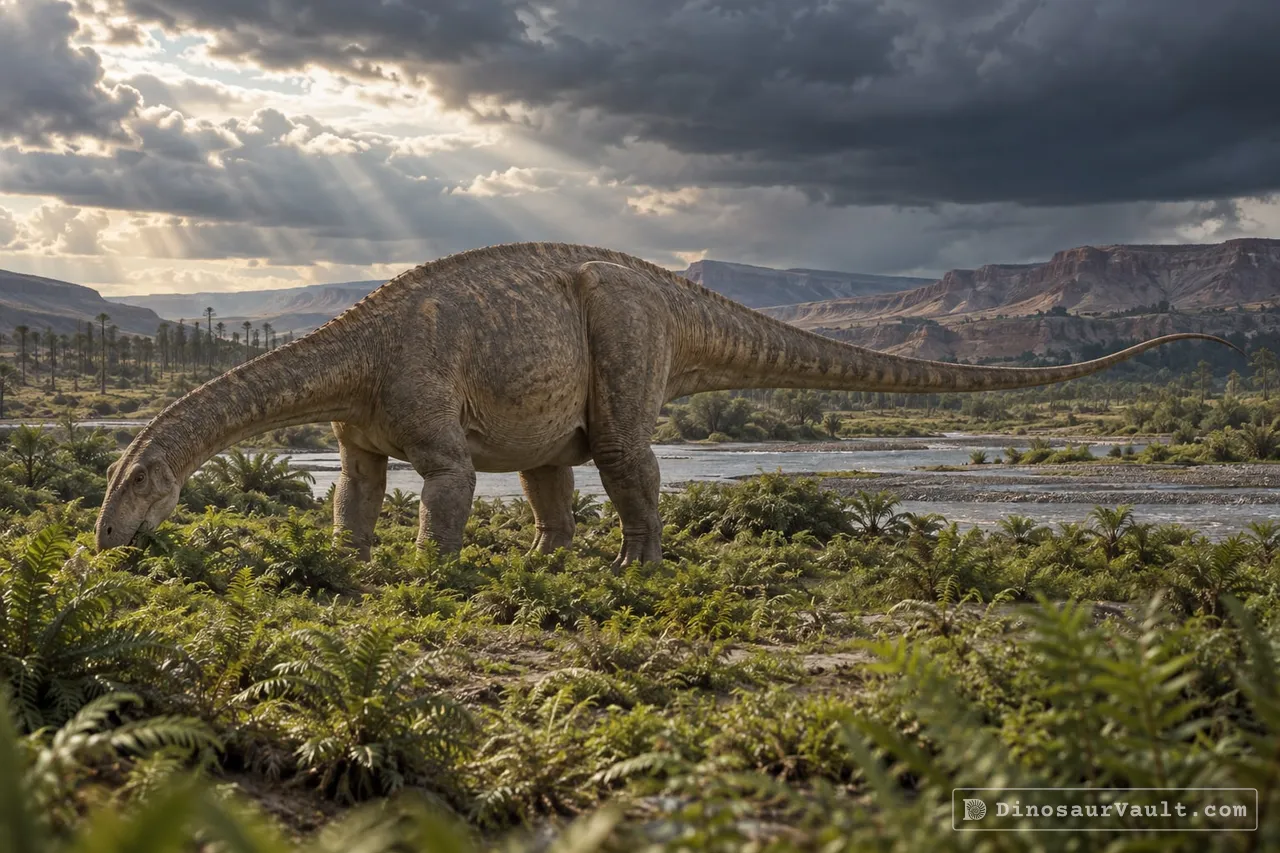
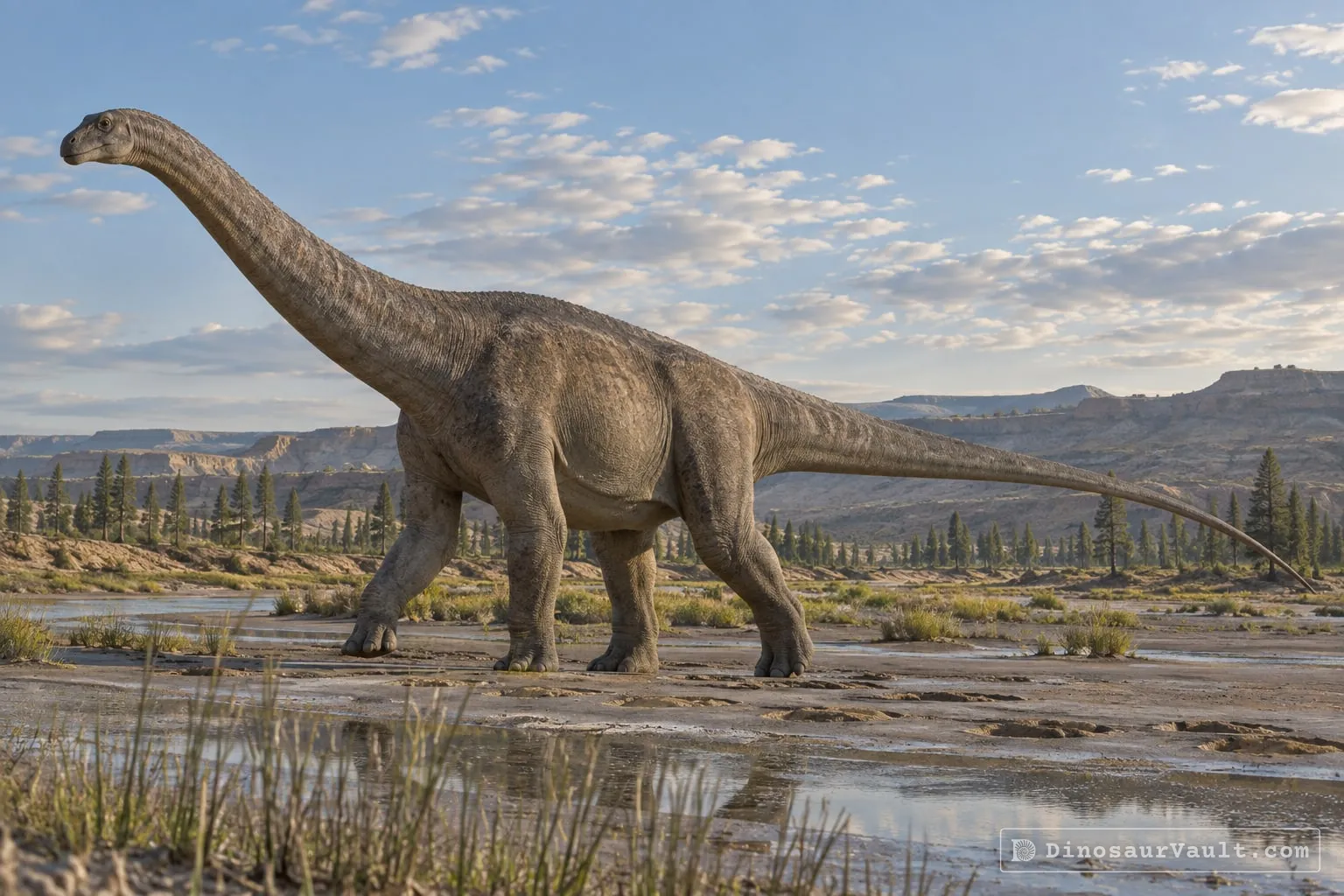
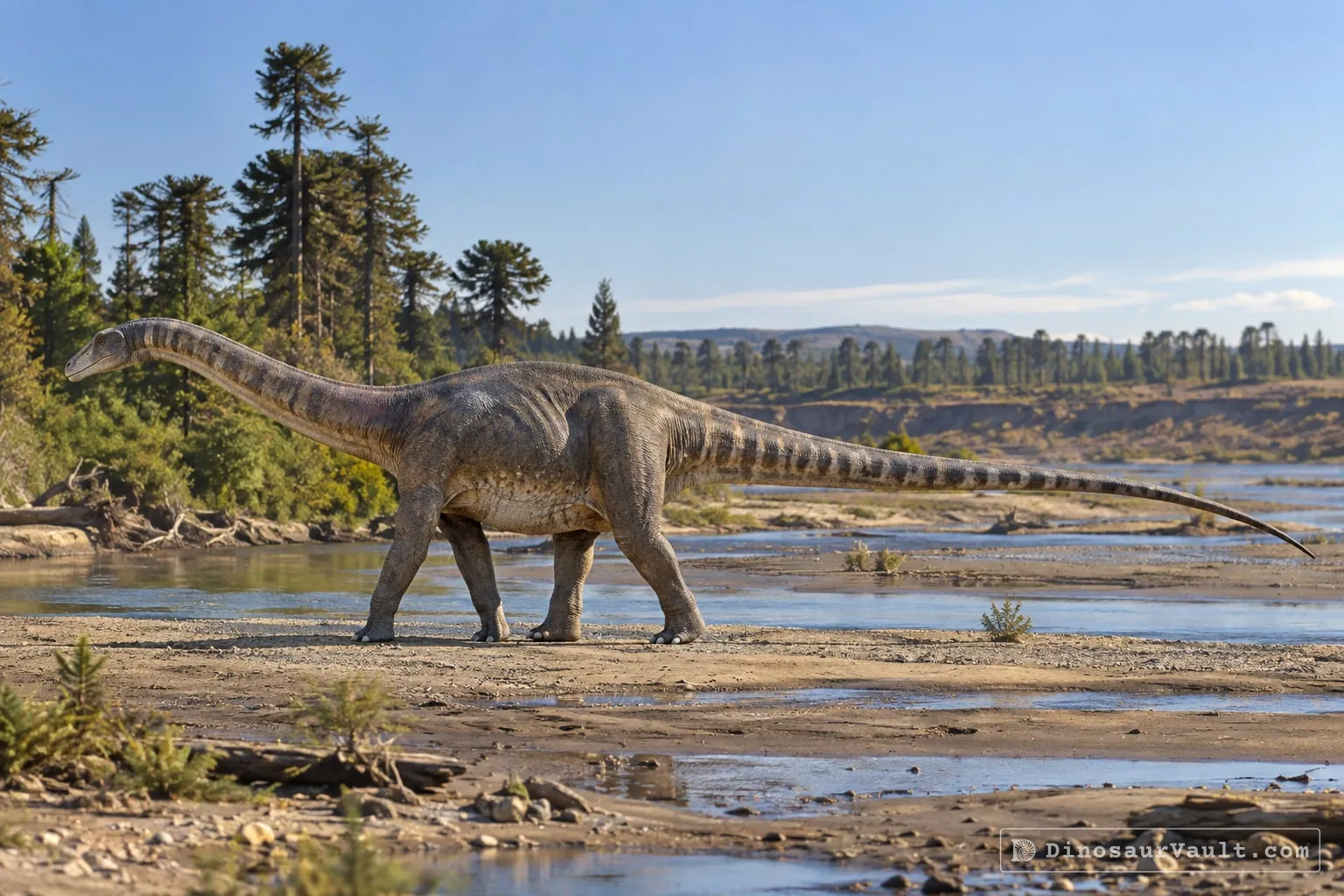
Campananeyen was a rebbachisaurid, a long-necked plant eater known from a partial skeleton. Its hip bone is thin, while the complete shape of its snout and jaws is unknown.
Its world
It lived about 113 to 110 million years ago, in the Early Cretaceous, in what is now Argentina. Its bones come from the Candeleros Formation, where it shared the land with its relative Limaysaurus, the giant predator Giganotosaurus and the armored Jakapil.
How it was found
Lerzo and colleagues named it in 2024. The type species is Campananeyen fragilissimus, a name that refers to its fragile bones.
Field gallery
More views of Campananeyen
Scenes reconstructed from the available fossil evidence.
Lived alongside
Found in the same rock formations
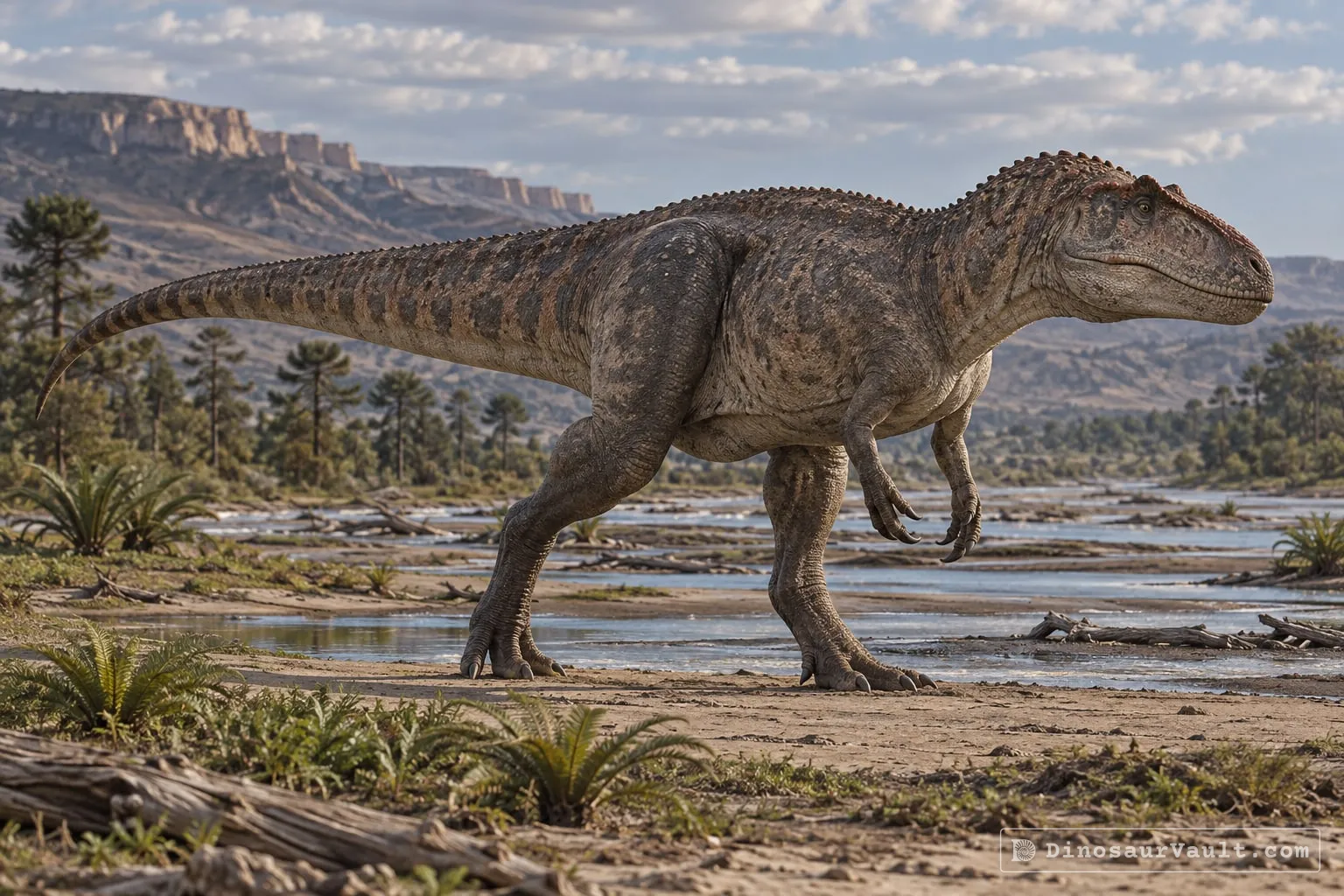
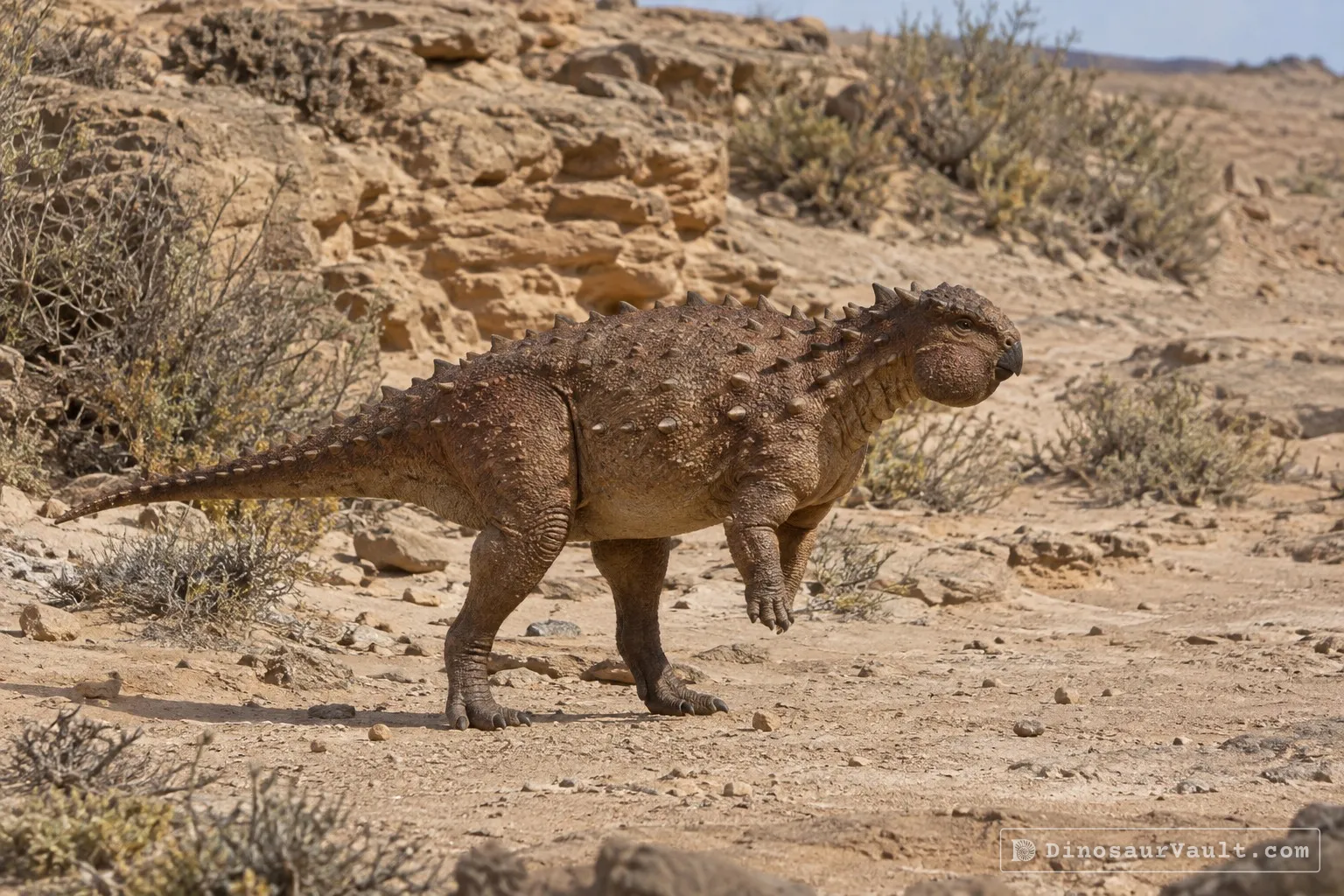
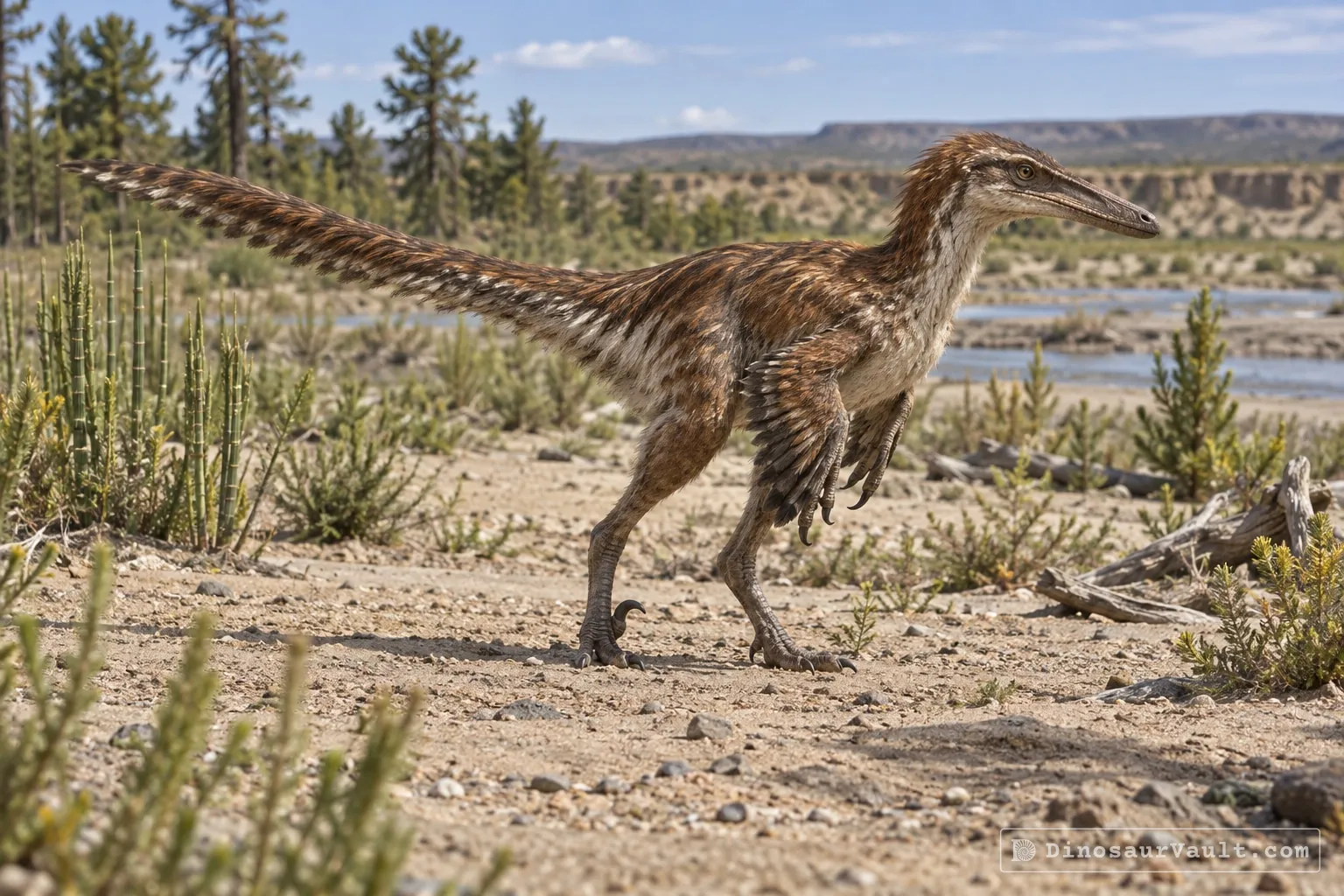
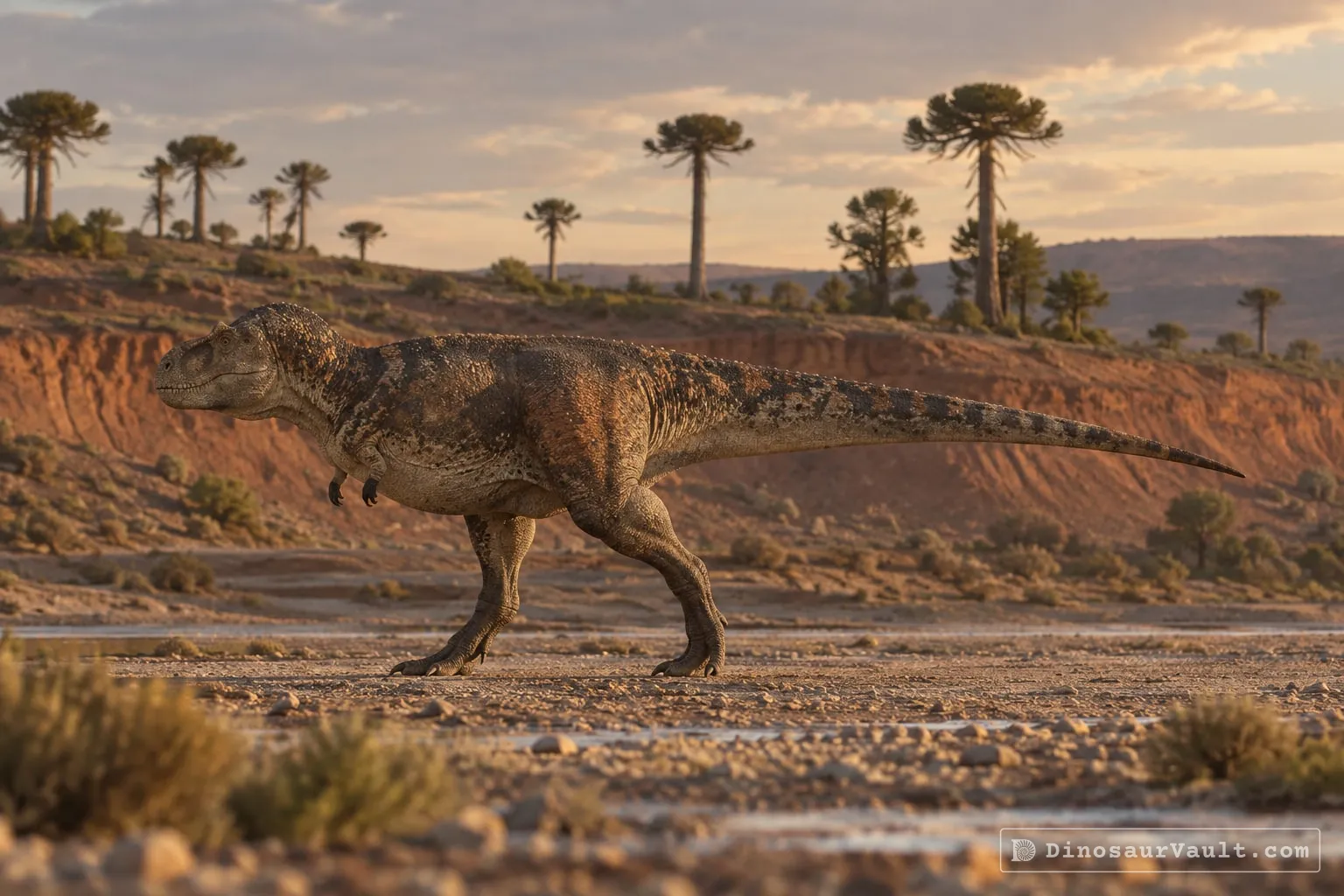
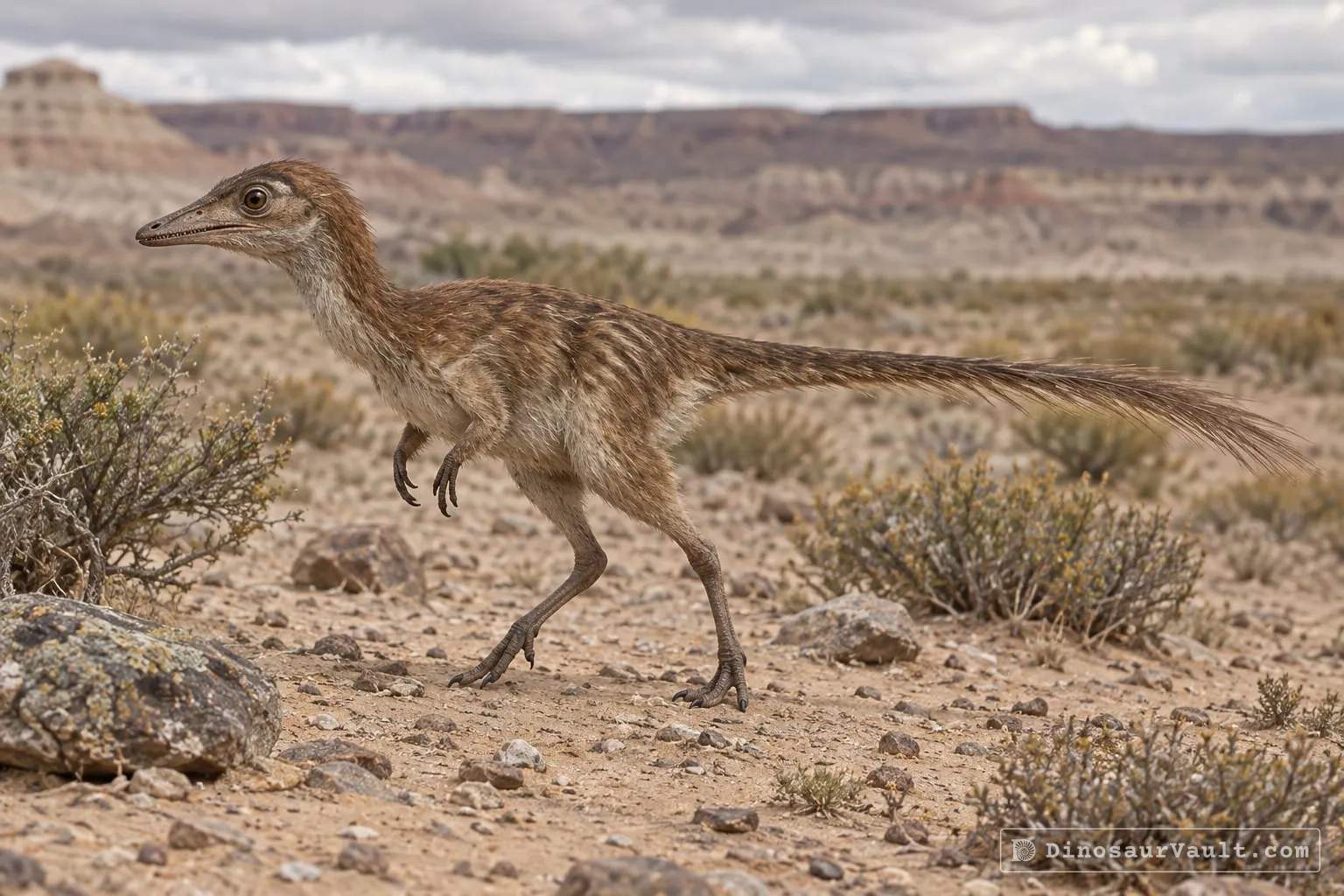


A rock formation can hold fossils laid down millions of years apart, so not every animal here met Campananeyen.
The evidence
The science behind Campananeyen
Which parts of the picture come from its own bones, and which come from its relatives.
From its own fossils
- The skull remains include part of the braincase and a bone from the jaw joint. The broken braincase exposes the spaces that held the brain and inner ear.
- Bones from the same skeleton include a back vertebra with a tall, petal-shaped spine, part of the hip vertebrae, a flattened rear tail vertebra, a hip bone with fragments of another, and two toe claws.
- The hip bone is thin, and the hip region contains extensive air spaces within the bones.
Borrowed from relatives
- The missing face and neck are restored by comparison with Lavocatisaurus, a rebbachisaurid known from skull bones.
- The missing body, front legs and tail follow Limaysaurus, a relative from the same rocks.
- The hands and outer toes, which are not preserved, follow other sauropods such as Apatosaurus and Camarasaurus.
Still unknown
- The complete shape of its snout, jaws and neck.
- Its closest relatives. Its describers linked it with Sidersaura, but a later analysis found that its place among rebbachisaurids changed with the method used.
- Its full body size and proportions.
Discovery timeline
- 2016SkullCarabajal, Canale & Haluza
- 2024Named itLerzo et al.
- 2025Family treeMannion & Moore
- 2026Close relativeGarderes, Lerzo & Knoll
Key papers
The research behind what we know of Campananeyen
Skull
Described the braincase and jaw-joint bone before the animal was named, comparing its brain and inner ear with other sauropods.
New rebbachisaurid cranial remains (Sauropoda, Diplodocoidea) from the Cretaceous of Patagonia, Argentina, and the first endocranial description for a South American representative of the clade. Journal of Vertebrate Paleontology 36: e1167067
Read the paper : New rebbachisaurid cranial remains (Sauropoda, Diplodocoidea) from the Cretaceous of Patagonia, Argentina, and the first endocranial description for a South American representative of the clade (opens in a new tab)Named it
Named Campananeyen from a partial skeleton with extensive air spaces in the hip region and proposed a close relationship with Sidersaura.
They all floated in the cretaceous: new rebbachisaurid (Sauropoda, Diplodocoidea) with a highly pneumatized skeleton from the Upper Cretaceous (lower Cenomanian) of Patagonia, Argentina. Historical Biology 37: 1795-1808
Read the paper : They all floated in the cretaceous: new rebbachisaurid (Sauropoda, Diplodocoidea) with a highly pneumatized skeleton from the Upper Cretaceous (lower Cenomanian) of Patagonia, Argentina (opens in a new tab)Family tree
A new family tree of long-necked diplodocoids in which Campananeyen stayed an early rebbachisaurid but shifted position between methods of analysis.
Critical reappraisal of a putative dicraeosaurid sauropod dinosaur from the Middle Jurassic of Gondwana and a revised view of diplodocoid evolutionary relationships and biogeography. Journal of Systematic Palaeontology 23
Read the paper : Critical reappraisal of a putative dicraeosaurid sauropod dinosaur from the Middle Jurassic of Gondwana and a revised view of diplodocoid evolutionary relationships and biogeography (opens in a new tab)Close relative
Compared the brain and inner ear of Sidersaura with Campananeyen and other rebbachisaurids, finding shared structures and differences in hearing.
Neuroanatomy and auditory adaptations of Sidersaura marae: Insights into the palaeoecology of rebbachisaurid sauropods. Cretaceous Research 184: 106364
Read the paper : Neuroanatomy and auditory adaptations of Sidersaura marae: Insights into the palaeoecology of rebbachisaurid sauropods (opens in a new tab)
Close relatives
Other members of Rebbachisauridae


Sources: Wikidata