Andesaurus
AN-deh-SORE-us
"Andes lizard"
- Lived
- 113 to 110 million years ago, Early Cretaceous
- Diet
- Herbivore
- Group
- Sauropods
- Found in
- Argentina
- Named by
- Calvo and Bonaparte 1991
Where its fossils were found
The evidence
Today

110 million years ago
Habitat
Rivers crossed a landscape that also included sandy dunes in the Candeleros Formation. Other dinosaurs from these rocks include Giganotosaurus, Buitreraptor and Limaysaurus.
Field notes
About Andesaurus
What it was like
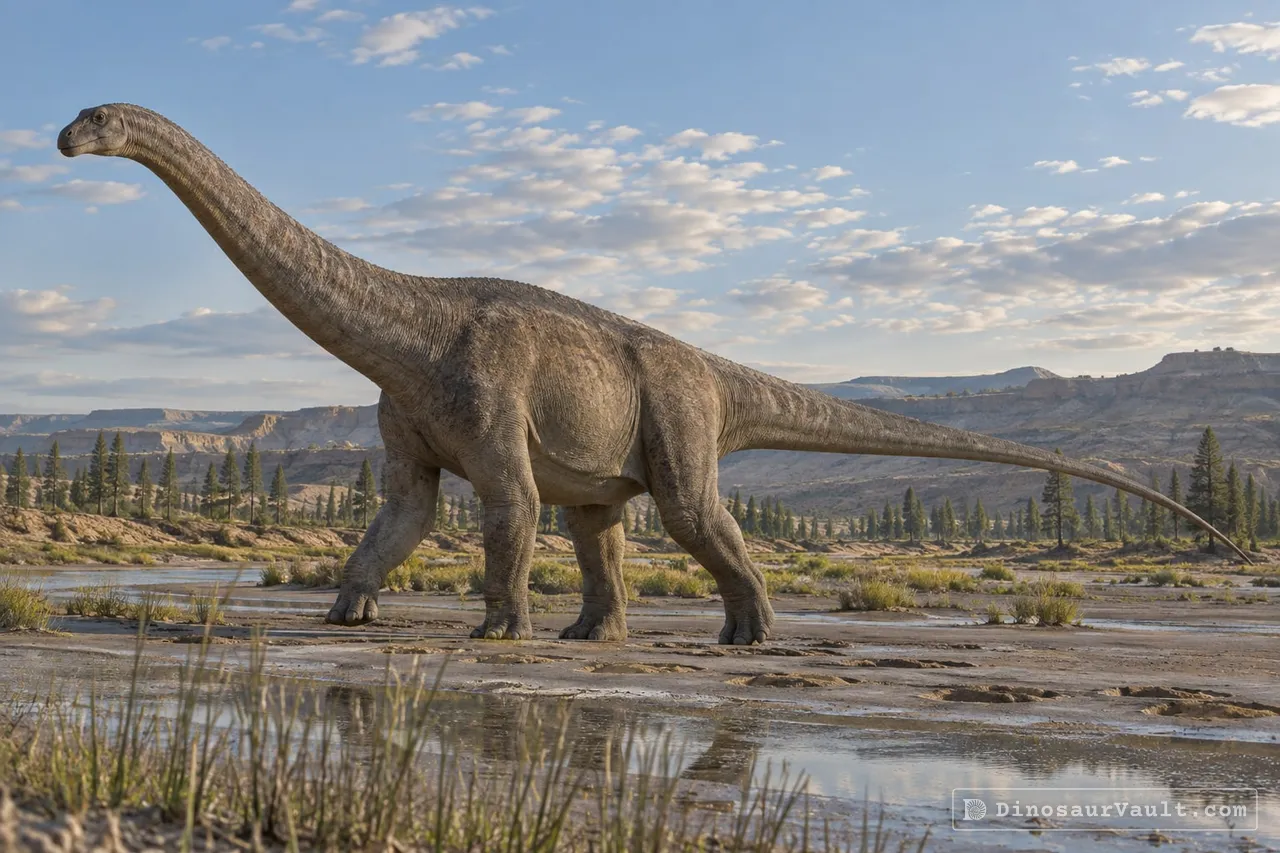
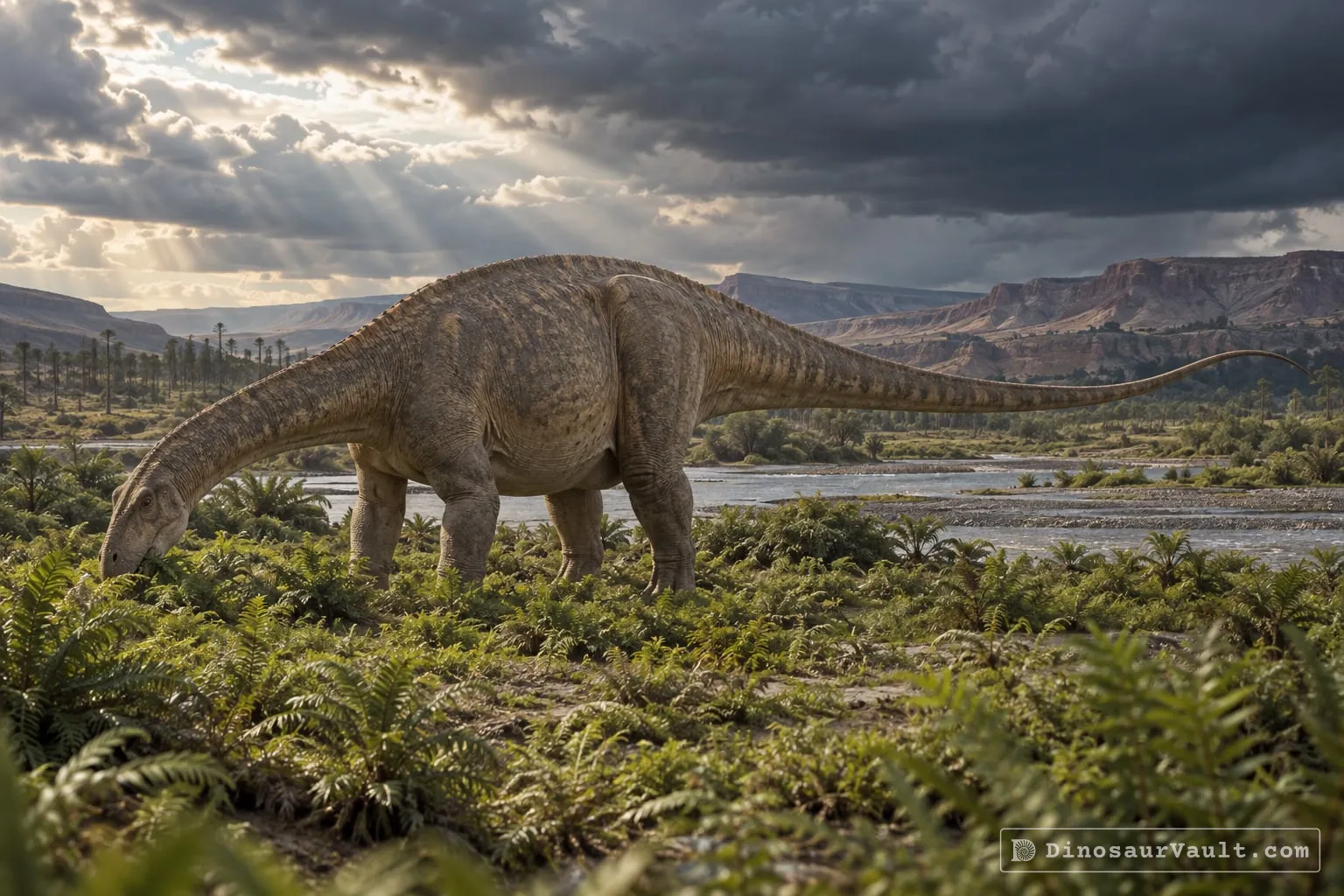
Andesaurus was an early titanosaur, a long-necked, four-legged plant eater. It is known from part of the backbone, hips and legs, which show it was very large.
Because it is an early member of the titanosaurs, it helps show how the group began.
Its world
It lived in the Cretaceous in what is now Argentina. Its bones come from the Candeleros Formation, where it shared the land with the giant hunter Giganotosaurus, the small raptor Buitreraptor and the long-necked Limaysaurus.
How it was found
Calvo and Bonaparte named Andesaurus in 1991, from a single find.
Field gallery
More views of Andesaurus
Scenes reconstructed from the available fossil evidence.
1 of 3
Lived alongside
Found in the same rock formations
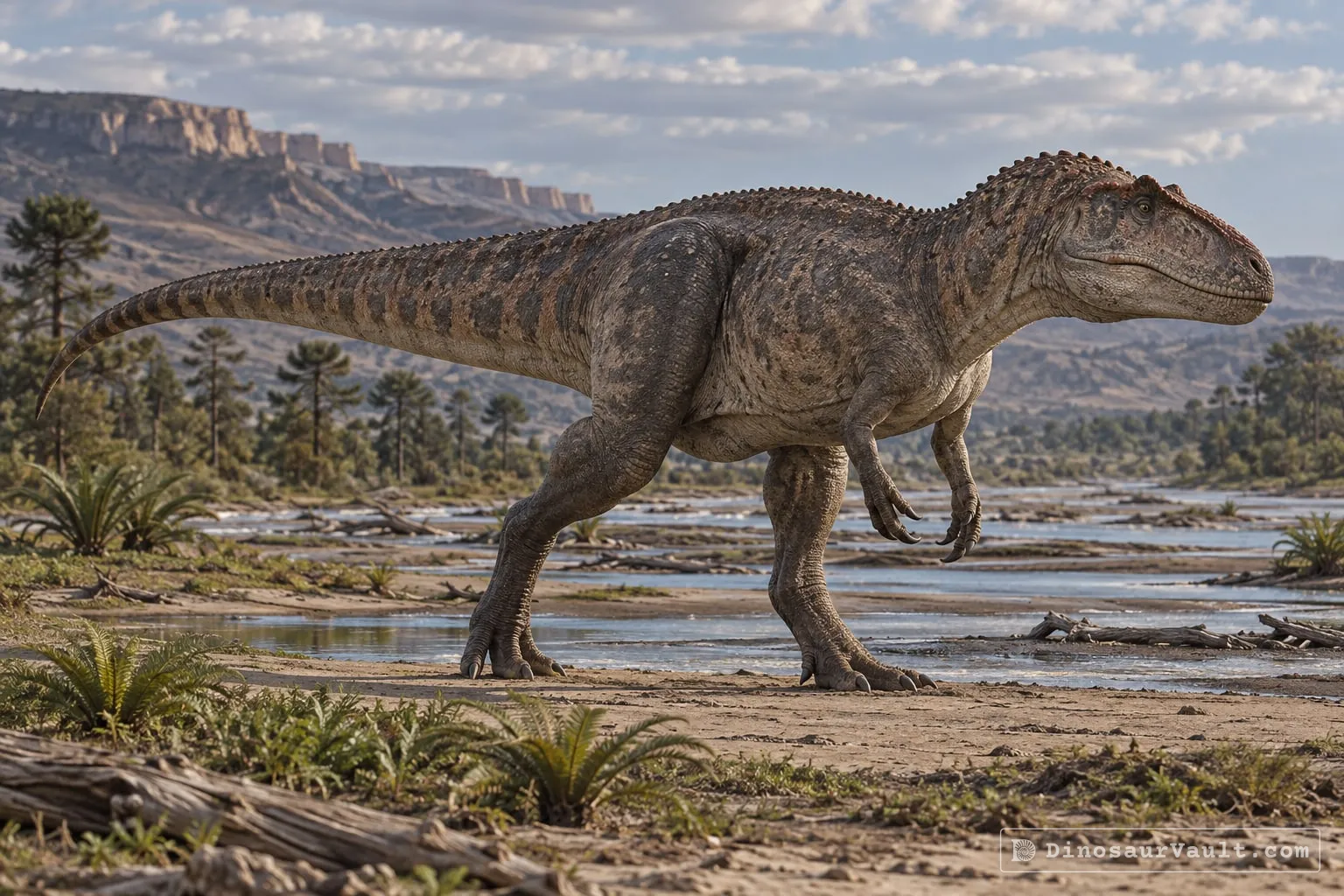
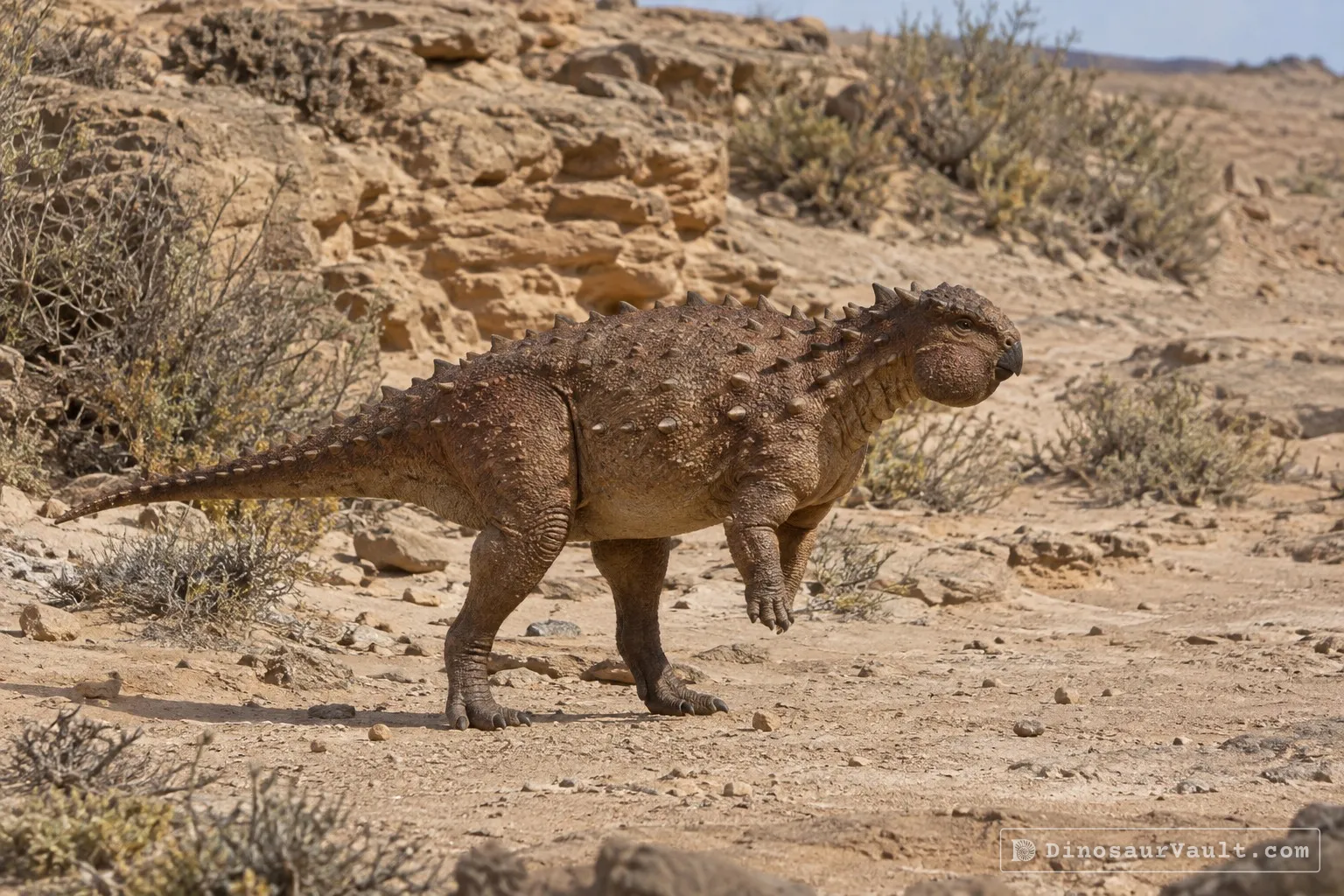
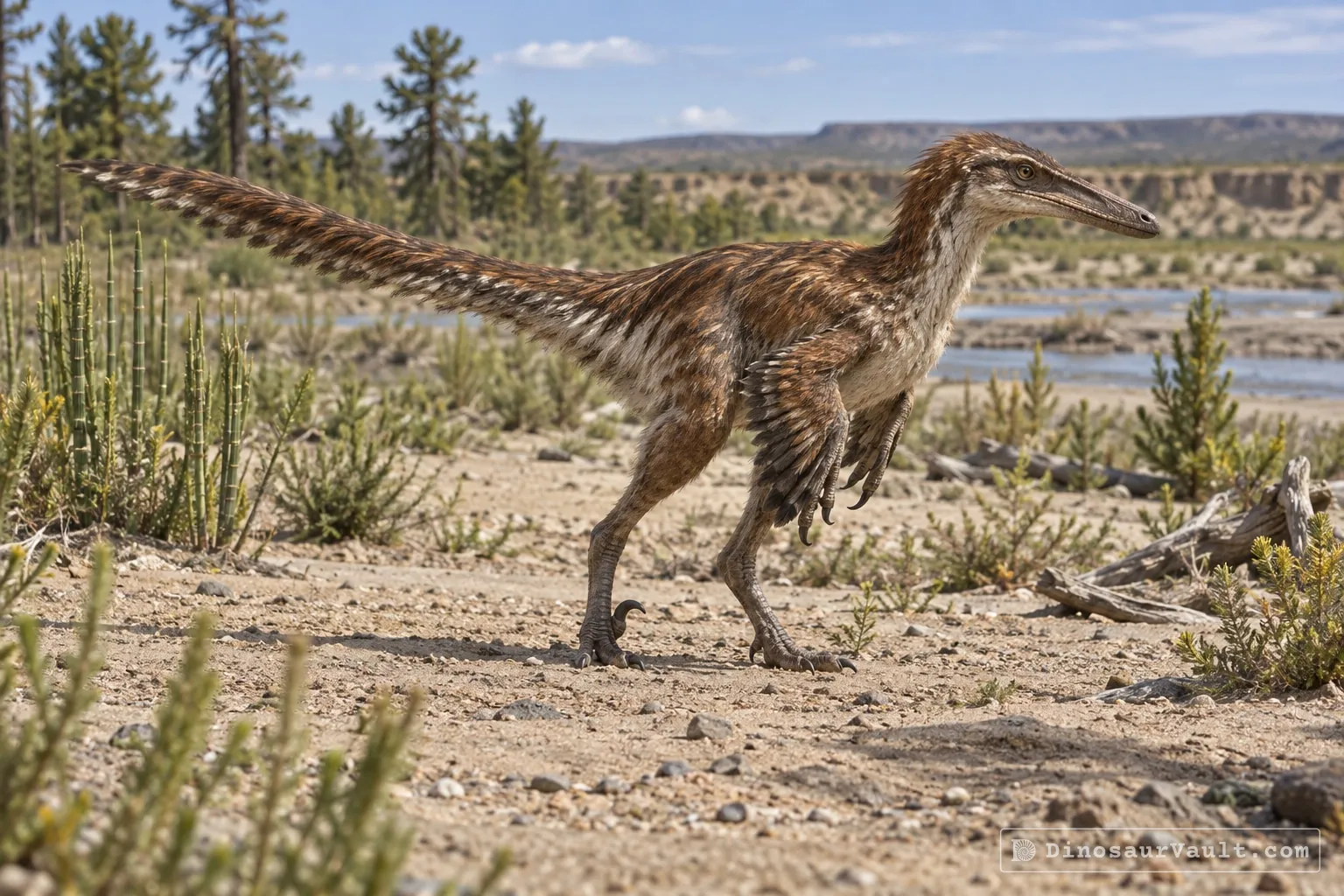
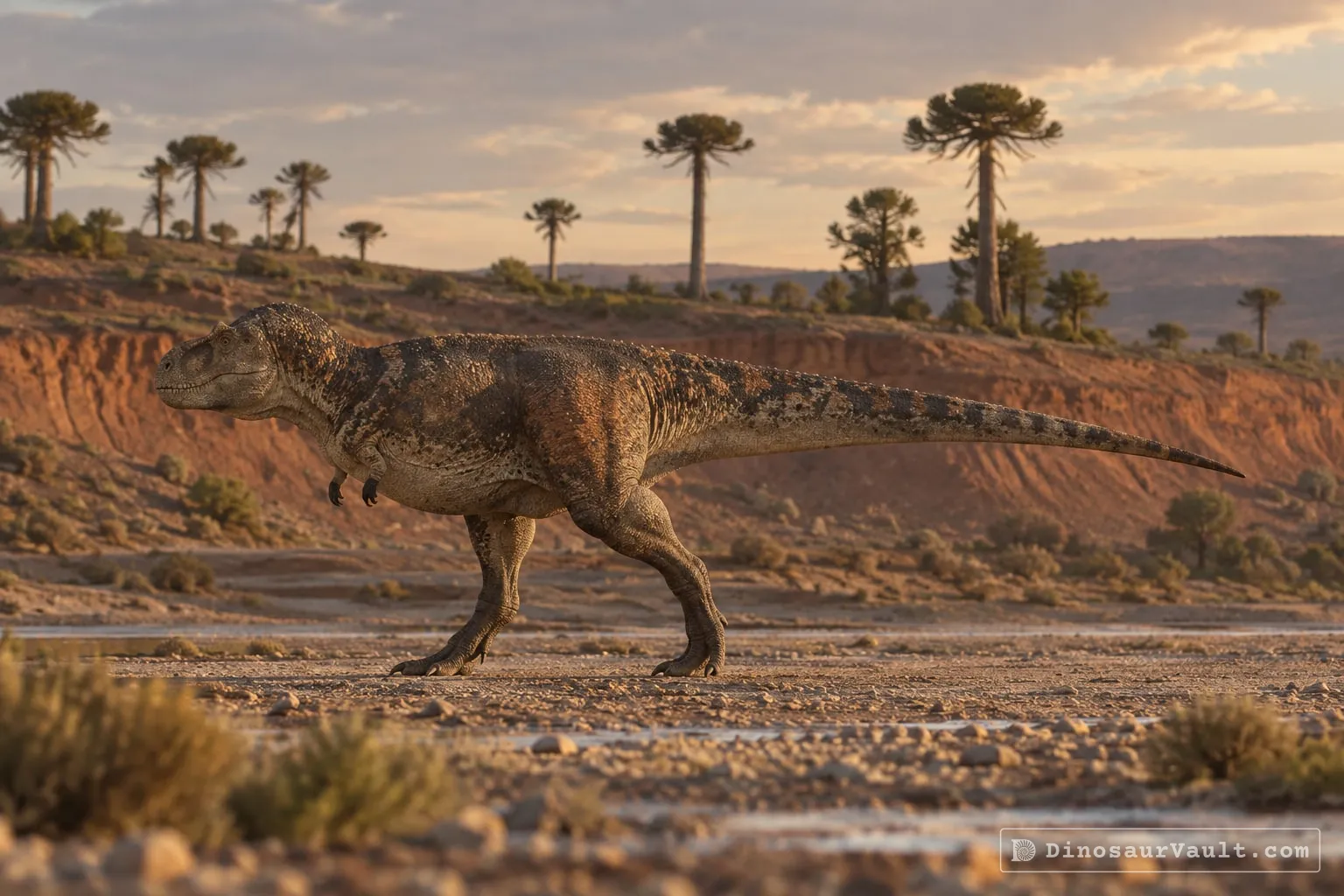
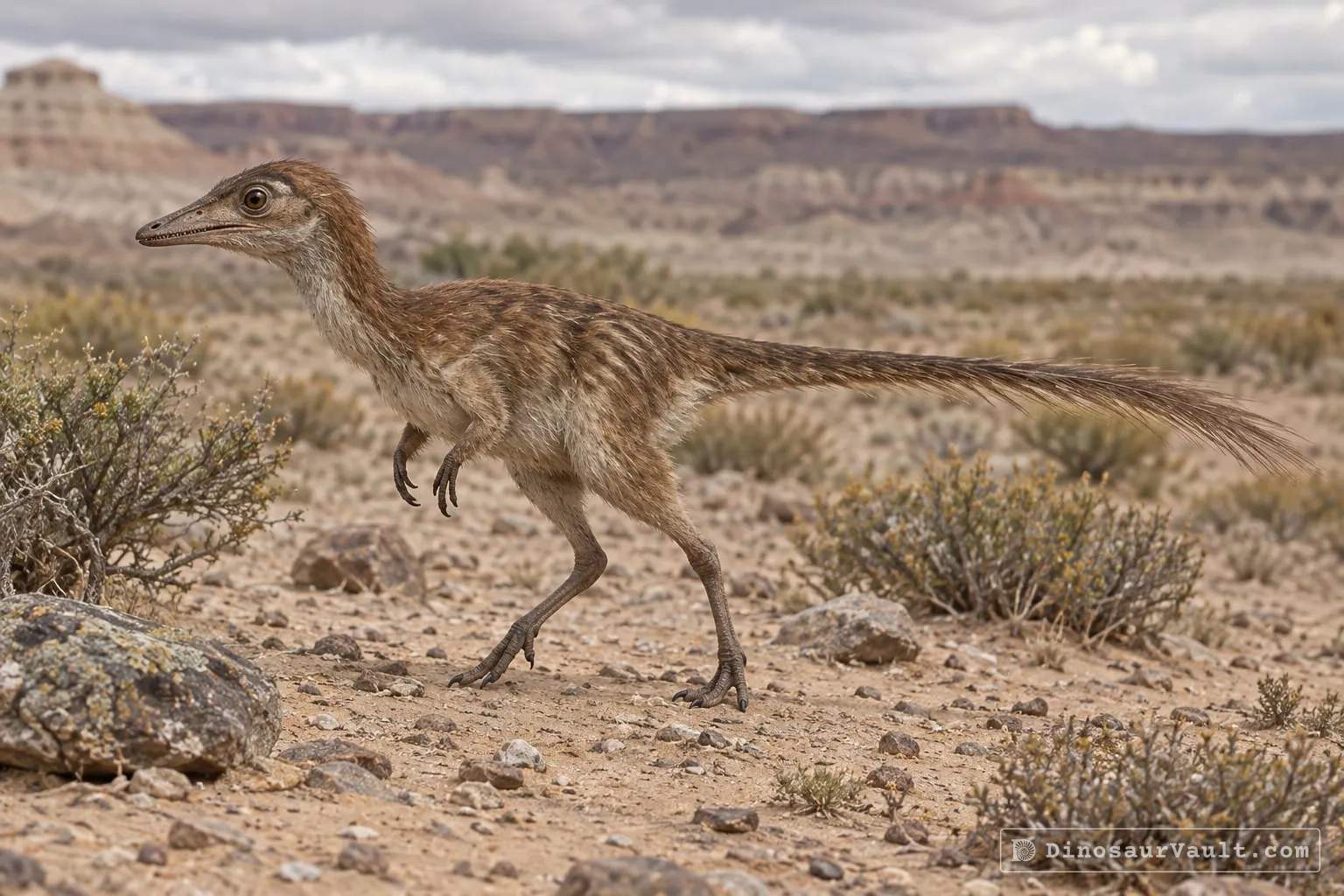
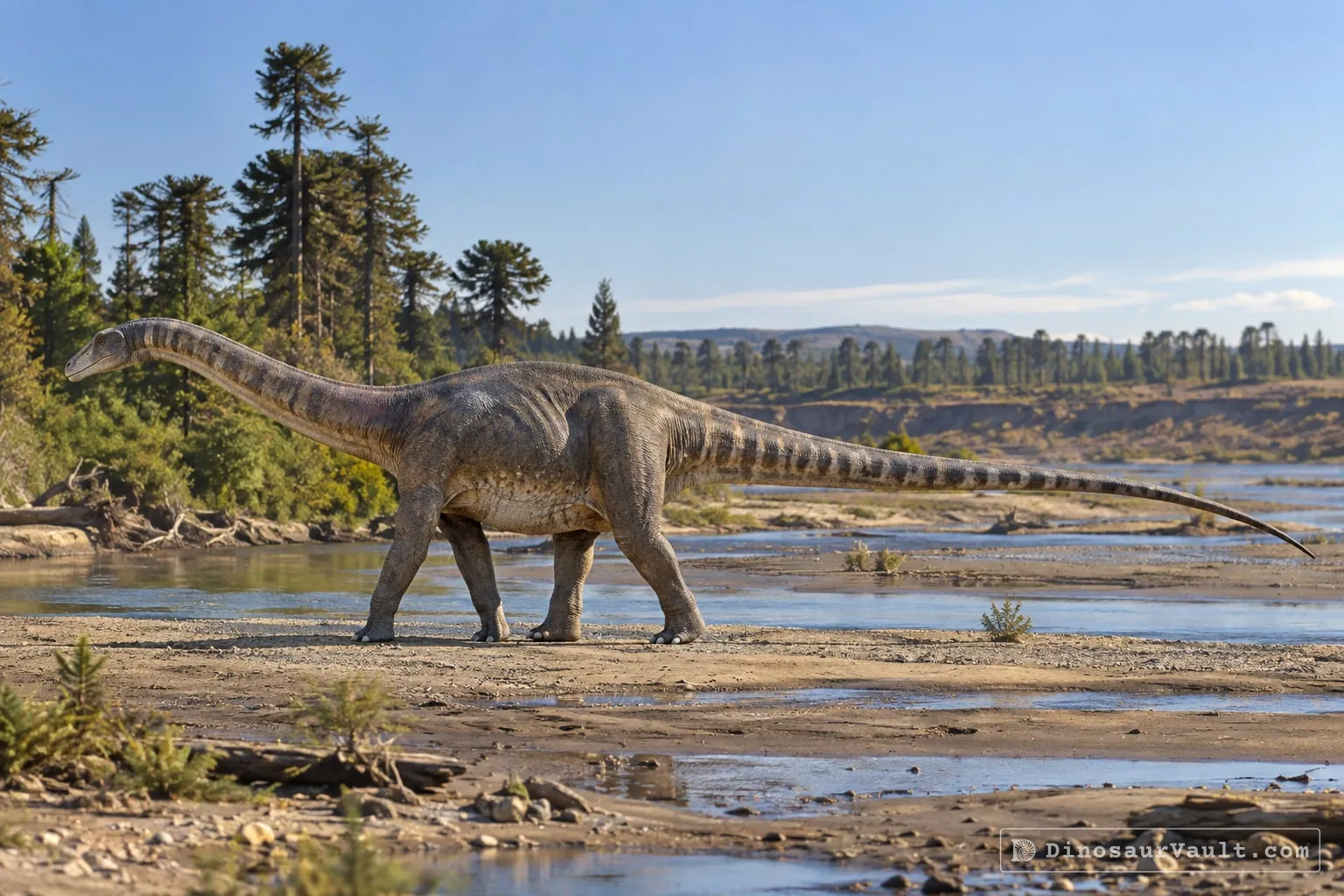
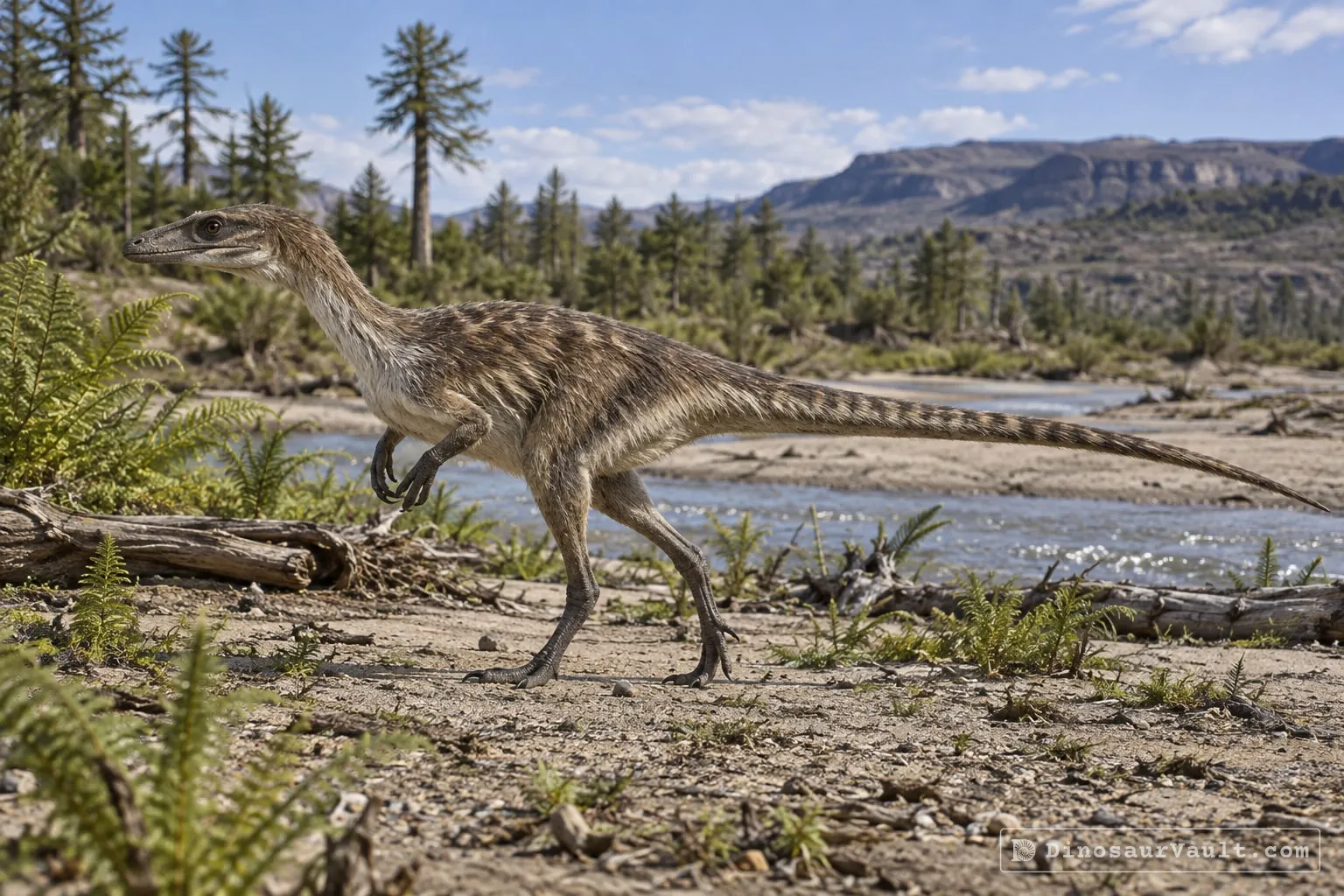


A rock formation can hold fossils laid down millions of years apart, so not every animal here met Andesaurus.
The evidence
The science behind Andesaurus
Which parts of the picture come from its own bones, and which come from its relatives.
From its own fossils
- A single partial skeleton preserves vertebrae from the back, hips and tail, ribs, hip bones, an upper arm bone, a thigh bone and two hand bones.
- Tall bony projections rise above the back vertebrae near the hips.
- A right and a left hand bone stood upright in life, and the first one bows outward.
Borrowed from relatives
- Euhelopus provides a comparison for the missing skull.
- Apatosaurus helps restore a hand with very short fingers, while Camarasaurus provides a comparison for hind feet with curved inner claws.
Still unknown
- The length and proportions of its neck and the shape of its skull.
- Its full hand and foot anatomy, including its finger and toe bones.
- Its color and the fleshy outline above the tall back vertebrae.
Often drawn wrong
- Tall projections on the back vertebrae are sometimes turned into an exaggerated narrow sail or exposed spikes.
Discovery timeline
- 1991Named itCalvo & Bonaparte
- 2011RedescriptionMANNION & CALVO
- 2013Close relativePoropat & Kear
Key papers
The research behind what we know of Andesaurus
Named it
Named Andesaurus from a partial skeleton and recognized it as an early member of the titanosaur group.
Andesaurus delgadoi gen. et sp. nov. (Saurischia-Sauropoda), dinosaurio Titanosauridae de la Formacion Rio Limay (Albiano-Cenomaniano), Neuquén, Argentina [Andesaurus delgadoi gen. et sp. nov. (Saurischia-Sauropoda), a titnosaurid dinosaur from Rio Limay Formation (Albian-Cenomanian), Neuquén, Argentina]. Ameghiniana 28: 303-310
No link available
Redescription
Restudied the original skeleton, clarified the features distinguishing Andesaurus, including its tall back spines and upright hand bones, and restricted the genus to its original specimen.
Anatomy of the basal titanosaur (Dinosauria, Sauropoda) Andesaurus delgadoi from the mid-Cretaceous (Albian-early Cenomanian) Río Limay Formation, Neuquén Province, Argentina: implications for titanosaur systematics. Zoological Journal of the Linnean Society: no-no
Read the paper : Anatomy of the basal titanosaur (Dinosauria, Sauropoda) Andesaurus delgadoi from the mid-Cretaceous (Albian-early Cenomanian) Río Limay Formation, Neuquén Province, Argentina: implications for titanosaur systematics (opens in a new tab)Close relative
Reconstructed the skull of Euhelopus, providing a comparison for the missing head of Andesaurus.
Photographic Atlas and Three-Dimensional Reconstruction of the Holotype Skull of Euhelopus zdanskyi with Description of Additional Cranial Elements. PLoS ONE 8: e79932
Read the paper : Photographic Atlas and Three-Dimensional Reconstruction of the Holotype Skull of Euhelopus zdanskyi with Description of Additional Cranial Elements (opens in a new tab)
Close relatives
Other members of Titanosauria


Sources: Wikidata