Outline: a typical sauropod
Inawentu
"imitator"
Type species Inawentu oslatus
- Lived
- 86 to 84 million years ago, Late Cretaceous
- Diet
- Herbivore
- Group
- Sauropods
- Found in
- Argentina
- Named by
- Filippi et al. 2024
Where its fossils were found
The evidence
Today

80 million years ago
Field notes
About Inawentu
What it was like
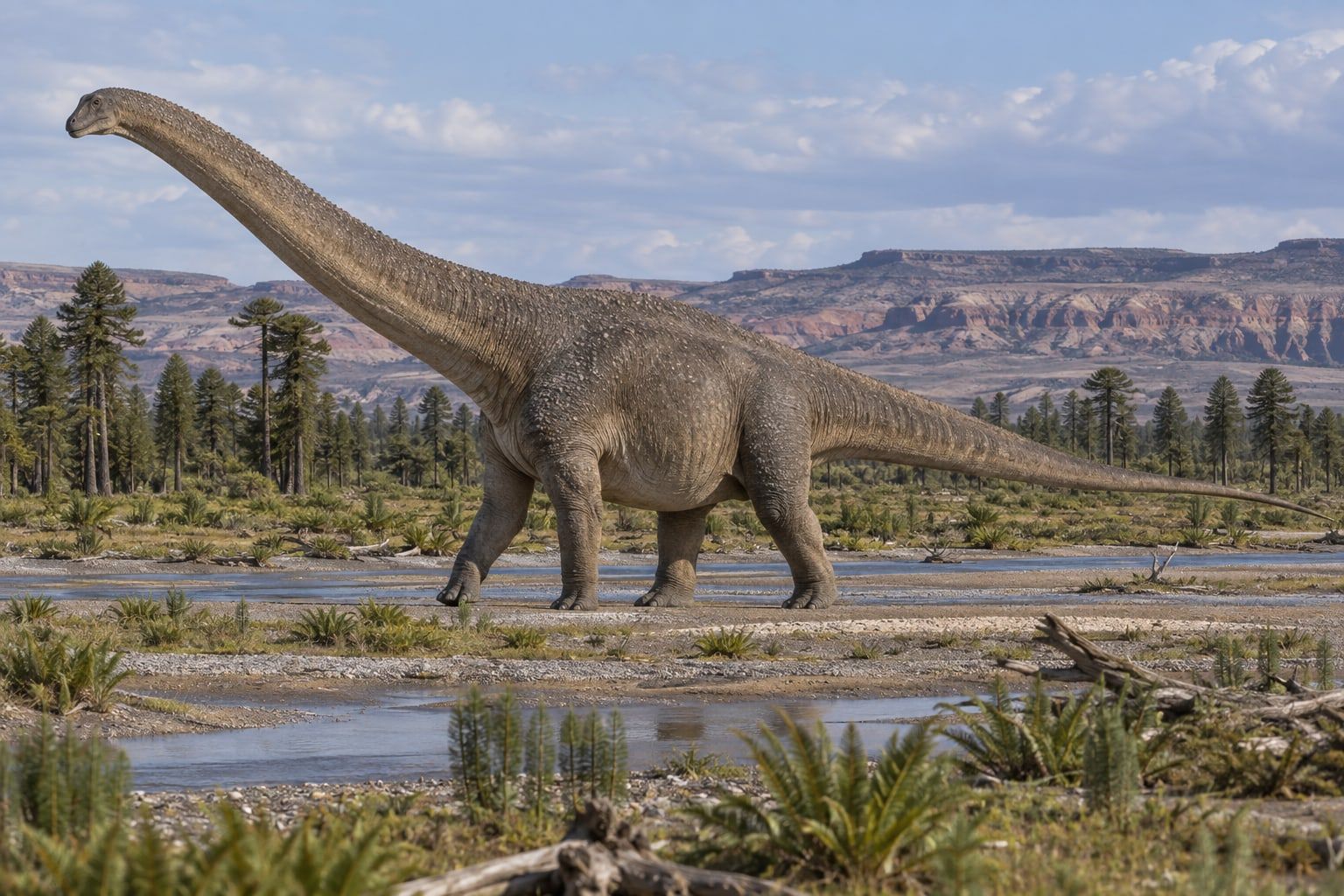
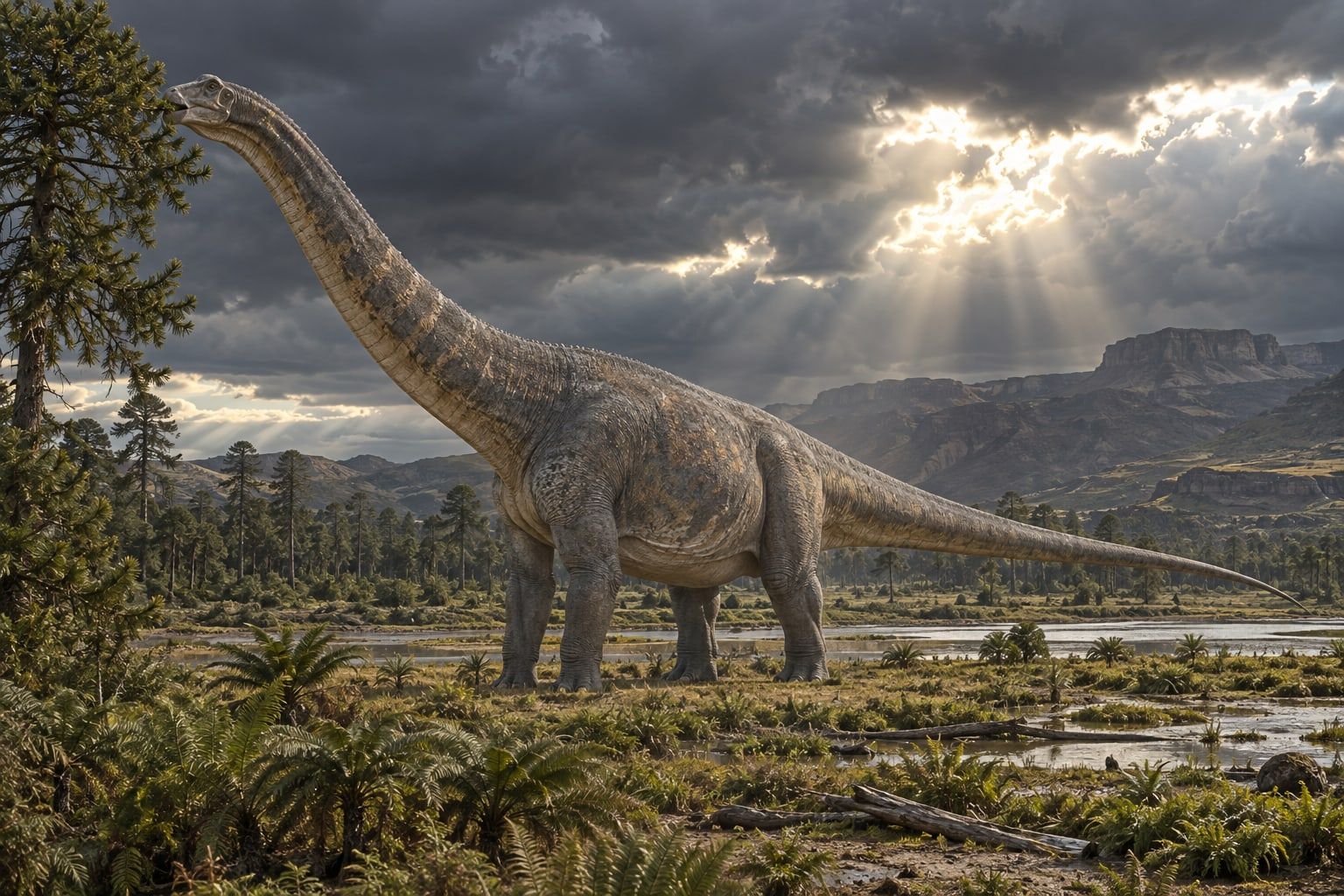
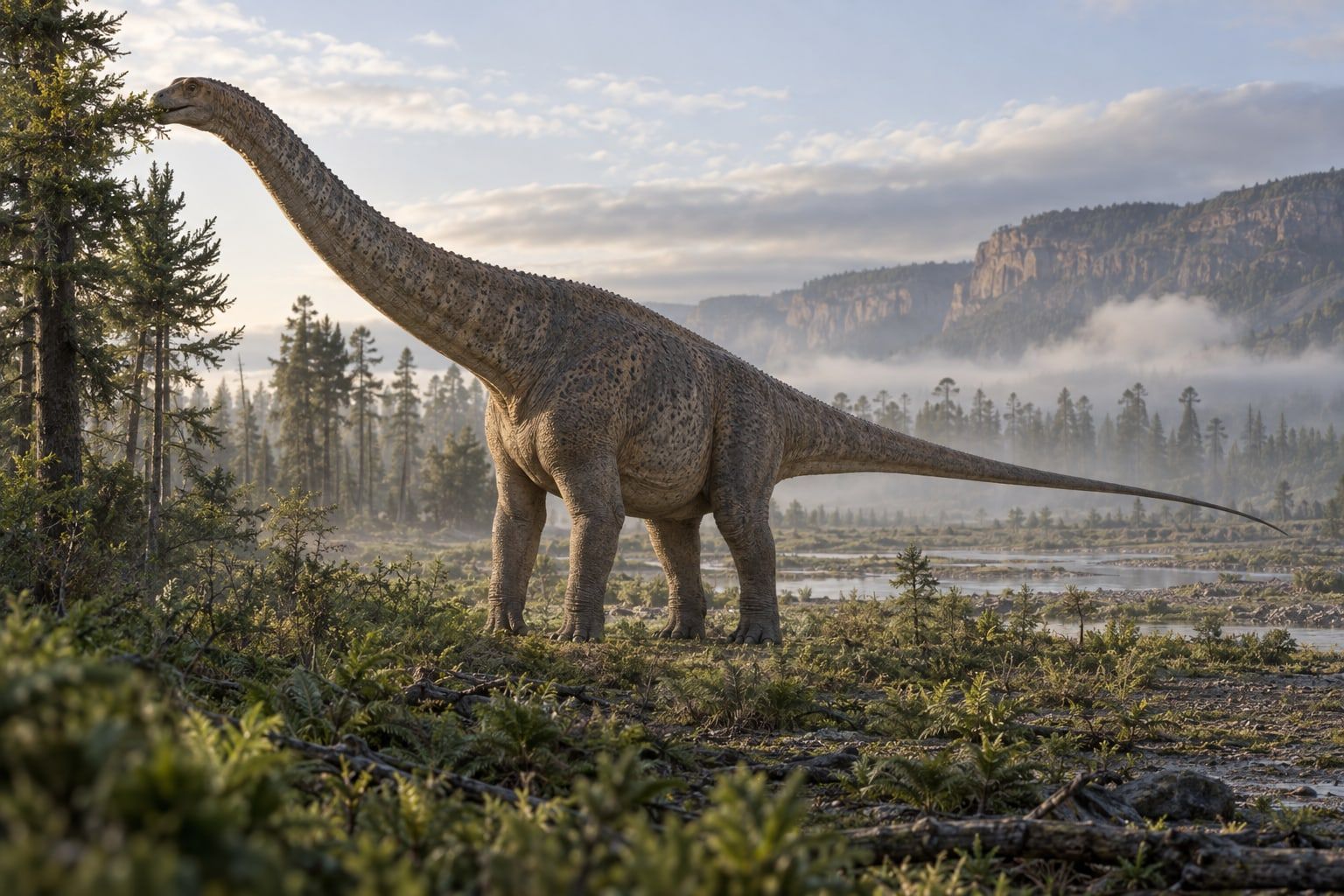
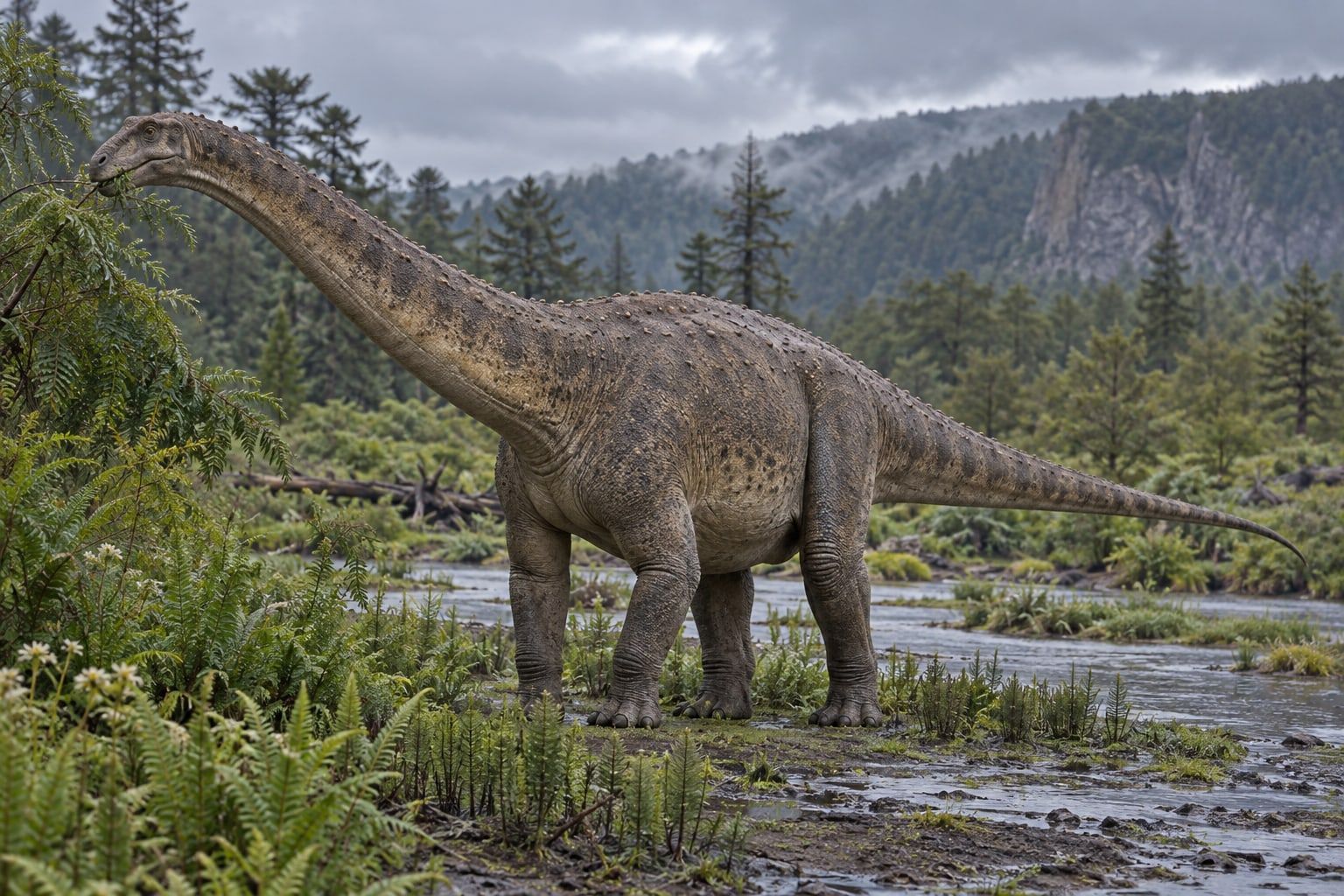
Inawentu was a titanosaur, a long-necked, four-legged plant eater, known from a partial skeleton with a skull. It had a short neck for a sauropod and a squared-off jaw, like that of Nigersaurus.
Those features suggest it fed on low plants, cropping them like a lawnmower. Its name, meaning "imitator," refers to how it came to look like other ground feeders.
Its world
It lived about 86 to 84 million years ago, in the Late Cretaceous, in what is now Argentina. Its bones come from the Bajo de la Carpa Formation, where it shared the land with the titanosaur Bonitasaura and the small hunters Alvarezsaurus and Velocisaurus.
How it was found
Filippi and colleagues named Inawentu in 2024, from a single find.
Lived alongside
Found in the same rock formations
Close relatives
Other members of Eutitanosauria
Sources: WikidataNamed in: L. S. Filippi, R. D. Juárez Valieri, and P. A. Gallina, A. H. Méndez, F. A. Gianechini, A. C. Garrido. 2024. A rebbachisaurid-mimicking titanosaur and evidence of a Late Cretaceous faunal disturbance event in South-West Gondwana. Cretaceous Research 154:105754