Yurgovuchia
"coyote"
- Lived
- 139 to 133 million years ago, Early Cretaceous
- Diet
- Carnivore
- Group
- Theropods, Dromaeosauridae
- Found in
- United States
- Named by
- Senter et al. 2012
Where its fossils were found
The evidence
Today

135 million years ago
Habitat
A lowland landscape in what is now Utah, recorded in the Cedar Mountain Formation. Utahraptor, Gastonia and Iguanacolossus lived in this region.
Field notes
About Yurgovuchia
What it was like
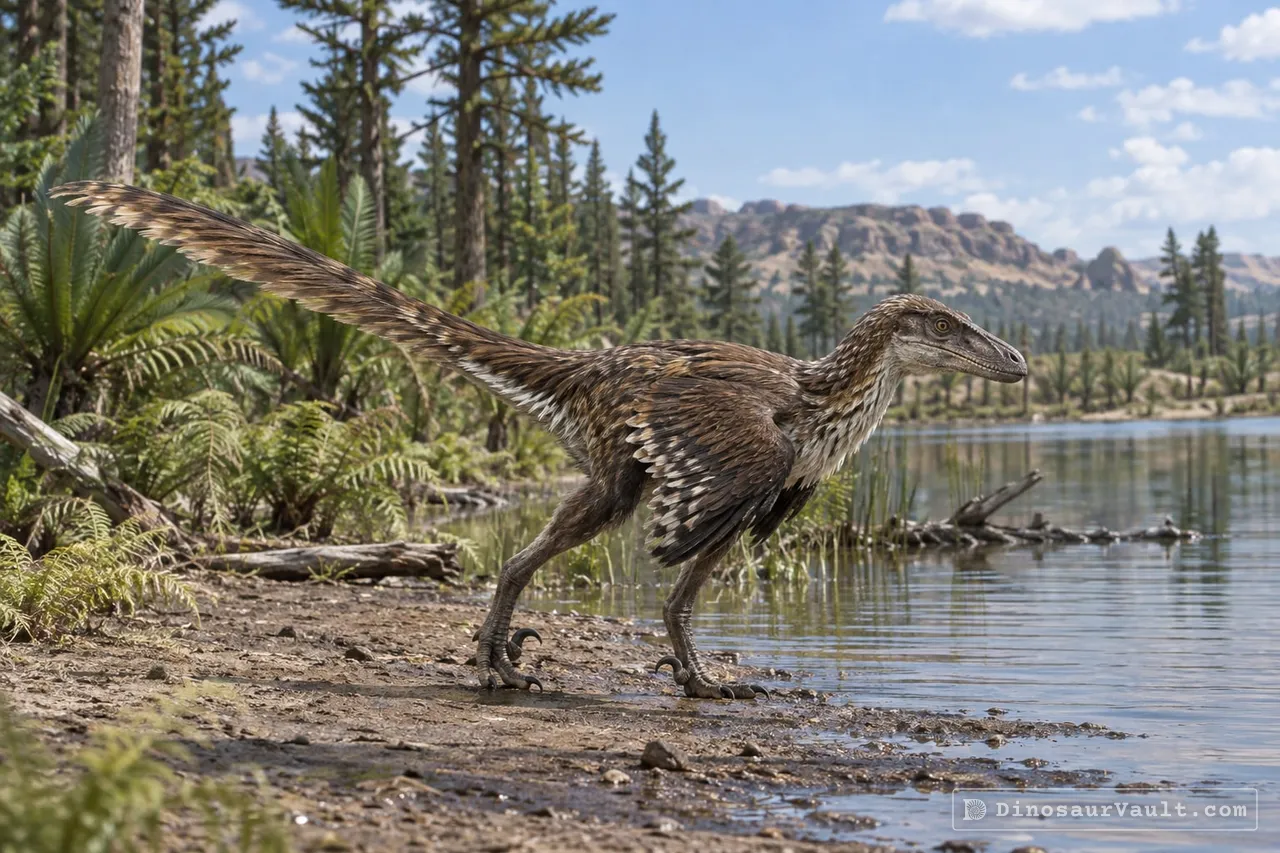
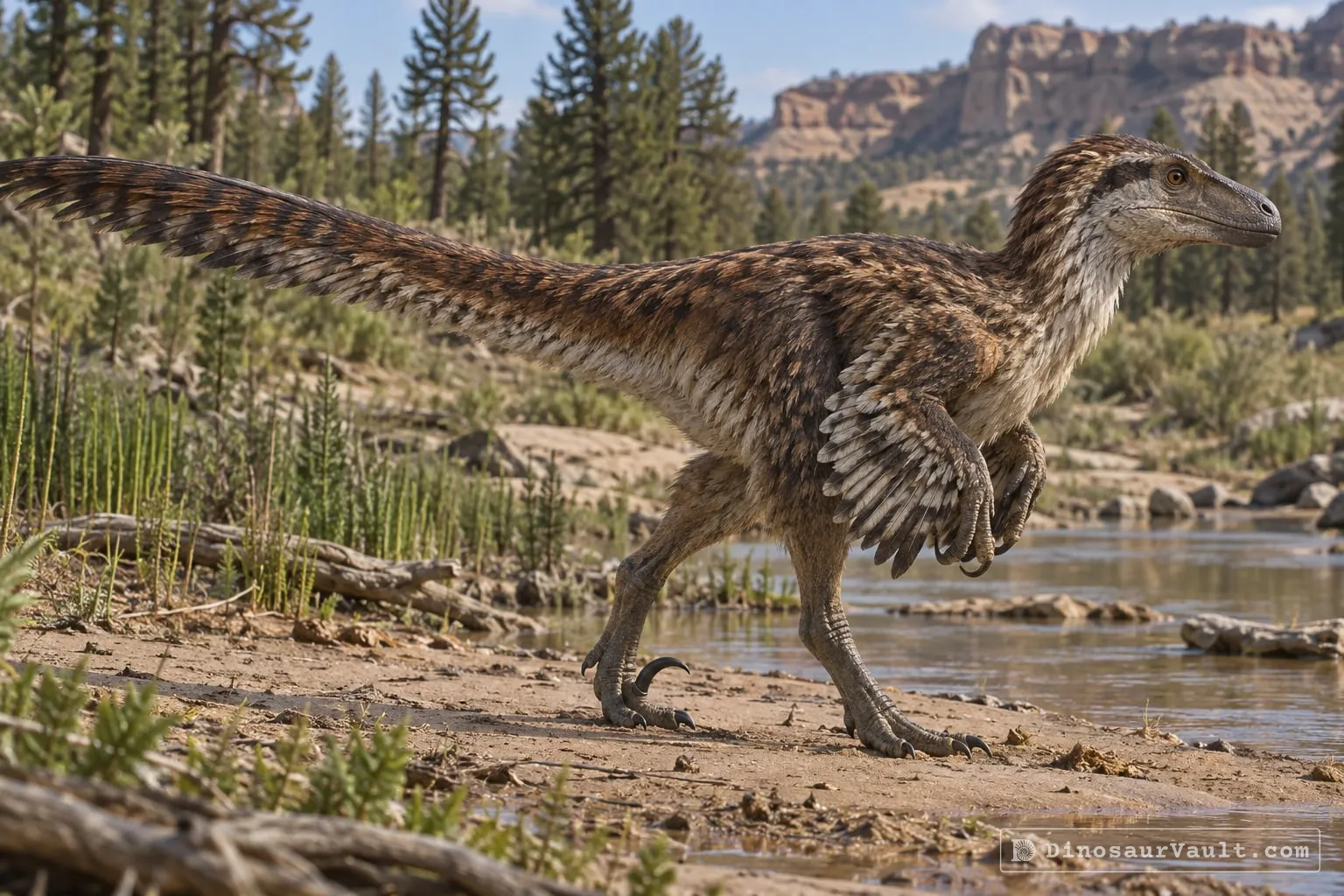
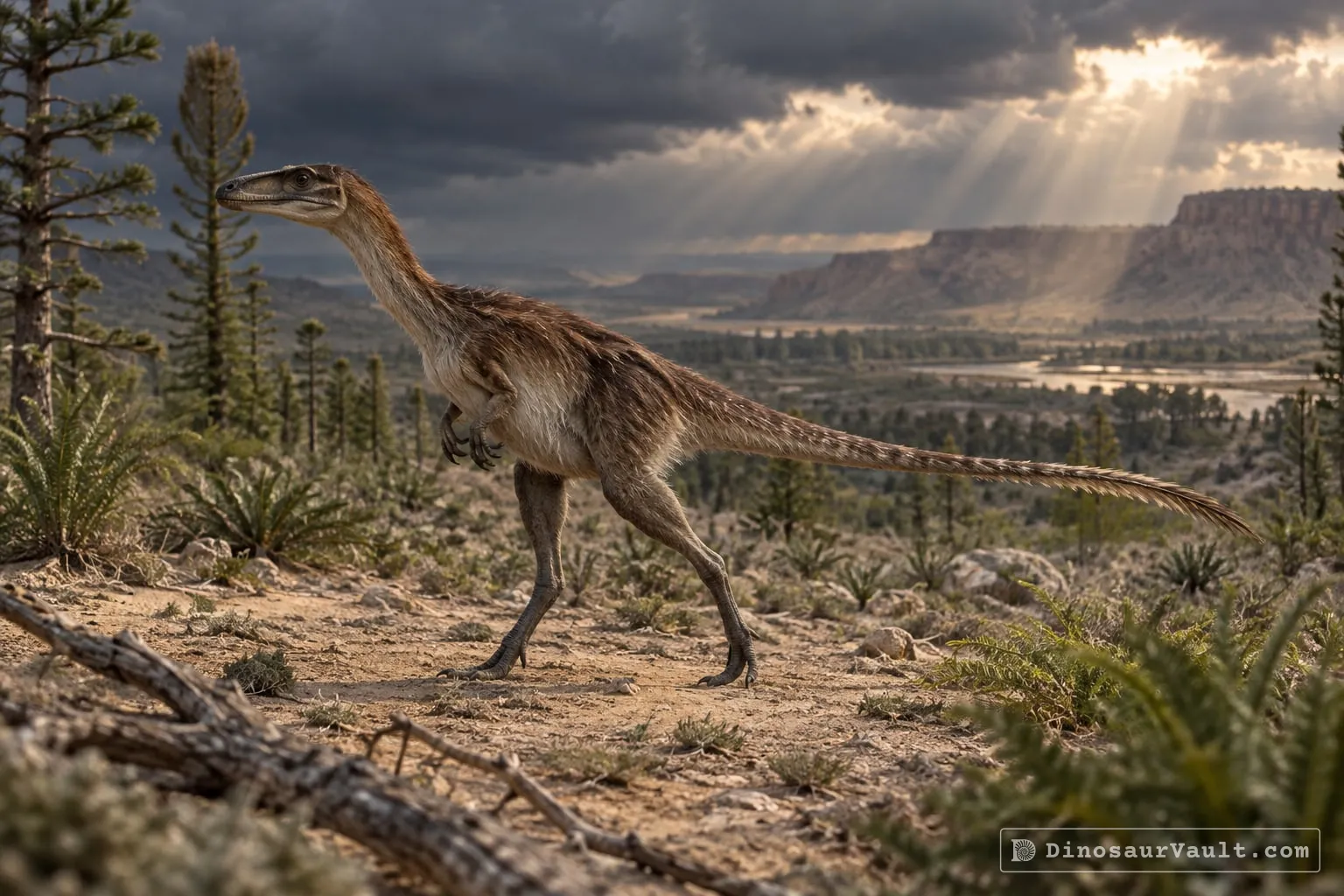
Yurgovuchia was a raptor, a feathered hunter with a sickle claw on each foot, known from backbones and some other bones. It was a relative of Dromaeosaurus.
Its world
It lived in the Early Cretaceous in what is now Utah, in the United States. Its bones come from the Cedar Mountain Formation, where it shared the land with the giant raptor Utahraptor and the armored Gastonia.
How it was found
Senter and colleagues named Yurgovuchia in 2012, from a single find. Its name comes from a word for coyote in a local native language.
Field gallery
More views of Yurgovuchia
Scenes reconstructed from the available fossil evidence.
1 of 3
Lived alongside
Found in the same rock formations
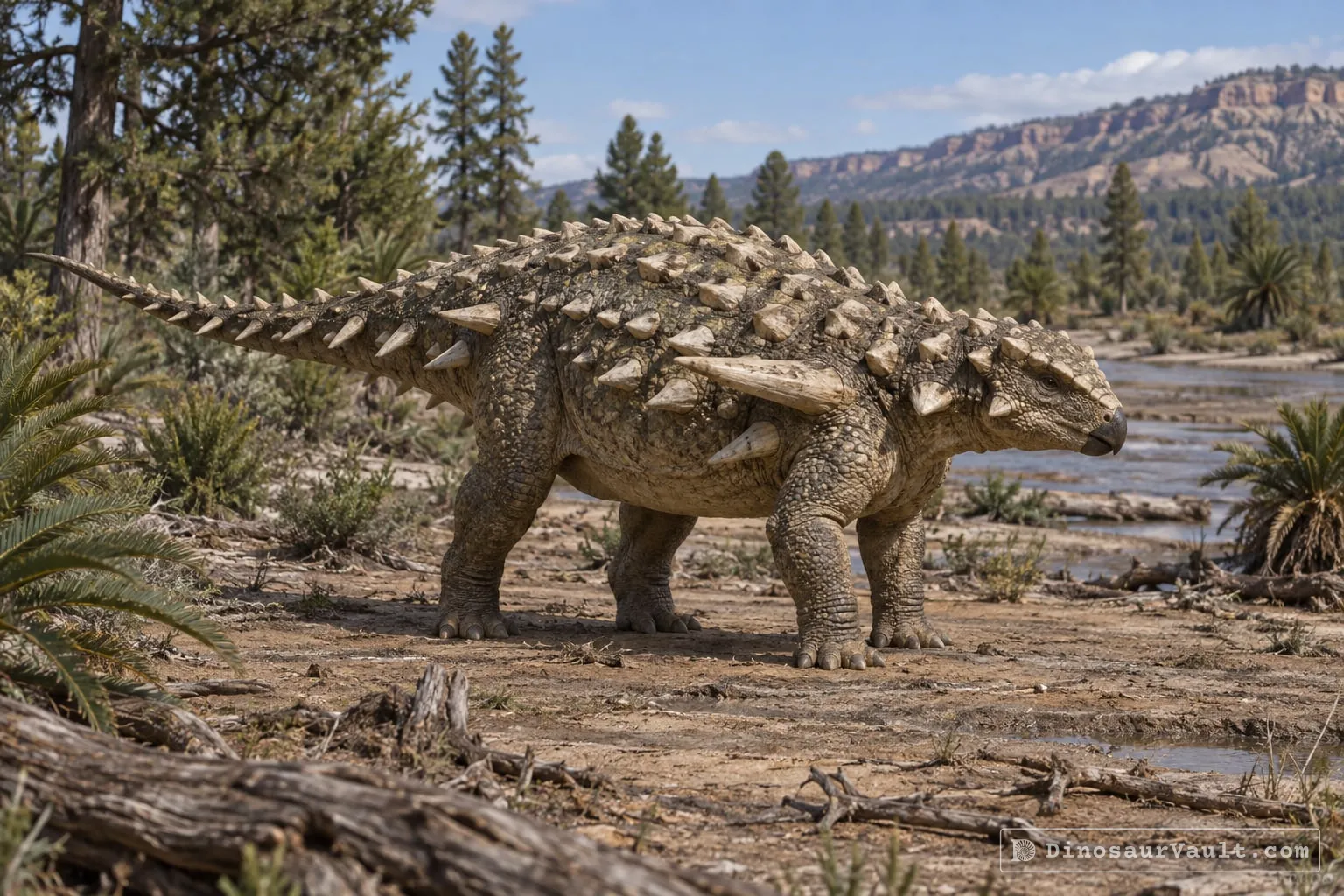
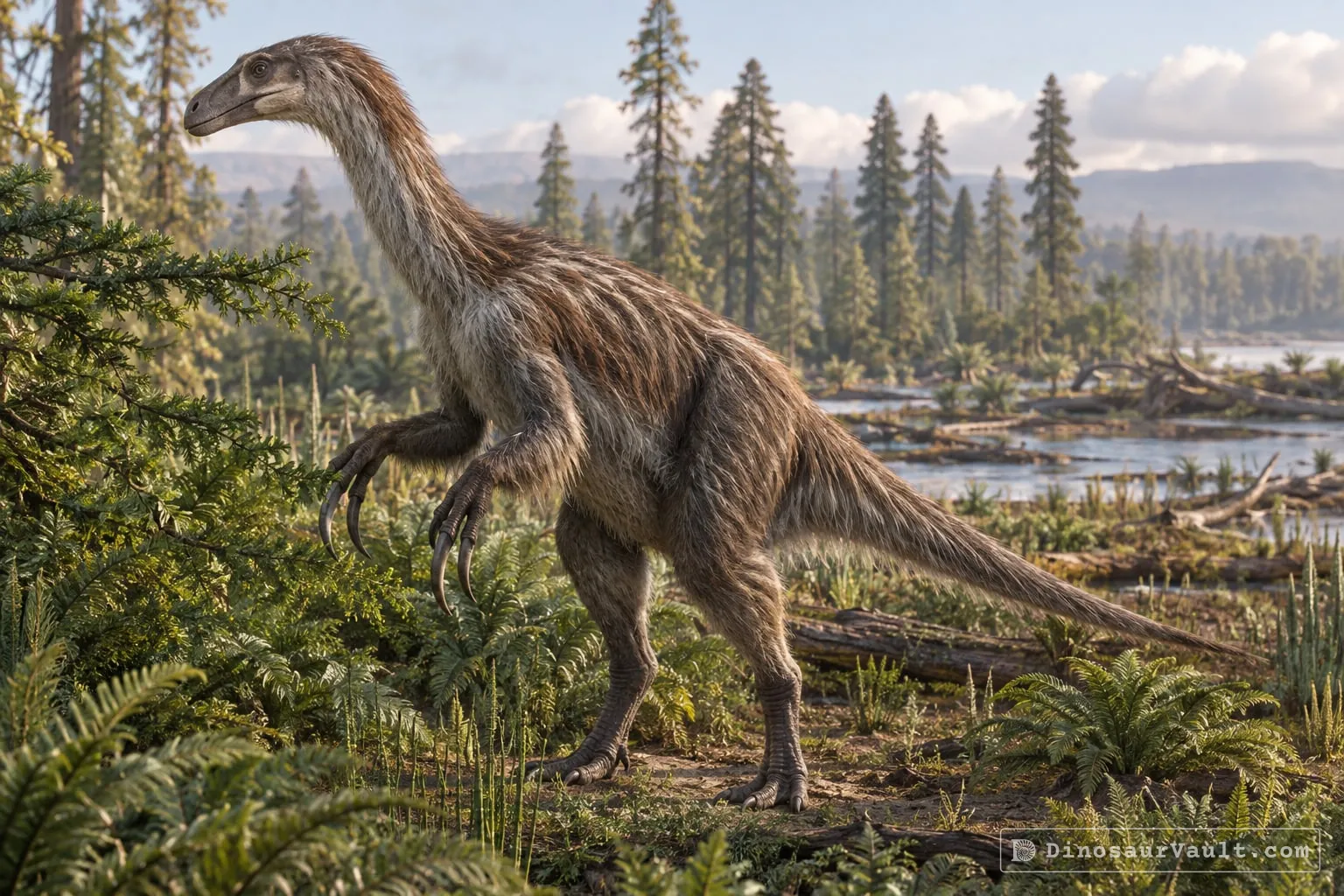
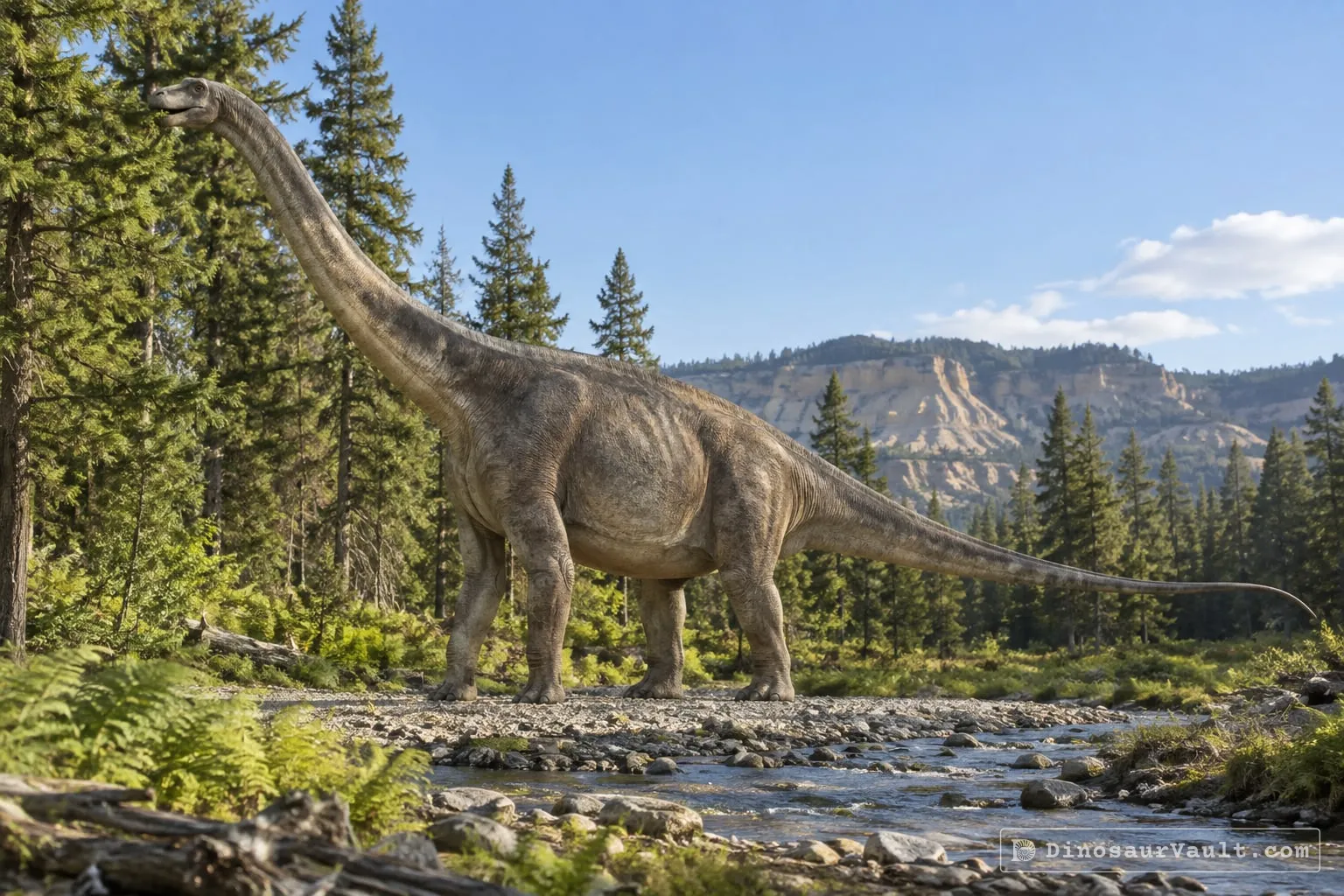
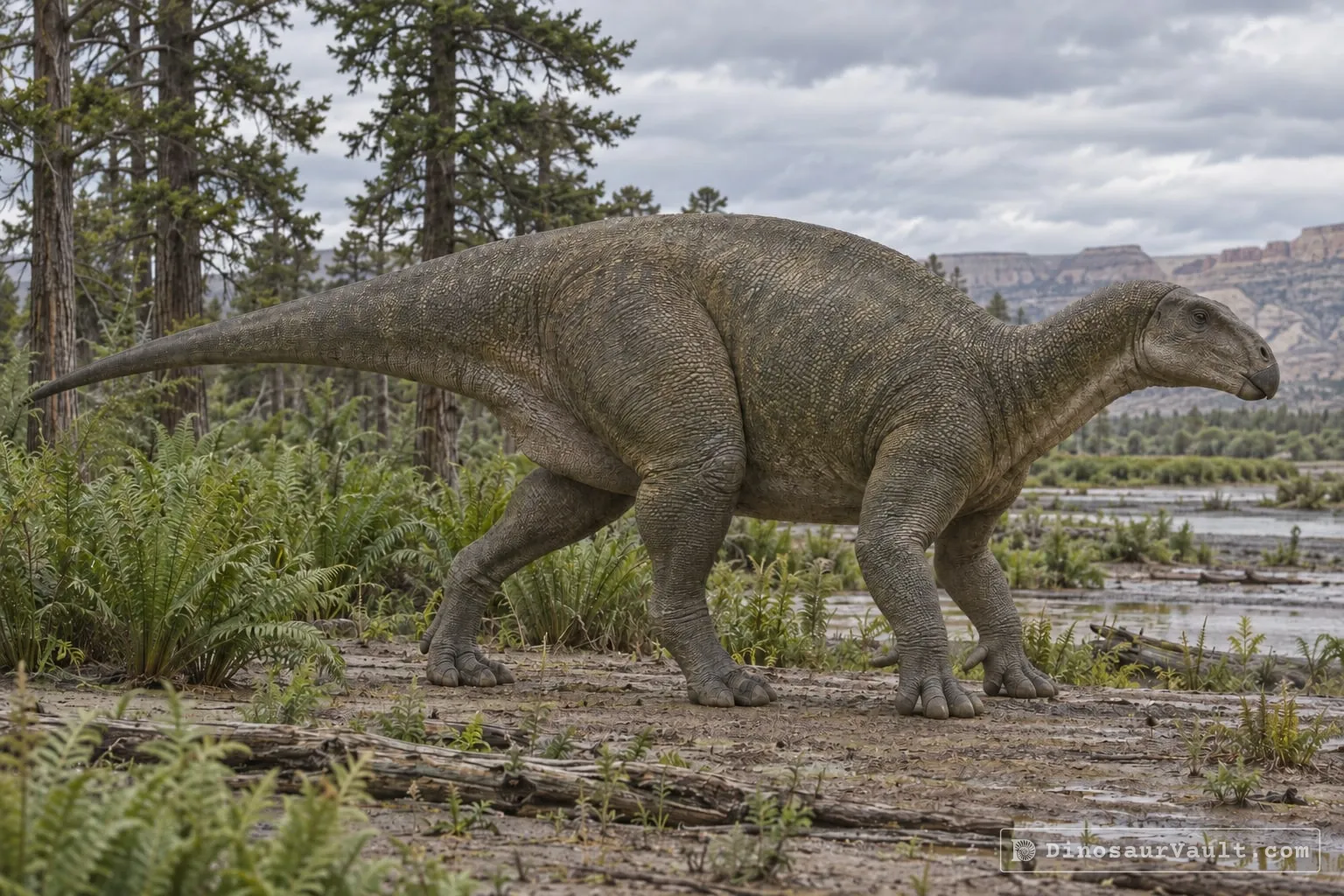
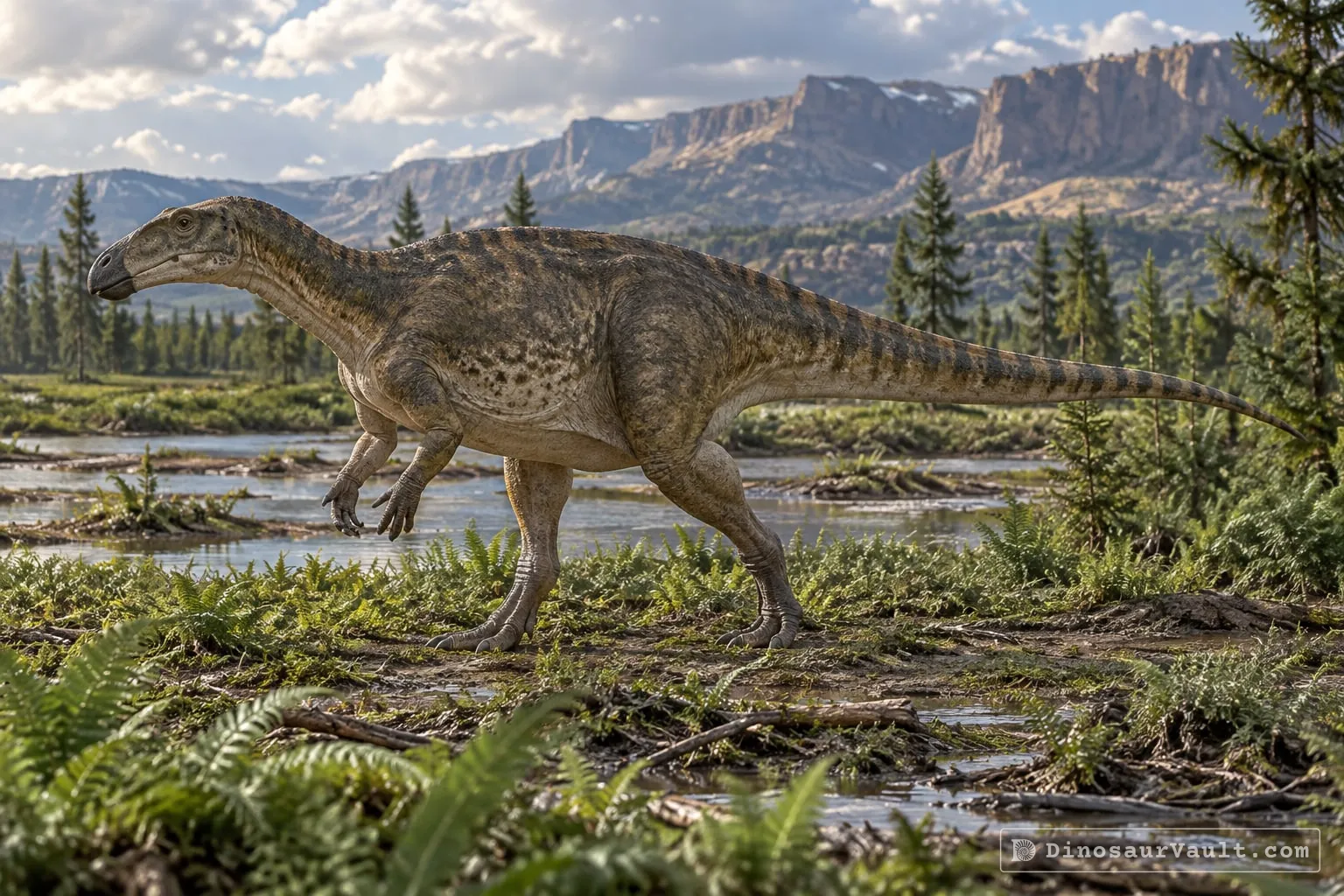
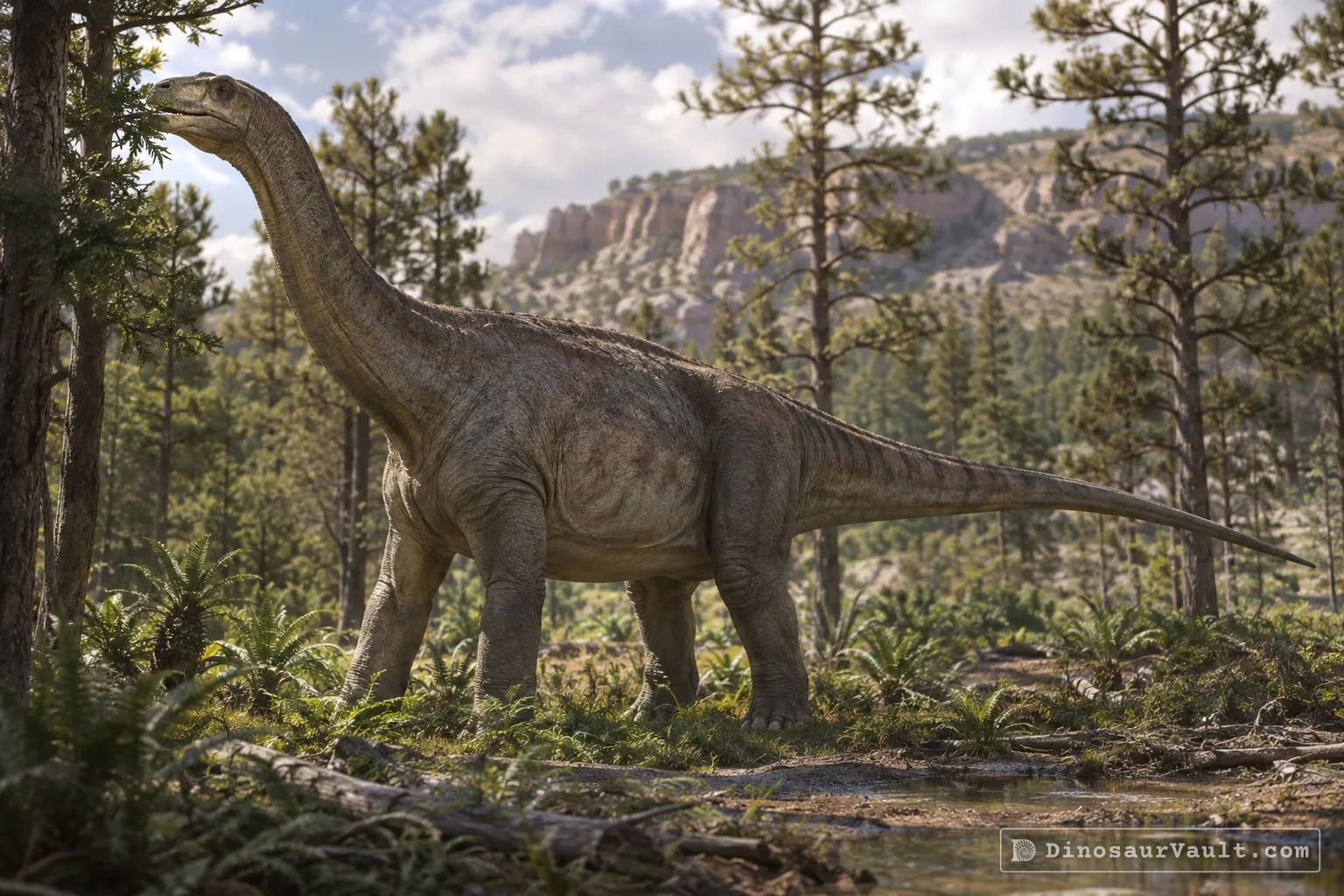


A rock formation can hold fossils laid down millions of years apart, so not every animal here met Yurgovuchia.
The evidence
The science behind Yurgovuchia
Which parts of the picture come from its own bones, and which come from its relatives.
From its own fossils
- A partial adult skeleton preserves bones from the neck, back and tail, plus the upper end of the left pubis, part of the hips. Other raptor bones from the same quarry come from different animals and are not part of this skeleton.
- The forward-pointing projections on its tail bones were shorter than those of many other raptors.
- The front face of its third neck vertebra is not strongly slanted, which suggests this part of its neck was less sharply bent than in most of its relatives.
Borrowed from relatives
- The missing skull, limbs and sickle claws are restored by comparison with Linheraptor, a raptor known from a nearly complete skeleton, and the claws also with Deinonychus.
- Feathered arms follow relatives such as Velociraptor, whose forearm bones preserve feather attachment bumps, and Zhenyuanlong, which preserves feathers on its arms.
Still unknown
- The shape of its skull and the proportions of its limbs.
- Its feather pattern and color.
- Its exact place among raptors. Its describers grouped it with Utahraptor, Achillobator and Dromaeosaurus but could not settle how the four are related.
Discovery timeline
- 2007Close relativeTurner, Makovicky & Norell
- 2010Close relativeXU et al.
- 2012Named itSenter et al.
- 2015SkinLü & Brusatte
- 2020Close relativeJasinski, Sullivan & Dodson
Key papers
The research behind what we know of Yurgovuchia
Close relative
Found feather attachment bumps on a Velociraptor forearm, supporting feathered arms in related raptors.
Feather quill knobs in the dinosaur Velociraptor. Science 317: 1721
Read the paper : Feather quill knobs in the dinosaur Velociraptor (opens in a new tab)Close relative
Named Linheraptor from a nearly complete skeleton with skull, neck, arms, hands, hips and legs, a guide to the parts Yurgovuchia lacks.
A new dromaeosaurid (Dinosauria: Theropoda) from the Upper Cretaceous Wulansuhai Formation of Inner Mongolia, China. Zootaxa 2403
Read the paper : A new dromaeosaurid (Dinosauria: Theropoda) from the Upper Cretaceous Wulansuhai Formation of Inner Mongolia, China (opens in a new tab)Named it
Named Yurgovuchia from an adult partial skeleton and linked its shortened tail projections with those of Utahraptor.
New Dromaeosaurids (Dinosauria: Theropoda) from the Lower Cretaceous of Utah, and the Evolution of the Dromaeosaurid Tail. PLoS ONE 7: e36790
Read the paper : New Dromaeosaurids (Dinosauria: Theropoda) from the Lower Cretaceous of Utah, and the Evolution of the Dromaeosaurid Tail (opens in a new tab)Skin
Described Zhenyuanlong, a large raptor preserving short filaments on its neck and back and vaned feathers on its short forearms.
A large, short-armed, winged dromaeosaurid (Dinosauria: Theropoda) from the Early Cretaceous of China and its implications for feather evolution. Scientific Reports 5
Read the paper : A large, short-armed, winged dromaeosaurid (Dinosauria: Theropoda) from the Early Cretaceous of China and its implications for feather evolution (opens in a new tab)Close relative
Described Dineobellator with feather attachment bumps, adding another feathered member to the raptor family.
New Dromaeosaurid Dinosaur (Theropoda, Dromaeosauridae) from New Mexico and Biodiversity of Dromaeosaurids at the end of the Cretaceous. Scientific Reports 10
Read the paper : New Dromaeosaurid Dinosaur (Theropoda, Dromaeosauridae) from New Mexico and Biodiversity of Dromaeosaurids at the end of the Cretaceous (opens in a new tab)
Close relatives
Other members of Dromaeosauridae


Sources: Wikidata