Unenlagia
"half bird"
- Lived
- 94 to 86 million years ago, Late Cretaceous
- Diet
- Carnivore
- Length
- about 2.4 m (8 ft)
- Group
- Theropods, Dromaeosauridae
- Found in
- Argentina
- Named by
- Novas and Puerta 1997
Size comparison
To scale

Scale in metersOutline: typical theropod shape
Where its fossils were found
The evidence
Today

90 million years ago
Habitat
Rivers crossed the floodplains of the Portezuelo Formation in Argentina. Neighbors included Megaraptor, Futalognkosaurus and Patagonykus.
Field notes
About Unenlagia
What it was like
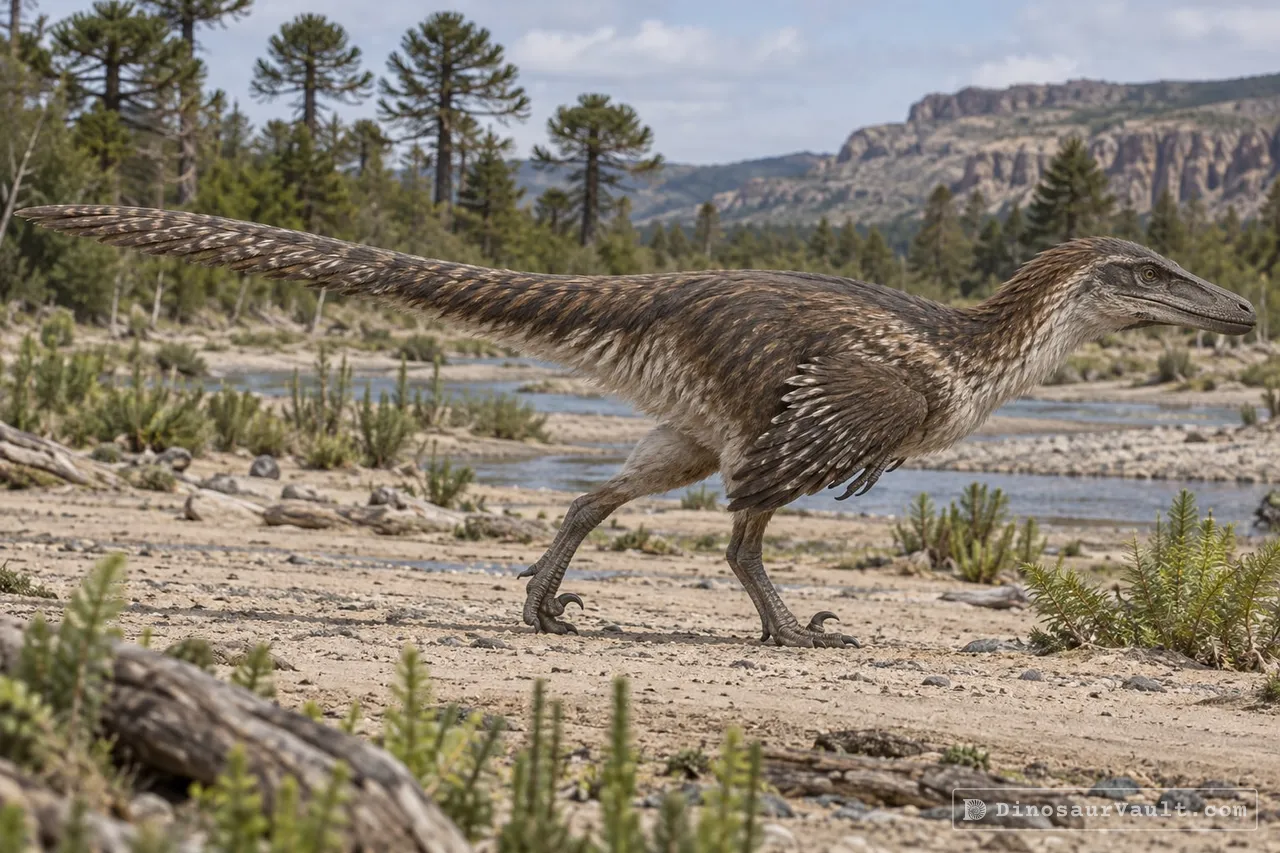
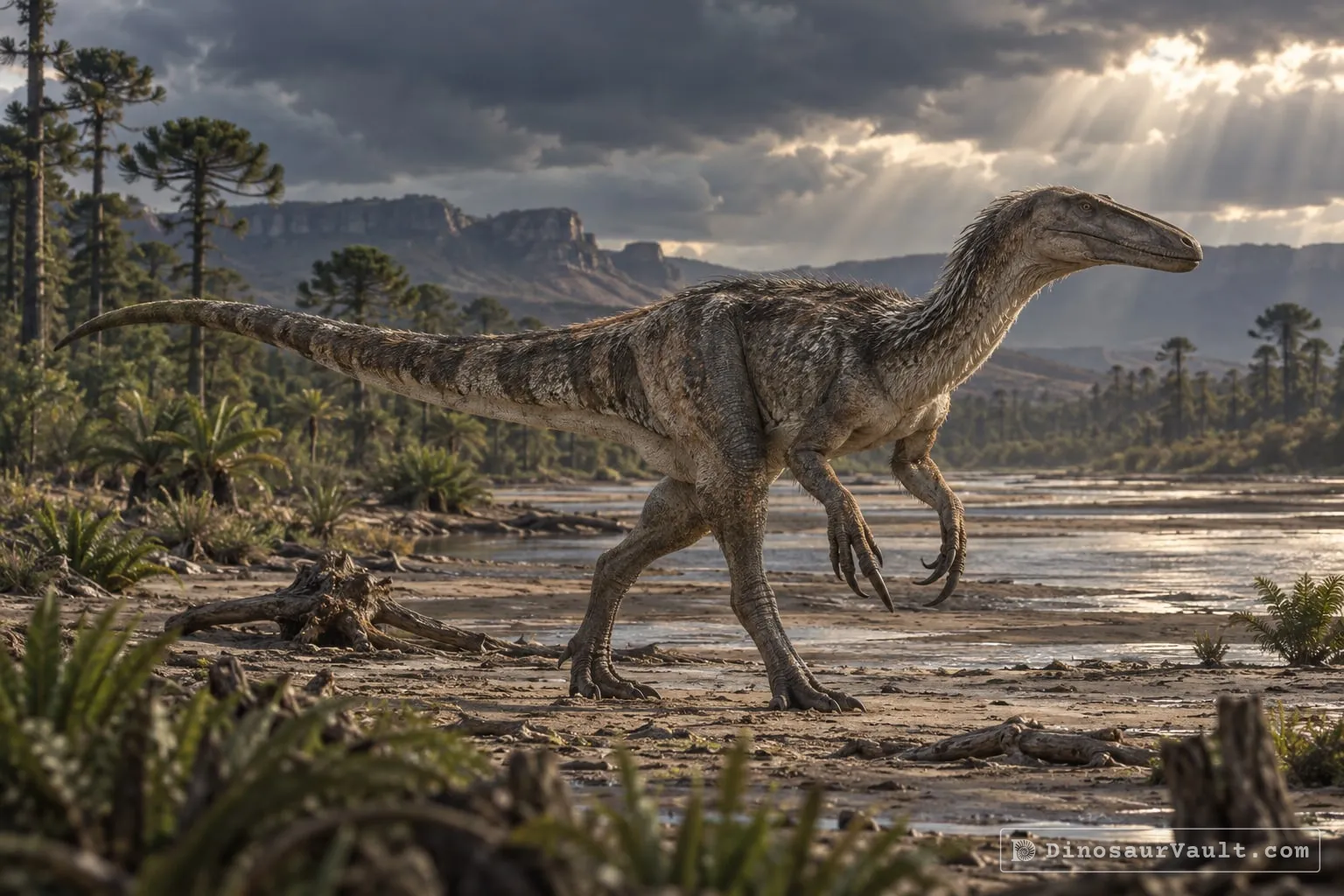
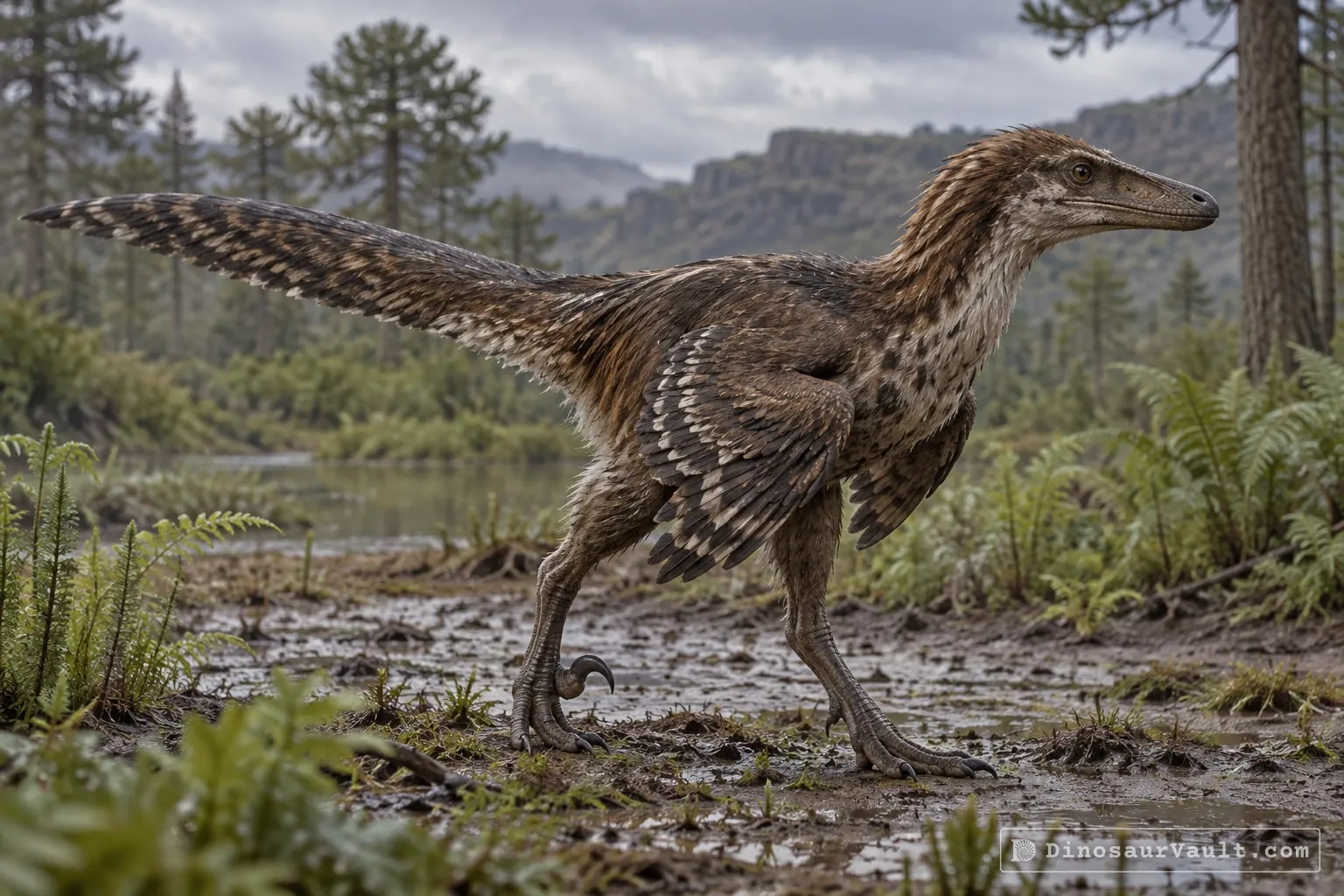
Unenlagia was a feathered, two-legged predator about 2.4 meters (8 feet) long, related to the raptors. Its shoulders allowed it to raise and fold its arms somewhat like a bird's wings, which gave it its name.
Its world
It lived about 94 to 86 million years ago, in the Late Cretaceous, in what is now Argentina. Its bones come from the Portezuelo Formation, where it shared the land with the big predator Megaraptor and the giant titanosaur Futalognkosaurus.
How it was found
Novas and Puerta named Unenlagia in 1997. A second species was named later. Some scientists think the small Neuquenraptor from the same rocks may be the same animal.
Field gallery
More views of Unenlagia
Scenes reconstructed from the available fossil evidence.
Lived alongside
Found in the same rock formations
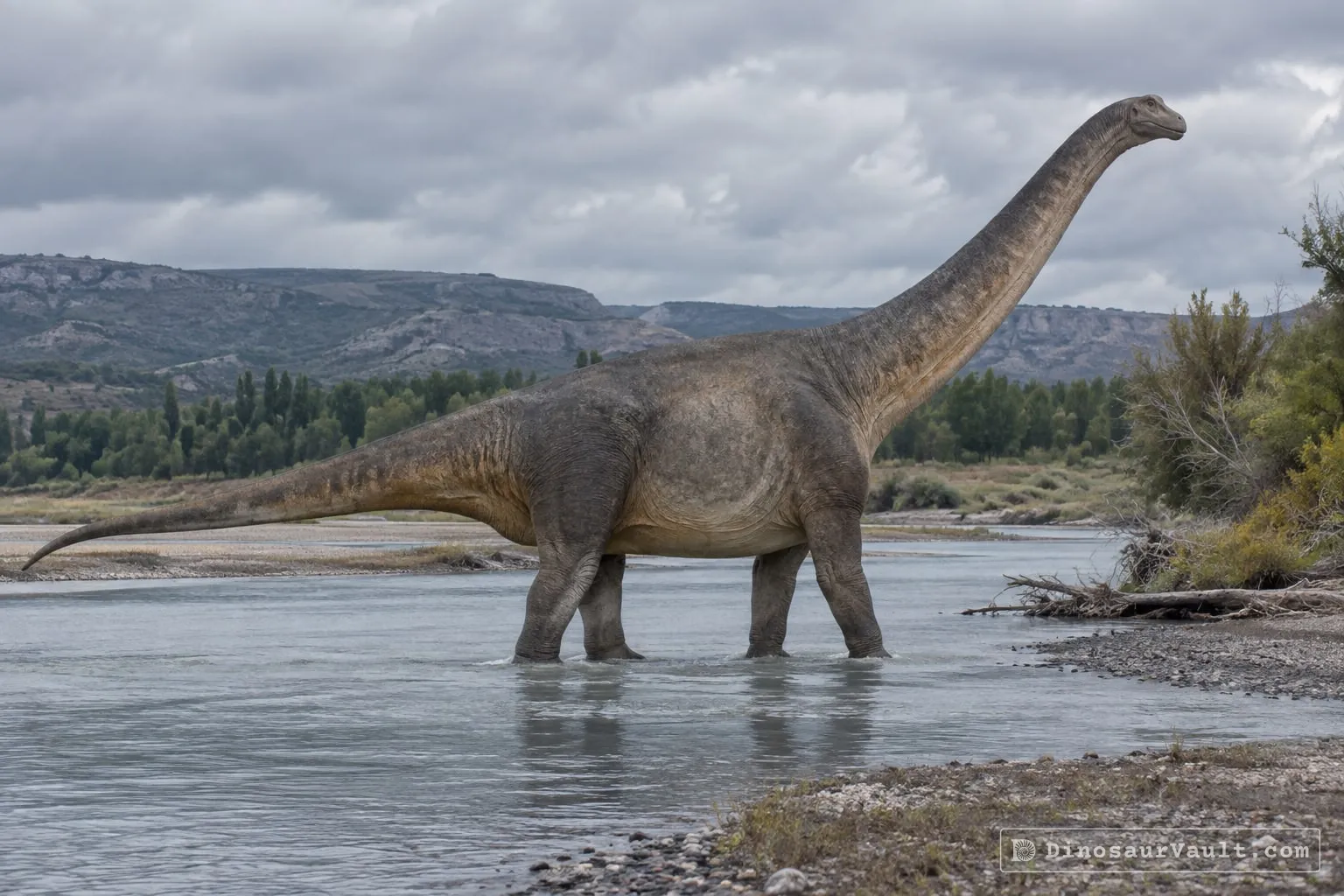
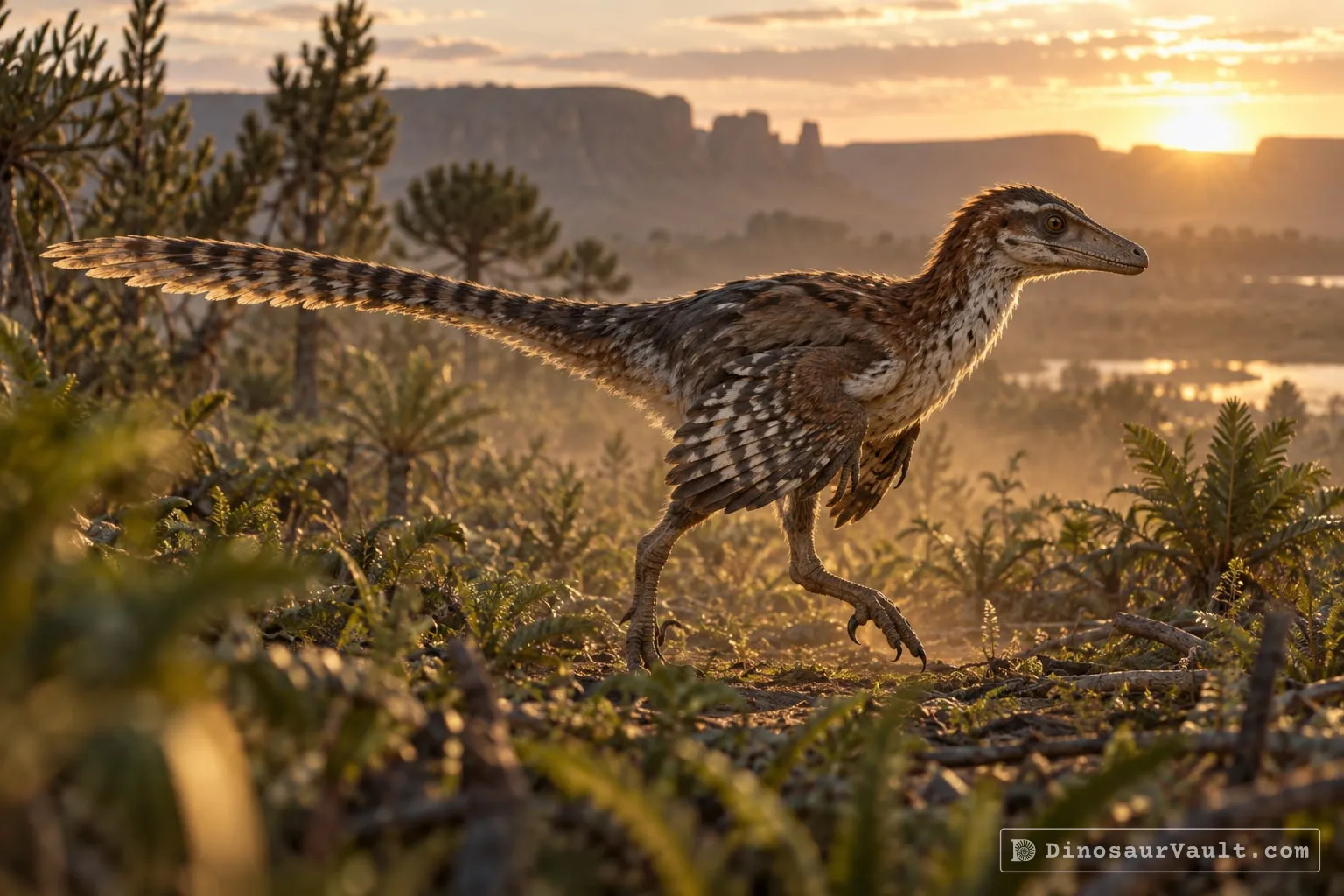
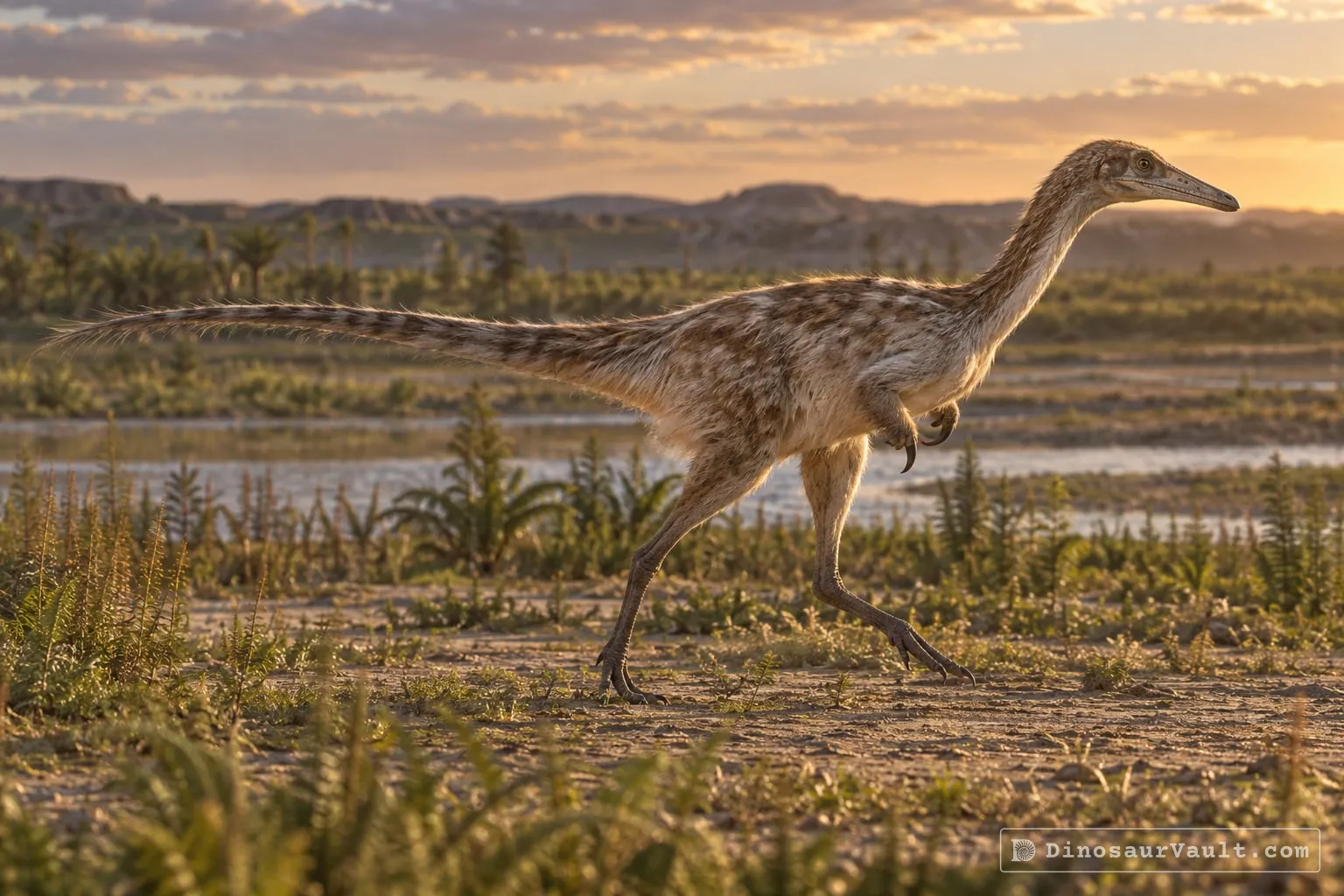
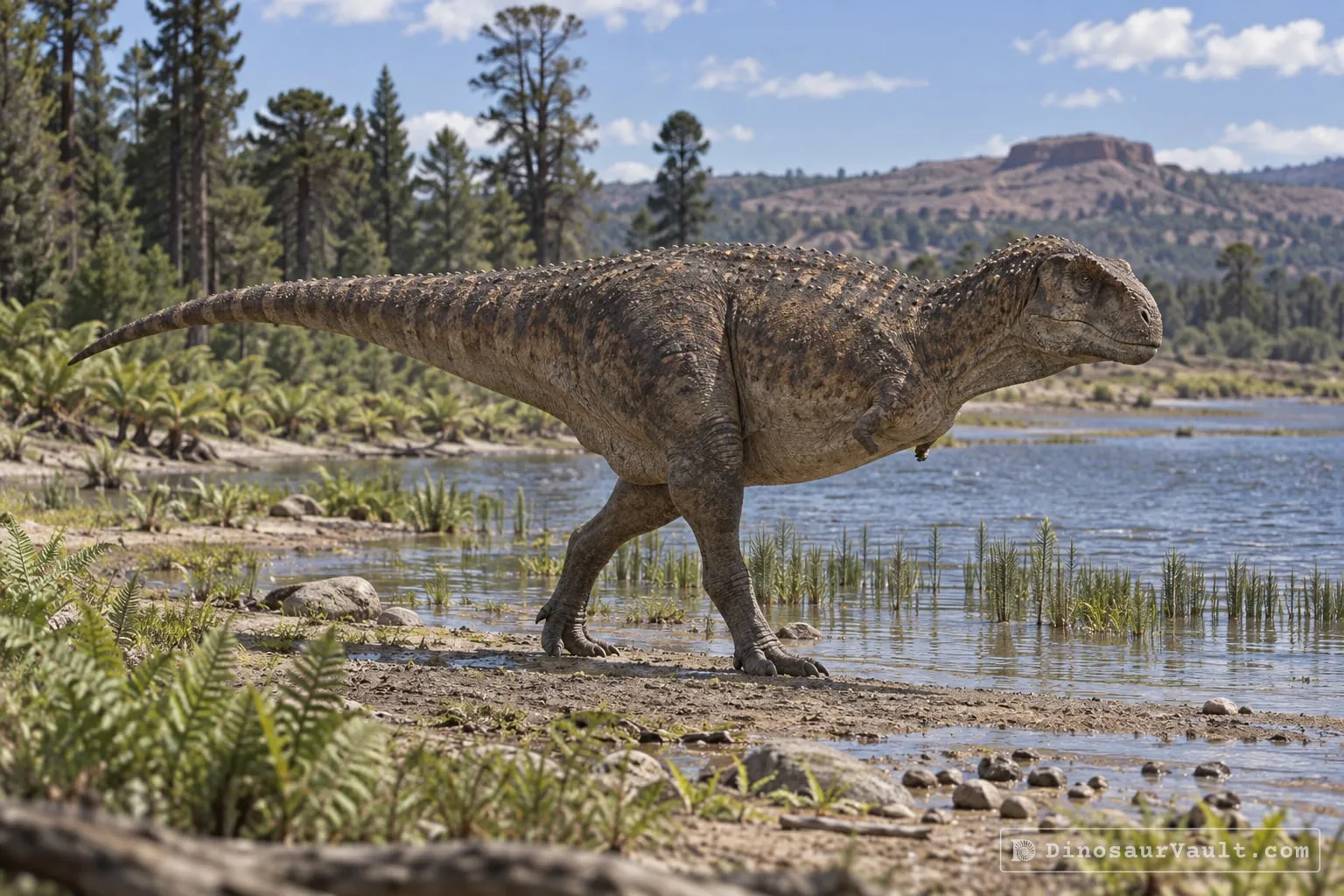
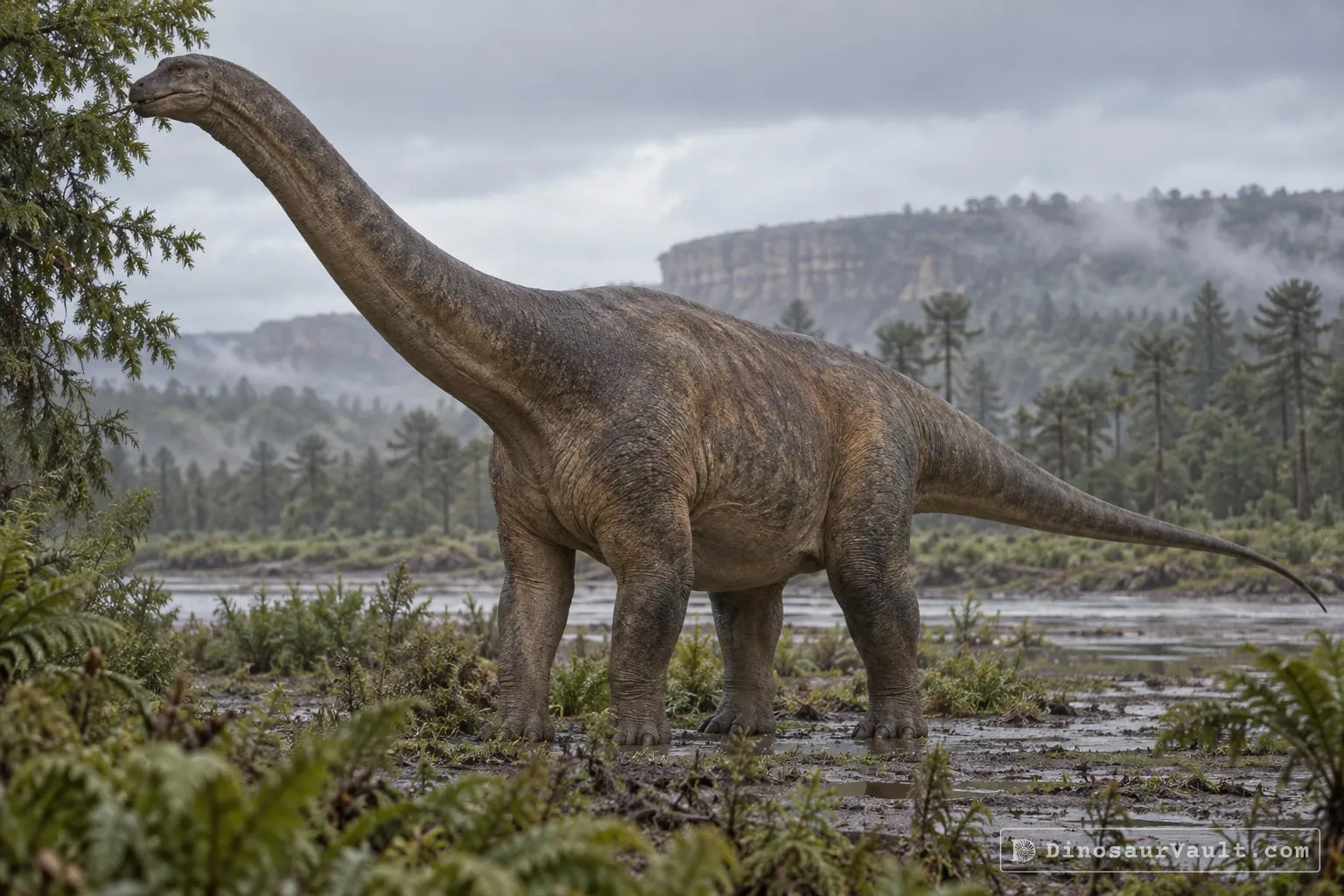


A rock formation can hold fossils laid down millions of years apart, so not every animal here met Unenlagia.
The evidence
The science behind Unenlagia
Which parts of the picture come from its own bones, and which come from its relatives.
From its own fossils
- An associated partial skeleton preserves vertebrae, ribs, shoulder bones, upper arms, hips and parts of the legs.
- Its long upper arms and slender shin bones give it a lightly built outline.
Borrowed from relatives
- Buitreraptor provides a guide to the missing head, hands and feet, including a raised curved claw on the second toe.
- Feathers preserved in Zhenyuanlong suggest that Unenlagia probably had body feathers and broad feathers along its arms.
Still unknown
- The shape of its skull and teeth.
- Its feather arrangement and color.
- Whether the named species were distinct, and exactly where it fits among birdlike dinosaurs.
Discovery timeline
- 1997Named itNovas & Puertat
- 2015SkinLü & Brusatte
- 2018Close relativeGianechini et al.
- 2021Full descriptionNovas et al.
Key papers
The research behind what we know of Unenlagia
Named it
Named Unenlagia from a partial skeleton with birdlike features in its shoulders and hips.
New evidence concerning avian origins from the Late Cretaceous of Patagonia. Nature 387: 390-392
Read the paper : New evidence concerning avian origins from the Late Cretaceous of Patagonia (opens in a new tab)Skin
Described Zhenyuanlong with broad arm feathers, showing that substantial feathered wings also occurred in large, short-armed relatives of birds.
A large, short-armed, winged dromaeosaurid (Dinosauria: Theropoda) from the Early Cretaceous of China and its implications for feather evolution. Scientific Reports 5
Read the paper : A large, short-armed, winged dromaeosaurid (Dinosauria: Theropoda) from the Early Cretaceous of China and its implications for feather evolution (opens in a new tab)Close relative
Described Buitreraptor hands and feet, including the raised second-toe claw used as a comparison for Unenlagia.
Postcranial skeletal anatomy of the holotype and referred specimens ofBuitreraptor gonzalezorumMakovicky, Apesteguía and Agnolín 2005 (Theropoda, Dromaeosauridae), from the Late Cretaceous of Patagonia. PeerJ 6: e4558
Read the paper : Postcranial skeletal anatomy of the holotype and referred specimens ofBuitreraptor gonzalezorumMakovicky, Apesteguía and Agnolín 2005 (Theropoda, Dromaeosauridae), from the Late Cretaceous of Patagonia (opens in a new tab)Full description
Described the original skeleton in detail and questioned whether the second named species could be distinguished from it.
Osteology of Unenlagia comahuensis (Theropoda, Paraves, Unenlagiidae) from the Late Cretaceous of Patagonia. The Anatomical Record 304: 2741-2788
Read the paper : Osteology of Unenlagia comahuensis (Theropoda, Paraves, Unenlagiidae) from the Late Cretaceous of Patagonia (opens in a new tab)
Close relatives
Other members of Dromaeosauridae


Sources: Wikidata