Neuquenraptor
"Neuquén thief"
Type species Neuquenraptor argentinus
- Lived
- 94 to 86 million years ago, Late Cretaceous
- Diet
- Carnivore
- Group
- Theropods, Dromaeosauridae
- Found in
- Argentina
- Named by
- Novas and Pol 2005
Where its fossils were found
The evidence
Today

90 million years ago
Habitat
Winding rivers crossed a flat landscape with forests of flowering plants and some conifers. Dinosaurs from the Portezuelo Formation include Megaraptor, Futalognkosaurus and Unenlagia.
Field notes
About Neuquenraptor
What it was like
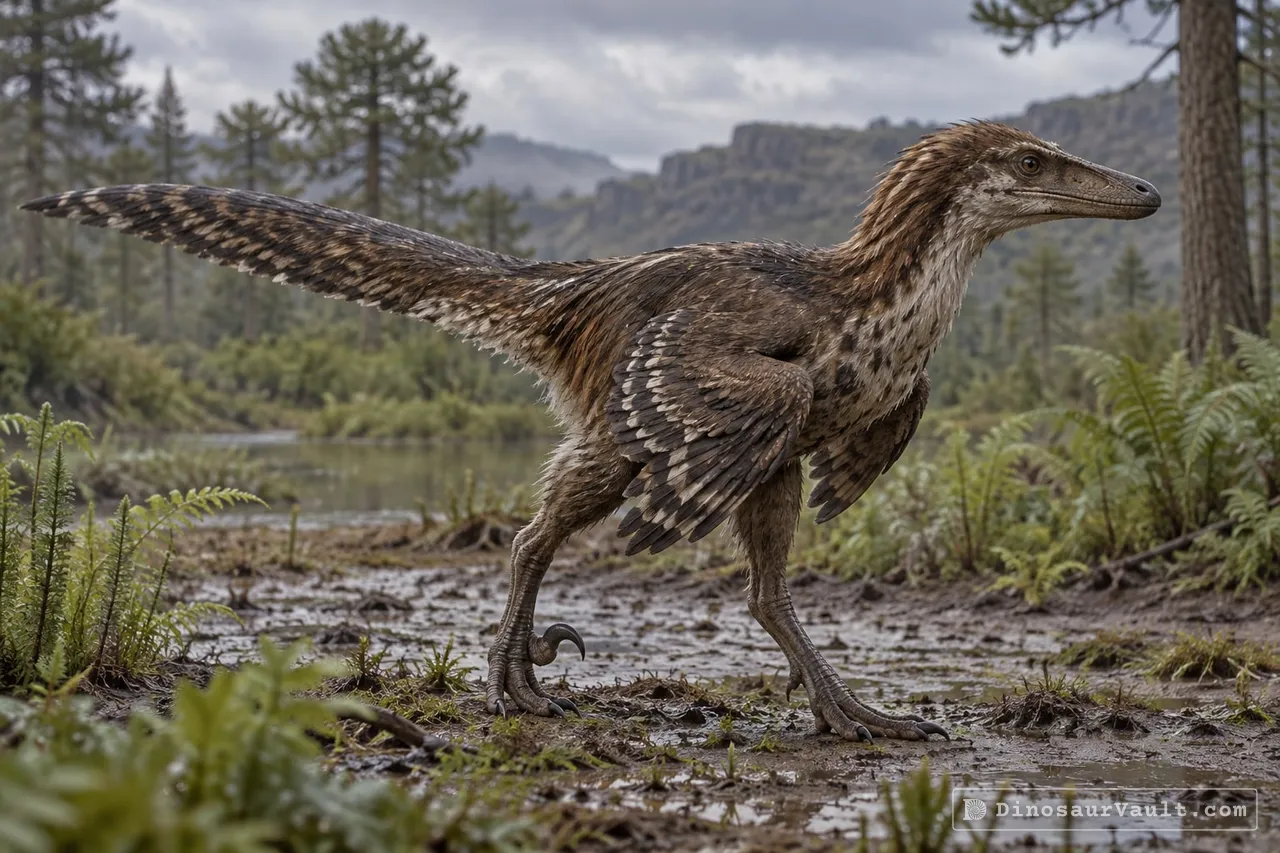
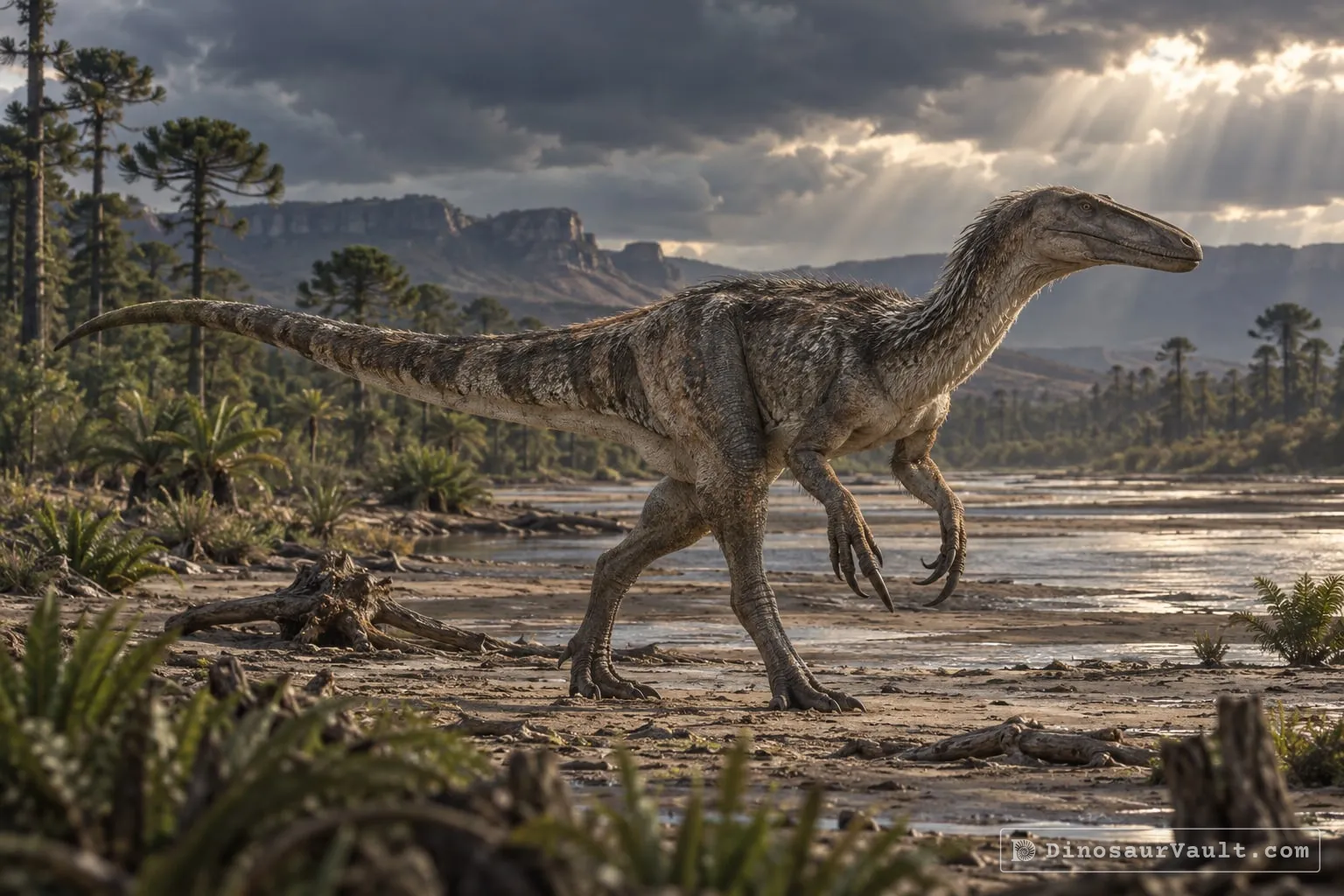
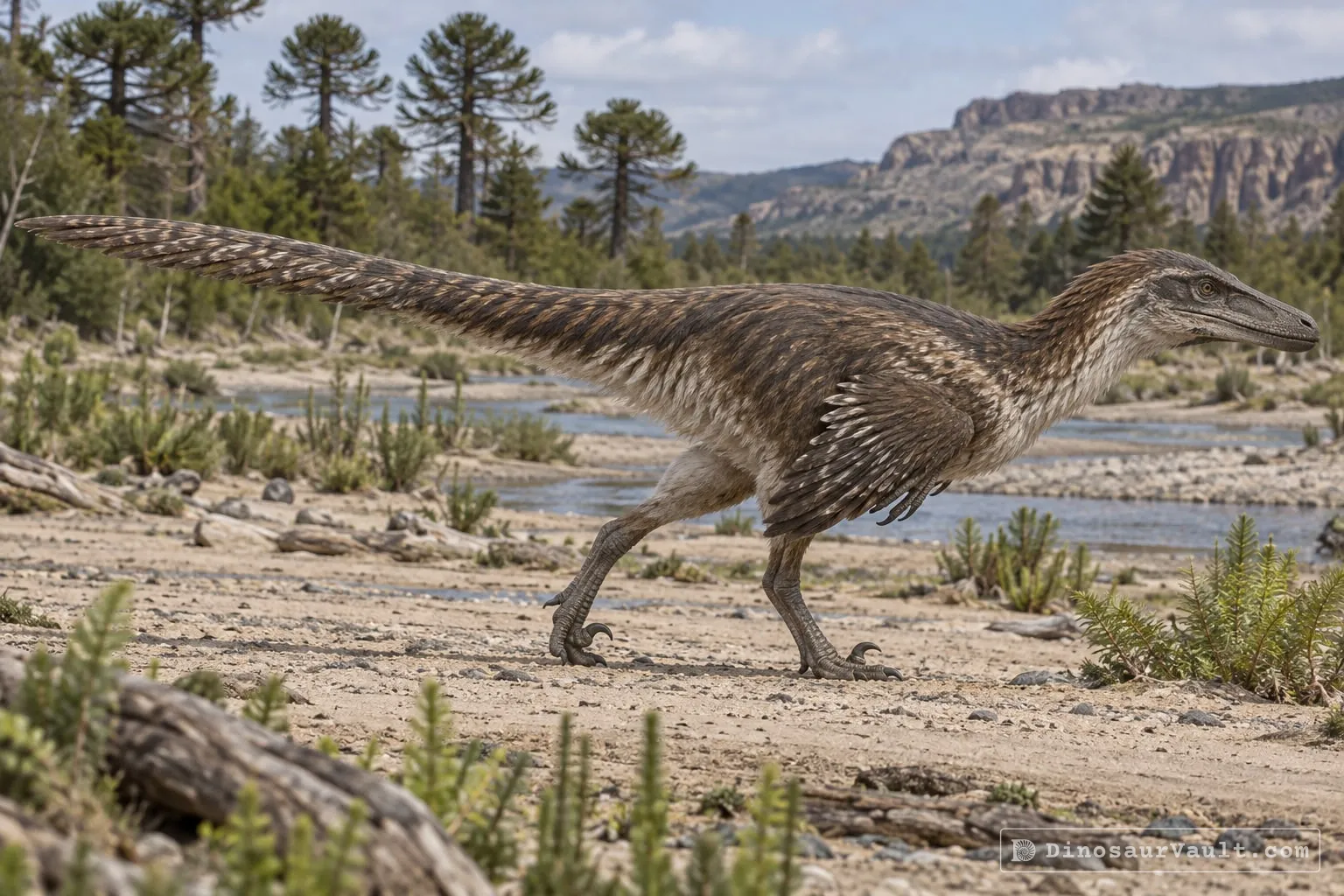
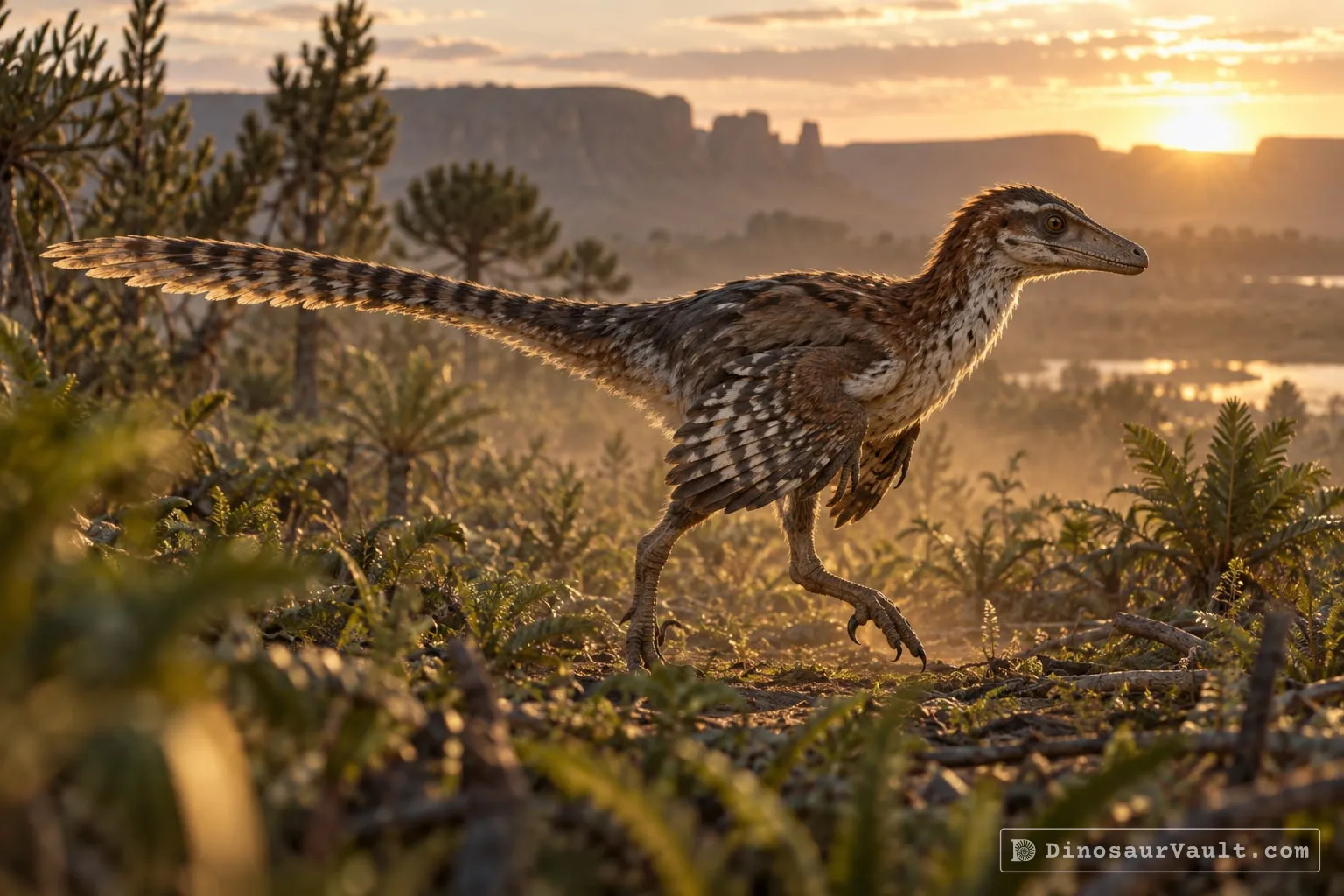
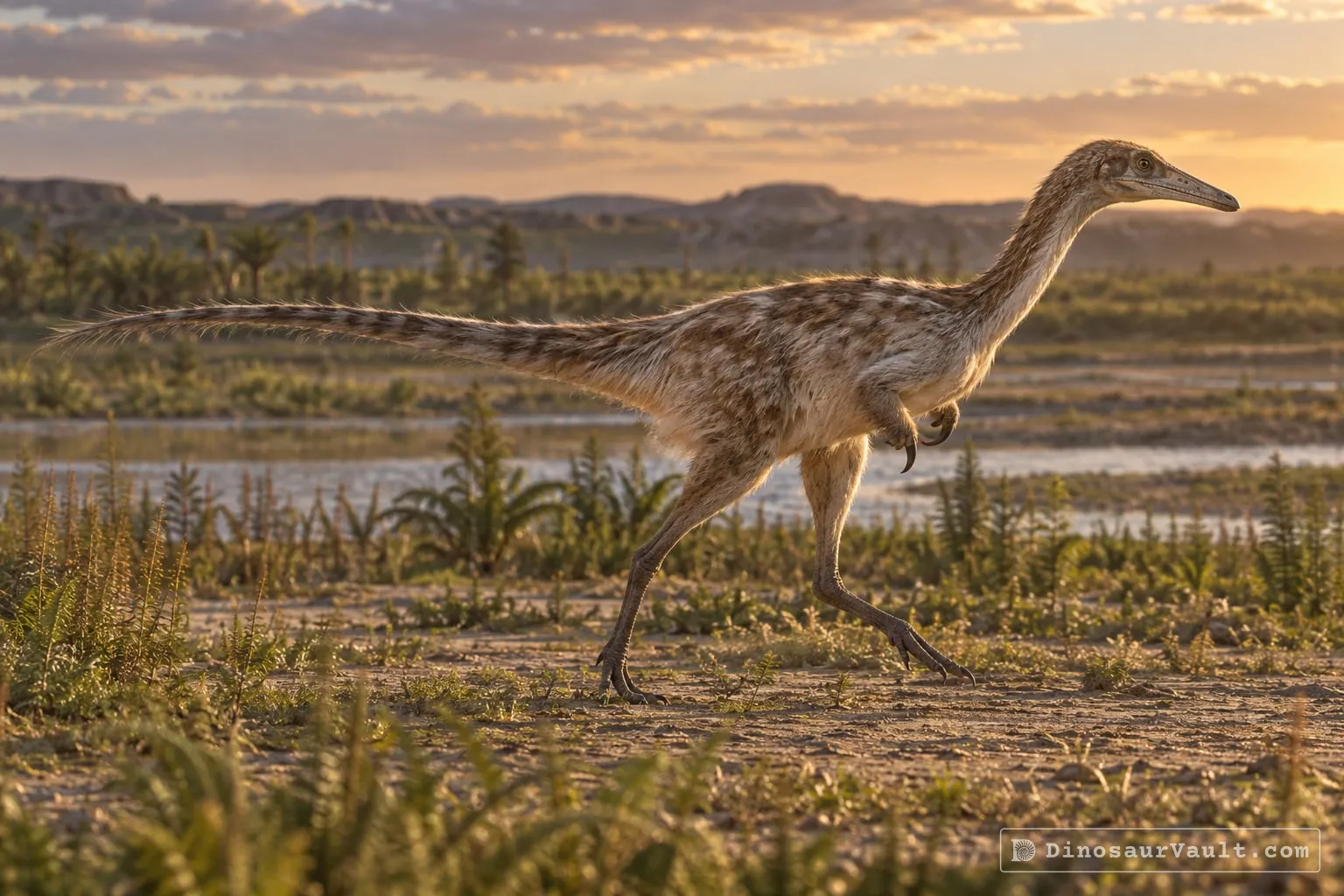
Neuquenraptor was a feathered two-legged hunter, a relative of the raptors. It is known from a foot with a large sickle-shaped claw and a few other bones. Some scientists think it may be the same animal as Unenlagia, found in the same rocks.
Its world
It lived about 94 to 86 million years ago, in the Late Cretaceous, in what is now Argentina. Its bones come from the Portezuelo Formation, where it shared the land with the big predator Megaraptor and the giant titanosaur Futalognkosaurus.
How it was found
Novas and Pol named it in 2005. The type species is Neuquenraptor argentinus.
Field gallery
More views of Neuquenraptor
Scenes reconstructed from the available fossil evidence.
Lived alongside
Found in the same rock formations
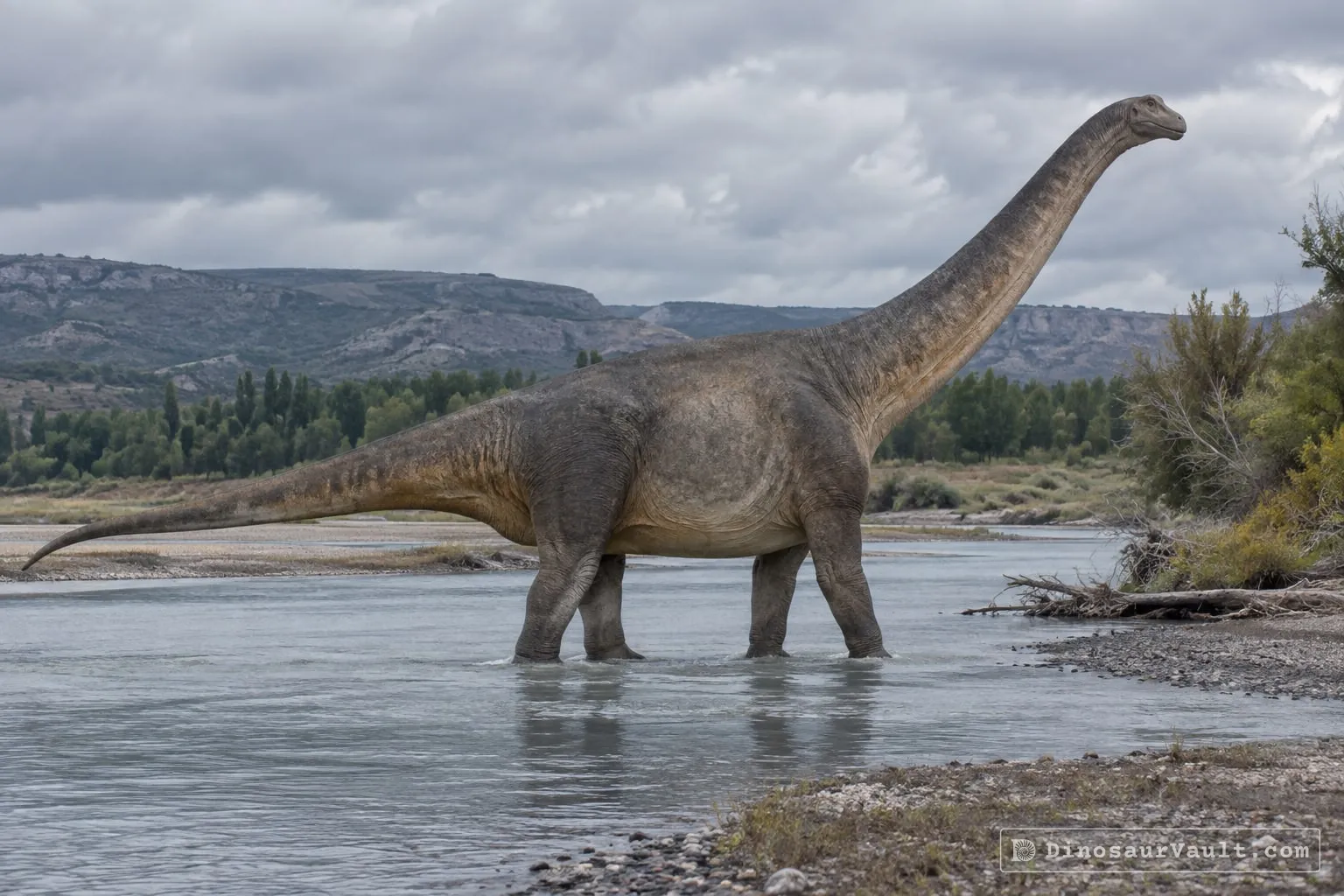
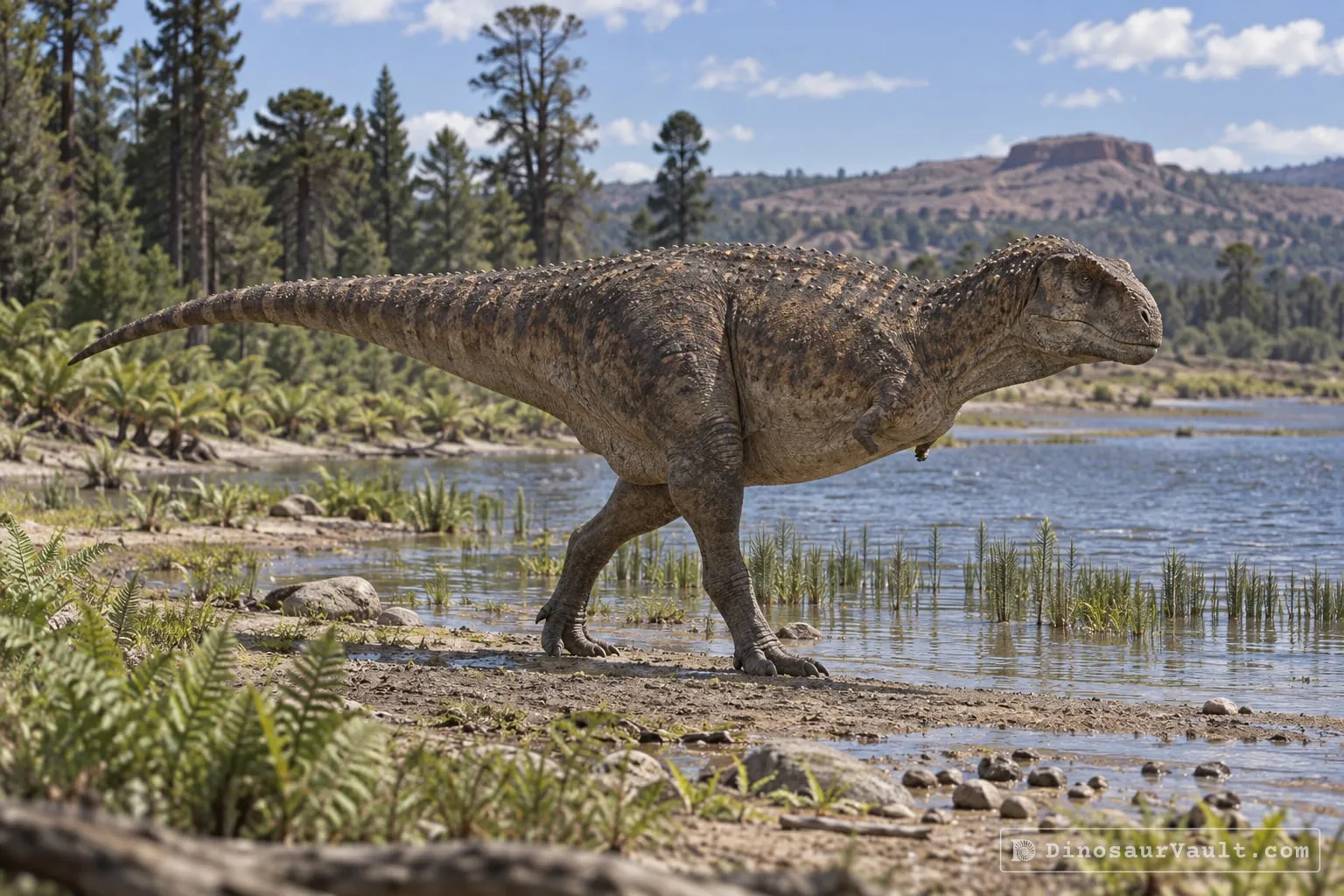
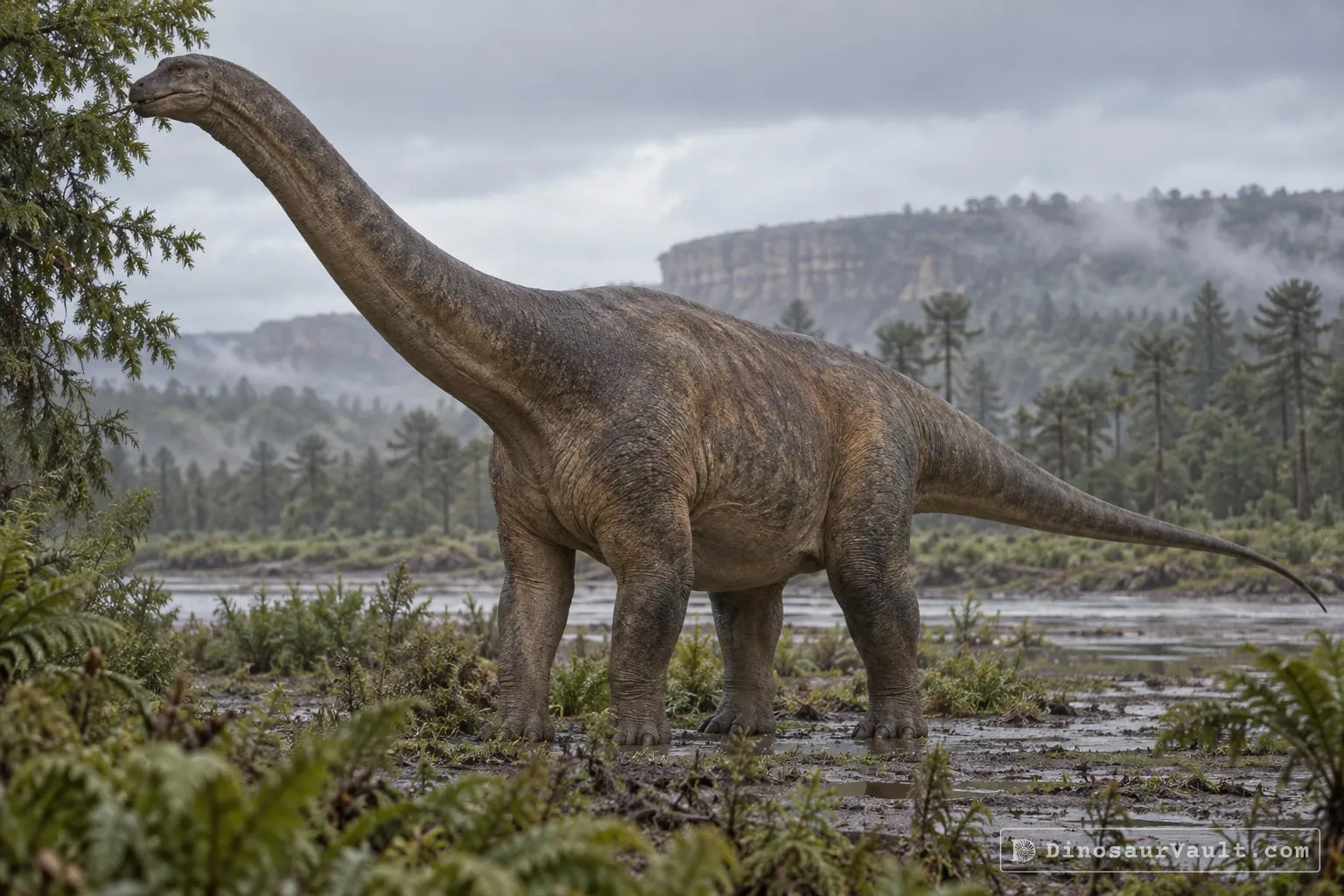


A rock formation can hold fossils laid down millions of years apart, so not every animal here met Neuquenraptor.
The evidence
The science behind Neuquenraptor
Which parts of the picture come from its own bones, and which come from its relatives.
From its own fossils
- A fragmentary skeleton includes most of a left foot, parts of the hind leg, a forearm bone, ribs and bones from beneath the tail.
- The inner weight-bearing toe carried an enlarged, curved claw.
Borrowed from relatives
- The missing trunk and limbs are restored using related animals such as Unenlagia and Buitreraptor.
- A feathered covering is inferred from feathered relatives in the wider raptor family, such as Microraptor.
Still unknown
- Whether Neuquenraptor and Unenlagia belong to the same genus.
- The shape of its skull and teeth.
- Its feather colors and pattern.
Discovery timeline
- 2003Close relativeXu et al.
- 2005Named itNovas & Pol
- 2005Family treeMakovicky, Apesteguía & Agnolín
- 2007Its worldCalvo et al.
- 2017Full descriptionBrissón Egli et al.
Key papers
The research behind what we know of Neuquenraptor
Close relative
Described feathers on Microraptor, providing a comparison for the feathered covering inferred for Neuquenraptor.
Four-winged dinosaurs from China. Nature 421: 335-340
Read the paper : Four-winged dinosaurs from China (opens in a new tab)Named it
Named Neuquenraptor and showed that raptor-like dinosaurs also lived in South America.
New evidence on deinonychosaurian dinosaurs from the Late Cretaceous of Patagonia. Nature 433: 858-861
Read the paper : New evidence on deinonychosaurian dinosaurs from the Late Cretaceous of Patagonia (opens in a new tab)Family tree
Described Buitreraptor and identified a distinct southern branch of the raptor family, helping place Neuquenraptor among its relatives.
The earliest dromaeosaurid theropod from South America. Nature 437: 1007-1011
Read the paper : The earliest dromaeosaurid theropod from South America (opens in a new tab)Its world
Described Futalognkosaurus and a river landscape with flowering plants, conifers and other dinosaurs from the Portezuelo Formation.
A new Cretaceous terrestrial ecosystem from Gondwana with the description of a new sauropod dinosaur. Anais da Academia Brasileira de Ciências 79: 529-541
Read the paper : A new Cretaceous terrestrial ecosystem from Gondwana with the description of a new sauropod dinosaur (opens in a new tab)Full description
Described the surviving bones in detail and compared Neuquenraptor with Unenlagia and other southern raptors.
Osteology of the unenlagiid theropod Neuquenraptor argentinus from the Late Cretaceous of Patagonia. Acta Palaeontologica Polonica 62
Read the paper : Osteology of the unenlagiid theropod Neuquenraptor argentinus from the Late Cretaceous of Patagonia (opens in a new tab)
Close relatives
Other members of Dromaeosauridae


Sources: Wikidata