Tsaagan
"white"
- Lived
- 84 to 72 million years ago, Late Cretaceous
- Diet
- Carnivore
- Group
- Theropods, Dromaeosauridae
- Found in
- Mongolia
- Named by
- Norell et al. 2006
Where its fossils were found
The evidence
Today

80 million years ago
Habitat
Sand dunes and dry ground formed much of the Djadokhta landscape in Mongolia. Protoceratops, Citipati and Velociraptor were among the other dinosaurs in these rocks.
Field notes
About Tsaagan
What it was like
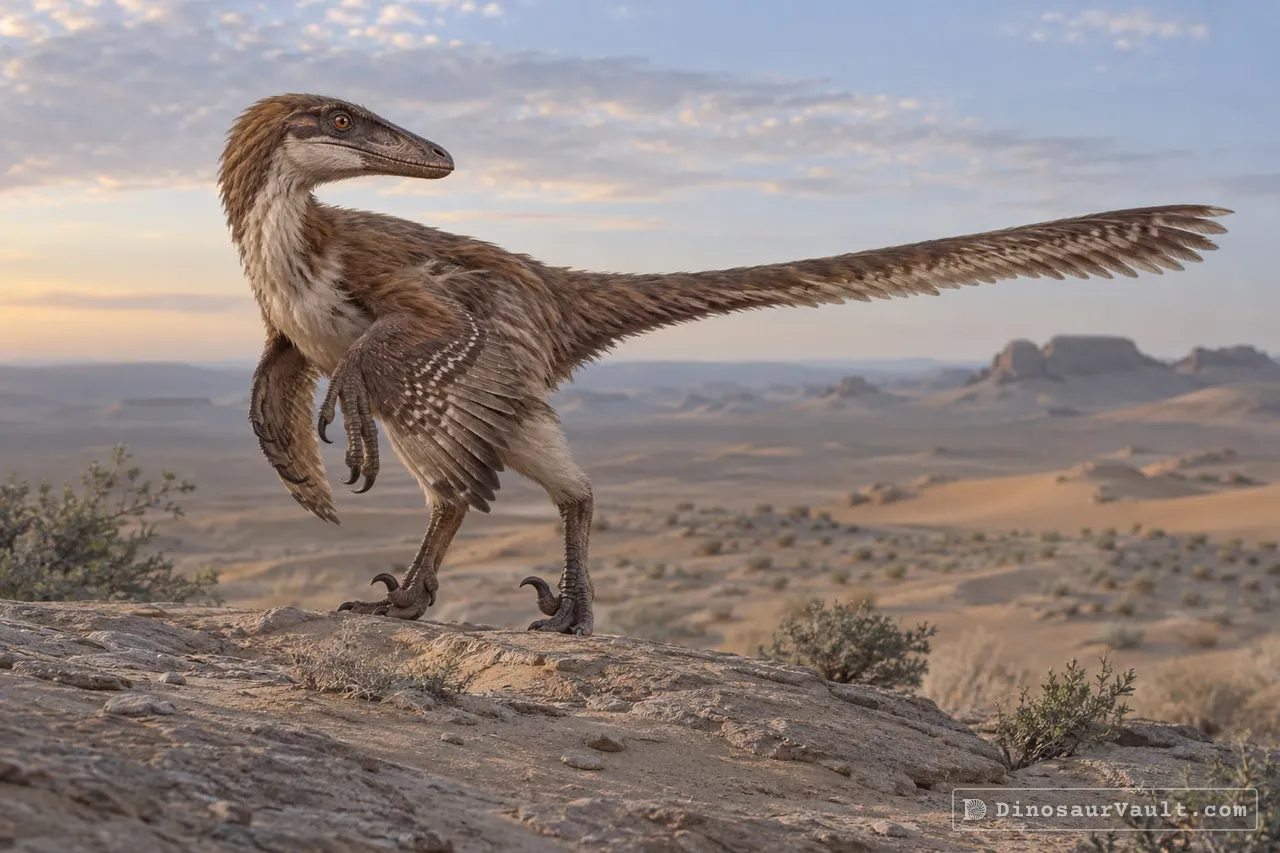
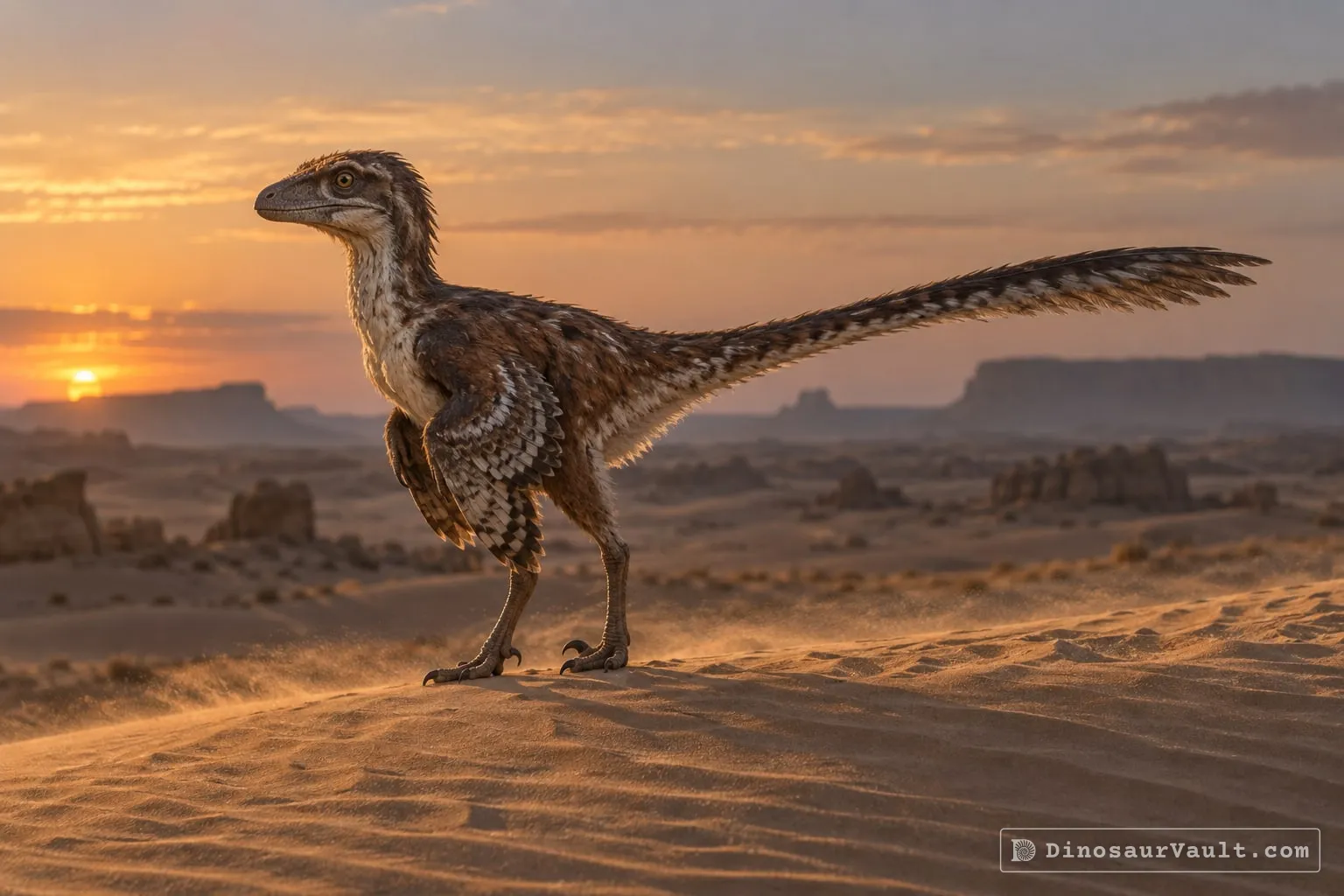
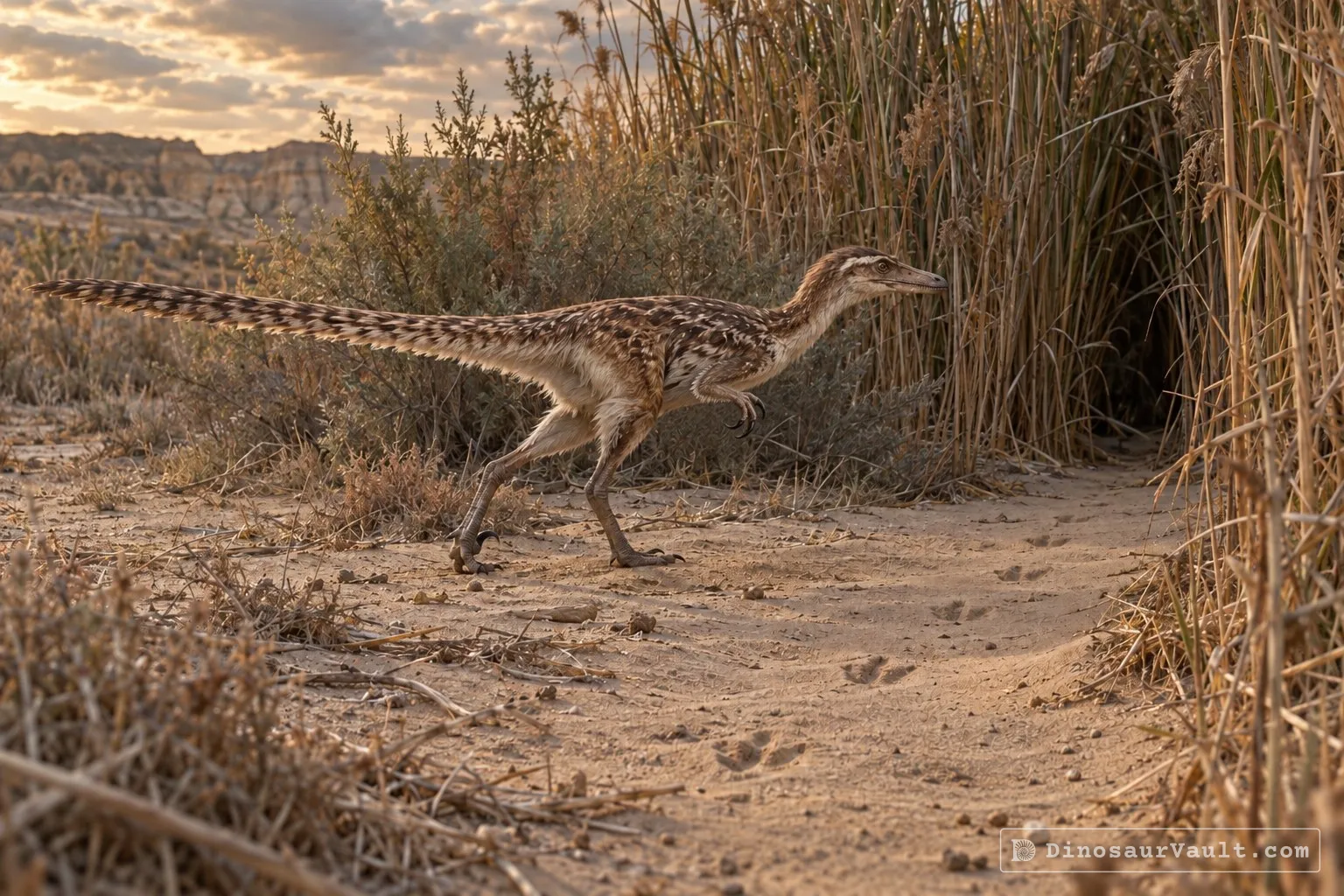
Tsaagan was a small feathered hunter from the raptor family, a close relative of Velociraptor. It is known from a well-preserved skull and neck. Like other raptors, it probably had a large sickle-shaped claw on each foot.
Its world
It lived in the Late Cretaceous in what is now Mongolia. Its bones come from the Djadokhta Formation, a dry land of sand dunes where Velociraptor, Protoceratops and the oviraptor Citipati also lived.
How it was found
Norell and colleagues named Tsaagan in 2006 from one find. Its full name, Tsaagan mangas, means "white monster" in Mongolian.
Field gallery
More views of Tsaagan
Scenes reconstructed from the available fossil evidence.
1 of 3
Lived alongside
Found in the same rock formations
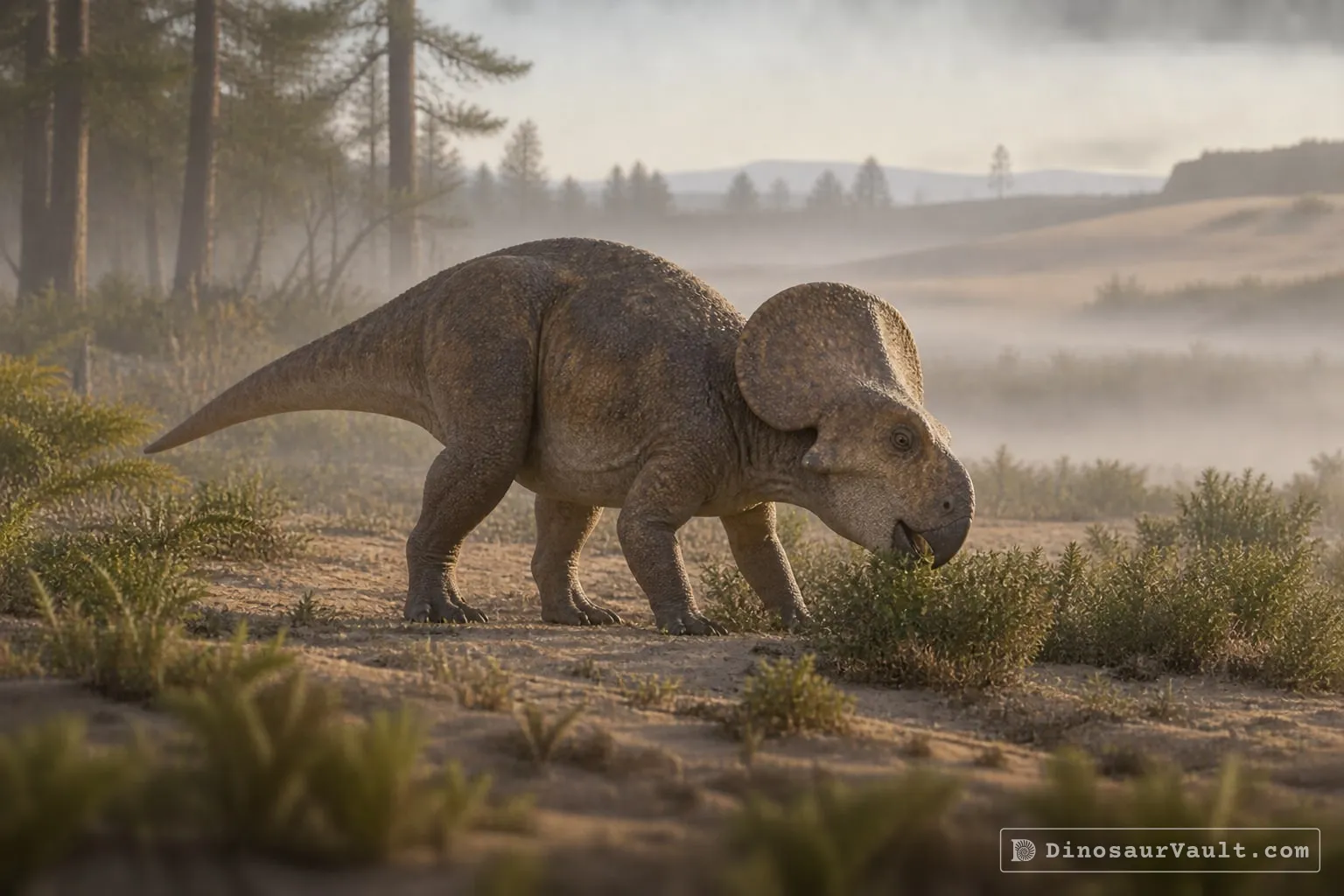
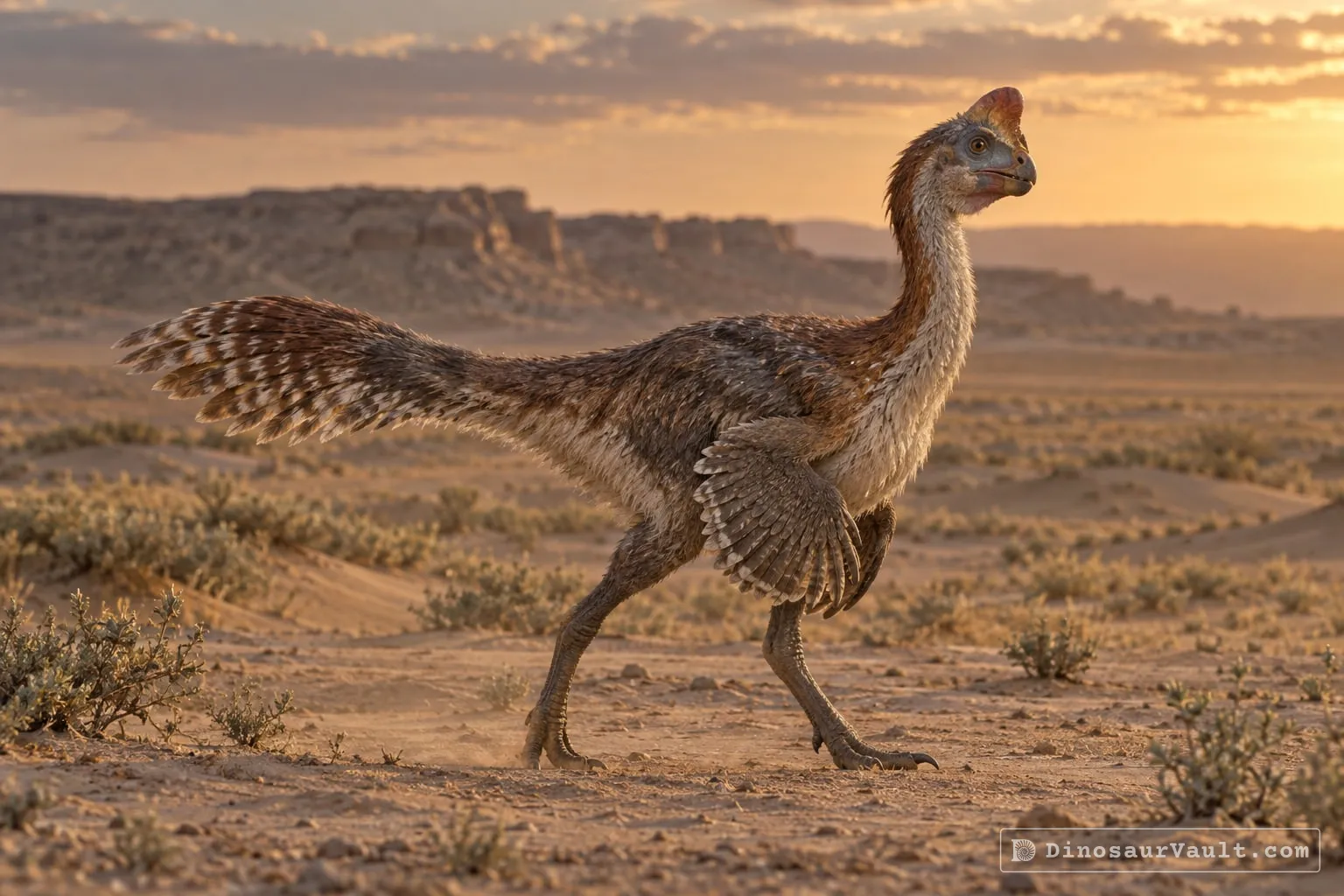
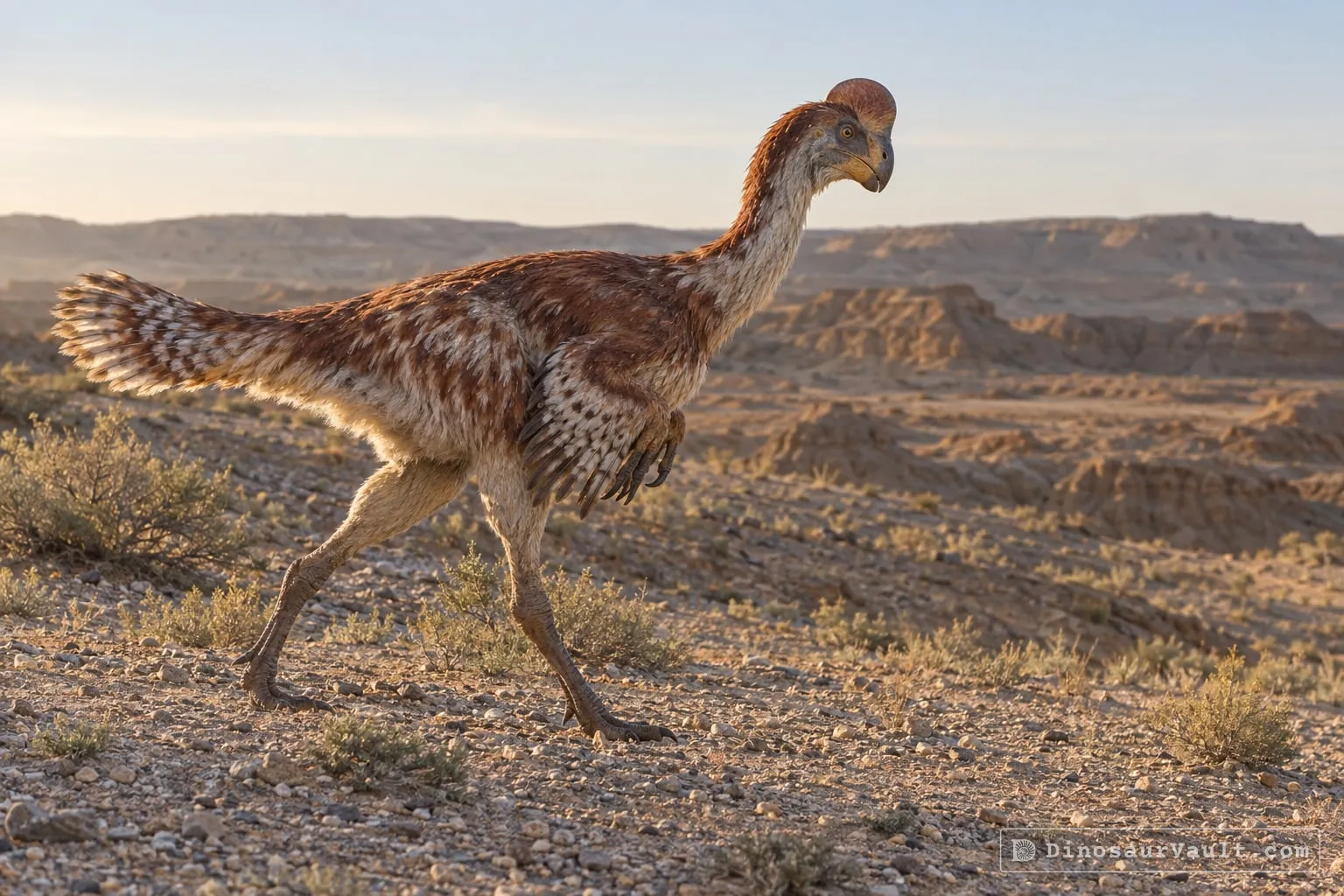
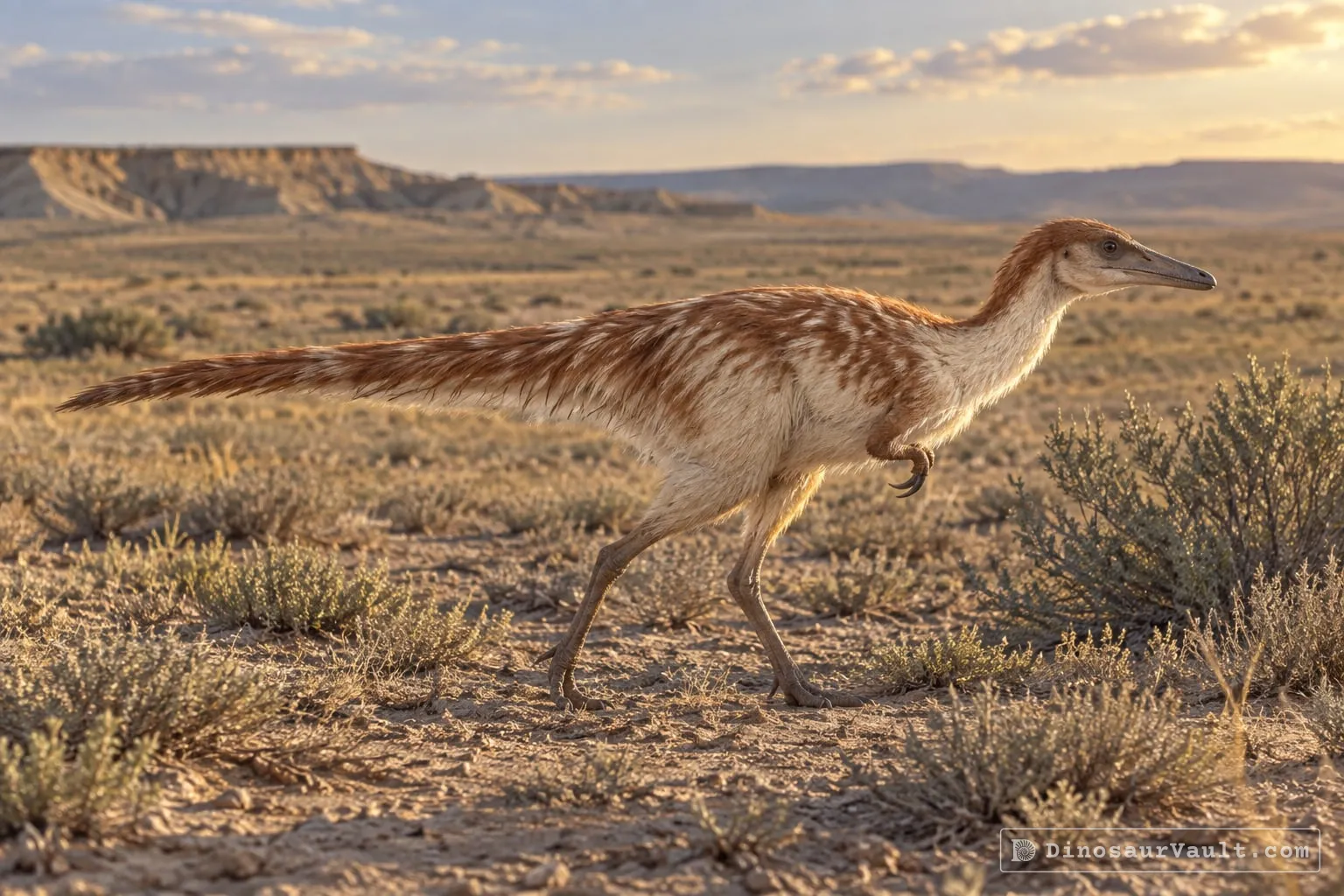
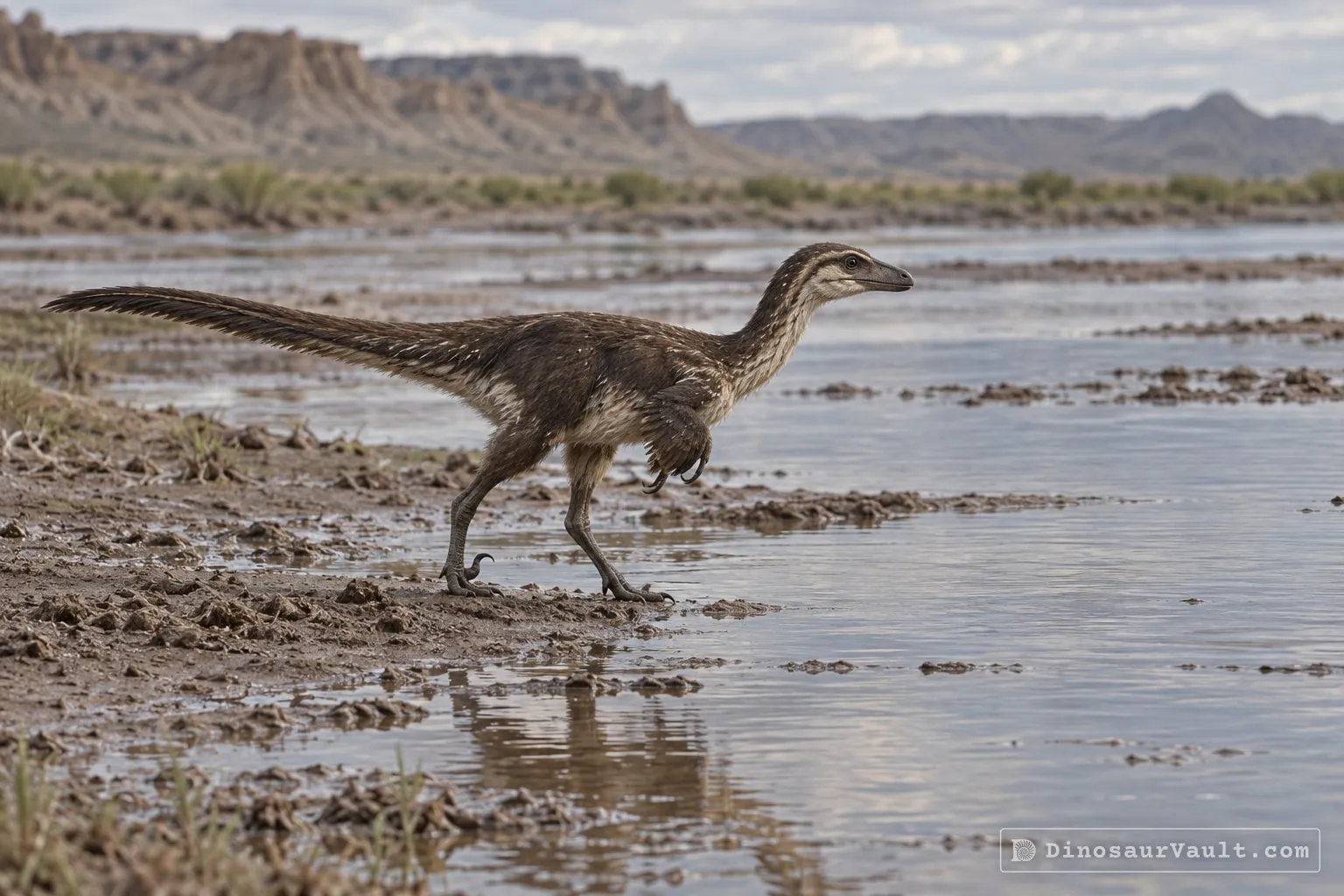
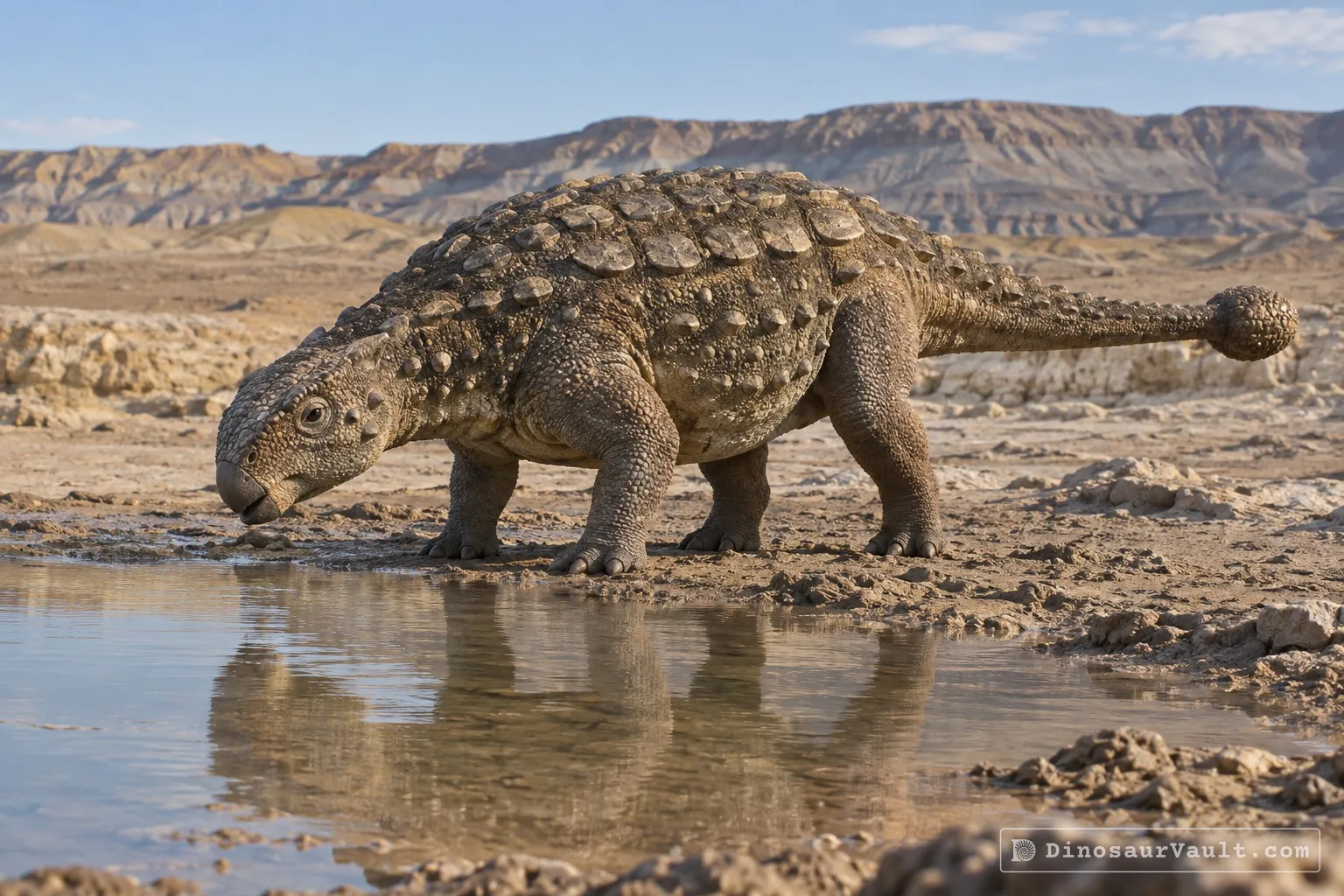


A rock formation can hold fossils laid down millions of years apart, so not every animal here met Tsaagan.
The evidence
The science behind Tsaagan
Which parts of the picture come from its own bones, and which come from its relatives.
From its own fossils
- A well-preserved skull and lower jaw show a long snout and strong jaws.
- Neck vertebrae and part of the shoulder are also preserved.
- Fused joints in the skull and neck identify the original specimen as an adult.
Borrowed from relatives
- The legs, sickle-shaped foot claws and tail are usually restored from relatives such as Velociraptor and Deinonychus.
- A feathered covering is inferred from feather evidence in other raptors, including the forearm attachment bumps reported in Velociraptor.
Still unknown
- The exact proportions of its legs and tail.
- Its feather colors and patterns.
- Which animals it usually hunted.
Discovery timeline
- 2006Named itNorell et al.
- 2007Close relativeTurner, Makovicky & Norell
- 2012Family treeTurner, Makovicky & Norell
Key papers
The research behind what we know of Tsaagan
Named it
Named Tsaagan from its skull and neck bones, using scans to describe the braincase and establish its place among raptors.
A New Dromaeosaurid Theropod from Ukhaa Tolgod (Ömnögov, Mongolia). American Museum Novitates 3545: 1
Read the paper : A New Dromaeosaurid Theropod from Ukhaa Tolgod (Ömnögov, Mongolia) (opens in a new tab)Close relative
Reported feather attachment bumps on a forearm bone assigned to Velociraptor, supporting feathered restorations of related raptors.
Feather quill knobs in the dinosaur Velociraptor. Science 317: 1721
Read the paper : Feather quill knobs in the dinosaur Velociraptor (opens in a new tab)Family tree
Compared raptor anatomy and tested the relationships of Tsaagan and other dinosaurs close to the origin of birds.
A Review of Dromaeosaurid Systematics and Paravian Phylogeny. Bulletin of the American Museum of Natural History 371: 1-206
Read the paper : A Review of Dromaeosaurid Systematics and Paravian Phylogeny (opens in a new tab)
Close relatives
Other members of Dromaeosauridae


Sources: Wikidata