Tlatolophus
"word crest"
Type species Tlatolophus galorum
- Lived
- 84 to 72 million years ago, Late Cretaceous
- Diet
- Herbivore
- Group
- Ornithopods, Hadrosauridae
- Found in
- Mexico
- Named by
- Ramírez-Velasco et al. 2021
Where its fossils were found
The evidence
Today

80 million years ago
Habitat
A low coastal plain with marshes and lagoons in what is now Mexico. Flowering plants grew here, and neighbors included Velafrons, Latirhinus and Xenovenator.
Field notes
About Tlatolophus
What it was like
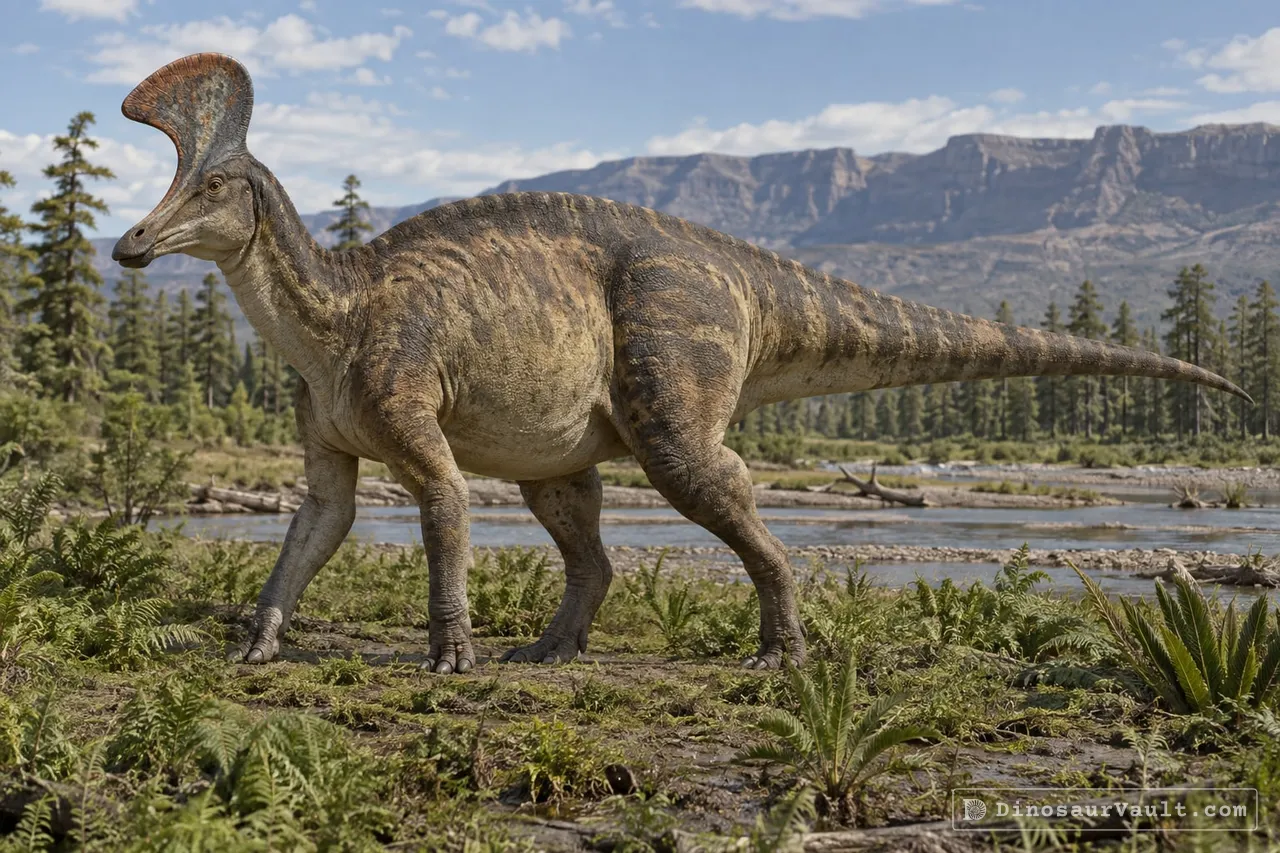
Tlatolophus was a duck-billed dinosaur with a large, hollow crest on its head, a close relative of Parasaurolophus. Its crest curved up and back and was shaped a little like a comma.
Like its relatives, it may have used the crest to make loud calls.
Its world
It lived about 84 to 72 million years ago, in the Late Cretaceous, in what is now northern Mexico. Its bones come from the Cerro del Pueblo Formation, where it shared the land with the crested Velafrons, the big-nosed Latirhinus and the troodontid Xenovenator.
How it was found
Ramírez-Velasco and colleagues named Tlatolophus in 2021, from a single find with a nearly complete crest. The name comes from a local word for "word" and a Greek word for crest, because the crest looked like a sign used in old writings of the region to show speech.
Field gallery
More views of Tlatolophus
Scenes reconstructed from the available fossil evidence.
Lived alongside
Found in the same rock formations
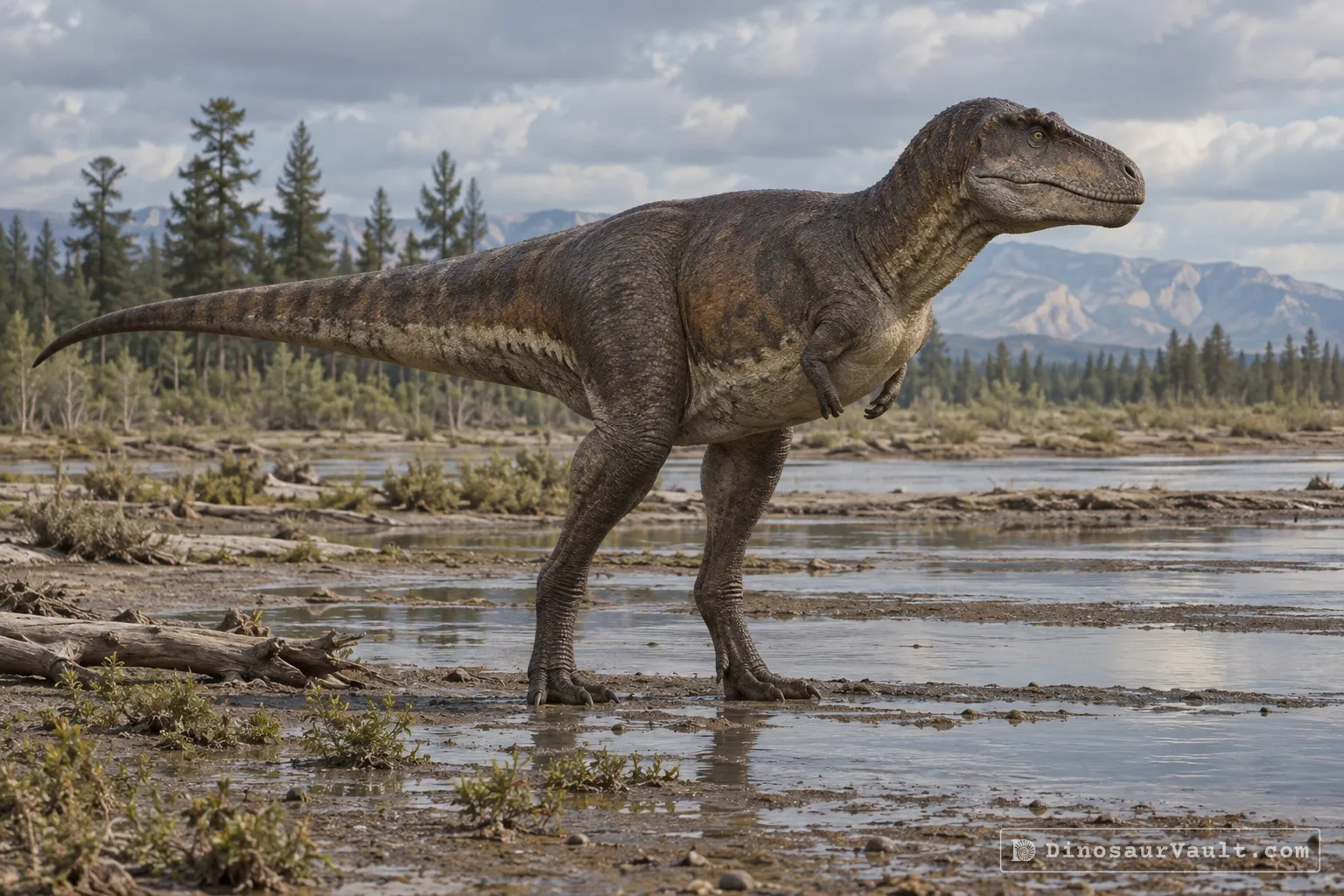
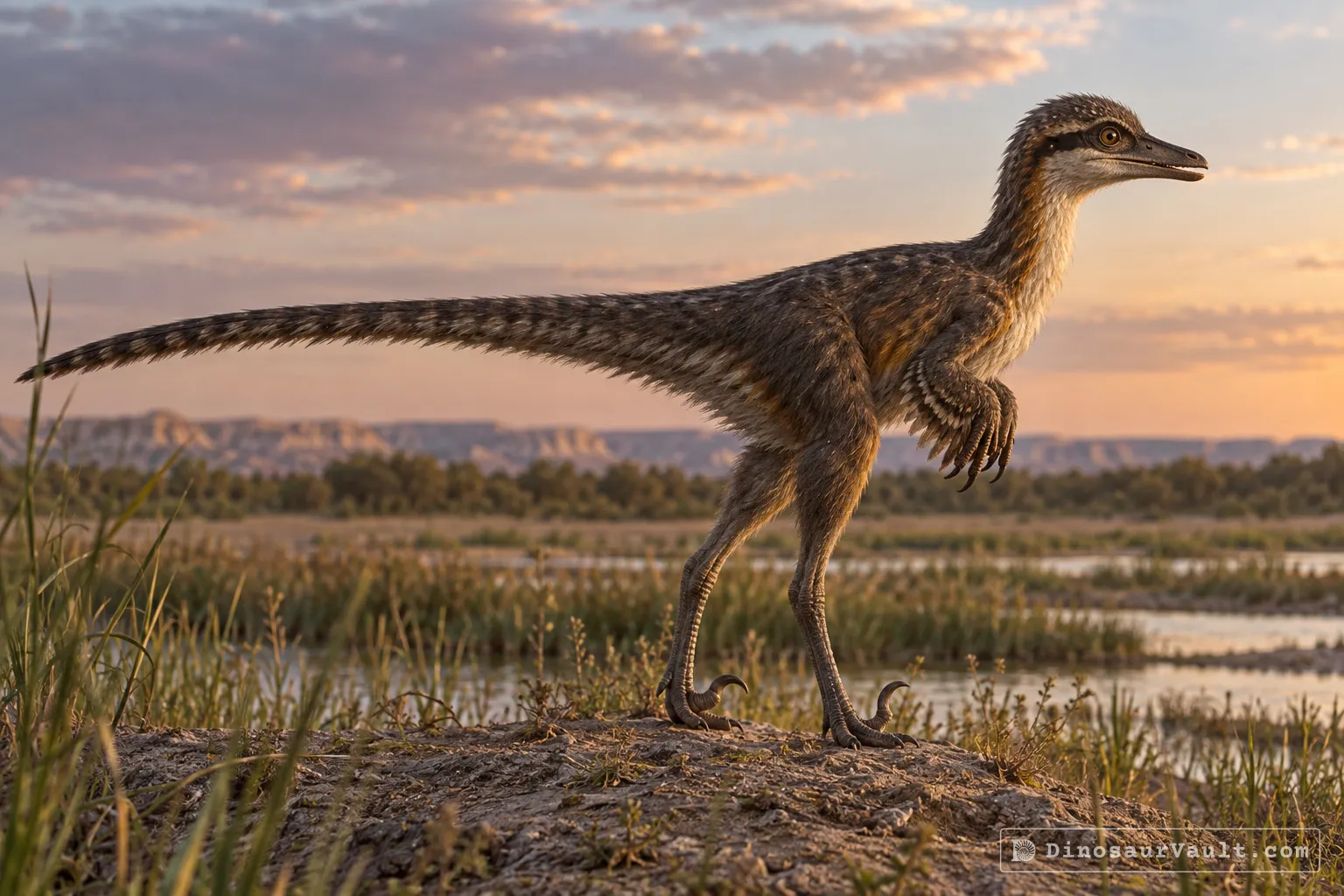
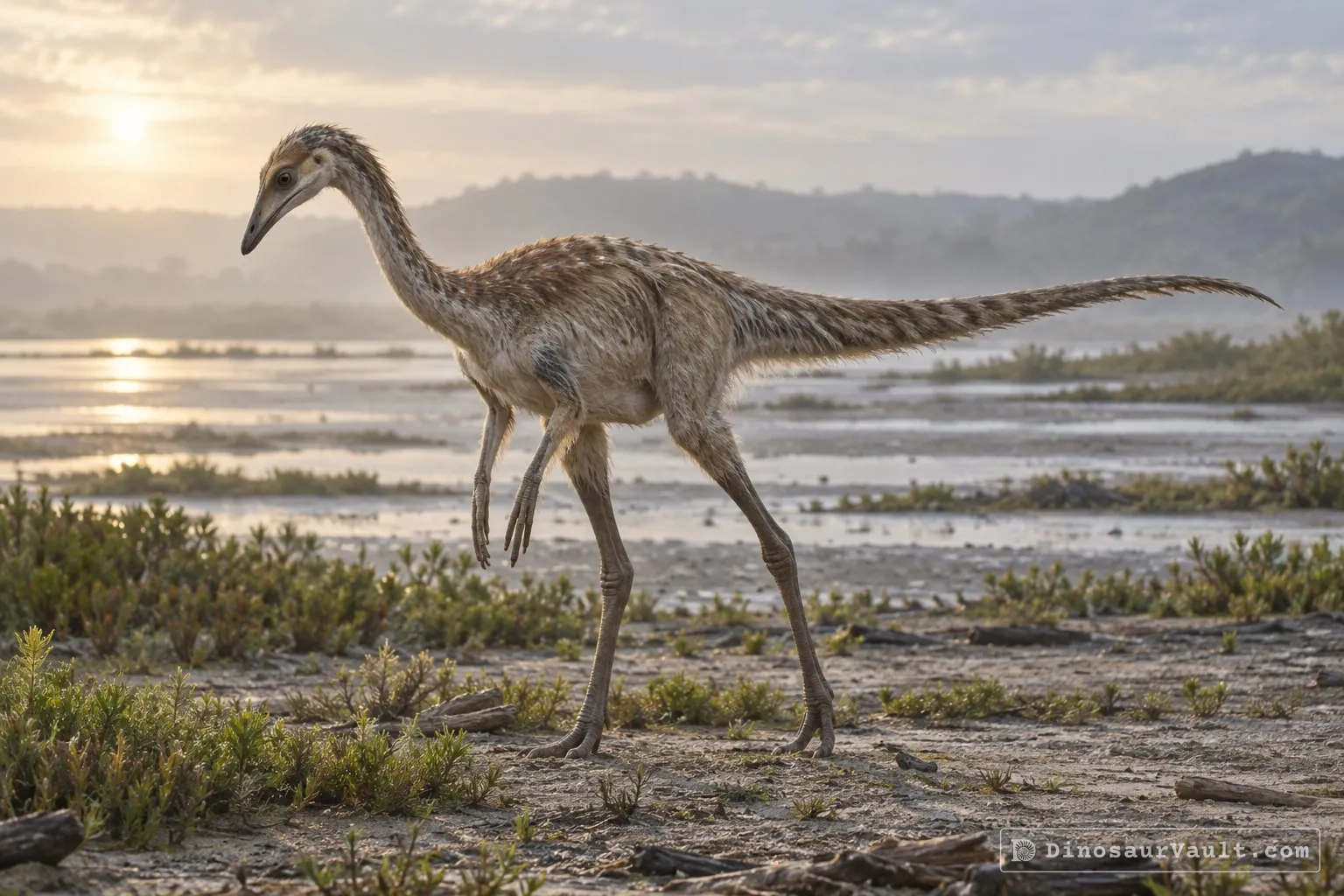
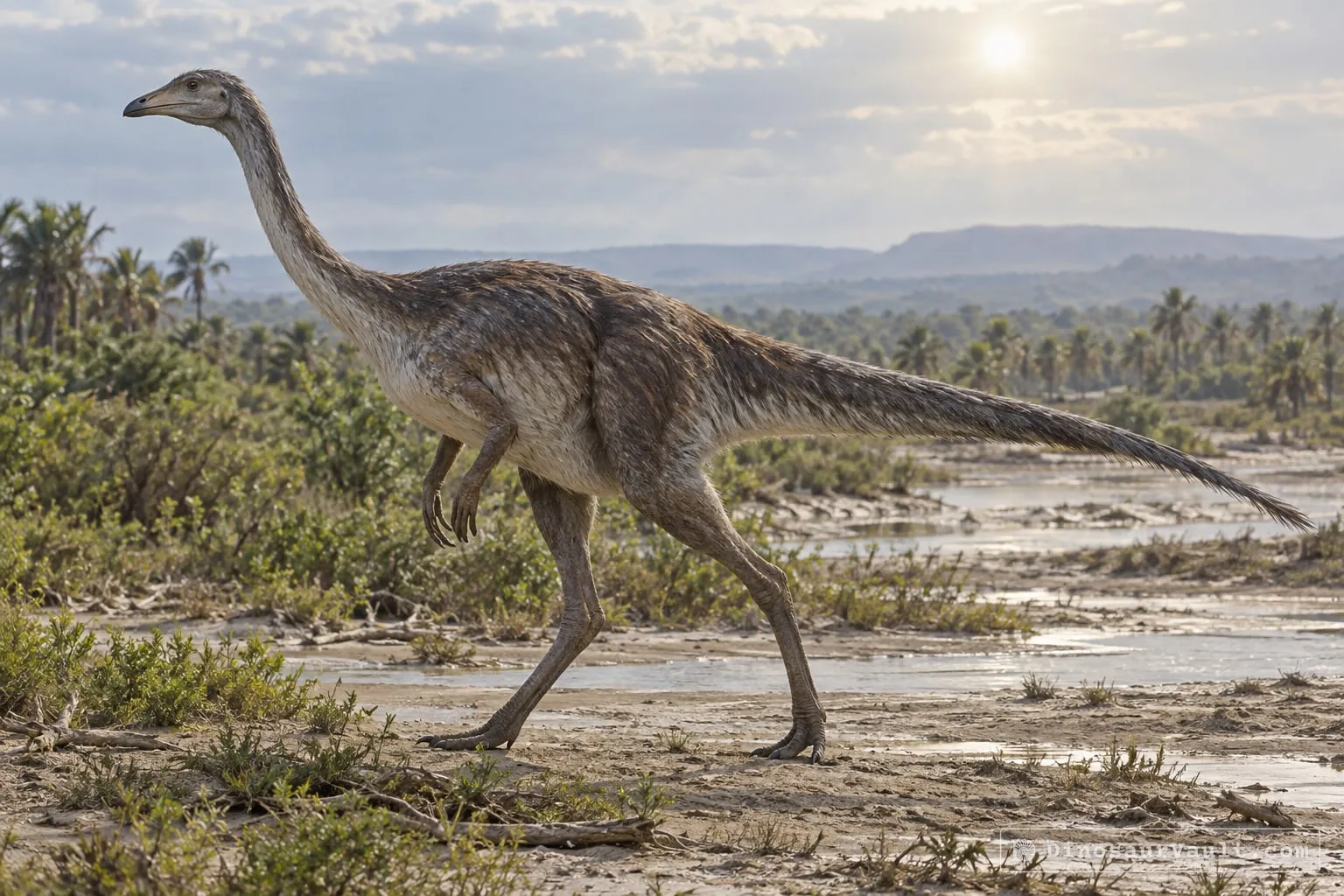
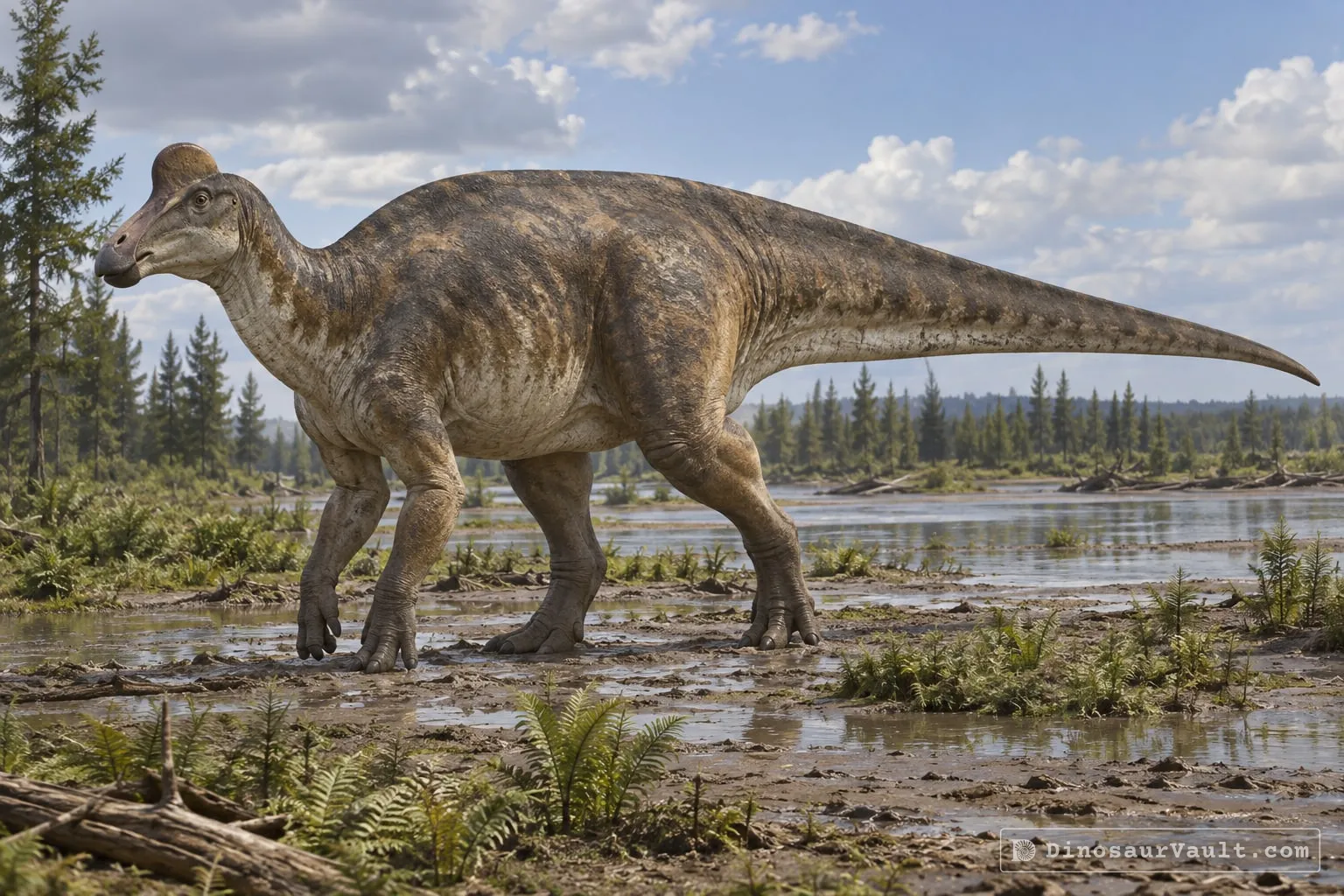
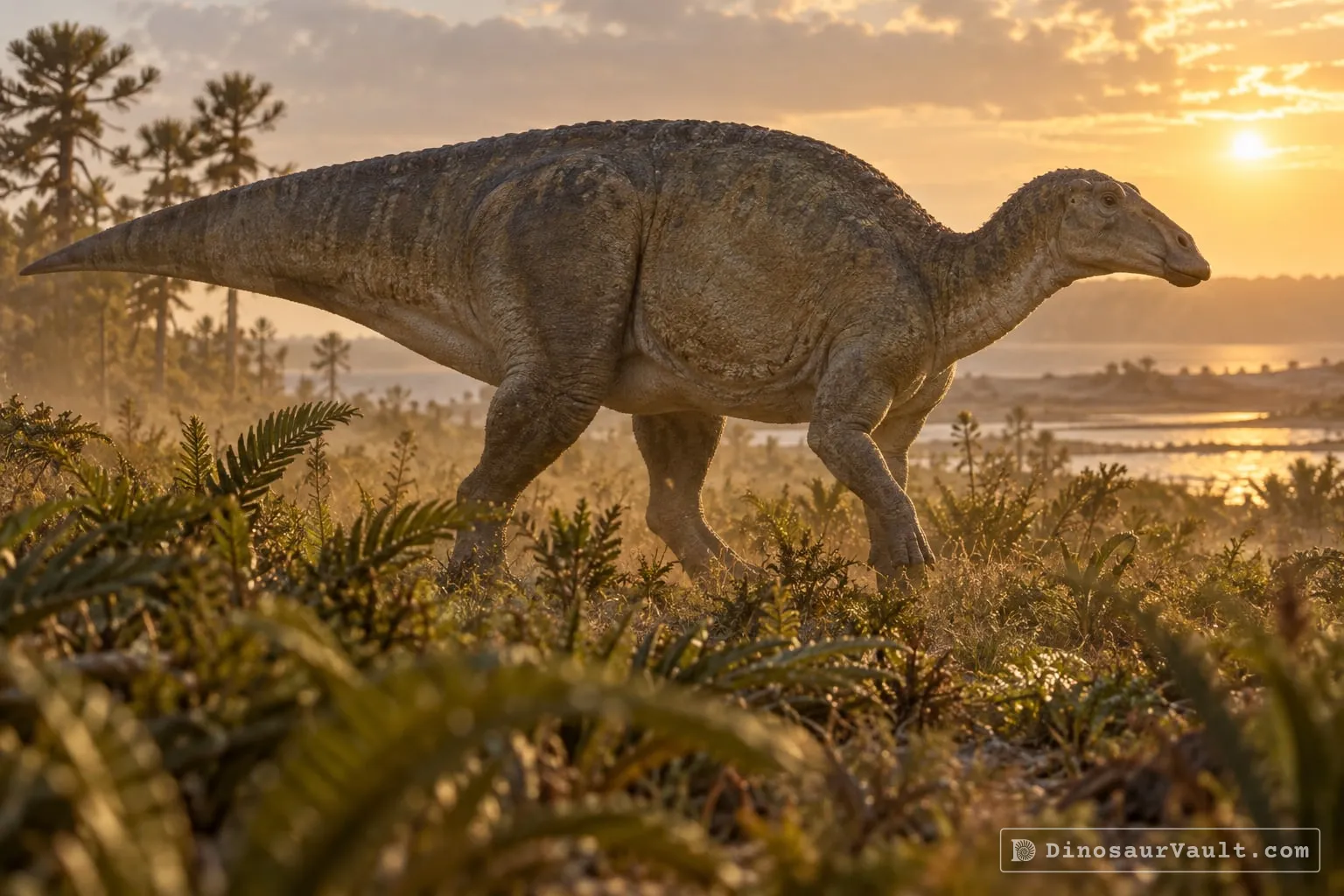
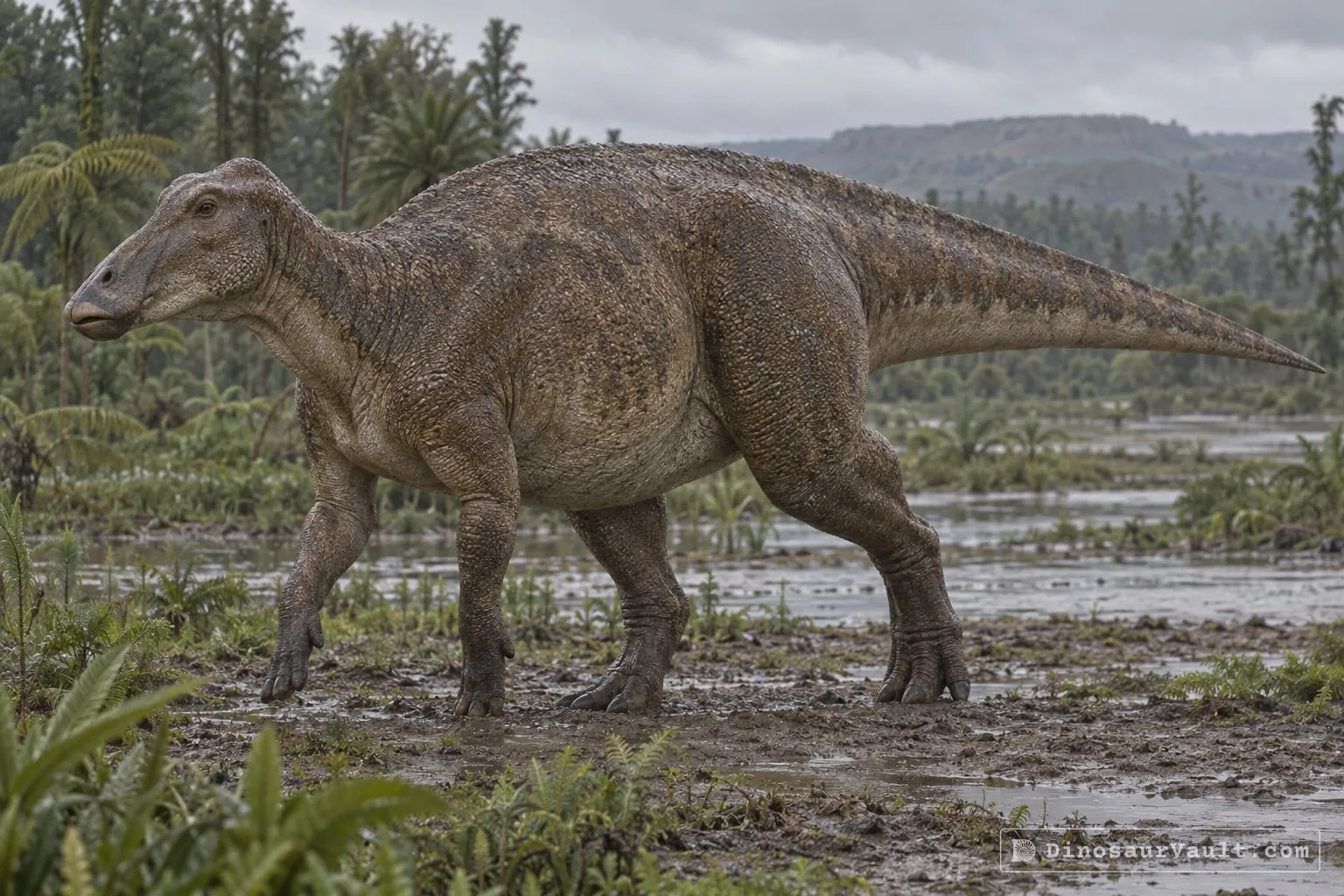


A rock formation can hold fossils laid down millions of years apart, so not every animal here met Tlatolophus.
The evidence
The science behind Tlatolophus
Which parts of the picture come from its own bones, and which come from its relatives.
From its own fossils
- A skull with a broad snout and a tall, hollow crest shaped like a backward comma.
- A partly connected tail was found with the skull and other bones of the same skeleton.
Borrowed from relatives
- Missing parts of the body are restored by comparison with crested duckbills such as Parasaurolophus.
- Like Parasaurolophus, it may have used its hollow crest to make calls.
Still unknown
- Its skin color and markings.
- The sound of its calls.
- How the crest changed as it grew.
Discovery timeline
- 2007Same rocksGates et al.
- 2021Named itRamírez-Velasco et al.
- 2022Family treeRamírez-Velasco
Key papers
The research behind what we know of Tlatolophus
Same rocks
Described Velafrons, another crested duckbill from the Cerro del Pueblo Formation.
Velafrons coahuilensis, a new lambeosaurine hadrosaurid (Dinosauria: Ornithopoda) from the late Campanian Cerro del Pueblo Formation, Coahuila, Mexico. Journal of Vertebrate Paleontology 27: 917-930
Read the paper : Velafrons coahuilensis, a new lambeosaurine hadrosaurid (Dinosauria: Ornithopoda) from the late Campanian Cerro del Pueblo Formation, Coahuila, Mexico (opens in a new tab)Named it
Described the skull and its backward-comma crest, placing Tlatolophus in the same branch of the duckbill family as Parasaurolophus.
Tlatolophus galorum, gen. et sp. nov., a parasaurolophini dinosaur from the upper Campanian of the Cerro del Pueblo Formation, Coahuila, northern Mexico. Cretaceous Research.
No link available
Family tree
Compared duckbills from Mexico and recovered Tlatolophus in the Parasaurolophini branch.
Phylogenetic and biogeography analysis of Mexican hadrosauroids. Cretaceous Research 138: 105267
Read the paper : Phylogenetic and biogeography analysis of Mexican hadrosauroids (opens in a new tab)
Close relatives
Other members of Hadrosauridae


Sources: Wikidata