Outline: a typical theropod
Paraxenisaurus
Type species Paraxenisaurus normalensis
- Lived
- 84 to 72 million years ago, Late Cretaceous
- Diet
- Omnivore
- Group
- Theropods, Deinocheiridae
- Found in
- Mexico
- Named by
- Serrano-Brañas et al. 2020
Where its fossils were found
The evidence
Today
80 million years ago
Field notes
About Paraxenisaurus
What it was like
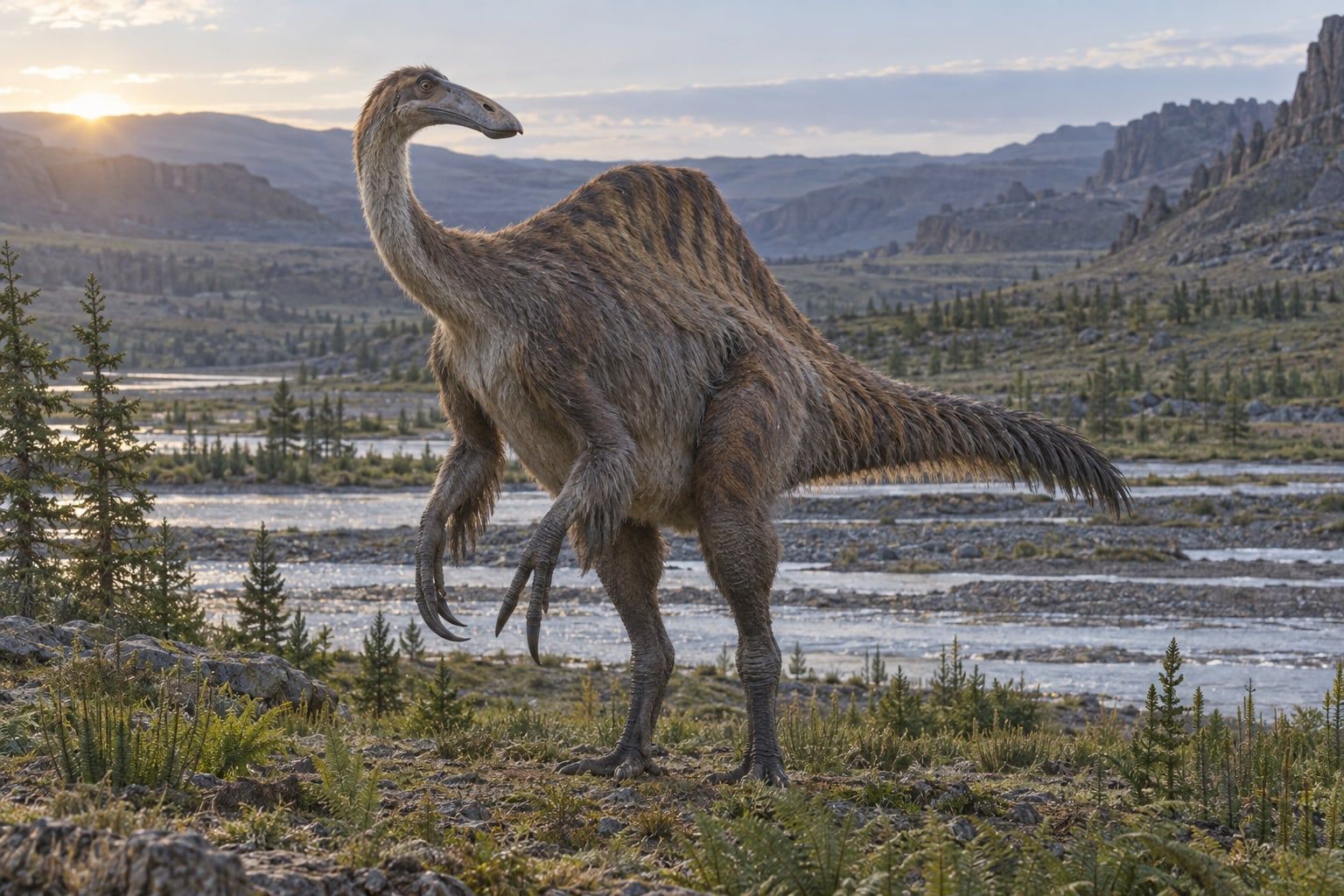
Paraxenisaurus was an ostrich-like dinosaur from the same family as the giant Deinocheirus. It is known from a few bones of the tail, hips, hands and feet, so its size and shape are uncertain.
Its world
It lived in the Late Cretaceous in what is now Mexico. Its bones come from the Cerro del Pueblo Formation, a coastal land shared with the crested duckbills Velafrons and Tlatolophus.
How it was found
Serrano-Brañas and colleagues named it in 2020 from one find. The type species is Paraxenisaurus normalensis. It was the first member of its family found in North America.
Lived alongside
Found in the same rock formations
Close relatives
Other members of Deinocheiridae
Sources: WikidataNamed in: C. I. Serrano-Brañas, B. Espinosa-Chávez, and S. A. Maccracken, C. Gutiérrez-Blando, C. de León-Dávilae, J. F. Ventura. 2020. Paraxenisaurus normalensis, a large deinocheirid ornithomimosaur from the Cerro del Pueblo Formation (Upper Cretaceous), Coahuila, Mexico. Journal of South American Earth Sciences 101:102610