Sinocalliopteryx
"Chinese beautiful feather"
- Lived
- 126 to 120 million years ago, Early Cretaceous
- Diet
- Carnivore
- Length
- about 2.4 m (8 ft)
- Group
- Theropods, Compsognathidae
- Found in
- China
- Named by
- Ji et al. 2007
Size comparison
To scale

Scale in metersOutline: typical theropod shape
Where its fossils were found
The evidence
Today

125 million years ago
Habitat
Lakes and forests in the Yixian Formation of China. Other dinosaurs from these rocks include Yutyrannus, Psittacosaurus and Sinosauropteryx.
Field notes
About Sinocalliopteryx
What it was like
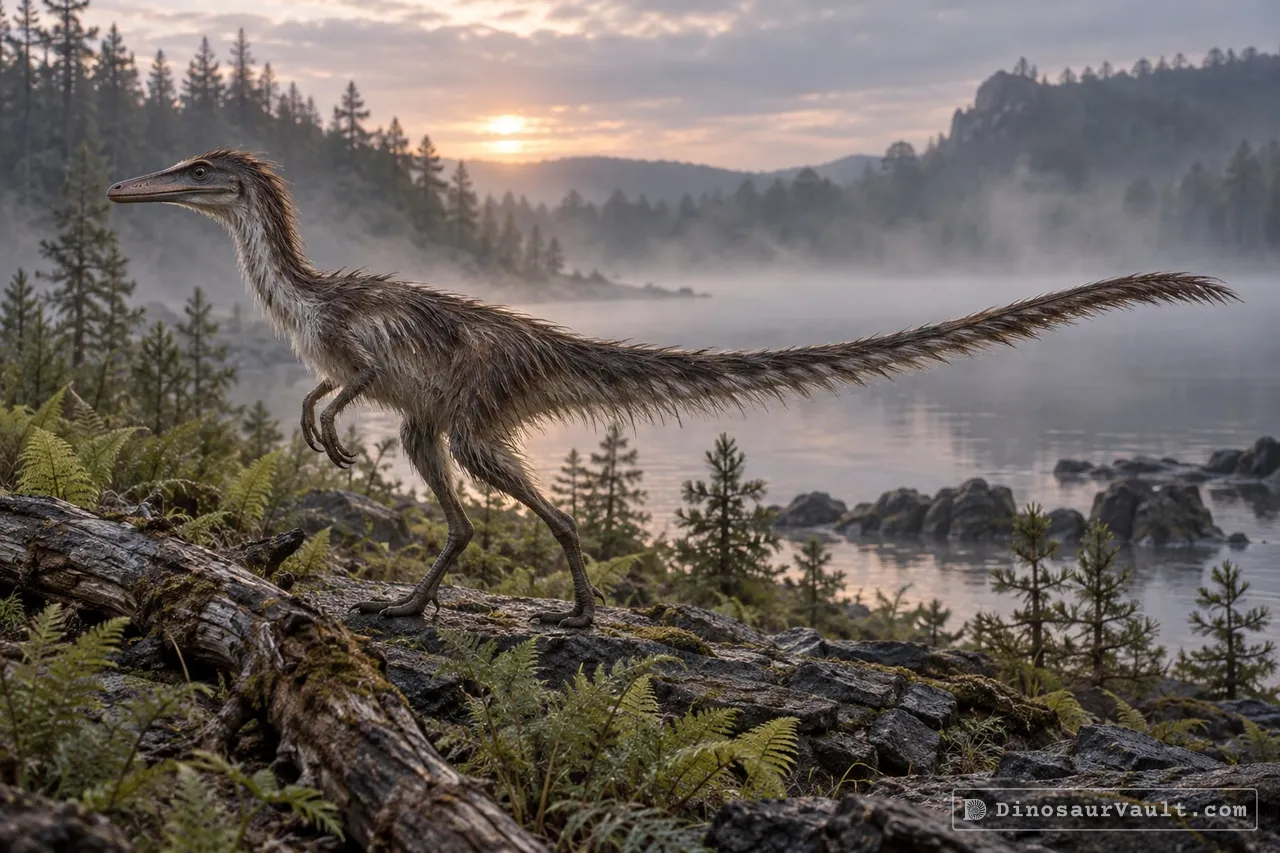
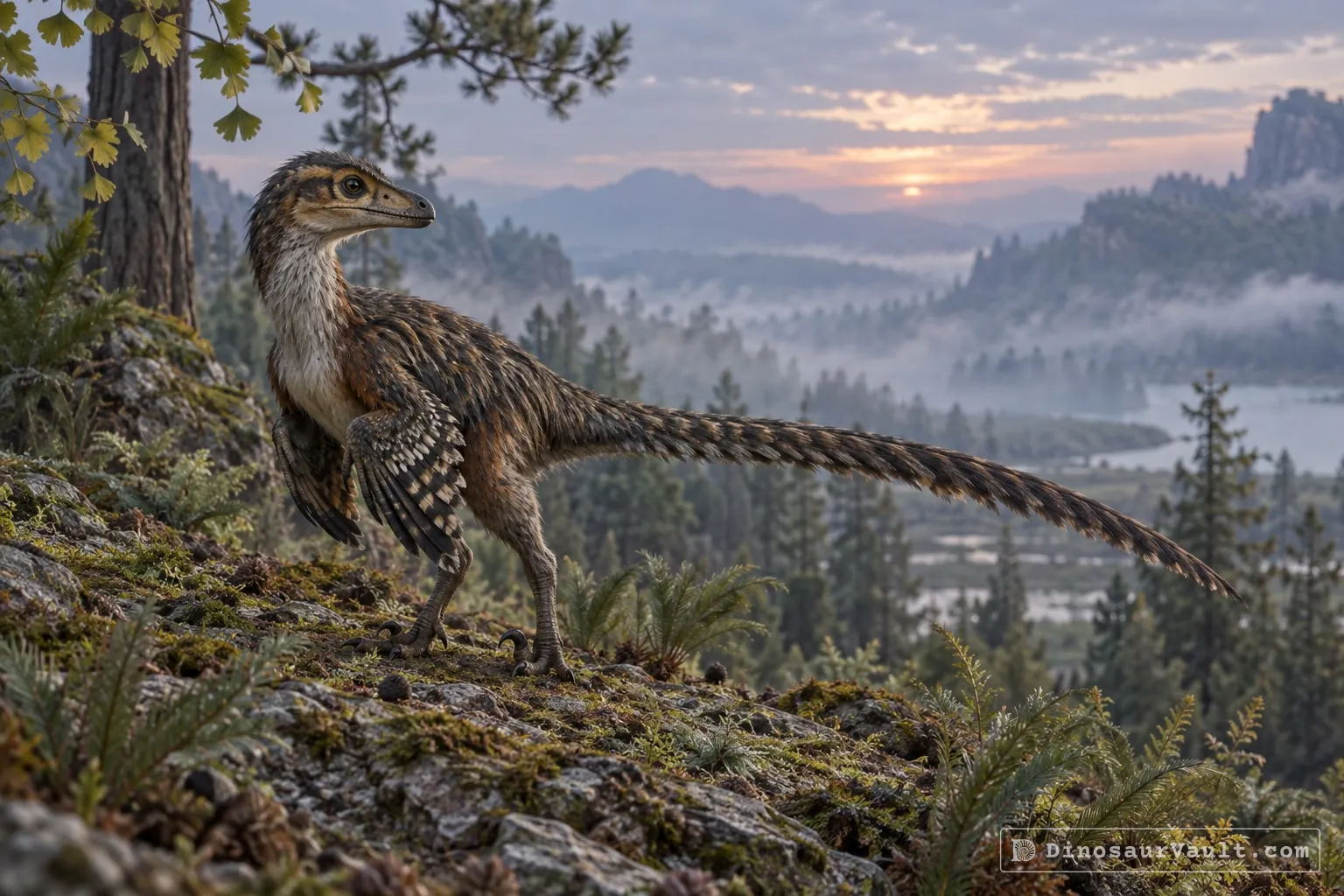
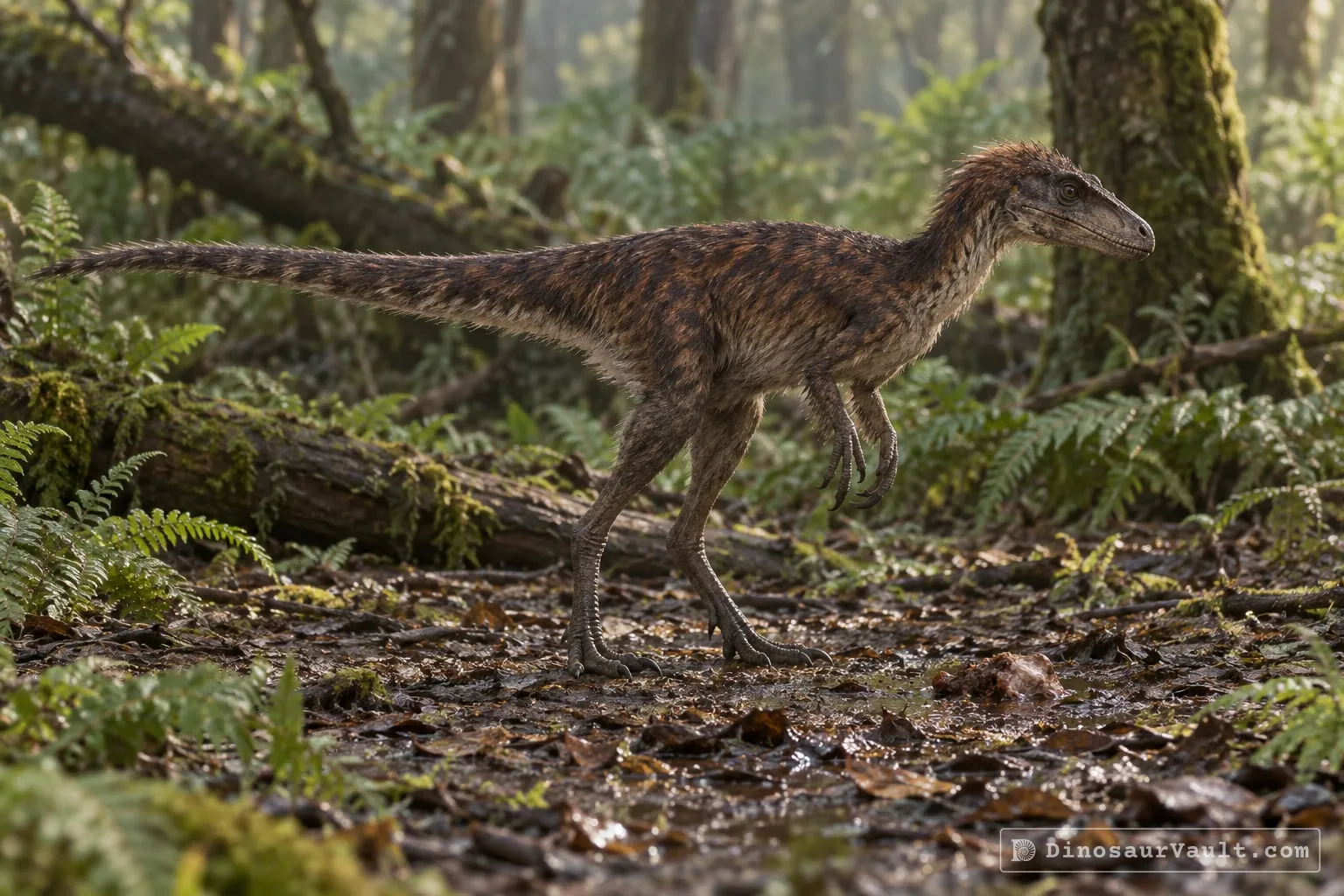
Sinocalliopteryx was a feathered hunter about 2.4 meters (8 feet) long, one of the largest compsognathids. Its skeleton preserves simple, hair-like feathers over much of the body.
Its stomach contents show what it ate: one specimen holds the leg of a small dromaeosaur, another the remains of early birds. It was clearly an active, skilled predator.
Its world
It lived in the Early Cretaceous, in what is now China. It comes from the Yixian Formation, a land of lakes and forests shared with the feathered tyrannosaur Yutyrannus, the smaller Sinosauropteryx and Sinornithosaurus, and the plant eater Psittacosaurus.
How it was found
Ji and colleagues named Sinocalliopteryx in 2007.
Field gallery
More views of Sinocalliopteryx
Scenes reconstructed from the available fossil evidence.
1 of 3
Lived alongside
Found in the same rock formations
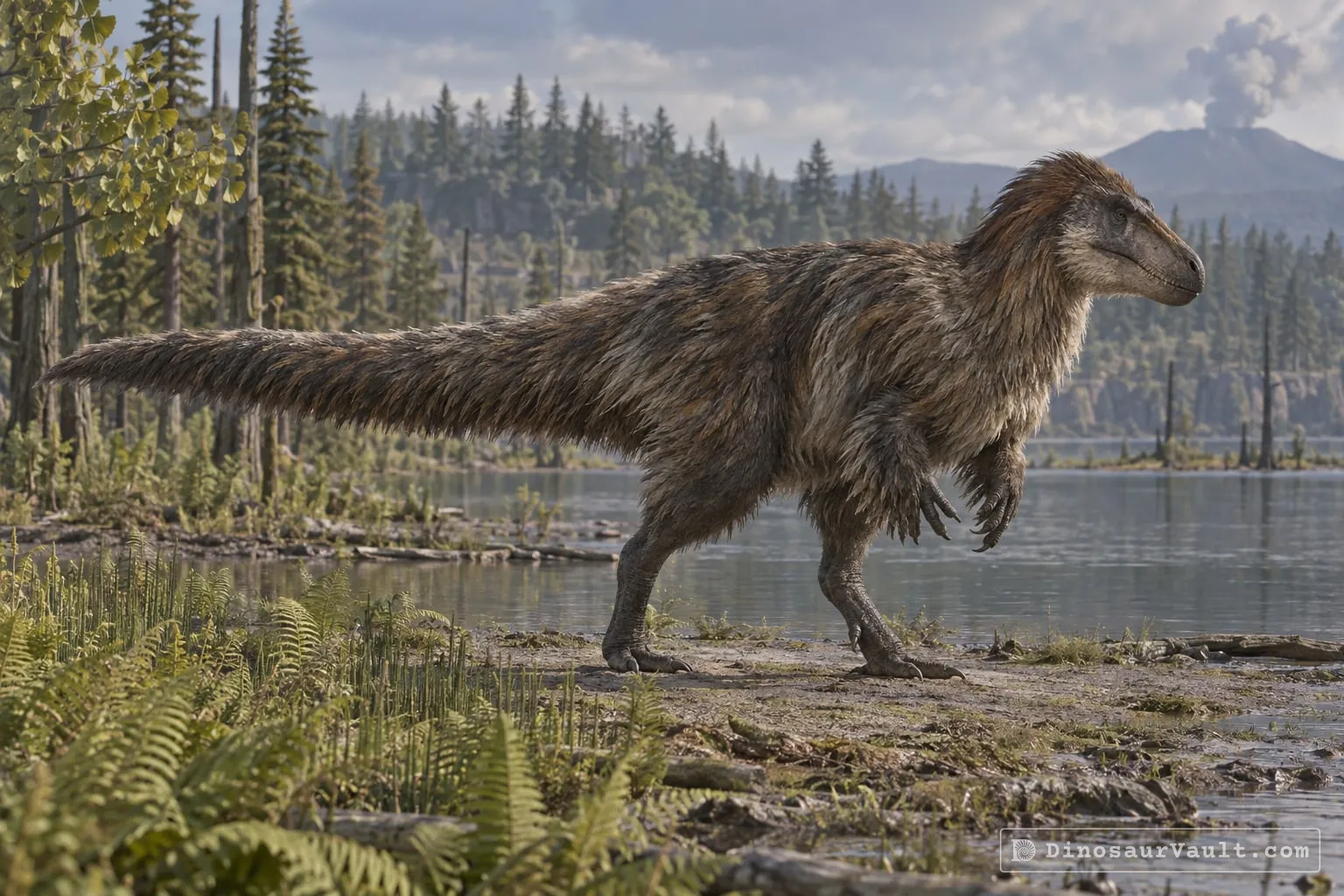
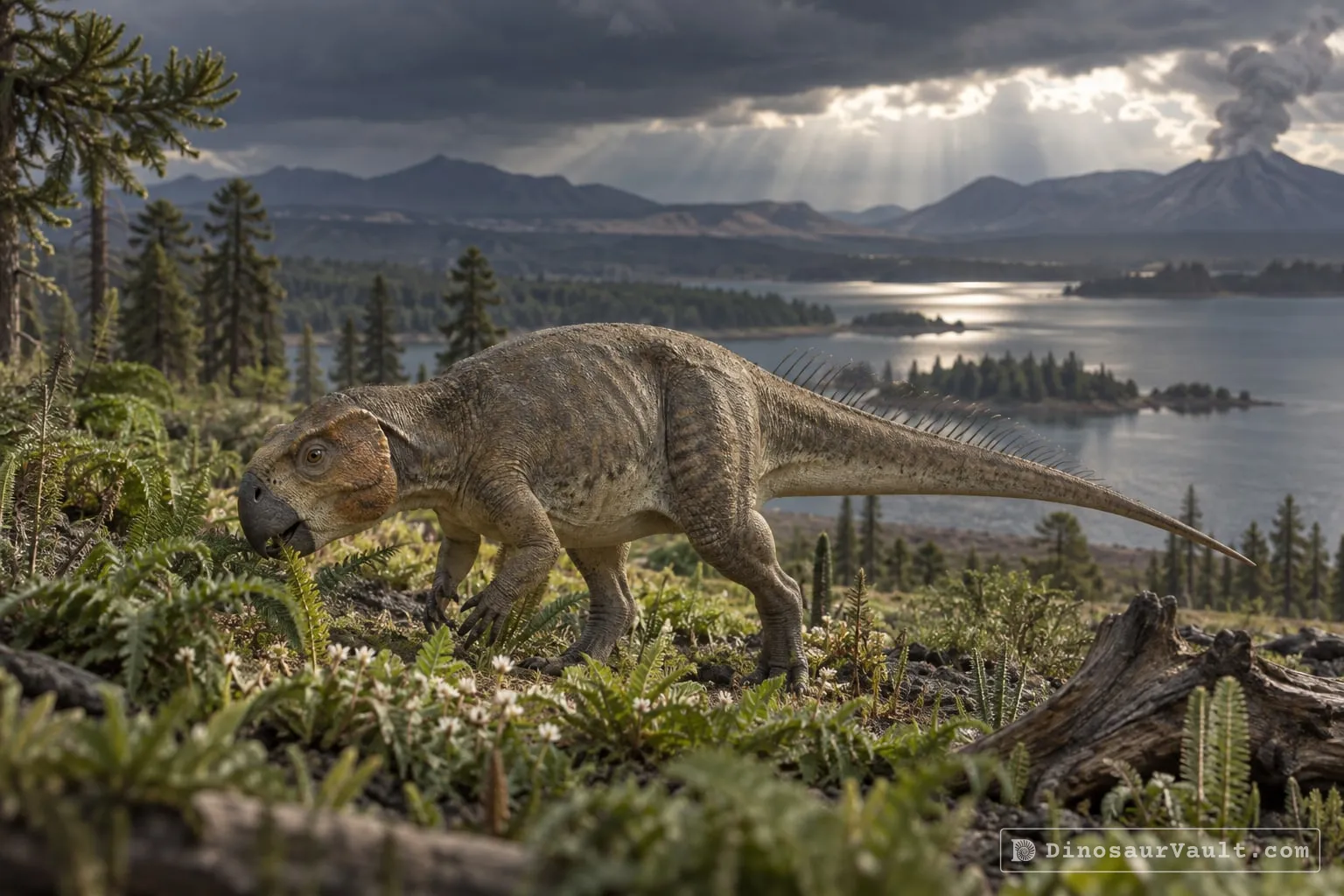
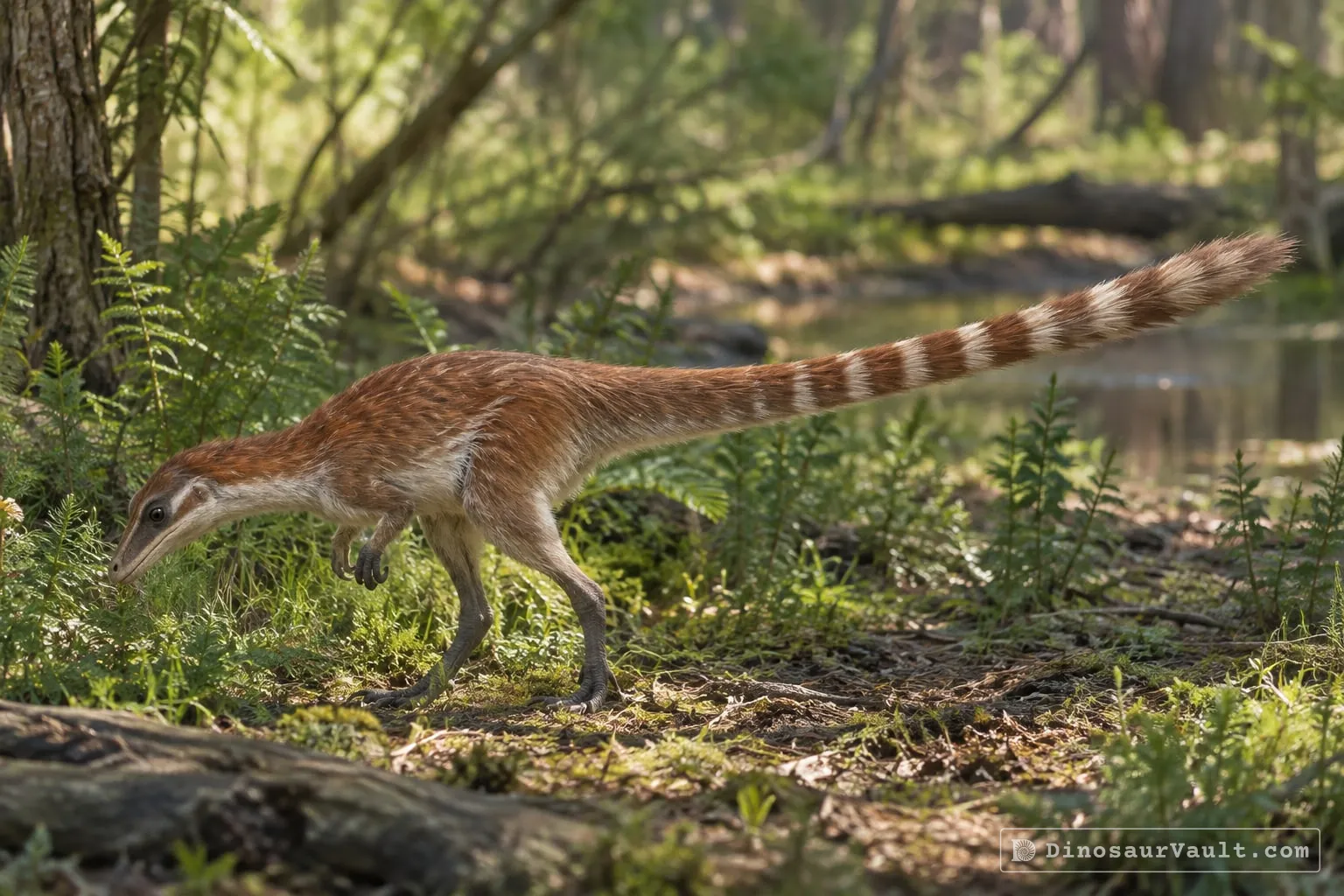
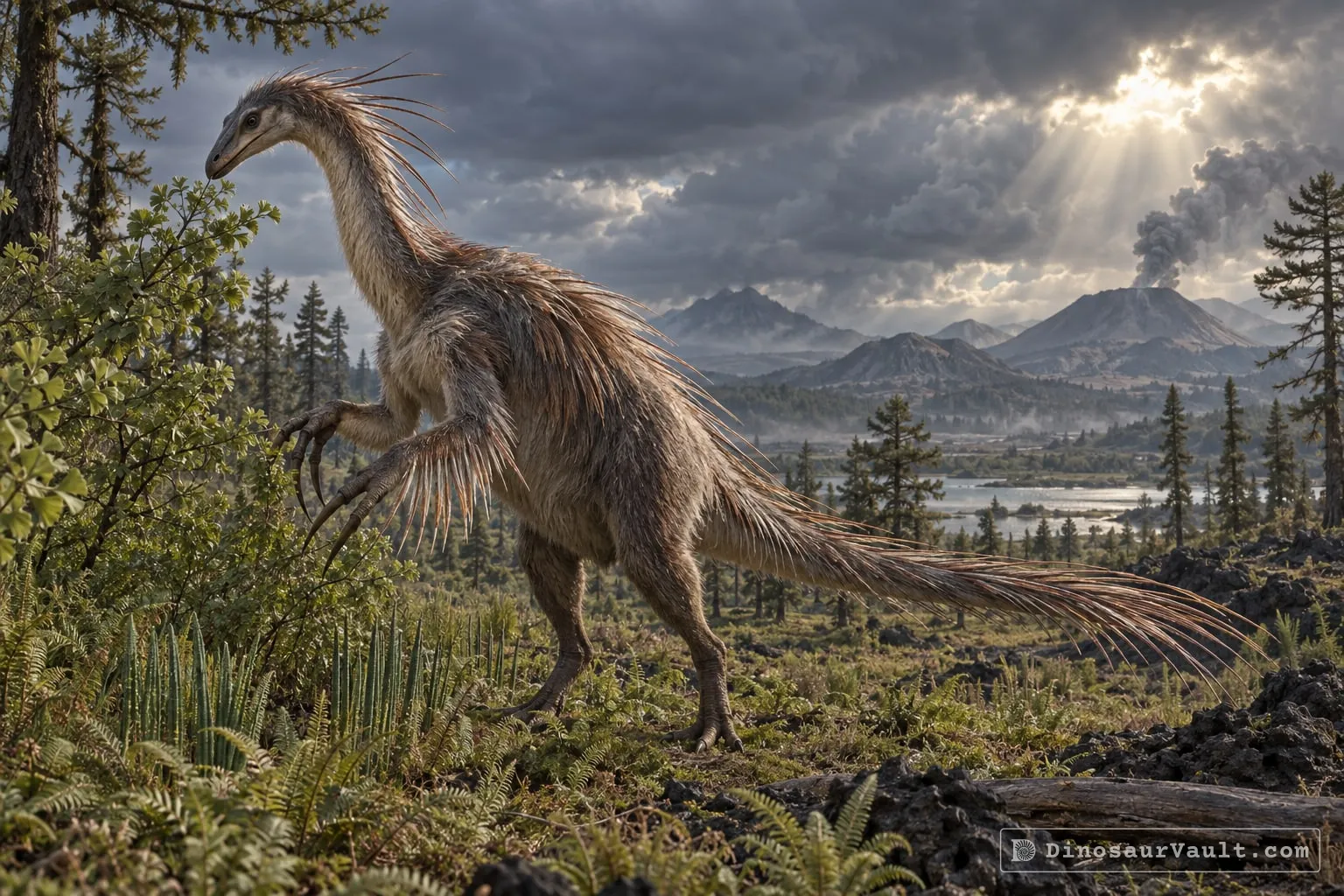
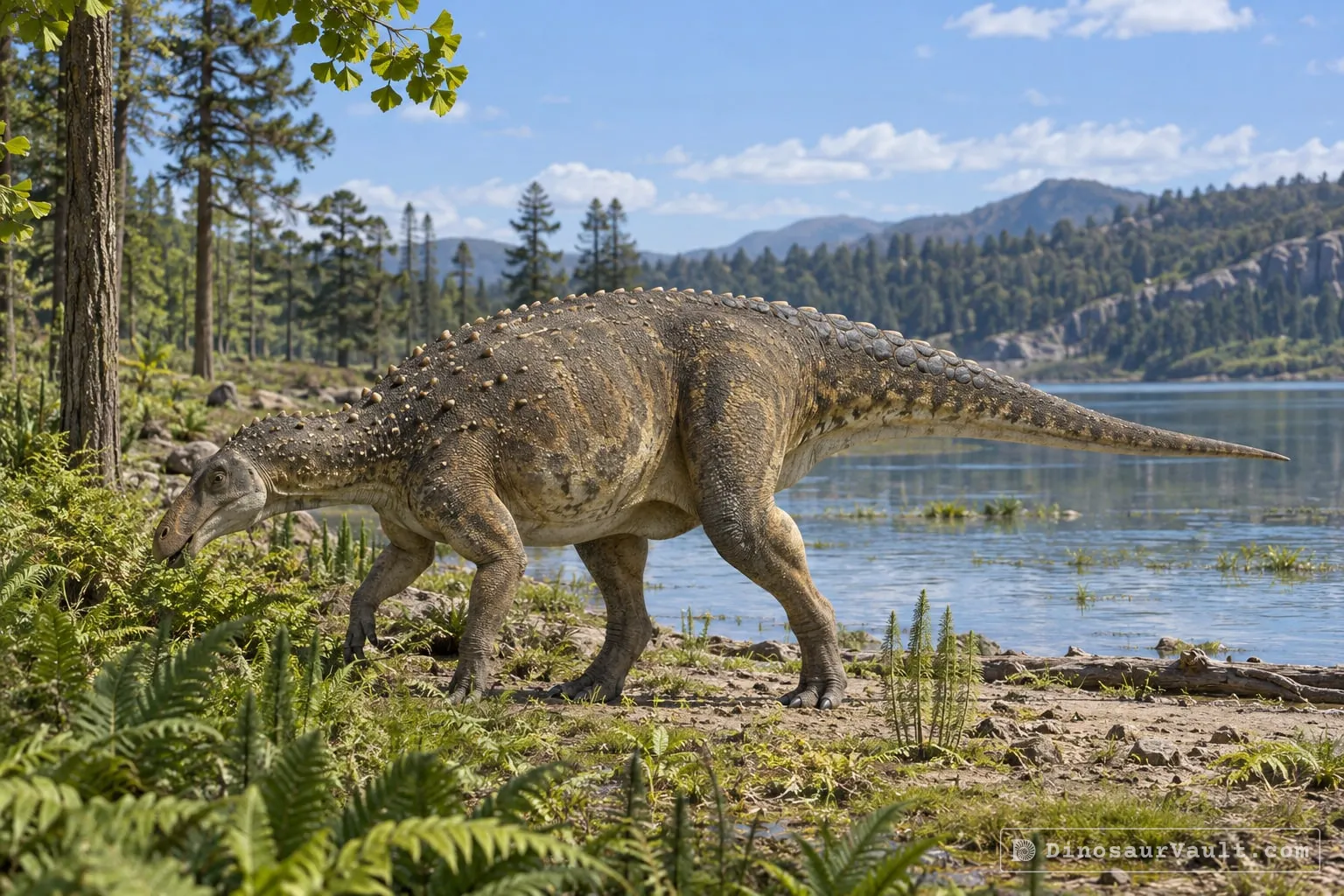
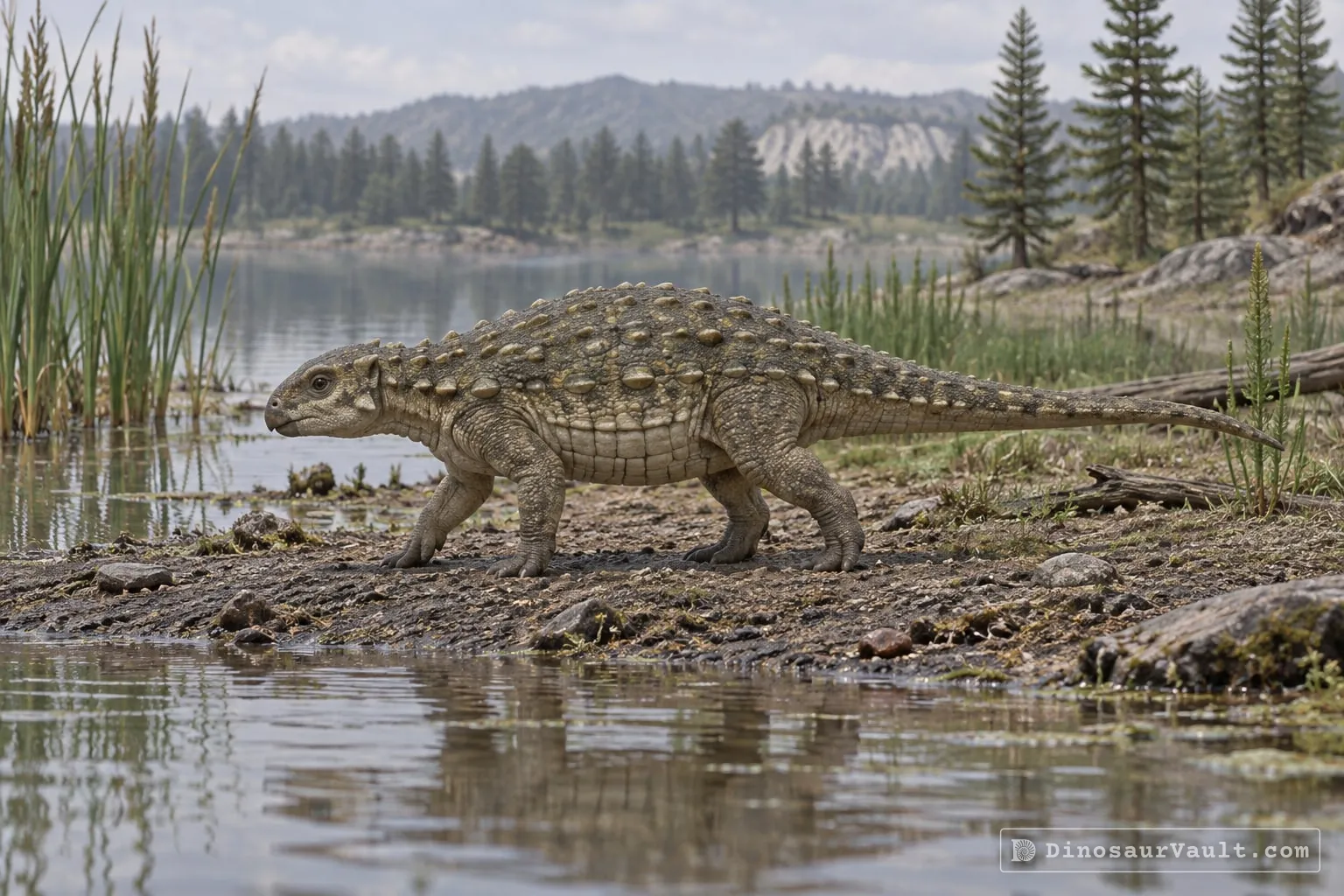


A rock formation can hold fossils laid down millions of years apart, so not every animal here met Sinocalliopteryx.
The evidence
The science behind Sinocalliopteryx
Which parts of the picture come from its own bones, and which come from its relatives.
From its own fossils
- A nearly complete skeleton preserves the skull, limbs and long tail.
- Simple, hair-like feathers are preserved around the body, including the feet.
- Stomach contents include a small dromaeosaur's leg and, in another specimen, the remains of early birds.
Borrowed from relatives
- Almost the whole body is known from its own bones, so little of its skeleton needs to be borrowed from relatives.
- Comparisons with Huaxiagnathus help explain its large hands and strongly curved hand claws.
Still unknown
- Its feather colors.
- How often it caught live prey rather than scavenging.
- How its body changed as it grew.
Discovery timeline
- 2007Named itJi et al.
- 2012How it fedXing et al.
- 2025Family treeQiu et al.
Key papers
The research behind what we know of Sinocalliopteryx
Named it
Named a large feathered predator from a complete skeleton, with long body filaments and a small dinosaur's leg inside its abdomen.
A new giant compsognathid dinosaur with long filamentous integuments from Lower Cretaceous of northeastern China. Acta Geologica Sinica 81: 8-15
No link available
How it fed
Identified dinosaur and bird remains in the stomachs of Sinocalliopteryx, including birds swallowed in quick succession.
Abdominal Contents from Two Large Early Cretaceous Compsognathids (Dinosauria: Theropoda) Demonstrate Feeding on Confuciusornithids and Dromaeosaurids. PLoS ONE 7: e44012
Read the paper : Abdominal Contents from Two Large Early Cretaceous Compsognathids (Dinosauria: Theropoda) Demonstrate Feeding on Confuciusornithids and Dromaeosaurids (opens in a new tab)Family tree
Grouped Sinocalliopteryx with Sinosauropteryx and other feathered hunters, proposing that their different jaws and limbs suited different hunting styles.
Two new compsognathid-like theropods show diversified predation strategies in theropod dinosaurs. National Science Review 12
Read the paper : Two new compsognathid-like theropods show diversified predation strategies in theropod dinosaurs (opens in a new tab)
Close relatives
Other members of Compsognathidae


Sources: Wikidata