Compsognathus
komp-SOG-nuh-thus
"elegant jaw"
- Lived
- 155 to 145 million years ago, Late Jurassic
- Diet
- Carnivore
- Length
- about 1 m (3 ft)
- Group
- Theropods, Compsognathidae
- Found in
- France, Germany and Portugal
- Named by
- Wagner 1861
Size comparison
To scale
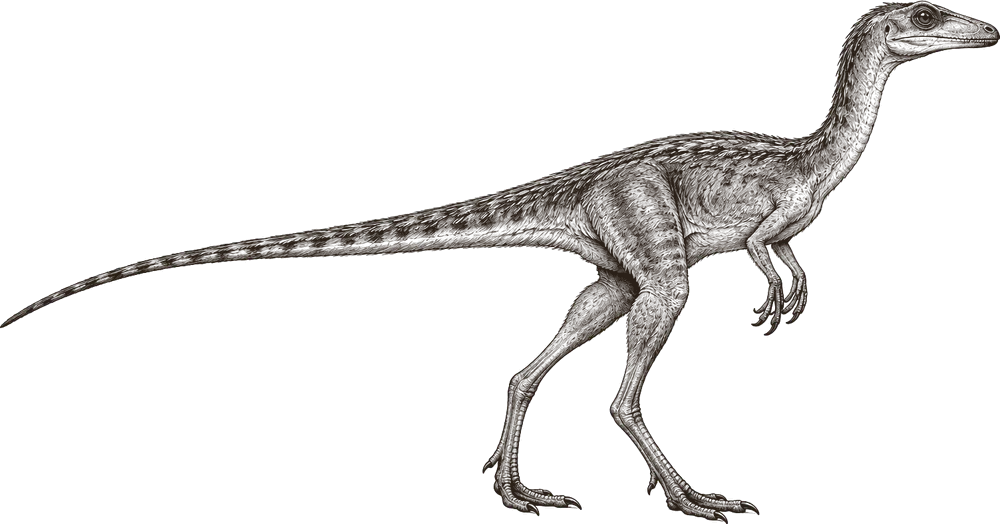

Scale in meters
Where its fossils were found
The evidence
Today

150 million years ago
Habitat
It probably hunted on islands beside shallow lagoons in what is now Europe. Juravenator inhabited the German island region, while Camarasaurus and Dacentrurus lived elsewhere in its European world.
Field notes
About Compsognathus
What it was like
Compsognathus was one of the smallest dinosaurs known, roughly the size of a chicken, and it grew to about 1 meter (3 feet) long including its tail. It walked on two long, slender legs and had small, grasping hands with sharp claws.
Its skull was light and narrow, with small sharp teeth suited for catching quick, small prey. Fossils of both known skeletons preserve the remains of small lizards in the stomach area, showing what this little hunter actually ate.
Its world
Compsognathus lived from about 155 to 145 million years ago, during the Late Jurassic, in what is now France, Germany, and Portugal. Its fossils come from formations including Alcobaça and Painten.
It lived alongside much larger dinosaurs, including the plant eaters Camarasaurus and Dacentrurus, as well as smaller theropods such as Aviatyrannis and Juravenator. Its small size and light frame suited a warm environment with plenty of low cover to dart through while hunting.
How it was found
Wagner named Compsognathus in 1861, making it one of the first dinosaurs known from a fairly complete skeleton. About 4 finds are known today, and its closest relatives, including Sinocalliopteryx and Huaxiagnathus, were also small, fast-moving theropods.
Field gallery
More views of Compsognathus
Scenes reconstructed from the available fossil evidence.
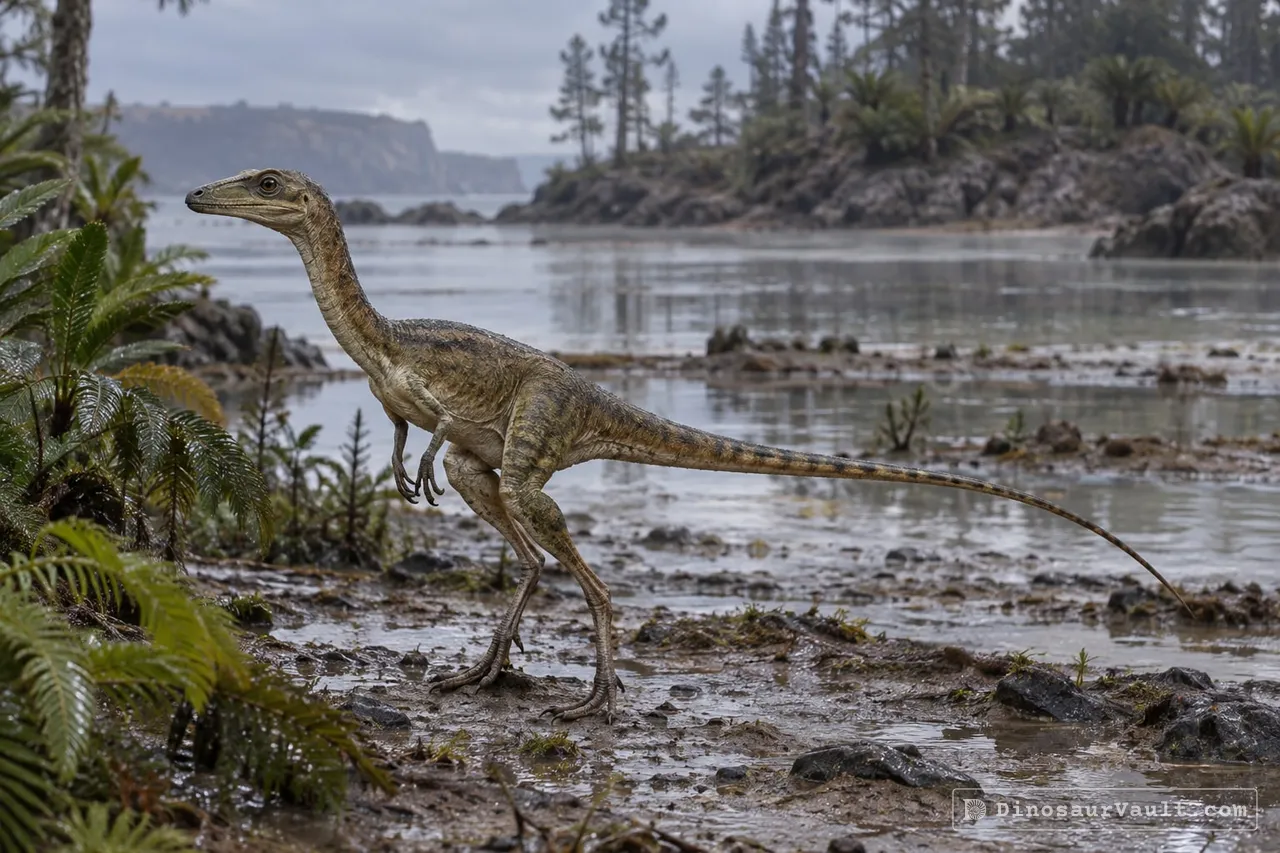
1 of 7
Lived alongside
Found in the same rock formations


A rock formation can hold fossils laid down millions of years apart, so not every animal here met Compsognathus.
The evidence
The science behind Compsognathus
Which parts of the picture come from its own bones, and which come from its relatives.
From its own fossils
- Articulated skeletons from Germany and France show a narrow head, slender hindlegs and a long tail.
- Small lizard remains inside the skeletons show what it ate.
- Its hands had strong grasping fingers and a much smaller third finger.
Borrowed from relatives
- Much of the skeleton is known from its own bones.
- Sinosauropteryx offers a comparison for possible short filaments, while other theropods support probable lips.
Still unknown
- The precise growth stages of the smaller German and larger French individuals.
- Whether its body had scales, filaments or a mixture of both.
- Its color and whether it lived in groups.
Often drawn wrong
- A large raised sickle claw on the foot copies Velociraptor.
- Older reconstructions give it only two fingers; its hand also had a small third finger.
Discovery timeline
- 1861Named itWagner
- 1998Close relativeChen, Dong & Zhen
- 2006Full descriptionPeyer
- 2007RedescriptionGISHLICK & GAUTHIER
- 2023Close relativeCullen et al.
Key papers
The research behind what we know of Compsognathus
Named it
Described a small, lightly built dinosaur from a nearly complete skeleton preserved in limestone.
Neue Beiträge zur Kenntniss der urweltlichen Fauna des lithographischen Schiefers [New contributions to the knowledge of the ancient fauna of the lithographic slates]. Abhandlungen der königlichen bayerische Akademie der Wissenschaft, II Classe 9: 65-124
No link available
Close relative
Described Sinosauropteryx with a filamentous body covering, offering a comparison for the possible covering of Compsognathus.
An exceptionally well-preserved theropod dinosaur from the Yixian Formation of China. Nature 391: 147-152
Read the paper : An exceptionally well-preserved theropod dinosaur from the Yixian Formation of China (opens in a new tab)Full description
Restudied the larger French skeleton and supported its assignment to the same species as the German specimen.
A reconsideration ofCompsognathusfrom the upper Tithonian of Canjuers, southeastern France. Journal of Vertebrate Paleontology 26: 879-896
Read the paper : A reconsideration ofCompsognathusfrom the upper Tithonian of Canjuers, southeastern France (opens in a new tab)Redescription
Reexamined the hands and identified a reduced third finger alongside the larger grasping fingers.
On the manual morphology of Compsognathus longipes and its bearing on the diagnosis of Compsognathidae. Zoological Journal of the Linnean Society 149: 569-581
Read the paper : On the manual morphology of Compsognathus longipes and its bearing on the diagnosis of Compsognathidae (opens in a new tab)Close relative
Comparisons of theropod teeth and living reptiles support lips covering the teeth when the mouth closed.
Theropod dinosaur facial reconstruction and the importance of soft tissues in paleobiology. Science 379: 1348-1352
Read the paper : Theropod dinosaur facial reconstruction and the importance of soft tissues in paleobiology (opens in a new tab)
Close relatives
Other members of Compsognathidae


Sources: Wikidata