Serendipaceratops
"serendipitous horned face"
Type species Serendipaceratops arthurcclarkei
- Lived
- 121 to 120 million years ago, Early Cretaceous
- Diet
- Herbivore
- Group
- Ceratopsians
- Found in
- Australia
- Named by
- Rich and Vickers-Rich 2003
Where its fossils were found
The evidence
Today

120 million years ago
Habitat
River plains in southern Australia supported forests of conifers, seed ferns and ferns near the pole. Small plant eaters in the region included Qantassaurus and Galleonosaurus.
Field notes
About Serendipaceratops
What it was like
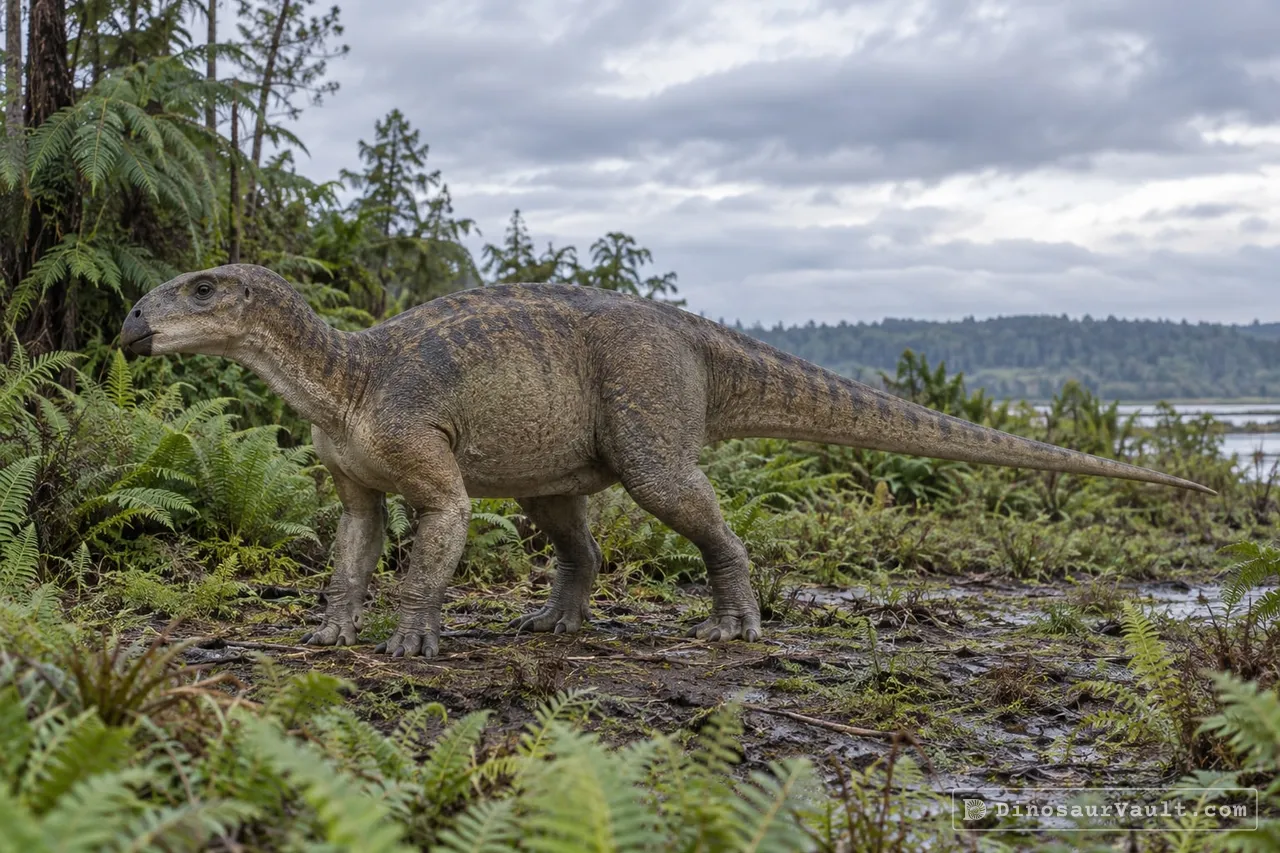
Serendipaceratops is known from a single bone of the forearm. It was first described as a horned dinosaur, which would have made it a surprising find in Australia. Many scientists now think the bone more likely belongs to an armored dinosaur.
Its world
It lived in the Early Cretaceous in Australia. The land then lay close to the pole. Other dinosaurs from rocks of this age in the region include the small plant eater Qantassaurus and the predator Australovenator.
How it was found
Rich and Vickers-Rich named it in 2003. The type species is Serendipaceratops arthurcclarkei, which honors a science fiction writer.
Field gallery
More views of Serendipaceratops
Scenes reconstructed from the available fossil evidence.
Lived alongside
Found in the same rock formations


A rock formation can hold fossils laid down millions of years apart, so not every animal here met Serendipaceratops.
The evidence
The science behind Serendipaceratops
Which parts of the picture come from its own bones, and which come from its relatives.
From its own fossils
- A single incomplete ulna, a bone of the forearm, is the basis for the name.
Borrowed from relatives
- A horned-dinosaur reconstruction borrows its head and body from animals such as Leptoceratops.
- An armored-dinosaur reconstruction borrows its head and body from early armored dinosaurs.
Still unknown
- Whether it belonged to the horned dinosaurs or the armored dinosaurs.
- The shape of its skull and the rest of its body.
- Its adult size and skin covering.
Discovery timeline
- 2003Named itRich & Vickers-Rich
- 2010Family treeAgnolin et al.
- 2014RedescriptionRich et al.
- 2018Its worldPoropat et al.
Key papers
The research behind what we know of Serendipaceratops
Named it
Named Serendipaceratops from a forearm bone and proposed that it belonged to an early horned dinosaur.
Protoceratopsian? ulnae from Australia. Records of the Queen Victoria Museum Launceston 113: 1-12
No link available
Family tree
Compared the forearm bone with other plant eaters and challenged its identification as a horned dinosaur.
A reappraisal of the Cretaceous non-avian dinosaur faunas from Australia and New Zealand: evidence for their Gondwanan affinities. Journal of Systematic Palaeontology 8: 257-300
Read the paper : A reappraisal of the Cretaceous non-avian dinosaur faunas from Australia and New Zealand: evidence for their Gondwanan affinities (opens in a new tab)Redescription
Used measurements and structural comparisons of the forearm bone to argue that Serendipaceratops was a valid horned dinosaur.
Serendipaceratops arthurcclarkeiRich & Vickers-Rich, 2003 is an Australian Early Cretaceous ceratopsian. Alcheringa: An Australasian Journal of Palaeontology 38: 456-479
Read the paper : Serendipaceratops arthurcclarkeiRich & Vickers-Rich, 2003 is an Australian Early Cretaceous ceratopsian (opens in a new tab)Its world
Reviewed southern Australia's polar plants and animals, including the competing interpretations of Serendipaceratops.
Early Cretaceous polar biotas of Victoria, southeastern Australia—an overview of research to date. Alcheringa: An Australasian Journal of Palaeontology 42: 157-229
Read the paper : Early Cretaceous polar biotas of Victoria, southeastern Australia—an overview of research to date (opens in a new tab)
Close relatives
Other members of Ceratopsia


Sources: Wikidata