Notoceratops
"southern horned face"
Type species Notoceratops bonarelli
- Lived
- 72 to 66 million years ago, Late Cretaceous
- Diet
- Herbivore
- Group
- Ceratopsians
- Found in
- Argentina
- Named by
- Tapia 1919
Where its fossils were found
The evidence
Today

70 million years ago
Habitat
Winding rivers crossed warm, humid floodplains with quiet freshwater pools in what is now Argentina. Aeolosaurus, Argyrosaurus and Secernosaurus are known from the same formation.
Field notes
About Notoceratops
What it was like
Notoceratops is known only from a toothless lower jaw, which has since been lost. It was first thought to be a horned dinosaur, but the jaw is too incomplete to be sure, and many scientists treat the name as doubtful.
Its world
It lived at the end of the Late Cretaceous in what is now Argentina. Its fossil comes from the Lago Colhué Huapi Formation, where the titanosaurs Aeolosaurus and Argyrosaurus also lived.
How it was found
Tapia named Notoceratops in 1919. The type species is Notoceratops bonarelli.
Field gallery
More views of Notoceratops
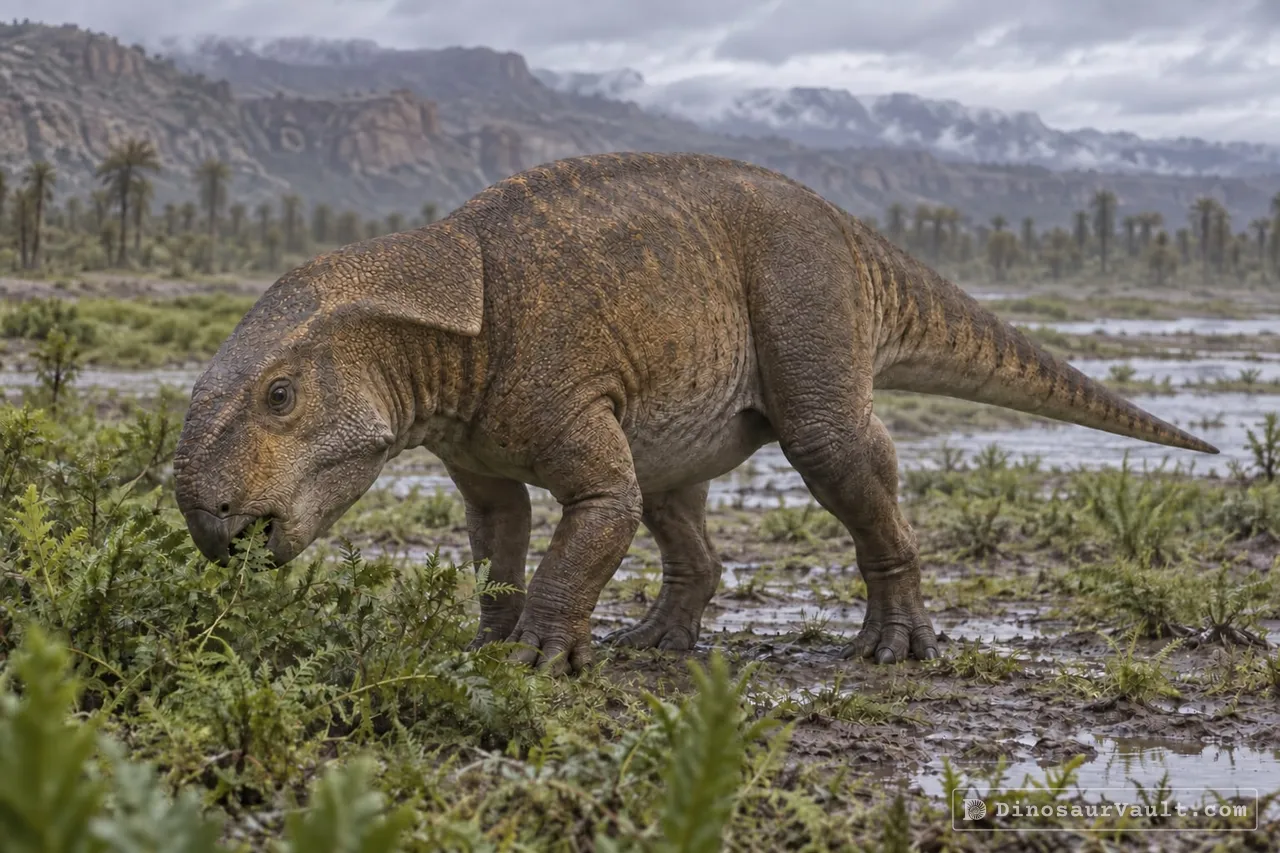
Scenes reconstructed from the available fossil evidence.
Lived alongside
Found in the same rock formations
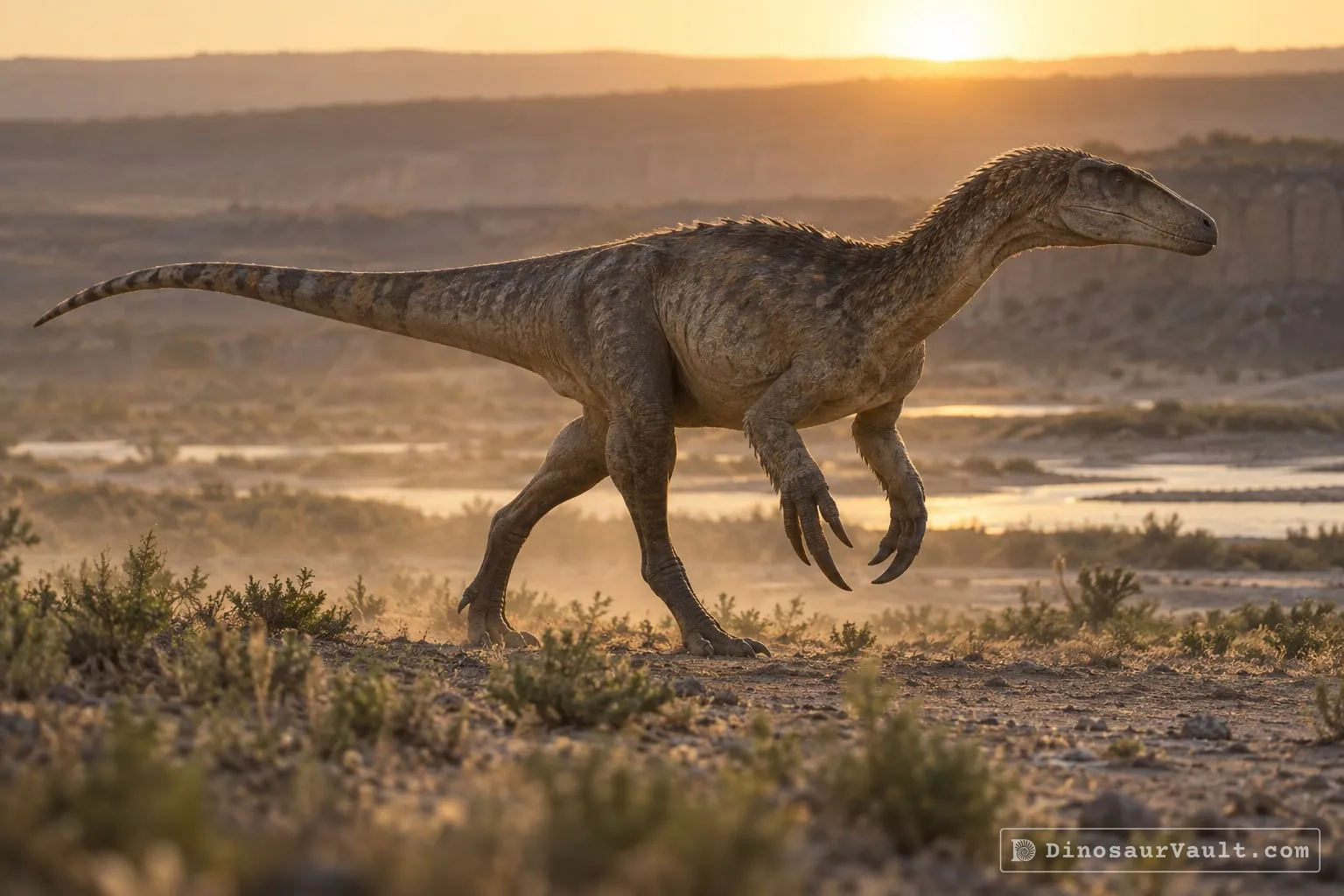
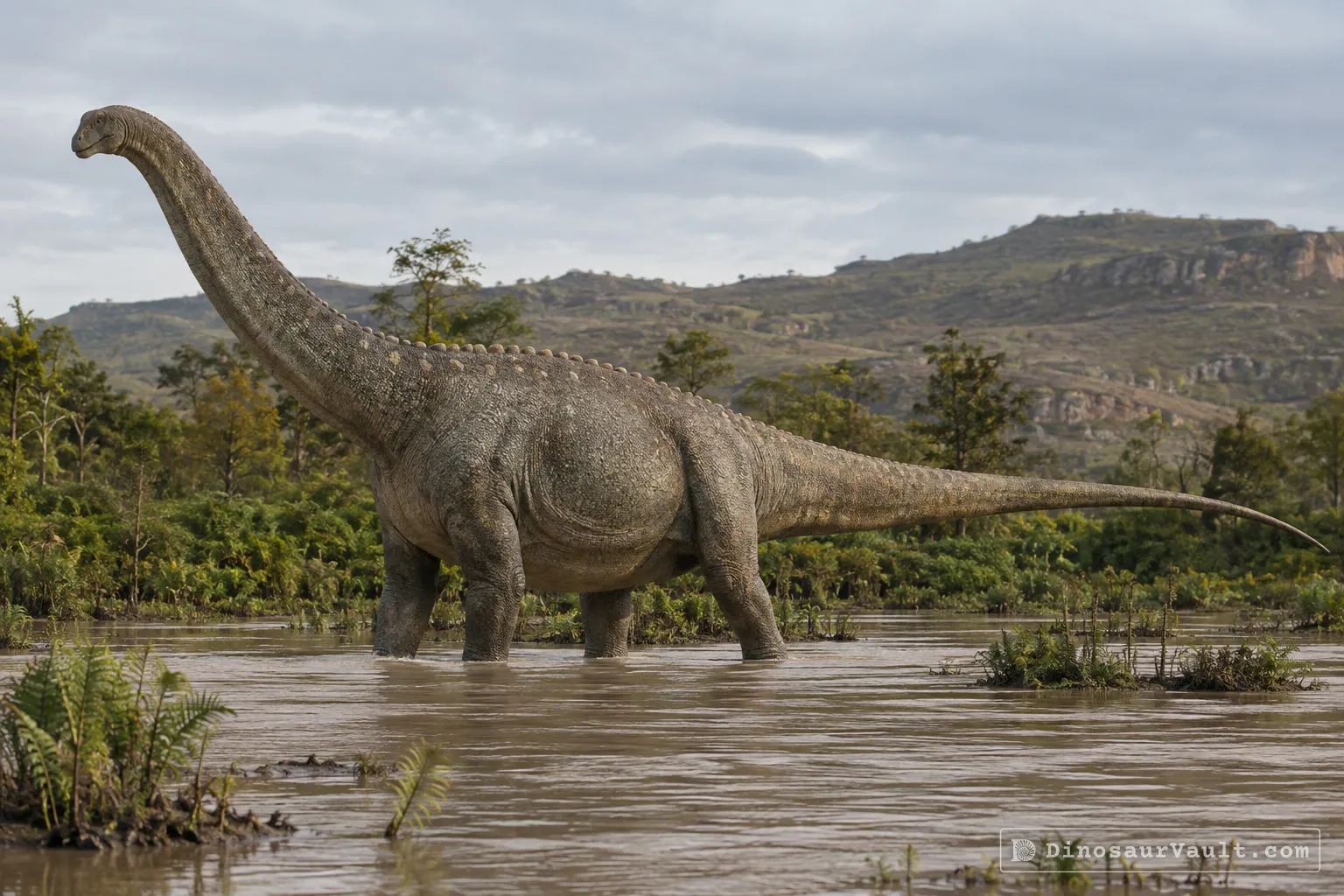
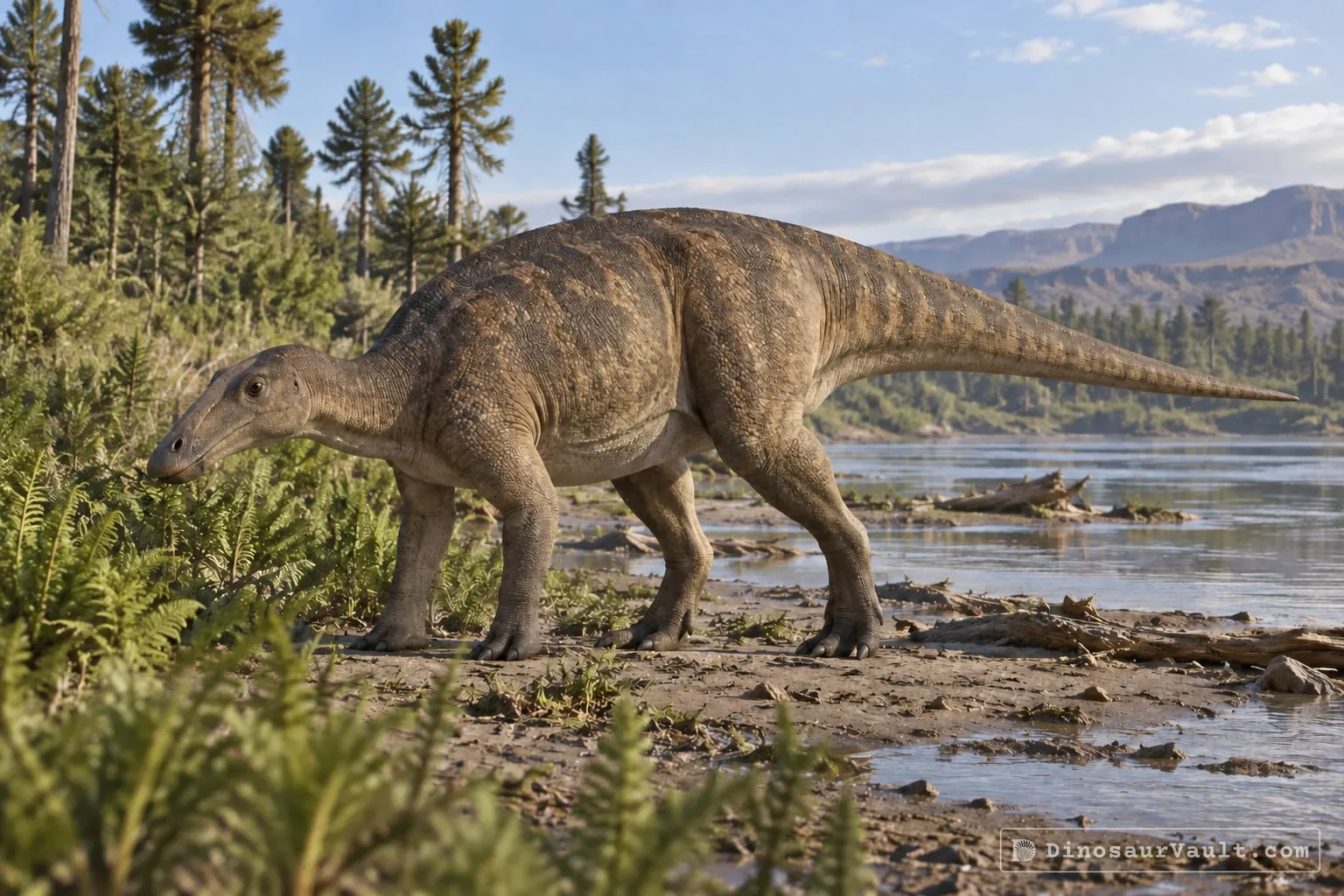
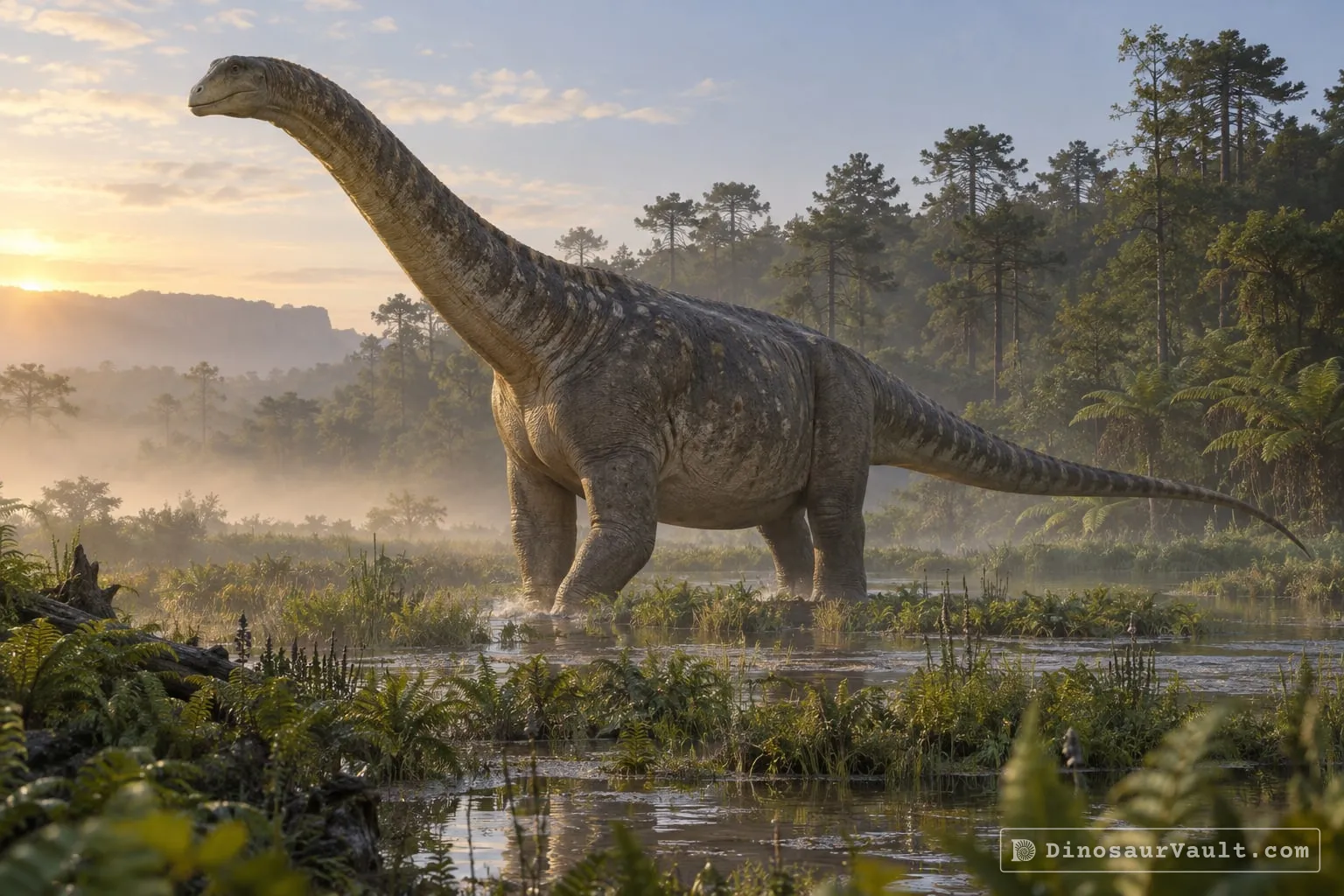
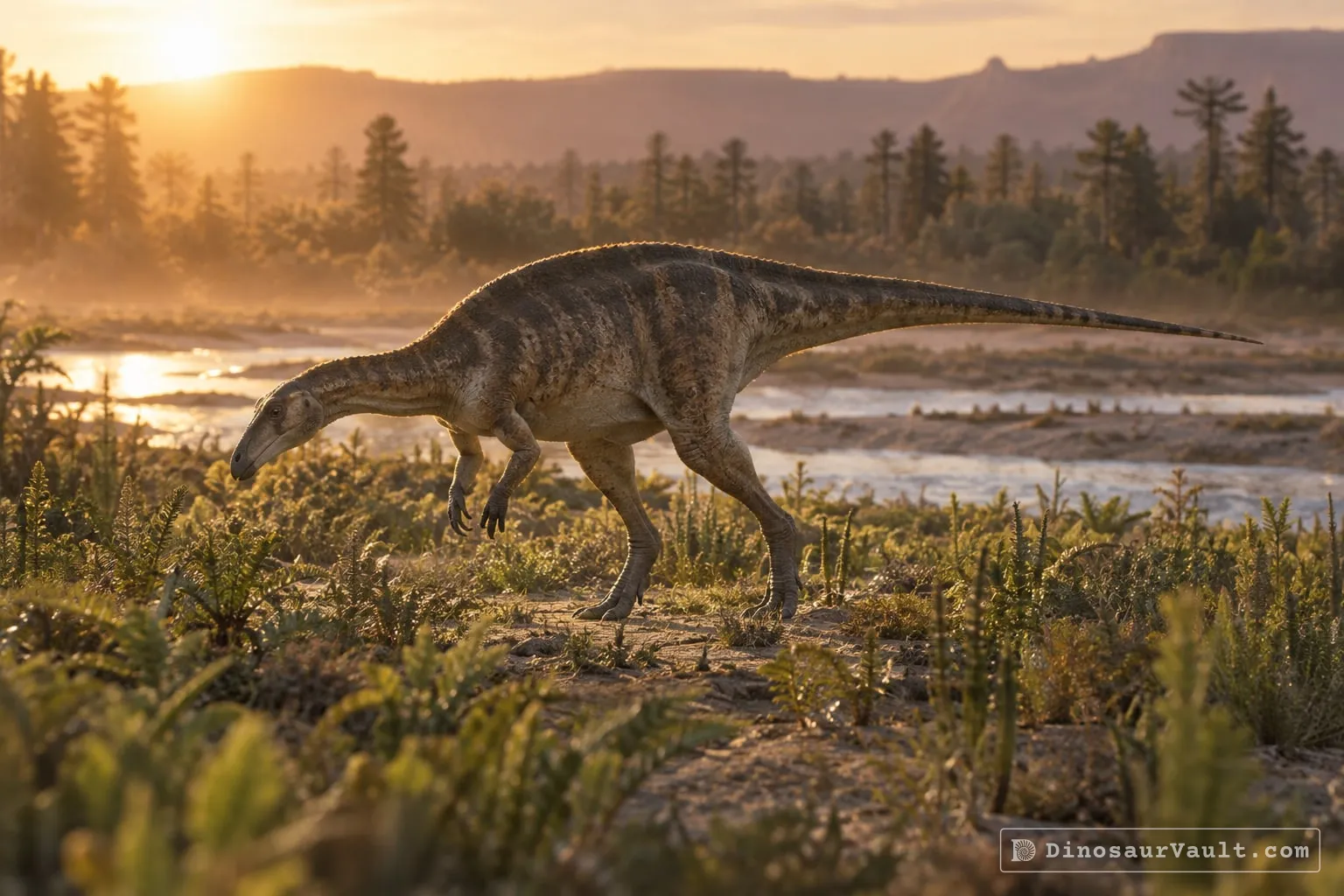


A rock formation can hold fossils laid down millions of years apart, so not every animal here met Notoceratops.
The evidence
The science behind Notoceratops
Which parts of the picture come from its own bones, and which come from its relatives.
From its own fossils
- The only find was an incomplete left lower jaw with no teeth preserved.
- The jaw has since been lost.
Borrowed from relatives
- A horned-dinosaur restoration would borrow the missing body from animals such as Psittacosaurus; a duckbill restoration would instead draw on animals such as Secernosaurus.
Still unknown
- Whether the jaw belonged to a horned dinosaur, a duckbill or another plant eater.
- Its body size and the shape of its skull.
- Its skin and color.
Discovery timeline
- 1919Named itTapia
- 2010Family treeIbiricu et al.
- 2021Its worldIbiricu et al.
Key papers
The research behind what we know of Notoceratops
Named it
Named a proposed horned dinosaur from an incomplete lower jaw found in Argentina.
Una mandibula de Dinosaurioa procedente de Patagonia [A dinosaur mandible from Patagonia]. Physis, Revista de la Sociedad Argentina de Ciencias Naturales 4: 369-370
No link available
Family tree
Reviewed the lost Notoceratops jaw and the competing suggestions that it belonged to a horned dinosaur or an ornithopod.
A Medium-Sized Ornithopod (Dinosauria: Ornithischia) from the Upper Cretaceous Bajo Barreal Formation of Lago Colhué Huapi, Southern Chubut Province, Argentina. Annals of Carnegie Museum 79: 39-50
Read the paper : A Medium-Sized Ornithopod (Dinosauria: Ornithischia) from the Upper Cretaceous Bajo Barreal Formation of Lago Colhué Huapi, Southern Chubut Province, Argentina (opens in a new tab)Its world
Described duckbill remains from the same formation and reconstructed winding rivers, freshwater pools and a warm, humid climate.
New hadrosaurid (Dinosauria: Ornithopoda) fossils from the uppermost Cretaceous of central Patagonia and the influence of paleoenvironment on South American hadrosaur distribution. Journal of South American Earth Sciences 110: 103369
Read the paper : New hadrosaurid (Dinosauria: Ornithopoda) fossils from the uppermost Cretaceous of central Patagonia and the influence of paleoenvironment on South American hadrosaur distribution (opens in a new tab)
Close relatives
Other members of Ceratopsia


Sources: Wikidata