Micropachycephalosaurus
"small thick-headed lizard"
- Lived
- 90 to 84 million years ago, Late Cretaceous
- Diet
- Herbivore
- Length
- about 0.6 m (2 ft)
- Group
- Ceratopsians
- Found in
- China
- Named by
- Dong 1978
Size comparison
To scale
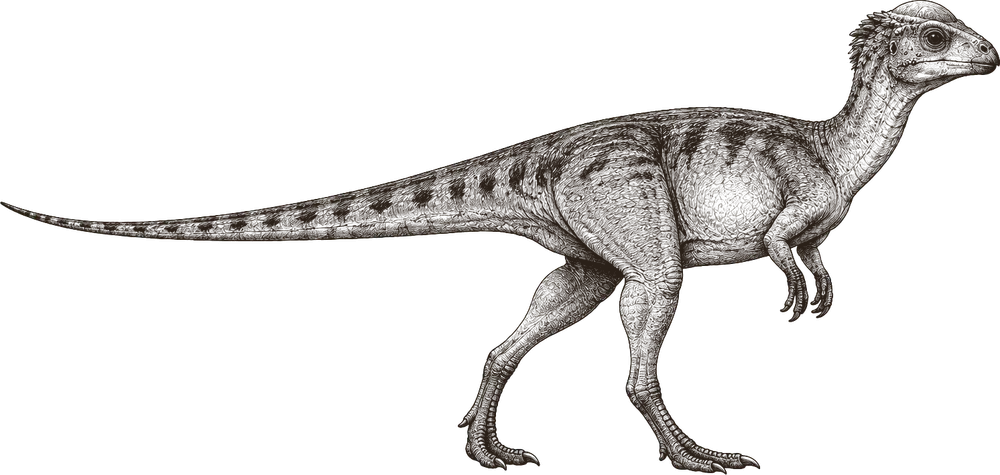

Scale in meters
Where its fossils were found
The evidence
Today

90 million years ago
Habitat
It lived in the Jiangjunding Formation region of China, where claystone preserves its remains. Tanius is another plant eater recorded from the same formation.
Field notes
About Micropachycephalosaurus
What it was like
Micropachycephalosaurus was a small, plant-eating dinosaur belonging to the ceratopsian branch of the dinosaur family tree, though it lacked the horns and bony frill of relatives like Triceratops. It measured only about 0.6 meters (2 feet) long, making it one of the smallest dinosaurs known from its group. Its genus name is famously long, among the longest given to any dinosaur, which stands in odd contrast to its tiny size. Some early studies linked it to the thick-skulled pachycephalosaurs because of that name, but it is now generally classified among the early ceratopsians instead.
Its world
Micropachycephalosaurus lived in what is now China during the Late Cretaceous, between about 90 and 84 million years ago. Fossils place it alongside the hadrosaur Tanius in the same habitat, where it would have needed to stay alert for far larger predators sharing the landscape.
How it was found
Dong named Micropachycephalosaurus in 1978, based on fossils from the Jiangjunding Formation. Only a single specimen is known, so scientists still have limited information about how it lived and how it relates to other early ceratopsians such as Psittacosaurus.
Field gallery
More views of Micropachycephalosaurus
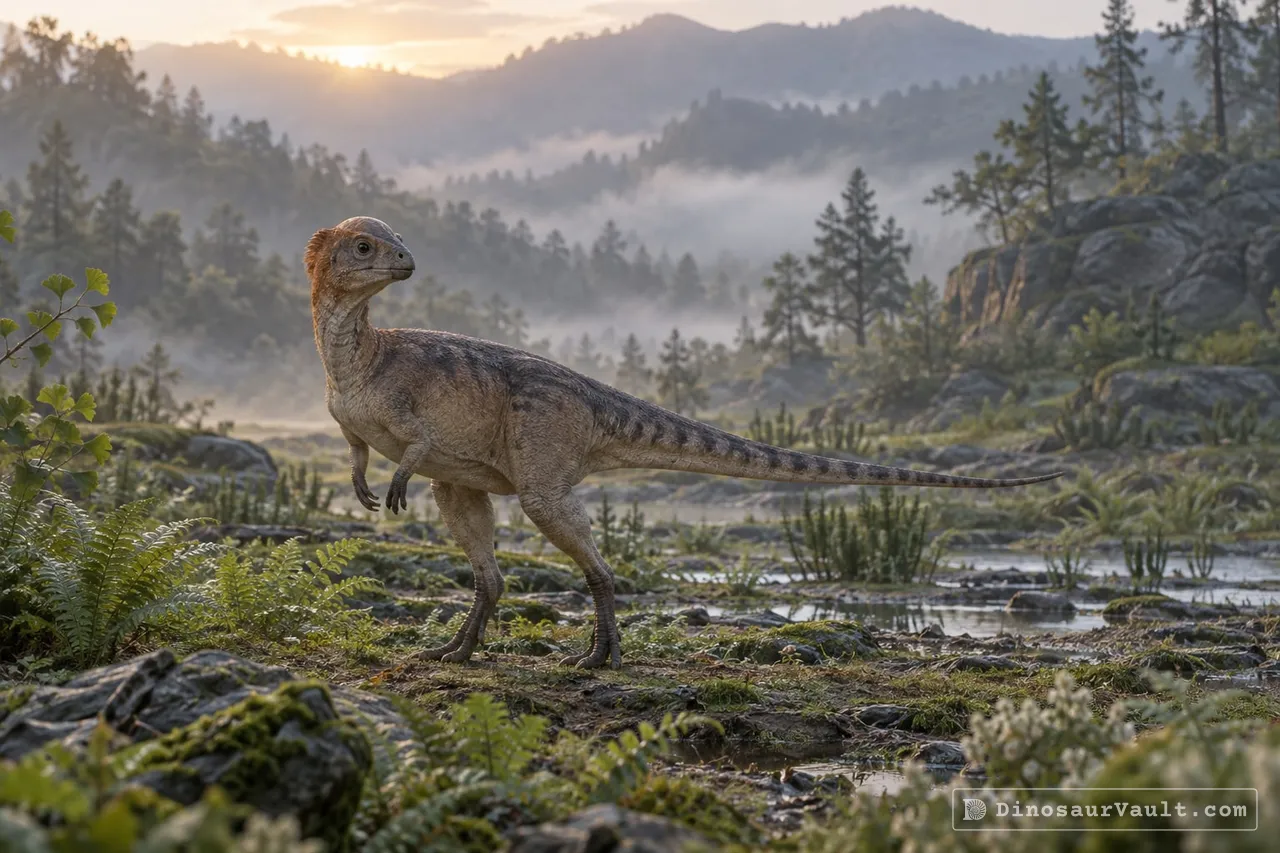
Scenes reconstructed from the available fossil evidence.
Lived alongside
Found in the same rock formations

A rock formation can hold fossils laid down millions of years apart, so not every animal here met Micropachycephalosaurus.
The evidence
The science behind Micropachycephalosaurus
Which parts of the picture come from its own bones, and which come from its relatives.
From its own fossils
- The only known specimen consists of scattered parts of a small dinosaur skeleton.
- Grooves along the underside of its back vertebrae help distinguish it from other dinosaurs.
Borrowed from relatives
- A small body balanced on its hindlegs is reconstructed from comparisons with early ceratopsians such as Psittacosaurus.
Still unknown
- The shape of its head and the proportions of its whole body.
- Its exact position in the dinosaur family tree.
- Its skin covering and color.
Often drawn wrong
- A thick skull dome like Pachycephalosaurus has no support in the surviving bones.
- A large horned frill like Triceratops has no fossil support.
Discovery timeline
- 1978Named itDong
- 2009RedescriptionButler & Zhao
- 2011Family treeBUTLER et al.
Key papers
The research behind what we know of Micropachycephalosaurus
Named it
Named a small plant eater from China and originally placed it among dome-headed dinosaurs.
[A new genus of Pachycephalosauria from Laiyang, Shantung]. Vertebrata PalAsiatica 16: 225-228
No link available
Redescription
Identified distinctive grooves in the back vertebrae and found no clear dome-headed dinosaur features in the surviving material.
The small-bodied ornithischian dinosaurs Micropachycephalosaurus hongtuyanensis and Wannanosaurus yansiensis from the Late Cretaceous of China. Cretaceous Research 30: 63-77
Read the paper : The small-bodied ornithischian dinosaurs Micropachycephalosaurus hongtuyanensis and Wannanosaurus yansiensis from the Late Cretaceous of China (opens in a new tab)Family tree
Included Micropachycephalosaurus in a wider family-tree analysis that placed it among early ceratopsians.
The postcranial osteology and phylogenetic position of the small ornithischian dinosaur Changchunsaurus parvus from the Quantou Formation (Cretaceous: Aptian–Cenomanian) of Jilin Province, north‐eastern China. Palaeontology 54: 667-683
Read the paper : The postcranial osteology and phylogenetic position of the small ornithischian dinosaur Changchunsaurus parvus from the Quantou Formation (Cretaceous: Aptian–Cenomanian) of Jilin Province, north‐eastern China (opens in a new tab)
Close relatives
Other members of Ceratopsia


Sources: Wikidata