Barilium
"heavy hip"
Type species Barilium dawsoni
- Lived
- 137 to 133 million years ago, Early Cretaceous
- Diet
- Herbivore
- Group
- Ornithopods, Iguanodontidae
- Found in
- United Kingdom
- Named by
- Norman 2010
Where its fossils were found
The evidence
Today

135 million years ago
Habitat
Rivers crossed low floodplains in what is now England. Hypselospinus and Hylaeosaurus lived in the same region.
Field notes
About Barilium
What it was like
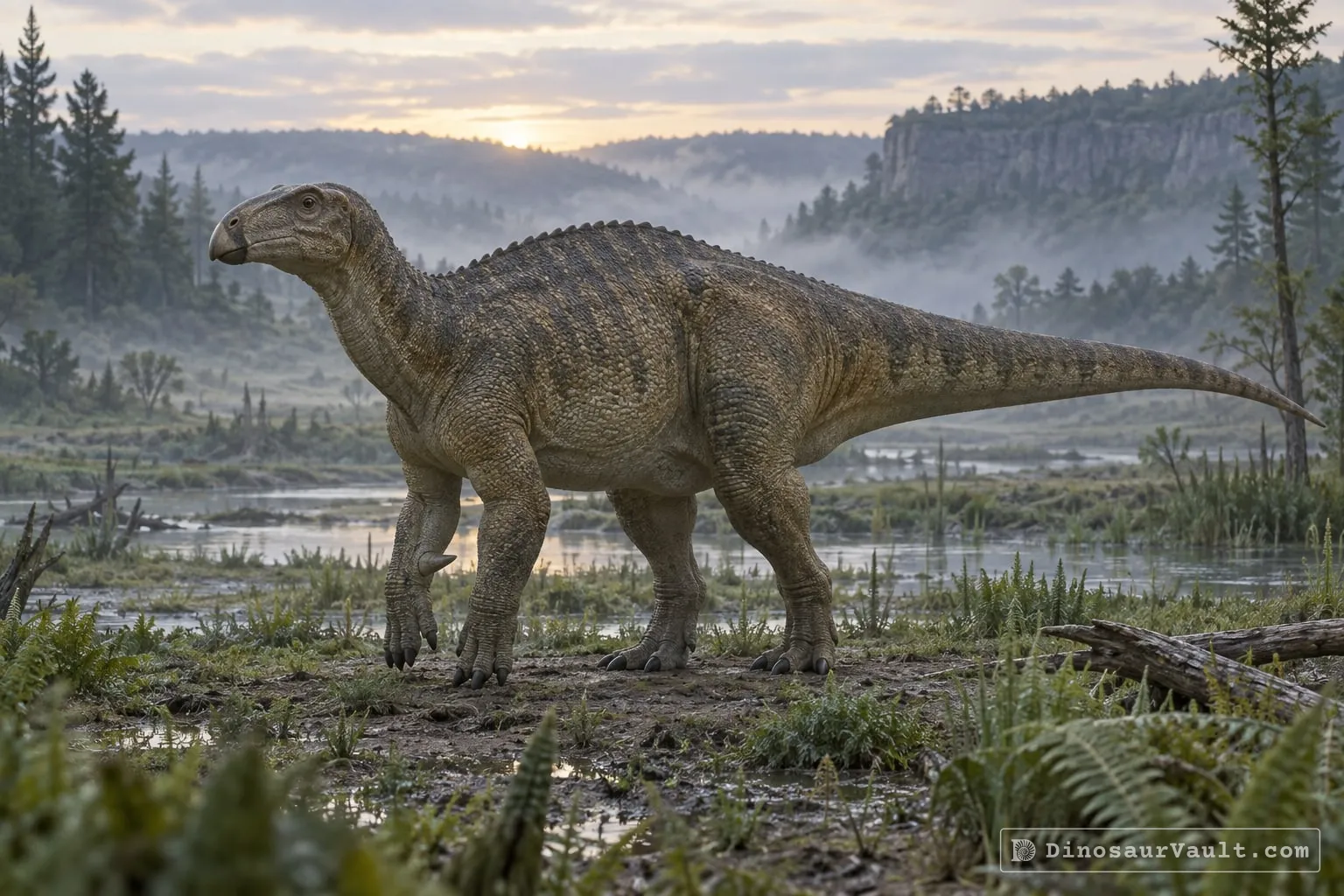
Barilium was a large, heavily built plant eater, a relative of Iguanodon. It had strong hips and probably walked on all fours much of the time.
Its world
It lived about 137 to 133 million years ago, in the Early Cretaceous, in what is now England. Its bones come from the Wadhurst Clay, a land of rivers and floodplains shared with the plant eater Hypselospinus and the armored Hylaeosaurus.
How it was found
Its bones were first described as a species of Iguanodon. Norman gave it its own genus in 2010. The type species is Barilium dawsoni.
Field gallery
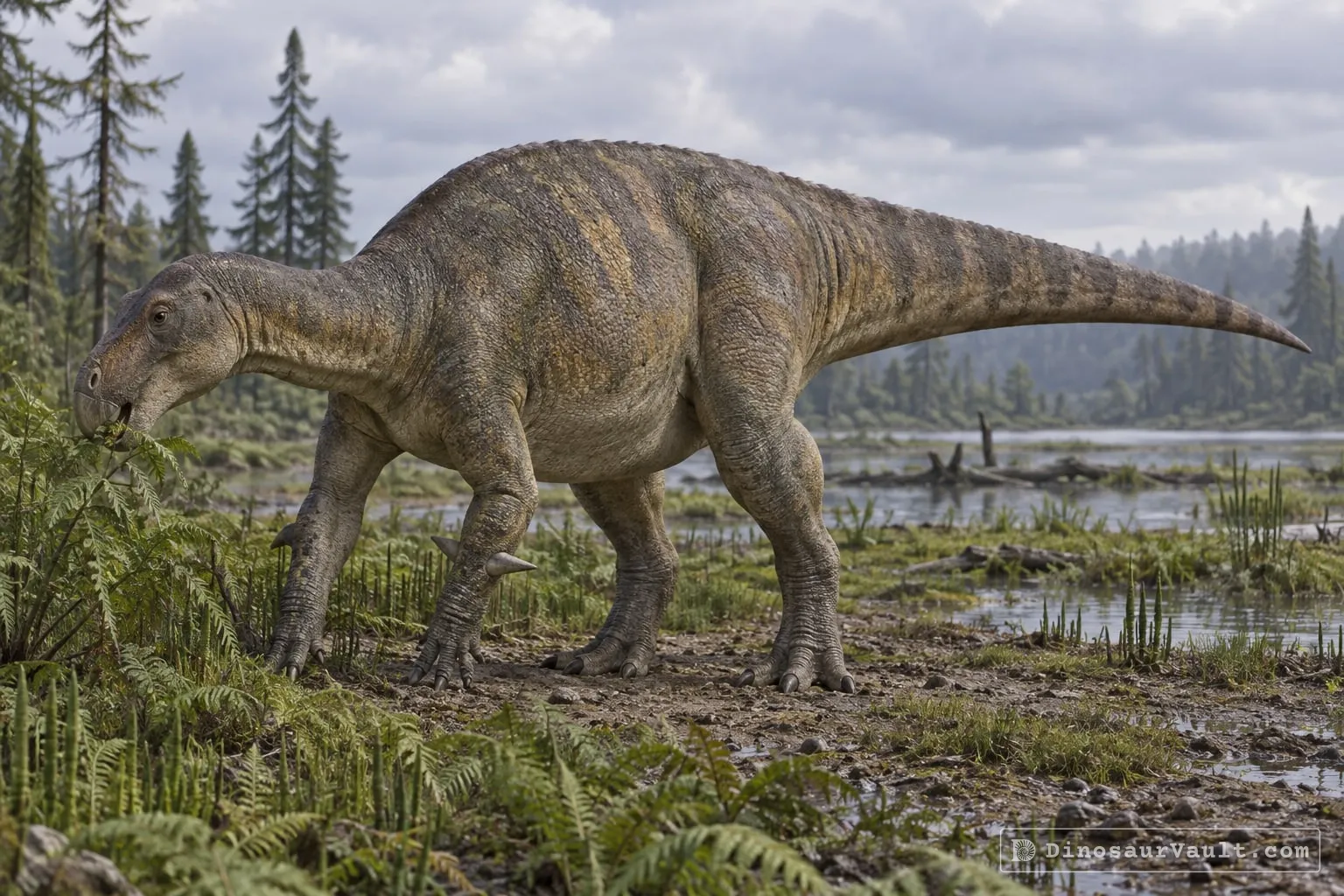
More views of Barilium
Scenes reconstructed from the available fossil evidence.
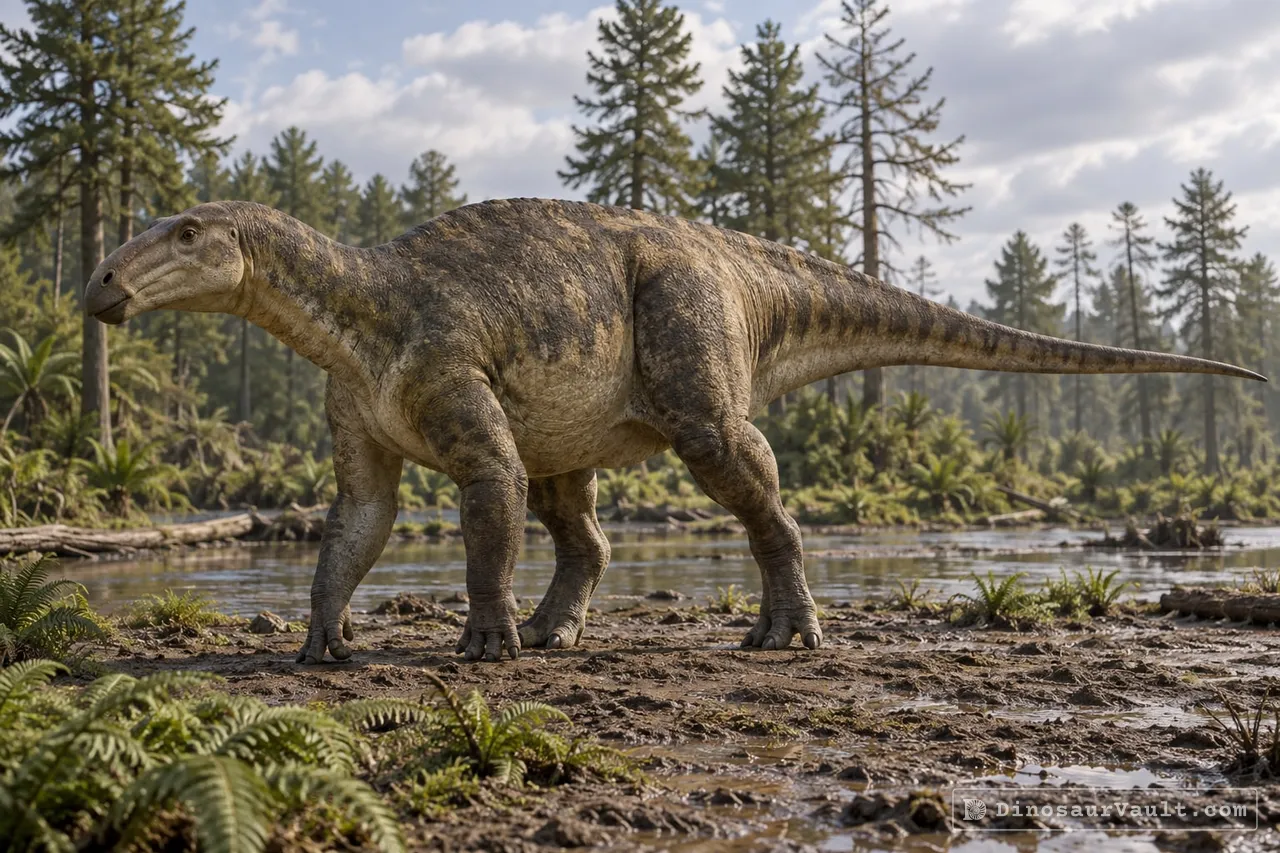
1 of 3
Lived alongside
Found in the same rock formations
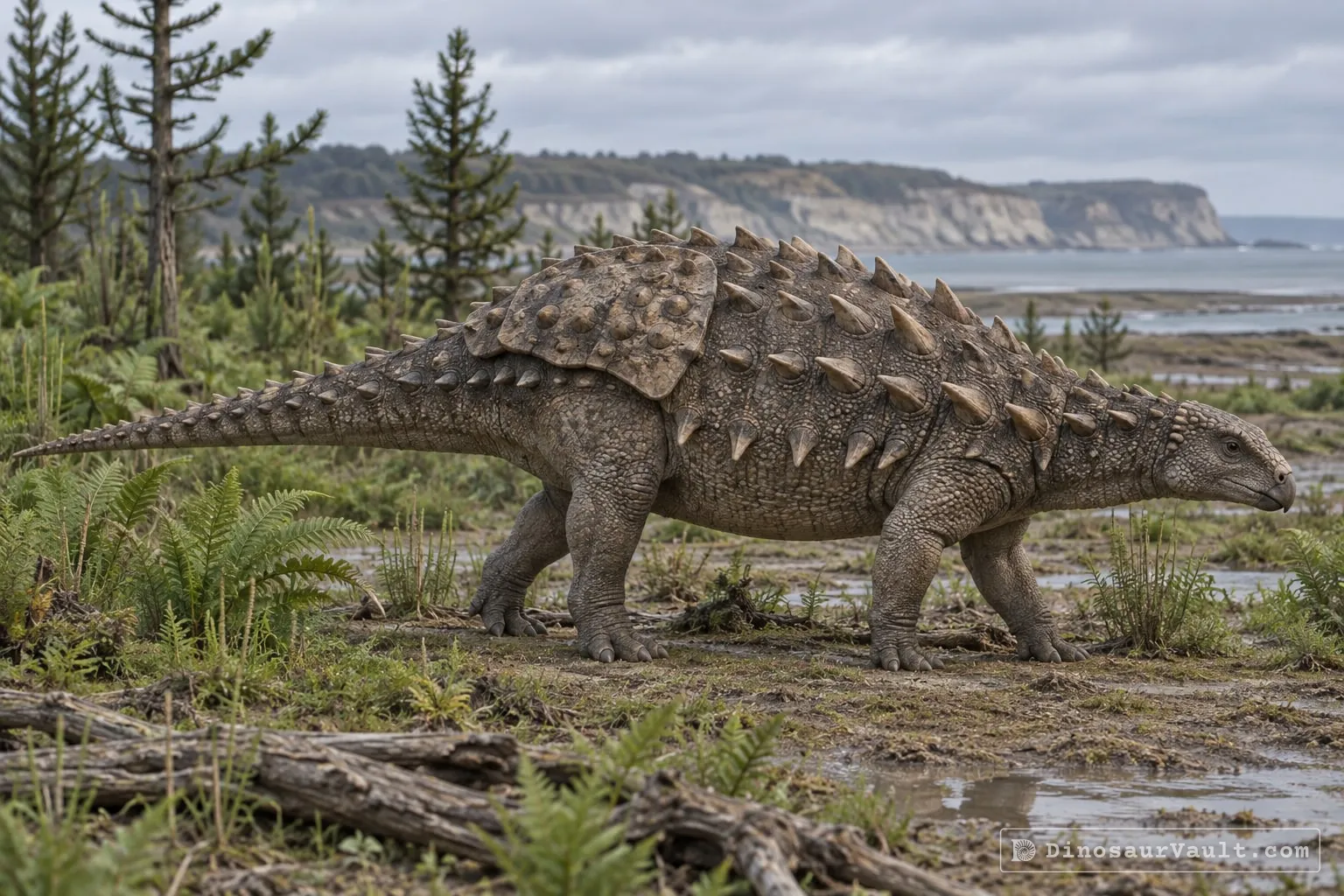
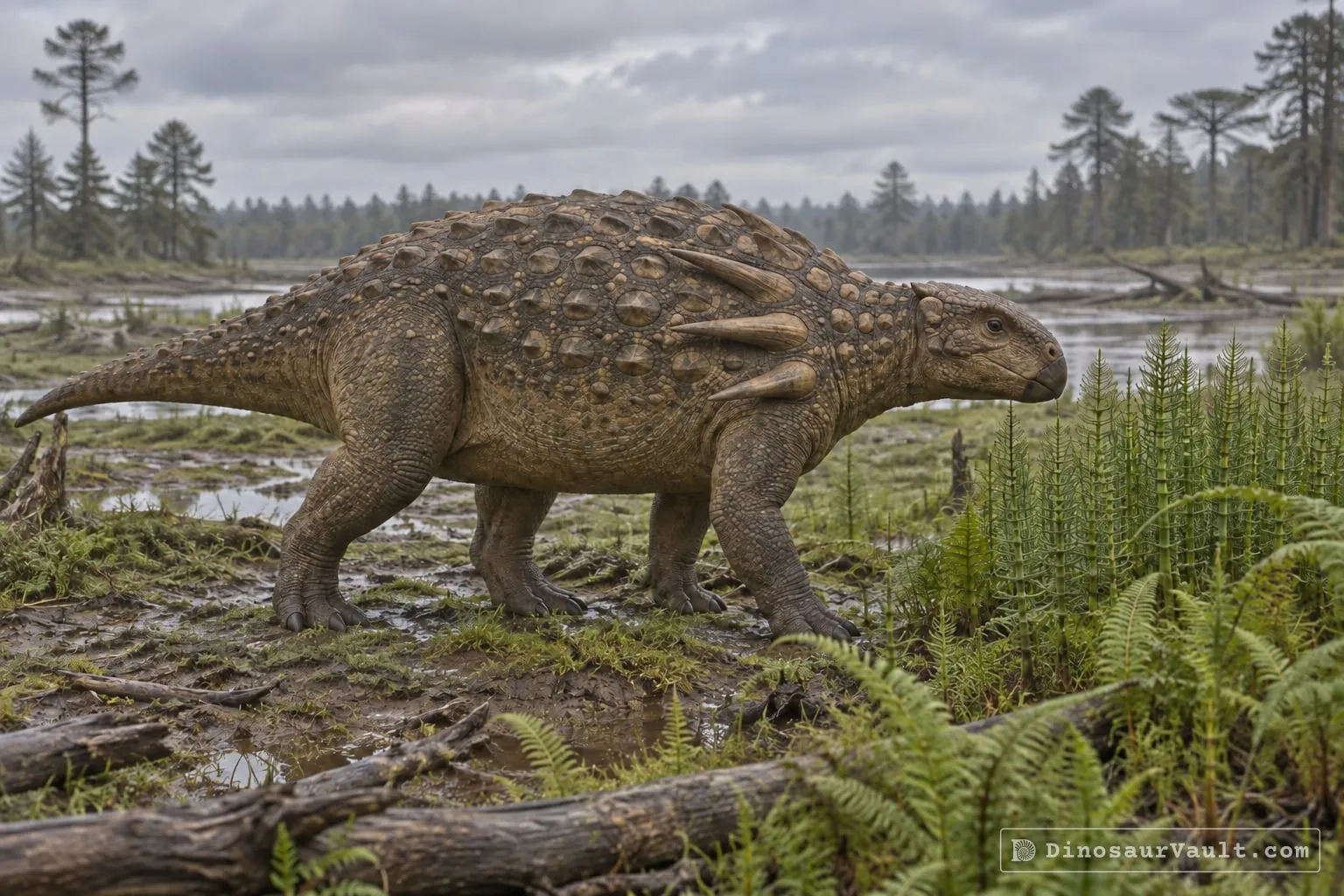
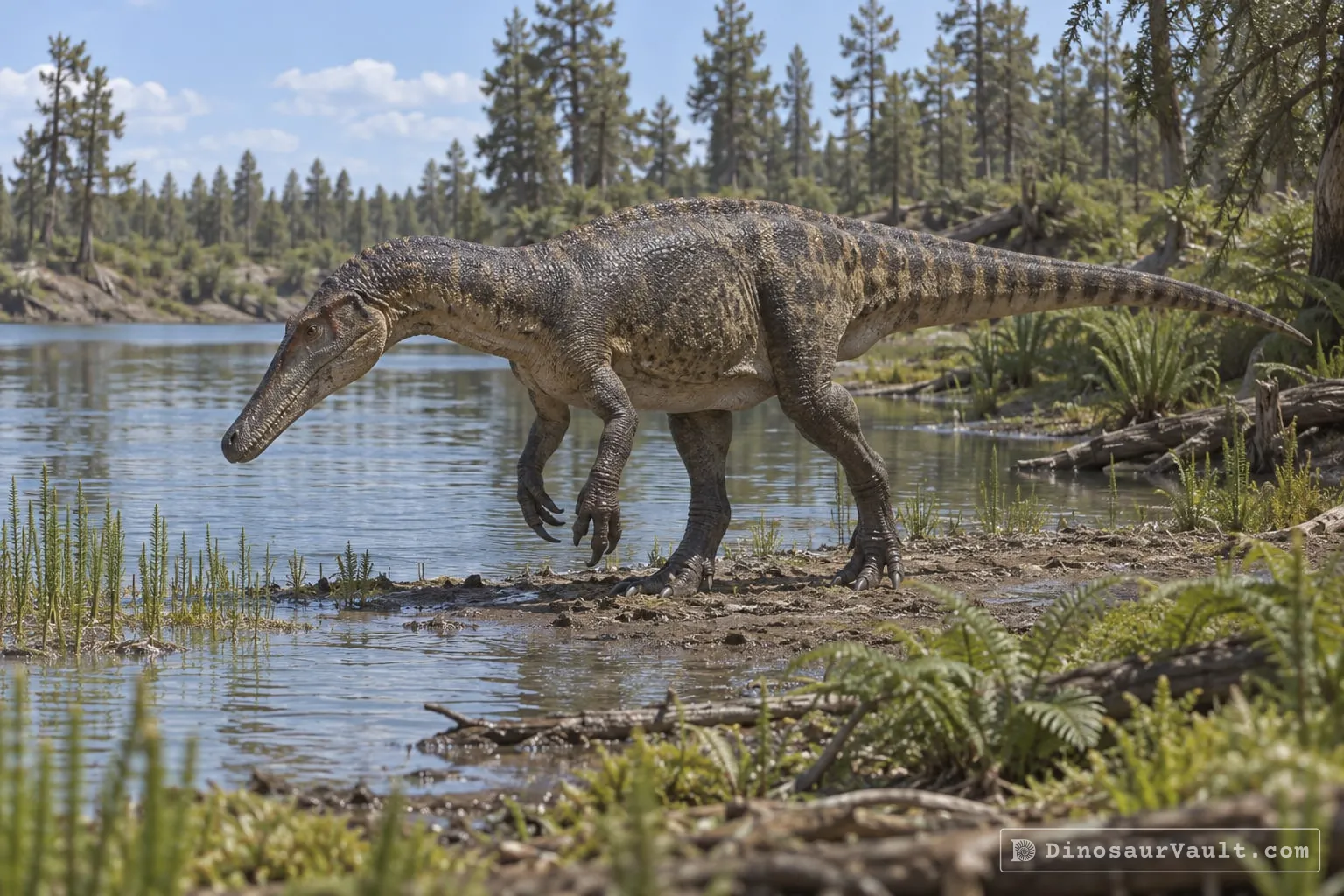
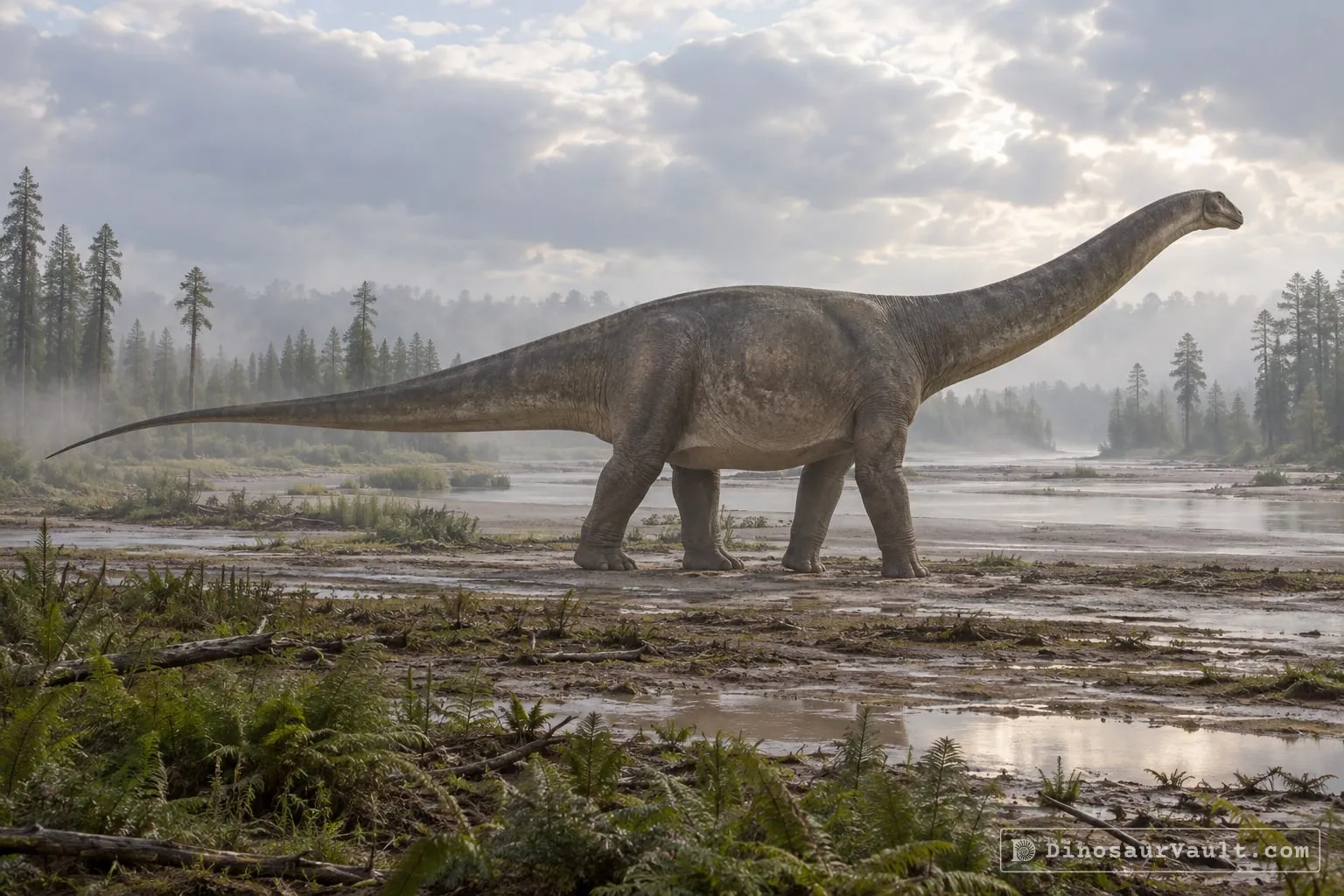
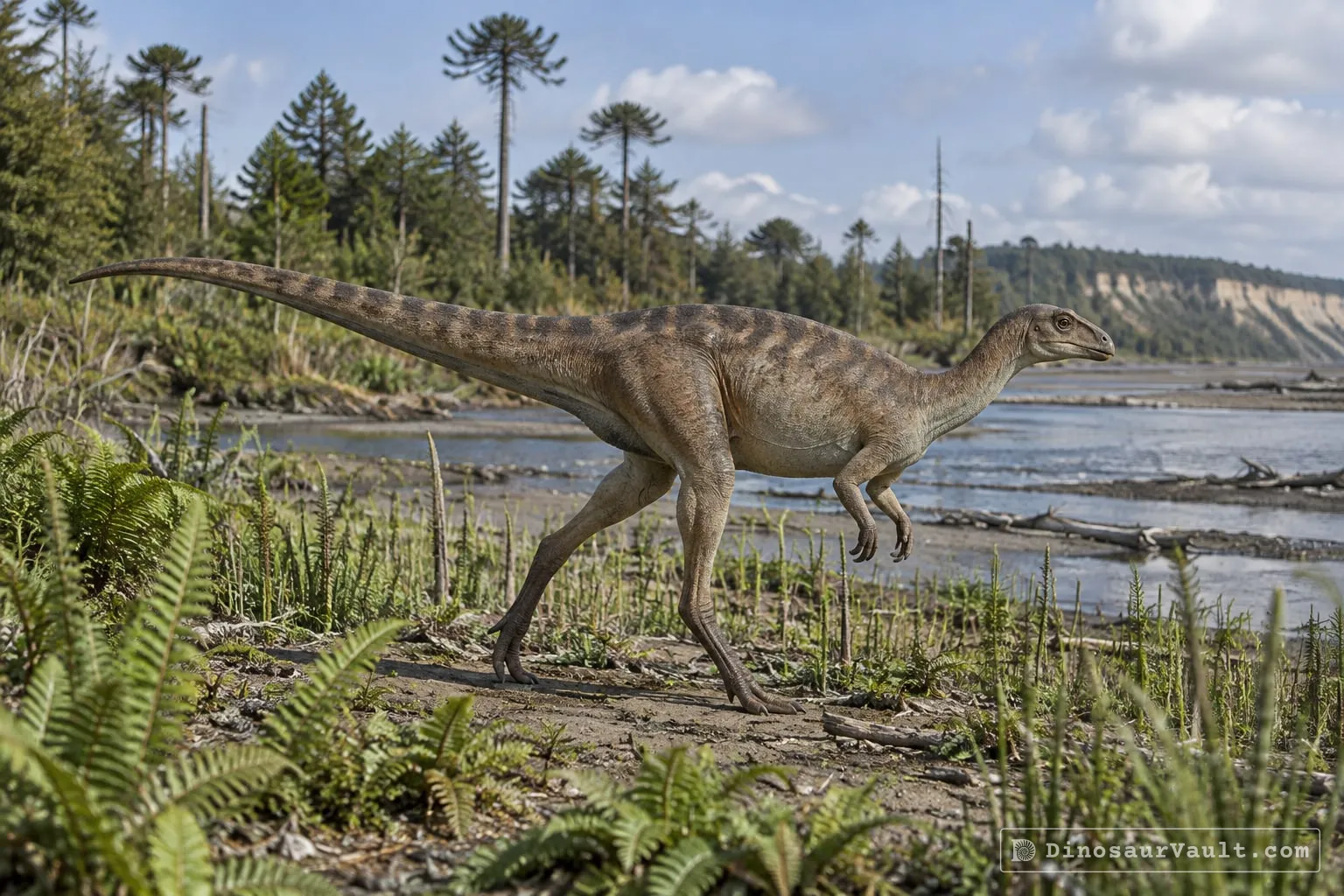


A rock formation can hold fossils laid down millions of years apart, so not every animal here met Barilium.
The evidence
The science behind Barilium
Which parts of the picture come from its own bones, and which come from its relatives.
From its own fossils
- Its hip bones and backbone show a heavily built plant eater with tall, thick spines along the rear of its back.
- The strong forearm met a fused block of wrist bones.
- Its thumb claw was unusually short, blunt and flattened from side to side.
Borrowed from relatives
- Iguanodon helps restore the broad beaked head and missing parts of the hands and feet.
Still unknown
- The complete shape of its skull.
- Its skin covering and color.
- How its body changed as it grew.
Discovery timeline
- 2010Named itNORMAN
- 2012Family treeMcDonald
Key papers
The research behind what we know of Barilium
Named it
Separated a heavily built plant eater from Iguanodon using distinctive features of its hips and backbone.
A taxonomy of iguanodontians (Dinosauria: Ornithopoda) from the lower Wealden Group (Cretaceous: Valanginian) of southern England. Zootaxa 2489
Read the paper : A taxonomy of iguanodontians (Dinosauria: Ornithopoda) from the lower Wealden Group (Cretaceous: Valanginian) of southern England (opens in a new tab)Family tree
Compared early iguanodonts and supported separating Barilium from Iguanodon.
Phylogeny of Basal Iguanodonts (Dinosauria: Ornithischia): An Update. PLoS ONE 7: e36745
Read the paper : Phylogeny of Basal Iguanodonts (Dinosauria: Ornithischia): An Update (opens in a new tab)
Close relatives
Other members of Iguanodontidae

Sources: Wikidata