Ningyuansaurus
Type species Ningyuansaurus wangi
- Lived
- 126 to 120 million years ago, Early Cretaceous
- Diet
- Omnivore
- Group
- Theropods
- Found in
- China
- Named by
- Ji et al. 2012
Where its fossils were found
The evidence
Today

125 million years ago
Habitat
The Yixian Formation records lakes and surrounding land with conifers in northeastern China. Sinosauropteryx, Sinornithosaurus and Psittacosaurus also lived in this region.
Field notes
About Ningyuansaurus
What it was like
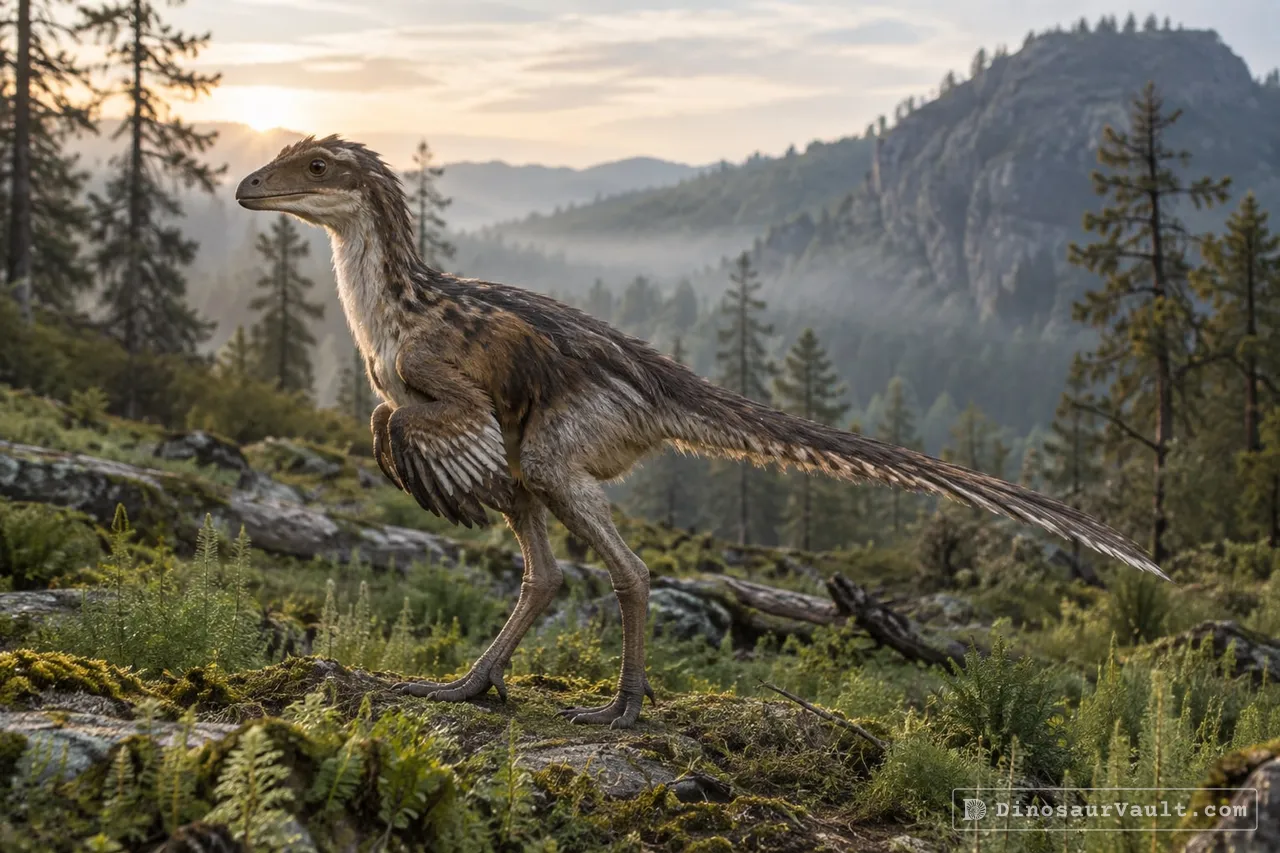
Ningyuansaurus was a small feathered dinosaur, an early member of the oviraptor group. It had a short skull and small teeth at the front of its jaws.
Seeds found inside its body suggest it ate plants, at least some of the time.
Its world
It lived in the Early Cretaceous in what is now northeastern China. Its skeleton comes from the Yixian Formation, where it shared the land with Sinosauropteryx, Sinornithosaurus and the early oviraptor relatives Caudipteryx and Incisivosaurus.
How it was found
Ji and colleagues named Ningyuansaurus in 2012, from a single find.
Field gallery
More views of Ningyuansaurus
Scenes reconstructed from the available fossil evidence.
Lived alongside
Found in the same rock formations
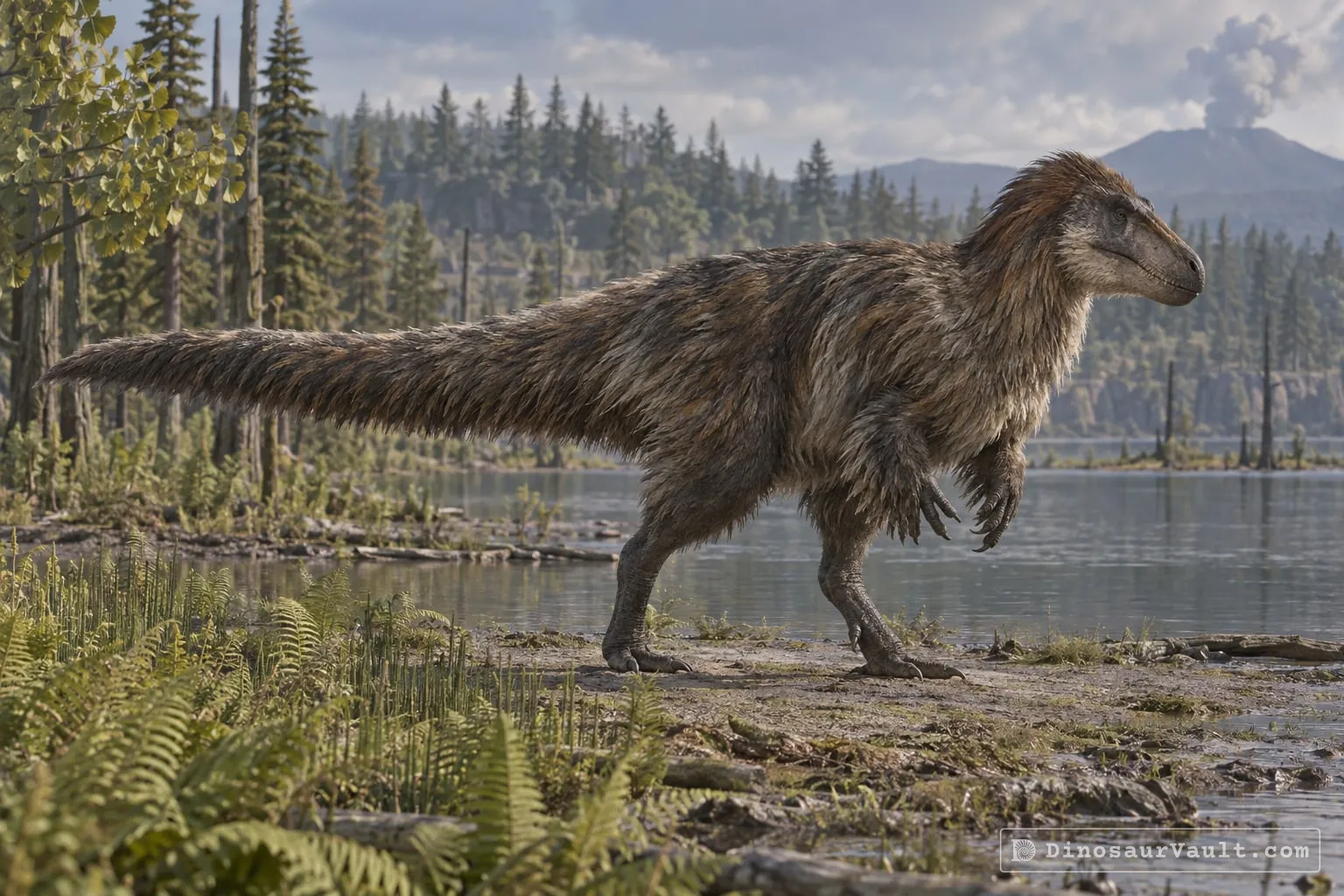
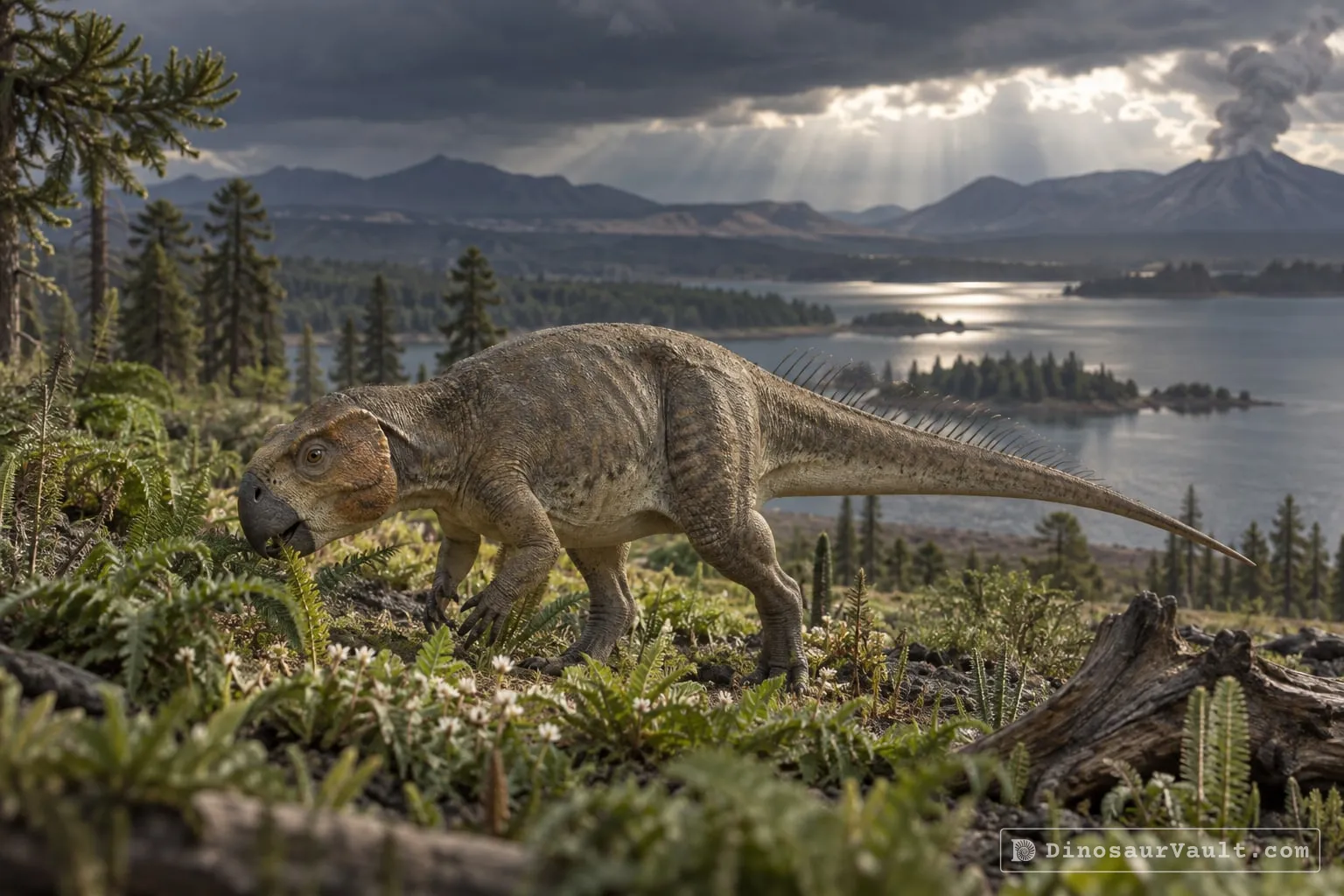
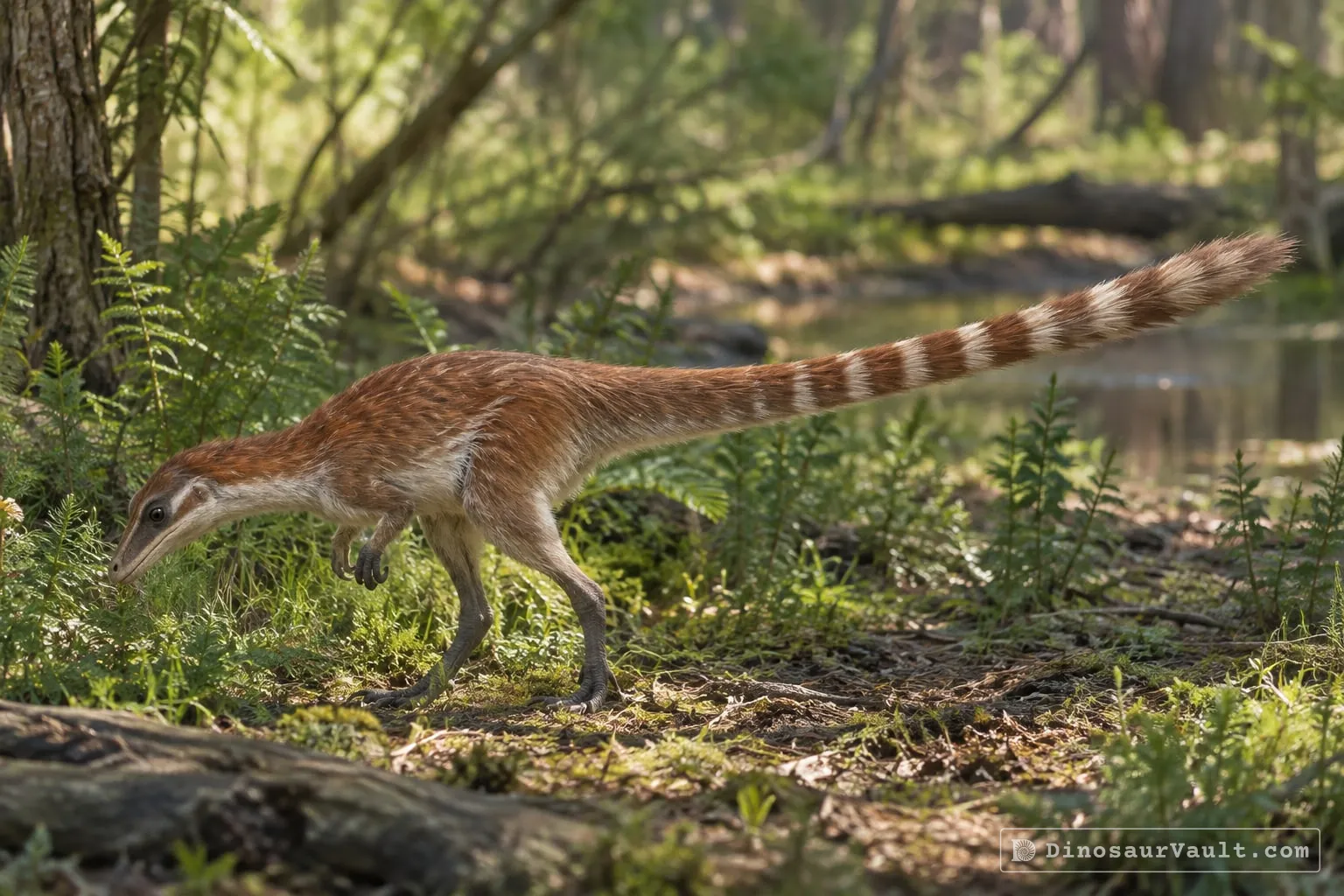
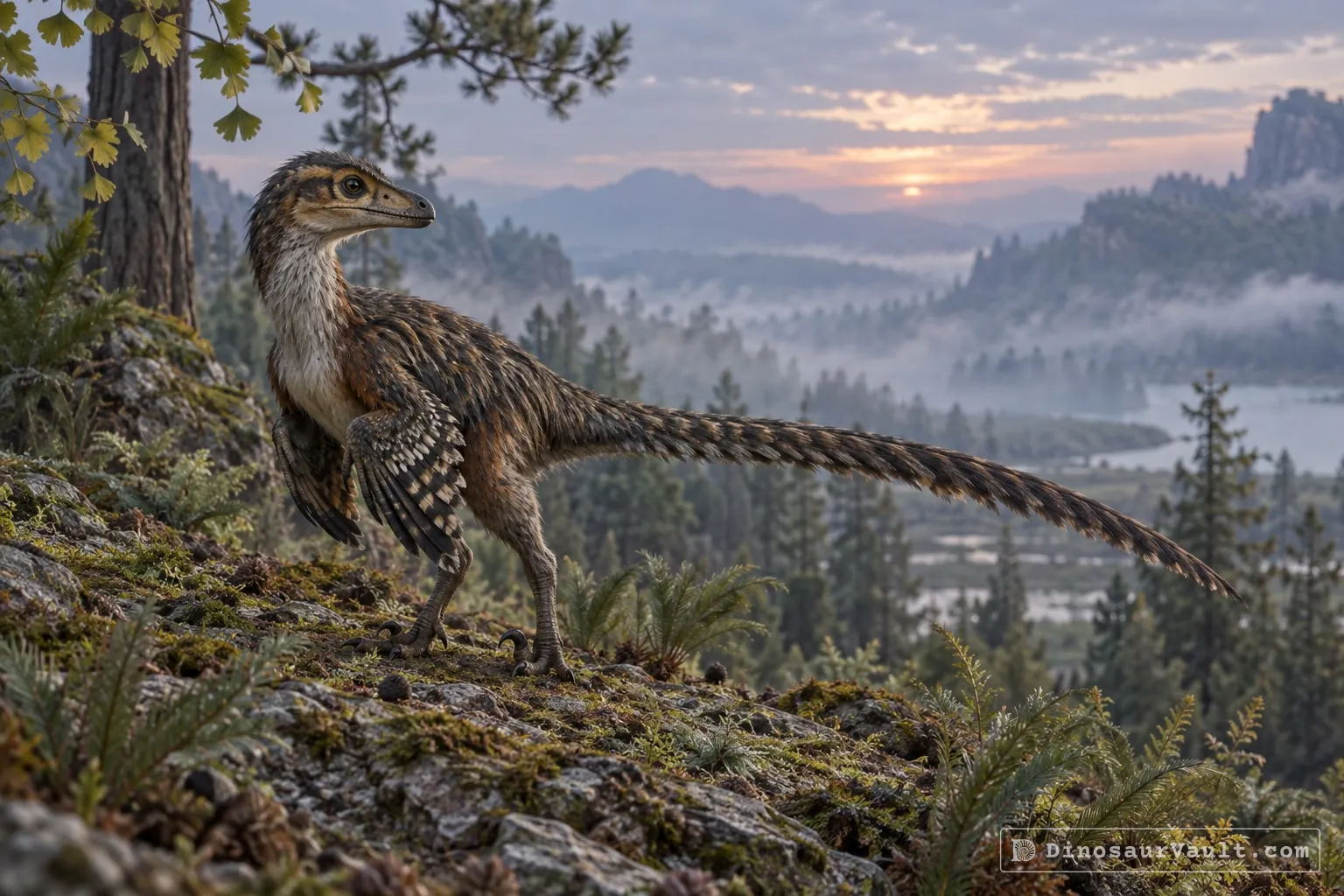
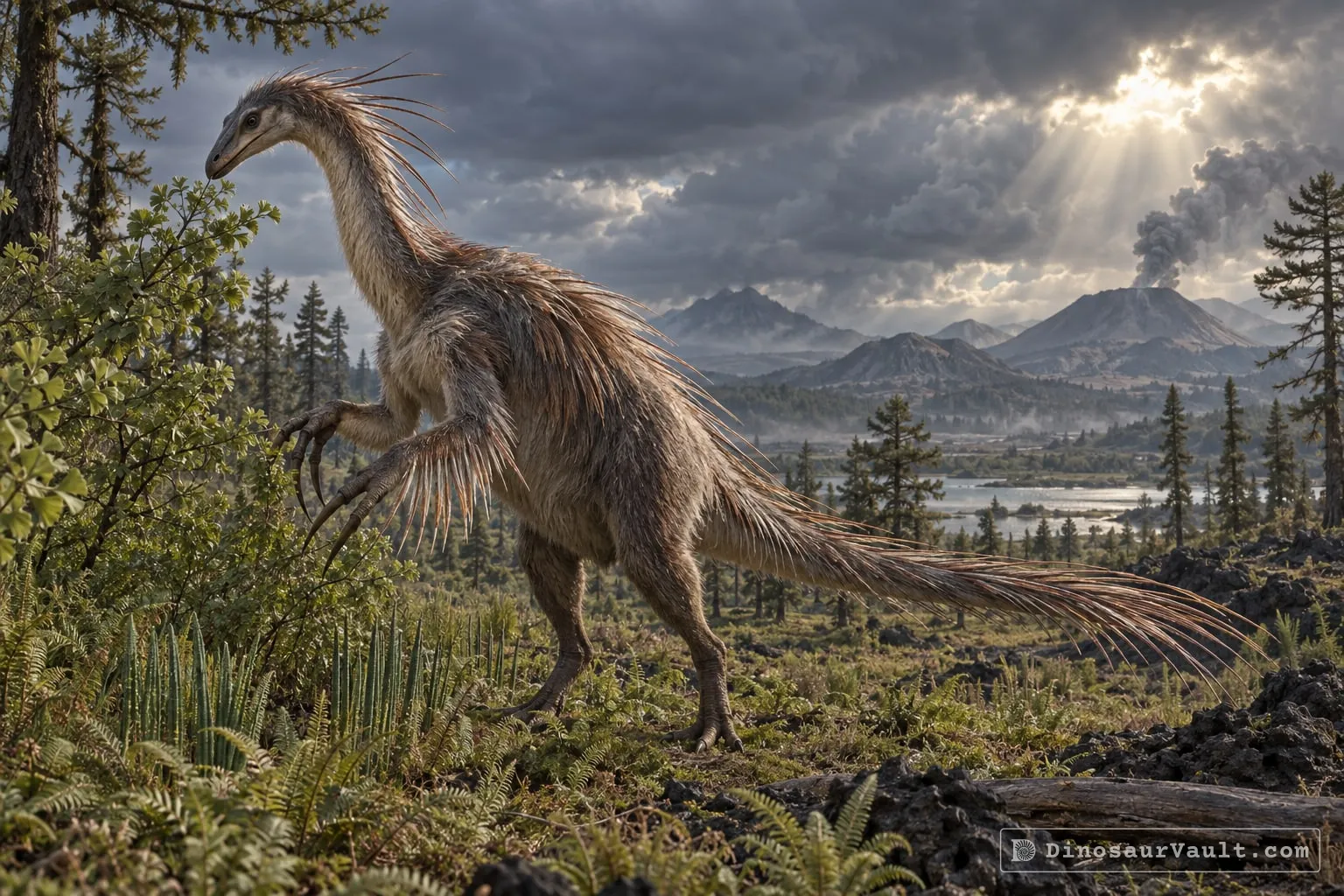
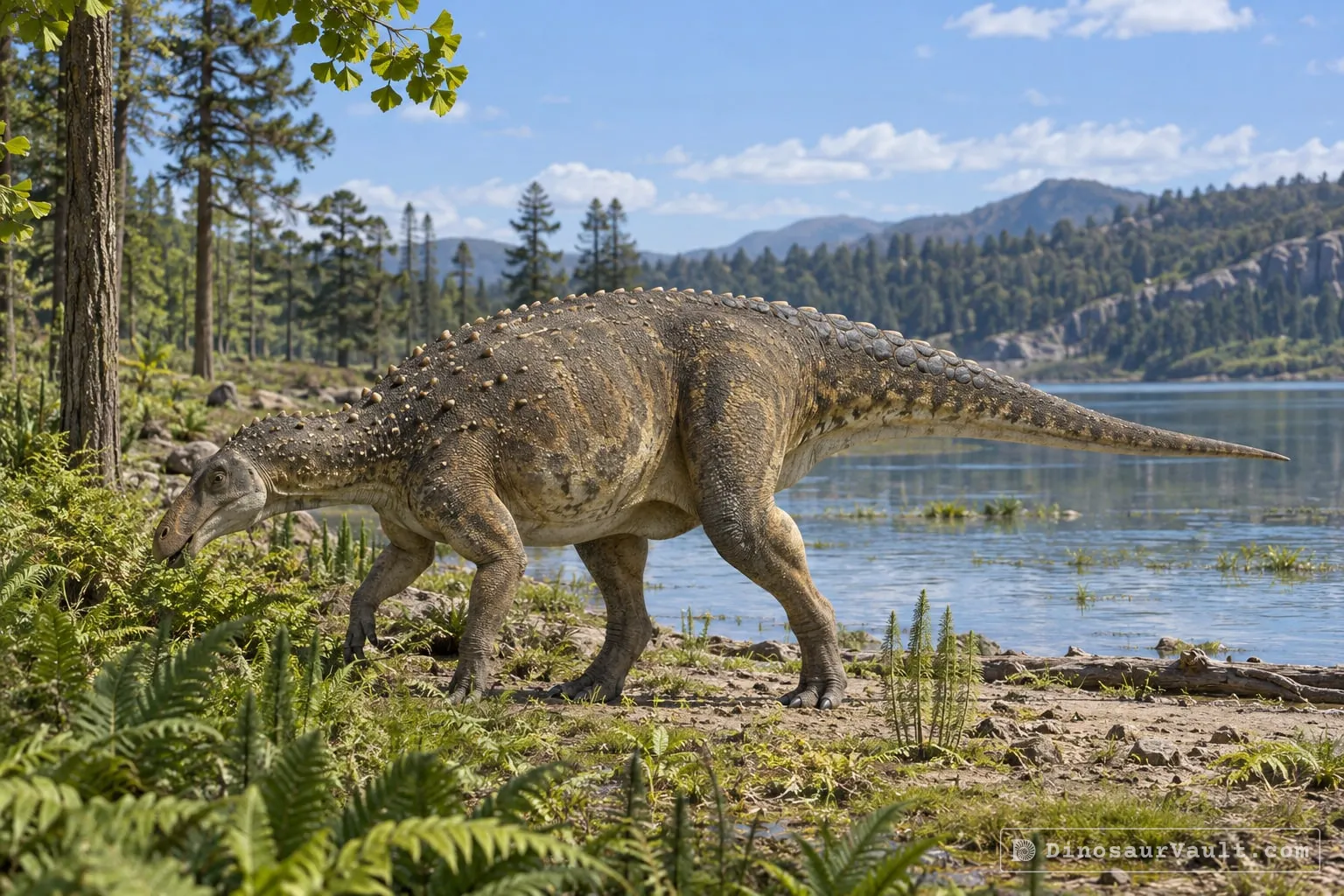
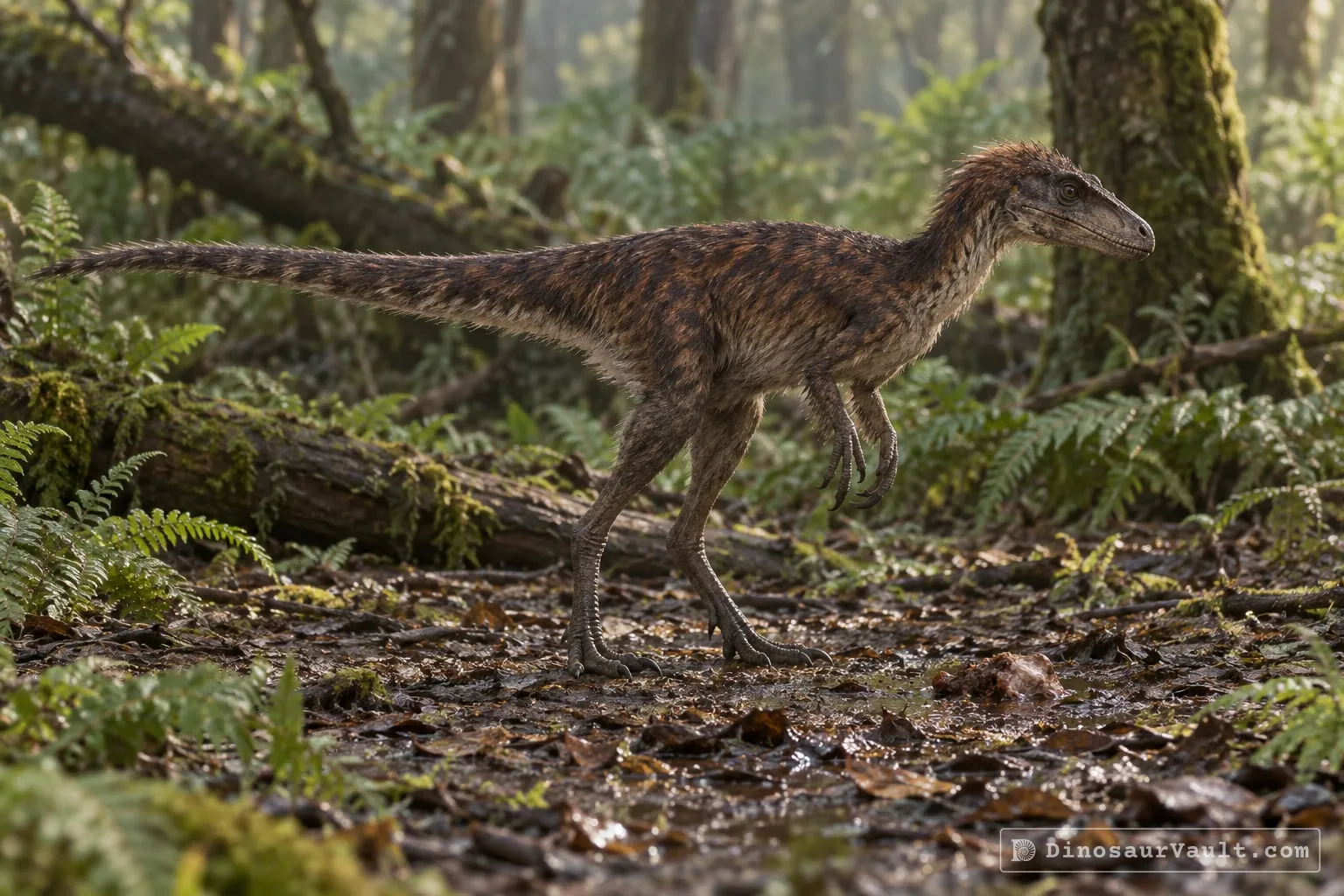
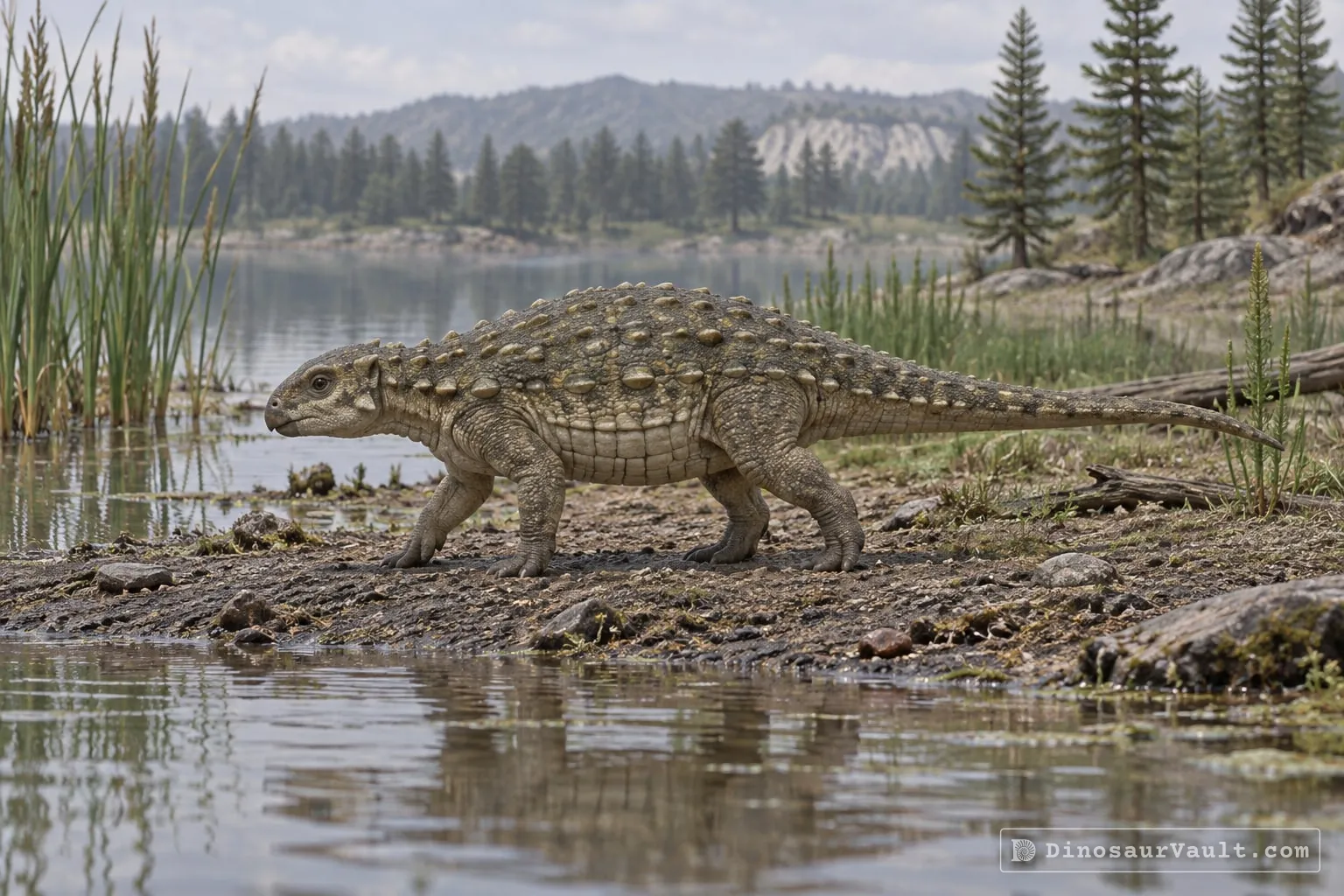


A rock formation can hold fossils laid down millions of years apart, so not every animal here met Ningyuansaurus.
The evidence
The science behind Ningyuansaurus
Which parts of the picture come from its own bones, and which come from its relatives.
From its own fossils
- A nearly complete skeleton preserves the skull, lower jaw and most of the body.
- Both jaws carried teeth, and the vertebrae near the tail tip were elongated.
- Seed remains inside its body suggest it ate plants.
Borrowed from relatives
- Most of its skeleton is known from its own bones.
Still unknown
- Its feather color and pattern, and how its appearance changed as it grew.
- What it ate besides seeds.
- Its family-tree position: equal weighting places it with sinovenatorine troodontids, some implied-weighting settings with early oviraptorosaurs, and another study beside Mahakala.
Discovery timeline
- 1998Same rocksQiang et al.
- 2012Named itJi et al.
- 2013How it fedLü et al.
- 2019Family treeHartman et al.
- 2021Family treeCau & Madzia
Key papers
The research behind what we know of Ningyuansaurus
Same rocks
Described feathered Caudipteryx and Protarchaeopteryx from the same Yixian Formation.
Two feathered dinosaurs from northeastern China. Nature 393: 753-761
Read the paper : Two feathered dinosaurs from northeastern China (opens in a new tab)Named it
Described a nearly complete skeleton with toothed jaws and seed remains inside its body, interpreting it as an early oviraptorosaur.
A new oviraptorosaur from the Yixian Formation of Jianching, western Liaoning Province, China. Geological Bulletin of China 31: 2102-2107
No link available
How it fed
Compared oviraptorosaur diets and discussed the seeds in Ningyuansaurus as support for plant eating.
A New Oviraptorosaur (Dinosauria: Oviraptorosauria) from the Late Cretaceous of Southern China and Its Paleoecological Implications. PLoS ONE 8: e80557
Read the paper : A New Oviraptorosaur (Dinosauria: Oviraptorosauria) from the Late Cretaceous of Southern China and Its Paleoecological Implications (opens in a new tab)Family tree
Placed Ningyuansaurus beside Mahakala in a broad family-tree analysis and called for its reexamination.
A new paravian dinosaur from the Late Jurassic of North America supports a late acquisition of avian flight. PeerJ 7: e7247
Read the paper : A new paravian dinosaur from the Late Jurassic of North America supports a late acquisition of avian flight (opens in a new tab)Family tree
Placed Ningyuansaurus with sinovenatorine troodontids when all characters count equally, but among early oviraptorosaurs under some implied-weighting settings.
The phylogenetic affinities and morphological peculiarities of the bird-like dinosaurBorogovia gracilicrusfrom the Upper Cretaceous of Mongolia. PeerJ 9: e12640
Read the paper : The phylogenetic affinities and morphological peculiarities of the bird-like dinosaurBorogovia gracilicrusfrom the Upper Cretaceous of Mongolia (opens in a new tab)
Close relatives
Other members of Oviraptorosauria


Sources: Wikidata