Eucnemesaurus
"good shin lizard"
Type species Eucnemesaurus fortis
- Lived
- 227 to 201 million years ago, Late Triassic
- Group
- Early sauropodomorphs, Riojasauridae
- Found in
- South Africa
- Named by
- Van Hoepen 1920
Where its fossils were found
The evidence
Today

210 million years ago
Habitat
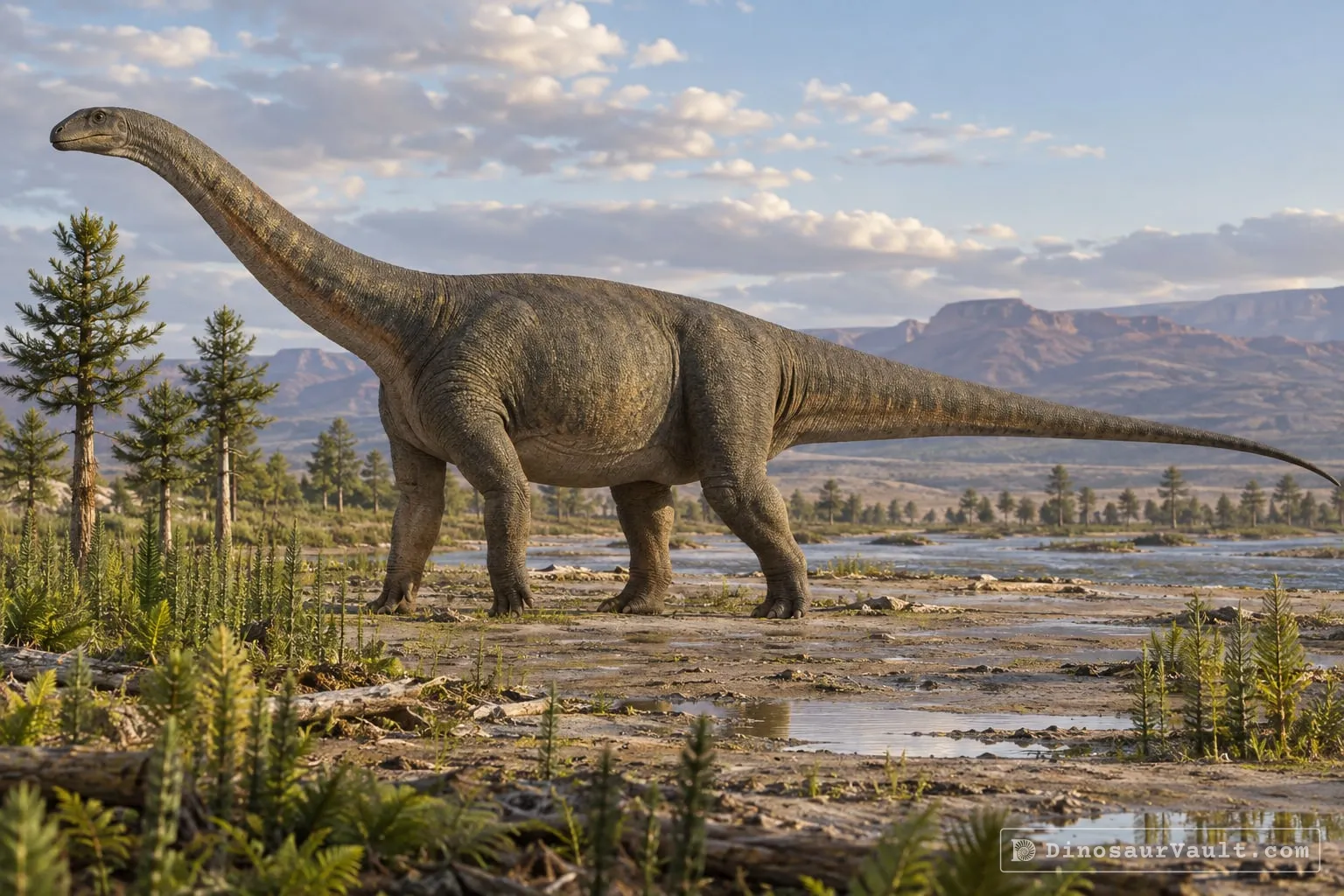
Meandering rivers crossed extensive floodplains, with forests along their banks, in what is now South Africa. Other plant eaters in the lower Elliot Formation included Plateosauravus and Blikanasaurus.
Field notes
About Eucnemesaurus
What it was like
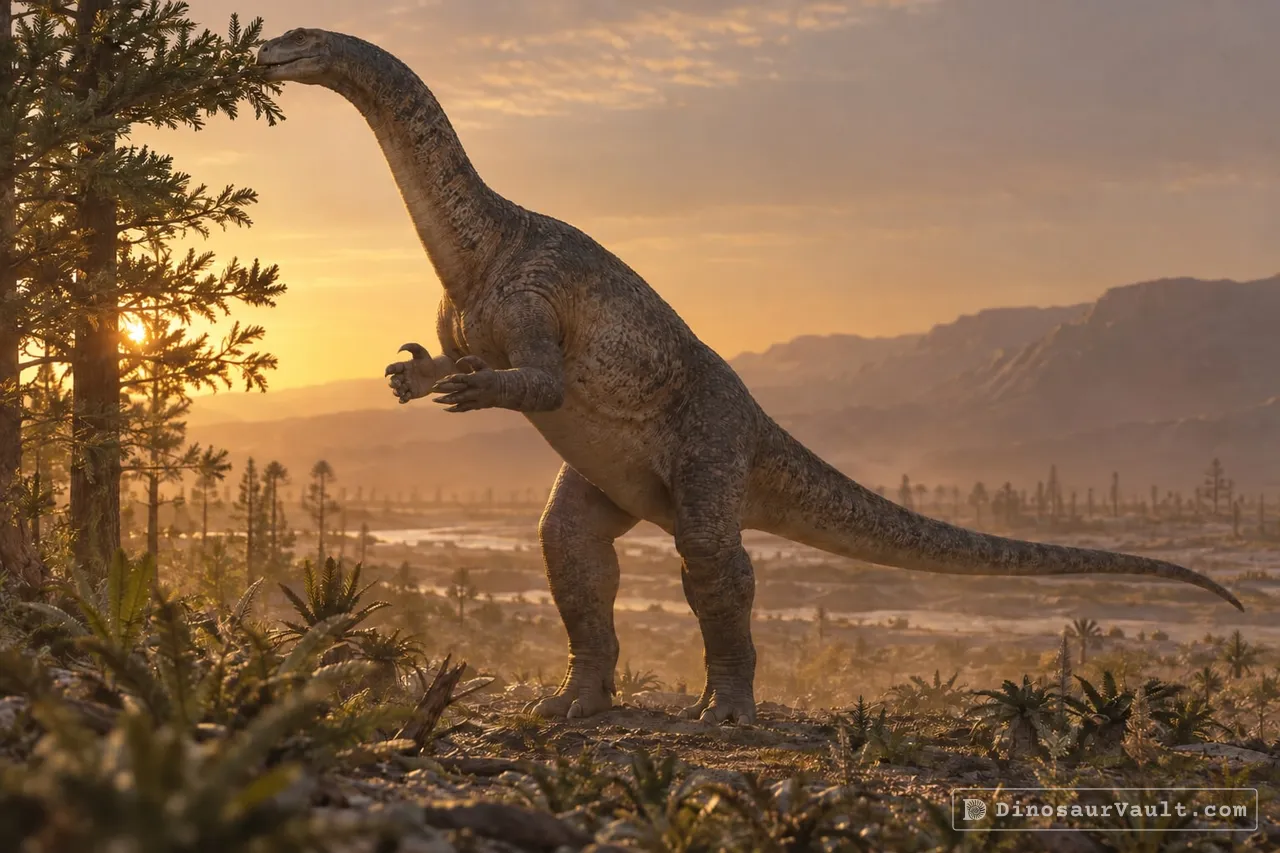
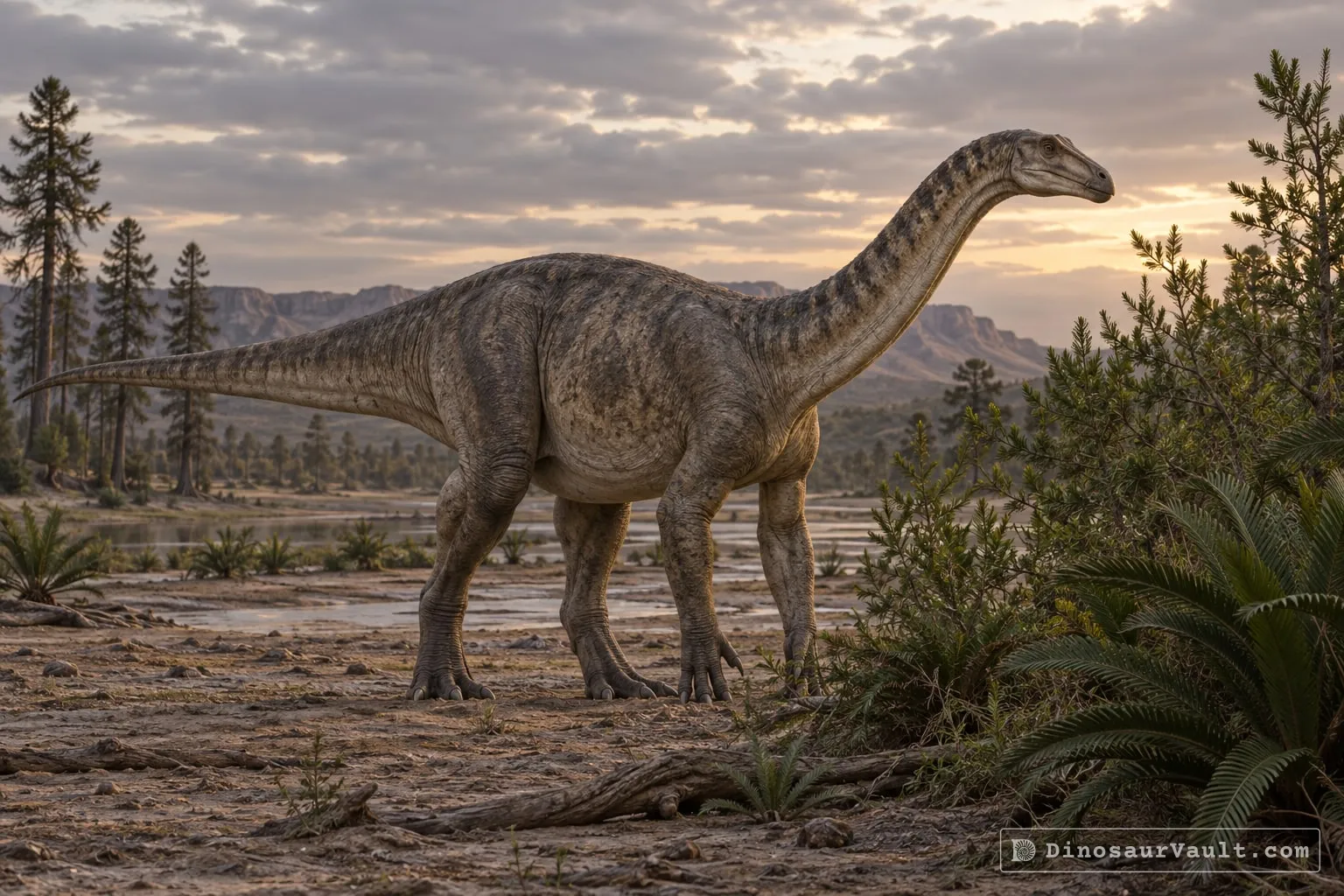
Eucnemesaurus was a large, heavy plant eater from the long-necked line that later produced the giant sauropods. It had strong, thick leg bones, which gave it its name.
It was related to Riojasaurus from Argentina.
Its world
It lived in the Late Triassic in what is now South Africa. Its bones come from the lower part of the Elliot Formation.
How it was found
Van Hoepen named Eucnemesaurus in 1920. Its bones were once mixed up with other genera, and some were even thought to belong to a giant meat eater.
Field gallery
More views of Eucnemesaurus
Scenes reconstructed from the available fossil evidence.
Lived alongside
Found in the same rock formations
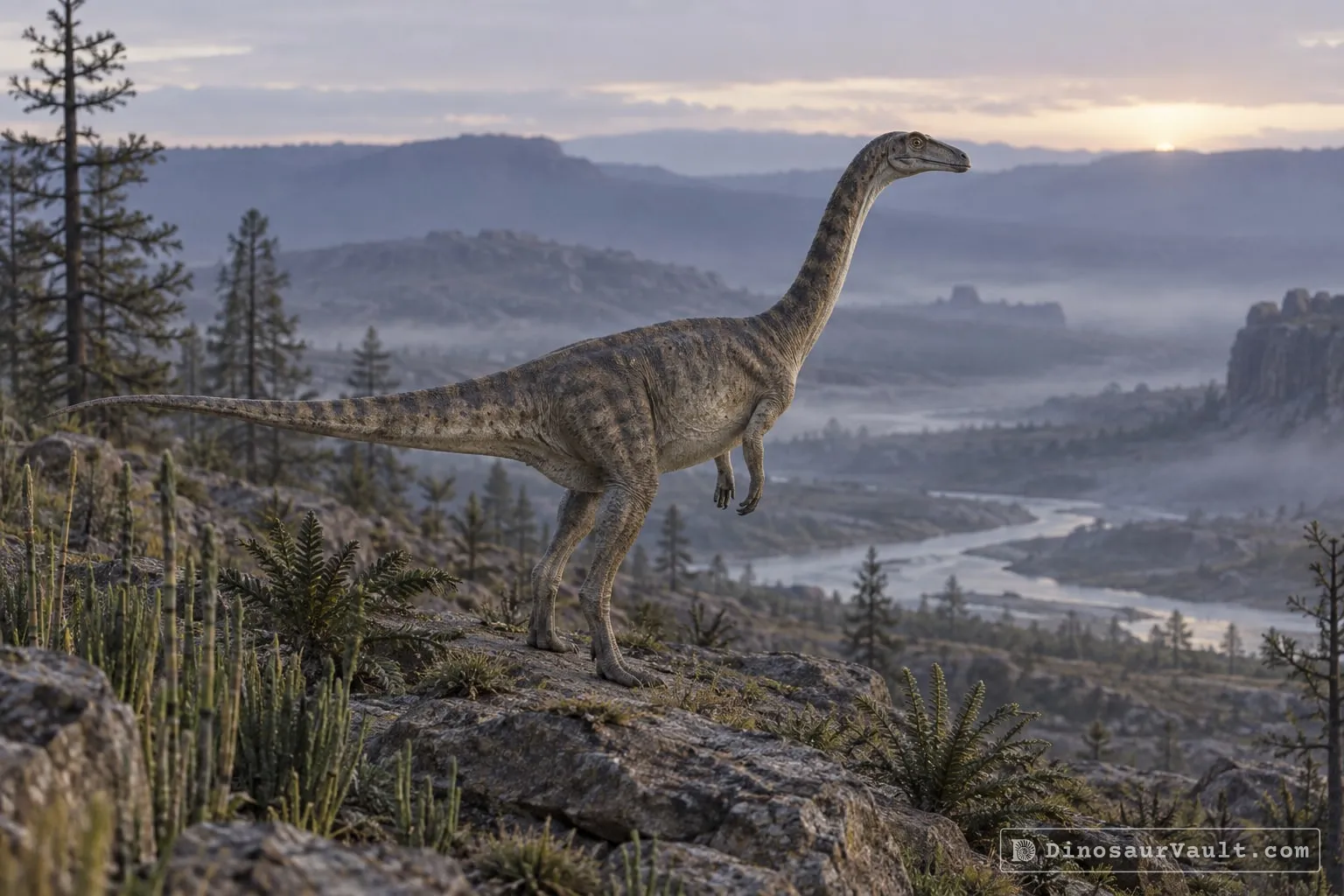
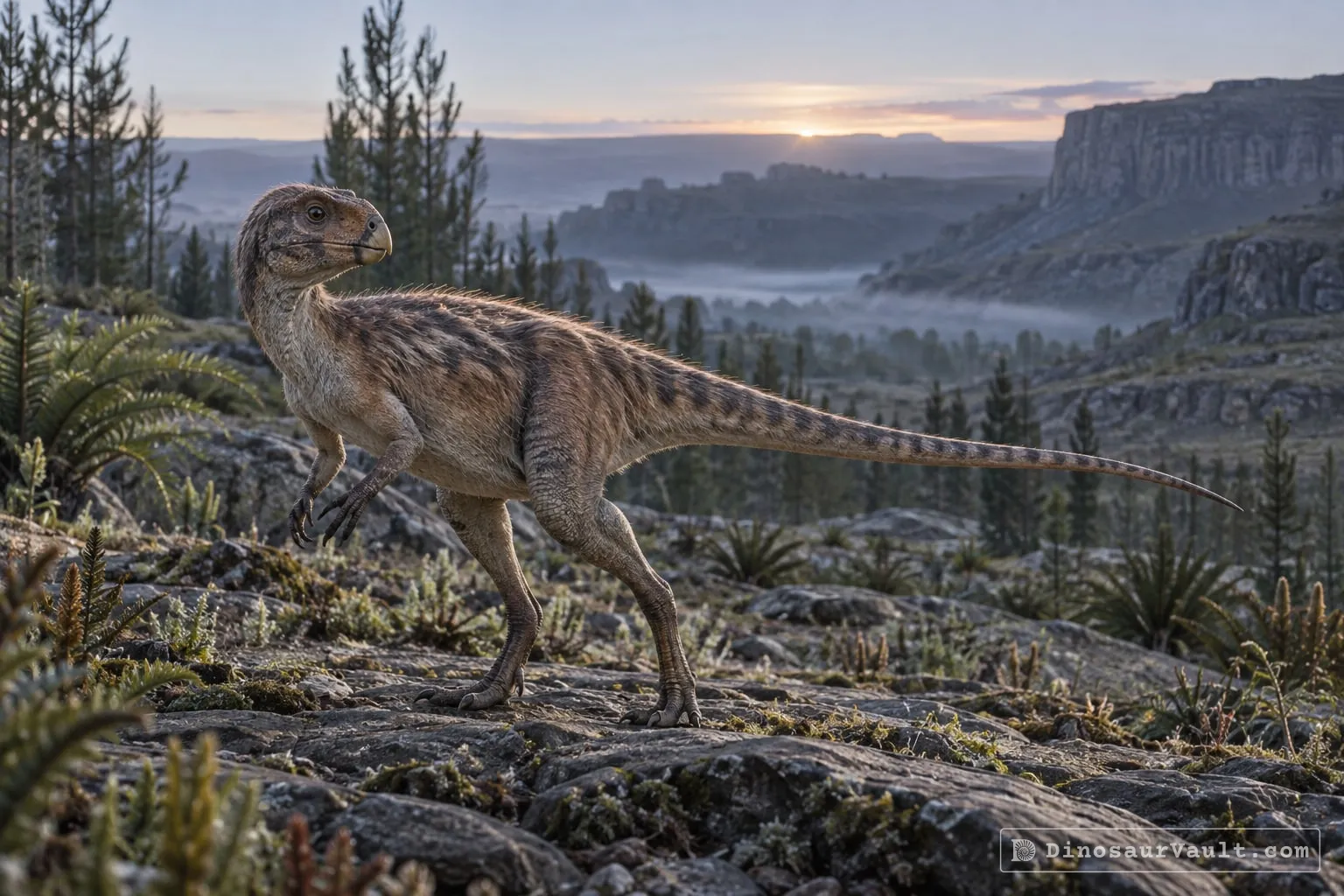
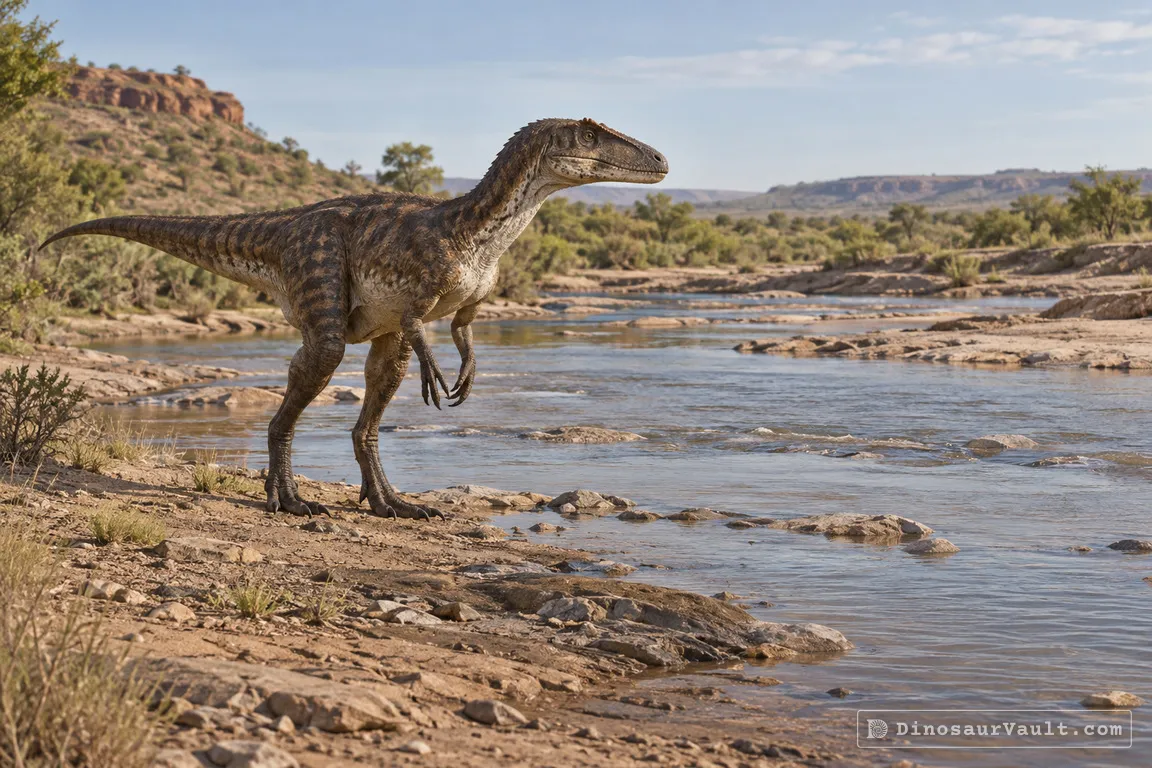
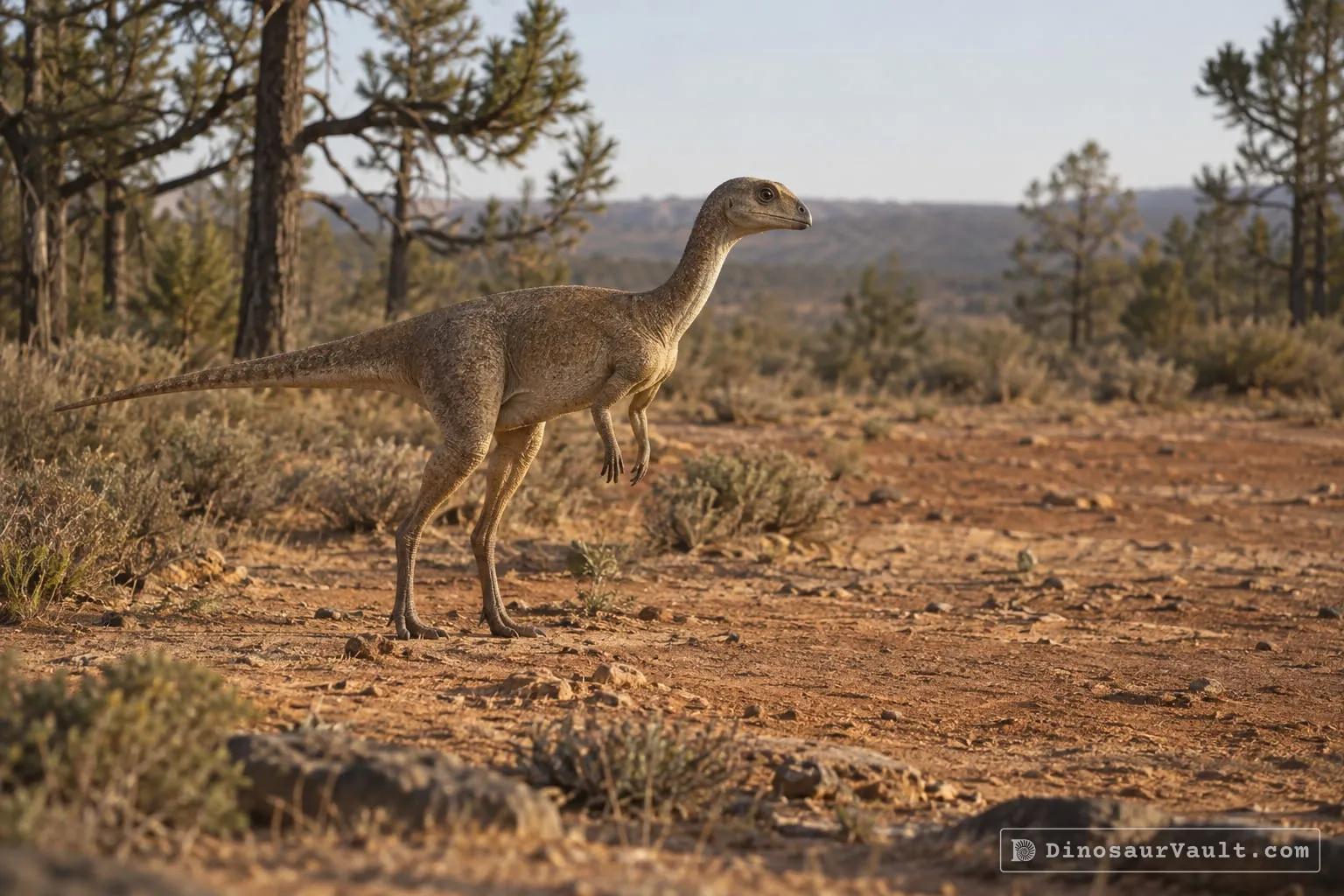
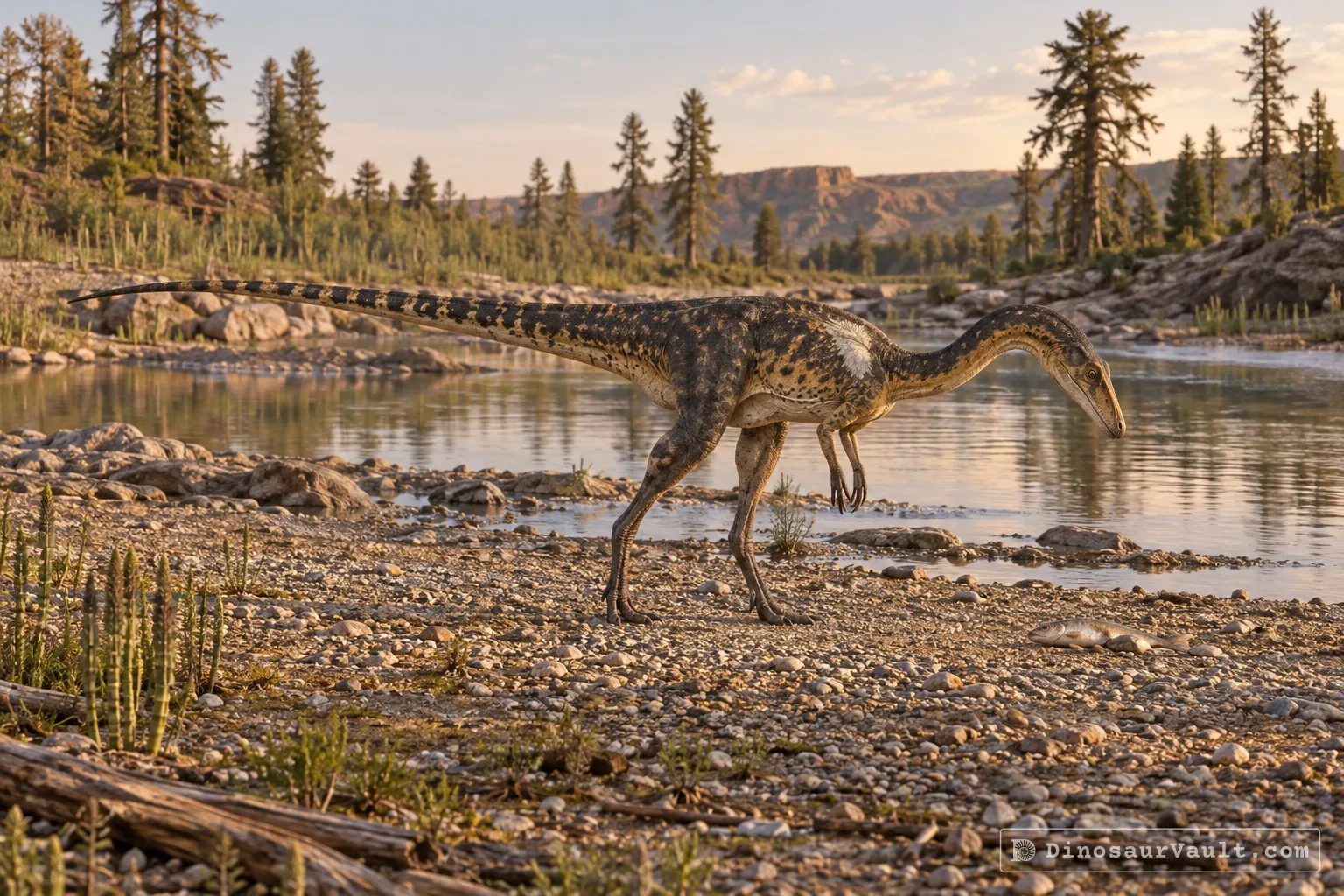
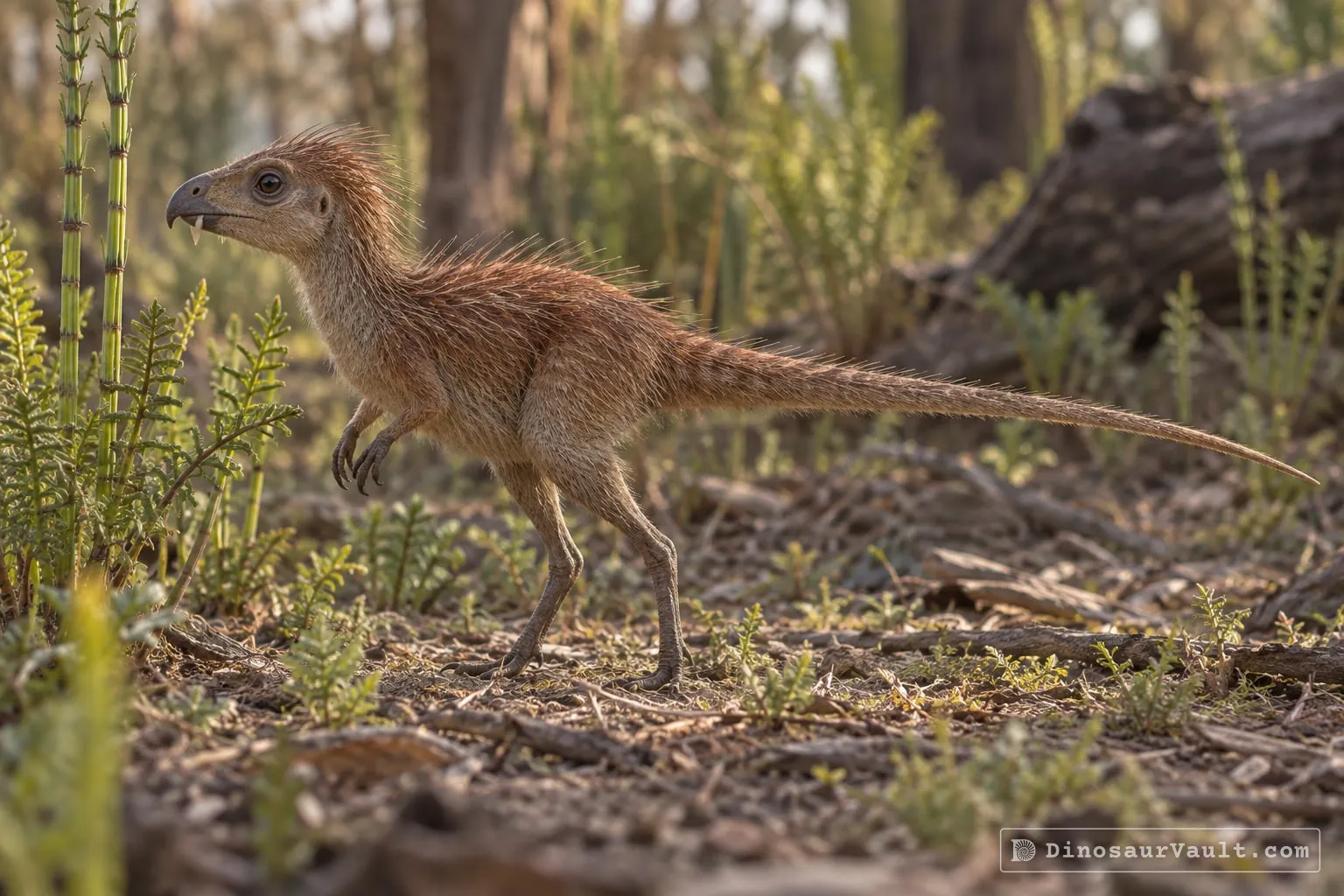


A rock formation can hold fossils laid down millions of years apart, so not every animal here met Eucnemesaurus.
The evidence
The science behind Eucnemesaurus
Which parts of the picture come from its own bones, and which come from its relatives.
From its own fossils
- The fragmentary type skeleton of the species fortis preserves vertebrae, part of a hip bone and strong hind limbs.
- The associated type skeleton of entaxonis preserves much of the hindquarters, including a nearly complete right foot that is broad and robust.
- In entaxonis, the inner foot claw is compressed from side to side, with its tip missing.
Borrowed from relatives
- The missing head, neck and forelimbs are reconstructed by comparison with Plateosaurus.
Still unknown
- The shape of its skull and teeth, and its skin covering and color.
- Whether it usually walked on two legs or four.
- Whether fortis and entaxonis belong together: some exploratory analyses separate them, but a later study found no features supporting the split.
Discovery timeline
- 1920Named itHoepen
- 2007Family treeYates
- 2015New findMcPhee et al.
- 2017Fossil sitesMcPhee et al.
Key papers
The research behind what we know of Eucnemesaurus
Named it
Named Eucnemesaurus from fragmentary bones, including vertebrae, hip bones and hind limbs.
Contributions to the knowledge of the reptiles of the Karroo Formation. 6. Further dinosaurian material in the Transvaal Museum. Annals of the Transvaal Museum 7: 93-141
No link available
Family tree
Showed that bones once given another name belong to Eucnemesaurus, and linked it to Riojasaurus through features of the thigh bone.
Solving a dinosaurian puzzle: the identity ofAliwalia rexGalton. Historical Biology 19: 93-123
Read the paper : Solving a dinosaurian puzzle: the identity ofAliwalia rexGalton (opens in a new tab)New find
Named the species entaxonis from articulated hindquarters with a broad, robust foot, and discussed how it may have walked.
A second species ofEucnemesaurusVan Hoepen, 1920 (Dinosauria, Sauropodomorpha): new information on the diversity and evolution of the sauropodomorph fauna of South Africa's lower Elliot Formation (latest Triassic). Journal of Vertebrate Paleontology 35: e980504
Read the paper : A second species ofEucnemesaurusVan Hoepen, 1920 (Dinosauria, Sauropodomorpha): new information on the diversity and evolution of the sauropodomorph fauna of South Africa's lower Elliot Formation (latest Triassic) (opens in a new tab)Fossil sites
Checked fossil sites and rock layers, separating the older Eucnemesaurus community from younger sauropodomorph communities.
The sauropodomorph biostratigraphy of the Elliot Formation of southern Africa: Tracking the evolution of Sauropodomorpha across the Triassic–Jurassic boundary. Acta Palaeontologica Polonica 62
Read the paper : The sauropodomorph biostratigraphy of the Elliot Formation of southern Africa: Tracking the evolution of Sauropodomorpha across the Triassic–Jurassic boundary (opens in a new tab)
Close relatives
Other members of Riojasauridae

Sources: Wikidata