Melanorosaurus
meh-LAN-oh-roh-SORE-us
"black mountain lizard"
Type species Melanorosaurus readi
- Lived
- 227 to 206 million years ago, Late Triassic
- Found in
- South Africa
- Named by
- Haughton 1924
Where its fossils were found
The evidence
Today

220 million years ago
Habitat
River channels and muddy floodplains in the lower Elliot Formation of South Africa. Blikanasaurus and Eucnemesaurus are also known from these rocks.
Field notes
About Melanorosaurus
What it was like
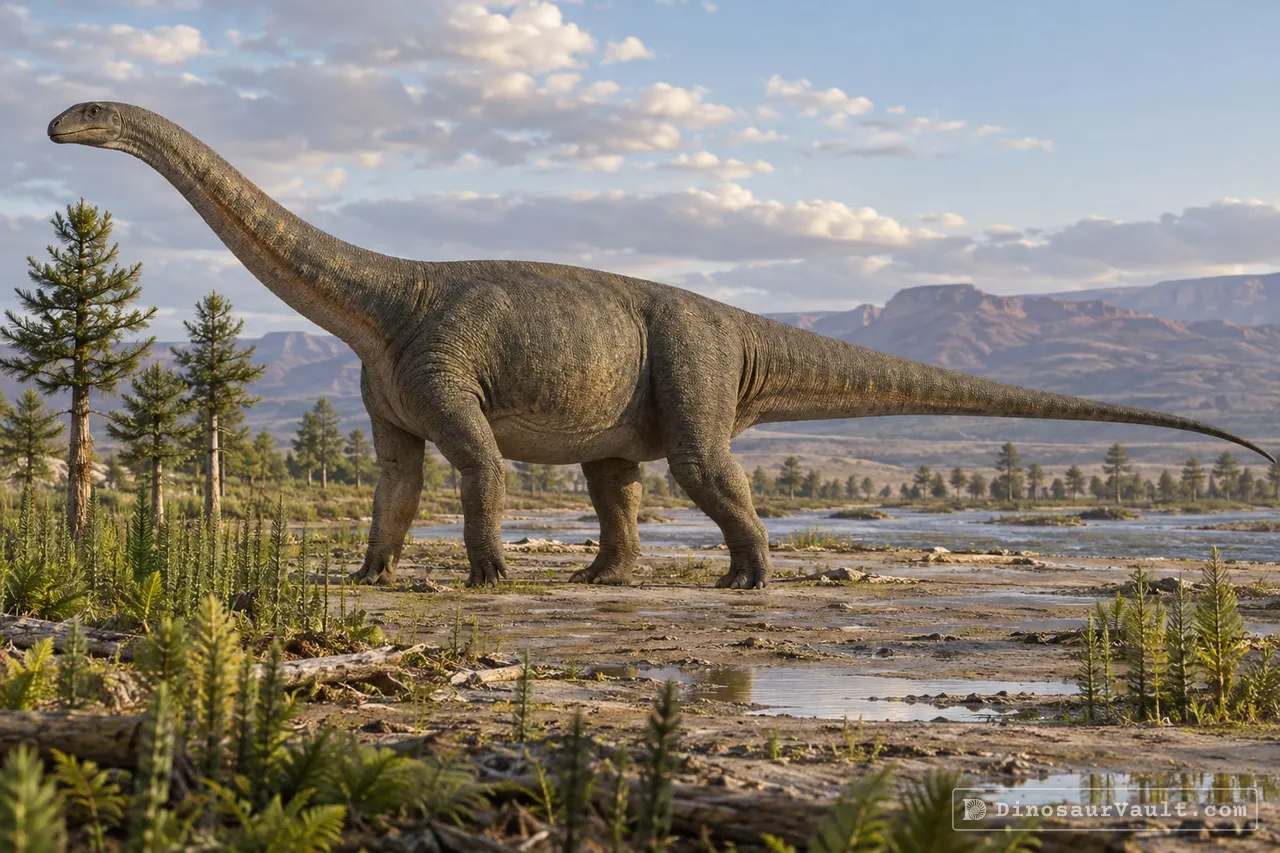
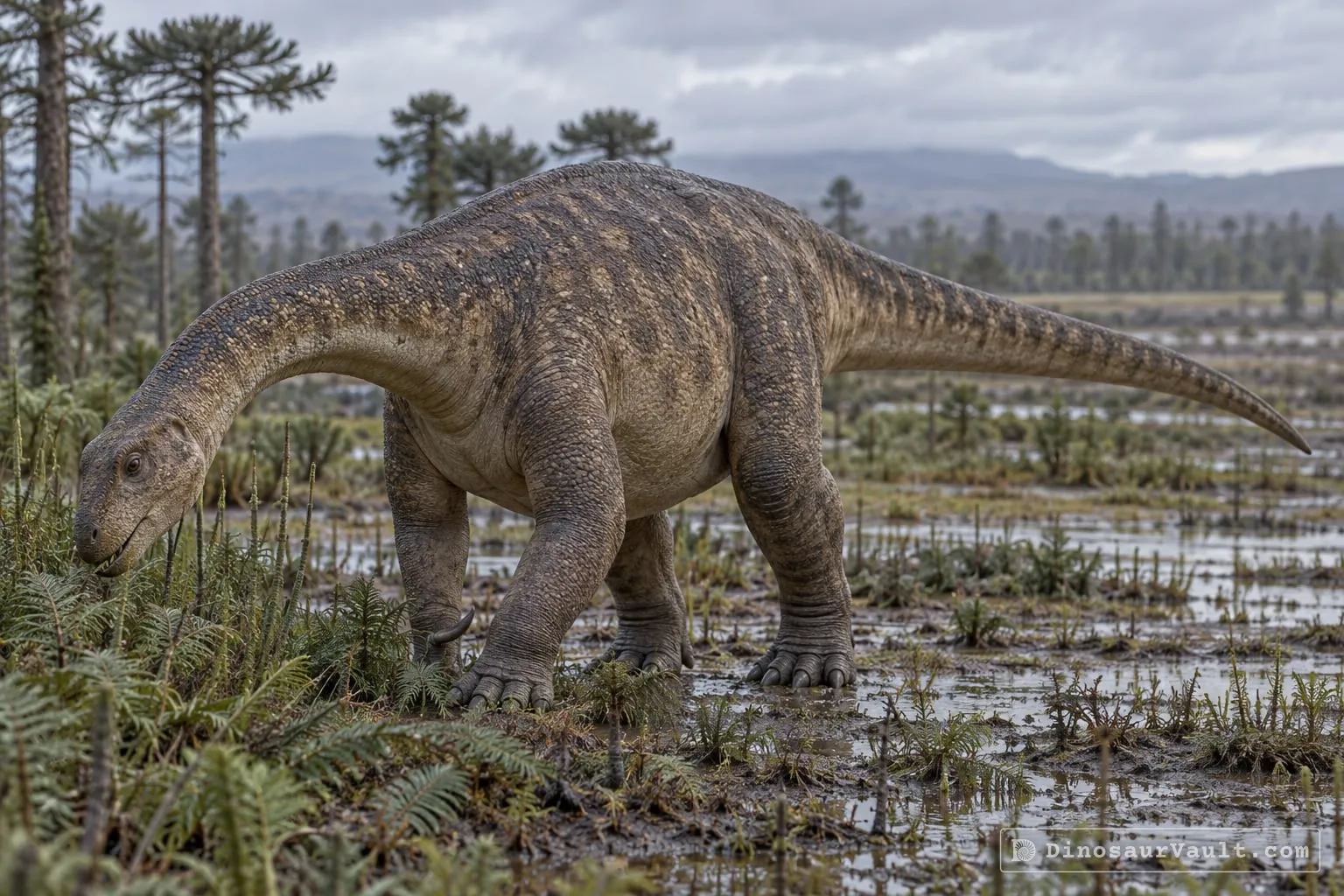
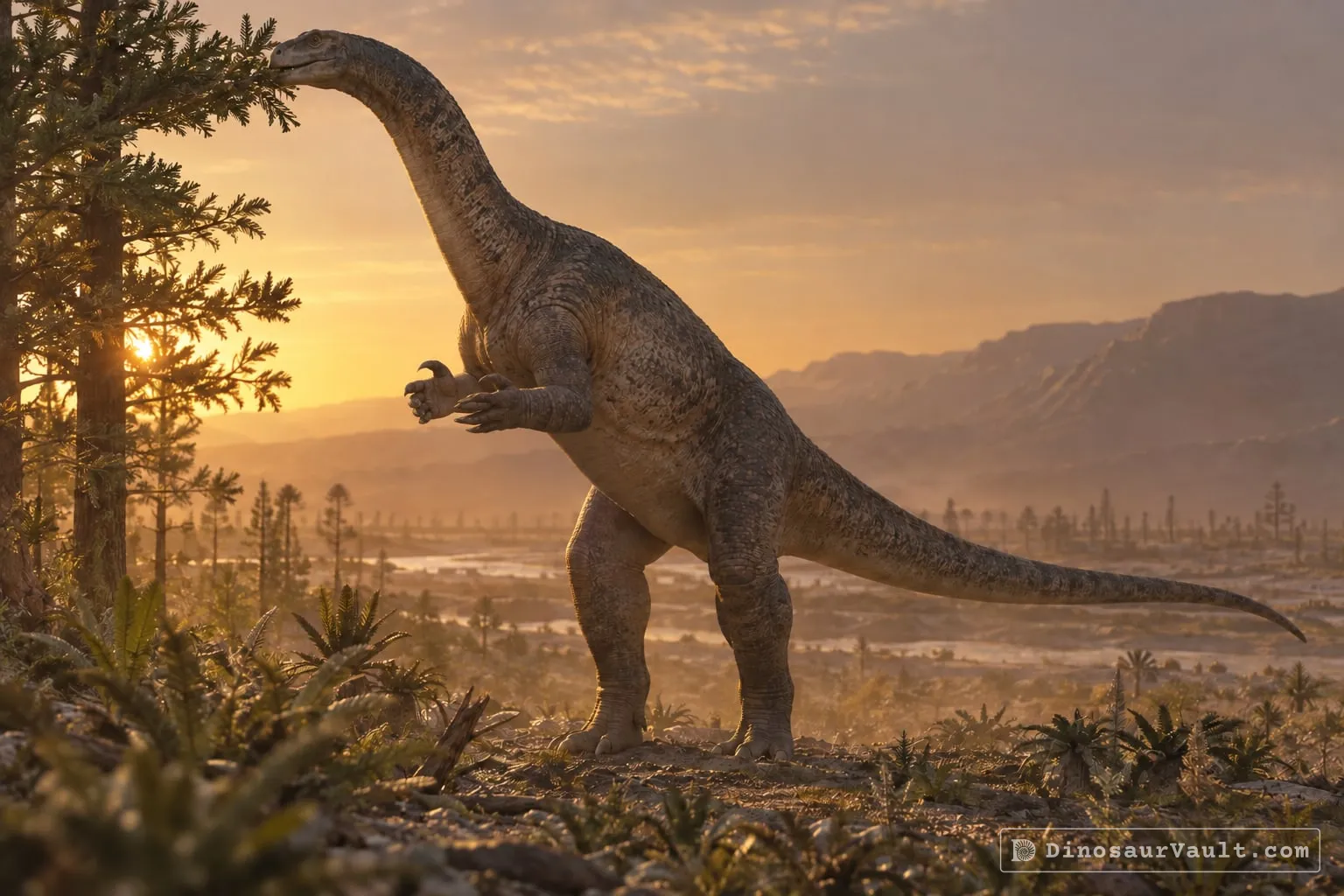
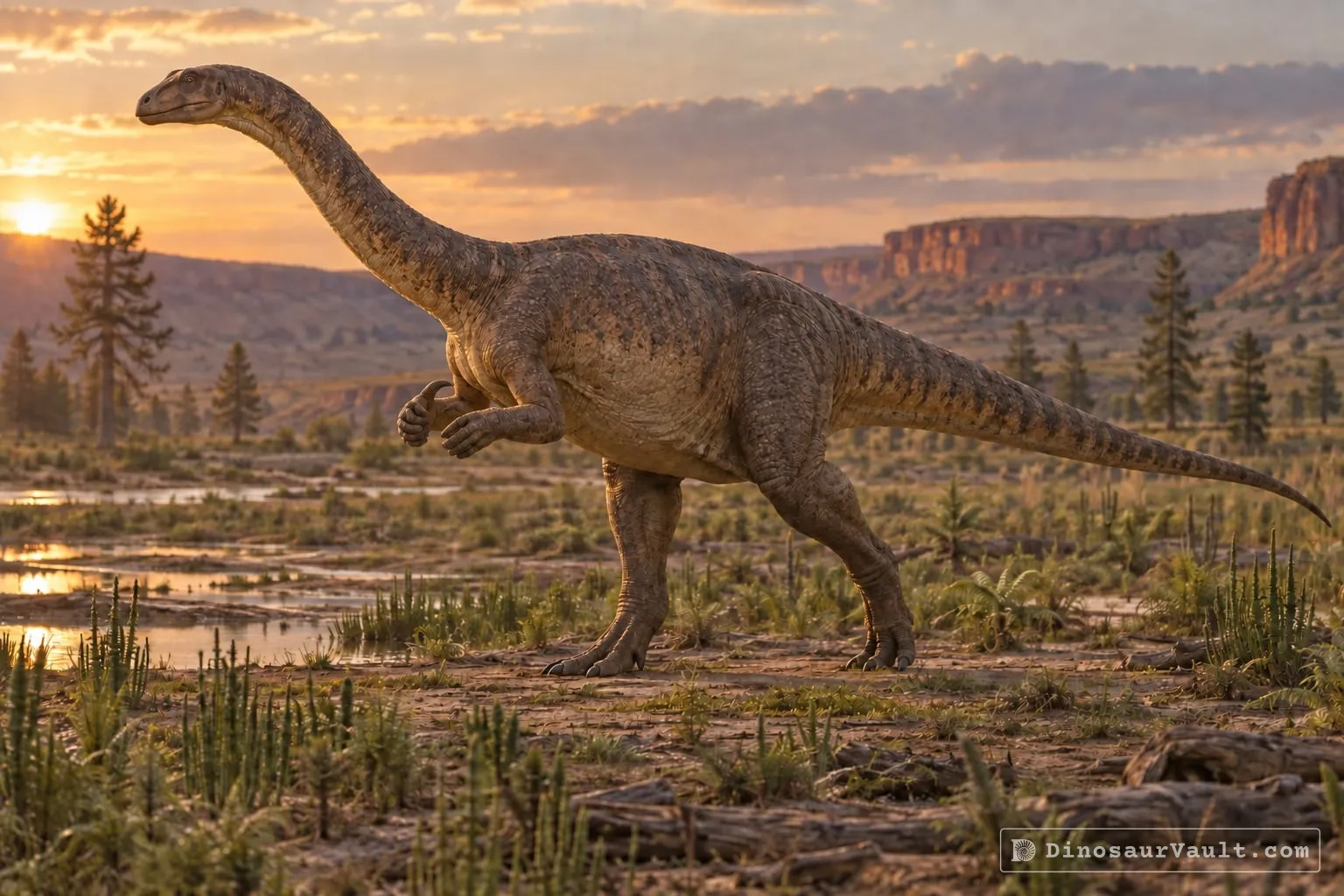
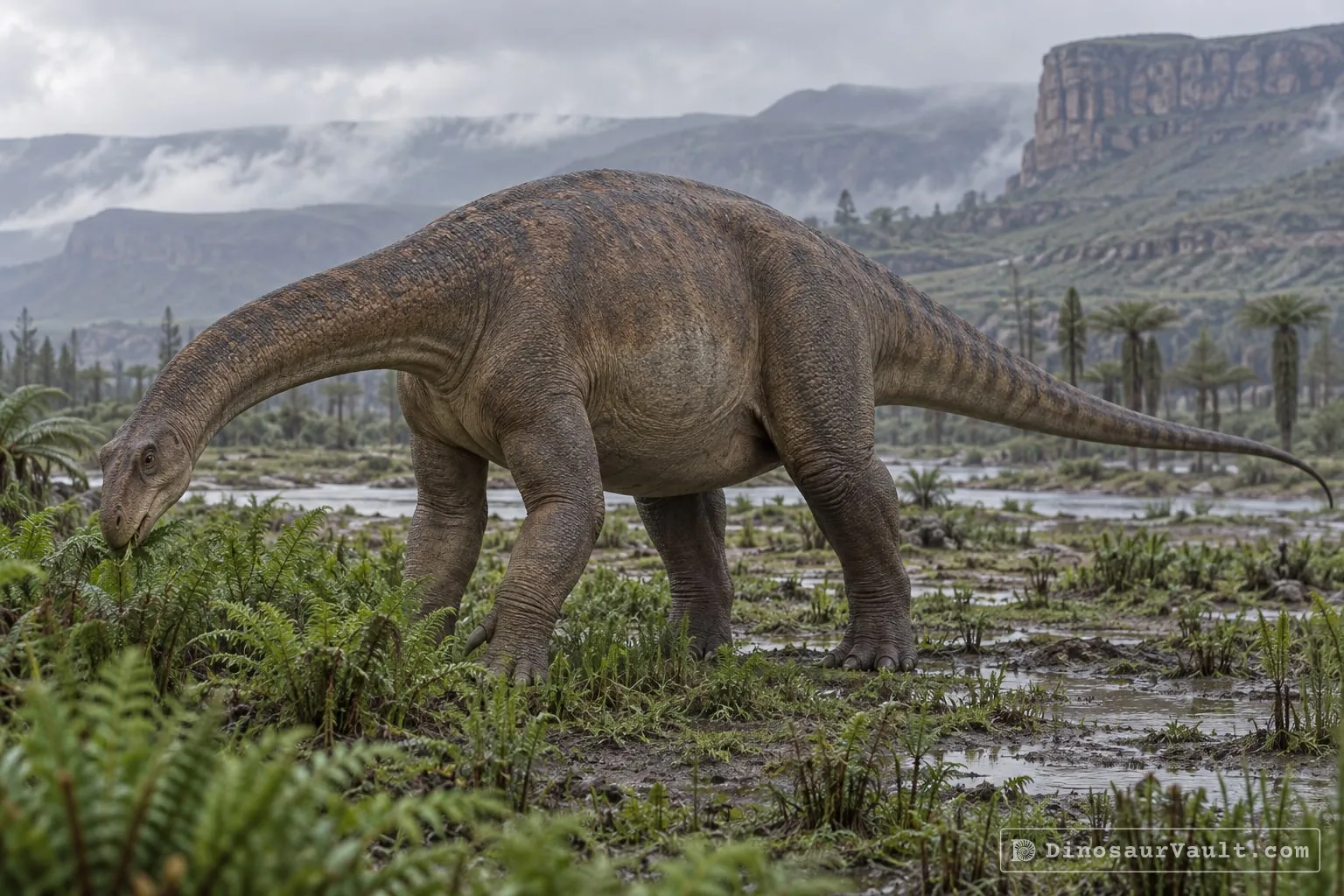
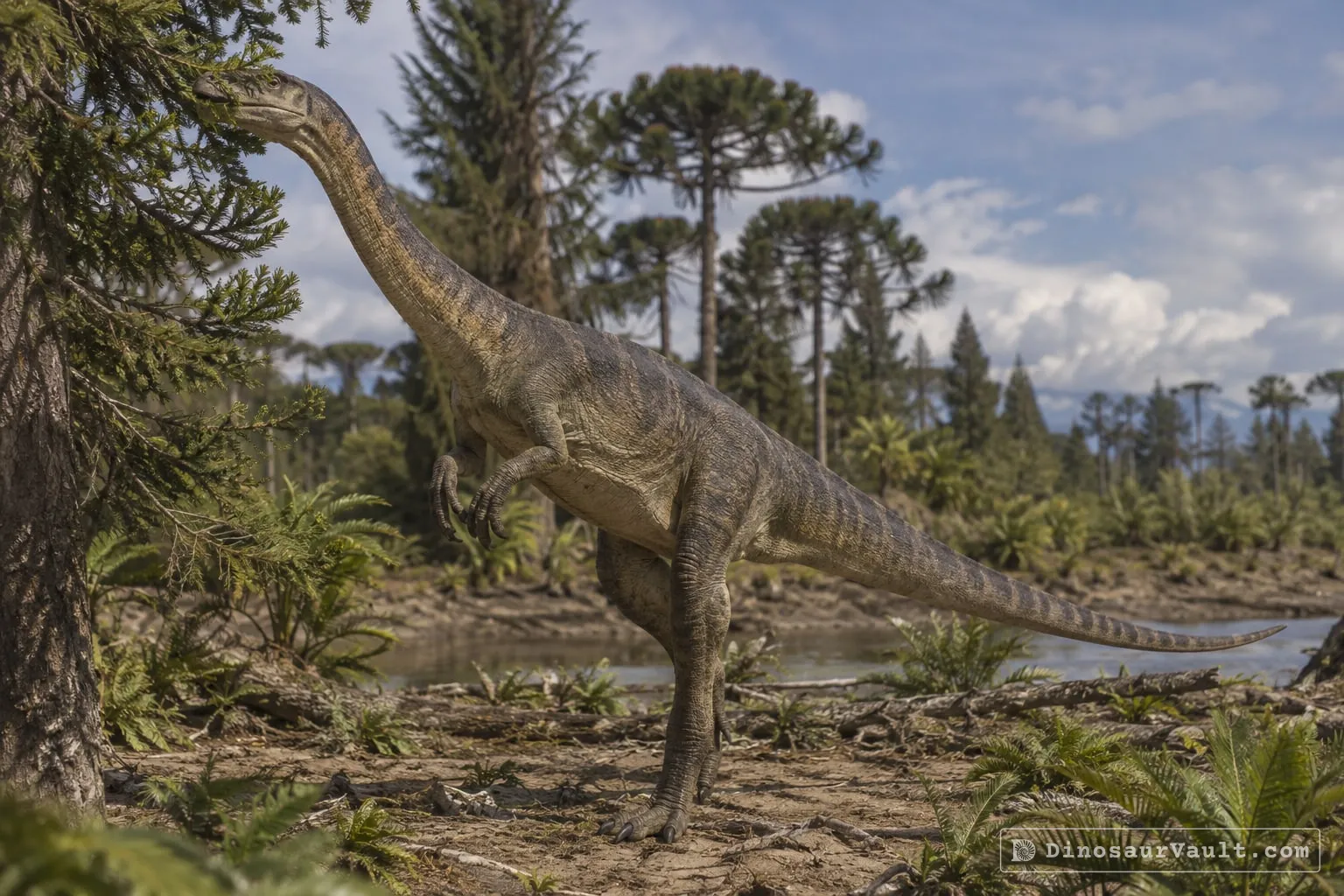
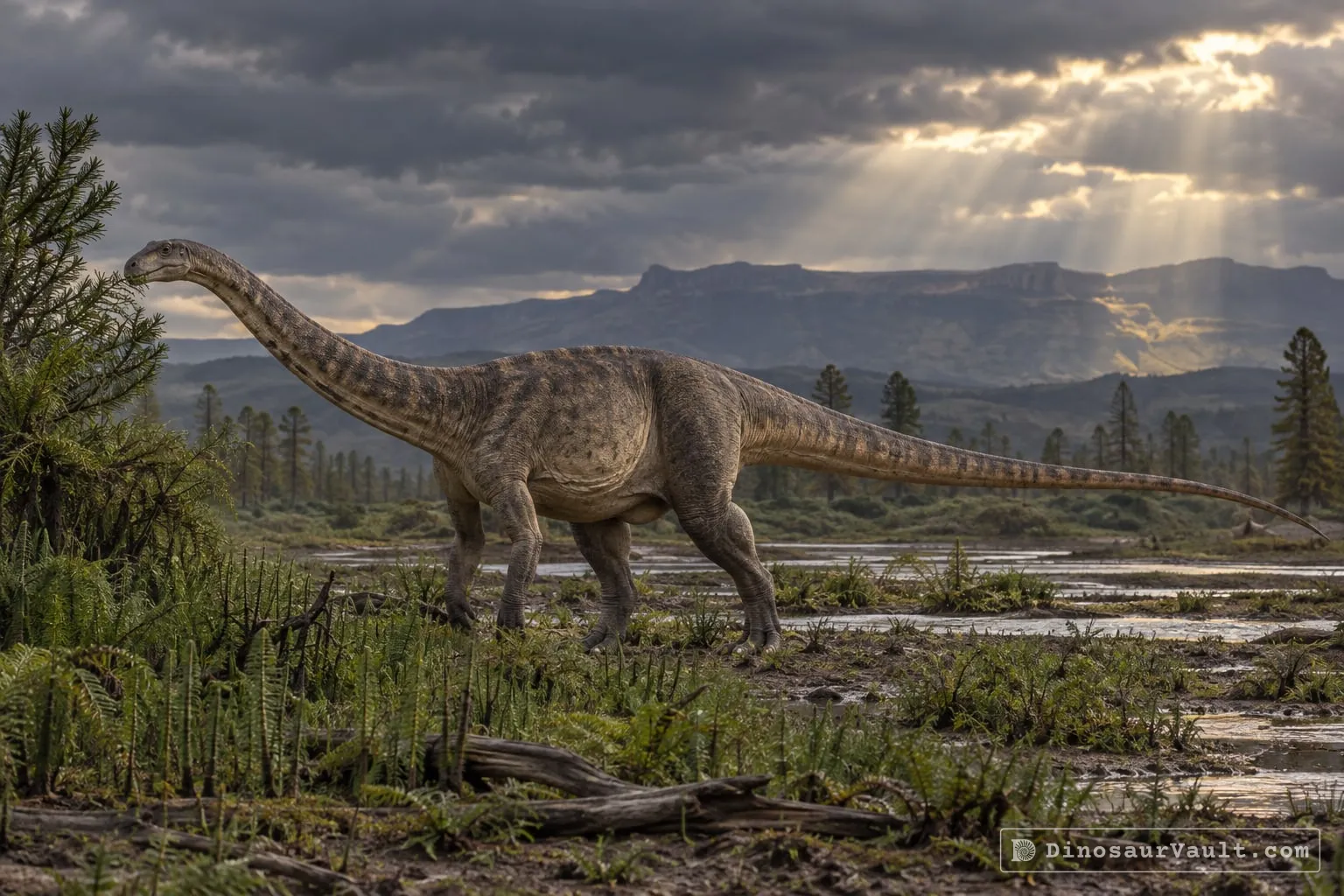
Melanorosaurus was a large, heavy plant eater, an early relative of the giant sauropods. It had thick, sturdy limbs and probably walked on all fours, unlike many of its lighter, two-legged relatives.
It had a long neck and tail and a small head, and it shows the kind of body that later sauropods would take to much larger sizes.
Its world
It lived in the Late Triassic in what is now South Africa and Lesotho. Its bones come from the Elliot Formation.
How it was found
Haughton named Melanorosaurus in 1924. A more complete skeleton with a skull was found later, which showed much more about how it looked.
Field gallery
More views of Melanorosaurus
Scenes reconstructed from the available fossil evidence.
Lived alongside
Found in the same rock formations


A rock formation can hold fossils laid down millions of years apart, so not every animal here met Melanorosaurus.
The evidence
The science behind Melanorosaurus
Which parts of the picture come from its own bones, and which come from its relatives.
From its own fossils
- The original partial skeleton includes vertebrae, ribs, limb bones and parts of the hips.
- Distinctive features of the tail vertebrae and hip bone help identify the genus.
Borrowed from relatives
- The small head and long neck in restorations draw on skull-bearing early sauropodomorphs such as Plateosaurus.
Still unknown
- Which of the additional skeletons assigned to it really belong to Melanorosaurus.
- Its color and skin pattern.
- Exactly how much weight its front limbs carried.
Discovery timeline
- 1924Named itHaughton
- 2016Family treePeyre de Fabrègues & Allain
- 2024RedescriptionBarrett & Choiniere
Key papers
The research behind what we know of Melanorosaurus
Named it
Named Melanorosaurus from a partial skeleton while describing the fossil animals and rocks of South Africa.
The fauna and stratigraphy of the Stormberg Series. Annals of the South African Museum 12: 323-497
No link available
Family tree
Showed that a former Melanorosaurus species belonged in a separate genus, Meroktenos, and came from older rocks than originally thought.
New material and revision ofMelanorosaurus thabanensis, a basal sauropodomorph from the Upper Triassic of Lesotho. PeerJ 4: e1639
Read the paper : New material and revision ofMelanorosaurus thabanensis, a basal sauropodomorph from the Upper Triassic of Lesotho (opens in a new tab)Redescription
Restudied the original bones, selected a reference skeleton and restricted definite Melanorosaurus material to that individual.
Melanorosaurus readi Haughton, 1924 (Dinosauria, Sauropodomorpha) from the Late Triassic of South Africa: osteology and designation of a lectotype. Journal of Vertebrate Paleontology 44
Read the paper : Melanorosaurus readi Haughton, 1924 (Dinosauria, Sauropodomorpha) from the Late Triassic of South Africa: osteology and designation of a lectotype (opens in a new tab)
Close relatives
Other members of Sauropodiformes


Sources: Wikidata