Blikanasaurus
"Blikana lizard"
Type species Blikanasaurus cromptoni
- Lived
- 227 to 201 million years ago, Late Triassic
- Found in
- South Africa
- Named by
- Galton and Van Heerden 1985
Where its fossils were found
The evidence
Today

210 million years ago
Habitat
It lived beside winding rivers and broad floodplains with forests along the banks. Melanorosaurus and Eucnemesaurus also occur in the lower Elliot Formation.
Field notes
About Blikanasaurus
What it was like
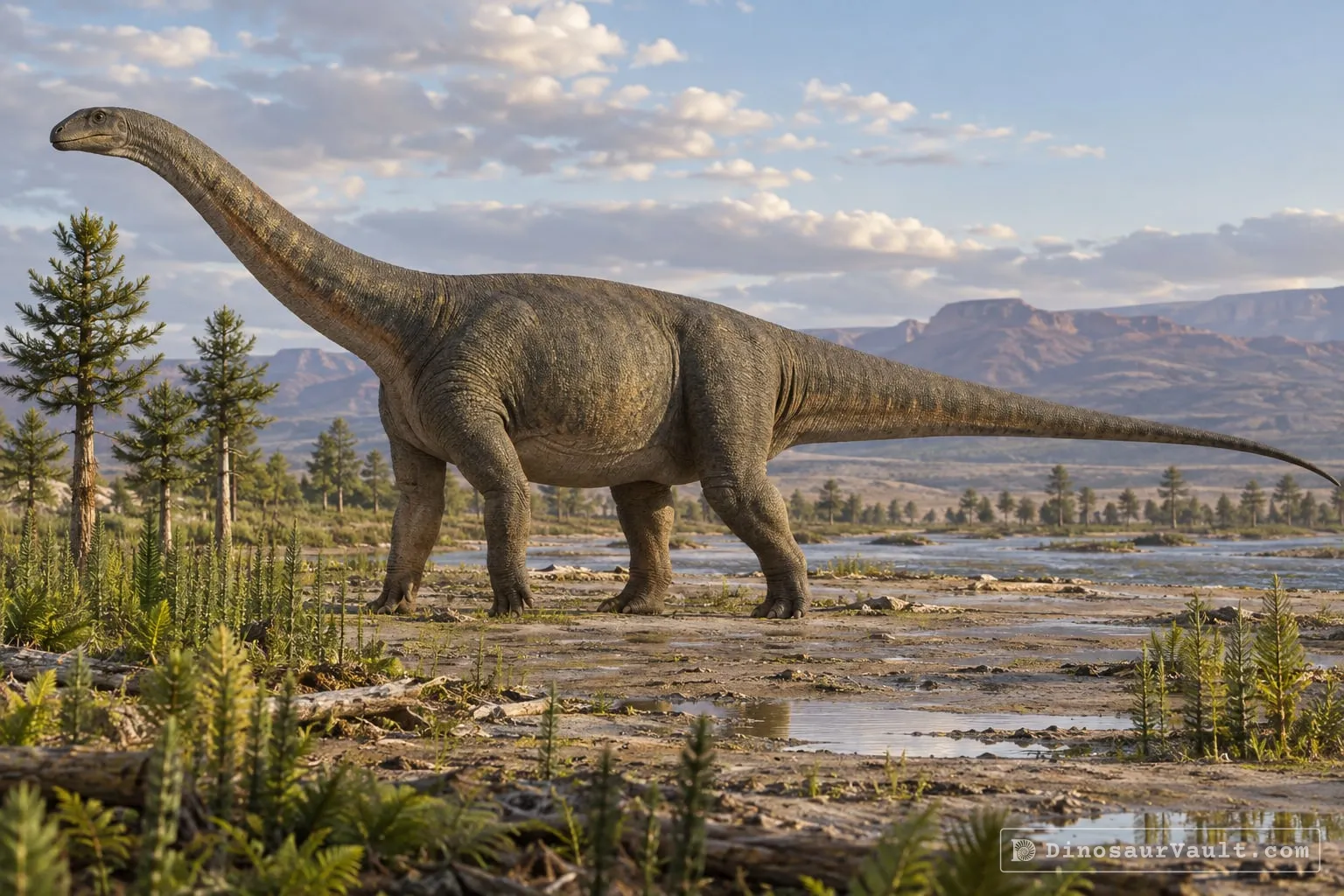
Blikanasaurus was a heavy early sauropodomorph known from a hind leg. The leg is short and thick, which suggests it walked on all four legs like later sauropods.
Its world
It lived in the Late Triassic, in what is now South Africa. It comes from the lower part of the Elliot Formation.
How it was found
Galton and Van Heerden named Blikanasaurus in 1985. The type species is Blikanasaurus cromptoni.
Field gallery
More views of Blikanasaurus
Scenes reconstructed from the available fossil evidence.
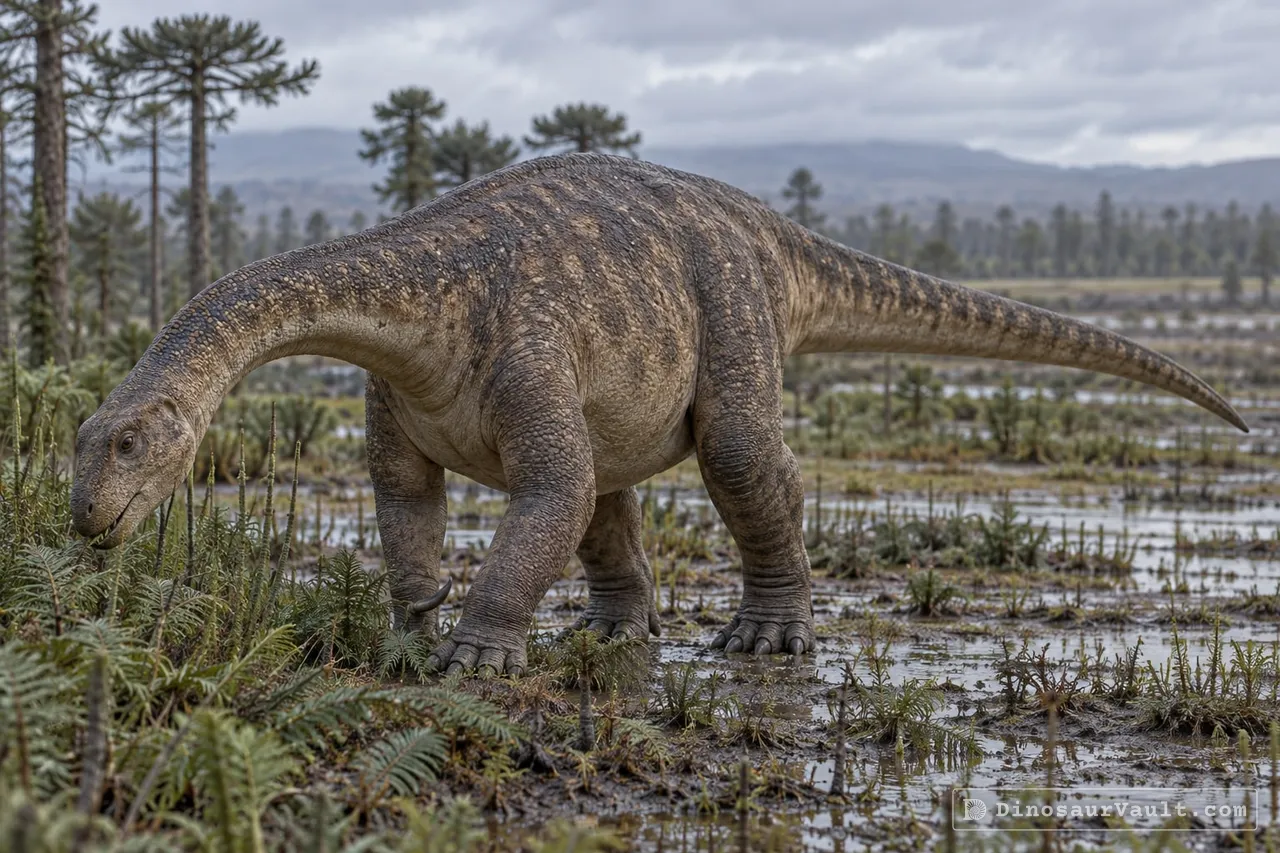
1 of 3
Lived alongside
Found in the same rock formations
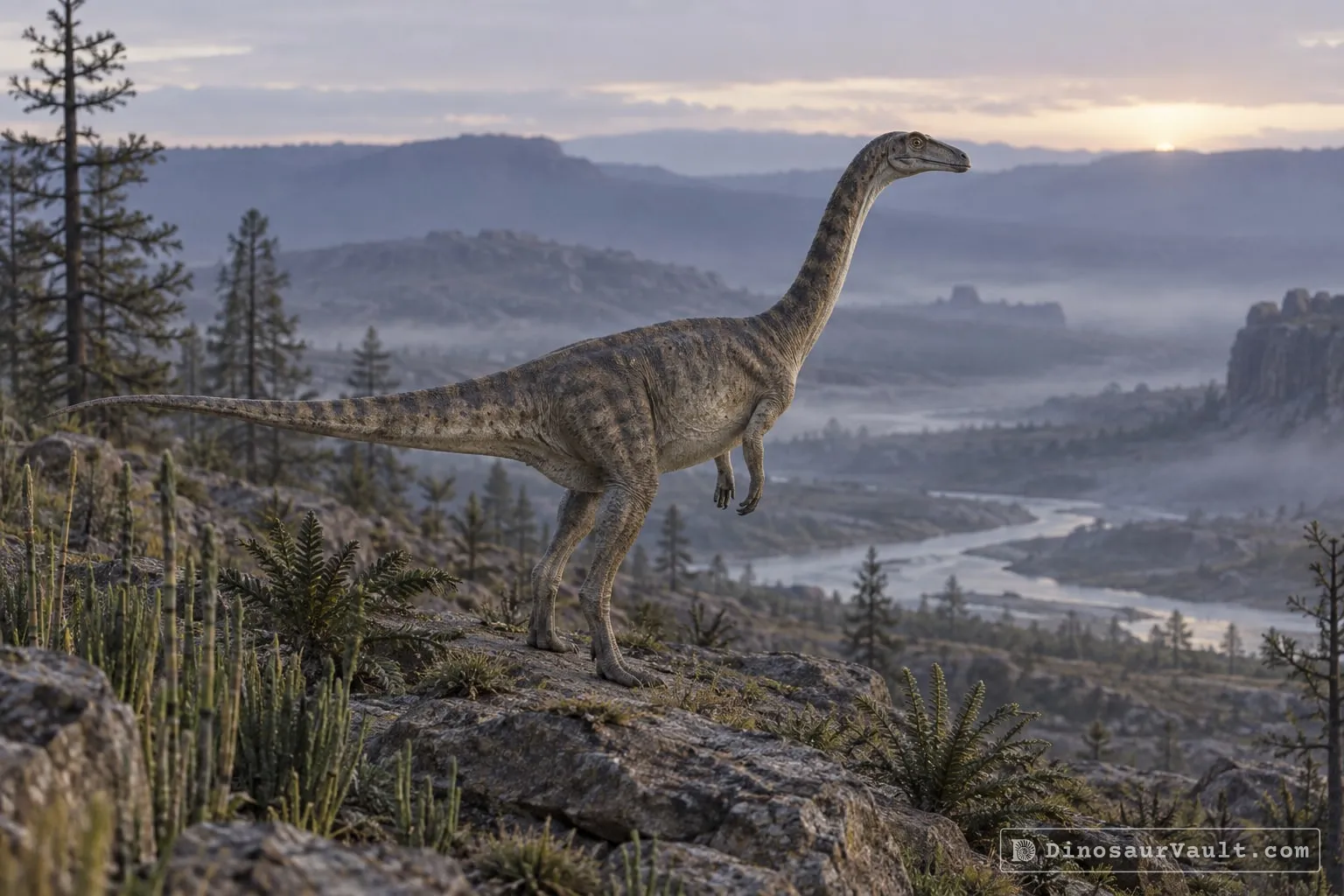
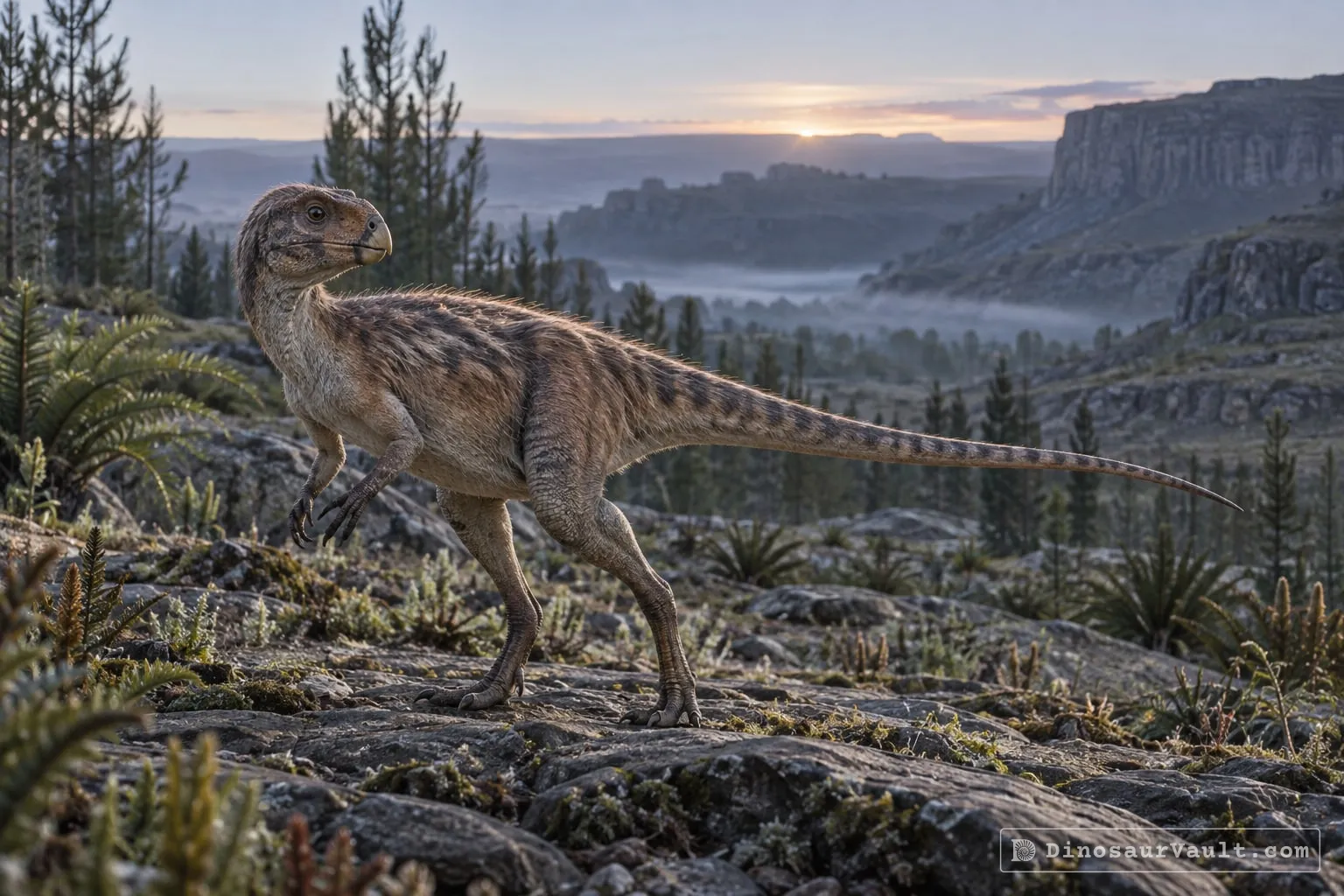
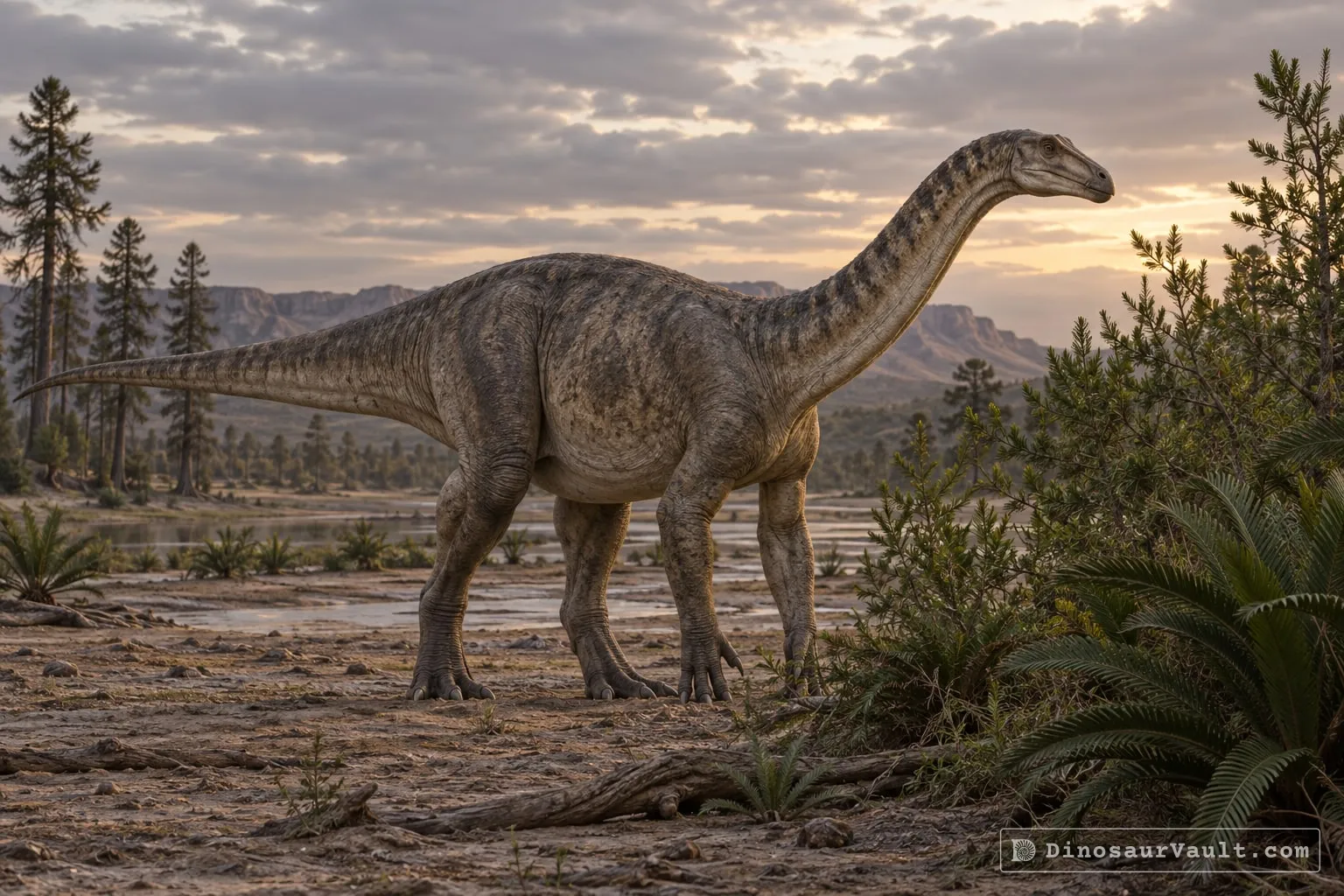
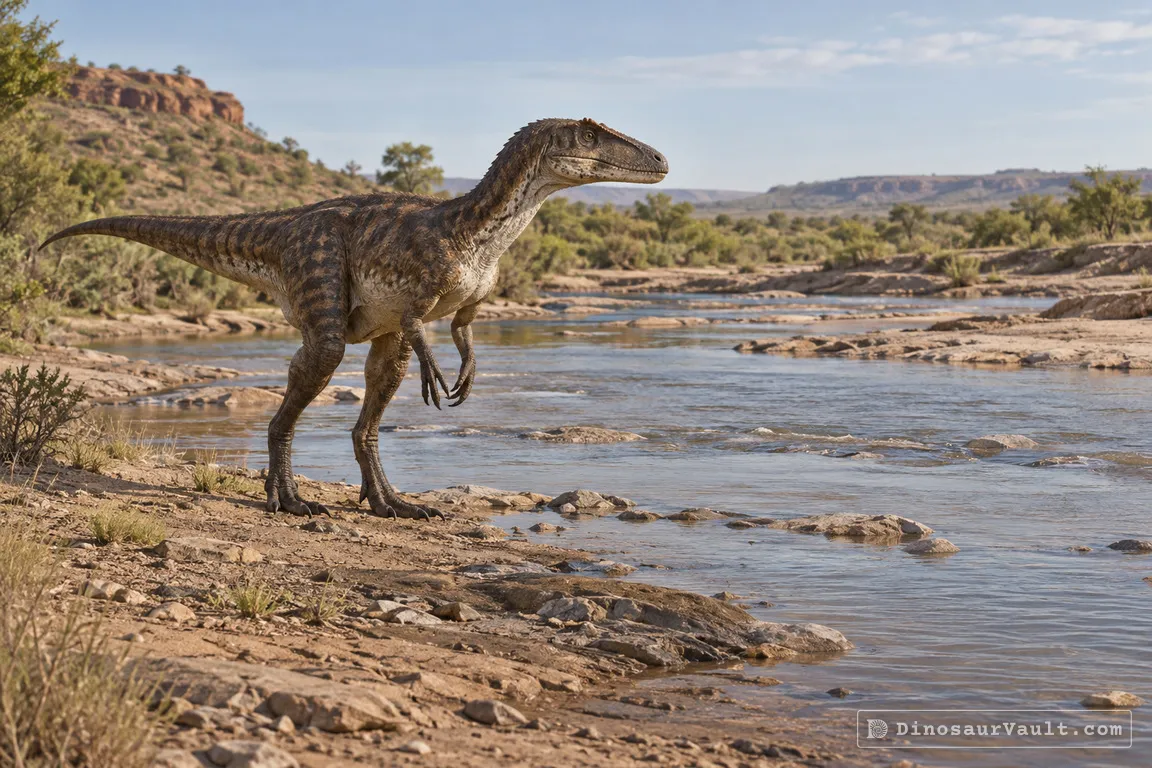
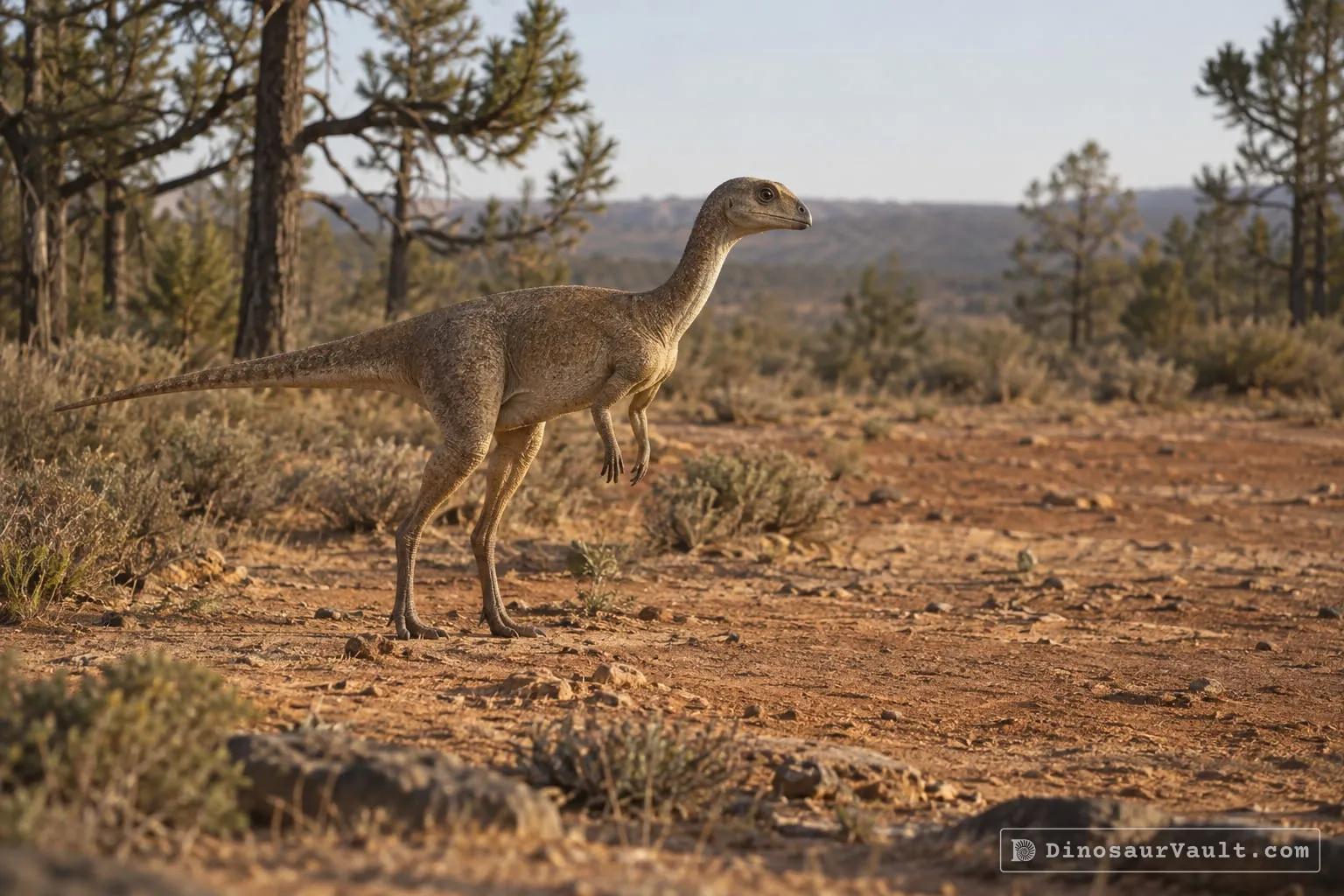
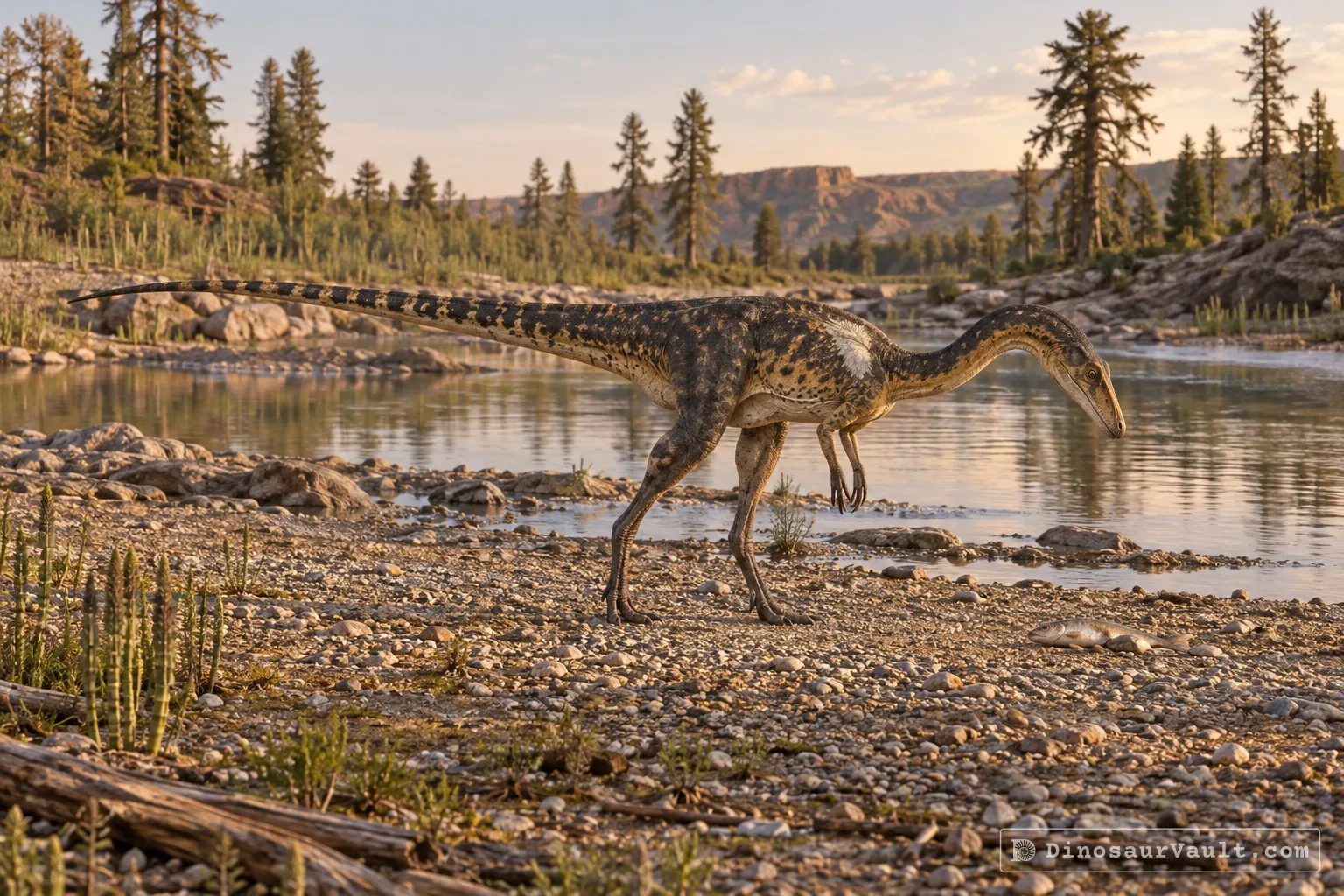
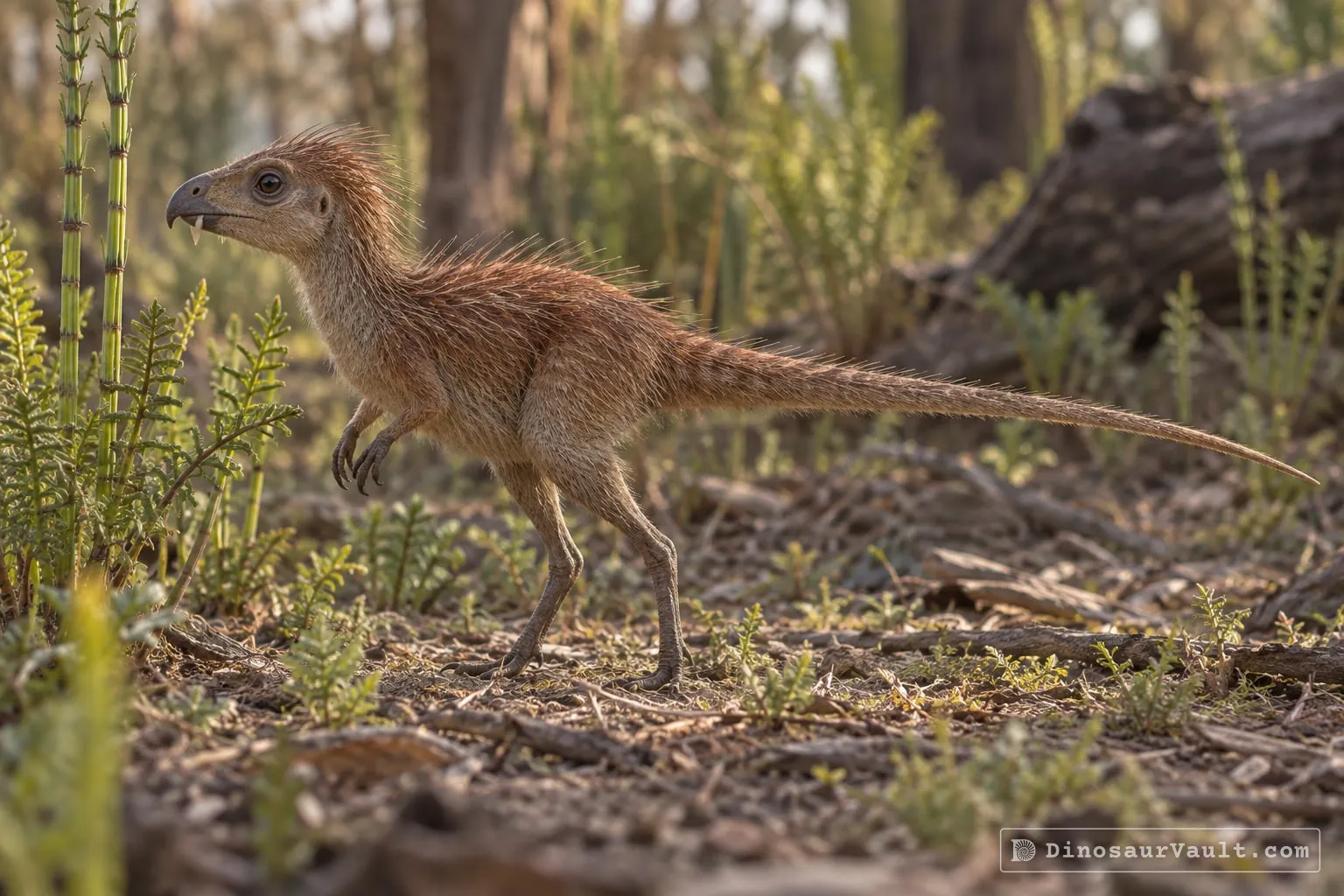


A rock formation can hold fossils laid down millions of years apart, so not every animal here met Blikanasaurus.
The evidence
The science behind Blikanasaurus
Which parts of the picture come from its own bones, and which come from its relatives.
From its own fossils
- The original specimen is part of a hind leg, including ankle and foot bones.
- The hind leg is extremely stocky, especially the foot, and its describers proposed a heavy animal that walked on all fours.
- A separate inner foot bone found loose among bones of several animals is provisionally referred to Blikanasaurus because it shares the type's exceptionally stout proportions.
Borrowed from relatives
- The missing trunk and forelimbs are restored after Antetonitrus, and the missing head and finger claws after Plateosaurus.
Still unknown
- The shape of its skull and the length of its neck.
- Its full body size and proportions.
- Its skin covering and color.
Discovery timeline
- 1985Named itGalton & Van Heerden
- 1998Full descriptionGalton & Heerden
- 2017Fossil sitesMcPhee et al.
Key papers
The research behind what we know of Blikanasaurus
Named it
Named Blikanasaurus from a partial hind leg with an unusually thick, compact foot.
Partial hindlimb of Blikanasaurus cromptoni n. gen. and n. sp.,representing a new family of prosauropod dinosaurs from the upper triassic of South Africa. Geobios 18: 509-516
Read the paper : Partial hindlimb of Blikanasaurus cromptoni n. gen. and n. sp.,representing a new family of prosauropod dinosaurs from the upper triassic of South Africa (opens in a new tab)Full description
Detailed the stocky hind leg and interpreted Blikanasaurus as a heavily built animal that walked on all fours.
Anatomy of the prosauropod dinosaurBlikanasaurus cromptoni (Upper Triassic, South Africa), with notes on the other tetrapods from the lower Elliot Formation. Paläontologische Zeitschrift 72: 163-177
Read the paper : Anatomy of the prosauropod dinosaurBlikanasaurus cromptoni (Upper Triassic, South Africa), with notes on the other tetrapods from the lower Elliot Formation (opens in a new tab)Fossil sites
Placed Blikanasaurus among the early sauropodomorphs of the lower Elliot Formation and reviewed their changing river environments.
The sauropodomorph biostratigraphy of the Elliot Formation of southern Africa: Tracking the evolution of Sauropodomorpha across the Triassic–Jurassic boundary. Acta Palaeontologica Polonica 62
Read the paper : The sauropodomorph biostratigraphy of the Elliot Formation of southern Africa: Tracking the evolution of Sauropodomorpha across the Triassic–Jurassic boundary (opens in a new tab)
Close relatives
Other members of Sauropodiformes


Sources: Wikidata