Meroktenos
Type species Meroktenos thabanensis
- Lived
- 227 to 201 million years ago, Late Triassic
- Found in
- Lesotho
- Named by
- Peyre de Fabrègues and Allain 2016
Where its fossils were found
The evidence
Today

210 million years ago
Habitat
Its lower Elliot world had winding rivers and broad floodplains in what is now Lesotho. Melanorosaurus and Eucnemesaurus lived in the same regional Late Triassic landscape.
Field notes
About Meroktenos
What it was like
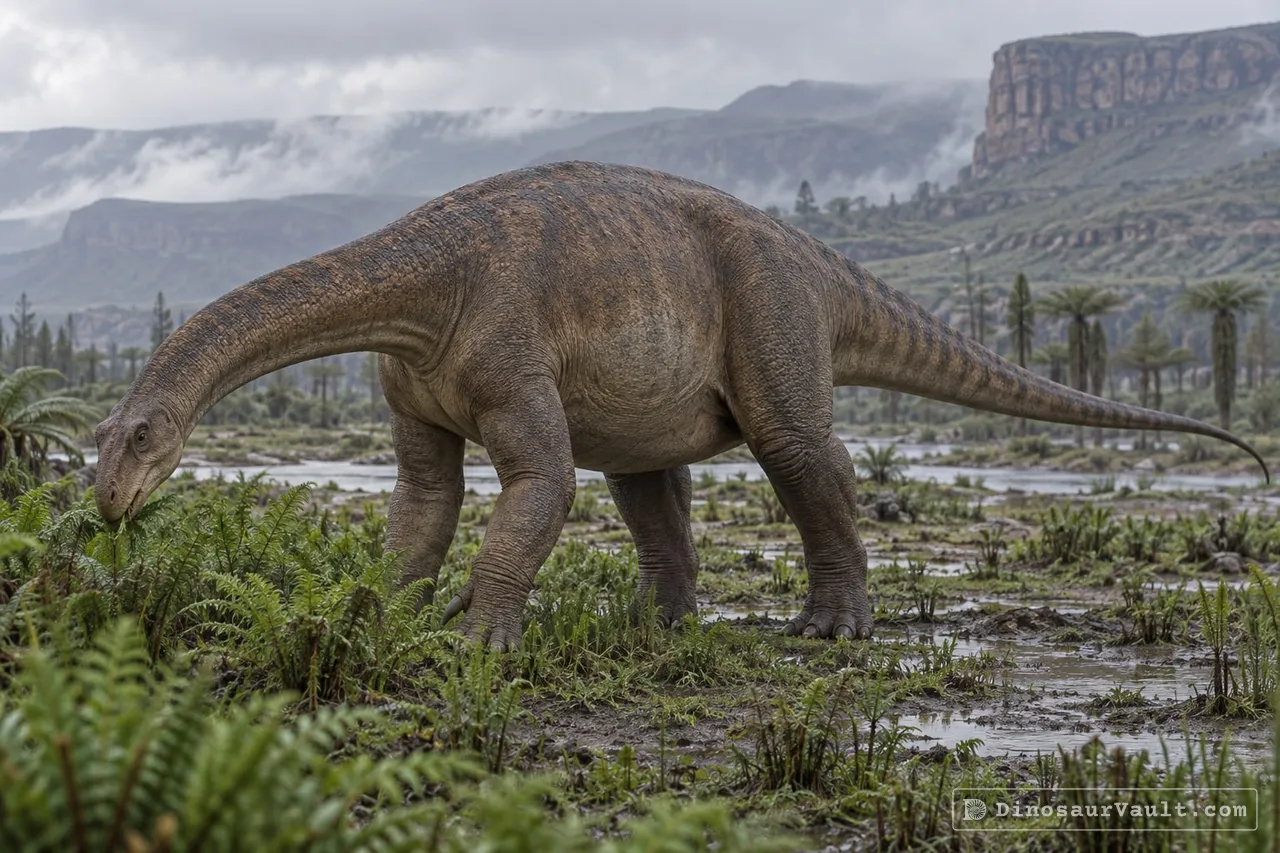
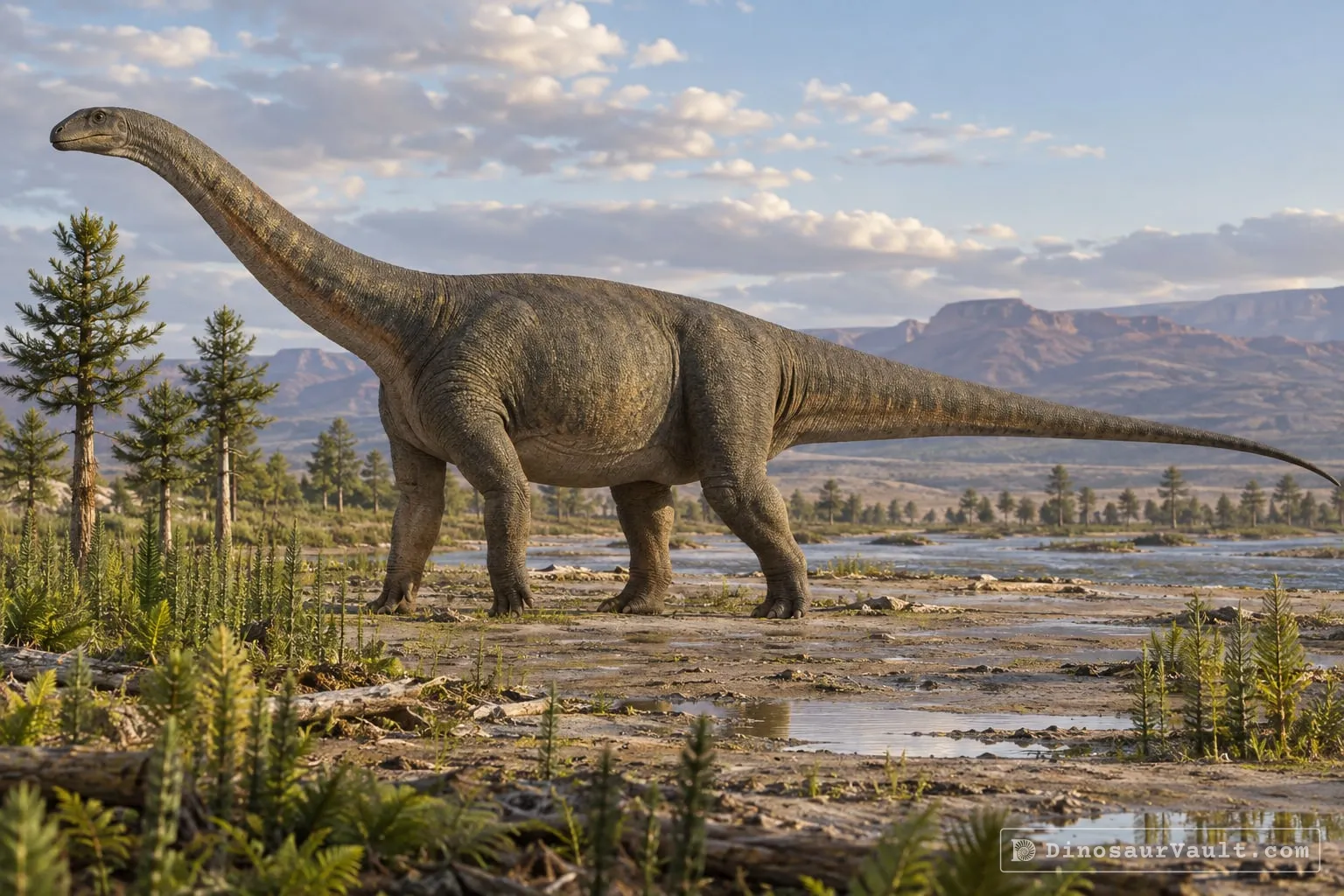
Meroktenos was a plant eater from the long-necked line that later produced the giant sauropods. It is known from part of a hind leg and foot.
Its bones were once thought to belong to Melanorosaurus, but they show features of their own.
Its world
It lived in the Late Triassic in what is now Lesotho. Its bones come from the lower part of the Elliot Formation.
How it was found
Peyre de Fabrègues and Allain named Meroktenos in 2016, from a single find.
Field gallery
More views of Meroktenos
Scenes reconstructed from the available fossil evidence.
1 of 3
Lived alongside
Found in the same rock formations
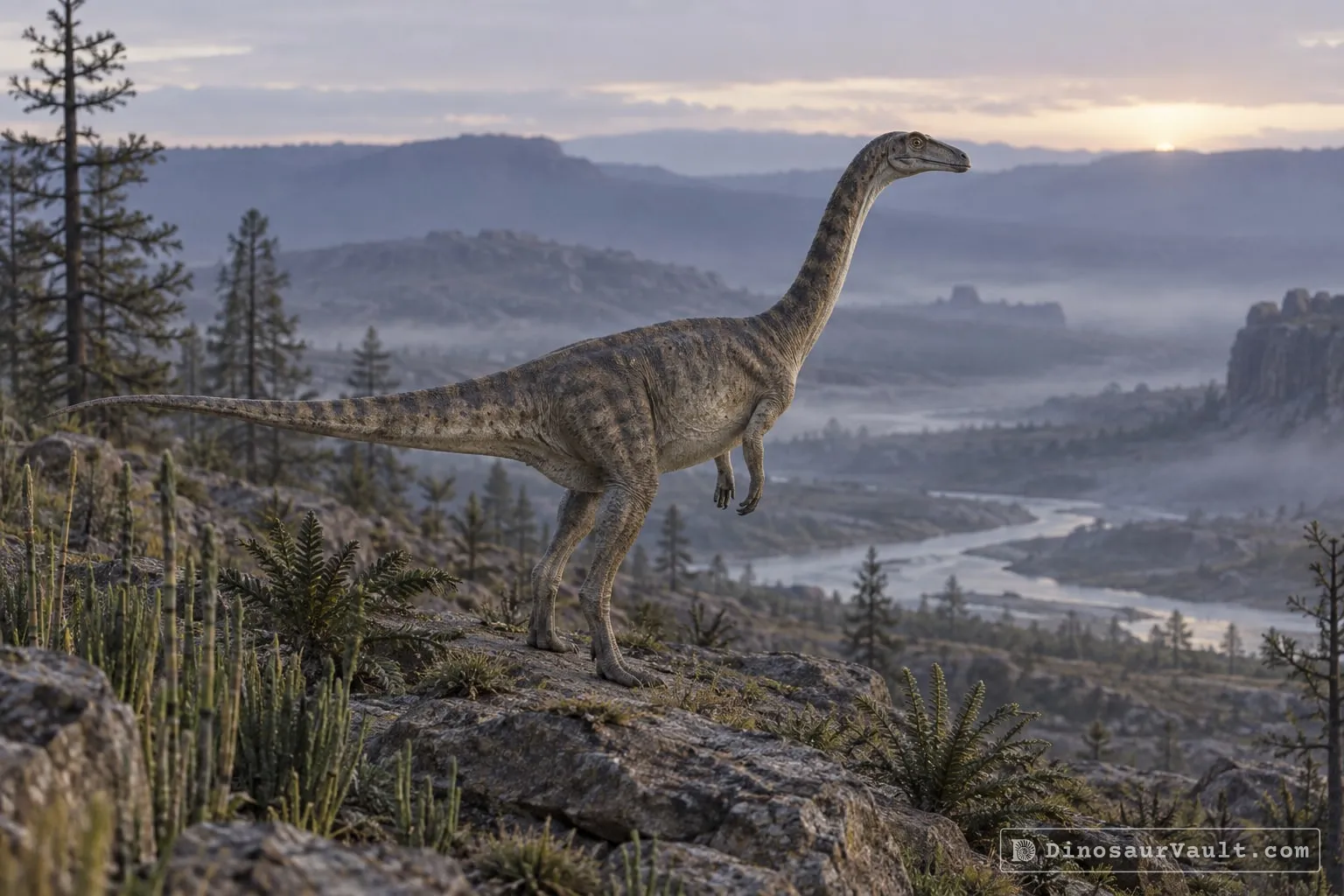
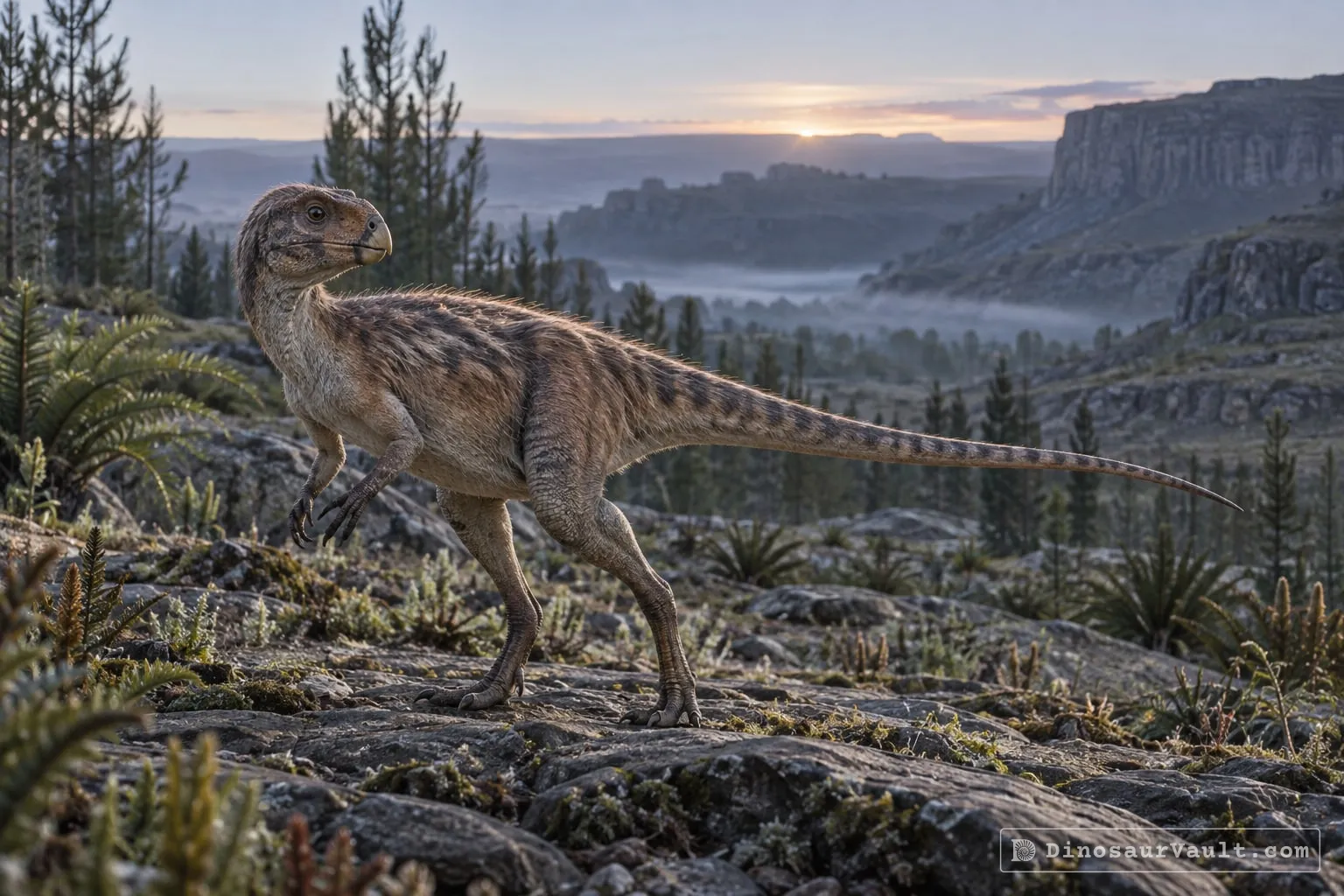
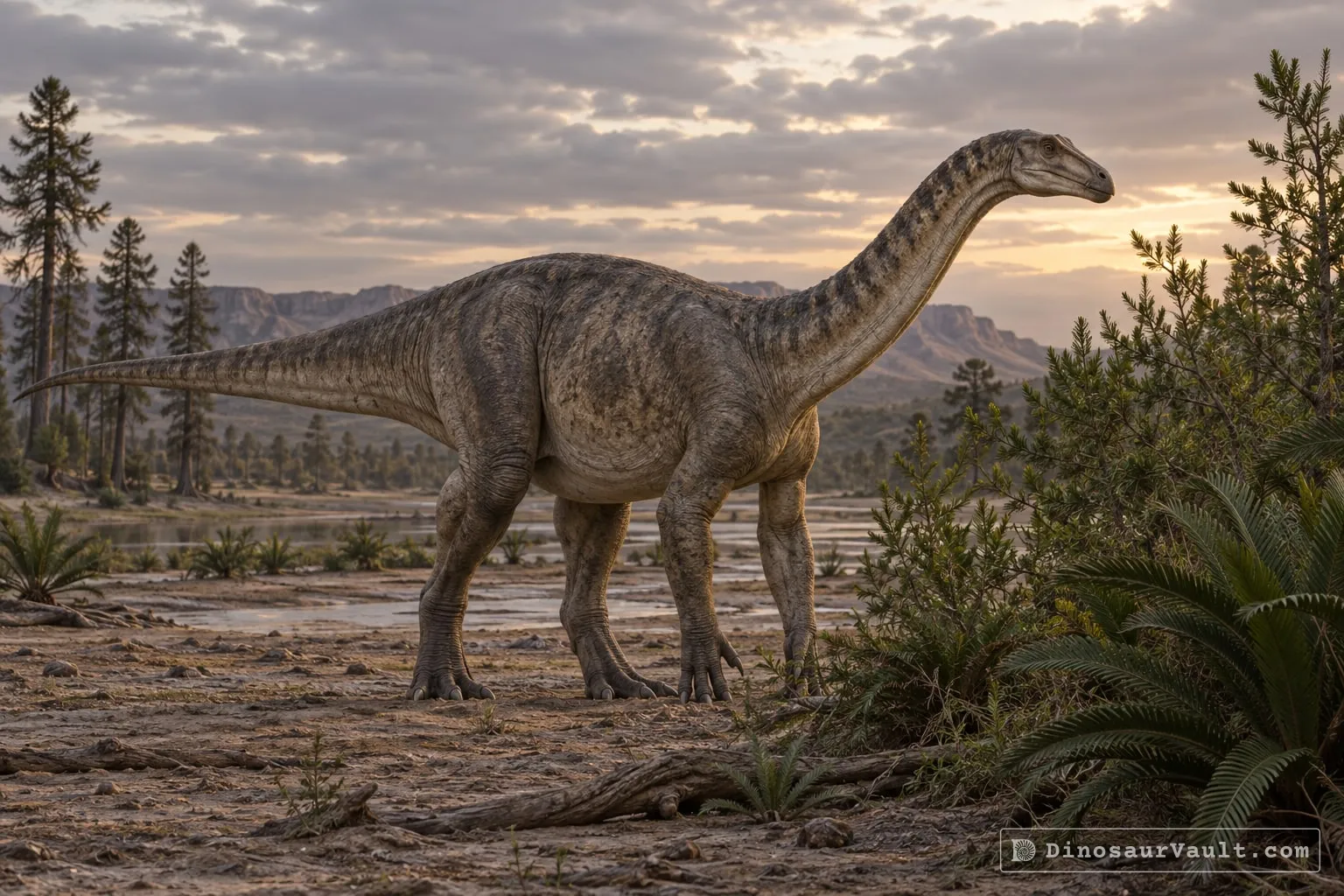
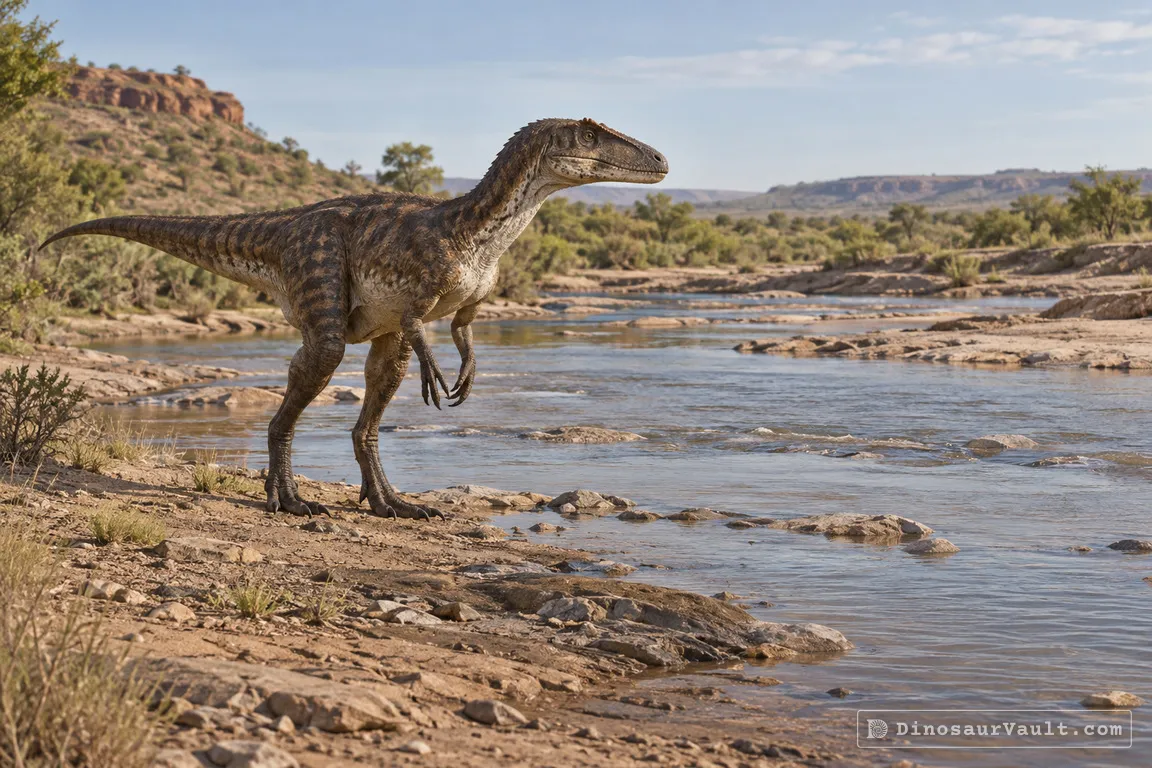
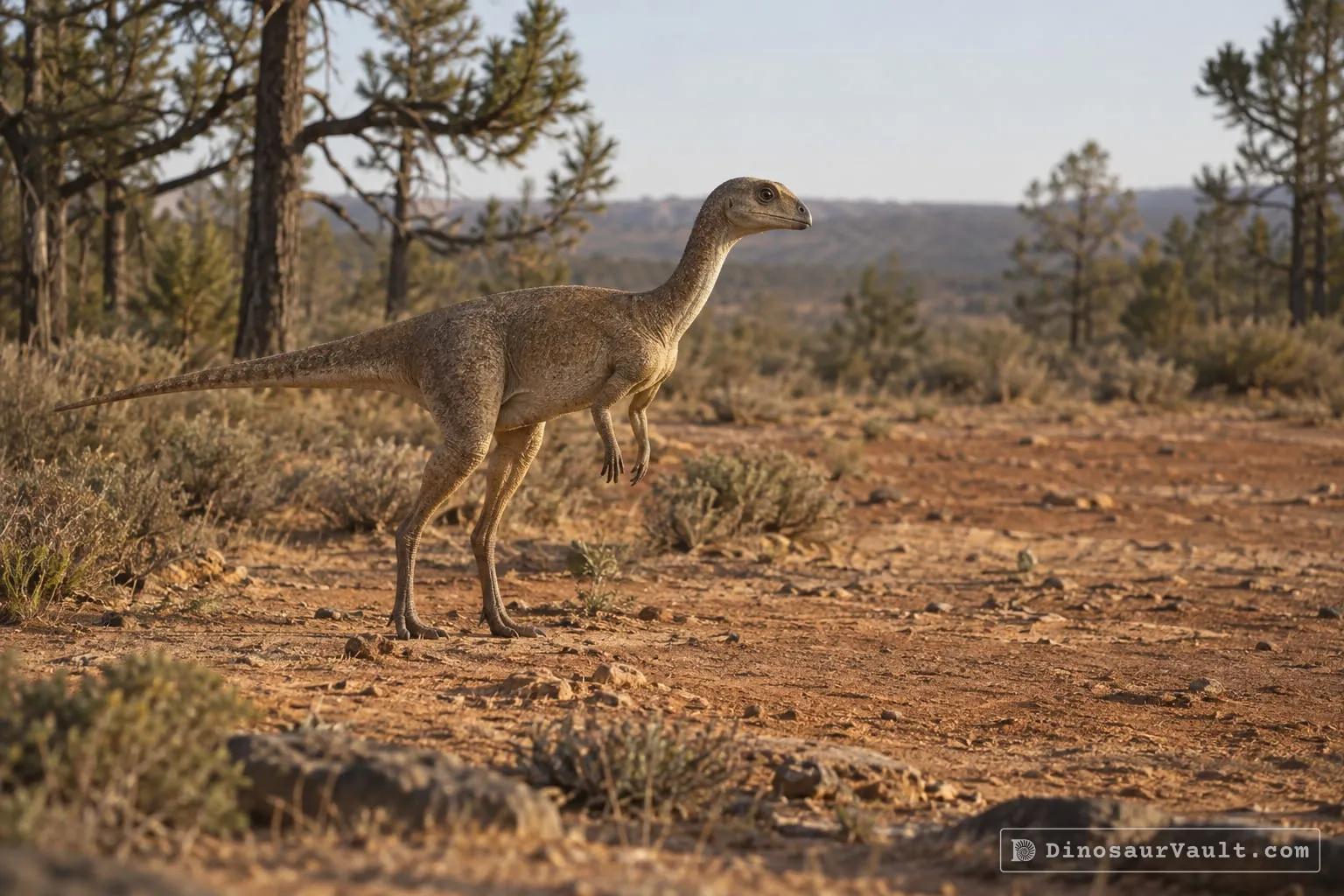
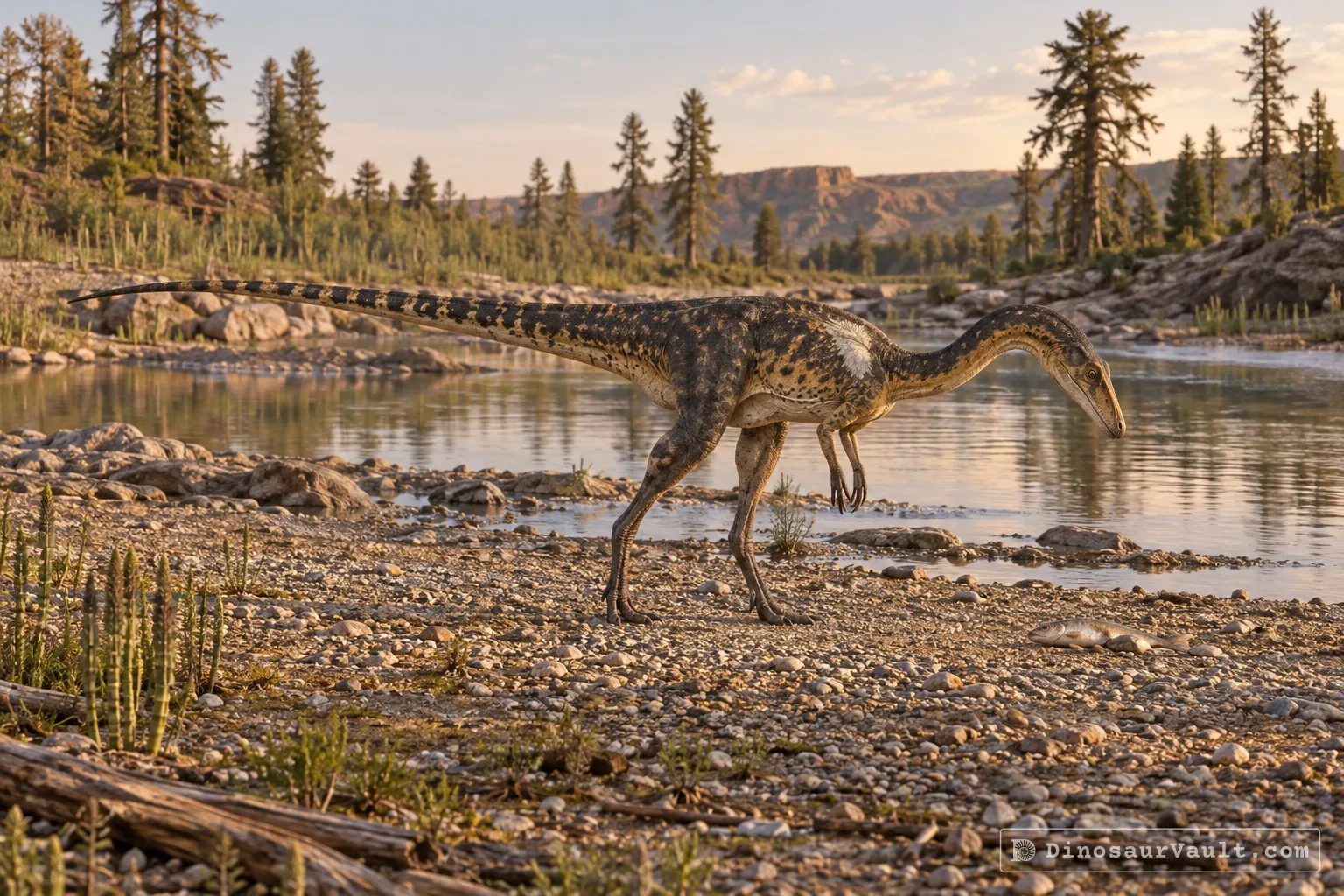
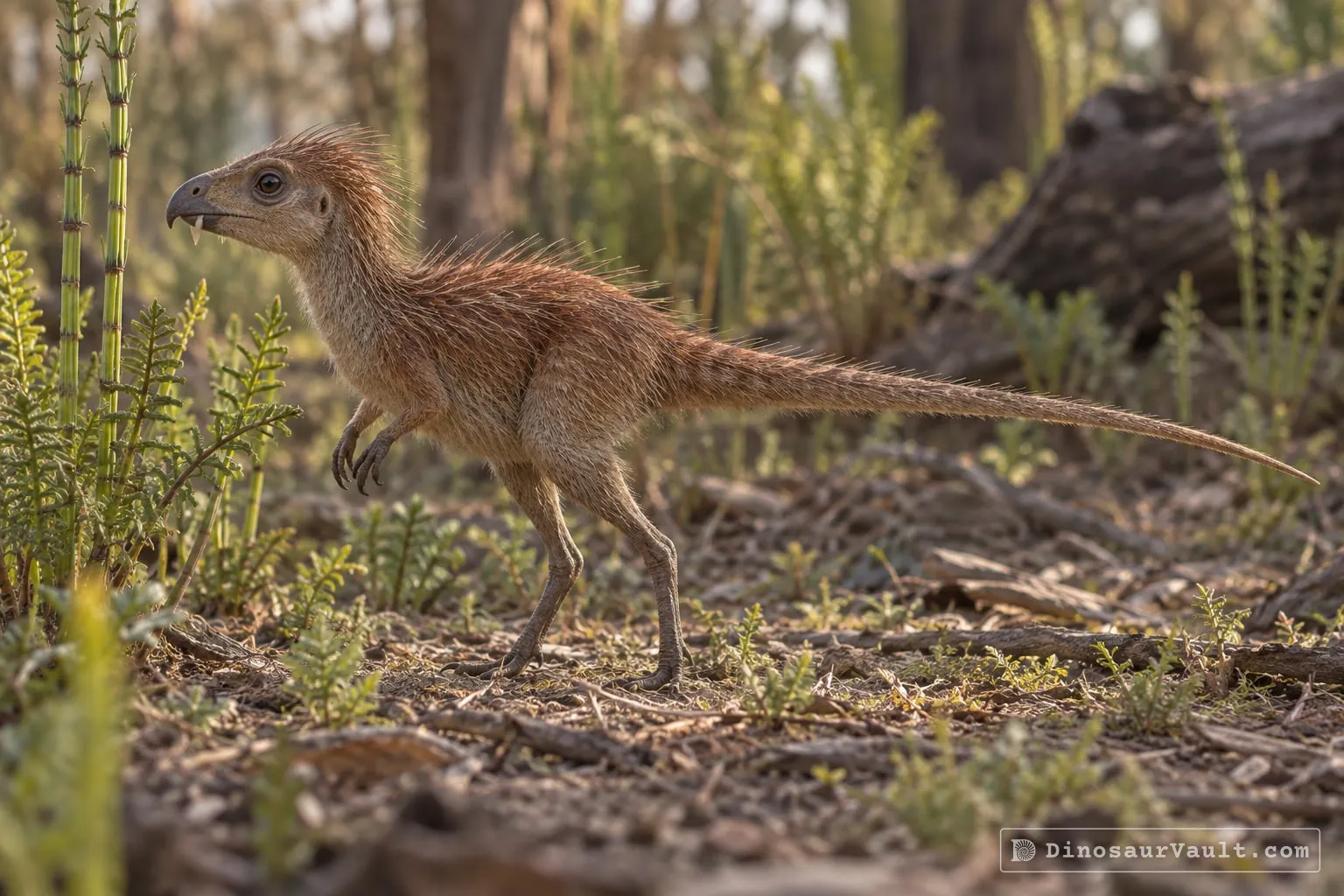


A rock formation can hold fossils laid down millions of years apart, so not every animal here met Meroktenos.
The evidence
The science behind Meroktenos
Which parts of the picture come from its own bones, and which come from its relatives.
From its own fossils
- The core remains include a thigh bone with associated hip bones, part of a vertebra and a foot bone.
- The thigh bone is stout and straight, with sauropod-like proportions, while the known foot bone is relatively slender and straight.
- A neck vertebra and forearm bones are tentatively referred to Meroktenos.
Borrowed from relatives
- Plateosaurus provides comparisons for the missing head, body and hands.
Still unknown
- Its full body size, skull shape and closest relatives.
- Whether the known animal had finished growing, and whether the tentatively referred bones belong to the same individual.
- The precise layer where its bones were collected.
Discovery timeline
- 2016Named itPeyre de Fabrègues & Allain
- 2017Fossil sitesMcPhee et al.
- 2018PostureMcPhee et al.
- 2024Family treeSchaeffer
Key papers
The research behind what we know of Meroktenos
Named it
Restudied the thigh bone and associated remains, separating Meroktenos from Melanorosaurus and recognizing sauropod-like proportions in its hindlimb.
New material and revision ofMelanorosaurus thabanensis, a basal sauropodomorph from the Upper Triassic of Lesotho. PeerJ 4: e1639
Read the paper : New material and revision ofMelanorosaurus thabanensis, a basal sauropodomorph from the Upper Triassic of Lesotho (opens in a new tab)Fossil sites
Revised the ages and distribution of Elliot dinosaurs and highlighted problems with the collection records and association of Meroktenos bones.
The sauropodomorph biostratigraphy of the Elliot Formation of southern Africa: Tracking the evolution of Sauropodomorpha across the Triassic–Jurassic boundary. Acta Palaeontologica Polonica 62
Read the paper : The sauropodomorph biostratigraphy of the Elliot Formation of southern Africa: Tracking the evolution of Sauropodomorpha across the Triassic–Jurassic boundary (opens in a new tab)Posture
Described Ledumahadi and showed that walking on all fours evolved before the straight, column-like limbs of true sauropods.
A Giant Dinosaur from the Earliest Jurassic of South Africa and the Transition to Quadrupedality in Early Sauropodomorphs. Current Biology 28: 3143-3151.e7
Read the paper : A Giant Dinosaur from the Earliest Jurassic of South Africa and the Transition to Quadrupedality in Early Sauropodomorphs (opens in a new tab)Family tree
Discussed an unresolved arrangement of Meroktenos, Sefapanosaurus and Aardonyx among early long-necked relatives.
Osteological redescription of the holotype of Plateosaurus trossingensis (Dinosauria: Sauropodomorpha) from the Upper Triassic of SW Germany and its phylogenetic implications. Journal of Systematic Palaeontology 22
Read the paper : Osteological redescription of the holotype of Plateosaurus trossingensis (Dinosauria: Sauropodomorpha) from the Upper Triassic of SW Germany and its phylogenetic implications (opens in a new tab)
Close relatives
Other members of Sauropodiformes


Sources: Wikidata