Plateosauravus
"grandfather of Plateosaurus"
Type species Plateosauravus cullingworthi
- Lived
- 227 to 201 million years ago, Late Triassic
- Group
- Early sauropodomorphs, Plateosauridae
- Found in
- South Africa
- Named by
- Huene 1932
Where its fossils were found
The evidence
Today

210 million years ago
Habitat
Broad floodplains crossed by winding rivers, with forests along their banks. Other plant eaters from these rocks include Eucnemesaurus, Melanorosaurus and Blikanasaurus.
Field notes
About Plateosauravus
What it was like
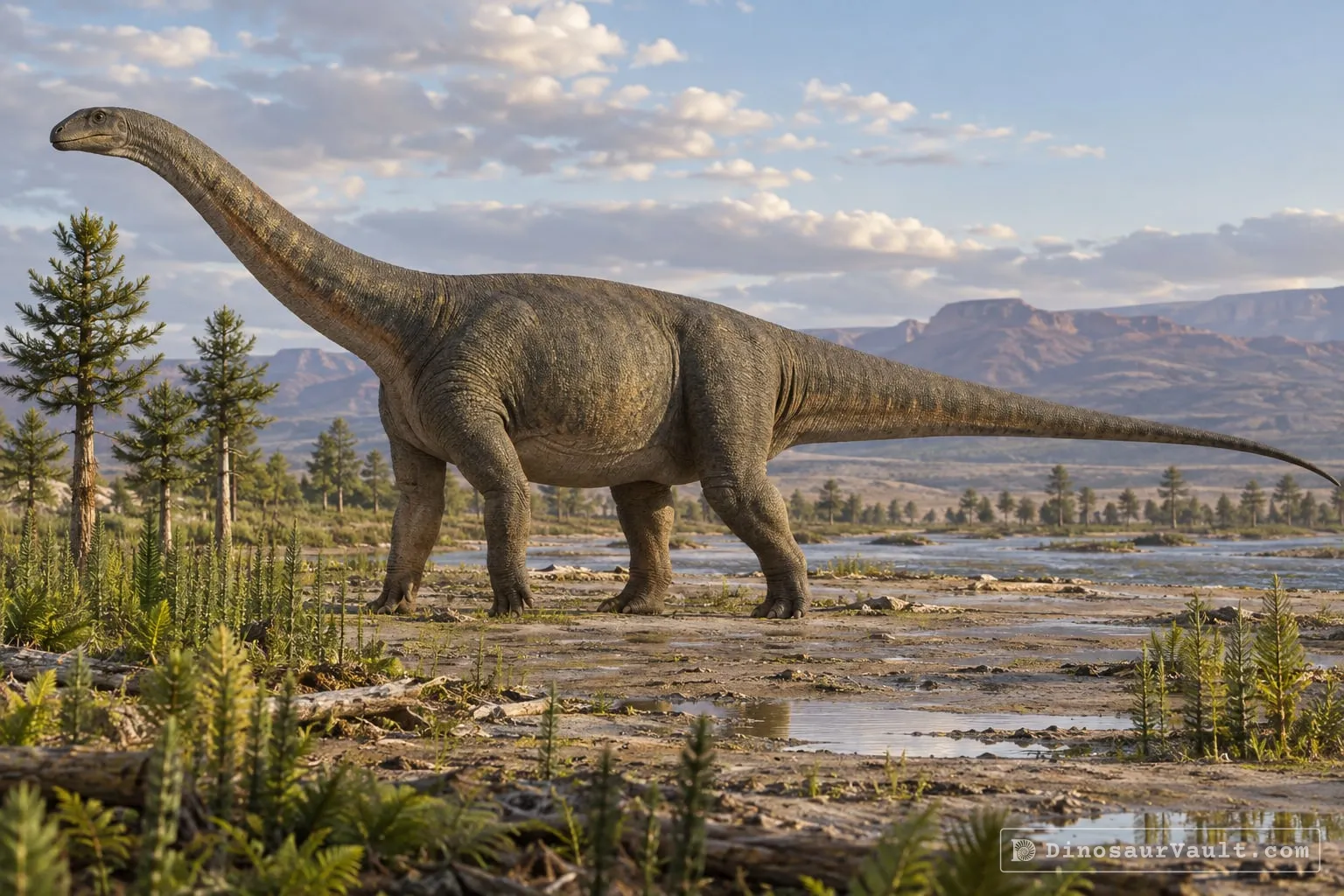
Plateosauravus was an early relative of the giant sauropods, a plant eater known from partial skeletons. The original collection includes more than one animal, and it is uncertain whether all the bones belong to the same species. It was first named as a species of Plateosaurus.
Its world
It lived in the Late Triassic in what is now South Africa. Its bones come from the lower part of the Elliot Formation.
How it was found
Huene gave it its own genus in 1932. The type species is Plateosauravus cullingworthi.
Field gallery
More views of Plateosauravus
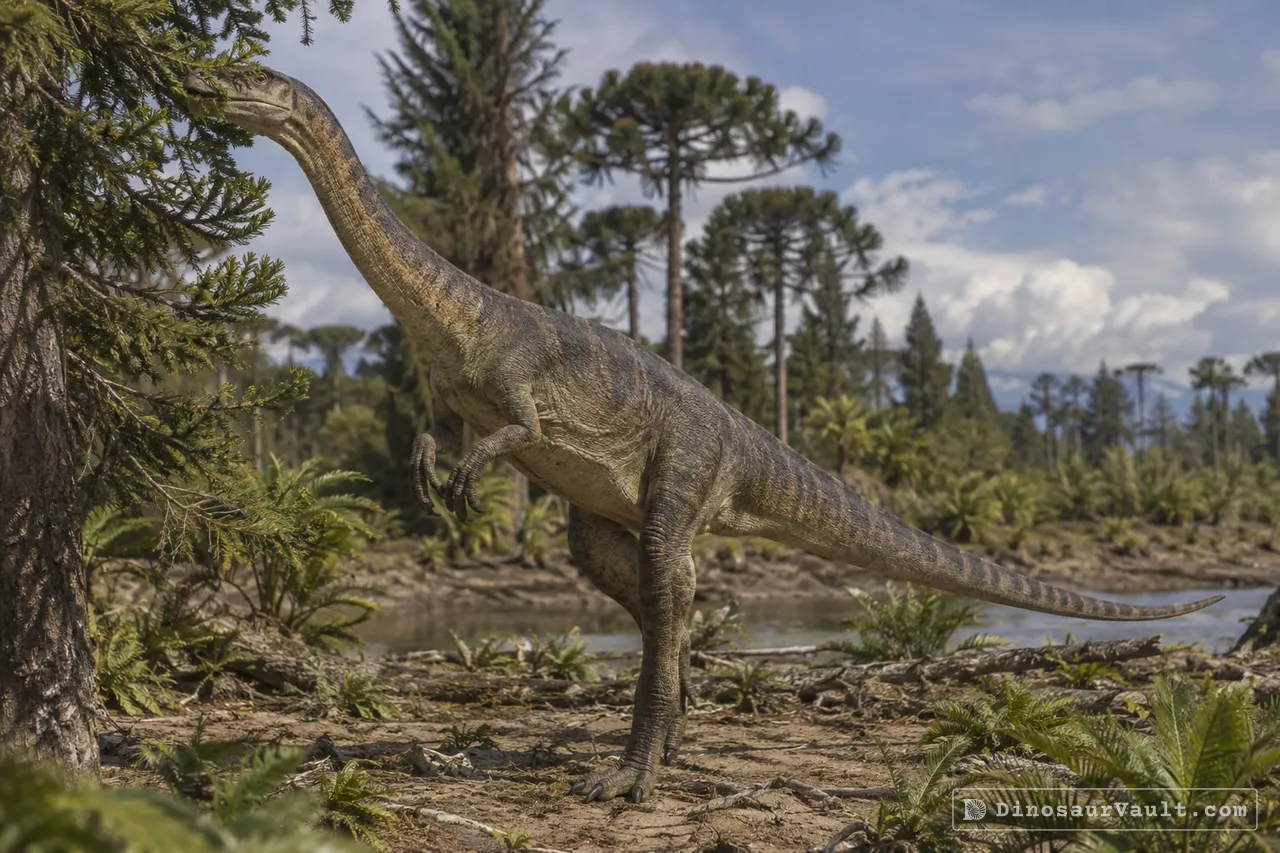
Scenes reconstructed from the available fossil evidence.
Lived alongside
Found in the same rock formations
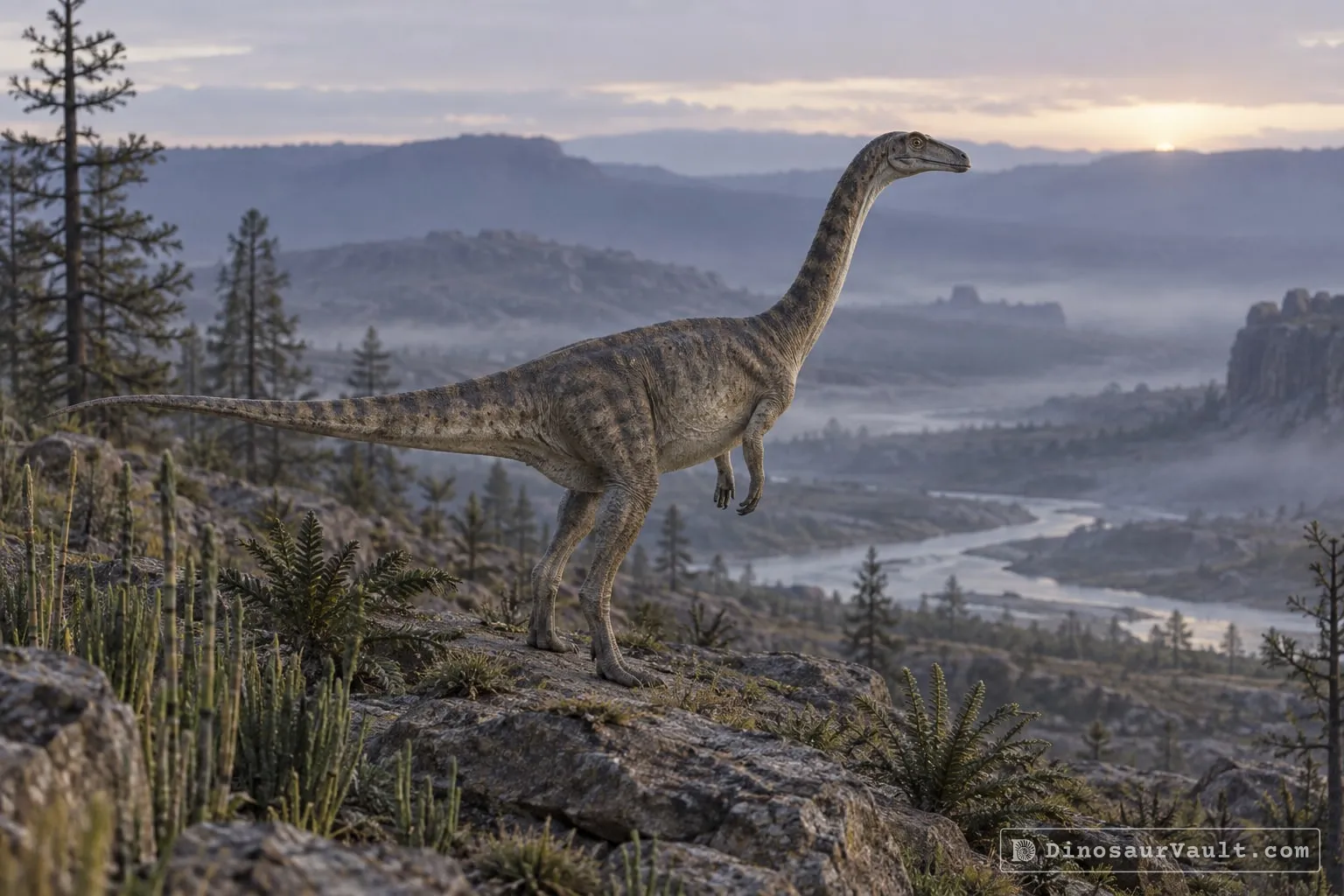
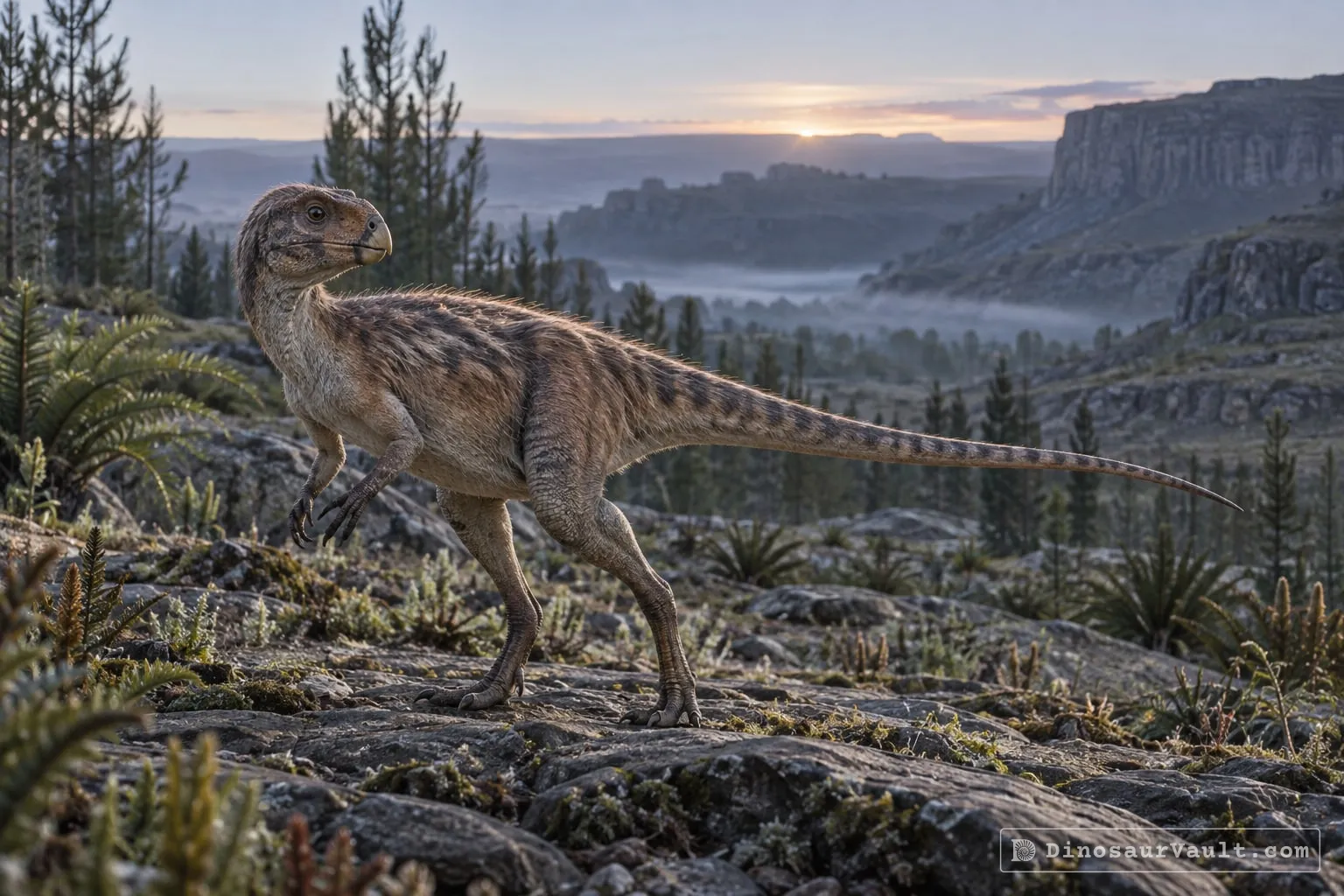
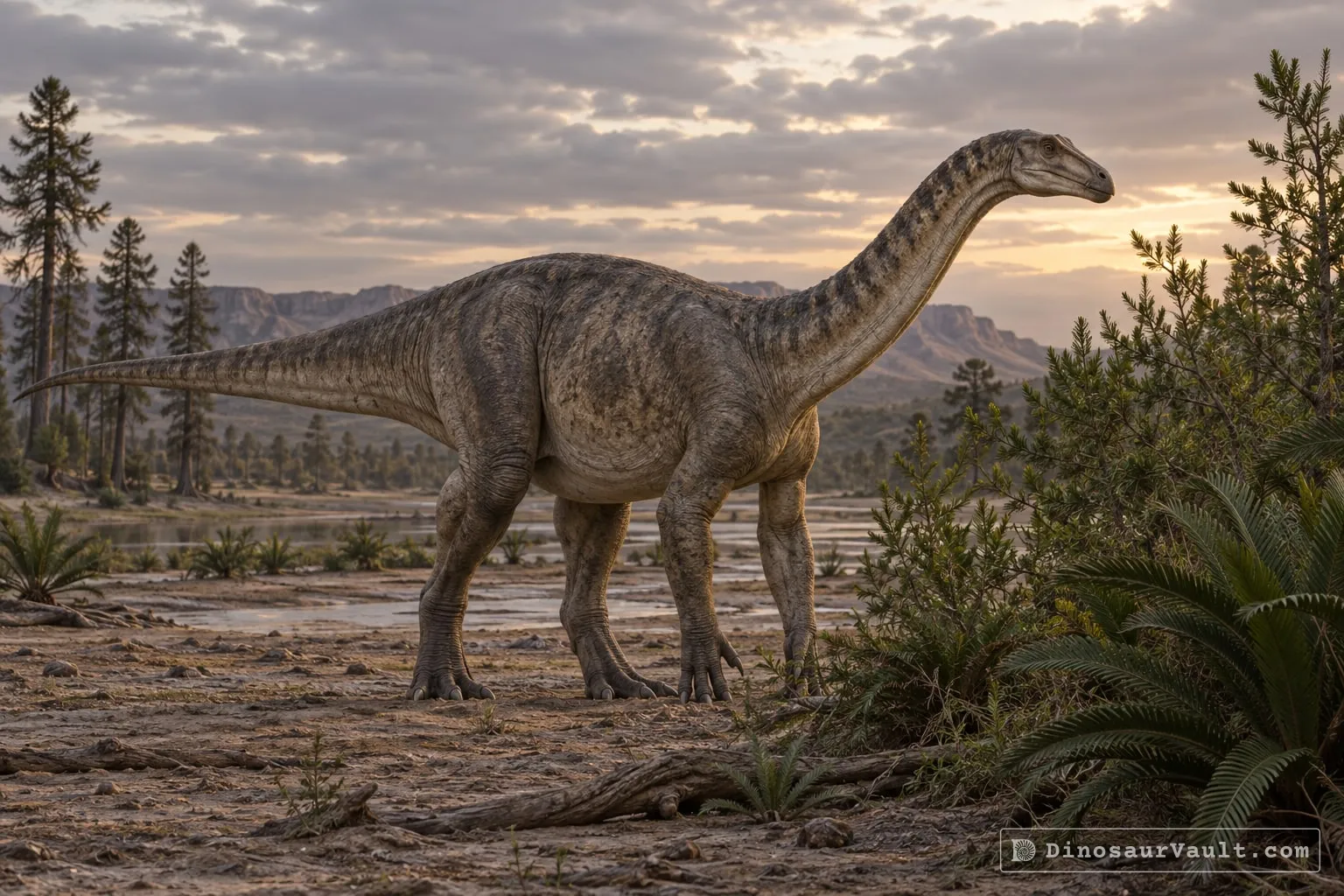
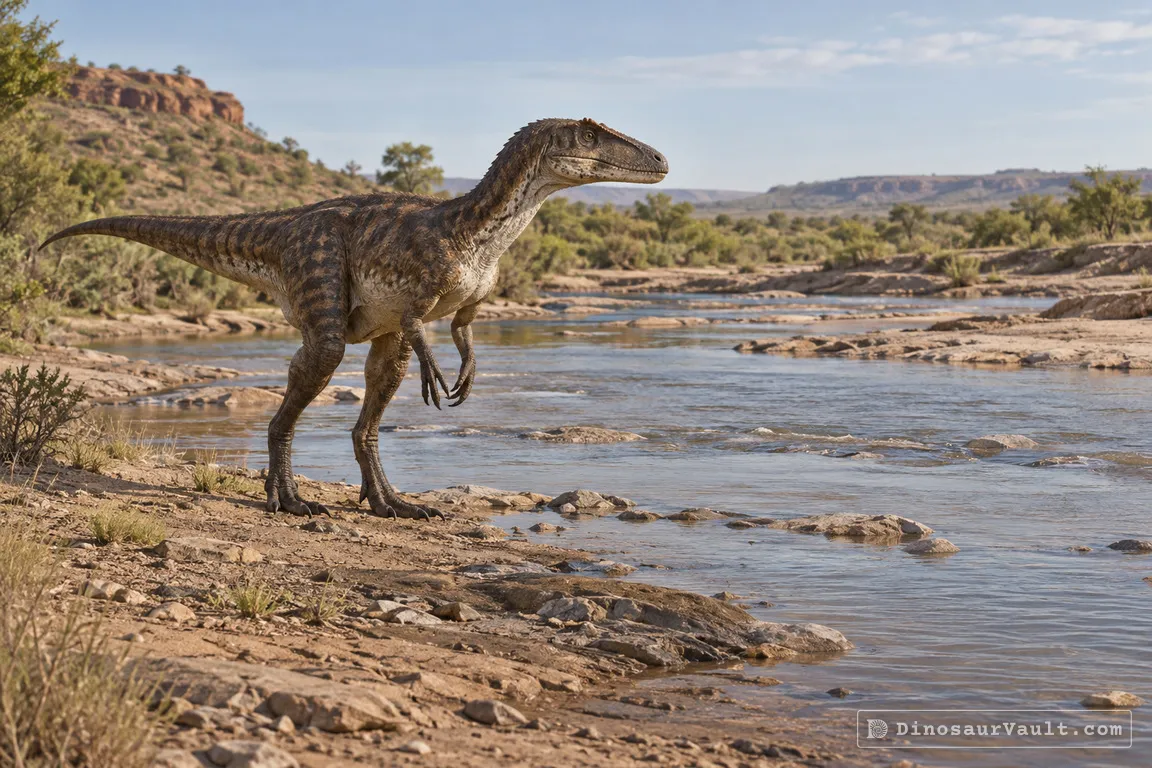
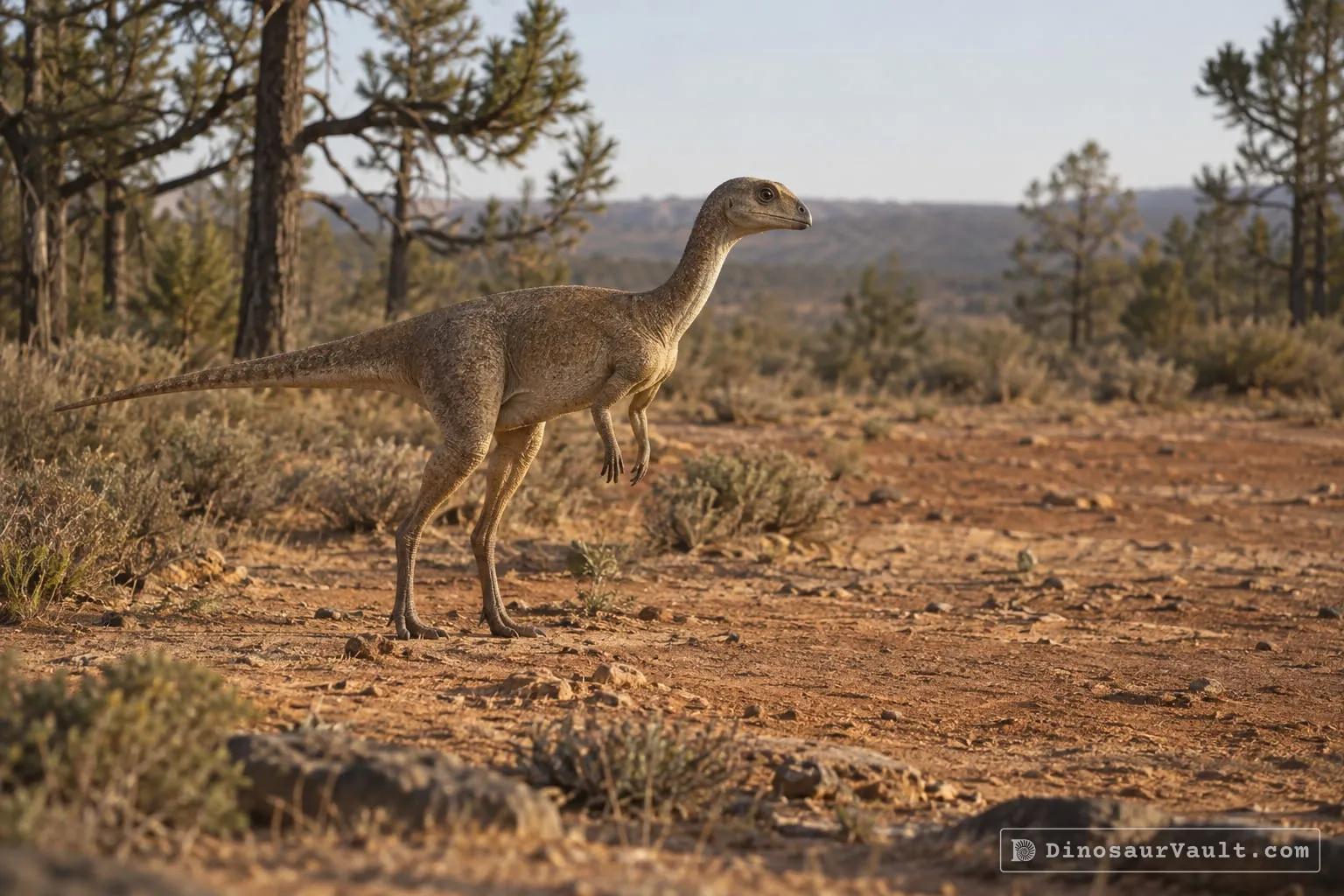
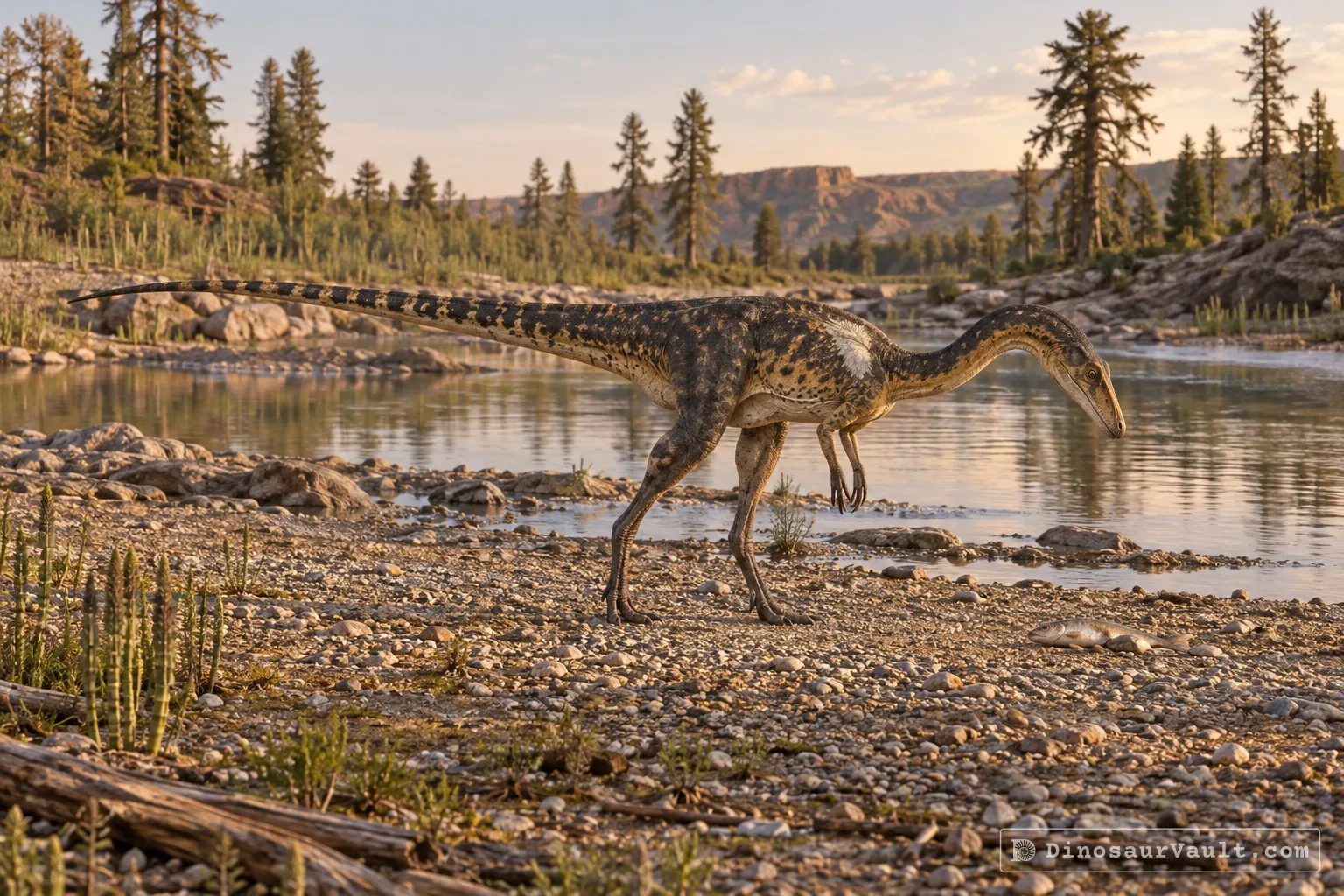
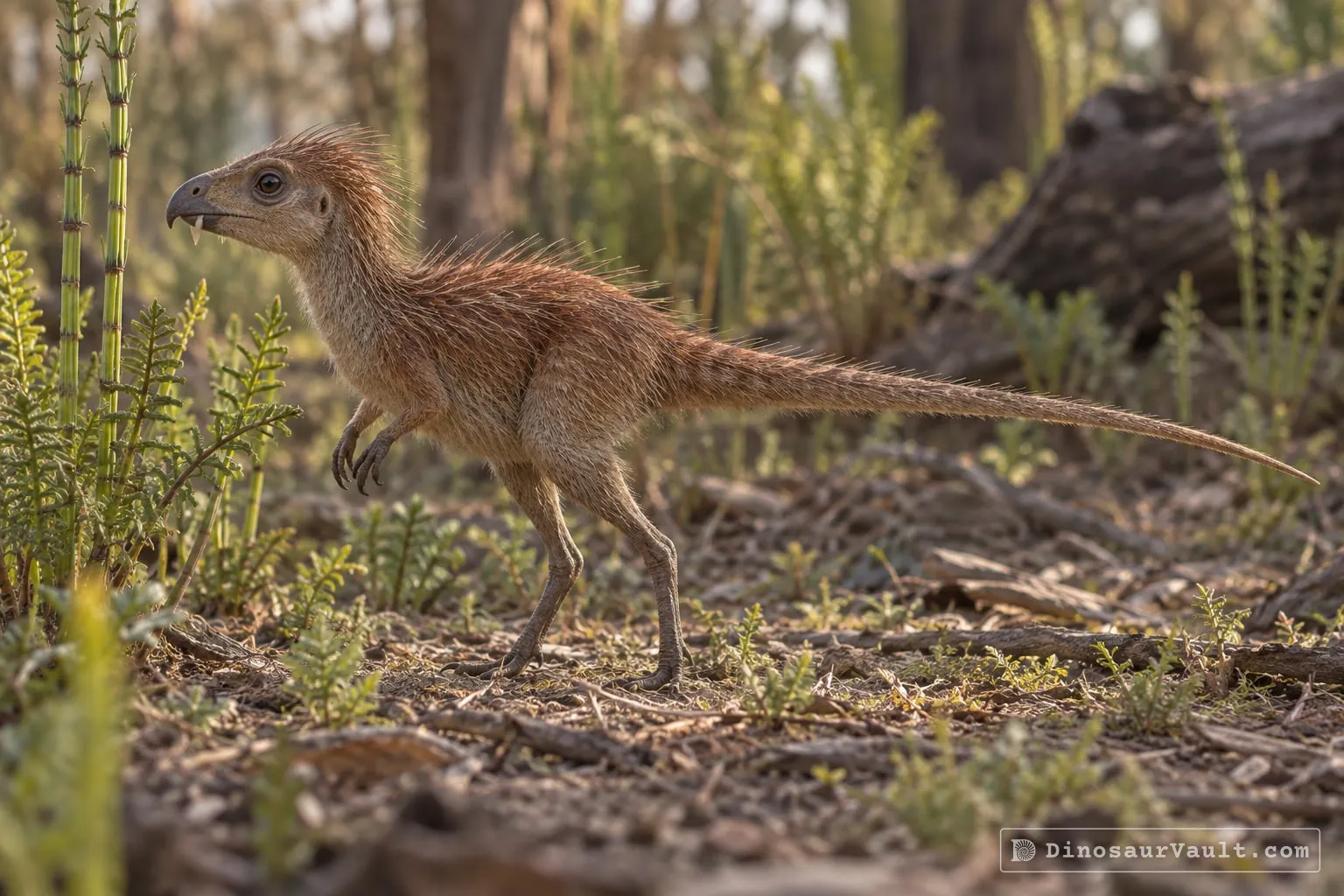


A rock formation can hold fossils laid down millions of years apart, so not every animal here met Plateosauravus.
The evidence
The science behind Plateosauravus
Which parts of the picture come from its own bones, and which come from its relatives.
From its own fossils
- The original collection contains separate vertebrae and limb bones, from at least two partial skeletons of large early sauropodomorphs.
- Back vertebrae in the collection have tall bony spines, and an upper arm bone is long.
- An upper arm bone in the collection has a sinuous crest near the shoulder end, a feature later compared in another study.
Borrowed from relatives
- The skull and much of the body are restored by comparison with other early sauropodomorphs, such as Plateosaurus.
Still unknown
- Whether all the bones in the original collection belong to one kind of animal. They were found disarticulated, their exact origins are imprecise, and a full formal description is still pending.
- Its place among early sauropodomorphs. Its tall back spines and long upper arm are unexpected for so early a form, and one recent study grouped it with Ruehleia.
- Whether juvenile bones described under an older genus name belong to Plateosauravus.
Discovery timeline
- 1932Named itHuene
- 2001Growing upDurand
- 2015Same rocksMcPhee et al.
- 2017Fossil sitesMcPhee et al.
- 2025Family treeWang et al.
Key papers
The research behind what we know of Plateosauravus
Named it
Gave the animal previously called Plateosaurus cullingworthi its own genus, Plateosauravus.
Die fossile Reptil-Ordnung Saurischia, ihre Entwicklung und Geschichte [The fossil reptile order Saurischia, their development and history]. Monographien zur Geologie und Palaeontologie, serie 1 4: 1-361
No link available
Growing up
Described juvenile sauropodomorph bones under an older genus name, providing material for studying growth once their identity is resolved.
The oldest juvenile dinosaurs from Africa. Journal of African Earth Sciences 33: 597-603
Read the paper : The oldest juvenile dinosaurs from Africa (opens in a new tab)Same rocks
Named a second species of Eucnemesaurus from the same rocks and doubted that all the bones placed in Plateosauravus come from one species.
A second species ofEucnemesaurusVan Hoepen, 1920 (Dinosauria, Sauropodomorpha): new information on the diversity and evolution of the sauropodomorph fauna of South Africa's lower Elliot Formation (latest Triassic). Journal of Vertebrate Paleontology 35: e980504
Read the paper : A second species ofEucnemesaurusVan Hoepen, 1920 (Dinosauria, Sauropodomorpha): new information on the diversity and evolution of the sauropodomorph fauna of South Africa's lower Elliot Formation (latest Triassic) (opens in a new tab)Fossil sites
Confirmed that the original bones came from the lower Elliot Formation and questioned whether the collection represents a single species.
The sauropodomorph biostratigraphy of the Elliot Formation of southern Africa: Tracking the evolution of Sauropodomorpha across the Triassic–Jurassic boundary. Acta Palaeontologica Polonica 62
Read the paper : The sauropodomorph biostratigraphy of the Elliot Formation of southern Africa: Tracking the evolution of Sauropodomorpha across the Triassic–Jurassic boundary (opens in a new tab)Family tree
Named Wudingloong and, in its family-tree analysis, grouped Plateosauravus with Ruehleia among early relatives of the sauropods.
A new Early Jurassic dinosaur represents the earliest-diverging and oldest sauropodomorph of East Asia. Scientific Reports 15
Read the paper : A new Early Jurassic dinosaur represents the earliest-diverging and oldest sauropodomorph of East Asia (opens in a new tab)
Close relatives
Other members of Plateosauridae


Sources: Wikidata