Jianianhualong
Type species Jianianhualong tengi
- Lived
- 126 to 120 million years ago, Early Cretaceous
- Diet
- Omnivore
- Group
- Theropods, Troodontidae
- Found in
- China
- Named by
- Xu et al. 2017
Where its fossils were found
The evidence
Today

125 million years ago
Habitat
Lakes and forests in the Yixian Formation, in what is now China. Its neighbors included Yutyrannus, Sinosauropteryx and Psittacosaurus.
Field notes
About Jianianhualong
What it was like
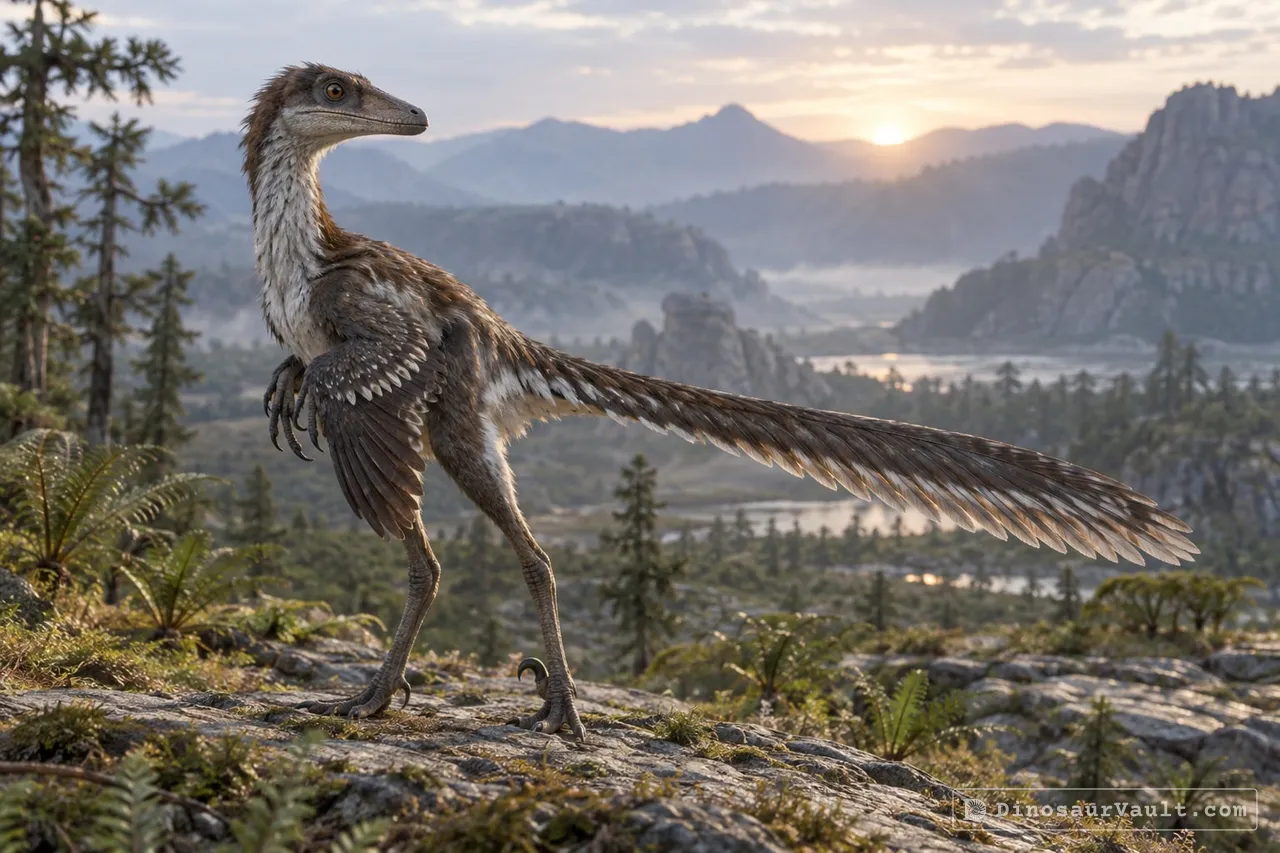
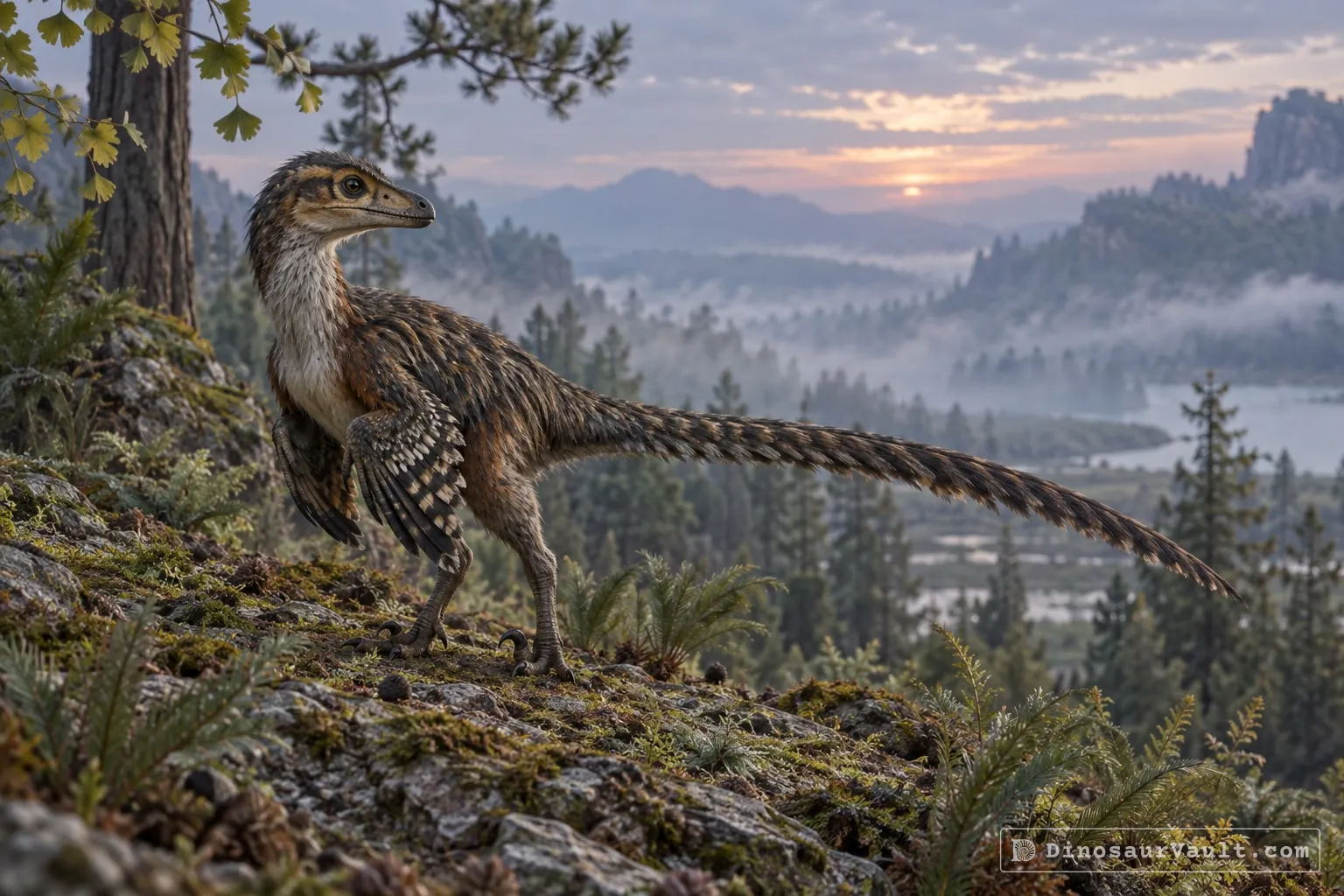
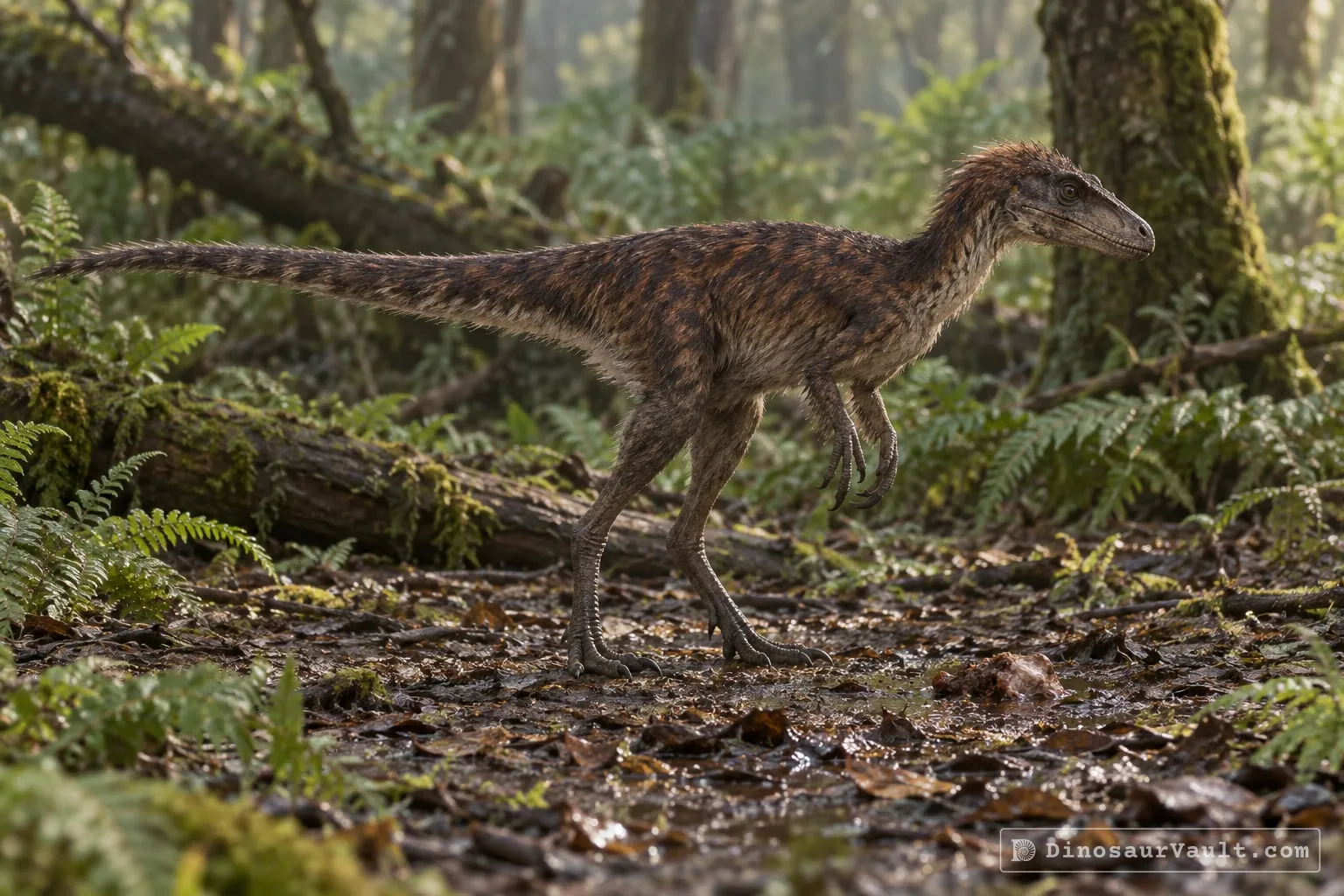
Jianianhualong was a small feathered troodontid. Its skeleton preserves feathers, including long tail feathers that were uneven in shape, like flight feathers. It suggests such feathers appeared before flight in this group.
Its world
It lived in the Early Cretaceous, in what is now China. It comes from the Yixian Formation, a land of lakes and forests shared with Yutyrannus, Sinosauropteryx and Psittacosaurus.
How it was found
Xu and colleagues named Jianianhualong in 2017. The type species is Jianianhualong tengi.
Field gallery
More views of Jianianhualong
Scenes reconstructed from the available fossil evidence.
1 of 3
Lived alongside
Found in the same rock formations
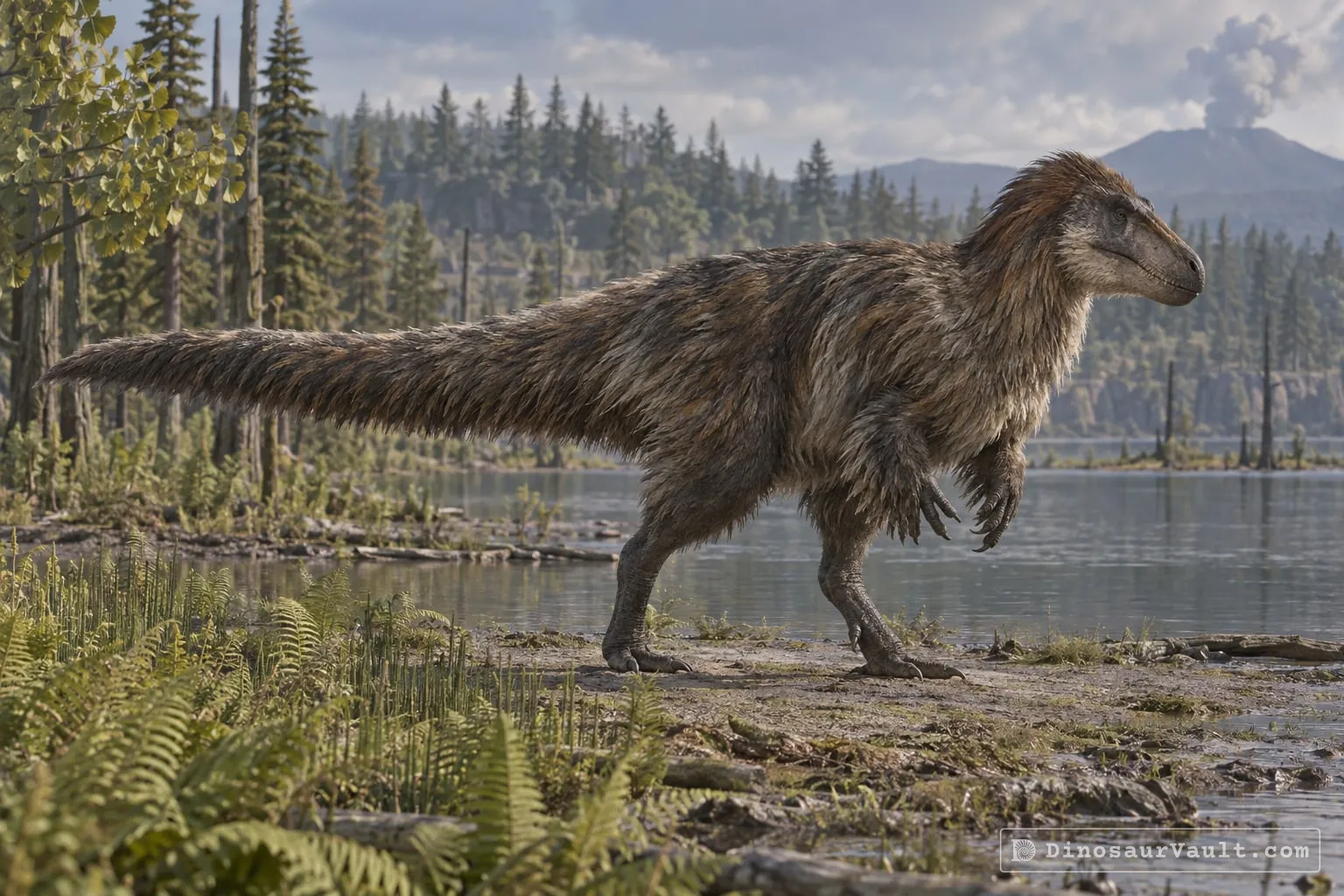
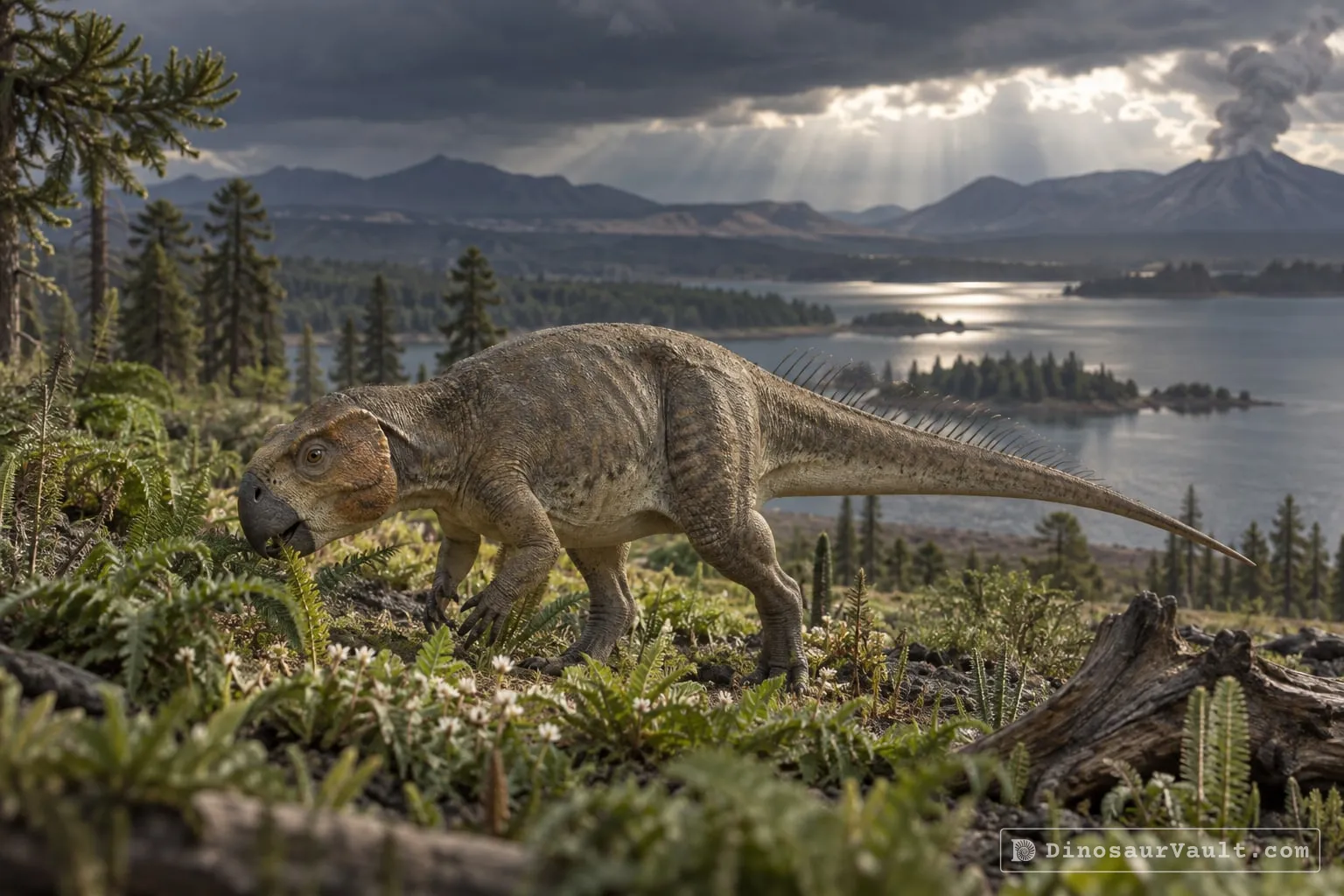
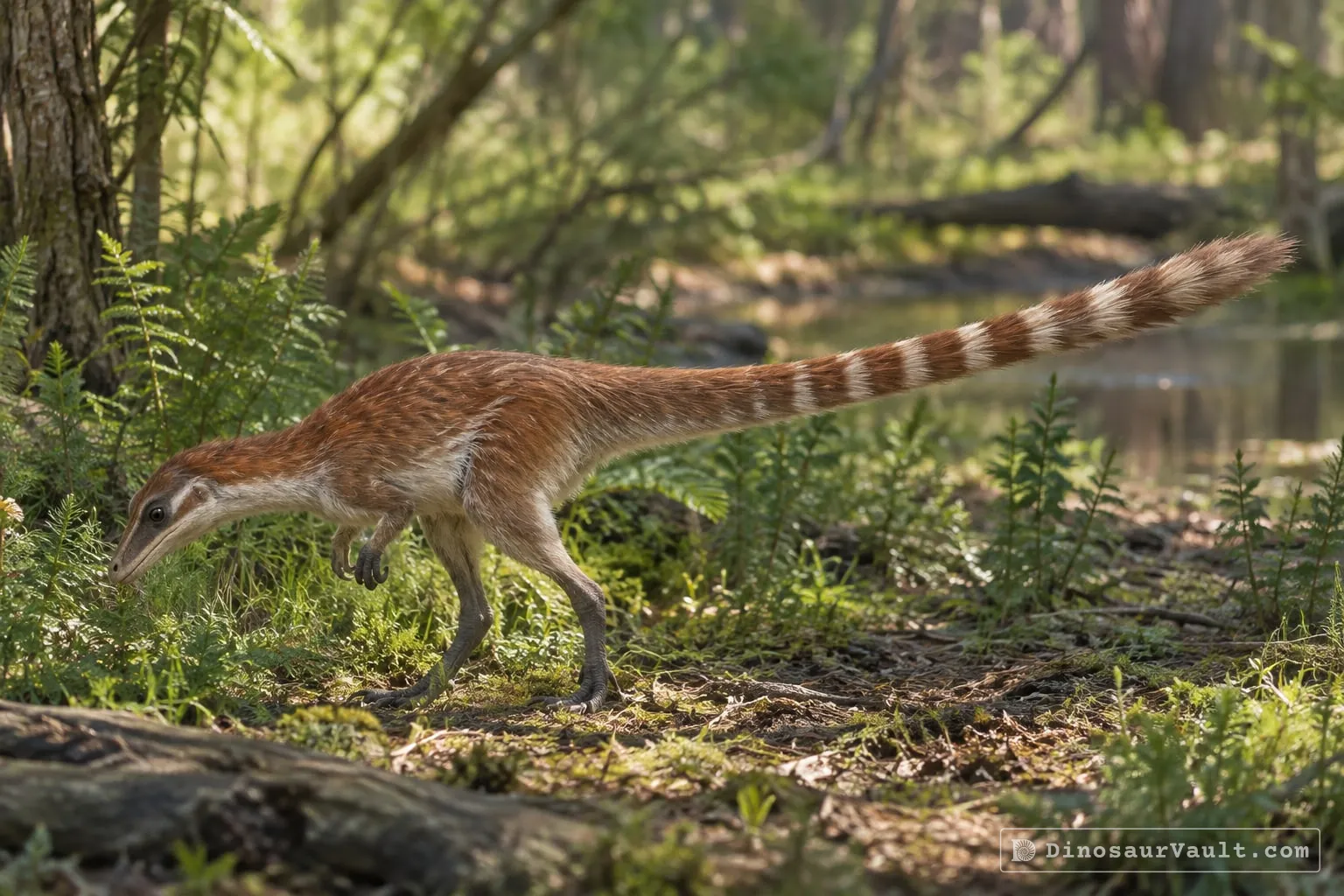
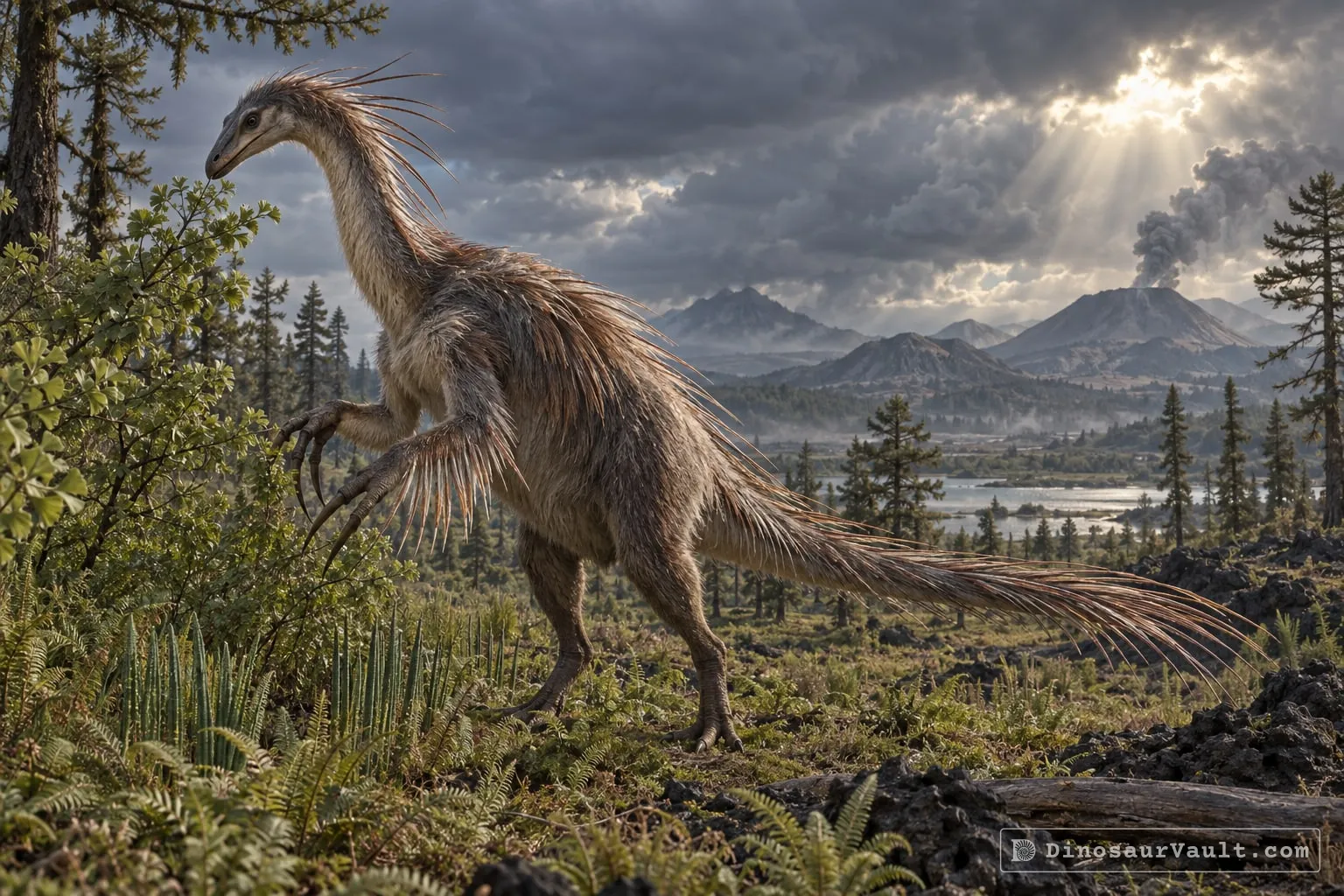
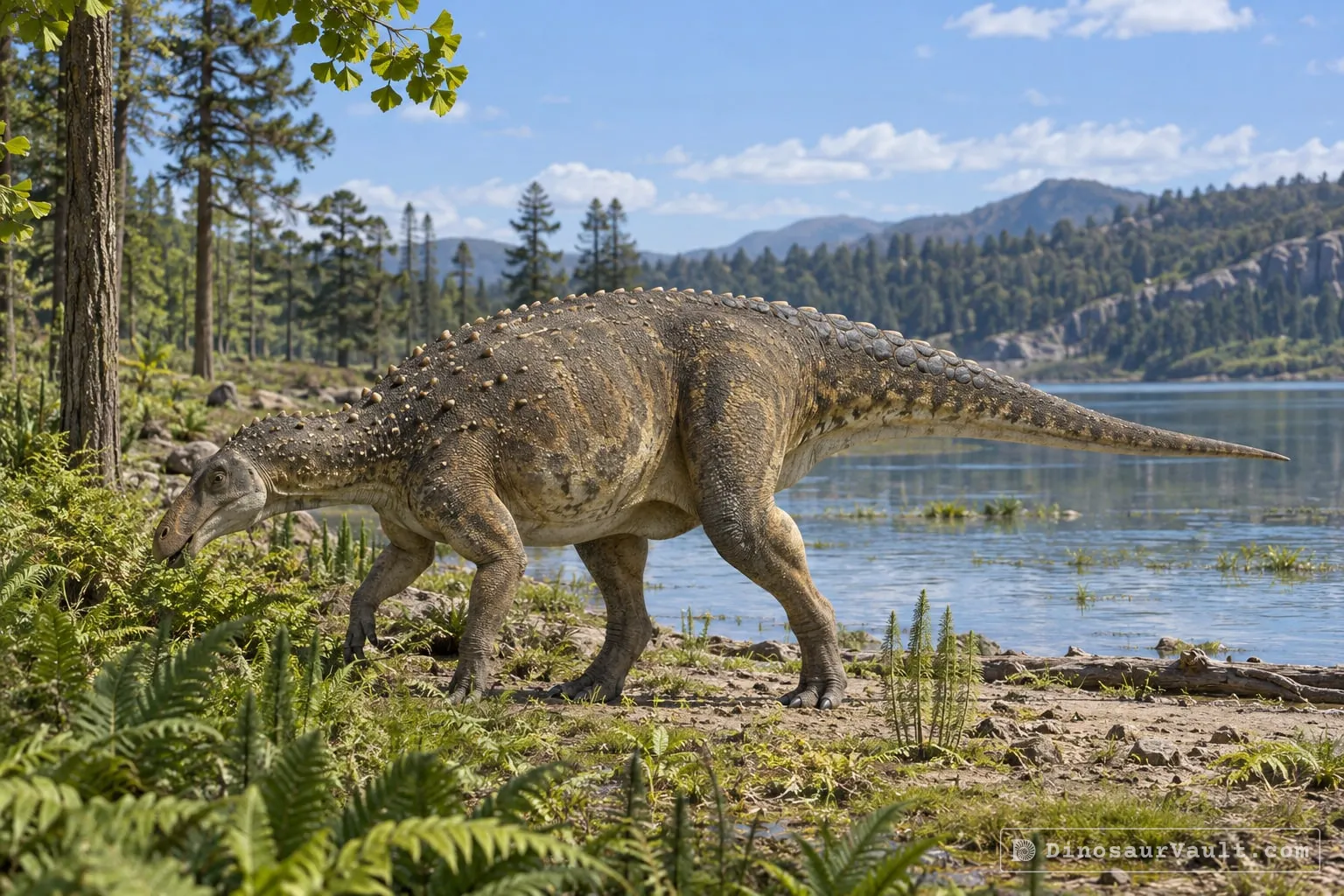


A rock formation can hold fossils laid down millions of years apart, so not every animal here met Jianianhualong.
The evidence
The science behind Jianianhualong
Which parts of the picture come from its own bones, and which come from its relatives.
From its own fossils
- A nearly complete skeleton preserves the skull, limbs and most of the tail.
- Long feathers cover the arms, legs and tail, including a tail feather with unequal vanes on either side of its shaft.
- Its skull and hind legs combine more advanced troodontid features with more primitive arms and hips.
Borrowed from relatives
- Most of its body shape comes from its own skeleton; the missing tail tip is restored by comparison with other troodontids.
Still unknown
- Its feather colors.
- Whether it could glide or fly.
- The exact shape of its arm feathers.
Discovery timeline
- 2002Close relativeXu et al.
- 2009Close relativeHu et al.
- 2017Named itXu et al.
Key papers
The research behind what we know of Jianianhualong
Close relative
Described Sinovenator from the Yixian Formation, showing that birdlike skeletal features appeared early in troodontid evolution.
A basal troodontid from the Early Cretaceous of China. Nature 415: 780-784
Read the paper : A basal troodontid from the Early Cretaceous of China (opens in a new tab)Close relative
Described long feathers on the legs and feet of Anchiornis, a comparison for the extensive feathering of early birdlike dinosaurs.
A pre-Archaeopteryx troodontid theropod from China with long feathers on the metatarsus. Nature 461: 640-643
Read the paper : A pre-Archaeopteryx troodontid theropod from China with long feathers on the metatarsus (opens in a new tab)Named it
Described a nearly complete feathered skeleton with uneven tail feathers and a mixture of primitive and advanced troodontid features.
Mosaic evolution in an asymmetrically feathered troodontid dinosaur with transitional features. Nature Communications 8
Read the paper : Mosaic evolution in an asymmetrically feathered troodontid dinosaur with transitional features (opens in a new tab)
Close relatives
Other members of Troodontidae


Sources: Wikidata